Options
Keeping two old friends together ...
 Sunnywood
Posts: 2,683 ✭
Sunnywood
Posts: 2,683 ✭
Once upon a time, aluminum was considered a rare and fascinating metal. Mainly, the reason for this was that it rarely occurs in pure metallic form, but rather in the form of bauxite (a white mineral oxide of aluminum). The first commercialized technology for reducing bauxite (aluminum oxide) to metallic aluminum, then considered a very difficult challenge, was the Hall-Héroult process, named for its simultaneous inventors Charles Martin Hall (of Oberlin, Ohio), and Paul H.T. Héroult (of France). Hall patented the process in the U.S., and became the father of aluminum production in the U.S. On October 1, 1888, with the help of a small group of prominent Pittsburgh entrepreneurs, Hall's company was incorporated as The Pittsburgh Reduction Company. One of those entrepreneurs was George H. Clapp, the younger son of the now-fabled coin collector John M. Clapp. The elder Clapp was a man of means, a Pennsylvania oilman, who was among the first to appreciate the value of collecting coins by date and mintmark, rather than by date alone. J.M. Clapp often obtained his branch Mint coins for face value, directly from the various Mints at the time of issue, although he also bought coins at auction and through prominent dealers of the day.
After John M. Clapp's death in 1906, much of his collection passed to his older son John H. Clapp, who continued its formation. The half cents and large cents were left to his son George. (Shortly thereafter, the name of brother George's aluminum company was changed to Aluminum Company of America. The final name change to "ALCOA" came in 1999.) When John H. Clapp died in 1942, the Stack brothers (Morton and J.B.) brokered the sale of the Clapp collection (without the early coppers) to Louis E. Eliasberg, Sr., a Baltimore banker, for the then princely sum of $100,000. Several years later, in 1946, George H. Clapp generously donated the Clapp early coppers to the ANS collection. Eliasberg of course continued building on the foundation of the John H. Clapp estate collection in his pursuit of the greatest and most complete collection of U.S. coins ever formed. Upon his death in 1976, his collection of gold coins went to his elder son Louis Eliasberg, Jr.; the silver and minor coins to his younger son, Richard A. Eliasberg. The younger Eliasberg consigned the silver and minor coins to Q. David Bowers & Raymond Merena for auction in 1996-1997.
When Louis Eliasberg Sr. was born in 1896, the Clapp family - John M., and sons John H. and George - were already well on the way to forming the foundation of their collection. In addition to buying older classic coins, J.M. Clapp was buying contemporaneously issued coins. He had a rare early appreciation of quality, and sought only the best specimens. In March 1894, Clapp purchased a group of Morgan dollars from dealer J. Colvin Randall. These included the three branch mint coins of 1892, and those of 1893. As Randall was a Philadelphia dealer, yet had these branch Mint coins together as a group, it is believed that they were obtained by Randall from the Assay Commission, which would have recevied early strikes from each of the branch mints.
Among the remarkable group purchased from Randall in March 1894 were the 1892-S and 1893-S dollars that later became the famed Eliasberg specimens. The group also included a proof '93-CC, as well as the now finest known '92-O and '93-O.
As has been posted here before, I acquired the Eliasberg 1893-S Morgan in January 2008. When the 1892-S was offered at auction at the Heritage 2009 FUN sale, I thought it would be a great opportunity to reunite these two coins. Alas, another collector with greater firepower also desired the Eliasberg '92-S for his collection, and I was outgunned. However, I found another opportunity to keep "two old friends" together.
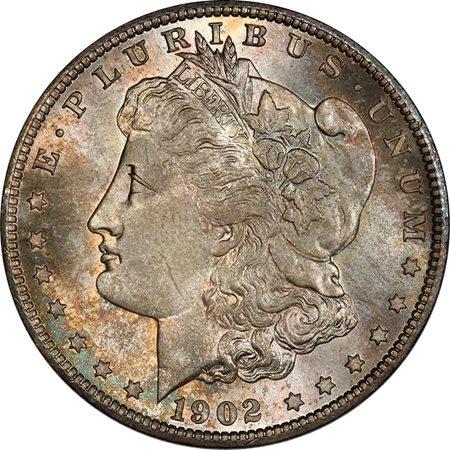
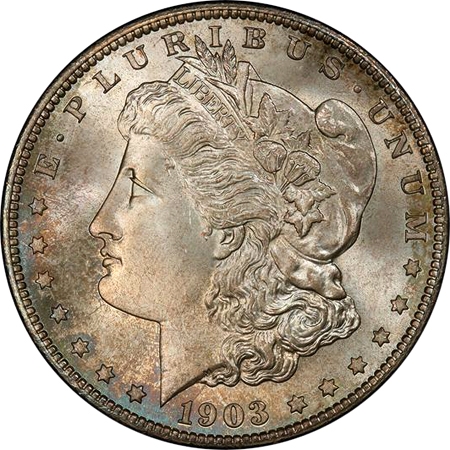
Beginning in 1894, Clapp purchased his Morgans directly from the various Mints. His 1902-S was purchased directly from the San Francisco mint in October 1902, and his 1903-S one year later. The two coins are a match in quality and appearance, and are both considered the finest extant specimens of their respective issues today, with absolutely original surfaces sporting classic "Eliasberg toning." The coins were together from October 1903 until the Eliasberg Sale in 1997. Between 1997 to 2001, the coins were both handled by the late great Jack Lee, but took different paths and were placed in different collections. The two were happily and coincidentally reunited in Heritage's June 2001 Long Beach Sale, and from that point on were again kept together in the Michael Casper Collection, and then the Arno Collection.
Knowing all of this, as I have studied the Eliasberg Morgans in detail, I bought the 1902-S and then stretched hard to buy the 1903-S as well. (The collector who had owned it prior to the June 2001 Heritage sale really wanted it back !!) Fortunately, I was able to keep the two coins together, and they have now been placed in my primary set of toned Morgans.
Here they are:


Best,
Sunnywood
(Edited to correct historical information.)
After John M. Clapp's death in 1906, much of his collection passed to his older son John H. Clapp, who continued its formation. The half cents and large cents were left to his son George. (Shortly thereafter, the name of brother George's aluminum company was changed to Aluminum Company of America. The final name change to "ALCOA" came in 1999.) When John H. Clapp died in 1942, the Stack brothers (Morton and J.B.) brokered the sale of the Clapp collection (without the early coppers) to Louis E. Eliasberg, Sr., a Baltimore banker, for the then princely sum of $100,000. Several years later, in 1946, George H. Clapp generously donated the Clapp early coppers to the ANS collection. Eliasberg of course continued building on the foundation of the John H. Clapp estate collection in his pursuit of the greatest and most complete collection of U.S. coins ever formed. Upon his death in 1976, his collection of gold coins went to his elder son Louis Eliasberg, Jr.; the silver and minor coins to his younger son, Richard A. Eliasberg. The younger Eliasberg consigned the silver and minor coins to Q. David Bowers & Raymond Merena for auction in 1996-1997.
When Louis Eliasberg Sr. was born in 1896, the Clapp family - John M., and sons John H. and George - were already well on the way to forming the foundation of their collection. In addition to buying older classic coins, J.M. Clapp was buying contemporaneously issued coins. He had a rare early appreciation of quality, and sought only the best specimens. In March 1894, Clapp purchased a group of Morgan dollars from dealer J. Colvin Randall. These included the three branch mint coins of 1892, and those of 1893. As Randall was a Philadelphia dealer, yet had these branch Mint coins together as a group, it is believed that they were obtained by Randall from the Assay Commission, which would have recevied early strikes from each of the branch mints.
Among the remarkable group purchased from Randall in March 1894 were the 1892-S and 1893-S dollars that later became the famed Eliasberg specimens. The group also included a proof '93-CC, as well as the now finest known '92-O and '93-O.
As has been posted here before, I acquired the Eliasberg 1893-S Morgan in January 2008. When the 1892-S was offered at auction at the Heritage 2009 FUN sale, I thought it would be a great opportunity to reunite these two coins. Alas, another collector with greater firepower also desired the Eliasberg '92-S for his collection, and I was outgunned. However, I found another opportunity to keep "two old friends" together.
Beginning in 1894, Clapp purchased his Morgans directly from the various Mints. His 1902-S was purchased directly from the San Francisco mint in October 1902, and his 1903-S one year later. The two coins are a match in quality and appearance, and are both considered the finest extant specimens of their respective issues today, with absolutely original surfaces sporting classic "Eliasberg toning." The coins were together from October 1903 until the Eliasberg Sale in 1997. Between 1997 to 2001, the coins were both handled by the late great Jack Lee, but took different paths and were placed in different collections. The two were happily and coincidentally reunited in Heritage's June 2001 Long Beach Sale, and from that point on were again kept together in the Michael Casper Collection, and then the Arno Collection.
Knowing all of this, as I have studied the Eliasberg Morgans in detail, I bought the 1902-S and then stretched hard to buy the 1903-S as well. (The collector who had owned it prior to the June 2001 Heritage sale really wanted it back !!) Fortunately, I was able to keep the two coins together, and they have now been placed in my primary set of toned Morgans.
Here they are:
Best,
Sunnywood
(Edited to correct historical information.)

0
Comments
Visit my son's caringbridge page @ Runner's Caringbridge Page
"To Give Anything Less than Your Best, Is to Sacrifice the Gift" - Steve Prefontaine
over time.
Great stories, which I totally love, on these coins. Love reading your posts.
Can you expound on the method of storage on these two coins when they came available via Eliasberg? Were they graded yet, or were they raw? (I guess I could go grab my catalog
John
siliconvalleycoins.com
Great coins...and nice to see them in color as the pics suck in the catalogue.
siliconvalleycoins.com
The Eliasberg coins were uncertified when they were offered at auction. They were in the Bowers & Merena auction flips. Eliasberg had painstakingly designed beautiful custom display boards and cases for his collection, and the coins spent years in those cases, where they acquired distinctive attractive toning. His collection toured the United States in these custom cases at various times. Of course, some of the older Clapp coins had already acquired toning elsewhere. But you can really see the "Eliasberg toning" on the 1893-S, 1902-S, and 1903-S in my set.
Best,
Sunnywood
Edited to add - John, crazier money now
Sunnywood's Rainbow-Toned Morgans (Retired)
Sunnywood's Barber Quarters (Retired)
Sunnywood's Rainbow-Toned Morgans (Retired)
Sunnywood's Barber Quarters (Retired)
Thanks for the great info and pictures.
my early American coins & currency: -- http://yankeedoodlecoins.com/
Obscurum per obscurius
Thanks,
bob
Just saw that your set will be at Long Beach in a couple of weeks!!! Hope it's still on display for us Saturday attendees
Michael Kittle Rare Coins --- 1908-S Indian Head Cent Grading Set --- No. 1 1909 Mint Set --- Kittlecoins on Facebook --- Long Beach Table 700
Thanks again.
Jim
When a man who is honestly mistaken hears the truth, he will either quit being mistaken or cease to be honest....Abraham Lincoln
Patriotism is supporting your country all the time, and your government when it deserves it.....Mark Twain
Man I love this place! Thanks for continuing to share with all of us Sunnywood!!
“We are only their care-takers,” he posed, “if we take good care of them, then centuries from now they may still be here … ”
Todd - BHNC #242