@Abuelo said: @MrEureka very nice! Really tough mint! That 1874 coin saw a lot of action in its youth really nice bunch.
I’m intrigued because I think the 1878 may be a contemporary counterfeit. The relatively crude die work and the rarity of the date are the best clues, as is the different shape of the eagle’s head. Granted, I don’t know this series well, so don’t take my suspicions as gospel.
Andy Lustig
Doggedly collecting coins of the Central American Republic.
Visit the Society of US Pattern Collectors at USPatterns.com.
@MrEureka you very well may be right. The coin is circulated enough that some of the details are lost. The cactus seems to be right. The snake head might be right. The eagle is otherwise too worn to say much. Clearly I do not knownthe weight yet I assume NGC was happy with it... Will take a look into the specific GA series more in detail...
Well, I do not own any other Guadalajara from the same time but Kirk Menczer did (even one with same assayer), thankfully. I chose these 3 coins because are relatively contemporary (1870s) and at least one of them was well circulated (I did not use the 71 and 73 that MrE showed as I thought were too far removed and instead added the 81). So here we go:
And the reverse:
While the coin in question (1878) is very worn and borderline damaged, I can make few comments:
The snakes for 1877 and 78 have prognathism.
The 77 and 78 snake have a similar curvature at the level of the eagle's neck, the 74 seems different.
The eagle in 78 is too worn to really make much more comments. The wings appear ok, yet the difference in the head is noted. Who knows if this is due to the fact that is worn/damaged or something more nefarious.
The legends in the 78 obverse are too worn to say much, at least to me.
The cacti in 77 and 78 are very similar in marks despite how worn it is.
On the reverse, the oak and laurel leaves look really good to me, even when the stems in the 78 are a bit thicker (keep in mind that the coin is minuscule). That difference might be due to how circulated the coin is.
The suspicious part to me comes in the reverse, in the CENTAVOS as the T and the N are suspect. That said, if you look at the T in the 1874 is clearly different from the 1877. But the N looks different. Again, damage? Circulation? Something else?
Again, I can tell little about the weight as I do not know it. The coin does look like silver.
If counterfeit, they did go for a lot of effort and cost for little reward as even then, 10 C was not a lot of money.
That said, I can see why @MrEureka raised the very good point. Personally (with all my bias) I can be convinced is the real deal, but would not go as far as to testify in Congress about it. Still, very happy to own it. Comparing uncirculated coins to AG3 is a difficult business.
@Abuelo There are some differences as you say, particularly the pointed N. However, it’s very close in most other details where contemporary counterfeits usually aren’t. I think I’m with you in the “real” camp.
Great discussion on a really interesting coin @Abuelo. I don't know the series well enough to comment specifically on the authenticity, but you could always crack it out and get a weight/specific gravity/XRF reading to get more information.
And if you do not know, here is Abuelo to tell you This is one of the classic errors in Mexican numismatics (one of many) and the classic in the series of "Peso Fuertes". The assayer initials should be AM but were inverted to MA. Apparently they discovered the mistake as the coin is very rare. One appearance in Heritage's archives and 3 in Stack's that I was able to find (for the type). After I finished with the dose of Christmas' decorations this afternoon (as @Boosibri knows) I was wasting time on eBay... and then I wasted a lot of money
I just bought this today. It is apparently a new discovery. Still in its original cellophane from the Mexican Mint.
The obverse is the 1978 onza pattern using the design of the 1949 onza (see KM-Pn211).
This design was ultimately rejected for the inferior (IMHO) design ultimately selected.
The reverse design is a Mayan ballplayer similar to what was used on the 20 Pesos starting 1980.
(This design may have also been used on a medal, but I can't seem to find it.)
It has a plain edge, so perhaps it's a restrike, made after 1978 using muled dies.
Finding the medal with this reverse design might lend a clue.
I've also found out that Pablo Luna knew about this piece as it's mentioned in his book, but not illustrated.
Translation:
I have recently been informed that of the three previous onzas, there are restrikes from the 1980s, in addition to interspersed dies, "mule" onzas combining designs, in quantities above what was expected, and even with new designs such as pre-Hispanic representations of Xochipilli and the Chikultic Disc.
@pruebas said:
I just bought this today. It is apparently a new discovery. Still in its original cellophane from the Mexican Mint.
The obverse is the 1978 onza pattern using the design of the 1949 onza (see KM-Pn211).
This design was ultimately rejected for the inferior (IMHO) design ultimately selected.
The reverse design is a Mayan ballplayer similar to what was used on the 20 Pesos starting 1980.
(This design may have also been used on a medal, but I can't seem to find it.)
It has a plain edge, so perhaps it's a restrike, made after 1978 using muled dies.
Finding the medal with this reverse design might lend a clue.
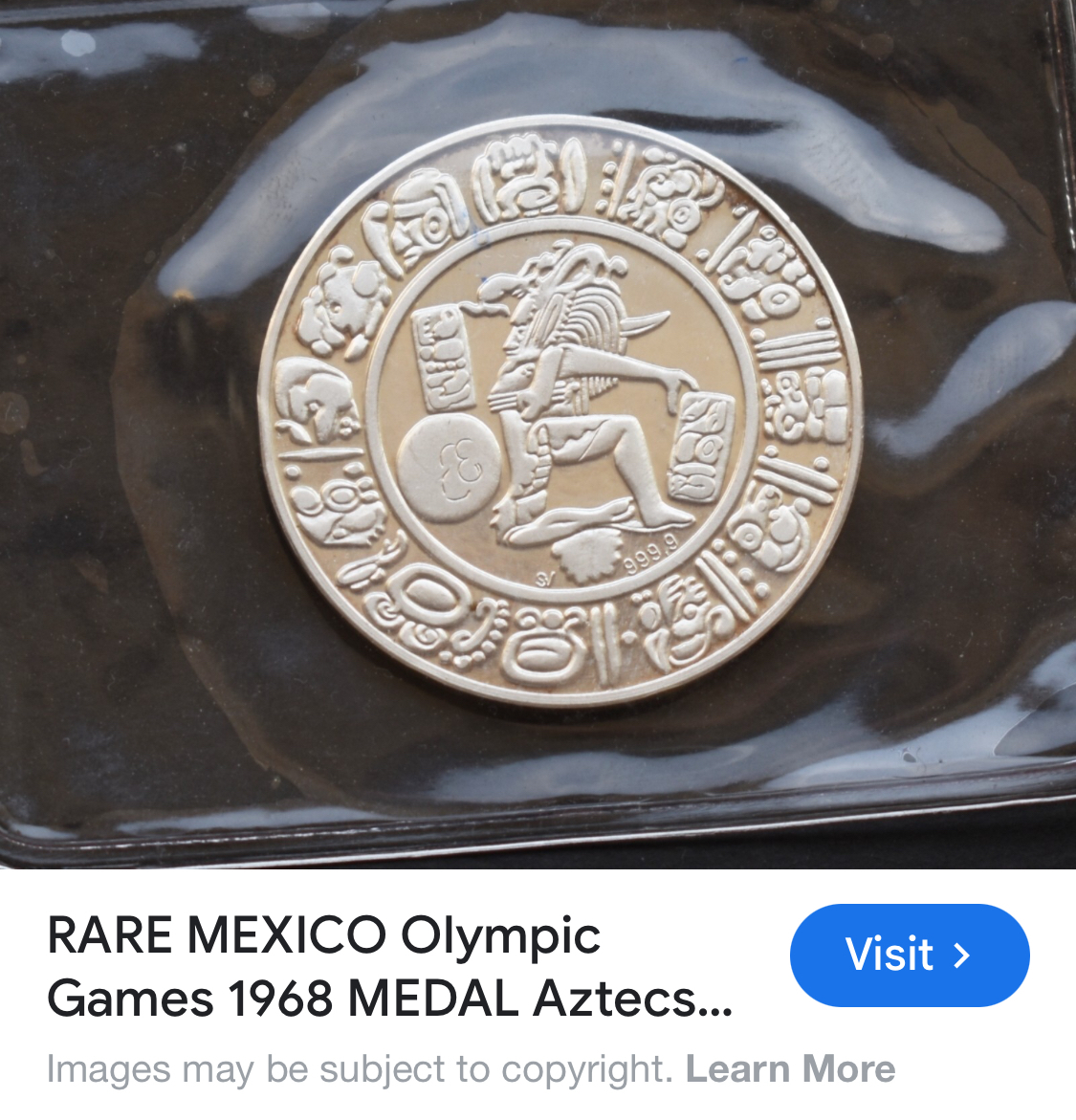
This isn’t the same die, but it’s close enough that I wonder if an unadopted version of the 1968 die was used for your piece.
Andy Lustig
Doggedly collecting coins of the Central American Republic.
Visit the Society of US Pattern Collectors at USPatterns.com.
@pruebas said:
I just bought this today. It is apparently a new discovery. Still in its original cellophane from the Mexican Mint.
The obverse is the 1978 onza pattern using the design of the 1949 onza (see KM-Pn211).
This design was ultimately rejected for the inferior (IMHO) design ultimately selected.
The reverse design is a Mayan ballplayer similar to what was used on the 20 Pesos starting 1980.
(This design may have also been used on a medal, but I can't seem to find it.)
It has a plain edge, so perhaps it's a restrike, made after 1978 using muled dies.
Finding the medal with this reverse design might lend a clue.
This isn’t the same die, but it’s close enough that I wonder if an unadopted version of the 1968 die was used for your piece.
Interesting observation. But the medal you pictured isn't a product of the Mexican Mint. The Mexican Mint surely wouldn't stoop so low as to take inspiration from someone else!
Private mints often used famous Mexican iconography because it attracted buyers. It would be especially useful when lots of gringos were coming to Mexico for the Olympics with money for souvenirs.
I'm going to keep searching for a Mexican Mint medal with that exact die design as it might be a clue as to when it was restruck.
Despite the fact the piece is a "restrike," it's still rare and valuable. I have never heard of such a piece until yesterday.
I wonder if these were restruck around 1981/1982 when the new Libertad onzas (gold and silver) were being proposed?
@pruebas said:
I just bought this today. It is apparently a new discovery. Still in its original cellophane from the Mexican Mint.
The obverse is the 1978 onza pattern using the design of the 1949 onza (see KM-Pn211).
This design was ultimately rejected for the inferior (IMHO) design ultimately selected.
The reverse design is a Mayan ballplayer similar to what was used on the 20 Pesos starting 1980.
(This design may have also been used on a medal, but I can't seem to find it.)
It has a plain edge, so perhaps it's a restrike, made after 1978 using muled dies.
Finding the medal with this reverse design might lend a clue.
Happy Thursday! This is a crazy story. This coin sold at the Kirk Menczer sale by Stack's just few weeks ago. Then, I found it on eBay with a price lower than at the auction. I did not hesitate and got it. I cannot imagine the seller put is at a buy it now price lower from what he or she paid at Stack's. So cannot understand it, but I am happy. I think is both a 4/2 and B/M. NGC only mentioned the overdate, not the overassayer.
@Abuelo said:
Happy Thursday! This is a crazy story. This coin sold at the Kirk Menczer sale by Stack's just few weeks ago. Then, I found it on eBay with a price lower than at the auction. I did not hesitate and got it. I cannot imagine the seller put is at a buy it now price lower from what he or she paid at Stack's. So cannot understand it, but I am happy. I think is both a 4/2 and B/M. NGC only mentioned the overdate, not the overassayer.
Did you ask the seller (after you bought it, of course)?
Maybe it wasn’t paid for and was returned to the consignor (the executor in this case) and now they are trying to unload it.
Maybe an administrative mixup on the part of the eBay seller?
@7Jaguars said:
I've always liked this 1995 Guatemala 50 Quetzals but not sure if it is actually a government issue (sorry for the terrible pictures):
I think those were unofficial patterns from a private minting operation in Britain. ICN or something like that.
There was a big auction of that material in the late 90s with large lots of these in various metals. They included Peru and Cuba, maybe some other countries.
But I agree with you the Quetzal is quite well done.
Comments
@MrEureka very nice! Really tough mint! That 1874 coin saw a lot of action in its youth really nice bunch.
I’m intrigued because I think the 1878 may be a contemporary counterfeit. The relatively crude die work and the rarity of the date are the best clues, as is the different shape of the eagle’s head. Granted, I don’t know this series well, so don’t take my suspicions as gospel.
Doggedly collecting coins of the Central American Republic.
Visit the Society of US Pattern Collectors at USPatterns.com.
@MrEureka you very well may be right. The coin is circulated enough that some of the details are lost. The cactus seems to be right. The snake head might be right. The eagle is otherwise too worn to say much. Clearly I do not knownthe weight yet I assume NGC was happy with it... Will take a look into the specific GA series more in detail...
Well, I do not own any other Guadalajara from the same time but Kirk Menczer did (even one with same assayer), thankfully. I chose these 3 coins because are relatively contemporary (1870s) and at least one of them was well circulated (I did not use the 71 and 73 that MrE showed as I thought were too far removed and instead added the 81). So here we go:
And the reverse:
While the coin in question (1878) is very worn and borderline damaged, I can make few comments:
That said, I can see why @MrEureka raised the very good point. Personally (with all my bias) I can be convinced is the real deal, but would not go as far as to testify in Congress about it. Still, very happy to own it. Comparing uncirculated coins to AG3 is a difficult business.
@Abuelo There are some differences as you say, particularly the pointed N. However, it’s very close in most other details where contemporary counterfeits usually aren’t. I think I’m with you in the “real” camp.
@scubafuel at the same time if you see the N in REPUBLICA MEXICANA, the N is basically normal.
Great discussion on a really interesting coin @Abuelo. I don't know the series well enough to comment specifically on the authenticity, but you could always crack it out and get a weight/specific gravity/XRF reading to get more information.
If you know, you know...
And if you do not know, here is Abuelo to tell you This is one of the classic errors in Mexican numismatics (one of many) and the classic in the series of "Peso Fuertes". The assayer initials should be AM but were inverted to MA. Apparently they discovered the mistake as the coin is very rare. One appearance in Heritage's archives and 3 in Stack's that I was able to find (for the type). After I finished with the dose of Christmas' decorations this afternoon (as @Boosibri knows) I was wasting time on eBay... and then I wasted a lot of money
I just bought this today. It is apparently a new discovery. Still in its original cellophane from the Mexican Mint.
The obverse is the 1978 onza pattern using the design of the 1949 onza (see KM-Pn211).
This design was ultimately rejected for the inferior (IMHO) design ultimately selected.
The reverse design is a Mayan ballplayer similar to what was used on the 20 Pesos starting 1980.
(This design may have also been used on a medal, but I can't seem to find it.)
It has a plain edge, so perhaps it's a restrike, made after 1978 using muled dies.
Finding the medal with this reverse design might lend a clue.
You had me at Mayan ballplayer.
It's called the Disco de Chinkultic and it is currently housed in the National Museum of Anthropology in Mexico City. (A trip to Mexico City is worth it solely to see this museum.)
I've also found out that Pablo Luna knew about this piece as it's mentioned in his book, but not illustrated.
Translation:
I have recently been informed that of the three previous onzas, there are restrikes from the 1980s, in addition to interspersed dies, "mule" onzas combining designs, in quantities above what was expected, and even with new designs such as pre-Hispanic representations of Xochipilli and the Chikultic Disc.
This isn’t the same die, but it’s close enough that I wonder if an unadopted version of the 1968 die was used for your piece.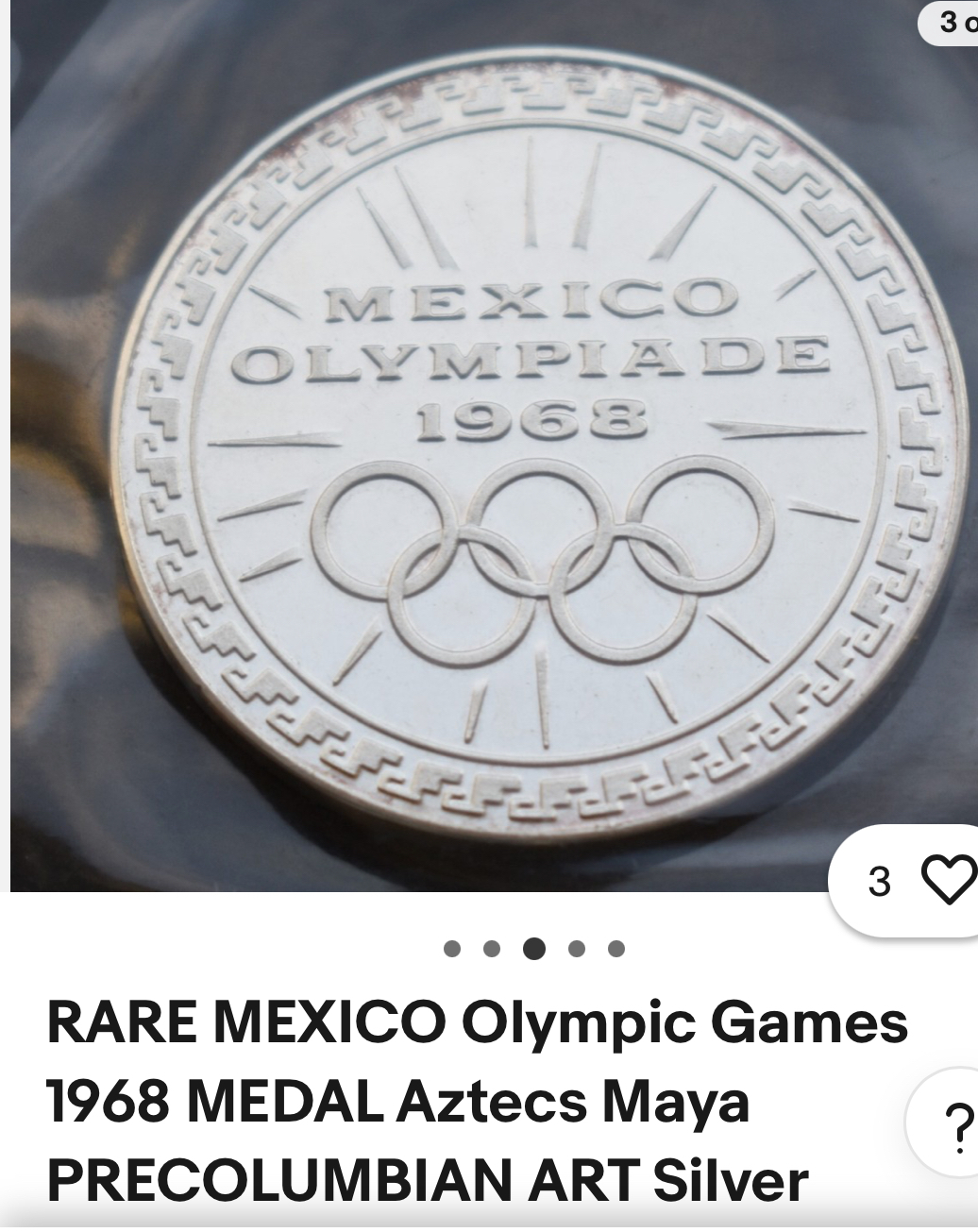
Doggedly collecting coins of the Central American Republic.
Visit the Society of US Pattern Collectors at USPatterns.com.
Interesting observation. But the medal you pictured isn't a product of the Mexican Mint. The Mexican Mint surely wouldn't stoop so low as to take inspiration from someone else!
Private mints often used famous Mexican iconography because it attracted buyers. It would be especially useful when lots of gringos were coming to Mexico for the Olympics with money for souvenirs.
I'm going to keep searching for a Mexican Mint medal with that exact die design as it might be a clue as to when it was restruck.
Despite the fact the piece is a "restrike," it's still rare and valuable. I have never heard of such a piece until yesterday.
I wonder if these were restruck around 1981/1982 when the new Libertad onzas (gold and silver) were being proposed?
Amazing discovery! New stuff from the 80's!!
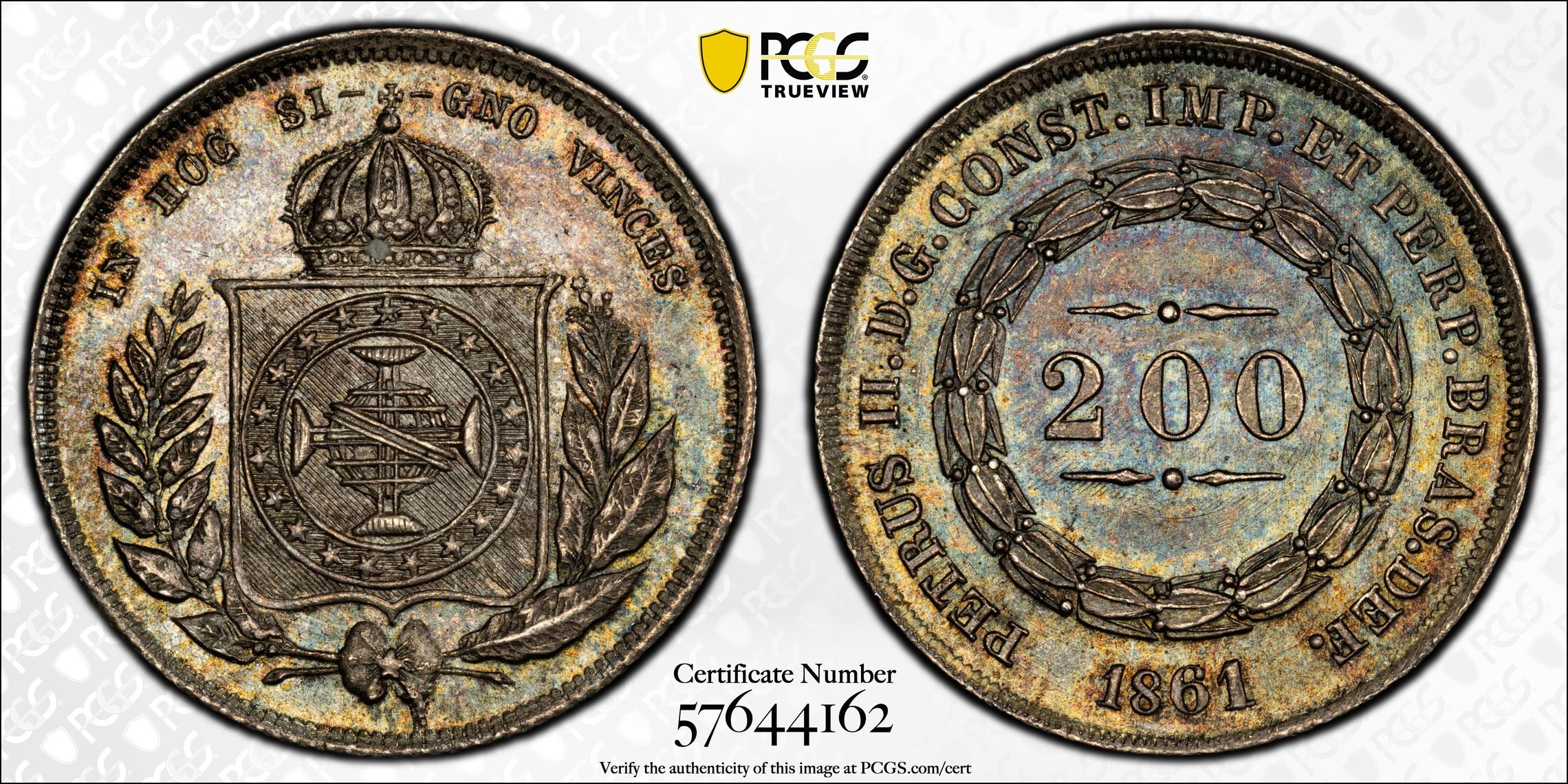
1861 Brazil 200 Reis MS 65 (Pop 1/1)
Happy Thursday! This is a crazy story. This coin sold at the Kirk Menczer sale by Stack's just few weeks ago. Then, I found it on eBay with a price lower than at the auction. I did not hesitate and got it. I cannot imagine the seller put is at a buy it now price lower from what he or she paid at Stack's. So cannot understand it, but I am happy. I think is both a 4/2 and B/M. NGC only mentioned the overdate, not the overassayer.
Did you ask the seller (after you bought it, of course)?
Maybe it wasn’t paid for and was returned to the consignor (the executor in this case) and now they are trying to unload it.
Maybe an administrative mixup on the part of the eBay seller?
There’s only one way to know!
@pruebas I did not. I thought was not a good idea.
At least wait until you have it in hand.
I'm BACK!!! Used to be Billet7 on the old forum.
And wait to see if more are listed
Latin American Collection
Latin American Collection
You are 10000% right!
I've always liked this 1995 Guatemala 50 Quetzals but not sure if it is actually a government issue (sorry for the terrible pictures):
Well, just Love coins, period.
I think those were unofficial patterns from a private minting operation in Britain. ICN or something like that.
There was a big auction of that material in the late 90s with large lots of these in various metals. They included Peru and Cuba, maybe some other countries.
But I agree with you the Quetzal is quite well done.
A couple of others in gold:
really nice!
Well, just Love coins, period.