Options
CA tokens
 logger7
Posts: 9,953 ✭✭✭✭✭
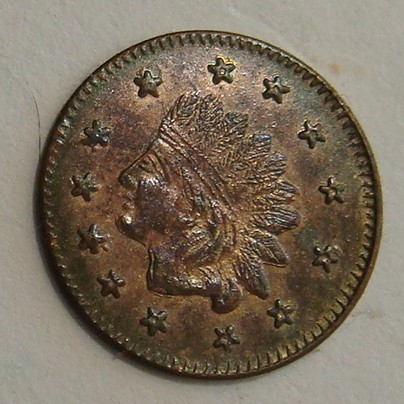
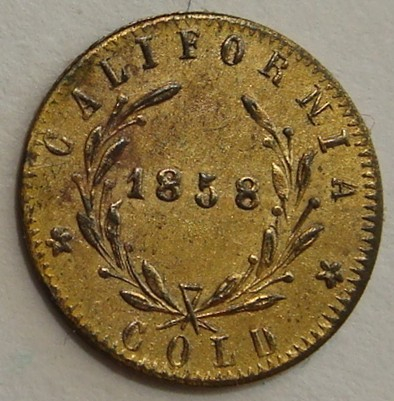
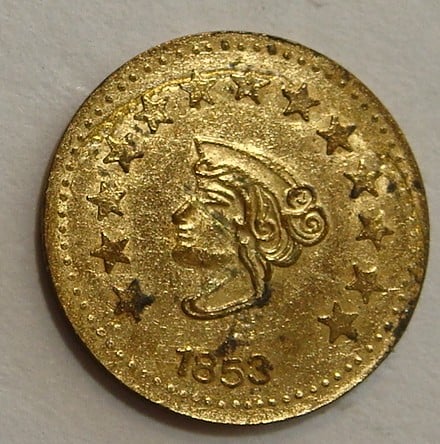
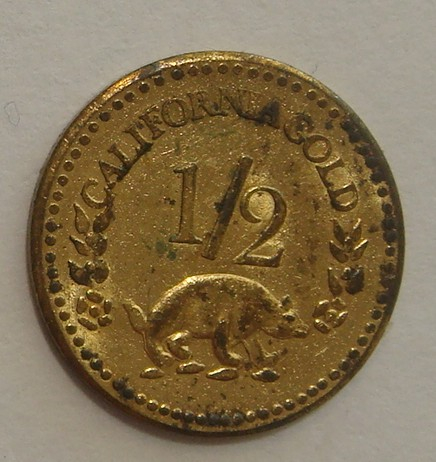
These "tokens" were in the Croton River numismatic society auction last night.
There were a couple bids not a lot of interest. I'm assuming no real gold content copies?
0
Comments
I think your assumption regarding no good content is safe.
I wouldn’t call them “copies” as I don’t believe there are genuine examples of these, since they don’t show a denomination. I think something like “souvenir token” would be more accurate.
Mark Feld* of Heritage Auctions*Unless otherwise noted, my posts here represent my personal opinions.
All of these tokens are brass
The first piece was struck by Kroll and Co or its successor Most of the corresponding dies still exist The non-gold composition indicates 1930s or later
The second piece was struck by Osborne Coinage (still in business) in 1966 They still have the dies but no longer have the press that the dies fit into
Source a good friend of mine
The second one I think I tracked down at the below link. It may be the first round one in the list. If not it is very similar.
https://www.calgoldcoin.com/oldhtml/bear1.htm
The first one I did not quickly find a match but it is similar to ones in the below link. The wreath side may match up but didn't see an Indian with the same stars position. Go down to round ones and then second set of 1858's.
https://www.calgoldcoin.com/oldhtml/wreath5.htm
https://youtube.com/watch?v=OwZlYz2V4AM Sophie Lloyd, guitar shred cover Paranoid (Black Sabbath)
https://youtube.com/watch?v=fbEW8BrNctI Haley Reinhart, Don't Know How To Love You Live (direct to record)
RLJ 1958 - 2023
Is there much of a market for these?
For the modern replicas and fantasies as those in the OP, no meaningful value at all beyond the souvenir market.
For the original California gold charms sold as souvenirs from the late 1880's to 1915 or so made of gold, yes, very much so especially now that NGC is slabbing them using Locke #'s for the many varieties. I'm a bit surprised that M. Feld is not familiar with the non-denominated Cal gold charms as Heritage has been auctioning slabbed examples for some time now.
I’m familiar with them in so far as having seen a lot of them, but I don’t keep up with their values and they’re not in my numismatic wheelhouse. Was there something in my previous post that was incorrect? If so, please let me know so that I can correct it. Perhaps I should have written “original” in place of “genuine” in the second sentence of the post, copied below?
Thank you.
“ I think your assumption regarding no (edited for typo) gold content is safe.
I wouldn’t call them “copies” as I don’t believe there are genuine examples of these, since they don’t show a denomination. I think something like “souvenir token” would be more accurate.”
Mark Feld* of Heritage Auctions*Unless otherwise noted, my posts here represent my personal opinions.
I picked up this one at a good price a while back just for the novelty of it. This type does contain gold and has a cool historical background as a token.
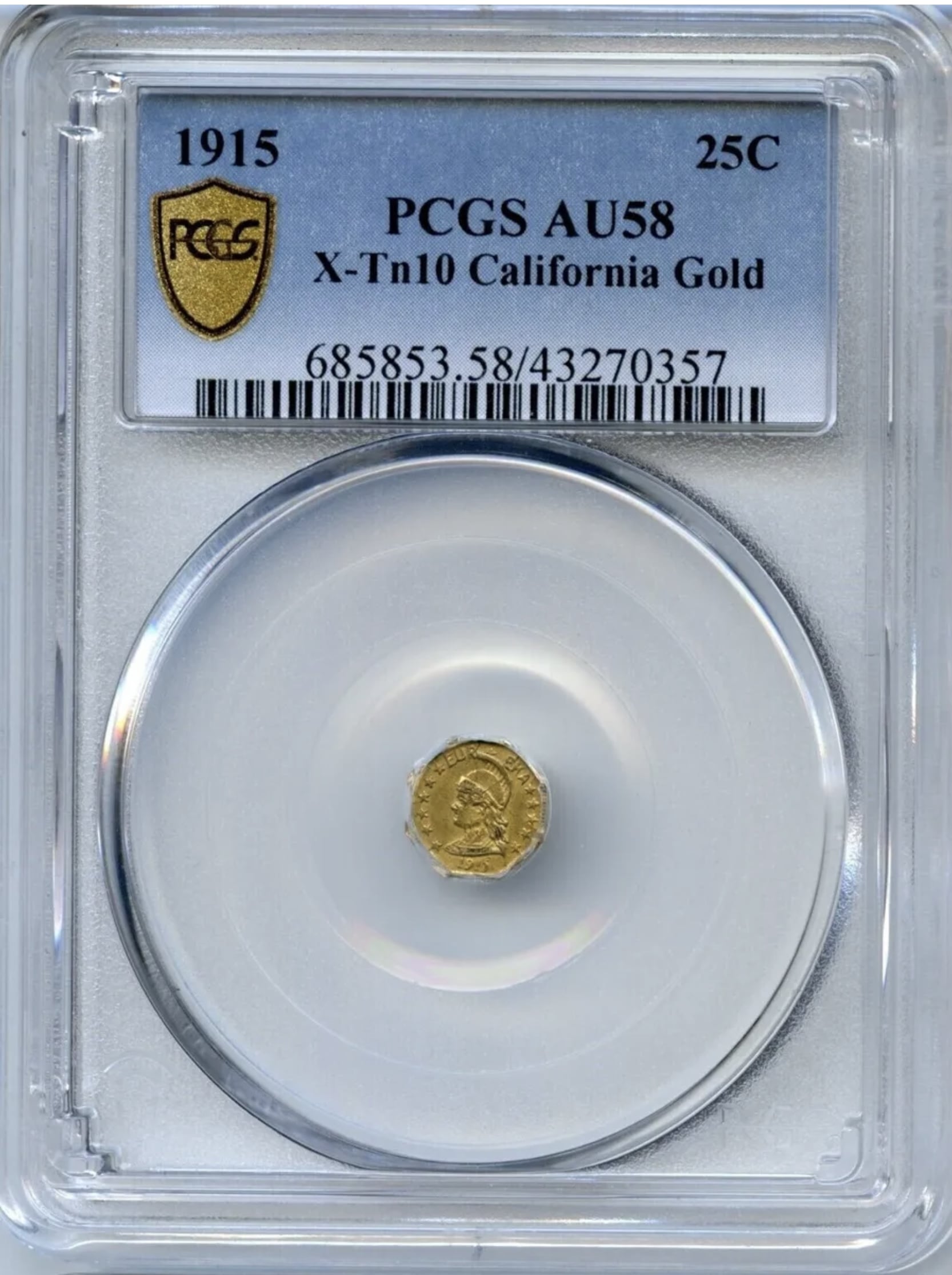
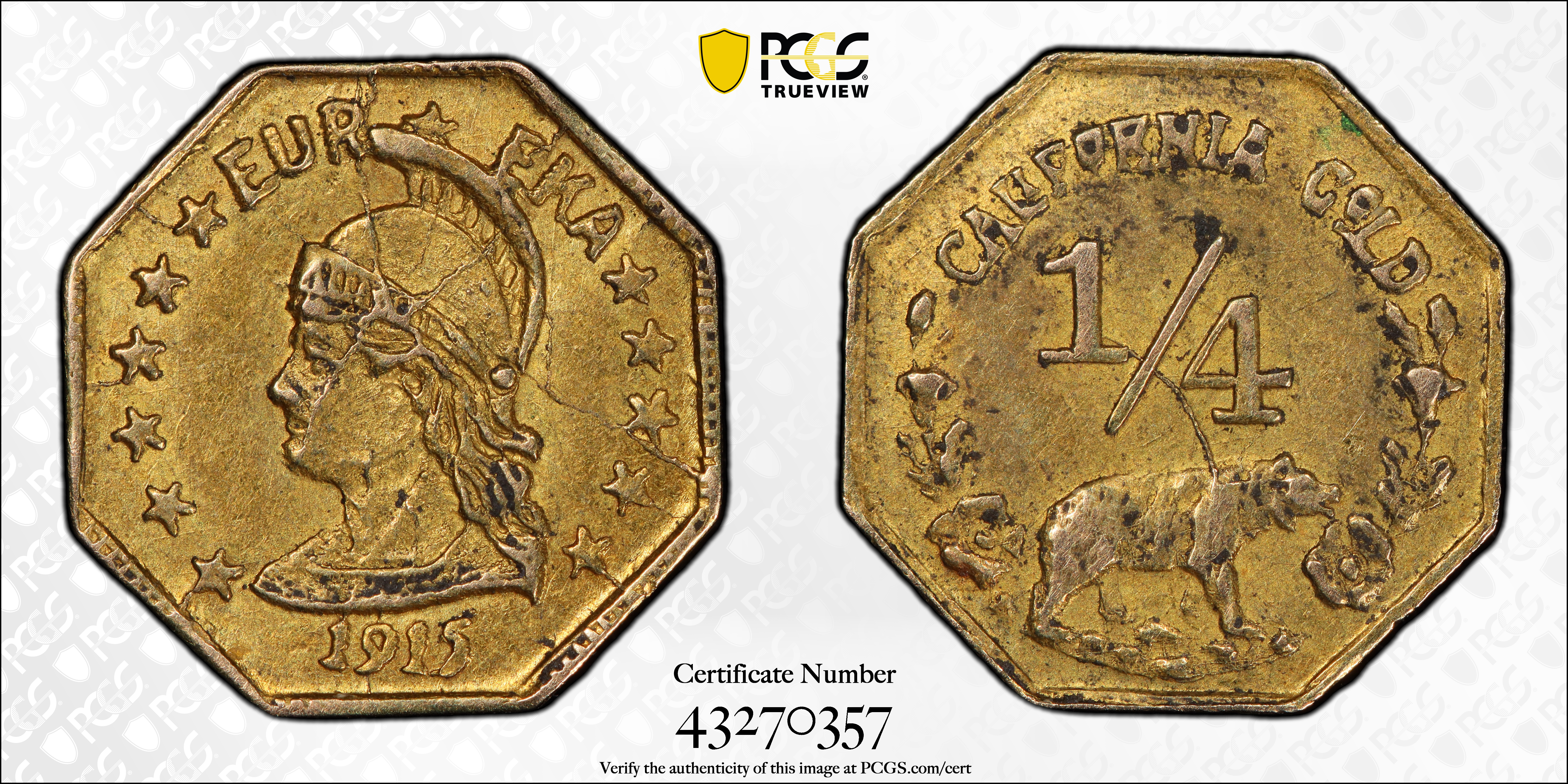
Here’s some background on these that I just created using Claude AI that I believe is accurate
Hart's "Coins of the Golden West": the 1915 Octagonal Minerva ¼
These small gold pieces are privately struck tokens, not U.S. Mint issues. They were marketed by the M.E. Hart Co. and sold by Farran Zerbe at the 1915 Panama-Pacific International Exposition in San Francisco. Hart's identity is still debated. One theory points to Mary E. Hart, a prominent businesswoman of the period. The set includes Alaska Pinch pieces, Parka Heads, Indian Bears, and Idaho, Montana, Oregon and Washington Gold issues. The Minerva Bear group is six pieces, in ¼, ½ and ONE denominations in round and octagonal shapes. The octagonal Minerva shows Minerva with EUREKA above and the date 1915 below. The reverse reads "California Gold One, California Gold 1/4, etc., depending on denomination) with a bear and California poppies. Each piece is about 13 mm, close in size and look to the California Fractional Gold series, which has long puzzled researchers. The ¼ with the long fraction bar (Locke-Bear 1 Oct 1/4 1915 Minerva #1) is the variety found in the cased sets. The pieces were sold cased with a M.E. Hart label on the back. Reports differ on set size (36 or 39 pieces) and on the number of tokens struck, so I'd welcome corrections or additions from anyone who has handled one.
Mr_Spud