My Texas Jola Story
 cmerlo1
Posts: 8,075 ✭✭✭✭✭
cmerlo1
Posts: 8,075 ✭✭✭✭✭
My favorite B&M, McBride's Guns here in Austin, has been sold and the coin department has been shut down. @shortnock and I spent most Saturday mornings there looking for coins and hanging out with the staff there, so this is a big loss for all of us.
They've known about the shutdown for a few months now, and had been cleaning out the back room and other storage areas.
Early in January, @shortnock and I were in our usual stools looking at coins, when the coin shop owner, Joan, brought out a ziploc bag with some counterfeit coins in it she'd found while cleaning out the back room (she knows I collect them and I'm one of the few people she sells them to).
The bag contained some very bad modern fakes of spanish cobs, morgans, and foreign coins. It also had a modern fake 'pattern' $5 gold piece in brass and this piece:
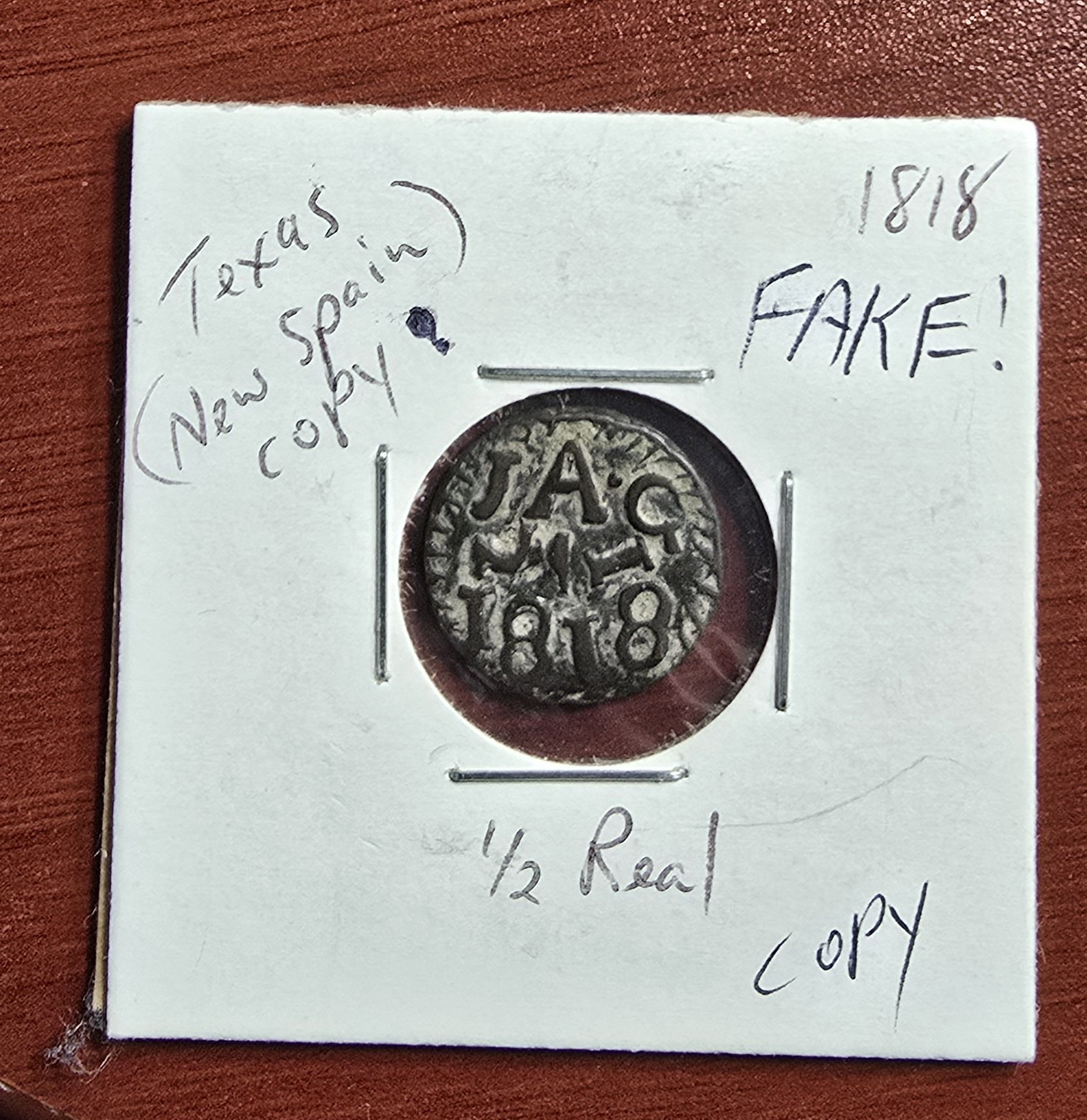
I asked for a price for the Jola and the pattern gold piece, and bought both of them for $3.00. The handwriting on both 2X2's was the same, saying the same thing.
Looking closely at the Jola at lunch, I started wondering if it might actually be real and discussed that possibility with @shortnock, who agreed. It had dirt in the protected areas (supposedly a number of these were found on the banks of the San Antonio river in 1959) and corrosion on the reverse, along with wear:
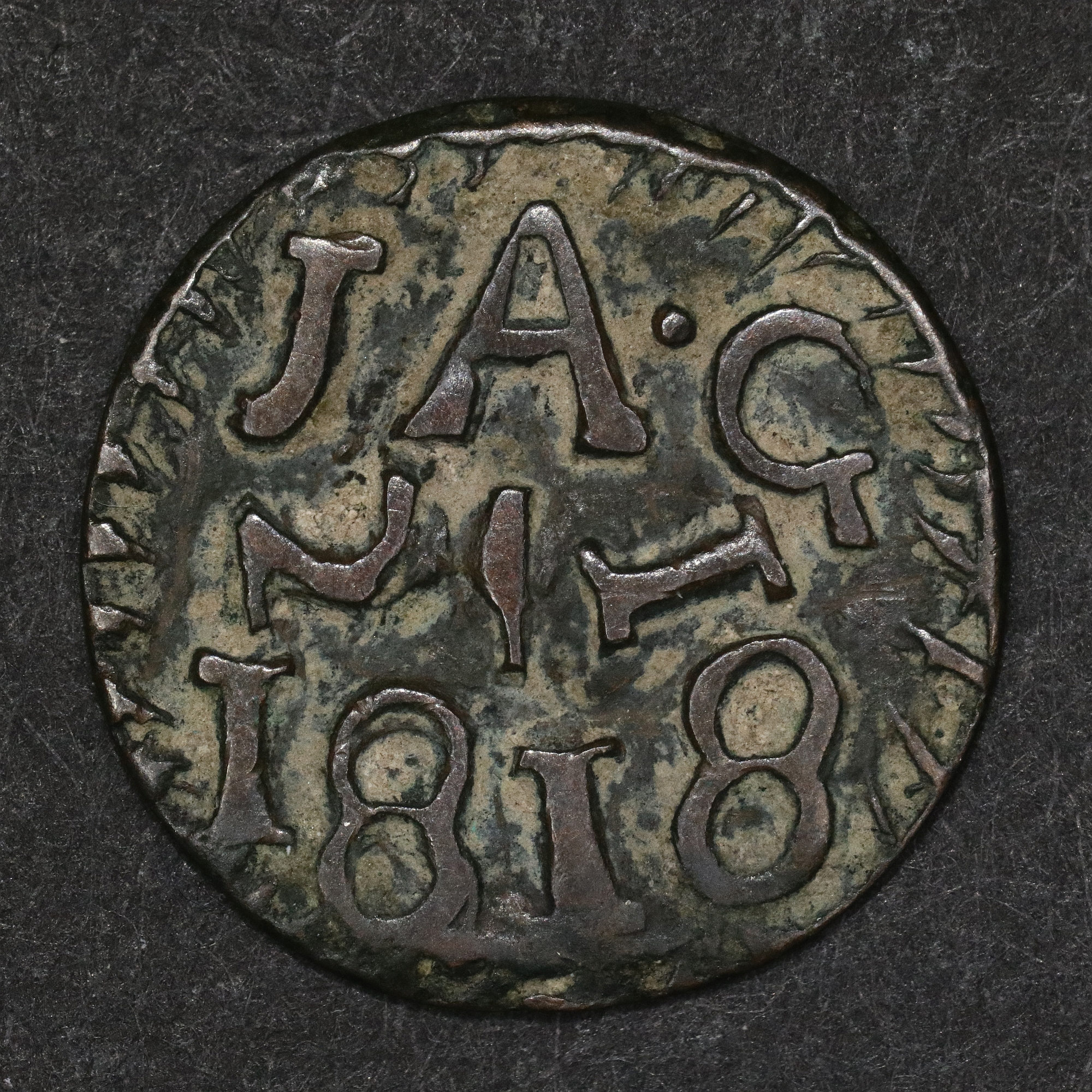
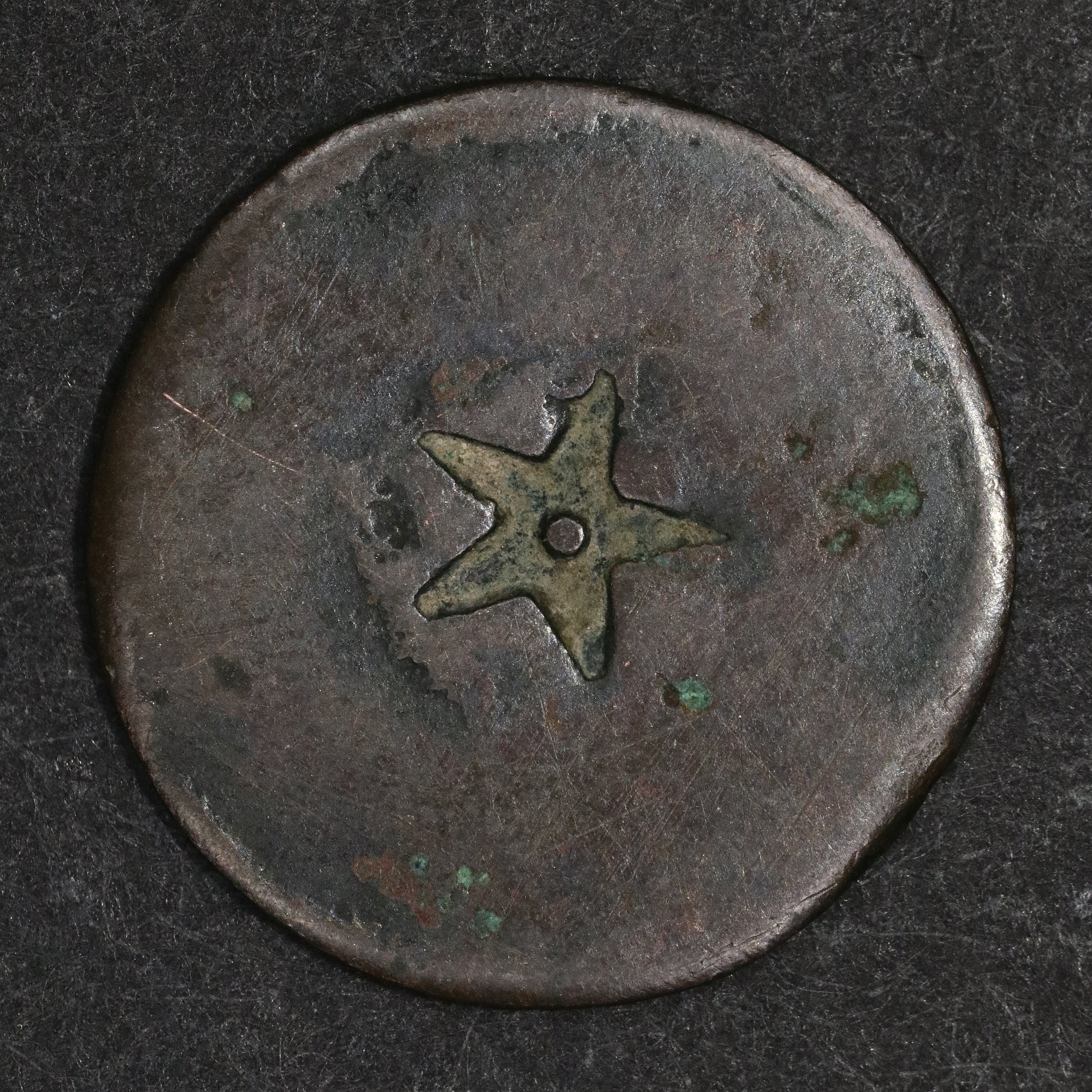
Since I'd only ever seen one certified example, I really didn't have anything to compare it to, except the photos on PCGS Coinfacts, and it definitely looked like one of them.
Since I work for ANACS, I'm a member of CDHD (Coin Dealers Helping Coin Dealers) on Facebook, and decided to post it there and ask for opinions on it, since a lot of the top dealers and auction houses are also members. One member requested photos of the edge, which I supplied. Within the next 20 minutes I received FB messages from Heritage Auctions and a prominent early Americana dealer (I won't name him but he might be a member here and can chime in), expressing interest in seeing the coin. This really got me excited.
Since Heritage reached out first, I agreed to take the coin to their office in Irving, TX, where it was examined by their chief numismatic cataloger and their consignement director. While neither could say the piece was authentic, one of them did say that if it's a fake, it's the best fake he's ever seen. They recommended sending it to PCGS, so I gave them permission to submit it and agreed to consign it to one of their auctions if it was genuine.
That was January 8th, and I was unusually calm waiting for the results from PCGS. I decided I would surprise Joan with a nice check if it was real and it sold, but was determined not to 'spend' the money on things since I didn't have it yet.
Finally, yesterday, I got an email and scan from Heritage:
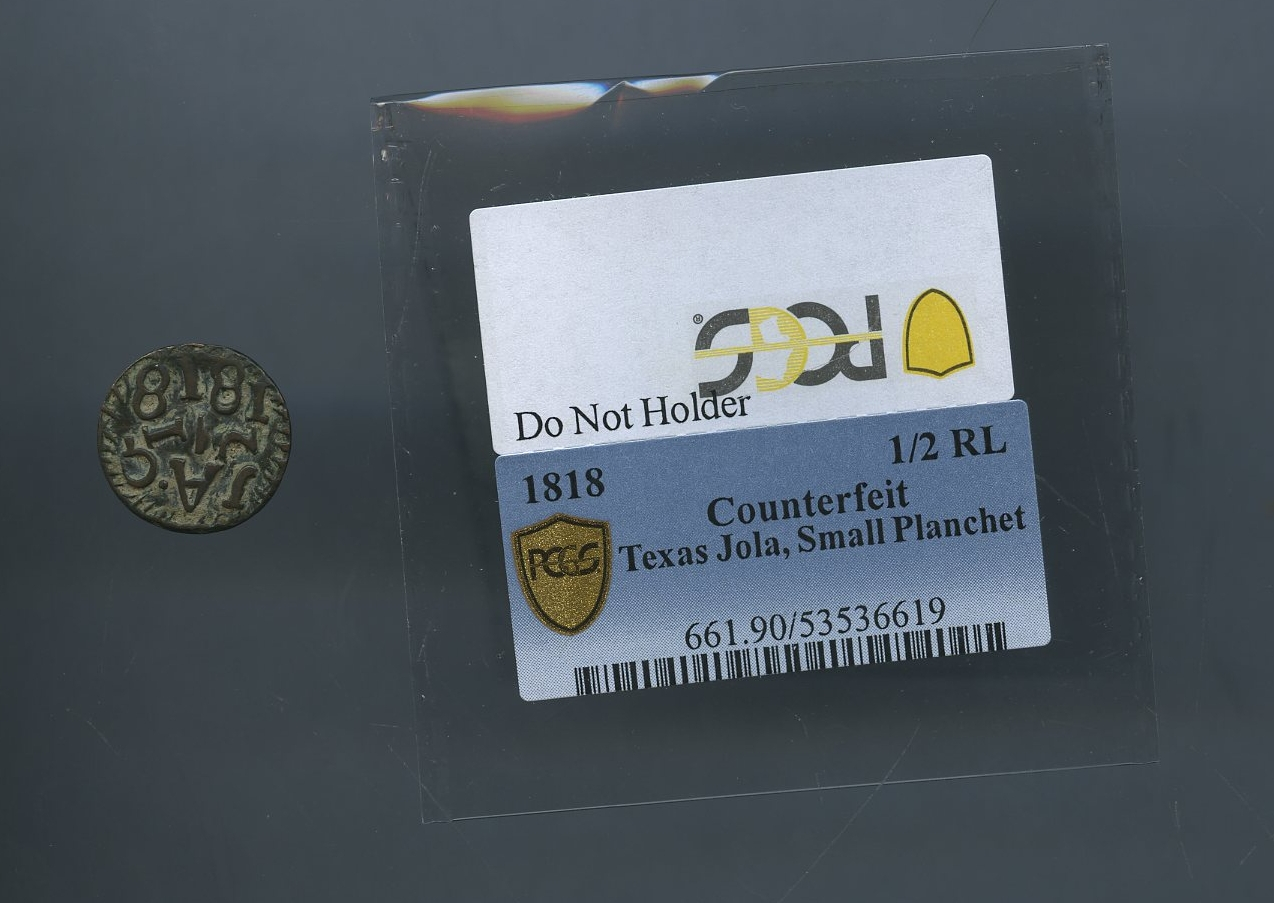
I also got a bill for $114 for the grading. So, in the end, I'm out that and the small amount I paid for the 'Jola'. It was an educated gamble, and I don't lose those very often. Heritage and I were both convinced that if it was fake, it was an old one (though being that these weren't really known until 1959, that's questionable), so it will be added to my counterfeit collection. Being into Texas history, I always wanted one of these but could never afford one, so this is the next best thing!
The only thing I wish for would be to know what the giveaway was that it's counterfeit, so I can learn. Whoever McBride's acquired it from also determined it was fake (unless they had also tried submitting it), so there has to be a tell there somewhere. I sent the body bag scan to the early Americana dealer and he wondered the same thing.
Either way, this was a fun experience. I'm disappointed but glad I got to live it, and now have a cool story.
Comments
Christian tells a good story exactly as it happened! Was really hoping he had made the best cherrypick of his life.
I’ve never seen one, but it sure does have that authentic look.
I've never even seen one of these before, so this was a great story with some bonus education to boot @cmerlo1!
A friend in Mexico had this example that we thought was genuine.
PCGS gave it a “cannot determine” and NGC gave it a “fake” opinion.
He thinks it’s because it doesn’t match any known variety.
The investigation continues.
An interesting read, thanks
Nice story, but sorry it didn't go in favor of the OP. Sorry to hear about the Austin store. I've visited it a few times.
So, if several knowledgeable individuals thought it very well could be legit, who was the expert at PCGS that labeled it a counterfeit? Could they elaborate since there are so few to compare.
Does PCGS have a time portal? SARC and rhetorical. 😁
But seriously, I'm curious what are the pickup points on something so crudely made back then.
USAF (Ret.) 1985 - 2005. E-4B Aircraft Maint. Crew Chief and Contracting Officer.
✓ Everyman Mint State Carson City Morgan Dollars (1878 – 1893)
✓ Morgan Dollar GSA Hoard (1878 – 1891)
✓ Everyman Mint State Lincoln Cents (1909 – 1958)
✓ Matte Proof Toned Lincoln Cents (1909 – 1916)
First I have not seen one of these and I have no experience with counterfeit ID.
Here is a search on HA for Texas Jola. It has the 1817, 1818 and small and large planchets included but the gives more for generalized comparisons.
https://coins.ha.com/c/search/results.zx?term=texas+jola&si=2&mode=archive&dept=1909
The OP appears to match up best with this one:
https://coins.ha.com/itm/colonials/1818-1-2-rl-new-spain-texas-jola-half-real-small-planchet-xf45-pcgs-w-8540-r6/a/1294-3666.s?ic4=ListView-ShortDescription-071515
Note that the location of the center dot inside the star is a little different in all three (OP, HA and coinfacts). There is a difference in the number 2 at the top of the 2 but could be a later strike.
Something I notice about the OP compared to the list on HA (and coinfacts) is the tops of the devices (letters, number and even what I will call dentils). This is using the OP larger photos out of the 2x2 (the 2x2 photo has a different look). The top of the devices appear to have little corrosion and relatively smooth and even a little shiny. Fairly well struck and includes the dentils when compared to HA examples. Most if not all the HA examples have local areas of heavier corrosion and/or larger pitting this includes the reverse surface. Don't know if there is any consistency in the composition and if it is know and it might be hard to measure but that might be something else to check.
Again I have no counterfeit experience and am just noting what I am seeing comparing photos and can make no conclusion.
https://youtube.com/watch?v=OwZlYz2V4AM Sophie Lloyd, guitar shred cover Paranoid (Black Sabbath)
https://youtube.com/watch?v=fbEW8BrNctI Haley Reinhart, Don't Know How To Love You Live (direct to record)
RLJ 1958 - 2023
Sorry it was fake, but I appreciate you posting the interesting story.
Complete Set of Chopmarked Trade Dollars
Carson City Silver Dollars Complete 1870-1893http://www.pcgs.com/setregistry/showcase.aspx?sc=2722"
Thanks, everyone and thanks @lilolme for the research- that would be the closest to the one I have. I think, after looking at other examples, mine just looks too good and not as crude as the others, despite the dirt and corrosion.
I've been asked if I intend to keep pursiung the idea that it may be genuine, and the answer is no. It's already been declared counterfeit at least twice that we know of (whoever put it in the 2X2 and sold it to McBride's, and by PCGS). It may have already made the rounds at the grading services, though it is unlikely McBride's submitted it as that's not something they typically do.
I have also received a nice offer from someone to buy it as a counterfeit (and it would eliminate much of my cost for the coin and the grading), but am passing for now. Like I said before, I've always wanted one of these and with a real one out-of-reach, this is the next best thing....
That IS a neat story. And with crude issues like those Jolas, I would assuredly never have had a clue.
Collector since 1976. On the CU forums here since 2001.
That's a neat piece and a numismatic 'experience'. perhaps an X-ray analysis may give you some clue. Many gold buyers and jewelers now have these devices. Especially in light of higher gold prices.
Sorry to hear about the closing of your shop. I don't like to hear about coin or gun shops closing.
I actually have a dealer friend who has an XRF scanner. I think that would be a neat thing to try, though I'm pretty sure it will come back as being mostly copper. Now that I think about it, though, it might be another way it was detected as counterfeit. < 1000 pieces were struck in San Antonio by Jose Antonio De La Garza, and if they all came from the same batch of copper, it could be a tell if this one doesn't match the composition of the genuine pieces. Or, if it does, it could indicate authenticity. Unfortunately, we'd need a scan of a known genuine example to compare to...
I’d want XRF on genuine and the OPs coin. It just looks genuine. There are so few of these it’s probable all.came from the same metal source.
FWIW it's easy to refine copper. If two pieces both test as essentially pure copper, that wouldn't tell you much. And I'm not sure I'd trust XRF results to measure contaminants at the level of a fraction of a percent anyway.
The interesting result would be if two pieces tested as the same unusual (not-pure) copper alloy.
Another approach would be to check isotope ratios rather than element composition. Isotope ratios can be used to identify sources of some materials. Copper only has 2 isotopes, though. Again it would come down to having something unusual worth measuring.
I have had two early pieces XRF tested and both were loaded with location specific impurities. The Only way to get chemically pure copper is by electrolysis. Using heat refines to a certain point, but similar metals such as silver and nickel can’t be removed. If early copper contains nickel, it is Swedish ore. No nickel indicates ore from Parys Mountain in England. I doubt the alloy used in these Jola pieces varied by any significant amount. The SUD pieces from Oaxaca may possibly show a similar ore source as the Jolas.
Here is the XRF from my piece. Almost pure copper except for a small amount of cobalt: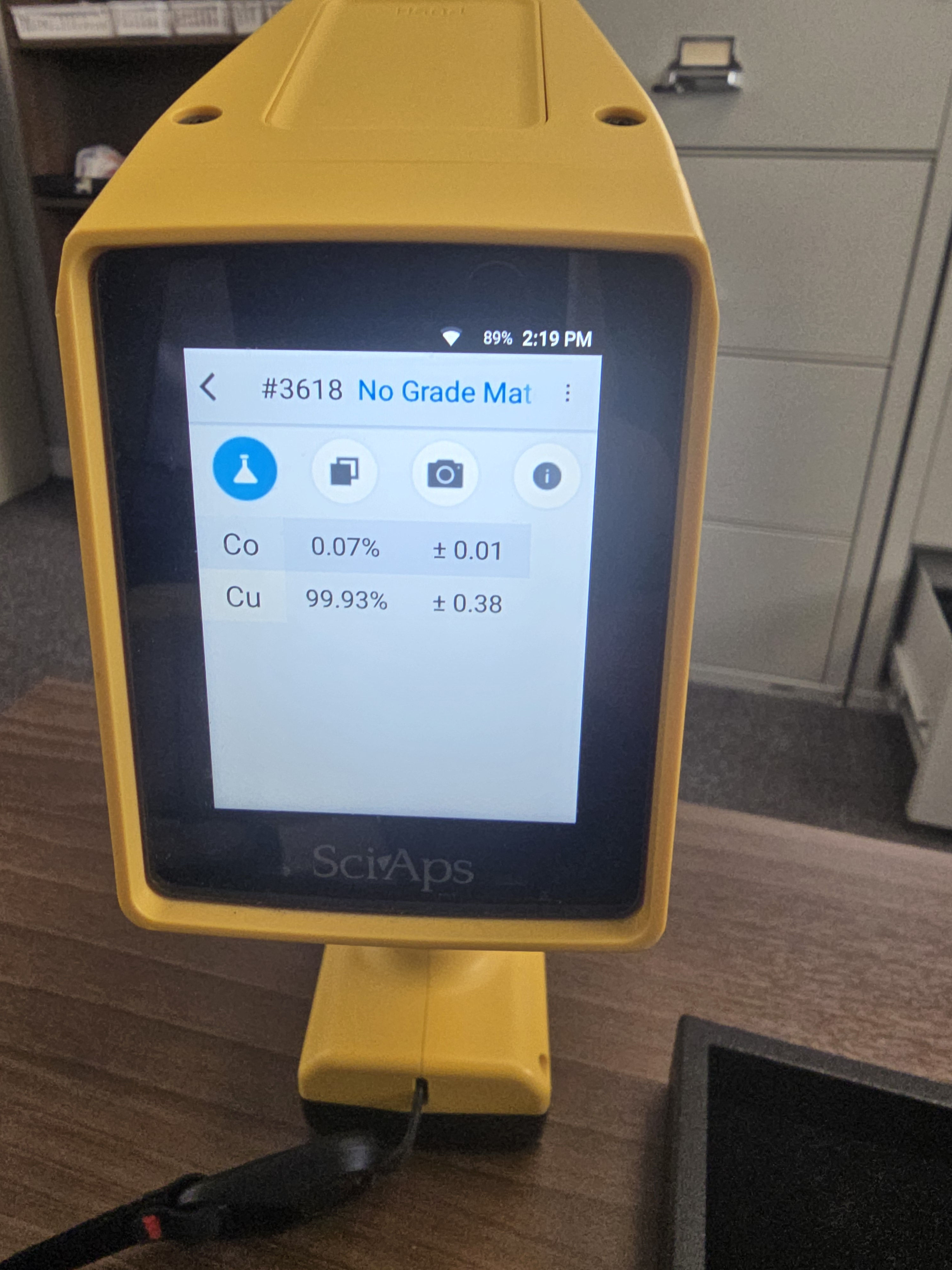
That’s VERY telling. That was no raw ore melted and then coined. It’s modern copper created by electrolysis. So, Yes, most certainly a counterfeit.
How sure are you about that? I found references to cobalt-copper alloys in archaeological contexts from 2000+ years ago.
I agree it sounds fishy in this case. I just d know enough to be sure either way.
If nothing else it would be easy to compare against, if another example gets tested.
Yes I’m sure of that. This raises the possibility the OP coin is a very well done electrotype. I’ve made dozens of these and the copper in them is created by the same basics as copper refining by electrolysis, and it is created atom by atom. ••••• an electrotype will never have a coin “ring” when dropped. The seam often referred to can be almost invisible.