Experimenting with Toning Markers: Can Pull-away and Elevation Chromatics be Replicated?
 dipset512
Posts: 290 ✭✭✭✭
dipset512
Posts: 290 ✭✭✭✭
Like many of you, I’ve spent a lot of time studying the classic markers for Natural Toning (NT) on Morgan Dollars. I’ve always found the concepts of Pull-away Toning and Elevation Chromatics (as popularized by resources like the Sunnywood classification) to be some of the most reliable 'tells' for authenticity.
Recently, I decided to run some experiments to see if these specific characteristics could be mimicked through accelerated/artificial means. My goal wasn't to 'beat the system,' but rather to see if we, as collectors, need to be even more vigilant than we thought.
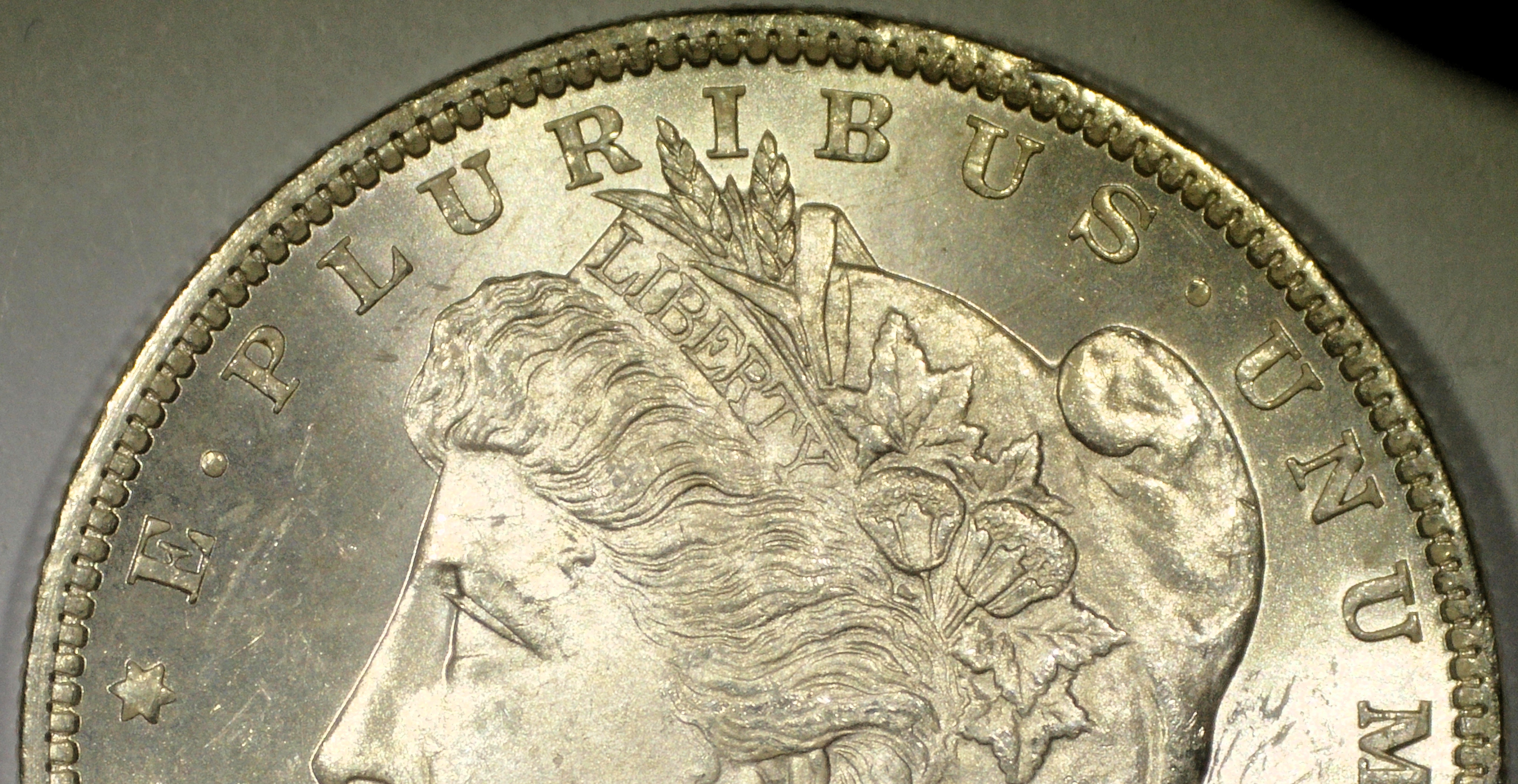
I started with an 1882-O Morgan Dollar that was blast white. Here is a before and after of elevation chromatics.
After:
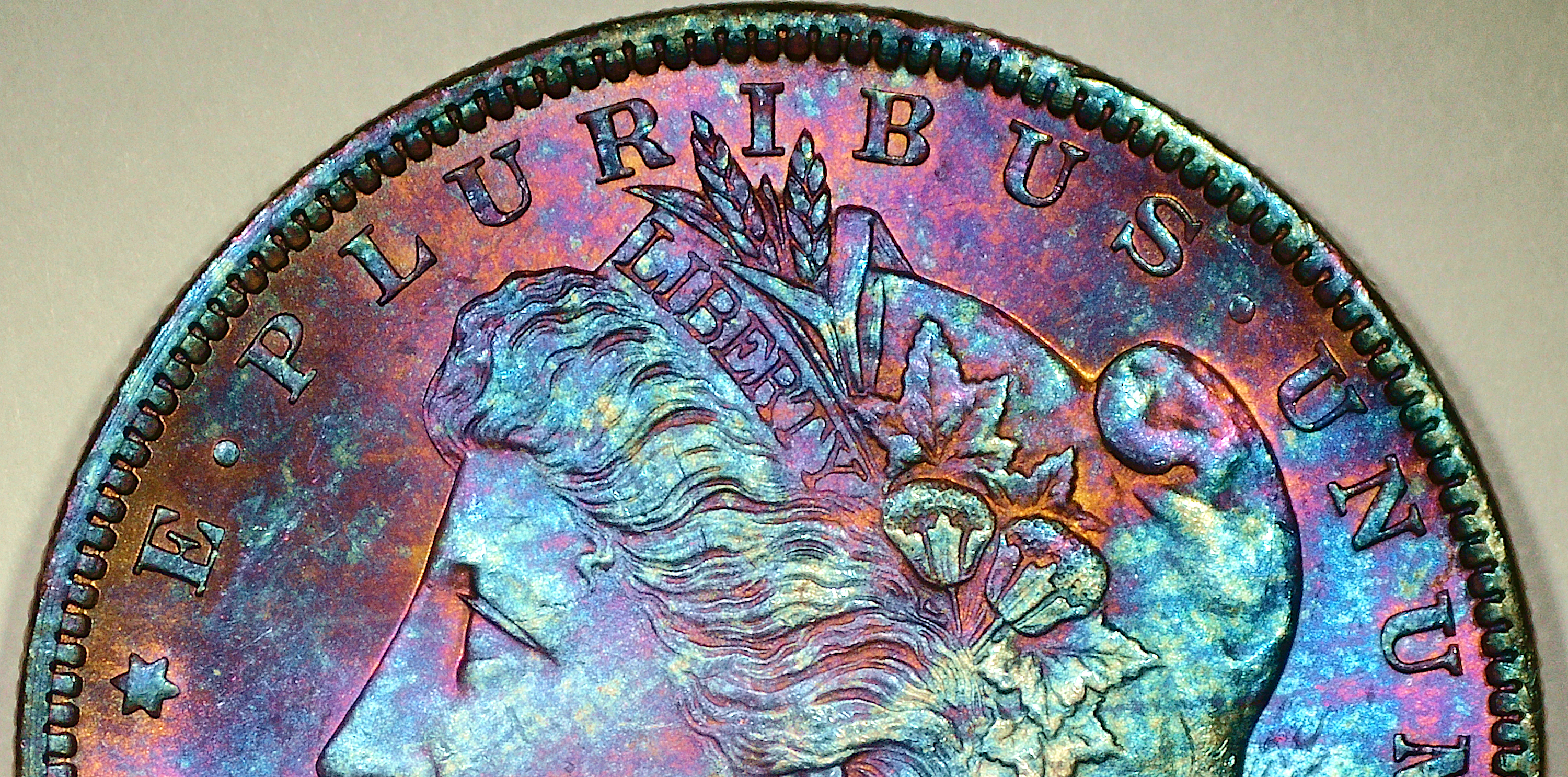
The color progression transitioned between the fields and the high points of 'LIBERTY' in a way that mimics the atmospheric layering often seen in older mint-set toning.
Here is pull-away toning; albeit, not an extreme example on an 1880 Morgan Dollar. Notice the left stars.
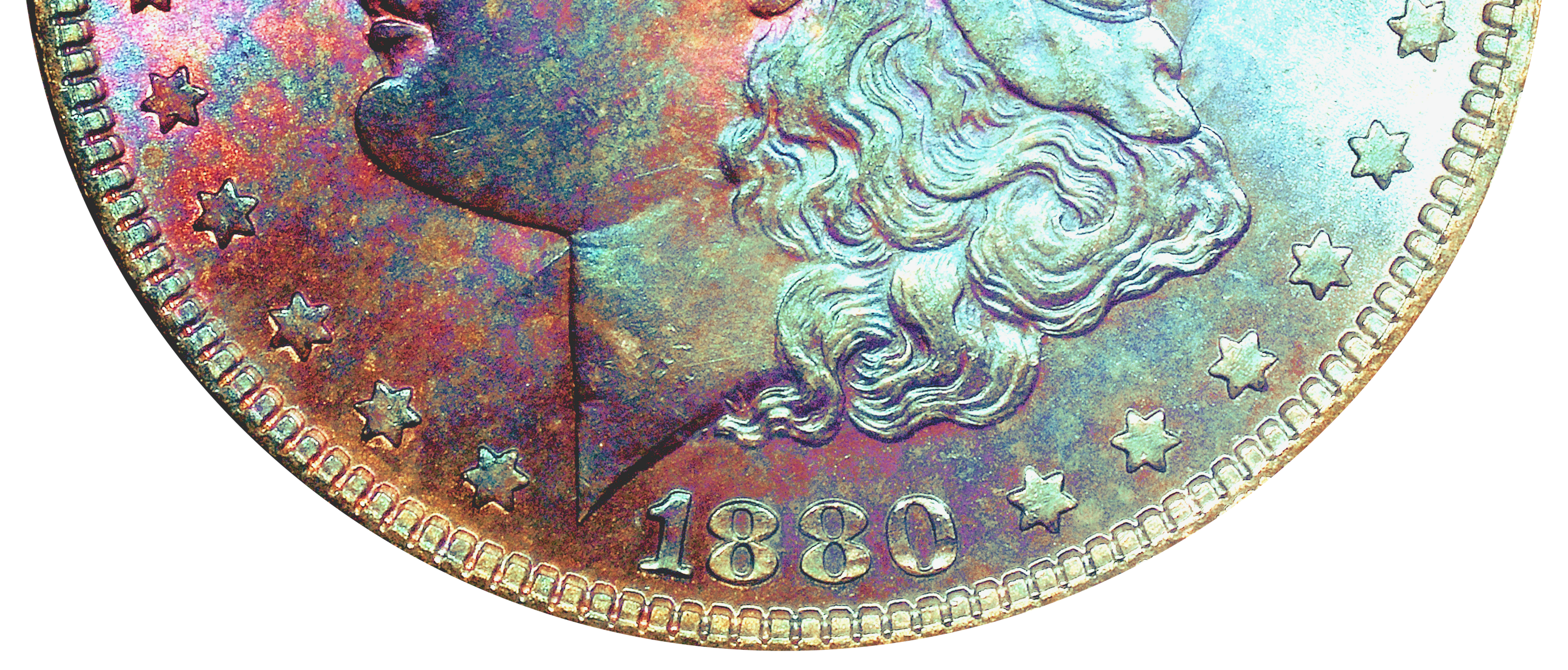
I want to be clear: I am not an expert grader, and I have immense respect for the folks who developed these terms. They are still fantastic benchmarks. However, my results suggest that as 'doctoring' techniques evolve, these markers might not be the 'silver bullets' we once thought they were.
Comments
You should never believe anything is a "silver bullet" when it comes to toning. The more knowledge you have the better protected you are.
In honor of the memory of Cpl. Michael E. Thompson
I was reliably told that of all the NT coins, this one was the most NT.
Didn't that one go for moon money I believe I saw? If you missed out, here is another one on Ebay that's very similar.
https://ebay.us/m/SsKPdL
The blue and purple splotches are a giveaway to me. You should test your work by submitting it.
@dipset512
How long did it take to produce your AT coin. Doesn't look bad, would fool a lot of folks being MA, but do not think it mimics mint bag toning. something with that rust orange toning on the lower half looks off. If old album or velvet tray toning I would think the reverse would have the toning and not the obverse.
I've said it before and I'll say it again: there is no chemical distinction between NT and AT. Album toning is almost by definition NT because it is caused by chemicals in the paper. It's a question of MA or not and that's a very arbitrary distinction.
All comments reflect the opinion of the author, even when irrefutably accurate.
On the blue/purple splotches: You're right that splotchiness can be a red flag. Before posting this, I actually emailed the expert at monstertonedmorgans.com to get his take. He pointed out exactly what some of you are seeing: Color Progression. Natural toning follows a very specific sequence (the thin-film interference cycle of silver sulfide, or Ag2S). If a coin jumps from 'Blast White' to 'Electric Blue' without passing through the other phases, it's a dead giveaway. In my experiment, I was focusing on replicating the physical patterns (pull-away and elevation).
I think I’d rather spend that submission money on a naturally toned Morgan that I didn't have to bake myself! For now, I’m happy to let the photos do the talking and keep the debate going here.
That is a great catch on the cohesion of the piece. You’re hitting on exactly why even high-quality AT often fails the eye test for seasoned collectors.
The process took about 20 minutes. One of the biggest hurdles in replicating NT (Natural Toning) is that nature has the benefit of time and low concentration. When we try to accelerate the reaction, the Ag2S (Silver Sulfide) layer often builds up too quickly.
By having this look on the obverse without a corresponding reason for it, it creates that uncanny feeling for an expert. My goal with this specific piece was just to see if I could trigger the pull-away effect near the lettering, but as you pointed out, the rust and the story of the coin give it away.
How much heat did you use and where was the heating source positioned?
I won't go into details on method, but no heat was used here. No techniques that has been talked about on this forum has been used either.
I asked because that particular shade of light blue. You could experiment with 90% common date BU 20th century coins. Use fewer reagents. Try to slow down the reaction.
Now we know the rust of the story.
I’m going to resist the urge to go too far down that rabbit hole! My main goal with this experiment was specifically to see if the physical markers (like pull-away and elevation chromatics) could be triggered in a lab setting.
I’d rather keep my focus on how we can identify these markers.
The more convincing you can make it, the more useful the study into identifying AT. You can always dip away the AT later.
I believe this would be considered AT'd
Interesting post and thank you for NOT turning this into a tutorial for coin doctors. james
The coin doctors have already figured it out. It’s the rest of us that need to bring their A game and stay ahead.
@cameonut2011 . That may be true but I would prefer "new" coin doctors have to do their own homework. james
@dipset512 Interesting study. Do you have any failures to share? And how that may have occurred. Peace Roy
BST: endeavor1967, synchr, kliao, Outhaul, Donttellthewife, U1Chicago, ajaan, mCarney1173, SurfinHi, MWallace, Sandman70gt, mustanggt, Pittstate03, Lazybones, Walkerguy21D, coinandcurrency242 , thebigeng, Collectorcoins, JimTyler, USMarine6, Elkevvo, Coll3ctor, Yorkshireman, CUKevin, ranshdow, CoinHunter4, bennybravo, Centsearcher, braddick, Windycity, ZoidMeister, mirabela, JJM, RichURich, Bullsitter, jmski52, LukeMarshall, coinsarefun, MichaelDixon, NickPatton, ProfLiz, Twobitcollector,Jesbroken oih82w8, DCW
Here are some. I guess it is a good idea to see examples of AT coins instead of seeing natural ones. But the how crosses over into method territory.
Proof Like, experimenting with different fabrics.
Early Attempt
Whatever method you are using, does a quick dip restore coin back to the original state without any telltale effects?
That's something I have not tried. I've noticed with dipping, luster removal comes fast and I think to remove that kind of toning would remove a lot of luster. But I'm sure it's possible as evidenced via @ricko
That shade of blue is funky. You need a deeper more natural blue and some green.
Like the shade of blue on this one. I would be outright terrified if you could emulate this: