Best Of
Re: Shipwrecks
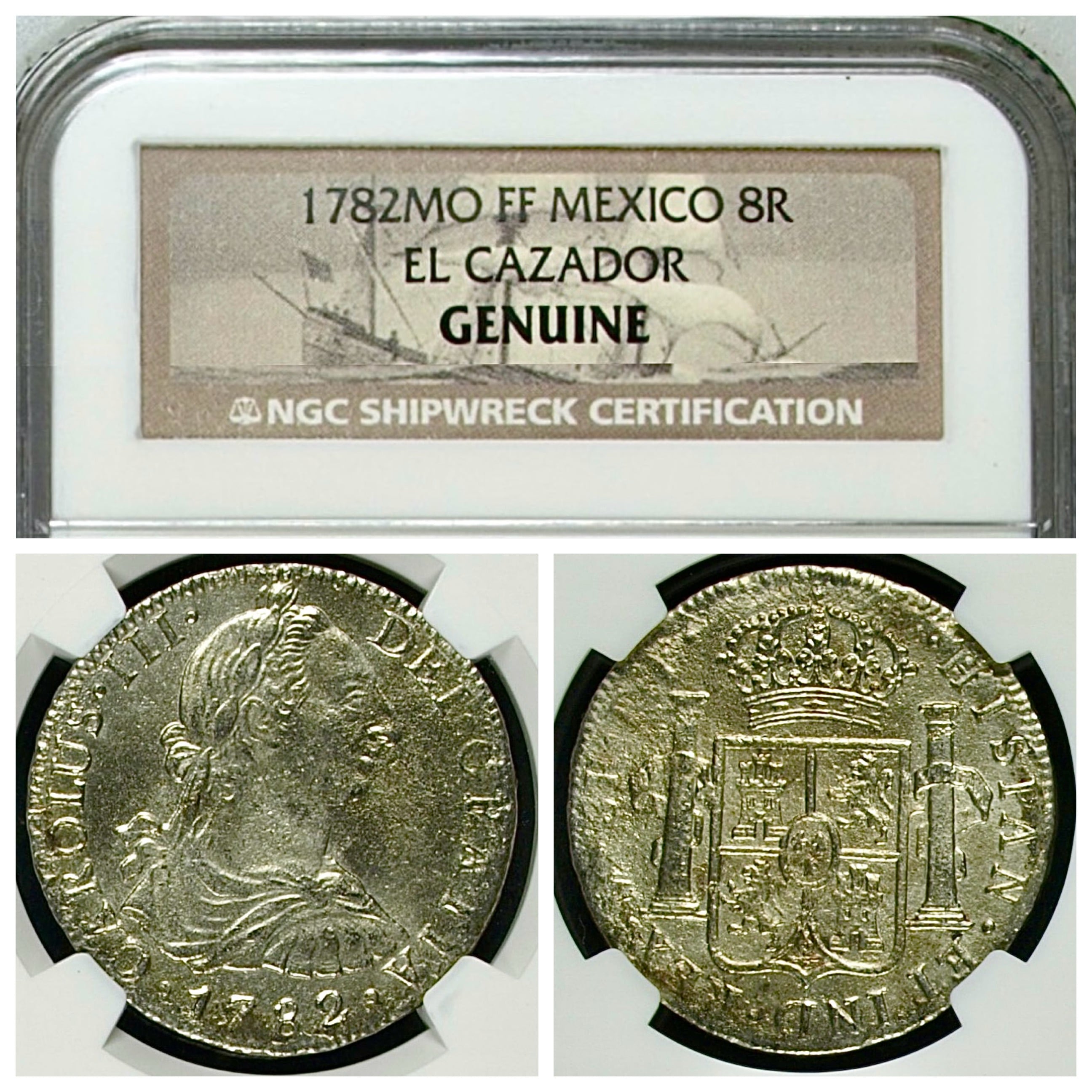
El Cazador: The Lost Ship of Silver
In 1784, the Spanish brig El Cazador—“The Hunter”—set sail for New Orleans carrying a treasure that could have saved an entire colony. Spanish Louisiana was in financial crisis: its paper currency had little value because it wasn’t backed by silver or gold. To stabilize the economy, King Carlos III of Spain dispatched a shipment of hard currency in the form of silver coins.
El Cazador stopped at Veracruz, Mexico, where it was loaded with roughly 450,000 silver reales—mostly “Pieces of Eight”—weighing an astonishing 37,500 pounds in total. Commanded by Captain Gabriel de Campos y Pineda, a trusted officer of the crown, the ship departed on January 11, 1784. It never reached its destination. Despite Spanish search efforts, El Cazador disappeared, and by June it was officially presumed lost.
For over two centuries, the fate of the ship—and its cargo of silver—remained a mystery. That changed on August 2, 1993, when the trawler Mistake, fishing fifty miles south of New Orleans, snagged an underwater obstruction. What the crew hauled aboard was astonishing: thousands of silver coins minted in Mexico, dated from 1775 to 1783, still gleaming after more than 200 years underwater.
The recovered treasure was initially secured in a bank vault in Grand Bay, Alabama. In 2005, Jonathan Lerner of Scarsdale Coin appraised the haul, which eventually led to the Franklin Mint acquiring roughly 360,000 coins in 2007 for distribution to collectors. From a desperate mission to save a colony’s economy to a spectacular underwater discovery centuries later, El Cazador remains one of the most captivating stories in numismatic and maritime history.
The 1781–1783 Mexico Mo FF 8 Reales
Among the coins recovered, the 1781–1783 Mexico Mo FF 8 Reales stand out as particularly significant. These silver “Pieces of Eight,” minted under King Charles III, often come from the famous 1784 El Cazador shipwreck. They bear the bust of Charles III on the obverse, while the reverse shows crowned arms flanked by pillars. The “Mo” mint mark indicates Mexico City, and the assayer initials “FF” refer to Francisco Antonio de la Fuente and Francisco de Paula.
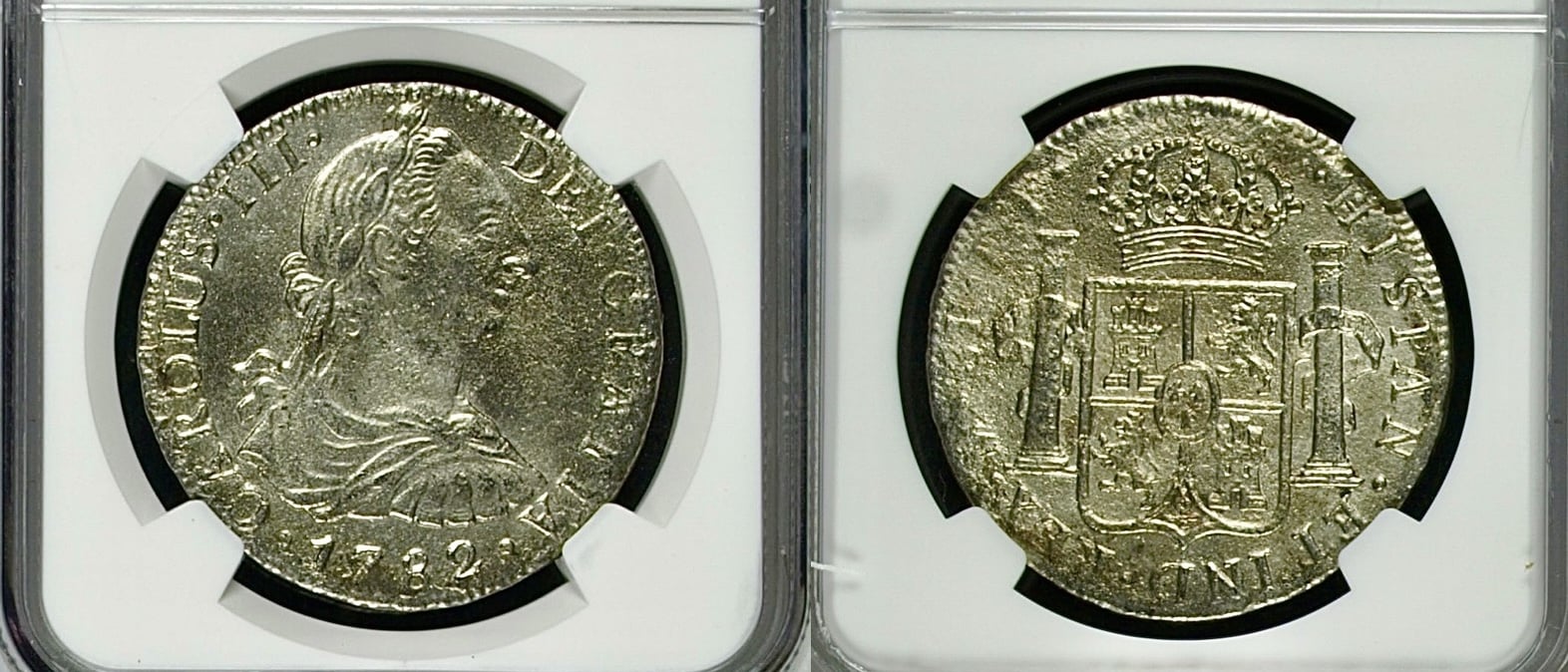
This coin is from my collection. It shows mild surface disturbance from saltwater exposure, yet still retains a satiny luster, giving it an above-average eye appeal. Not bad for a recovery specimen.
Key Details of 1781–1783 Mo FF 8 Reales (KM 106.2):
- Composition: .9030 silver
- Weight: Approximately 27.0674 grams
- Significance: Many, particularly from 1783, were recovered from the El Cazador shipwreck

Re: Better date Morgan, straight grade or no?
@RedRocket said:
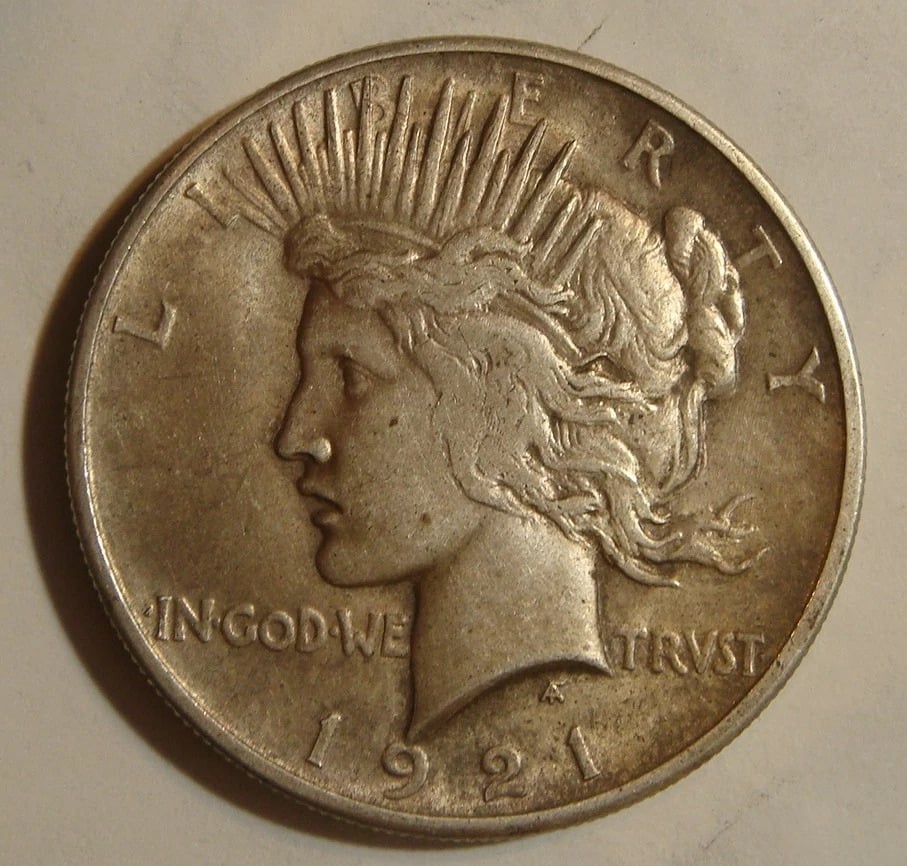
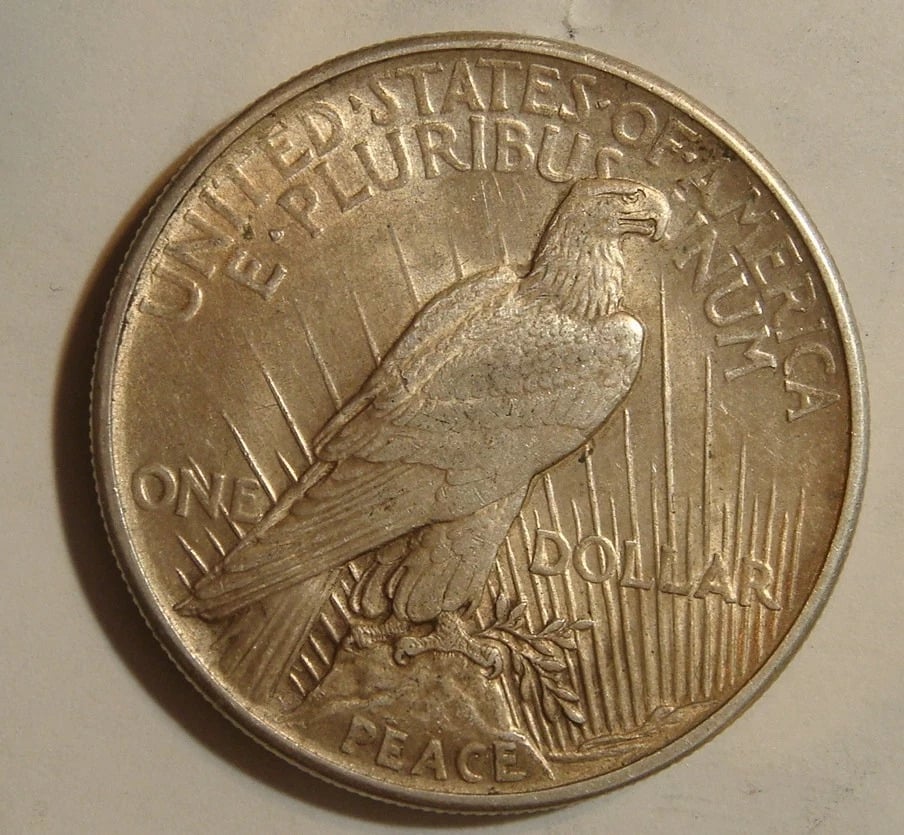
Upper right corner, your Peace dollar looks interesting. Any chance of seeing it too?
This is the 1921 Peace dollar:
 logger7
Re: The 10.1% WA sales tax has taken the wind out of my numismatic sails.
@PerryHall said:
@Shabu92 said:
I live in California, and if I spend $2,000 or more, there's no tax on my coins or bullion. Bought two coins for a total $2,000 a couple of weeks ago, all tax free because it was one transaction.So, if a poor person saves his money and buys a tenth oz or quarter oz AGE, he has to pay sales tax on his PURCHASE while a wealthy investor can buy one or more AGE's and he doesn't have to pay any sales tax? Doesn't sound very fair to me. I can certainly understand why people would go out of their way to avoid paying this unfair tax.

FIFY

Re: The 10.1% WA sales tax has taken the wind out of my numismatic sails.
@safari_dude said:
Many numismatic items are still considered legal tender and therefore shouldn’t be taxed. Even if a rare SLH quarter that is slabbed is sold, it shouldn’t be taxed as it can still be used as a quarter, correct?
That only makes sense if you are paying face value. Otherwise, you are not trading it as "legal tender".
 jmlanzaf
Re: Why the 2026 Congratulations set should be a winner
@UncleAbe said:
Seems like HHL of 1 is back on
Now lets see how many they release this second go-round. As of now, there is an ATS of "0" showing
 mbr33
mbr33
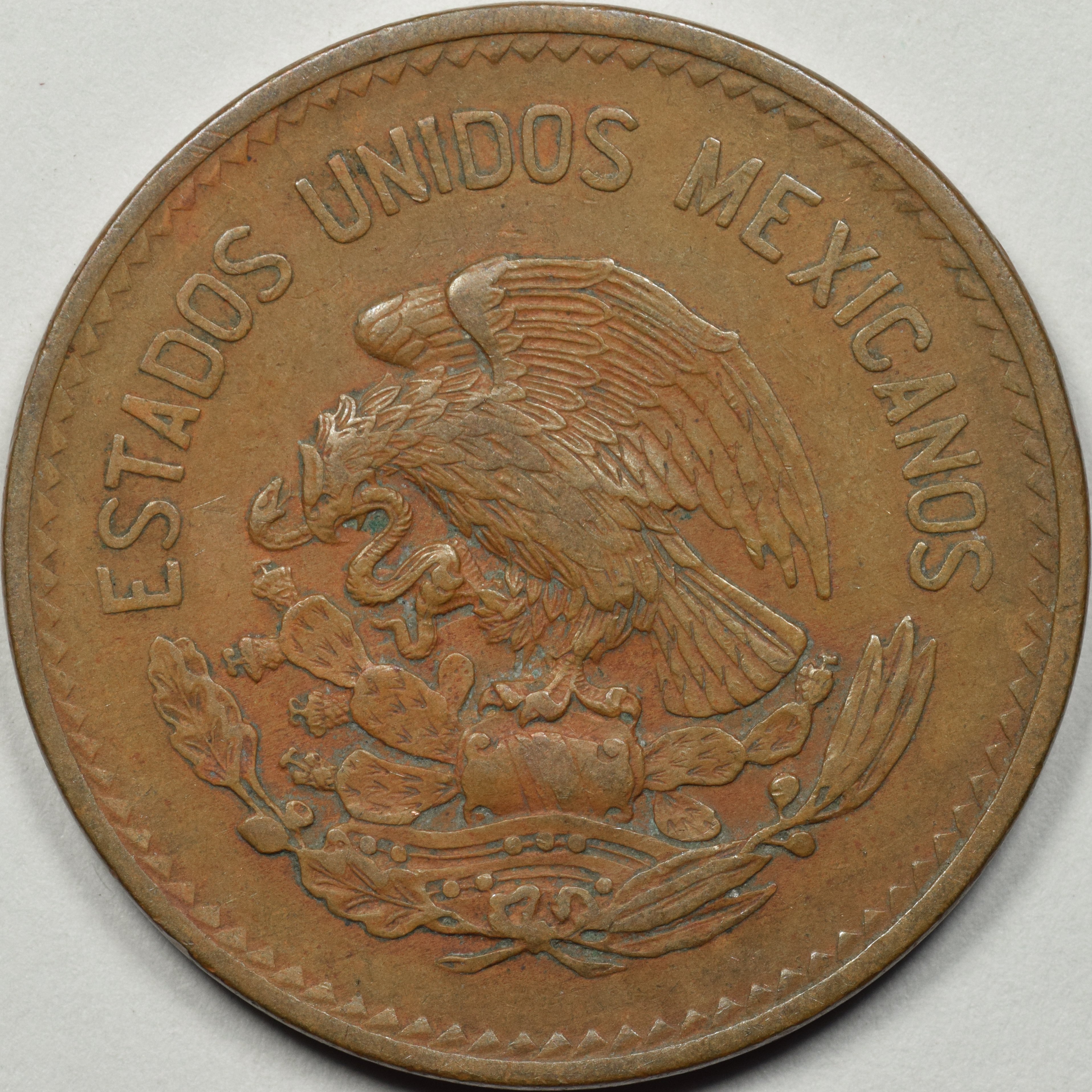
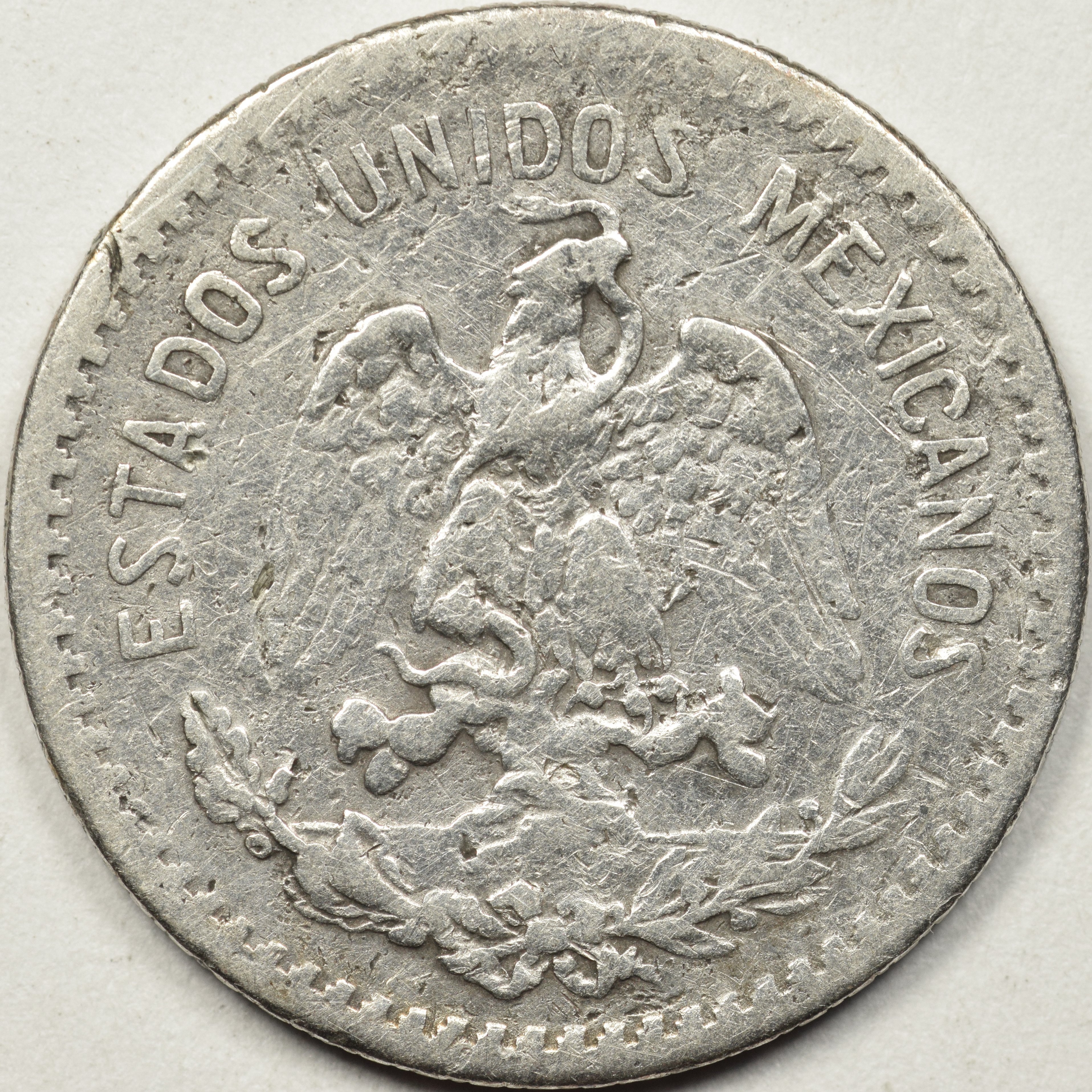
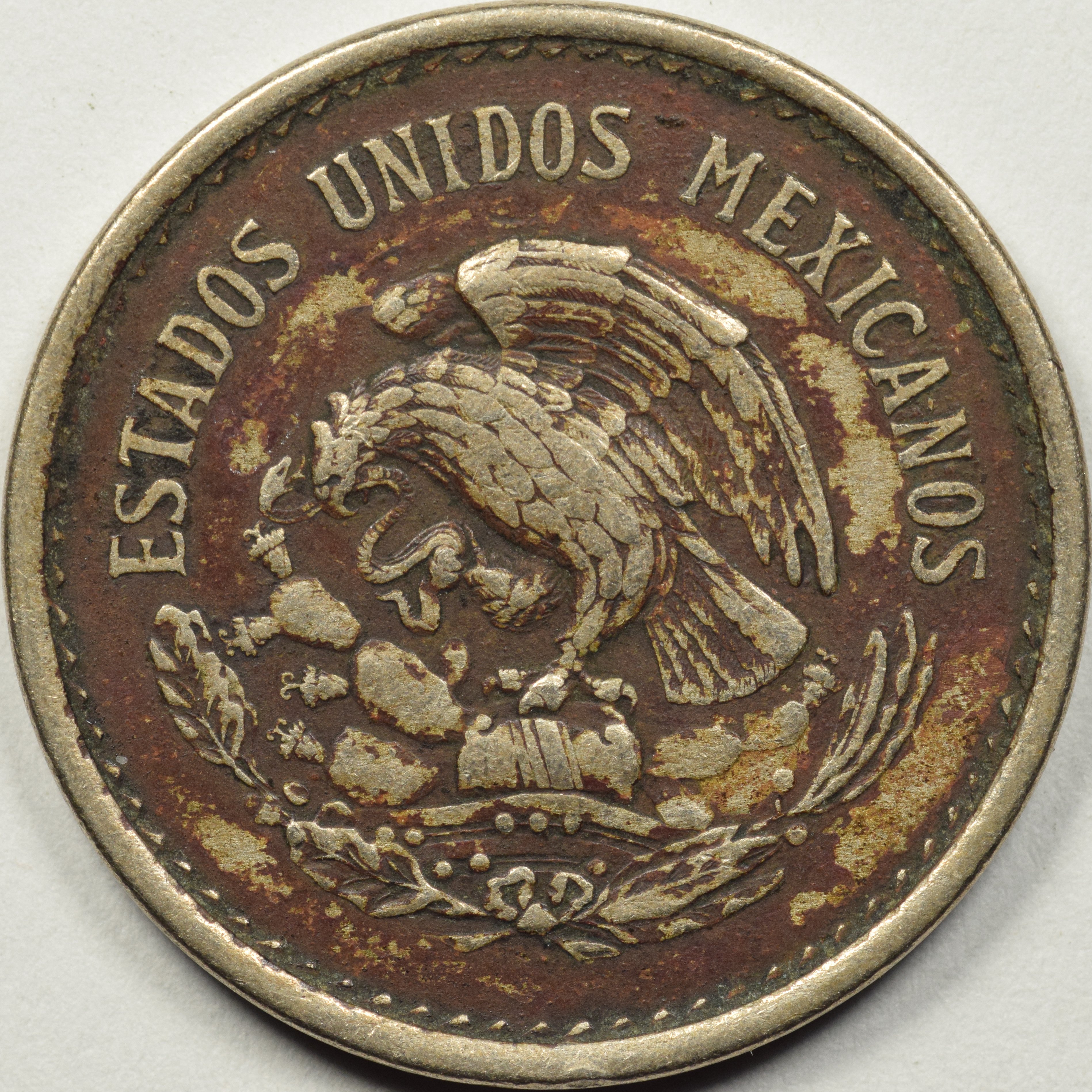
Cinco de Mayo - Post your coins from Mexico
Anything will do. I know mine aren't the greatest pieces.

Re: Any interest in an easy to use large size bust quarter variety guide?
I like this type of attribution guide.
It is essentially a flow chart or decision tree, where the key "pickup points" determine which branch to take.
In my seated half dime guides, I have a similar partial tree written as a numbered list which I call "Attribution Hints".
I develop each tree when I go through the process of attributing all the auction photos.
One potential weakness of a decision tree happens in lower grade coins if the key pickup points are too worn to show the feature. So it is nice to have an alternative tree to handle this. But maybe this situation would simply be handled by the Tompkins or other complete book. And of course at some low grade, attribution is no longer possible, and eventually even the date cannot be read or determined.

Re: 1996 D Lincoln penny DDO
@MFeld said:
@MsMorrisine said:
and the Obverse is the front of the coin. the close was of the Reverse of the coinhere is the 1995 DDO:
https://www.pcgs.com/coinfacts/coin/1995-1c-doubled-die-obverse-rd/3127Although the subject coin doesn’t appear to be a doubled die, comparing it to a different date (1995) doubled die example doesn’t necessarily prove anything.
I believe his point was that the OP should learn the difference between obverse and reverse.
 IkesT
IkesT
Re: Charmy's 2026 CENTRAL STATES NUMISMATIC SOCIETY'S (CSNS) Show Report w/lots of Pics!
Thanks for sharing! Those gold proofs are amazing!!
 BruceS
Re: Is the Mint making coins for circulation anymore?
As pointed out by @jmlanzaf, everyone uses credit/debit cards or paper money. I honestly can’t recall the last time I saw someone reach into their pocket to pull out change to pay for something. Who does that??
People used to do almost all transactions with cash. I remember my mother freaking out when she found out I used a credit card to pay for groceries (back in the early 1980's). She figured that having a credit card was a sign of desperation. She also clipped paper coupons, and often paid by check! think of the time it took to check her out!
Then there were the old ladies with the coin purses, (complete with the requisite moths that flew out) who paid with pennies nickels and dimes for things like milk. (in the 1970's I briefly worked in a grocery store, in college)
I also was a paperboy (Milwaukee Journal) when I was in 6th grade. (1967) Those were the days. You could find a lot of silver quarters, dimes, and even the occasional Franklin half. The Kennedy Halfs were all being hoarded.
