Best Of
Re: The Official NGC 3.0 Holder Census Thread Updated April 24, 2026
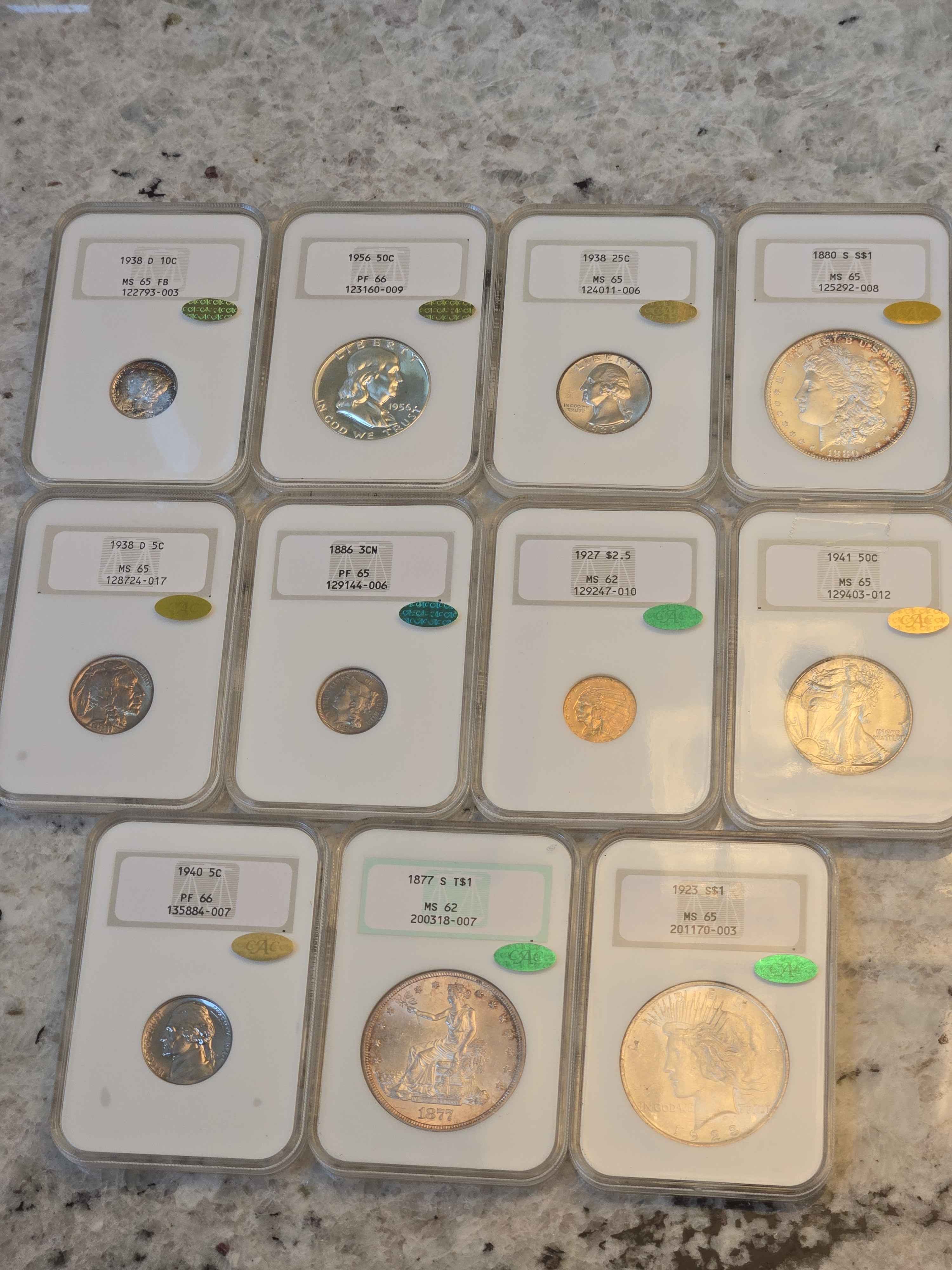
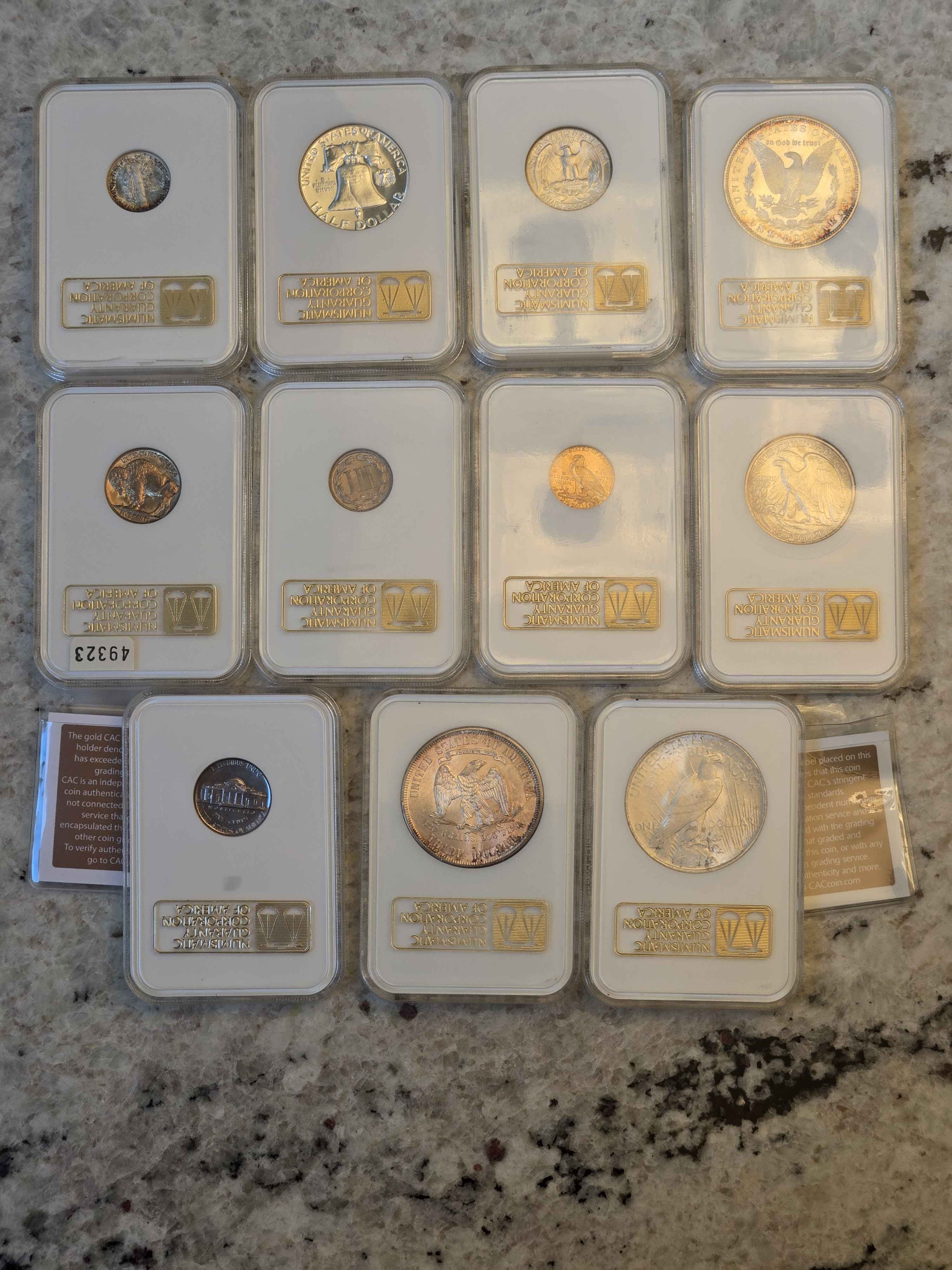
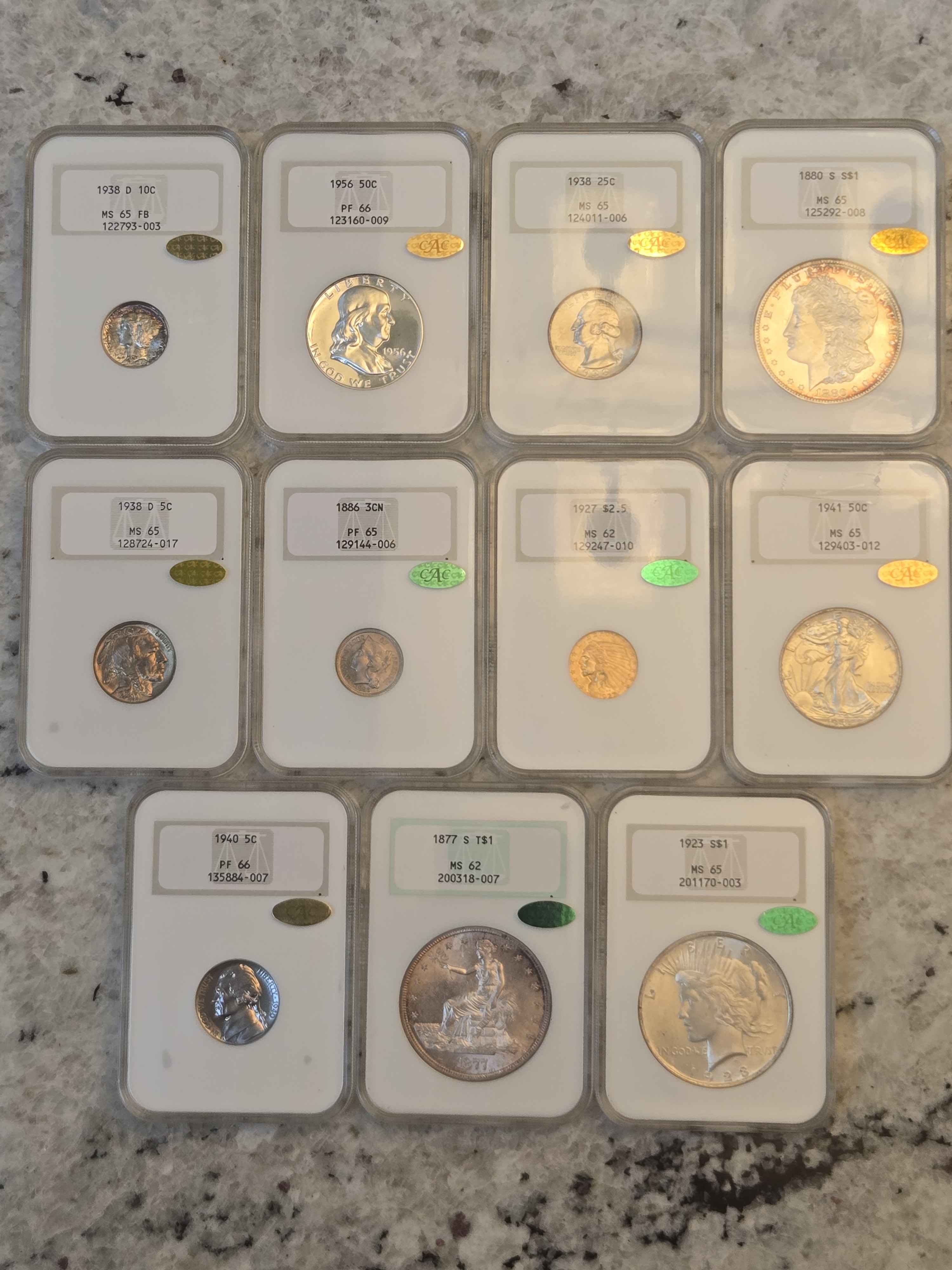
Here are my 11. The only one on your spreadsheet is the Morgan, which is erroneously listed as a gen 4 and was added pre-CAC (it's now gold CAC).
 VTJedi

Re: Let's see some colorful Mercury Dimes!
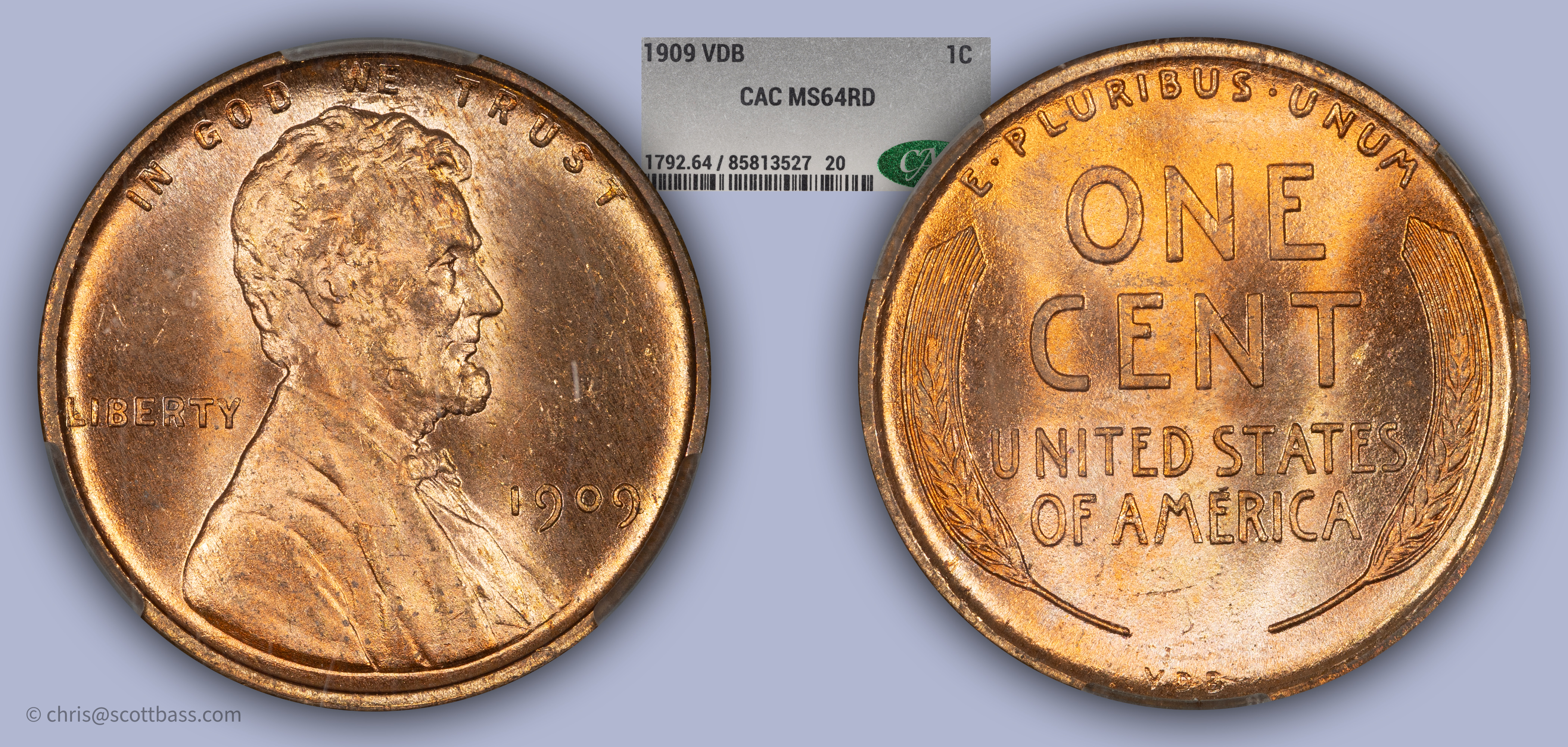
My youngest son noticed my penchant for frosty white and suggested I expand my horizons. This recent acquisition was for him although I'm still not a fan. 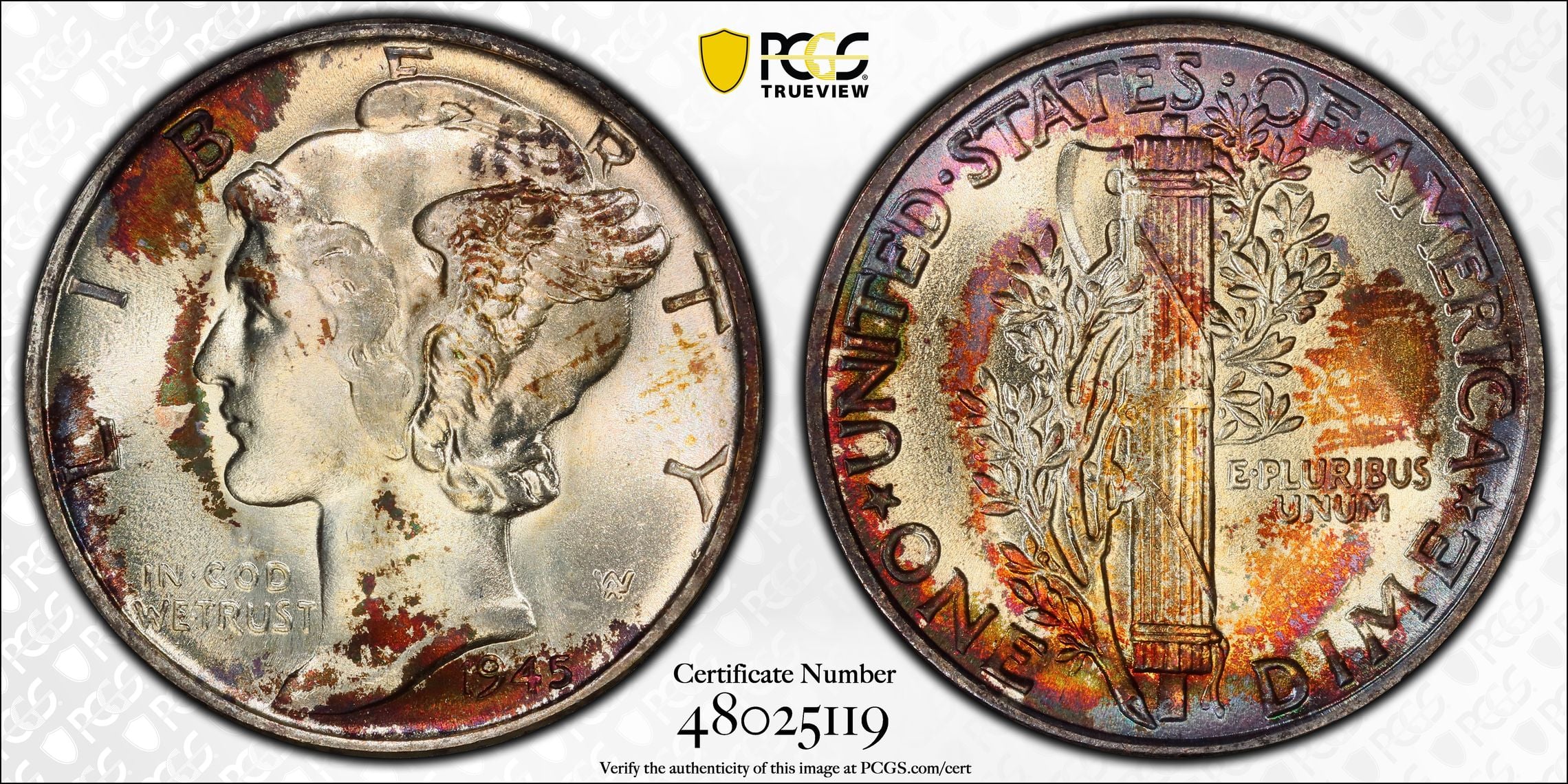
 PapiNE

The Official NGC 3.0 Holder Census Thread Updated April 24, 2026
PCGS forum member @86Saab has built and expanded a fabulous database of observed NGC 3.0 holders and the coins in them. As of the date this thread started there are 2,598 NGC 3.0 slabs recorded and the database also includes quite a few NGC 4.0 coins, as well. A Google Docs spreadsheet is linked below in view-only format for those who would like to see what has been observed thus far.
What is the NGC 3.0 holder?
Using the slab numbering system for regular production slabs made popular through the work of Conder101, the NGC 3.0 holder was the first holder offered by NGC that paired the previously used gold embossed reverse NGC logo with a new obverse paper insert that incorporated the NGC scales logo. All known NGC 3.0 holders have the embossed reverse logo done on the outer side of the slab plastic such that the embossing can be felt with the fingers while the obverse side paper insert has been seen with ink color ranging anywhere from a brown-grey through a rather vivid lime green.
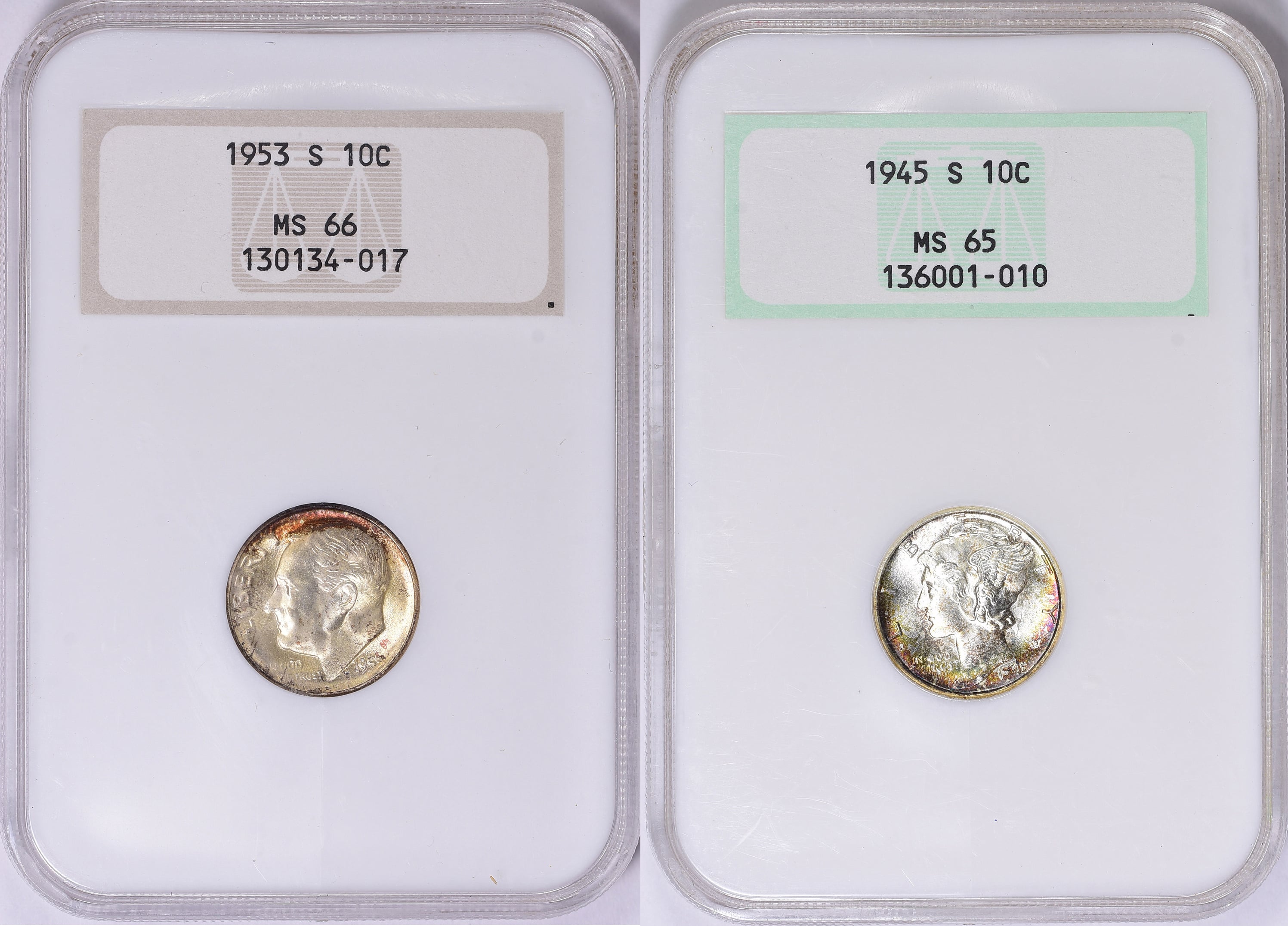
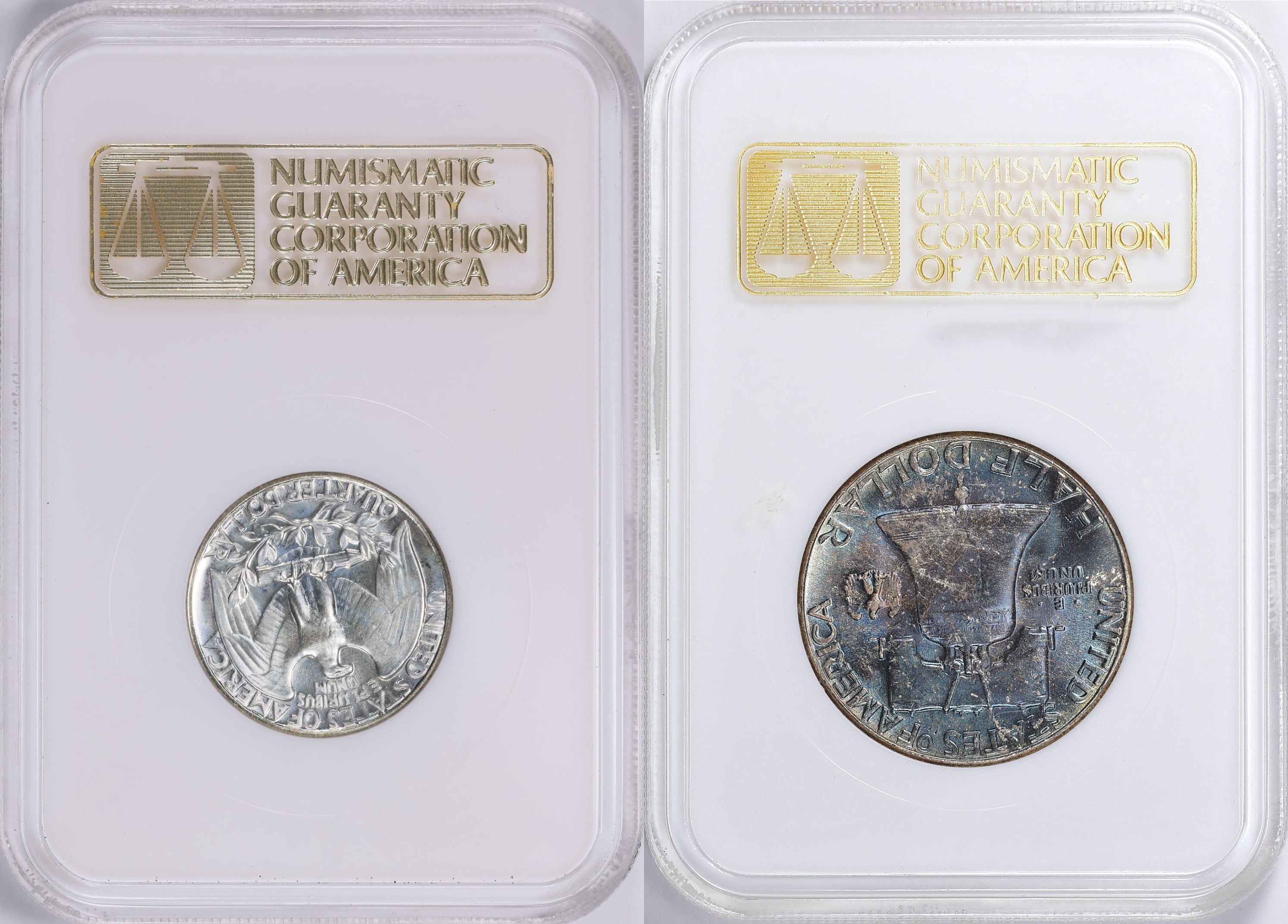
Images of four NGC 3.0 holders are shown below. The first pair of images is a comparison of the obverse from two slabs. The Roosevelt dime has the more commonly found brown-grey ink while the Mercury dime has the lass frequently seen vivid lime green ink. The second pair of images is a comparison of how the raised embossed logo might appear. The Washington quarter has a sharply raised embossed logo in deep gold while the Franklin half has a less vivid embossed logo in lighter gold.
The difference in ink color has been attributed to ink degradation in combination with lot-to-lot variation in the stability of the ink used during insert printing. This has been confirmed in direct conversation with John Albanese, founder of NGC as well as CAC and CACG. The variation in embossing depth and color on the reverse appears to be due to wear as the upper reverse was a common area for dealer stickers and price codes to be placed and the removal of stickers as well as residual glue from them appears to have affected some slabs more than others.
So, all NGC 3.0 holders have a raised gold embossed NGC logo on the reverse paired with a paper insert incorporating the NGC scales logo on the obverse.
We would like your help. If you have NGC 3.0 slabbed coins in your collection, or you see one online for sale or at auction, we would love to add them to the database. Optimally, you can provide obverse and reverse slab shots with the coin inside and place them within this thread. It is important for us to be able to read the paper insert in the slab in order to add the certification information to the database.
Another thread that details the production window and likely numbers of NGC 3.0 slabs produced is linked below-
Thank you!
 TomB
TomB
The Official NGC 3.0 Holder Identification, History and Information Thread
What is the NGC 3.0 holder?
Using the slab numbering system for regular production slabs made popular through the work of Conder101, the NGC 3.0 holder was the first holder offered by NGC that paired the previously used gold embossed reverse NGC logo with a new obverse paper insert that incorporated the NGC scales logo. All known NGC 3.0 holders have the embossed reverse logo done on the outer side of the slab plastic such that the embossing can be felt with the fingers while the obverse side paper insert has been seen with ink color ranging anywhere from a brown-grey through a rather vivid lime green.
Images of four NGC 3.0 holders are shown below. The first pair of images is a comparison of the obverse from two slabs. The Roosevelt dime has the more commonly found brown-grey ink while the Mercury dime has the lass frequently seen vivid lime green ink. The second pair of images is a comparison of how the raised embossed logo might appear. The Washington quarter has a sharply raised embossed logo in deep gold while the Franklin half has a less vivid embossed logo in lighter gold.
The difference in ink color has been attributed to ink degradation in combination with lot-to-lot variation in the stability of the ink used during insert printing. This has been confirmed in direct conversation with John Albanese, founder of NGC as well as CAC and CACG. Additionally, John Albanese stated on Episode 40-John Albanese Grades My Coins-CAC Grading from Cabbage Coins on YouTube that he “never had a green label at NGC” while referencing his previous conversations with me. The variation in embossing depth and color on the reverse appears to be due to wear as the upper reverse was a common area for dealer stickers and price codes to be placed and the removal of stickers as well as residual glue from them appears to have affected some slabs more than others.
So, all NGC 3.0 holders have a raised gold embossed NGC logo on the reverse paired with a paper insert incorporating the NGC scales logo on the obverse.
What is the timeline for NGC 3.0 slab production?
Conder101 had previously stated that NGC 3.0 slabs were produced from late 1987 (commonly accepted as December, 1987) through August, 1989. However, recent evidence from contemporary numismatic articles proves that the NGC 3.0 holder was phased out earlier and might have been retired by December, 1988. Thus, it can be stated that NGC 3.0 slabs were produced from sometime in December, 1987 until sometime in December, 1988. The evidence for the revised timeline is discussed below.
The August 10, 1988 issue of Coin World has multiple articles about the 1988 ANA show in Cincinnati as well as the counterfeit PCGS holder scheme that was discovered at the show. David Hall had “estimated that between 200 and 500 coins may be involved”. (1) Regarding NGC’s planned use of a hologram on its holder, John Albanese is attributed as stating “the new holders with the hologram will go into use within a few weeks”. (2) Later, in the October 26, 1988 issue of Coin World Laurie Sperber wrote an op/ed style article or advertisement and, when discussing features of NGC, stated “They have also gone to great lengths to insure that the holders are tamper proof (hologram)…”. (3) These Coin World articles infer the imminent use of a hologram on NGC holders in late 1988.
Secondly, the February 10, 1989 issue of the Certified Coin Dealer Newsletter (the Bluesheet) wrote about the California season of shows in January, 1989. They observed “The new ANACS slabs were in evidence on the bourse floor, as were the new holographically protected NGC slabs”. (4) This is definitive, contemporaneous proof that the NGC 4.0 holder, which had a reverse hologram and replaced the NGC 3.0 holder, was produced, distributed and on the bourse floor in January, 1989.
Additionally, the October, 1988 issue of COINage magazine reports that NGC announced at the ANA that a hologram holder was being developed for their use and “would be available within a few weeks”. NGC also announced that already certified coins could be sent back to NGC for reholder into the new hologram holder for minimal cost. (5) COINage magazine further reported in November, 1988 “it was revealed several hundred counterfeit PCGS slabs had slipped into circulation” and “In a press release distributed right on the floor of the ANA convention, NGC President John Albanese announced that the company would begin hot-stamping a hologram onto its slabs to deter counterfeiters”. It also states “The holograms would be added to older NGC slabs for a small charge”. (6) In the January, 1989 year-end review issue of COINage magazine it’s reported that “NGC announced the introduction of a protective hologram holder”. (7) In the January, 1989 issue, David Ganz listed predictions for the coming year. Prediction #5 is the increased use of holograms on slabs and it mentions that “The Numismatic Guarantee Corporation of America (NGC) has been in the forefront of this technology…”. (8) Photo evidence of the introduction of the NGC 4.0 slab with reverse hologram is provided by the May, 1989 issue of COINage magazine with the cover showing a selection of current slabs. The coins are all obverse side up and the NGC certified coin is a 1927 MS65 double eagle. Later, all the reverses are shown and the reverse of this NGC certified coin has the hologram found on the NGC 4.0 holder. (9) The images are shared below.
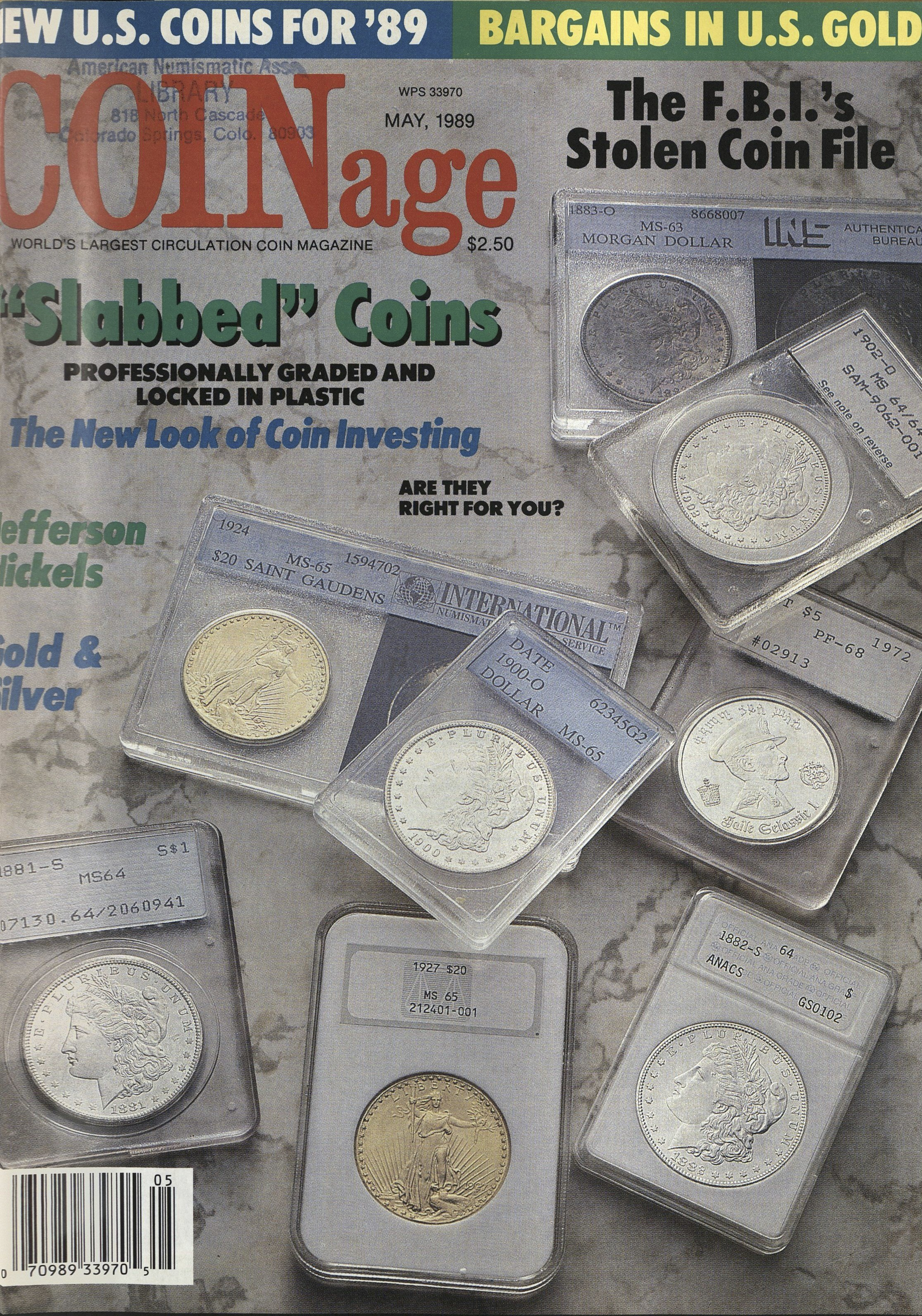
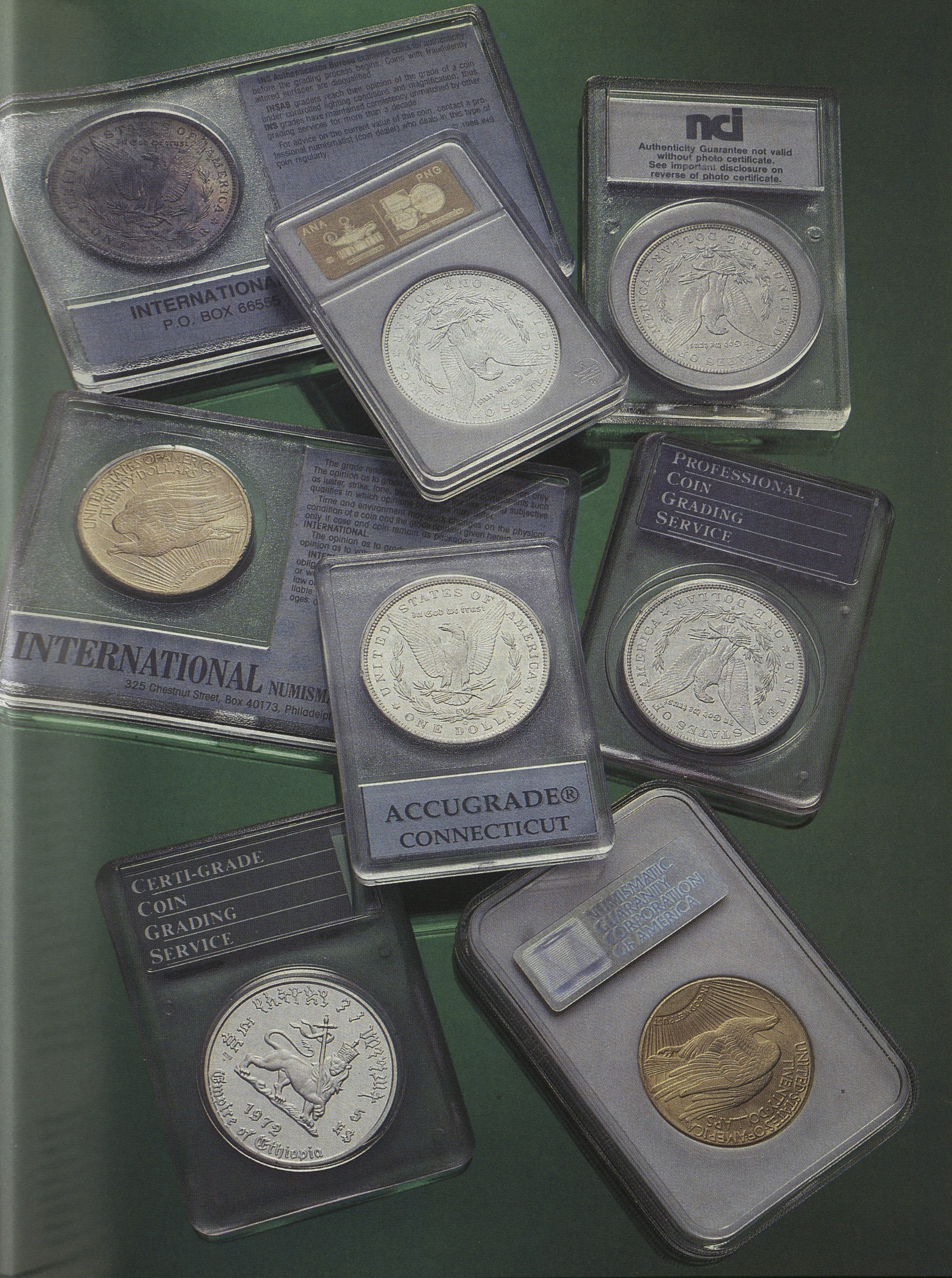
Taking the information in Coin World, the Bluesheet and COINage magazine together indicates that the industry knew by mid-August, 1988 that NGC was working to provide a hologram on its holder (the NGC 4.0 holder), the NGC 4.0 holder was written about in present tense and was reported as actively trading and selling on the bourse floor in January, 1989, and an image of the NGC 4.0 holder appeared by May, 1989, which would have meant that the image was taken no later than late March, 1989 in order for it to appear on the cover of COINage magazine.
Finally, I asked John Albanese directly if he recalled when the NGC 3.0 holder was phased out and when the NGC 4.0 holder was introduced and he told me directly that the NGC 4.0 holders were already being shipped in December, 1988. Therefore, it is logical to change the date of NGC 3.0 production to December, 1987 to December, 1988.
How many NGC 3.0 holders were originally produced?
The NGC population report was produced bi-monthly in the 1980s and at this time I have not been able to examine one. Therefore, a range for production must be made from contemporary evidence and this estimation of NGC 3.0 holder production is a bit on the geeky side, but for those interested it is shown as follows.
The February, 1988 issue of COINage magazine has an interview with John Albanese and it notes the first full month of grading was October, 1987 with 8,500 coins were graded. In November, 1987 11,000 coins were graded and by end of December, 1987 it was 3,000 coins per week. John Albanese estimated they would certify 121,000 coins in 1988. (10) This means that essentially 31,500 coins were graded by NGC in 1987 and, for the sake of estimation, we might consider these to be largely pre-NGC 3.0 holder coins.
In the May, 1989 issue of COINage magazine it’s reported that Mark Salzberg of NGC stated NGC was grading at that point 12,000-14,000 coins per month. (11) These numbers would have referenced NGC throughput by no later than late March, 1989 to be present in this issue of the magazine. This is after the NGC 3.0 holder was already replaced by the NGC 4.0 holder and gives a good estimation of likely upper end certification for NGC in 1988.
Taken together, the two articles in COINage support the idea that 120,000-130,000 NGC 3.0 holders were produced given John Albanese estimating 10,000 coins per month would be certified by NGC in 1988 and Mark Salzberg stating that upwards of 12,000-14,000 coins were being received by late March, 1989.
Since I have no population reports from this time period it might be difficult to get more precise or to even check the validity of the above. However, in the March, 1990 issue of COINage Scott Travers states 1,782,246 coins had been slabbed combined by PCGS and NGC as of January 1, 1990. (12) Further, the July, 1990 COINage issue contains a list of some of the most commonly certified coins by NGC and PCGS “as of April 1990” population data. (13) The data is remarkably robust and shows a sum of 28,988 coins graded by NGC for the basket of issues referenced vs. 158,731 coins certified by PCGS for the same coins. This comes out to 15.44% market share for NGC and 84.56% market share for PCGS within this basket. The numbers for market share appear realistic for the time period and mesh beautifully if we realize that PCGS certified its one millionth coin on December 21, 1988 (14) and that Patti Minassian of PCGS stated that PCGS was certifying approximately 45,000 coins per month in mid-1989. (11)
Given that these were stated to be some of the most commonly submitted coins to both PCGS and NGC, we can use market share percentages to infer how many coins were certified by each company as of January 1, 1990. If we take the market share from the most commonly submitted coins and apply it to the total cumulative population reports (1,782,246 coins) then we obtain 1,507,067 coins certified by PCGS and 275,179 coins certified by NGC as of January 1, 1990. Obviously, these numbers cannot be assumed to be absolutely correct, but at first glance they are extremely reasonable.
If we then take the number of coins certified by NGC in 1987, which would be largely if not completely before the NGC 3.0 holder was introduced, and subtract that number from the total inferred from the January 1, 1990 calculated total we get-
(275,179 total coins certified) - (31,500 coins certified in 1987) = 243,679 coins certified combined in 1988 and 1989
If we additionally realize the John Albanese estimation that NGC would likely certify 121,000 coins in 1988 we can see that what John Albanese had expected (121,000 per year) was pretty close to the average calculated for two years (243,679 coins over two years or 121,840 coins per year). Therefore, absent population reports, if is likely that NGC certified 120,000 +/- 10,000 coins in 1988 to give a realistic window of NGC 3.0 holder production of 110,000-130,000 coins.
(1) PCGS Officials Warn of “illicit” PCGS Holders. (1988 August 10). Coin World, 29(1478), 3-12.
(2) NGC Slabs to Use Hologram. (1988 August 10). Coin World, 29(1478), 3.
(3) Facts on NGC Certified Coins. (1988 October 26). Coin World, 29(1489), 25.
(4) Norweb 1893-S Morgan Graded PCGS-67. (1989 February 10). Certified Coin Dealer Newsletter, IV(6), 1.
(5) Green, P.M. (1988 October). Protecting the Slabs. COINage, 24(10), 57-62.
(6) Sussman, D. (1988 November). 3-D Protection. COINage, 24(11), 74-84.
(7) Travers, S.A. (1989). 12 Months Under the Glass. COINage, 86-88.
(8) Ganz, D.L. (1989 January). Ganz Crystal Ball. COINage, 25(1), 49-57.
(9) Thorne, M.G. (1989, May). “Slabbed” Coins. COINage, 25(5), 1-41.
(10) Lowney, J. (1988, February). Out to Make the Grade. COINage, 24(2), 116-118.
(11) Iddings, J. (1989, May). The Slab Era. COINage, 25(2), 49-52.
(12) Iddings, J. (1990, March). The Last Slab. COINage, 26(3), 58-60.
(13) Travers, S.A. (1990, July). 10 Most Slabbed Coins. COINage, 26(7), 58-66.
(14) Thanks A Million. (1989 April 21). Certified Coin Dealer Newsletter, IV(16), 6.
TomB
CSNS Thursday Report
Hi Folks,
CSNS is normally a busy show but not as much as winter FUN or summer ANA. But this first day of 'public' entrance to the show seemed to me to have more people in the aisles that most of the time at the OKC ANA. And not only were the serious collectors coming in, but all types of people with all levels of knowledge and price targets for coins. Every booth was heavily occupied with customers, every aisle had alot of people in them with that buzz you get when crowds are all talking at the same time. Was it the massive hoard of humanity of this past winter FUN? Probably not, but it could not have been too far from that. So folks who are thinking the state of numismatic collecting and posting on the thread about it? LOL, come on over to Schaumburg and tell us that coin collecting is on its way out. NOT.
.
Needless to say, I didn't have a break all day, never ate anything, but forced myself to keep hydrated at least by sipping agua in brief pauses from the soon to be non-existent coin collectors (see above) amassed in front of my table from public opening until 5 pm where I walked the floor when @Copperindian came by and manned my table for about 20 minutes. So one can make the case that the activity was nuclear, yep, it was. Selling was as good as FUN was, I have not had the time to go through all of the invoices yet but I sold several big boy big girl coins (BBBGC) to several different people. The BBBGC types of buyers seem to now know I exist and that is great and will feel less reluctant to pony up for BBBGCs when I find super cool ones. But all price points were being sold at my table including my least expensive but gorgeous 1916-D barber quarter in AU58/CAC. So one can conclude that the selling was ginormous at my table. And as I said above, every table around me, with wide ranges of the types of collectibles they were selling, were full of people at the front of their tables too. @Charmy across the aisle had about 5 or more people at her table the whole day. That is what I am talking about here y’all.
.
At one point my friend @Kliao came by to say hi. He is graduating from college this semester and with straight A's. So congrats to this young numismatist who is going to keep collecting etc. for the rest of his life. So @Kliao, after we conversed and updated each other for about 10 minutes, asked me if I had any coins he could walk the floor for that I wanted to sell. I had a few set back that were going to GC at the end of the show, so I thought, ok why not? I gave him 3 with net prices and off he went. He worked for a company out of Illinois at shows like ANA to help them out until now - they were actually set up next to me. So @Kliao had some experience with this. So about 1 hour later he came back and said I sold the large cent and showed me the price he got. Oh my and that coin sat at my table for year with no bites. But he said I am still on the other two and will check back and off he went. Another 30 minutes or so he came back and said all sold. Wow, I was floored. Like I said, all 3 of these did not meet my standards (even though CACed) and sat at my table for a year. Get @Kliao into the picture and whoosh, gone all gone. So we chatted about whom he sold them to and he told me about the different offers he got and of course took the best ones. Funnily enough, the guy that bought the indian cent @Kliao sold for me, went right back to the same dealer I bought it from at CSNS last year! At a better price that what that dealer sold to me! And that dealer told me at the time the coin was sitting in his case for a very long time hence the price had had given me at the time. So we had a nice laugh about that.
.
Another good story with some intrigue about grading. So a prominent dealer came by about 1 pm and said DM when you get a chance come by I have some coins you will like. So when I got there at 5 pm, he pulled out this gorgeous half dime and said hey look at this one you will love it! Nice blue toning, P64/CAC. I said hey I sold that at FUN! Which I did. It had no sticker on it when I bought it. I sent it in to CACG and did not cross, even at 63. So it was at my table at FUN and another prominent dealer came by and scooped it up unbeaned at a strong price. So now a few months later, it comes up on a list and there it is, with a CAC sticker on it! Hold it a minute I thought, CACG would not cross it at 63 and there it is with a sticker on it at 64? This was just more evidence to me that CACG is being far more tougher on grading than CAC. I have been seeing this a few times now. John Albanese are you reading this? Suffice to say the price I bought it for unbeaned, then the price I sold it for unbeaned, and now the price for it with a bean, keeps going up. Same coin, but a bean really is a price influencer, and CACG, whatcha doin guys?
Buying was also good, I added probably another dozen cool coins that will hit the website soon. On one of the BBBGCs I sold, the buyer traded me a couple incredibly cool early US coins as part of the deal. He had upgraded his type set on these two and I was thrilled to get them. Several folks came by with boxes to show me. Most of the coins were not what I wanted but was able to pick out a few that met my expectations and the type I sell. I picked up 6 more when I finally did my walk at 5 pm and snagged them at my favorite dealers tables. I probably have around 40 or more newps, all CAC, all super cool, and I probably sold that many. Coining is good.
.
I also was able to have nice chats with many PCGS board members, dealers and collectors both, that came by the table. Always great to catch up and thanks to everyone who came buy. I will try to get out later today and do the same if the activity slows down.
.
Also, one of the prominent dealer friends came by and said hey DM, we are thinking we should be setting up together at future shows when possible, getting one extended booth for both of us. We obviously are doing the same thing you are, and it would be good for all of us to be at the same place on the floor and help all of us. Whoa, these guys are super prominent and it was fantastic they offered. So of course I said yes! That will free me up for roaming the floor more often and agree that for both buisnesses, is and advantageous move. So hopefully this will start at winter FUN. Stoked!
.
I went to the PNG Icebreaker at the Gathering Bar in the hotel at 6 pm with @Copperindian, @ParadimeCoins, and a few others and we ended up chatting until around 8:30pm. We had a great time, I got way behind on paper work, but is ok.
.
Thanks for reading and we will see how it goes today, Best, DM
 Desert Moon
Re: The Lincoln Cent Thread
1922 No D weak reverse (DP#3). Pictured in Tom DeLorey's book: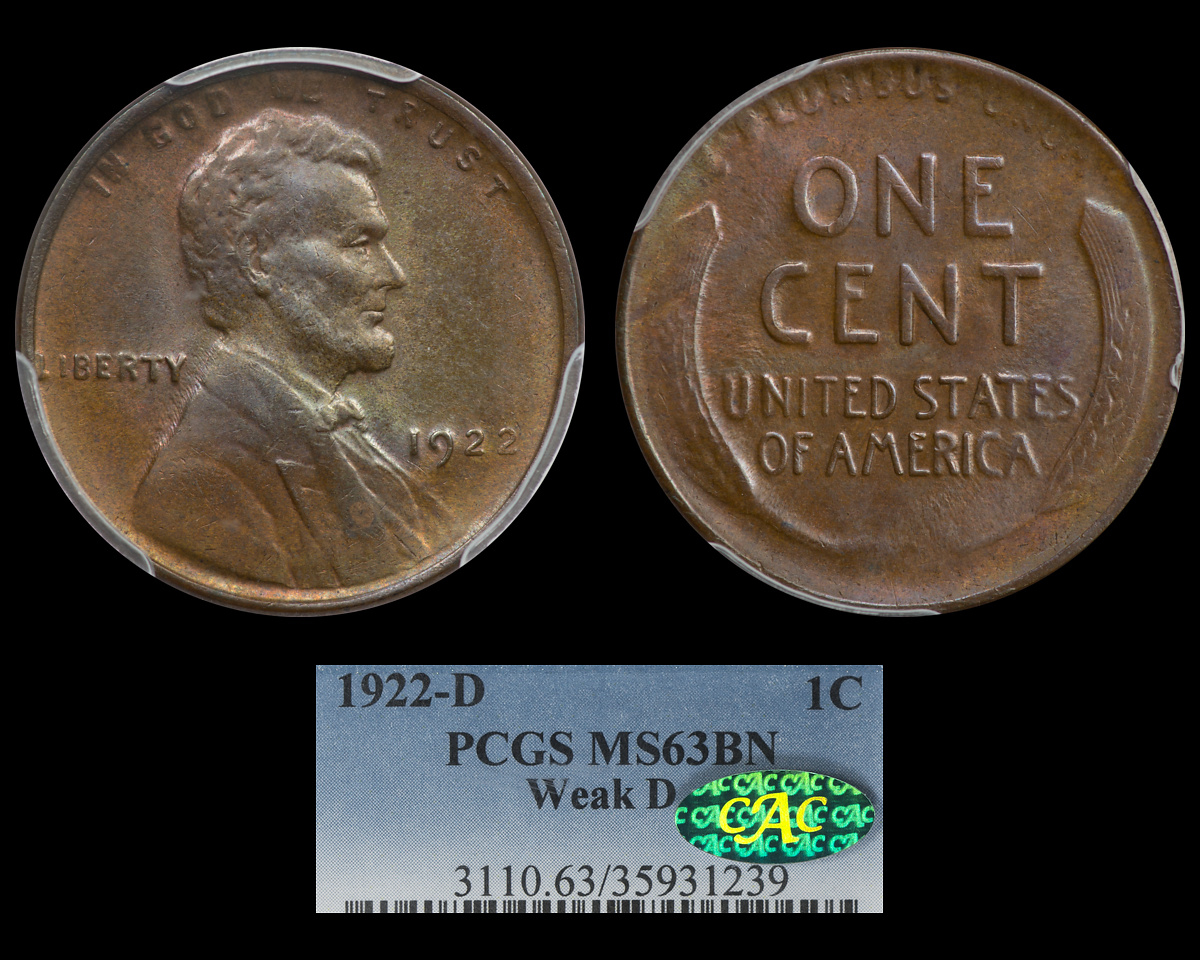
4 reverse die cracks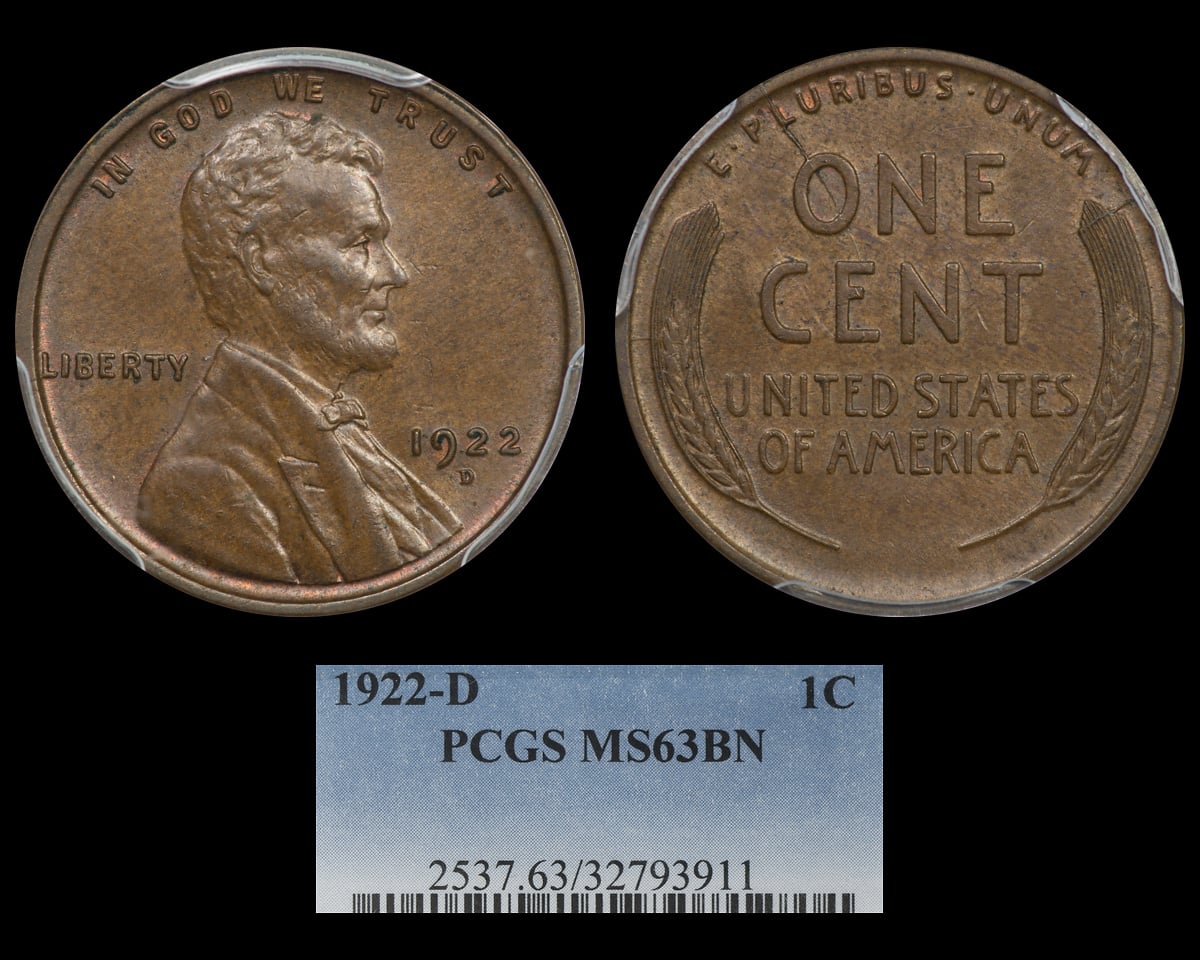
MS63RB reverse die crack, left stalk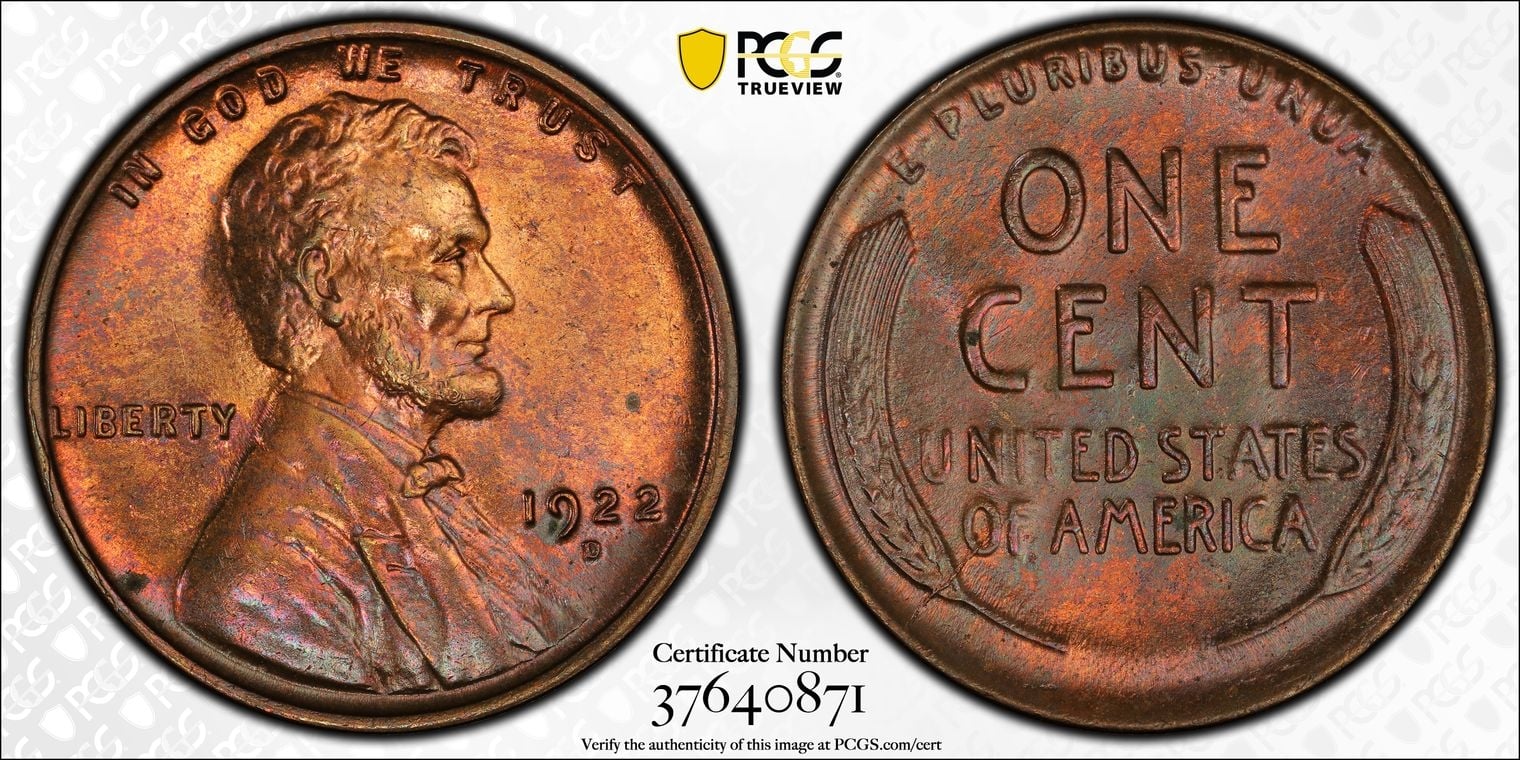
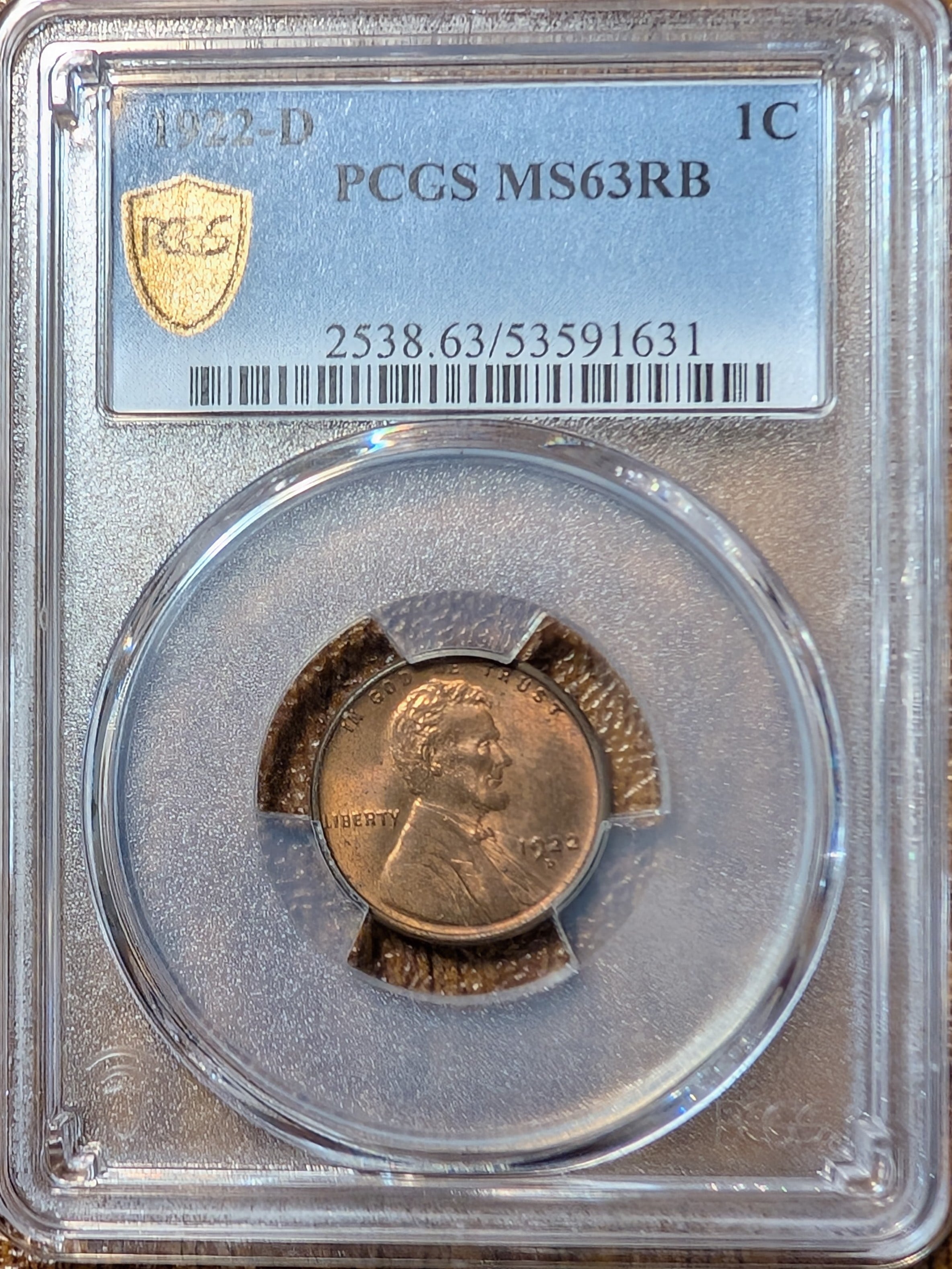
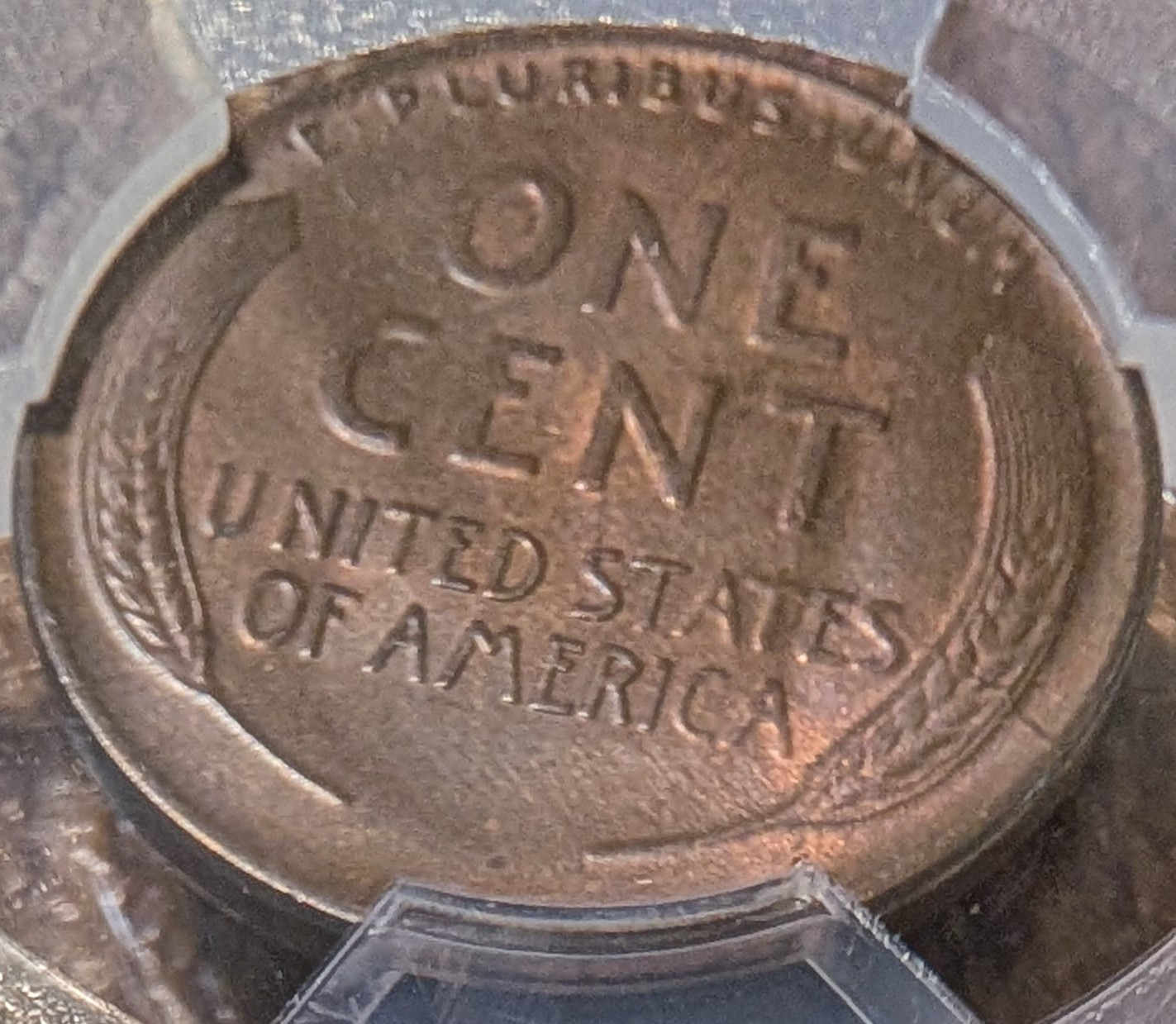
I have the reverse die crack of right stalk in MS63RB too, just no nice pic. Love the history of these.
Add: here's the pics for the reverse die crack on the right stalk. Best I could do with my limited imaging capabilities.
 Tramp
Tramp
The 1819 Chilean Portales Pattern Peso
The 1819 Chilean Portales Pattern Peso
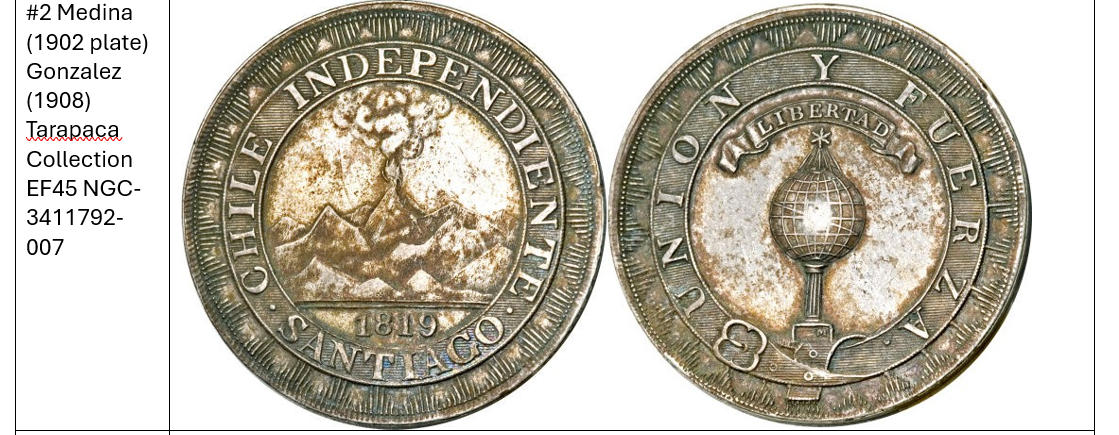
At the August 2025 ANA sale, the Eternal Collection was sold and within it contained the finest documented 1819 Chilean Pattern Peso, often called the Portales Peso, named after mint super intendent Jose Santiago Portales. I underbid this coin, being caught off guard by the price it achieved and immediately regretted the decision not to chase further. For the set which I am building it is an essential coin and with five known, a very rare opportunity.
A collector friend happened to know the person who bought the coin from the sale. I made an offer and was able to purchase the coin, taking delivery at the CSNS show. Thank you to both @Scubafuel and the collector for helping me to add this coin.
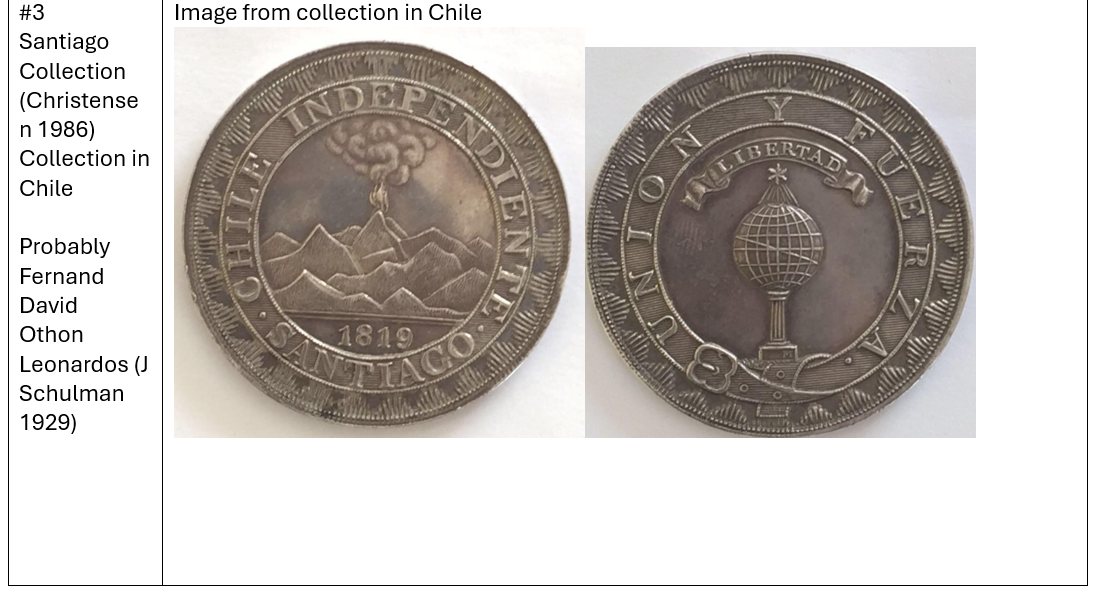
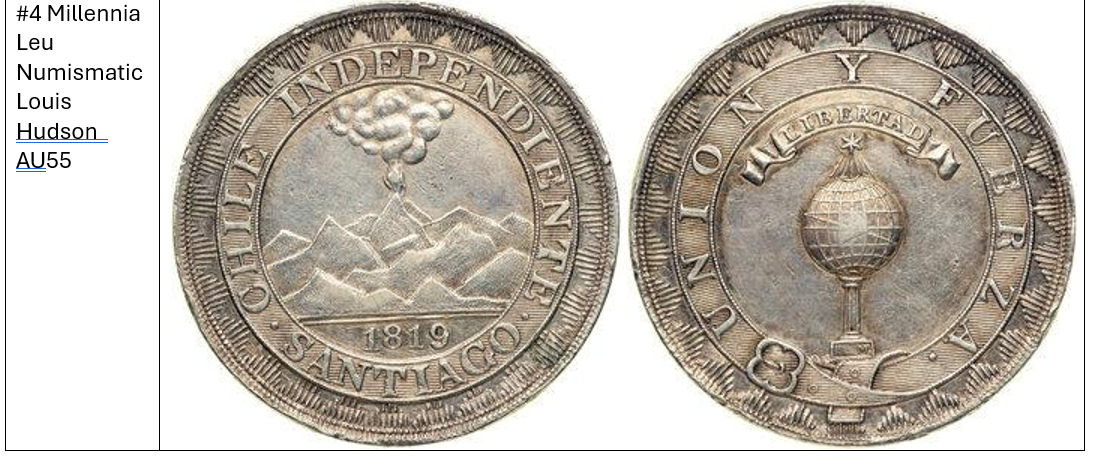
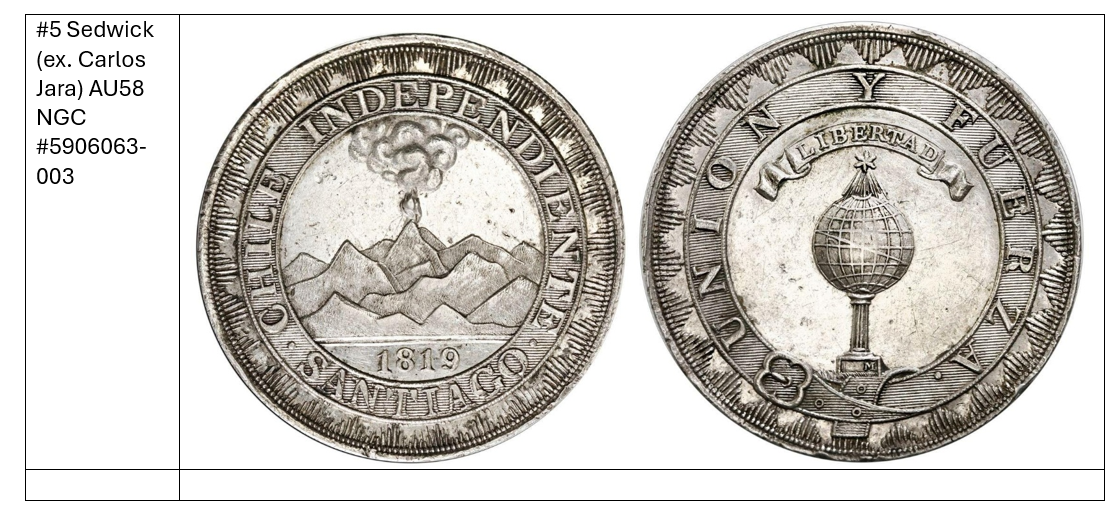
In 1817, the newly independent Chile adopted the iconic Volcano design for its new coinage. Immediately after issuance, the design was aesthetically criticized and often counterfeited. The mint super intendent J.S. Portales struck a proposed replacement with the Volcano and Globe icons featured on the circulating coinage, with a significant more elaborate design and elaborate lattice border. The design was never adopted, perhaps due to the impracticality of the elaborate design and complexity of engraving given the simple technical resources available to the mint at the time. The simpler (and still beautiful) Volcano peso design in circulation remained unchanged until 1834.
The Portales Family
The Portales family had deep roots in the numismatic operations of Chile. J.S Portales was the second in his family to hold the title of Mint Superintendent. His father, Diego Portales also served as Superintendent until 1799 when J.S. Portales took over the role, holding it until at least 1826 when he was sworn into the National Congress as Superintendent. The son of J.S Portales, also named Diego, was an assayer at the mint from 1817 to 1821, adding the “D” to the “FD” during the period.
Census
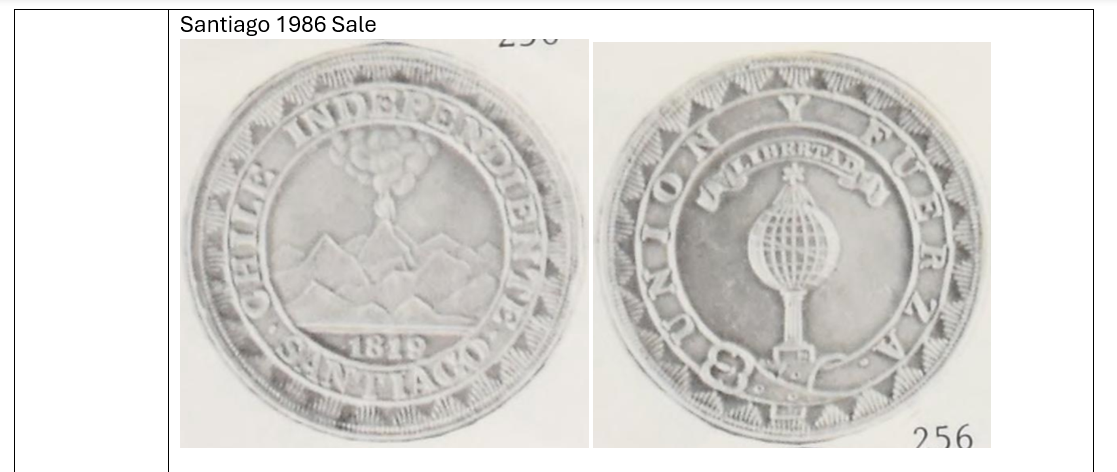
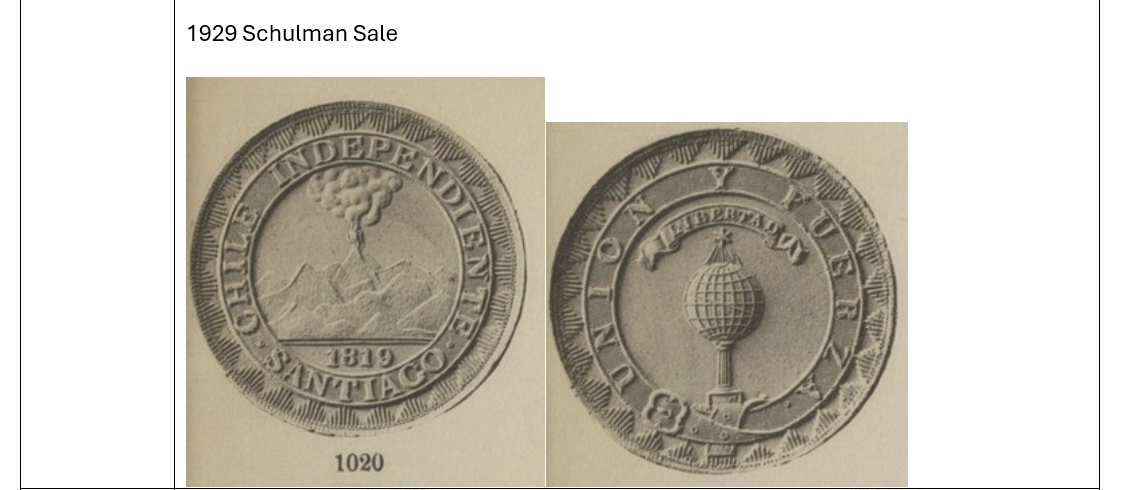
Today, there are five examples of the Portales pattern documented. The Leonardos coin (1929 J. Schulman auction) shown below is either an image of another documented example, or a sixth coin. Carlos Jara suggests that the coin is the same as the Santiago coin sold by Christensen in 1986. Given the near 60 year gap in images, it is very possible.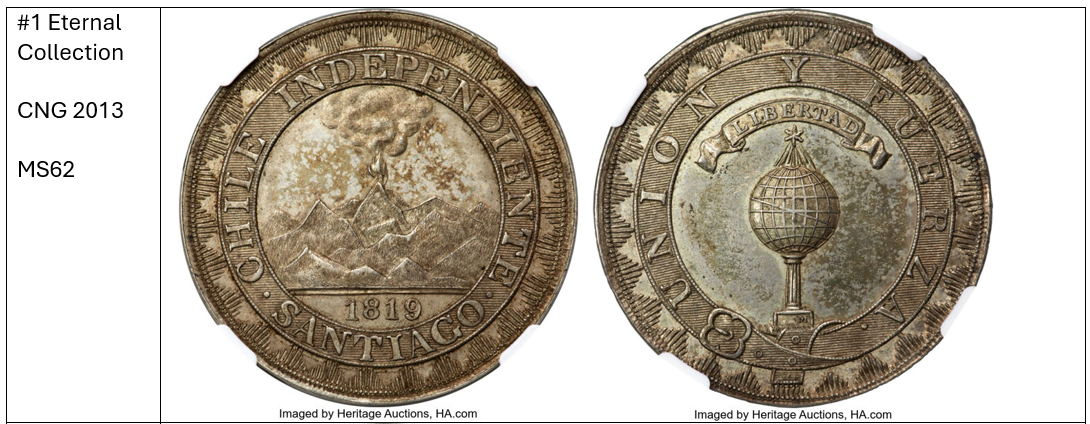
 Boosibri
Central States Report - Thursday - 4/23/26
Another Central States show is in the books for me and here are some of my observations:
~The parking lot was packed as even the last rows had no spots…I was surprised as it’s a huge lot and I had not seen this before…alas it was not all coin show traffic as there was some seminar in an adjacent room.
~There was almost no line to get in at 10:30 (30 min after open).
~Inside it looked like a decent crowd and some tables had several people at them; the PCGS table had a line as well.
~In another thread someone mentioned leaving extra boxes on one of the tables near the entrance that typically has leaflets. I did that and was amused when the first person who walked by opened it to check if any coins were inside and then walked away when he saw it was empty. When I was leaving, the boxes were gone so someone had a use for them.
~I saw a Compugrade holder and a 108 rattler (the later ones; not the white label) at the same table and the dealer knew what they were (both were priced above the market rates).
~There were some bullion tables and I noticed one that had graded MS 69 ASEs at $85 each, which seemed lower than other tables but with spot dropping some today is almost $10 over (one can likely do better if they are in the market for silver). I did not have any bullion to sell so can’t really say how much dealers were paying and if any was moving (I only saw one gold deal while I was waiting at a table but I was not too focused so don’t know how much bullion was moving overall).
~I saw a few Carr pieces at two tables but nothing too interesting (for me at least).
~As is often the case, there were a ton of Morgans at the show. I saw one blast white common date I liked with a PL reverse (and a cameo look to the Eagle) but it was a 67+ grade, which was more than I wanted to spend (there was a solid premium on top of the 67 guide). I also saw a handful of all currency tables (outside of my realm of interest but seemed like there was some variety). And there were some world tables too (a combo of modern, older, and ancient).
~Among my focus of toned Morgans, multiple tables had from one to several. The prices ranged from strong to moon money. I have been seeing incredible results at auctions lately and was hoping there might be something at the show that would be more reasonable but that was not the case. If the dealers sent some of these coins to GC, they would do well but the majority would still not hammer as high as their asking prices. In some cases I believe the dealers just want a flashy coin or two at their table to draw interest and not necessarily to sell (unless it's at the moon money price), which makes sense. But others continue to run their museums (where it is the same toners that were at the last shows).
~I brought a handful of items to sell and it was going slow for a while; fortunately things picked up near the end and I was able to sell a few items, including a modern world coin and two toners. Quite a few people passed on the toners but eventually I found a buyer at a price I was comfortable with.
~I continued my streak of buying and reselling one item at the show. This time it was a world toner. The original dealer had a premium on it for the color but I saw more room and was proven correct when a different dealer paid a bit more for (nothing earth shattering but enough to cover the entrance fee and my 30 minutes of “work” to make the sale-at minimum wage  ).
).
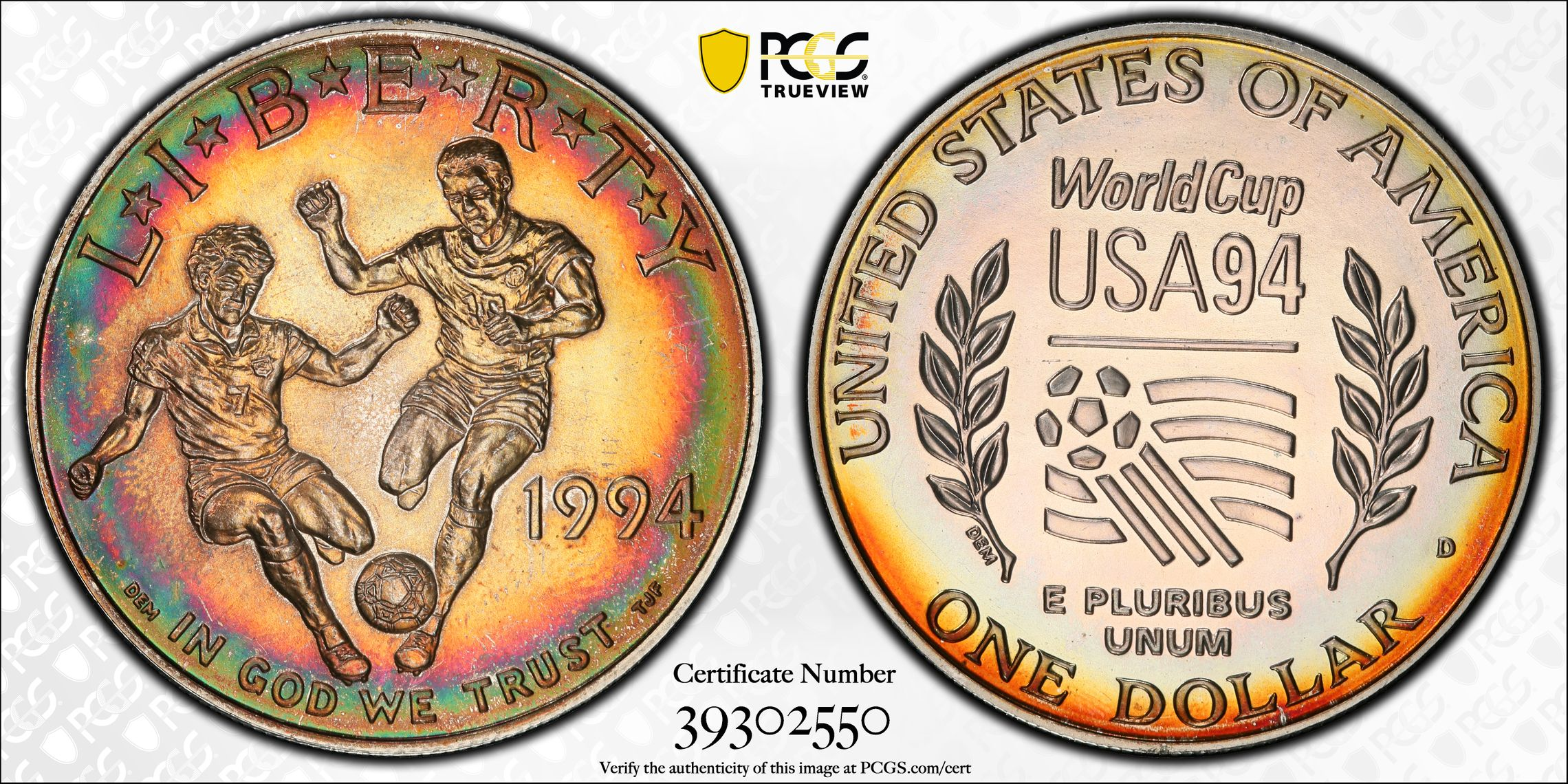
~I only picked up one coin to add to the collection-a nicely toned World Cup Soccer Commemorative. I actually bid on this coin at GC a few months ago and was the direct under bidder. I paid above the auction price because I liked it enough in hand and it came from a person I met via Instagram with whom I’ve now done several deals.
(PCGS MS 67)
 U1chicago