Options
Raw Buffalo Nickel
 rmpsrpms
Posts: 1,972 ✭✭✭✭✭
rmpsrpms
Posts: 1,972 ✭✭✭✭✭
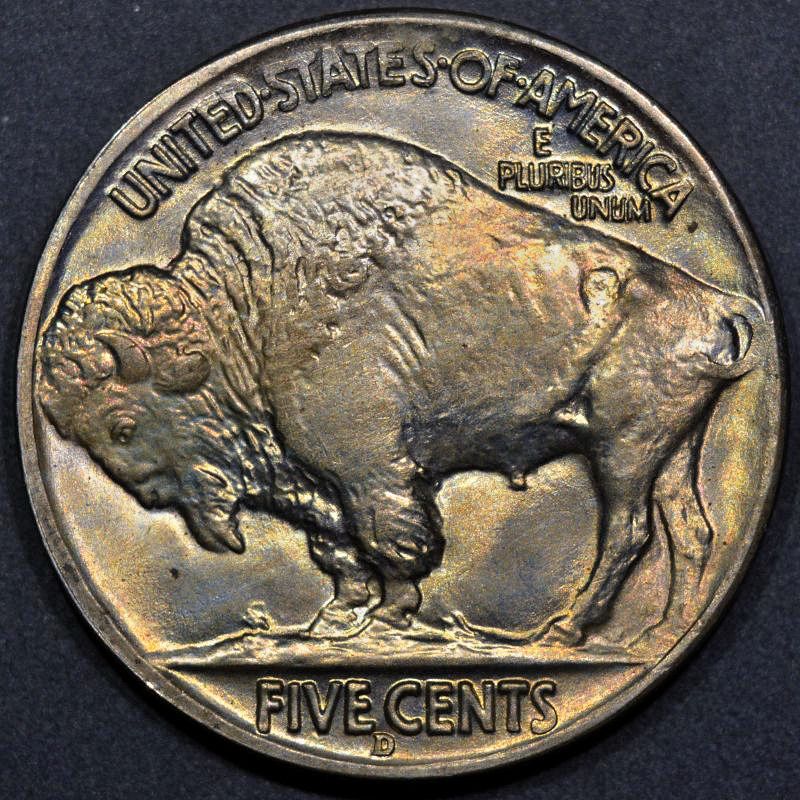
Curious what you all think this might grade, and why. I'm trying to learn a bit about Buffalo Nickel grading, so the "why" is more important than just a grade. Thanks...Ray

0
Comments
But I'll qualify with not my series.
See http://www.doubledimes.com for a free online reference for US twenty-cent pieces
Positive BST Transactions (buyers and sellers): wondercoin, blu62vette, BAJJERFAN, privatecoin, blu62vette, AlanLastufka, privatecoin
#1 1951 Bowman Los Angeles Rams Team Set
#2 1980 Topps Los Angeles Rams Team Set
#8 (and climbing) 1972 Topps Los Angeles Rams Team Set
nice coin and even better images
.
<< <i>It looks as if there may be a flat spot on the Bison's hip, which is the highest point on reverse of the coin. There also looks to be some rub on the cheek and jaw of the Indian, however, it is tough to tell if that is toning or a light rub. It would be very helpful to see the coin in hand, of course. I have seen many examples of this date/mm in 65 holders with a light rub on the hip. It seems to be overlooked by the TPGs at times. Without the rub, it looks to be a 65 due to the mild ticks and light spotting. >>
Here are pics with pseudo-axial lighting to show the surfaces better. I don't think the coin has any rub, looks like the luster is unbroken. But it does have obv and rev strike weakness that shows even more strongly with the axial lighting...Ray
edited to add: the "look" with axial lighting is more like the in-hand look as well.
http://macrocoins.com
<< <i>66 if the luster is great, 65 if not. >>
Based on the image, this seems about right although if I had to guess, I would say 65. Weak strike is the reason it would likely not grade higher -- 38-D's are plentiful and you can find them with better strikes. Look at the top of "States" as well as the tail on the reverse, and then look at the area above the braid on the obverse.
"Look up, old boy, and see what you get." -William Bonney.
- Strike
- Luster
- Tick marks
- spots
- color
- relative common-ness
On that last point, would I expect a common date like this to be equally treated by the grading services, or would "market grading" philosophy dictate a slightly more conservative approach? Thus would a MS67 1938-D on average be nicer than a MS67 1915-S for instance?
http://macrocoins.com
BST Transactions: DonnyJf, MrOrganic, Justanothercoinaddict, Fivecents, Slq, Jdimmick,
Robb, Tee135, Ibzman350, Mercfan, Outhaul, Erickso1, Cugamongacoins, Indiananationals, Wayne Herndon
Negative BST Transactions:
a.k.a "The BUFFINATOR"
Hoard the keys.
<< <i>Thanks everyone for the replies. From what I am reading it doesn't sound like there is so much mystery to grading these, same basic rules apply:
- Strike
- Luster
- Tick marks
- spots
- color
- relative common-ness
On that last point, would I expect a common date like this to be equally treated by the grading services, or would "market grading" philosophy dictate a slightly more conservative approach? Thus would a MS67 1938-D on average be nicer than a MS67 1915-S for instance? >>
PCGS "market grades" almost every series so eye appeal is paramount.
Also, don't be fooled into thinking "there is no mystery to grading these". To properly grade this series, you really have to understand the nuances of each date/mm. Some dates are often better struck than others. Likewise, some dates have better color, luster, or planchets quality than others and are graded accordingly. This date (1938-D) almost always comes with great strike, color, luster, etc thus it takes very little to knock the grade down.