Options
For a Lincoln Cent to Grade XF...
 OneCent
Posts: 3,561 ✭
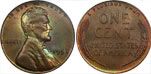
There should not be any wear on the tips of the wheat ears.
If the obverse meets the XF criteria but the reverse does show slight wear on the wheat ear tips, at best the coin should be called choice VF (VF-30 or VF-35).
I do not like my XF Lincoln's with even the slighest wear on the wheat ears!!!
Agree or disagree.
If the obverse meets the XF criteria but the reverse does show slight wear on the wheat ear tips, at best the coin should be called choice VF (VF-30 or VF-35).
I do not like my XF Lincoln's with even the slighest wear on the wheat ears!!!
Agree or disagree.
Collector of Early 20th Century U.S. Coinage.
ANA Member R-3147111
0
Comments
<< <i>There should not be any wear on the tips of the wheat ears.
>>
How would that be possible? An XF coin has seen a lot of circulation. There should definitely be wear on the wheat ears, but all the details should be present and bold.
<< <i>There should not be any wear on the tips of the wheat ears.
If the obverse meets the XF criteria but the reverse does show slight wear on the wheat ear tips, at best the coin should be called choice VF (VF-30 or VF-35).
I do not like my XF Lincoln's with even the slighest wear on the wheat ears!!!
Agree or disagree. >>
I think it's rather silly to look at any one feature of a coin and judge grade. A coin's grade is the sum of the quality of the entire coin, not one feature.
That's the same reason grading buffs by the horn never made sense to me, or grading Barbers by the LIBERTY.
Those types of rules just seem to me to be a shortcut to thinking, and a trap when considering weakly struck coins.
so disagree.
Like Mike said you need to look at the entire coin
EAC 6024
Although your opening question has some general merit on grade, the mantra repeated here often by some posters comes to mind. Each series has unique aspects even within the dates and mints themselves that make generalized grading by a set of guidelines a hard task at best. The mintmarked Lincolns of the '20s, many issues of the Buffalo nickels, the O-mint Morgans (as well as many others), etc., all have some issues on strike that may make a goal of seeing certain detail on a coin nearly impossible.
But, it doesn't mean you can't set a goal of high quality and search for pieces in your chosen series that are representative of the best available for the minting standards of the time. I believe your statement is also slightly affected by the semantics you used. I like my Lincolns the same way to some degree, but realize that 'no' wear and 'slight' wear are very close across the continuum of grading. I can accept a certain amount of lack of crispness in the wheat ears, but like them defined when the issues individual characteristics allow.
Drunner
I look at the wheat kernels (the "bottom" part of the wheat ears) -- if they are all clearly defined and have not been worn together, I feel comfortable that the coin is likely an is an EF.
60 years into this hobby and I'm still working on my Lincoln set!
<< <i>Disagree. There will be light wear on all high points of an EF coin. Even an AU58 may show light war across the tops of the wheat ears.
I look at the wheat kernels (the "bottom" part of the wheat ears) -- if they are all clearly defined and have not been worn together, I feel comfortable that the coin is likely an is an EF. >>
I have xf's through au58's that have absolutely no wear on the tips of the wheat ears.
That said, I do understand that a coin can have some light wear on the wheat ears and qualify as xf or even au if the wear is slight enough. I also understand that the whole coin needs to be considered when determining a grade, not just the wheat stalks.
I think that what I like is xf's with au reverses.
Collector of Early 20th Century U.S. Coinage.
ANA Member R-3147111
To add - if no wear on the wheat ears is what you like and what you look for when shopping for new coins for your collection, that is fine, just maybe a tad unrealistic, and you may need to step up and purchase AU coins in some instances to maintain this look for your set.
<< <i>I'd say it's open to interpretation....MS63BN: >>
I thimk that could be accurately graded, as long as its a year with very weak strikes, such as 1922 wheats.
<< <i>
<< <i>I'd say it's open to interpretation....MS63BN: >>
I thimk that could be accurately graded, as long as its a year with very weak strikes, such as 1922 wheats. >>
<< <i>
<< <i>There should not be any wear on the tips of the wheat ears.
>>
How would that be possible? An XF coin has seen a lot of circulation. There should definitely be wear on the wheat ears, but all the details should be present and bold. >>
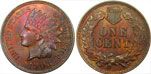
I agree and not to be an ass about this but it is kind of like saying for an Indian cent to be XF there should be full diamonds with no wear on the obverse.
WS