Options
1858 $10: a classic rarity of US gold
 RYK
Posts: 35,801 ✭✭✭✭✭
RYK
Posts: 35,801 ✭✭✭✭✭
The 1858 Liberty $10 is one of the classic rarities of the Liberty $10 series and once a popular rarity of the US gold series. To give you an idea how rare the coin is, the total PCGS population is 34 coins (highest grade MS-64, next is AU-55!), and Heritage has offered the date only 19 times in the last 13 plus years. The original mintage was a scant 2521 pieces.
B. Max Mehl, Coinguy's great-uncle, gets much of the credit for popularizing this coin to a generation of collectors in the early-mid 20th century. Apparently, he made quite a "hoopla" (per David Akers), whenever the date appeared in his auctions, claiming that only a handful existed. It was notably absent from the Dunham Collection, but was of course present in the Eliasberg, Bass, and Norweb Collections. In fact, it's celebrated status was probably overstated in the past by Mehl as probably more than 30 pieces exist. It has, however, largely slipped off the radar screen as a "classic rarity" and a condition rarity.
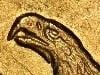
Here's a photo of a coin currently on the market (I have no ownership interest in it):

Here are some prior examples from Heritage sales:
First, an NGC AU-55:


And a PCGS AU-50:


Finally, the coin below was in a previous ANR sale (Link). It did not meet its reserve. I emailed Frank Van Valen and informed him that the coin was (is) the ex-Eliasberg coin, and the coin, to my knowledge, has never again surfaced on the open market. The distinctive copper toning spots allowed me to make the connection to the coin pictured in the Eliasberg catalog.


I have never owned one of these and doubt that I ever will. It lacks a mintmark, which all but excludes me from being interested in it.
B. Max Mehl, Coinguy's great-uncle, gets much of the credit for popularizing this coin to a generation of collectors in the early-mid 20th century. Apparently, he made quite a "hoopla" (per David Akers), whenever the date appeared in his auctions, claiming that only a handful existed. It was notably absent from the Dunham Collection, but was of course present in the Eliasberg, Bass, and Norweb Collections. In fact, it's celebrated status was probably overstated in the past by Mehl as probably more than 30 pieces exist. It has, however, largely slipped off the radar screen as a "classic rarity" and a condition rarity.
Here's a photo of a coin currently on the market (I have no ownership interest in it):
Here are some prior examples from Heritage sales:
First, an NGC AU-55:
And a PCGS AU-50:
Finally, the coin below was in a previous ANR sale (Link). It did not meet its reserve. I emailed Frank Van Valen and informed him that the coin was (is) the ex-Eliasberg coin, and the coin, to my knowledge, has never again surfaced on the open market. The distinctive copper toning spots allowed me to make the connection to the coin pictured in the Eliasberg catalog.
I have never owned one of these and doubt that I ever will. It lacks a mintmark, which all but excludes me from being interested in it.
0
Comments
Experience the World through Numismatics...it's more than you can imagine.
Below is the auction catalog description from when the THE MS64 example sold in 1995 for $104,500. By the way, I see from the description that Mr. Andy Lustig was apparently a previous owner of the coin:
"1858 MS 64 PCGS. When this coin surfaced more than twenty years ago it was universally considered the finest 1858 in existence. Today it is still regarded as such, unapproached in quality by any other coin of this date (the NGC 64 is this same coin).
This fabulous coin first entered the marketplace in the early 1970s. Bits and pieces of the story have been told previously, but we believe this is the first time it has been told in its entirety. In 1972 a man entered the New York offices of Manfra, Tordella and Brookes. He opened a small chamois pouch and showed Paul Nugget an 1858 eagle. The coin was presented face up, and because it had such mint bloom he naturally assumed it had to be an O-mint. To quote Paul, "It was beyond comprehension that an 1858-P could be presented over the counter in such a superior state of preservation." Naturally he bought the coin. He then placed it in the collection of Frank Bohren. When Bohren died, his trust fund consigned the coin to Auction '80 where it was given a lengthy description by David Akers and it realized $115,000. It next passed to an unnamed intermediary, from whom Andy Lustig eventually purchased the coin. He then placed it with Warren Miller, who kept it as one of the cornerstones of his extensive collection of Liberty tens.
The coin is truly phenomenal, and would be an impressive piece even if it were a common date. According to the man who originally sold it to Paul Nugget, this coin resided in the same chamois pouch from the time it was struck until 1972. The design elements are sharply defined in all areas. The mint luster is unparalleled on any No Motto ten we can remember having seen. It is bright, almost semi-prooflike, with a cartwheel effect similar to silver dollars from the early 1880s. There are scattered portions of coppery-reddish patina scattered about both sides and a small grease stain is noted on the tip of the eagle's left (facing) wingtip. Without a doubt, this is one of the most important and prestigious coins in all of U.S. numismatics, and we are sure it will realize a price commensurate with its rarity, quality, and importance."
Didn't wanna get me no trade
Never want to be like papa
Working for the boss every night and day
--"Happy", by the Rolling Stones (1972)
<< <i>Nice post, Robert.
Below is the auction catalog description from when the THE MS64 example sold in 1995 for $104,500. By the way, I see from the description that Mr. Andy Lustig was apparently a previous owner of the coin:
"1858 MS 64 PCGS. When this coin surfaced more than twenty years ago it was universally considered the finest 1858 in existence. Today it is still regarded as such, unapproached in quality by any other coin of this date (the NGC 64 is this same coin).
This fabulous coin first entered the marketplace in the early 1970s. Bits and pieces of the story have been told previously, but we believe this is the first time it has been told in its entirety. In 1972 a man entered the New York offices of Manfra, Tordella and Brookes. He opened a small chamois pouch and showed Paul Nugget an 1858 eagle. The coin was presented face up, and because it had such mint bloom he naturally assumed it had to be an O-mint. To quote Paul, "It was beyond comprehension that an 1858-P could be presented over the counter in such a superior state of preservation." Naturally he bought the coin. He then placed it in the collection of Frank Bohren. When Bohren died, his trust fund consigned the coin to Auction '80 where it was given a lengthy description by David Akers and it realized $115,000. It next passed to an unnamed intermediary, from whom Andy Lustig eventually purchased the coin. He then placed it with Warren Miller, who kept it as one of the cornerstones of his extensive collection of Liberty tens.
The coin is truly phenomenal, and would be an impressive piece even if it were a common date. According to the man who originally sold it to Paul Nugget, this coin resided in the same chamois pouch from the time it was struck until 1972. The design elements are sharply defined in all areas. The mint luster is unparalleled on any No Motto ten we can remember having seen. It is bright, almost semi-prooflike, with a cartwheel effect similar to silver dollars from the early 1880s. There are scattered portions of coppery-reddish patina scattered about both sides and a small grease stain is noted on the tip of the eagle's left (facing) wingtip. Without a doubt, this is one of the most important and prestigious coins in all of U.S. numismatics, and we are sure it will realize a price commensurate with its rarity, quality, and importance." >>
I love stories like that about coins.
I LOVE the look of the AU-50 old holder
Experience the World through Numismatics...it's more than you can imagine.
No question about it: key date.
Now that's a nice coin, and story! Thanks to both Robert and Mark for telling it.
-Amanda
I'm a YN working on a type set!
My Buffalo Nickel Website Home of the Quirky Buffaloes Collection!
Proud member of the CUFYNA
The 1889 $10 is a low population (PCGS pop 86 in all grades, highest graded at PCGS are four 62's) and low mintage (4485) coin that pales in comparison to other With Motto $10's, namely ALL of the Carson City $10's from the 1870's, the 1875 Philly $10 (mintage 120, yes 120!, PCGS pop of 12 coins), and the 1883-O $10 (mintage 800, PCGS pop 24 in all grades).
The 1889 $10 is closer to being "unusual date" gold, than rare date gold. I do not think that it is a coin that will ever be popular among rare date gold collectors because it lacks a "story" and is overshadowed by quite a few other coins in the series.
Collectors of early coins by variety find R5 coins cool but only really sport wood over R6 and higher, and in such a long series (not a limited-year type) I think a coin needs to be a proof, or have a more memorable date than 1858 or 1889 or 1875, or have more "story" as to why the mintage is low or the coin otherwise special, in order to get a lot of attention.
Not saying it's not a great or rare or wonderfully historic coin, it sure is
Liberty: Parent of Science & Industry
I saw one at at the White Plains, NY coin show a couple of years or so ago. The dealer, who had a case full of pricy material, wasn't too happy to have it.
He had purchased it on his own initiative to offer to a customer who was putting together a date-and-mintmark set of eagles. Unfortunately, the customer had had some reverses in his business (the dealer told me that he was a senior executive at a Fortune 500-type company) and wasn't able to buy such a pricy coin at the moment.
The dealer was now stuck, because that one customer was the only guy he knew of who was putting together a set of eagles!
I hope the owner of this coin has better luck selling it
Check out the Southern Gold Society
I predict that he will sell it very quickly. If I could link it to one of the great collections of the past, I would buy it myself. I still regret not (leeping my mouth shut and) buying the Eliasberg coin when it was available. I agree with your statement. It is indeed a "specialist coin" and unlike other expensive specialist coins (ie. 1861-C $5 or 1865 $3), relatively illiquid.