Options
A comparison of 2 Half-Dimes
 JrGMan2004
Posts: 7,557 ✭
JrGMan2004
Posts: 7,557 ✭
Hello all, been a while since I've made any real numismatic posts 
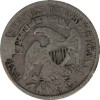
Currently at work, but had a bit of a break, and happened to have my half-dimes in my bag, so I started looking at them. I recently purchased a half-dime (I think I bought it right before the ANA Show off of eBay), an 1831 LM-1.3. For some reason, the 1831 LM-1, LM-2, and LM-3 marriages have been fascinating for me. First, the dies for LM-1 were paired together 3 times, however, in between the 1st and 2nd and 2nd and 3rd pairings, the reverse die was paired with an 1830 dated obverse die. This is easy to see if you have all 5 coins by comparing the reverse die state, you can easilly see it progress, eventually to a CUD on 1831 LM-1.3. A cud also develops and appears on the reverse die for LM-2. Then on LM-3, the obverse die has a cud appear around Stars 2-4. Currently, I believe there is only one example known with the 1831 Obverse 1 die with the full cud. I now have the cud of LM-1.3 and the cud of LM-2, only the LM-3 cud remains for my collection to be complete in that regard. However, I am interested in putting together a die state progression for the cud on LM-1.3. While LM-1 is an R.1 and easilly attainable, the other marriage that comes inbetween 1.1 and 1.2 and 1.2 and 1.3 is an R.4 and a little harder to obtain (I do not recall what the LM designation is for this other die marriage). However, I do have 2 coins so far, a fairly early die state of LM-1.1, and the full cud die state of LM-1.3 Below, you will find some rather large pictures.


Currently at work, but had a bit of a break, and happened to have my half-dimes in my bag, so I started looking at them. I recently purchased a half-dime (I think I bought it right before the ANA Show off of eBay), an 1831 LM-1.3. For some reason, the 1831 LM-1, LM-2, and LM-3 marriages have been fascinating for me. First, the dies for LM-1 were paired together 3 times, however, in between the 1st and 2nd and 2nd and 3rd pairings, the reverse die was paired with an 1830 dated obverse die. This is easy to see if you have all 5 coins by comparing the reverse die state, you can easilly see it progress, eventually to a CUD on 1831 LM-1.3. A cud also develops and appears on the reverse die for LM-2. Then on LM-3, the obverse die has a cud appear around Stars 2-4. Currently, I believe there is only one example known with the 1831 Obverse 1 die with the full cud. I now have the cud of LM-1.3 and the cud of LM-2, only the LM-3 cud remains for my collection to be complete in that regard. However, I am interested in putting together a die state progression for the cud on LM-1.3. While LM-1 is an R.1 and easilly attainable, the other marriage that comes inbetween 1.1 and 1.2 and 1.2 and 1.3 is an R.4 and a little harder to obtain (I do not recall what the LM designation is for this other die marriage). However, I do have 2 coins so far, a fairly early die state of LM-1.1, and the full cud die state of LM-1.3 Below, you will find some rather large pictures.
-George
42/92
42/92
0
Comments
42/92
I'll give you a ttt for the effort.I'm working on a set of Capped Bust Half Dimes in high end AU,preferbly with colorful toning.So far I have: 1829,1834,1835,1836,& 1837. All in AU-55 to 58. I'll post some pictures later on.
Take care
Hayden
Ray
<< <i>Nice pictures George.
Ray >>
It's amazing what you can do with a high resolution camera with a good macro lens built in
42/92
That set should be very impressive when completed. I especially like the idea of the LM1-LM1.4 progression set. I'd love to see a nice collage photo or something to that effect when it's complete.
Rich
Hmmmm. I do believe that I have seen both of those coins before. Right?
Our eBay auctions - TRUE auctions: start at $0.01, no reserve, 30 day unconditional return privilege & free shipping!
<< <i>Hmmmm. I do believe that I have seen both of those coins before. Right? >>
Probally not... the LM-1.1, maybe, but definately not the LM-1.3
42/92
I, too, have been fascinated with the 1831 LM-1 die marriage, and the subsequent remarriages using that same reverse. If you look in the Logan/McCloskey half dime book, on page 70, you will see that I discovered the three remarriages for the 1831 LM-1 using Reverse L and wrote it up in an article in the John Reich Journal in October 1994.
For a FUN Show several years ago, I made a small (non-competitive)exhibit which asked the question "What Is a Remarriage?". In the display, I showed six (6) AU examples of the Reverse L die, arranged in descending order of emission sequence, or die deterioration, from a 'perfect' die (somewhat earlier than your first coin) to the latest die state, with the retained cud above NIT (slightly later than your second coin). I then instructed the viewer to turn the set of coins over, revealing the obverse dies. The obverse dies were dated 1831, 1830, 1831, 1830, 1831, 1831 in the chronological order of manufacture! All of the coins were minted in 1831, even the ones dated 1830. This reciprocating use of two different obverse dies, always paired with the same reverse die, effectively demonstrated the concept of a remarriage.
I have since taken apart the display and returned the coins to my collection. Perhaps I can reassemble it to show you at this year's FUN Show.
The obverse dies were dated 1831, 1830, 1831, 1830, 1831, 1831 in the chronological order of manufacture! All of the coins were minted in 1831, even the ones dated 1830. This reciprocating use of two different obverse dies, always paired with the same reverse die, effectively demonstrated the concept of a remarriage.
Steve, is the theory that the Mint would remove dies for maintenance, then return them to the presses without remembering the previous marriages? Or, did the reverse die stay in the press and the Mint removed only the obverse die from time to time for maintenance or whatever reason?
Thanks, Dennis
Our eBay auctions - TRUE auctions: start at $0.01, no reserve, 30 day unconditional return privilege & free shipping!
42/92
There could be several reasons for removing the coinage dies from the coin press, and then replacing them, or others, back into the coin press to resume production of coins. First, often coins of a specific denomination were minted in very small quantities to satisfy the needs of a specific 'customer' who brought in coin silver to be minted into coins. The Mint did not have large quantities of silver and gold in reserve, and mint large quantities of coins in reserve. Rather, they would wait until an individual brought in foreign coins or silver in another form, whereupon it would be assayed and then minted into coins in the denominations requested by the 'customer'. Thus, coins were often minted in very small groups, on demand.
Also, it has been pretty well documented that the coinage dies were removed from the coin press at the end of each work day and placed in a vault for security. Then, at the beginning of the next work day, a pair of dies would be removed from the vault and placed into the press, with little regard to which dies they were, or even if the date on the obverse die was current. Today there is a law that prevents the Mint from striking coins with anything other than the current date, but in the nineteenth century that was not the case. Indeed, dies were a very precious and valuable comodity, representing many man/days of expensive labor. If more coins could possibly be struck from a die, they would be. The emission sequence (chronological order in which specific die marriages were produced) for the Bust half dimes has been determined, after considerable study, and illustrated in the Logan/McCloskey half dime reference. This often overlooked resource is perhaps one of the most informative pieces of information offered in that authoritative book. It illustrates the very complex and random nature of the die selection used in the production of the half dimes, and introduces yet another fascinating area of die marriage collecting - remarriages.
It is these factors, and a few others, that account for the seemingly random nature by which die pairs were selected for use in striking coins in the nineteenth century mint. Also, remember that the machinery in the early Mint was hardly perfect, and was subject to many breakdowns and repairs. It is likely that the coinage dies would be removed from the presses when repairs or adjustments were made, providing yet another reason for changing the die pair.
It is interesting, and perhaps a bit informative, to do a little quick math to determine just how many coins could be struck in a single day, or an hour, or even per minute. If we assume, for purposes of discussion, that a single coin press was used to strike half dimes, for instance. And let's also assume that the coin press NEVER broke down. Also, let's assume that there was uninterrupted production of half dimes for all twelve months of the year. All of these assumptions have potential flaws, but let's accept them for our discussion. Now, if we calculate how many seconds there were in an average work year (this was before the AFL-CIO, and the 40 hour work week; laborers worked as much as 12 hours a day, and 6 days a week), we find the following:
60 sec x 60 min x 12 hrs x 6 days x 50 wks = 12,960,000 seconds/year
If we divide that by 1 million (an average yearly production of Capped Bust half dimes), we find that they produced one half dime every 12.9 seconds - constantly - non-stop for an entire year!! And with a hand screw press, at that! Imagine working that fast and that hard (the counterweights on the hand screw press had plenty of inertia, and took considerable strength to get moving - every 12.9 seconds). And if they stopped for anything, including an equipment breakdown, then the lost time would mean that the production rate would have to increase. Actually, taking into consideration all of the possible reasons for interruption of production, then coins were struck at a rate of one every 8 or 9 seconds! This kind of puts things into perspective. You begin to wonder how, before the days of automation, they could possibly stay ahead of demand in coin production.
<< <i>the other marriage that comes inbetween 1.1 and 1.2 and 1.2 and 1.3 is an R.4 and a little harder to obtain (I do not recall what the LM designation is for this other die marriage) >>
George, You are referring to the the 1830 LM-9 remarriages. The remarriage chart (MrHalfDime's display group of five coins) gives this order: 1831 LM-1.1, 1830 LM-9.1, 1831 LM-1.2, 1830 LM-9.2, and then 1831 LM-1.3. The Jules Reiver CBHD being sold by Heritage features an NGC AU-58 labelled as LM-9.2, if you are interested for your set. I'm not so sure that coin isn't the 9.1 remarriage instead...the reverse L remarriage chart tells me that the top right of T1 should be filled if the coin is to be classified 9.2. Anyway, if you are interested in putting together a die state progression set, a 9.1 and 9.2 from 1830 would be needed, so this coin would be a good start.
BTW, I recently picked up my first example of the 1831 LM-1.3 from Brian Greer (VF-30 with retained cud). I'm still missing the 1831 LM-1.1, but there are plenty of examples out there to be had.
As to Barndog's comment "but there are plenty of examples [of the 1831 LM-1.1] out there to be had" I wish him luck, and will help him to locate one. But I recall that when I was researching this remarriage, I had great difficulty in locating the 'perfect' die state of the reverse, with no filling of S2. Might as well make it really difficult, and look for an example with no filling of M1, either. My good friend and fellow half dime researcher Mark Smith, for whom the half dime book was dedicated, had the only other example known at that time (1994). A few other examples have turned up since then for this very difficult early die state of an otherwise R1 marriage.
Steve,
THANK YOU for that great answer to my question. I was not aware that the dies were locked up at night. Regarding your math exercise, we can also factor in that the Mint had more than one press running a certain denomination, right? Let's take the year 1831. How many presses did the Mint have in operation? We can assume that the Mint was producing Half Cents (probably dated 1832), Large Cents, Half Dimes, Dimes, Quarters and Half Dollars concurrently. Was there a dedicated press for each denomination (based on required tonnage), or were there multiple presses running the same denomination?
I recall a recent debate regarding the estimated production rate of 1793-1795 coppers. The extreme estimate was 60 coins per minute, which seems impossible, and the generally accepted rate was 30 coins per minute, which still seems ambitious considering the minting equipment of the time. I also recall reading that the U.S. Mint actually had an automatic planchet feeder as early as 1793. Imagine that; no electricity, no precision tooling equipment and no part supply superstores, yet they managed to design and build an automatic planchet feeder. I believe Ekfeldt was responsible for this, but I may be mistaken.
Thanks, Dennis
Our eBay auctions - TRUE auctions: start at $0.01, no reserve, 30 day unconditional return privilege & free shipping!
Why not? Russ Logan did it. He found an MS-63 1833 LM-5/V10, the finest known, and now residing in a Tennessee collection. Never say no. It could happen!
<< <i>I recall a recent debate regarding the estimated production rate of 1793-1795 coppers. The extreme estimate was 60 coins per minute, which seems impossible, and the generally accepted rate was 30 coins per minute, which still seems ambitious considering the minting equipment of the time. I also recall reading that the U.S. Mint actually had an automatic planchet feeder as early as 1793. Imagine that; no electricity, no precision tooling equipment and no part supply superstores, yet they managed to design and build an automatic planchet feeder. I believe Ekfeldt was responsible for this, but I may be mistaken.
Thanks, Dennis >>
I actually did a term paper for my English class this fall on the first U.S. Mint. As I read it, there was a tube affixed somewhere near the base of the press that was large enough to stack planchets (Don't know how many planchets). When the press swung back, and triggered a mechanism that popped the coin out of the little cup, and moved it aside, while bringing a new planchet into place with a little thingamabob. Something like that. I need to read it a few more times to get a proper grasp on exactly how it worked...
42/92