Options
1914/3 Buffalo Nickel…have a look
 Vetter
Posts: 1,057 ✭✭✭✭✭
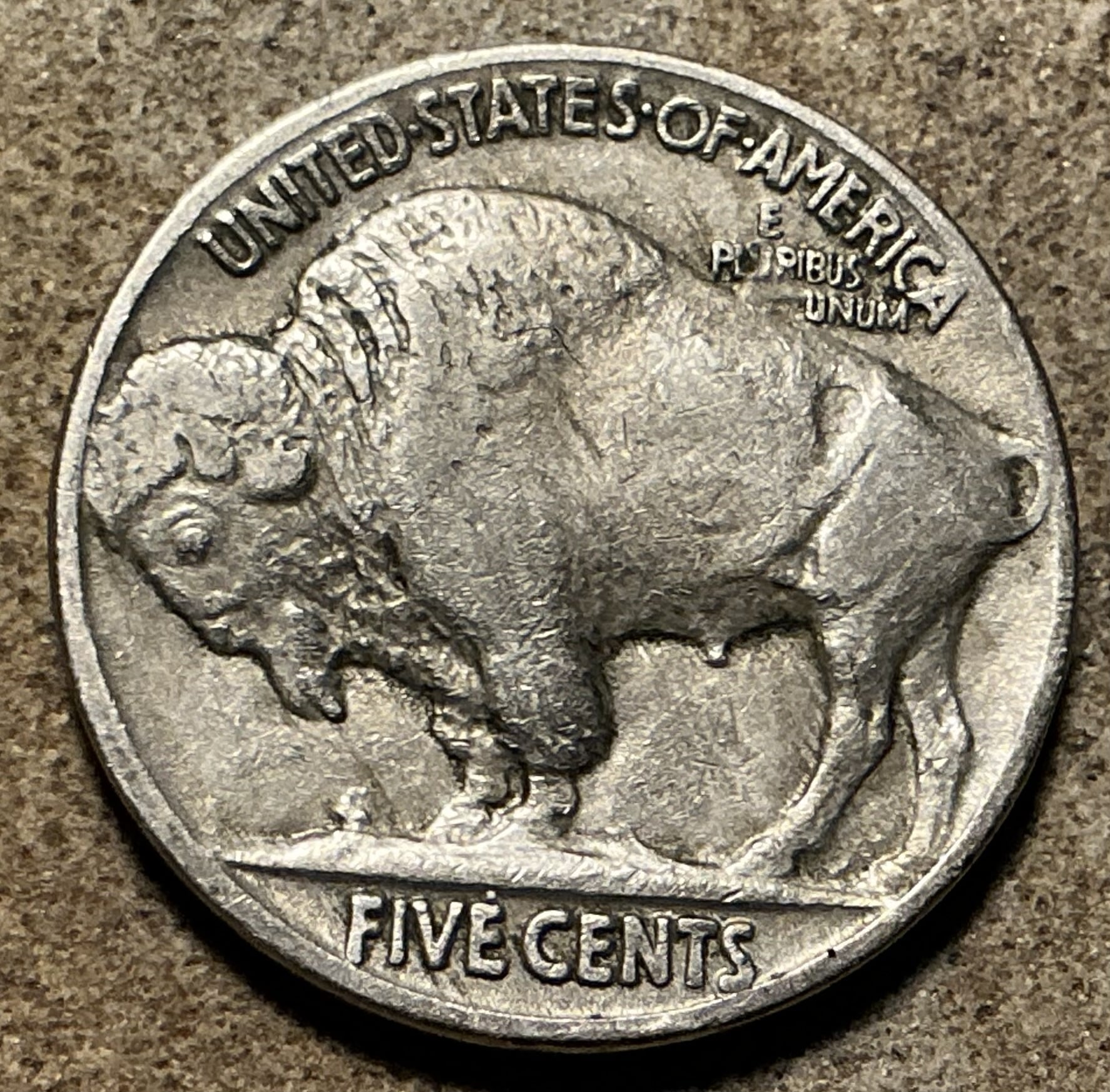
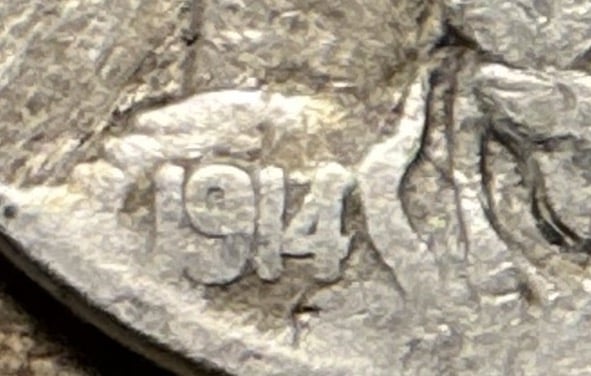
I know this variety has pretty much been debunked, but boy does this look like a 14/3. Best one I’ve seen in a very long time. What say you?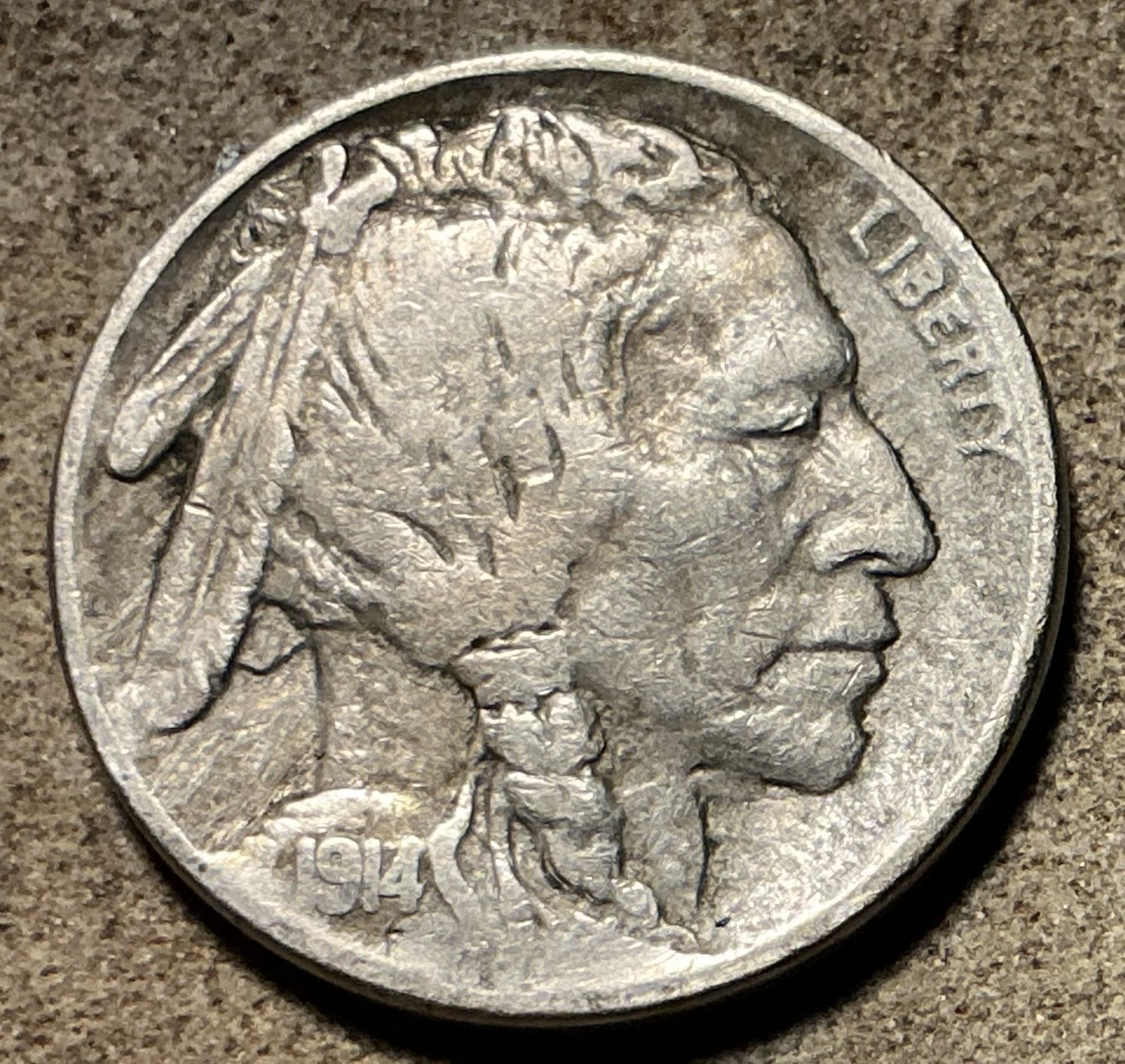
Members I have done business with:
Silverman68, jfoot13, GAB, ricman, Smittys, scrapman1077, RyGuy, Connecticoin, Meltdown, VikingDude, Peaceman, Patches and more.
5
Comments
Looks like it.
Jim
When a man who is honestly mistaken hears the truth, he will either quit being mistaken or cease to be honest....Abraham Lincoln
Patriotism is supporting your country all the time, and your government when it deserves it.....Mark Twain
Who says that the 1914/3 overdate has been debunked? Someone may express their opinion that they don’t like it, but that does not mean that a variety has been debunked.
Nice overdate, BTW.
I thought I read or heard that the TPG companies were not slabbing them anymore. Maybe I’m wrong.
Silverman68, jfoot13, GAB, ricman, Smittys, scrapman1077, RyGuy, Connecticoin, Meltdown, VikingDude, Peaceman, Patches and more.
Looks good from here
It is a legitimate over-date (my opinion).
PCGS still recognizes it.
https://www.pcgs.com/coinfacts/coin/1914-3-5c/93924
BST transactions: dbldie55, jayPem, 78saen, UltraHighRelief, nibanny, liefgold, FallGuy, lkeigwin, mbogoman, Sandman70gt, keets, joeykoins, ianrussell (@GC), EagleEye, ThePennyLady, GRANDAM, Ilikecolor, Gluggo, okiedude, Voyageur, LJenkins11, fastfreddie, ms70, pursuitofliberty, ZoidMeister,Coin Finder, GotTheBug, edwardjulio, Coinnmore, Nickpatton, Namvet69,...
just the Denver version
I sent one just like that to PCGS and they would not attribute it as the variety. That was 10 years ago.
There a long discussion within the error and variety community about these, and in my opinion the consensus now is that these are indeed overdates.
TD
Back when Homerunhall was still posting on here, he made a statement about these. I believe he was doubtful about recognizing them as a variety but I may be misremembering.
They have the misfortune of paling in comparison to the 1916 DDO and the 1918/7-D.
"Look up, old boy, and see what you get." -William Bonney.
If the top of the so-called 3 shows why wouldn't the bottom also show?
I will explain this tomorrow. In the meantime, find a good picture of the date on a 1916 Doubled Die obverse nickel and see how the bottom of one of the 6’s is missing.
.
.
.
PCGS Coinfacts images
https://www.pcgs.com/coinfacts/coin/1914-3-5c/93924/62
https://www.pcgs.com/coinfacts/coin/1916-5c-doubled-die-obverse/3931
https://www.pcgs.com/coinfacts/coin/1918-7-d-5c/3939
BST transactions: dbldie55, jayPem, 78saen, UltraHighRelief, nibanny, liefgold, FallGuy, lkeigwin, mbogoman, Sandman70gt, keets, joeykoins, ianrussell (@GC), EagleEye, ThePennyLady, GRANDAM, Ilikecolor, Gluggo, okiedude, Voyageur, LJenkins11, fastfreddie, ms70, pursuitofliberty, ZoidMeister,Coin Finder, GotTheBug, edwardjulio, Coinnmore, Nickpatton, Namvet69,...
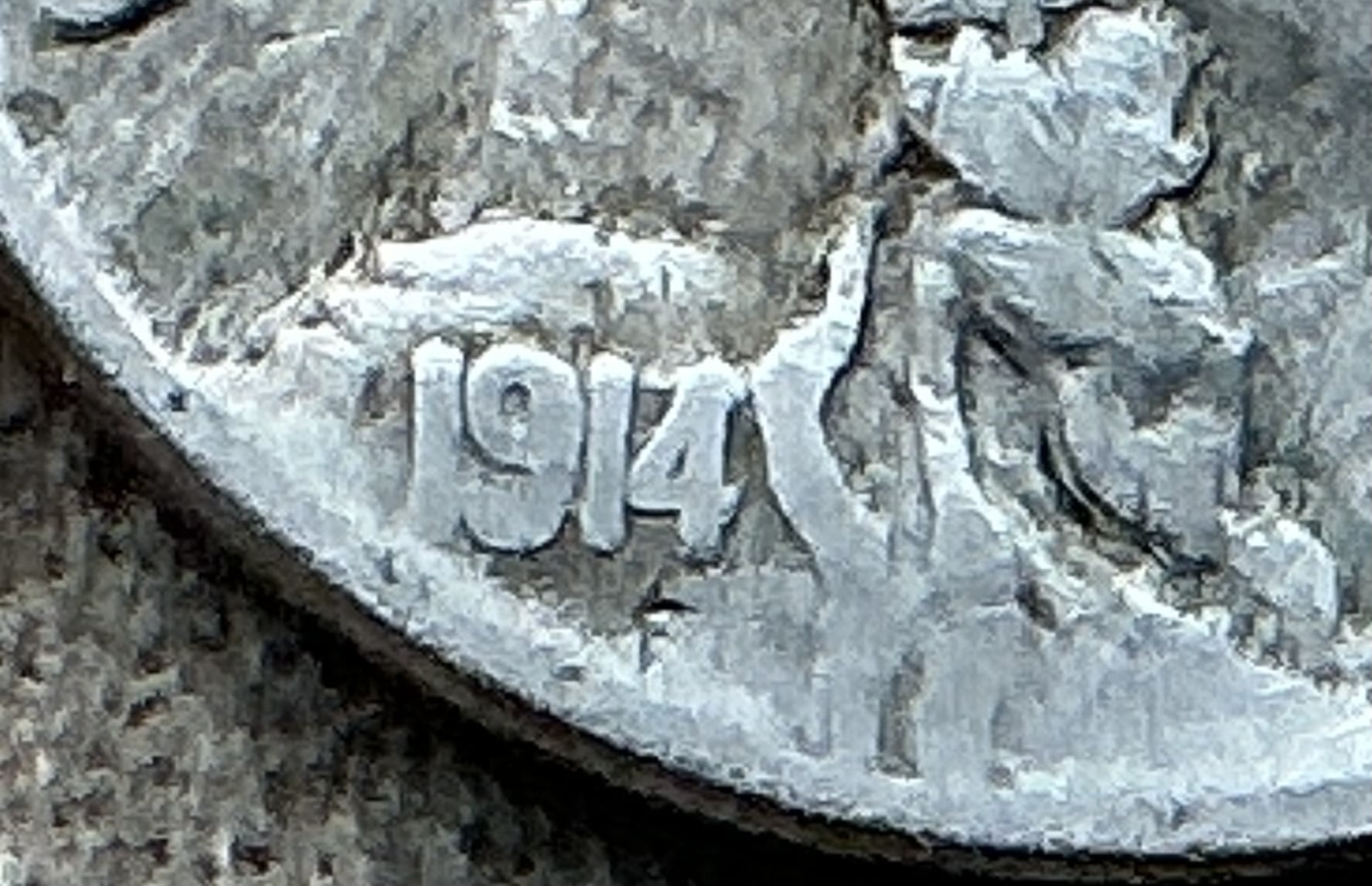
I took another picture of the date. A little different than the PCGS picture above. It seems the top cross bar is a bit stronger on mine. You can see the knob of the 3 to the right of the 4 on both.
Silverman68, jfoot13, GAB, ricman, Smittys, scrapman1077, RyGuy, Connecticoin, Meltdown, VikingDude, Peaceman, Patches and more.
Interesting how long this discussion subject has survived....
problem with these is while I too think it is an overdate one must understand die production. simplified die production is a pyramid. Starting at the top with a master hub making masker dies that make working hubs down to working dies. If one working die get multiple impressions with different working Hubs then the variance becomes a die variety.
What I recall is the 1914/3 was injected upstream in the master level so there is many working dies/hubs(?) used that had some semblance of the impression. So the question isn't so much if the overdate is there at this point but more so if it is care worthy since it is kind of prolific where multiple dies had full runs with it.
11.5$ Southern Dollars, The little “Big Easy” set
Oh, thank you! This will make it much easier.
Prior to 1907, working hubs die not have dates. As new style designs were introduced starting with the 1907 St. Gaudens gold, it was realized that there were advantages to making a new, dated, Master Die for each denomination each year, and raising up one or more Working Hubs from each. This changeover was completed by the end of 1908.
Working Die blanks were annealed to soften them, by heating them to a certain temperature and letting them cool slowly overnight. They were then machined to have a shallow raised cone on their faces. Apparently the cone helped the die steel completely conform to the face of the Working Hub as the Working Hub was impressed into the Working Die blank multiple times.
However, as the Working Die conformed to the Working Hub under pressure, the Working Die slowly work hardened until it became too hard for the Working Hub to continue reshaping it. The incomplete Working Dies (it would have been more efficient to make multiple Working Dies as a batch from the same Working Hub already in the press) would be reheated and again allowed to cool overnight. In the morning of the next working day, they would be put back in the hubbing press one by one and given another impression. Raised lugs on the face of the Working Hub outside the circumference of the design helped to align the impressions correctly, so that the lugs fitted into depressions in the outer diameter of the face of the Working Die. That outer diameter would be trimmed off of the Working Die after the hubbing process was finished.
Because of that shallow raised cone, the image started forming in the center of the Working Die and spreading outwards from there. Depending on the size of the denomination and the depth of its relief, this took two or more impressions to completely sink the design. After the first impression you would see just the central portion of the design out to wherever it stopped, but not the rim or the portions of the design near the rim.
Look at the picture of the 1916 date on that Doubled Die Obverse (DDO). See how one of the two 1916 dates is incompletely formed. I don't know whether the Working Die had received one or two or three or more impressions from the Working Hub up to this point, but however many it had received, the last impression up to that point had stopped 1 to 2 millimeters from the outer circumference of the rim. If you look at a picture of the full obverse of this coin, you will see that the word LIBERTY, which is small and concentric to the rim, is not doubled at all because the nth impression that left that partial 1916 did not leave any part of the word LIBERTY.
Because the partial date is NOT concentric to the rim, but instead horizontal, the four digits of the partial date are of different strengths. The 6, being furthest from the rim and closer to the center of the original cone, is the most complete. The 9 is much less complete. The first 1 is barely there.
--
And now for the 1914/3 nickels. There are several different dies involved, with varying amounts of the crossbar of the 3 showing under the top of the 4. My theory, which I am still waiting to see disproven, is that one small batch of Working Dies, let us guess 10 or 12 individual dies, was started to be hubbed from a 1913-dated Working Hub near the end of 1913. The Buffalo nickel was new that year, and back then there was typically heavy demand for a new coin because of its novelty factor.
This batch of Working dies was hubbed outwards to just slightly less than what is seen on the partial date on the 1916 DDO. As such, less of the 1913 date would have been formed. Just as the top of that 6 was the closest to the center of that cone, the top of a 3 is closest to the center of the coin. Therefore, it is quite possible that those 10 or 12 (or whatever) dies were partially hubbed to the point that each only showed the top of the 3.
The hubbing process took place over multiple days because of the annealing. If at the point that these dies had been hubbed out just past the point that the tops of the 3's had appeared, and the Coiner had notified the Engraving Department that it was not going to need that last batch of 1913-dated obverse dies after all, the Engraving Department may have, quite reasonably, decided to finish that batch of partially hubbed Working Dies with a 1914-dated Working Hub. This would explain why the various 1914/3 obverse dies only show the tops of the 3's.
Most of the 1914/3 Obverse dies show hand tooling marks on and around those tops of the 3's. This suggests to me that the overdating was deliberate, as was the attempt to disguise the fact. The 1916 DDO, on the other hand, was a one off random blunder, and ignored.
Your thoughts and questions are welcomed.
Tom DeLorey
Just as Working Dies are formed from the center outwards by impressing steel against steel under tremendous pressure, Working Hubs also form from the center outwards. Here is a picture of the partial date on a never completed steel Working Hub for the Brian Boru Dollar, DeLorey-78.
That upstream overdating happened on the 1943/2 Walking Liberty halves, which are common and not collected as an overdate. See my theory above as to how I believe the 1914/3 dies happened at the end of the process.
Wow….Thank you CaptHenway for such an informative perspective on how this was made. I had no idea such time went into the die making process. This explains so much!
Silverman68, jfoot13, GAB, ricman, Smittys, scrapman1077, RyGuy, Connecticoin, Meltdown, VikingDude, Peaceman, Patches and more.
Certainly a plausible scenario. My database shows nothing explicit, but information on the Capt.'s suggestion would have been in the Engraving Dept records, which seem to be completely missing. The following excerpt from Charles Barber's Jan 14, 1914 letter appears to offer support through Barber's objections to excess die orders and accompanying waste.
One other suggestion I beg leave to make. You will notice Denver Mint reports in the case of both
the Eagle and Half Eagle that none were used; and in other cases only two pairs were used out of ten
pairs ordered. This appears to me an extravagant ordering of dies, a useless waste of both labor and
material and quite unnecessary, as if the instructions to the Superintendents of the other Mints in Sec
1, Art 16 are followed there would be no such thing as dies destroyed without service and in the
present case there would and should not be 57 dies returned.
[RG104 Entry 229 Box 300 #313591]
Are there any 1914/13-D nickels? Denver did not record receiving 1914-date nickel dies until July 1914.
Key Evidence Refuting the 1914/13 Overdate:
• Impossible Minting Mechanics. A true overdate requires a working die from one year to be repunched with a hub from the next year. Experts like John Wexler and Kevin Flynn demonstrated that the U.S. Mint did not hub a 1914 working hub over a 1913 master die, nor did engravers attempt to efface a "3" from a hub.
• Wrong Shape and Position. Overlay studies show that the curved mark above the "4" does not match the actual font, size, or alignment of the "3" used on 1913 Buffalo nickels.
• Multiple Dies Affected. The anomaly appears across at least 11 different dies—including coins from Philadelphia, Denver (1914-D), and San Francisco (1914-S)—with varying shapes and strengths. If it were a single overdate master hub, the underlying "3" would be identical on every die produced from it.
• Third-Party Grading Rejection. Major coin authentication services—including PCGS, NGC, and ANACS—no longer certify these coins as true "1914/3 Overdates". Instead, they attribute them strictly by their Cherry pickers' Guide die variety numbers (such as FS-101), leaving the 1918/7-D as the only recognized overdate in the Buffalo nickel series.
The alleged 1914/3-D Nickels are not very convincing. Unlike the 1914/3 Philadelphia coins, which in my opinion are convincing, I would call the 1914/3-D coins "Reported, not Confirmed" for now.
Denver received a typical ten each 1914-D obverse and reverse Contingency Dies on Dec. 6, 1913, each batch serial numbers #11 to #20. None of these dies were RETIRED until July, which presumably means that they were not USED until then.
The practice of sending out Contingency Dies is explained in my book on the Cents of 1922. Each Mint was given (typically) ten of each dated obverse in case they suddenly needed them, which was exactly happened with the Cents of 1922. Otherwise the Mint would have been idled for lack of anything to do. Reverse dies were sent out if needed. If the Mint in question had a supply of reverse dies left over from previous years, as Denver did at the end of 1921, the Contingency Reverse dies might be skipped, as happened when the first 1922-D obverses were shipped out in late Dec. 1921.
The last two batches of 1913-dated nickel obverses were received in Denver on Nov. 17th (#729-740) and Nov. 19th (#751-756.) The last dies used were retired on Nov. 30, 1913, which tells us that Nickel production ended approximately then.
At the end of that page in the Die Register it is recorded that obverse dies #735-740 and #751-756 were mutilated on Dec. 31, 1913.
Three small batches of 1913-D reverse dies, #455-460, #581-586 and #632-637 show as never installed in a press, but there is no record of what happened to them. They do not reappear as the earliest reverse dies of 1914, as do the leftover reverse Cent dies of 1920 which were the Cent reverse dies used up in 1922.
Perhaps those dies were returned to Philadelphia for some reason, which might have caused Barber's letter to have been written. The first 1914-D nickel reverses used in July of 1914 were those contingency dies dated #11-20.
Thanks Tom and Roger for the info.
This is all very plausible. It certainly might be the reason for the overdated coins.
Someone knew about the mistake, as the tooling around the top of the date confirms the effort to remove the 3.
Still, it may have been deliberate as Tom suggests. There is a huge use of manpower used to create dies.
Pete
RE: " Impossible Minting Mechanics. A true overdate requires a working die from one year to be repunched with a hub from the next year. Experts like John Wexler and Kevin Flynn demonstrated that the U.S. Mint did not hub a 1914 working hub over a 1913 master die, nor did engravers attempt to efface a "3" from a hub."
Curious. How was this determined?