Options
Branch Mint Morgan Collection
 Floridafacelifter
Posts: 1,441 ✭✭✭✭✭
I dare say this collection is “complete” because there could always be new discoveries, but my plan was to put together the finest known set of Morgan Branch Mint proofs- all in PCGS/CAC
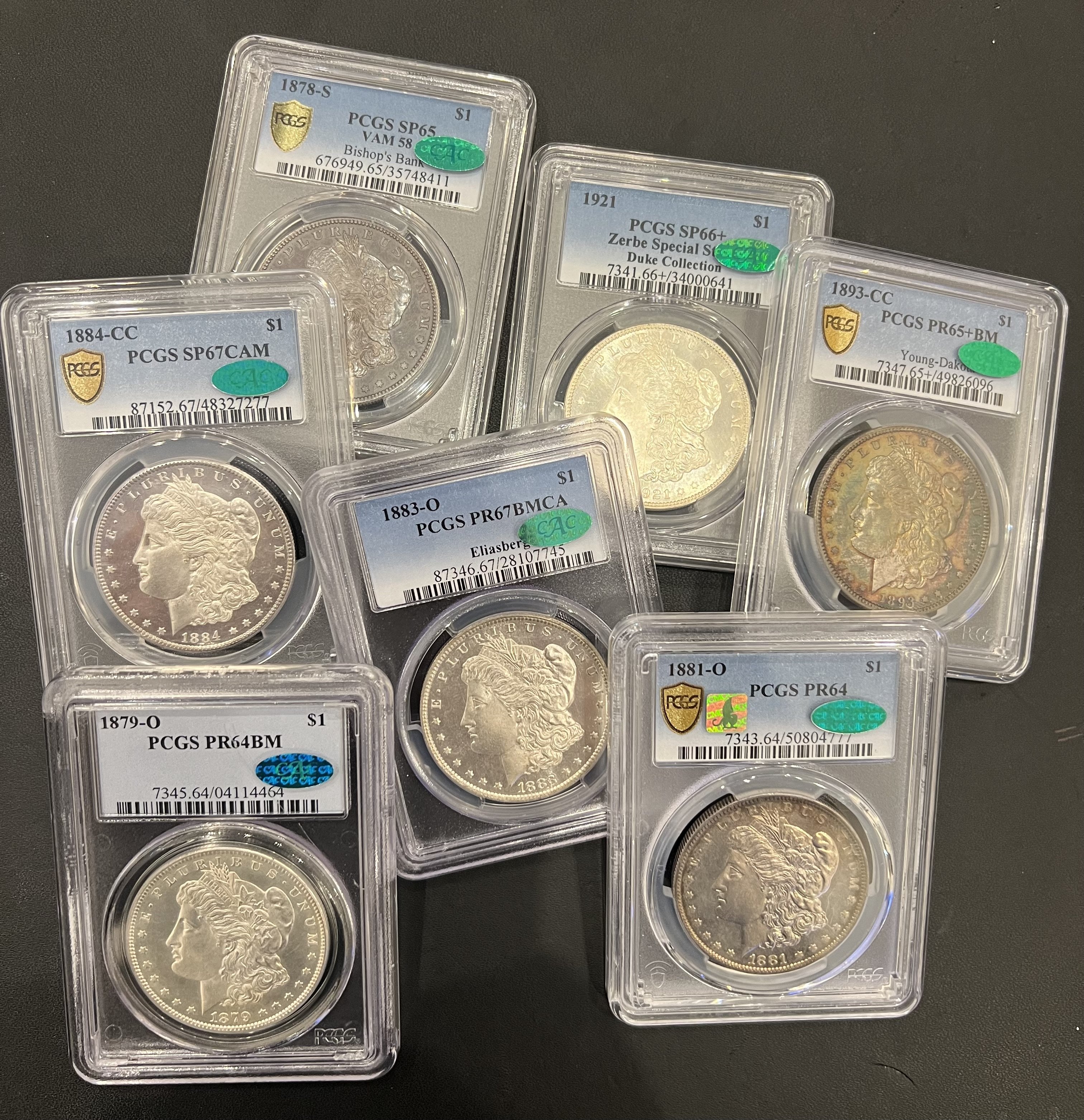
The final piece to the puzzle (21-S) came together this week but hasn’t arrived yet so isn’t a part of the group pic but is on its way!
1878-S SP65 VAM 58 CAC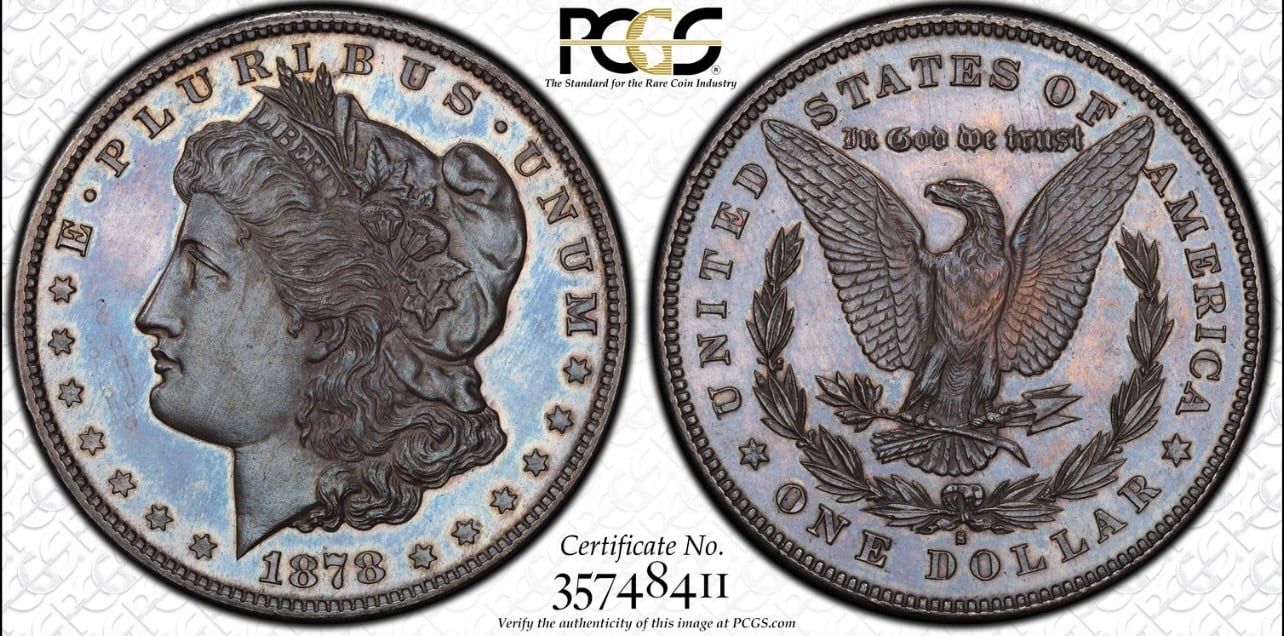
1879-O PR64 CAC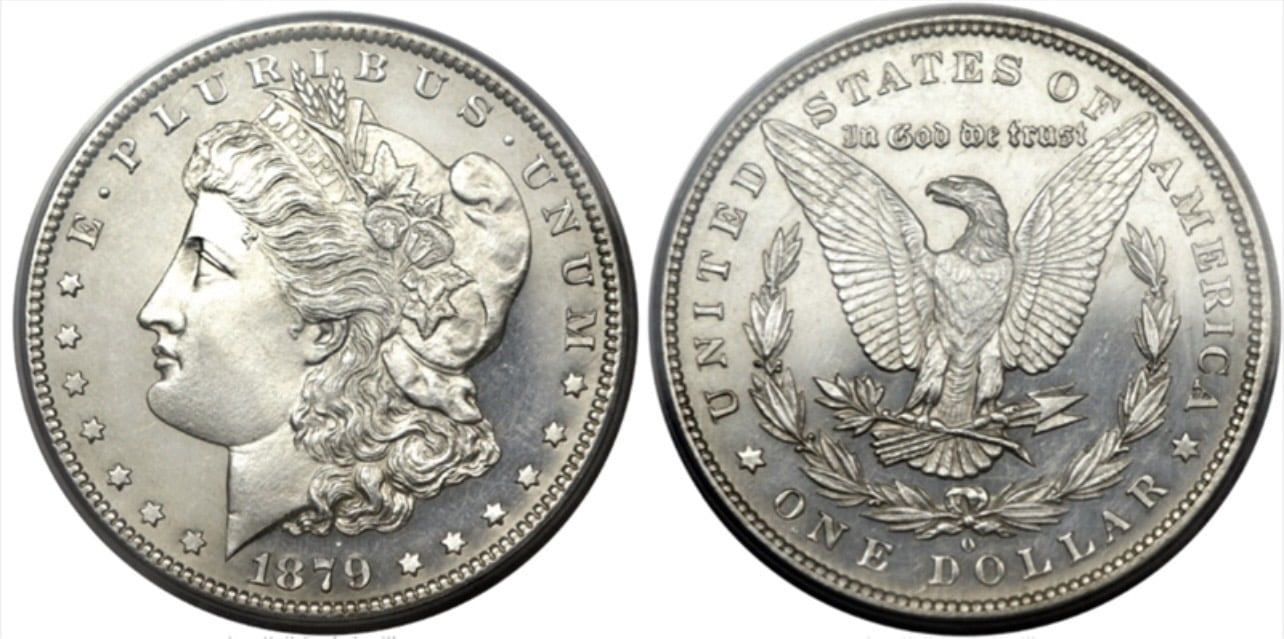
1881-O PR64 CAC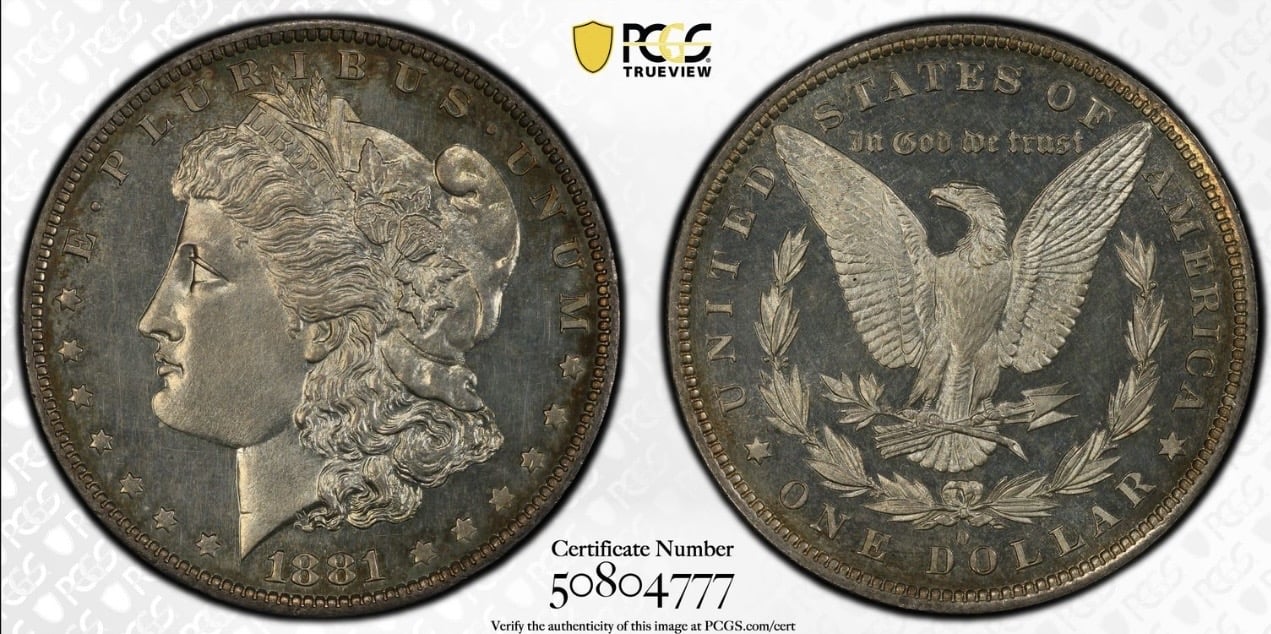
1883-O PR67 CAMEO CAC Eliasberg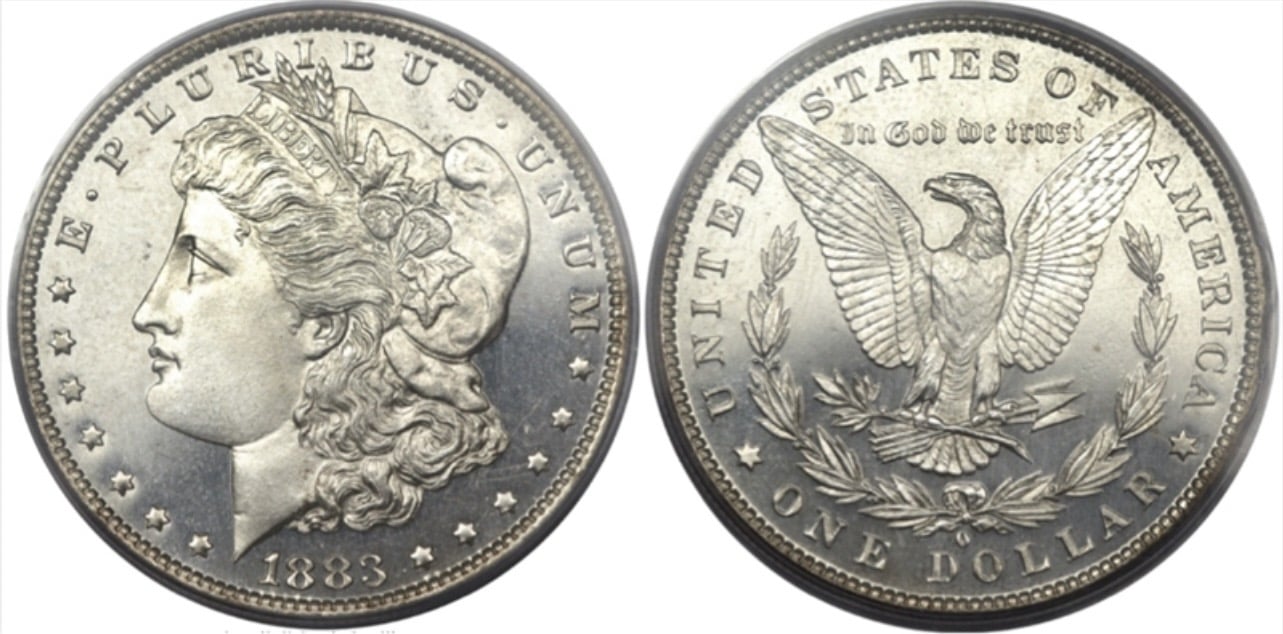
1884-CC SP67 CAMEO CAC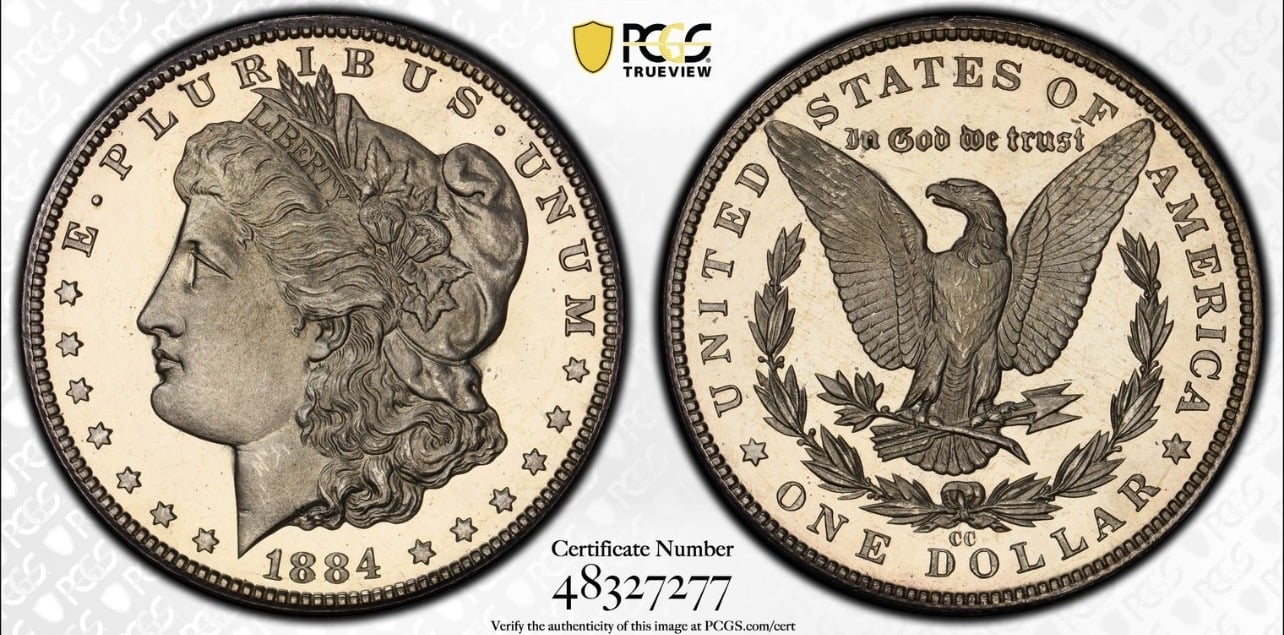
1893-CC PR65+ CAC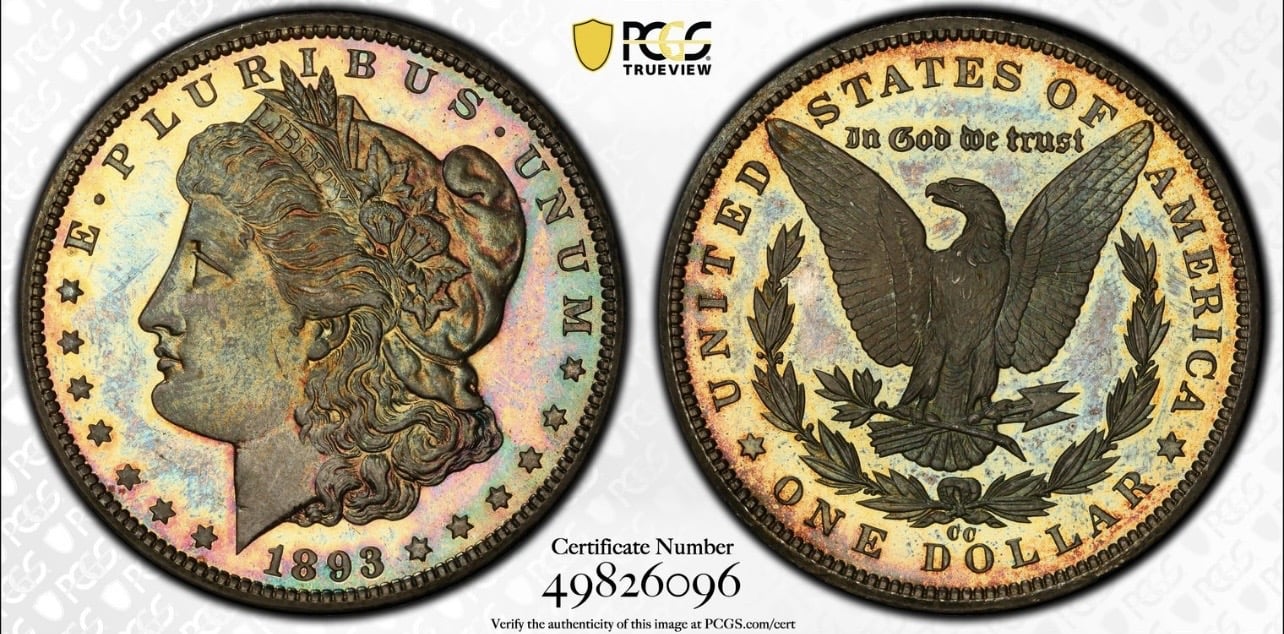
1921 SP66+ CAC ZERBE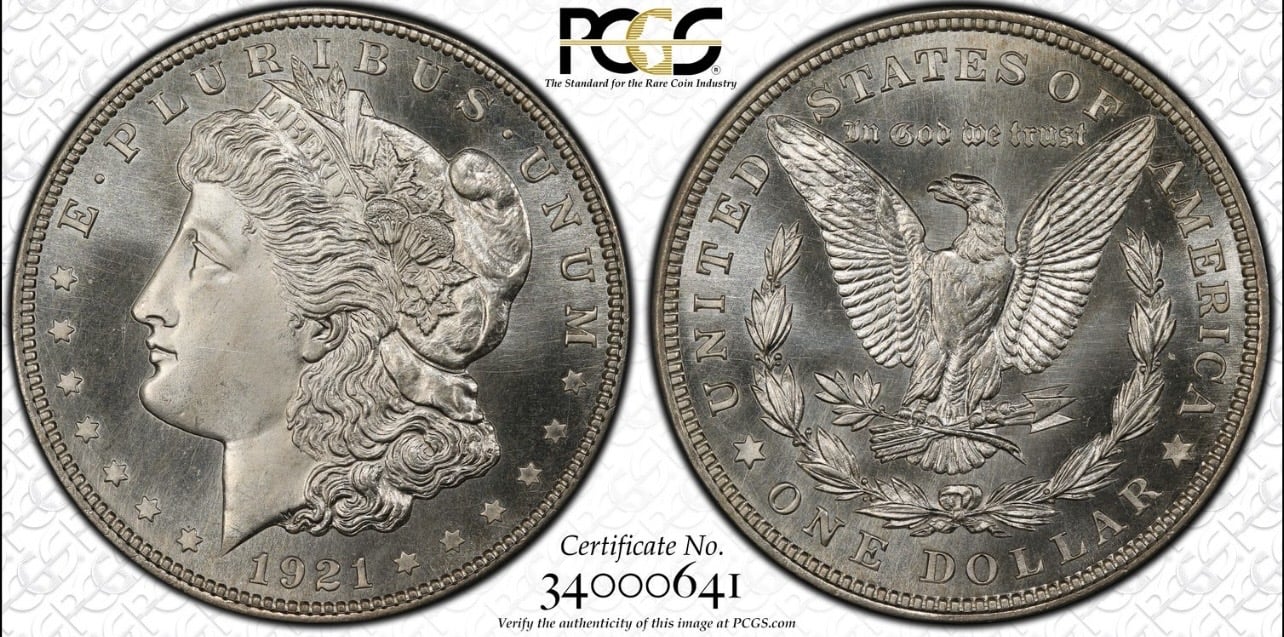
1921-S SP65+ CAC ZERBE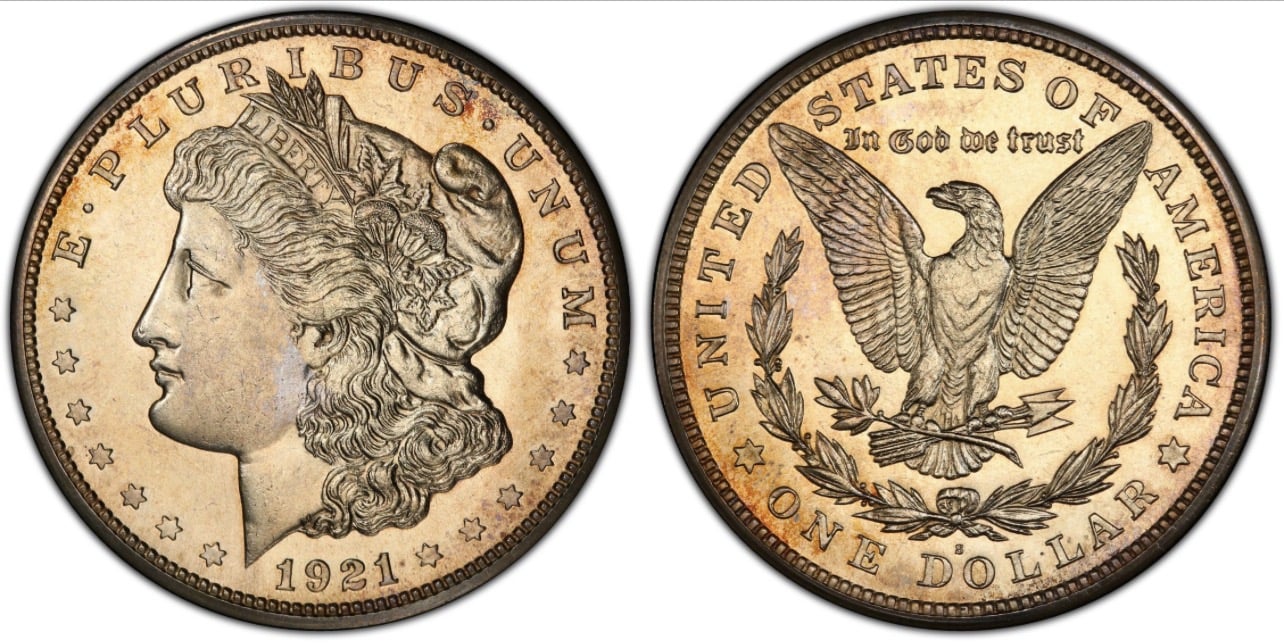
47
Comments
Congratulations! What a cool and beautiful set.
And Wow! what a collection it is.
Incredible!!!
chopmarkedtradedollars.com
@Floridafacelifter I am so impressed.
Thats one heck of a collection.
Thank you for showing us
Student of numismatics and collector of Morgan dollars
Successful BST transactions with: Namvet Justindan Mattniss RWW olah_in_MA
Dantheman984 Toyz4geo SurfinxHI greencopper RWW bigjpst bretsan MWallace logger7 JWP BruceS bigjpst
JWP PROMETHIUS88
Dead Cat Waltz Exonumia
"Coin collecting for outcasts..."
Congratulations is definitely in order here. You, sir, have one of the nicest collections I’ve ever seen.
That's quite the set, it genuinely leaves me speechless! Congratulations on (somehow) doing this remarkable achievement!
"Another day, another Collectors Universe forum scrolling session."
- Someone, probably
Nice, I like
Absolutely mind blowing set! Always a thrill seeing your outstanding selections. Well done and congratulations.
Zack.
Thanks everyone- the 21 Zerbe is obviously not a BM since it was struck in Philly but as a specimen she fits in with the other girls!
WOW!
Even the folks who thing Morgans are boring have to make an exception for your wonderful set.
Collector of Liberty Seated Half Dimes, including die pairs and die states
Fantastic. Truly Fantastic.
Awesome set FFL! Congratulations and thanks for sharing.
Top of the awesome scale! Thank you for sharing!
just awesome. Has anyone else put a set like this together before?
Not too shabby
Superb collections are built more by omission than by addition.
Very nice coins. However, only the Philadelphia Mint had the equipment necessary to strike proof coins. Some mintmarked pieces might have been made at Philadelphia for purposes such as examples of "perfect" detail (such as for New Orleans Mint), new equipment introduction, etc. We've found no documentation.
There is a long tradition of collectors and dealers calling anything "reflective" a proof, or claiming sharply struck early coins (esp bust half dollars) are proofs or "specimens" or some other concocted title. None of this diminishes the quality or appeal of your coins - only the accuracy of casual descriptions.
PS: The so-called "Zerbe proofs" are nice proof-like examples. Only the 1921 Morgans struck for Chapman approach true proof quality - and that is documented by Mint Curator Comparette.
What equipment did Philly have that the BMs didn’t? A certain kind of press?
Specimen, to me, connotes an early strike (kind of like the first car model off an assembly line), combined with a worthiness of preservation and being set aside. But, that’s really just fabricated or “concocted”, as you put it.
Superb collections are built more by omission than by addition.
There was an excellent article about this in the most recent LSCC magazine (with contributions from @RogerB ) which I received yesterday. Let me know if you need me to scan it over to you.
chopmarkedtradedollars.com
Pocketchange. The Philadelphia Mint was to only one that owned medal presses. These were used to strike medals and proof coins. They were the only presses capable of pressures necessary to bring up full design detail. The other mints had only normal toggle presses for circulation coinage. (A good initial way to determine medal press use is to compare the candidate coin's edge with known proofs of the same year and denomination - they should be nearly identical.)
A second subtle discriminator is surface polish. Philadelphia was to only mint that purchased and used "jeweler's rouge" for polishing proof planchets and dies. The other mints (and Philadelphia for die surface repair) used "Vienna lime."
Third, any coin claimed to be a "proof" must conform in entirety to widely accepted proof specimens from the Philadelphia Mint (as sold in proofs sets).
As noted before - this is simply correction of many decades of misinformation. The quality of your coins carry their own qualifications.
It’s definitely a mish mosh of labels and designations and the TPGs all seem to have a different approach. There are so-called proofs in NGC holders that will not cross to PCGS or CACG.
My goal was to put together these non-Philly “proofs” / specimens / special coins as a set and I chose PCGS/CAC because I am most confident in the double endorsement.
And thank you for reminding me of the Chapman proof- I didn’t include her in the bunch because she’s not PCGS/CAC (yet)
Holy crap!
Roger, thank you for the informative reply.
Why is it that a medal press (or any specific type of machinery) would be a prerequisite for producing a proof?
Yes, I understand medal presses were designed to bring up a coin to full design detail, but in my understanding that proof is a “method of manufacture”, why would that disqualify the branch mint’s from producing them, even if not “conforming in entirety to widely accepted proof specimens from the Philadelphia Mint”?
If a branch mint specifically polished a planchet (even if using Vienna lime) and the dies, specially struck a coin (in this case, on the only press they had) with said polished planchet and dies, and set that piece aside for a unique purpose to be saved (first strike of that coin for that series or year, for example), is it incorrect to call that coin a proof? Or, is that coin a “specimen” at best or just a proof-like business strike?
(I’m not advocating one way or the other. I find the topic interesting and my question is one of curiosity.)
Superb collections are built more by omission than by addition.
Thanks to @Floridafacelifter for kindly showing us this extraordinary, museum-quality set in PCGS/CAC—heartiest congratulations on assembling such an exceptional collection!
Passing this along in case it might be of any use /reference for your collection files: attached is a PDF of the Philadelphia Mint's February 4, 1898 Regulations Governing the Sale of Proof Coins and Medals. Right under the pricing, it notes: (A "proof coin" is one struck by hand on a screw press from a specially polished die, using a polished blank.) It's a neat piece of period ephemera—simply Philadelphia's order price list, as to this day there has never been a rule or law requiring a coin to be struck on a specific press to be deemed a proof.
Looking forward to seeing the updated group shot once the 21-S arrives!
I have a 1884CC that I cracked out of an anacs UDM.
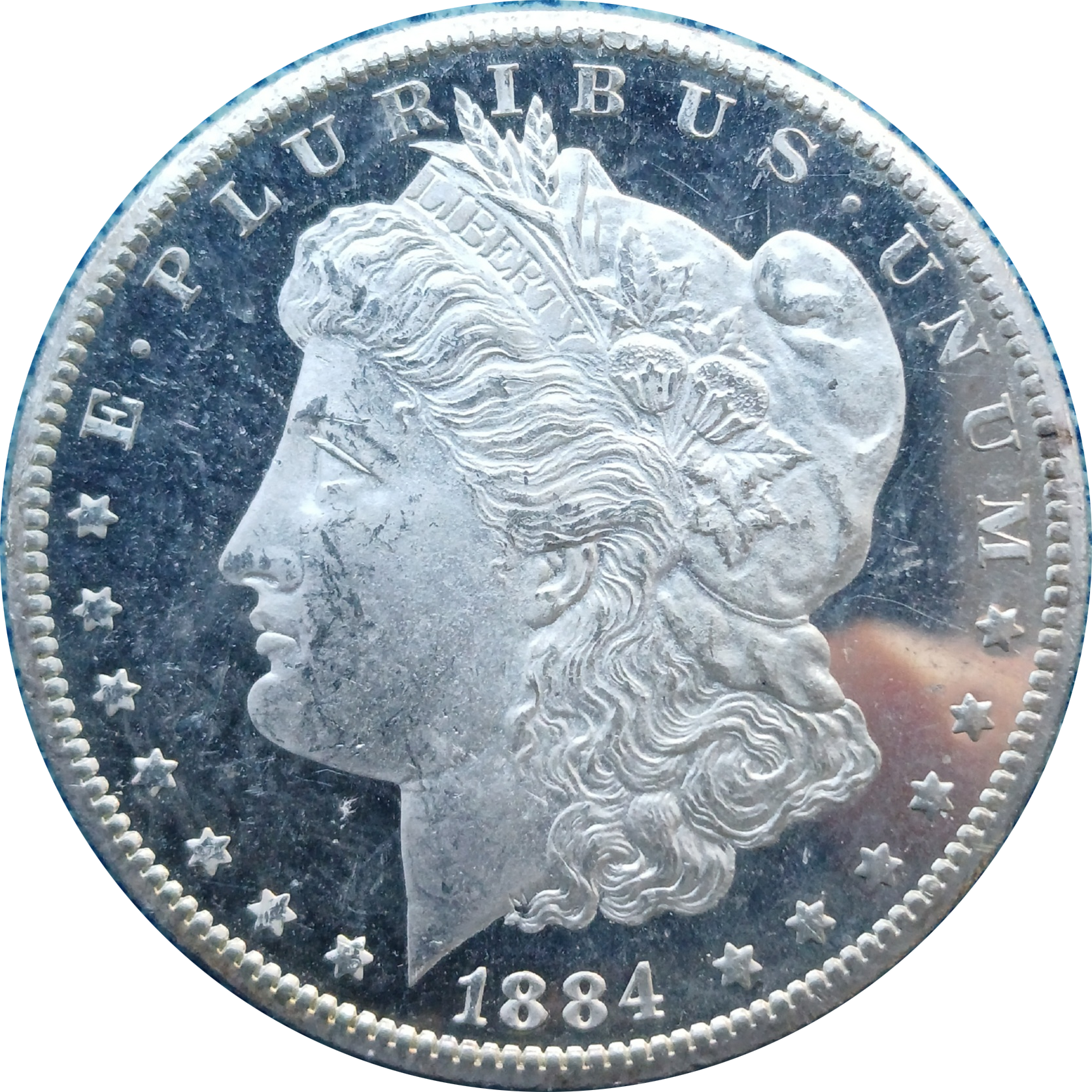
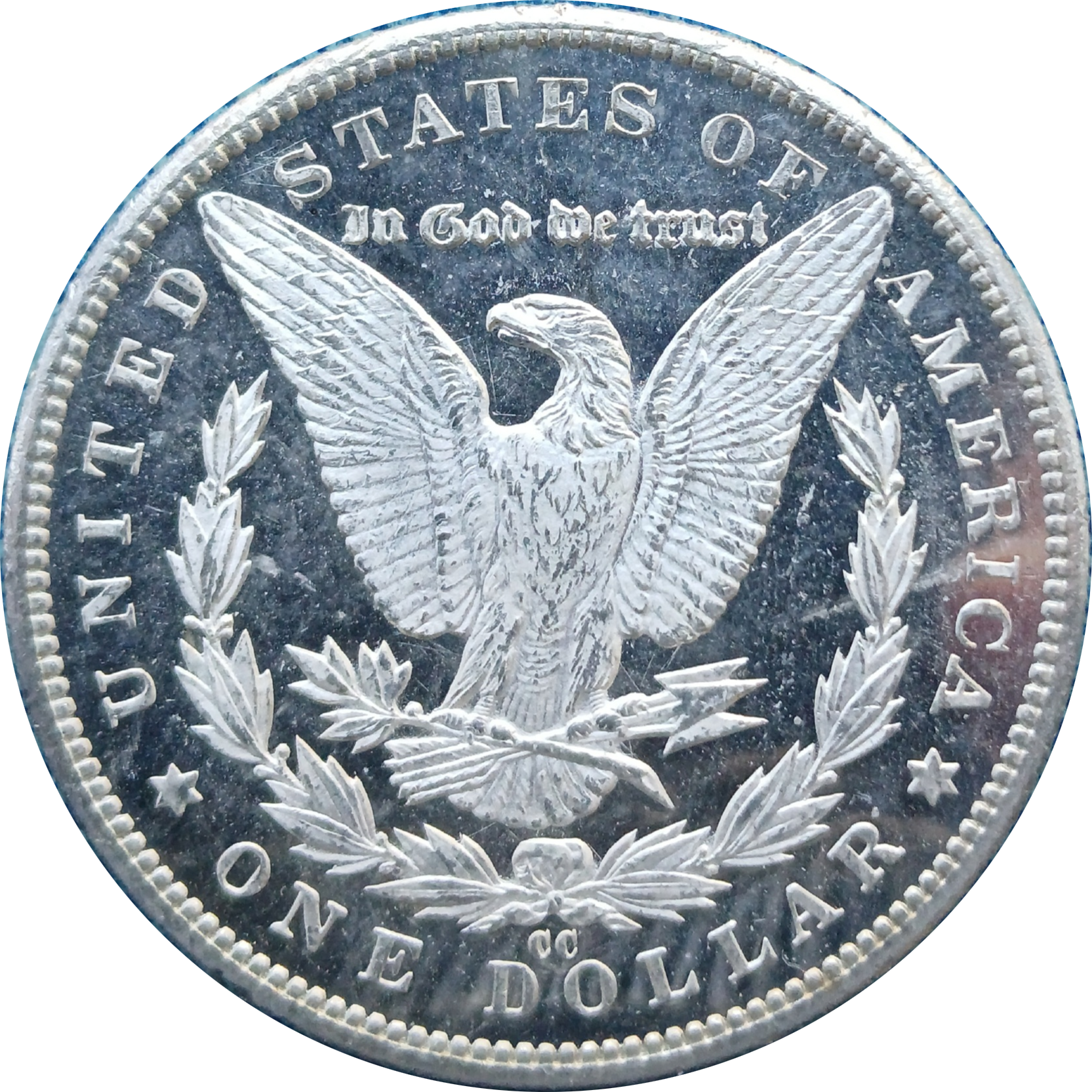
I brought to the Manchester NH show. I compared it to a proof coin and the mirrors and were just as reflective as the proof.
I am not saying that this coin is a proof. It wasn't handled like a proof I guess. Its just a beautiful coin. It must have been minted with fresh dies. The mirrors and devices are like nothing I have ever seen before.
The planchet had to have been polished to produce a coin like this. I will match it up to any proof. It will have the same or better mirrors.
Student of numismatics and collector of Morgan dollars
Successful BST transactions with: Namvet Justindan Mattniss RWW olah_in_MA
Dantheman984 Toyz4geo SurfinxHI greencopper RWW bigjpst bretsan MWallace logger7 JWP BruceS bigjpst
JWP PROMETHIUS88
Thank you so much for posting those documents- a lack of mint documentation (why were these coins made?), a lack of consensus among the TPGs, and experts that disagree- what could be more fun to collect???
My approach has always been to do as much research myself as I can, talk to the experts and then decide for myself what should or should not be included in the set.
I don’t care if a coin is designated SP (Specimen or Special Preparation), SS (Special Strike), or Proof- as long as the coin is clearly specially prepared, was set aside after striking with care, preserved over time, and now recognized by two sources (PCGS and CAC) as DIFFERENT.
Let the coins speak for themselves- they aren’t medal press Philly proofs, but they also aren’t business strikes. They fall somewhere in the middle, and that’s ok with me.
"I dare say this collection is “complete” because there could always be new discoveries, but my plan was to put together the finest known set of Morgan Branch Mint proofs- all in PCGS/CAC"
I think you have succeeded
_
Fantastic coins!
Incredible. Thanks for sharing.
Wow, what an amazing set!
"Mistakes are always forgivable, if one has the courage to admit them" Bruce Lee
As both a scientist and physician, and right from the beginning especially as regards the former, we used to divide these professionals into two categories:
IMHO, this applies to the world of coins when it comes to proof, specimen, or prooflike designations. Specifically, a coin may have many of the characteristics agreed by most as fitting a particular category. How many must be checked off to fit one definition? Is it all of those listed by the referenced Philadelphia Mint brochure above?
What if a coin received some, many, or most of the defined characteristics? Does that mean it did not deserve designation as a specially handled piece? Not to give away my opinion, but I think that the term "specimen" allows for middle ground coins and perhaps the best term.
BTW, the Bowers and Merena 1996 Norweb auction catalog of Canadian coins (pp 24-43) had some excellent discussions on this very topic with a bit of a perspective naturally oriented toward Canada and the British world.
Well, just Love coins, period.
Pocketchange --
RE: "Why is it that a medal press (or any specific type of machinery) would be a prerequisite for producing a proof?
"Yes, I understand medal presses were designed to bring up a coin to full design detail, but in my understanding that proof is a “method of manufacture”, why would that disqualify the branch mint’s from producing them, even if not “conforming in entirety to widely accepted proof specimens from the Philadelphia Mint”?
"If a branch mint specifically polished a planchet (even if using Vienna lime) and the dies, specially struck a coin (in this case, on the only press they had) with said polished planchet and dies, and set that piece aside for a unique purpose to be saved (first strike of that coin for that series or year, for example), is it incorrect to call that coin a proof? Or, is that coin a “specimen” at best or just a proof-like business strike?"
A medal press, hydraulic or the old screw (lever) type, produced greater striking force than a toggle (Uhlhorn-type) press that was designed to make 90-120 coins per minute. A medal press also applied force over a longer time which permitted more complete metal flow and produced a milder shock wave through the planchet. These factors created coins that, when properly made, displayed full detail of the polished dies. This is part of the "special method of manufacture" often quoted for proof coins. Careful examination of metal flow, detail, edge, etc. will make fundamental differences clear; however, it requires study and research that "authentication" businesses have not performed. Ideally, businesses would sponsor independent research resulting in clear empirical definitions for proof coins. This could aid in finding objective support for solutions to long standing questions --- including the "branch mint proof" paradox.
The basic definition of a "proof coin" (or "master coin" as originally titled) was established in the mid-19th century. It has not changed. A superb coin, such as the 1906-D double eagle I describe in another thread, is not a proof because it was not manufactured using the standard equipment that was required. It also does not meet the accepted visual criteria. That is: To be a proof it must be made exactly like a standard Philadelphia Mint proof in all respects; anything less destroys the fundamental meaning of the term "proof coin."
Added --- an overly simple explanation. If one wants to make 50cal ammunition, but has only a 22cal cartridge press, one is not going to make those 50cal no matter how hard one tries.
Hope this helps a little.
Not necessarily to be argumentative but the Royal Mint has a simplest definition of proof / and in the coin world would likely take precedence, and this most definitely allows for leeway in interpretation :
Well, just Love coins, period.
Laura ever tell you the story on the 93cc?
Lost in the mail?
I don’t think I heard the full version but would love to!
Remarkable set!
Congratulations!!
Sometimes, it’s better to be LUCKY than good. 🍀 🍺👍
My Full Walker Registry Set (1916-1947):
https://www.ngccoin.com/registry/competitive-sets/16292/
The labels DO NOT MATTER!!!
Only the coins matter. Well done, Sir!
I put together a Morgan Dollar Branch set together, but it is no where the caliber of the OP's.
BST transactions: dbldie55, jayPem, 78saen, UltraHighRelief, nibanny, liefgold, FallGuy, lkeigwin, mbogoman, Sandman70gt, keets, joeykoins, ianrussell (@GC), EagleEye, ThePennyLady, GRANDAM, Ilikecolor, Gluggo, okiedude, Voyageur, LJenkins11, fastfreddie, ms70, pursuitofliberty, ZoidMeister,Coin Finder, GotTheBug, edwardjulio, Coinnmore, Nickpatton, Namvet69,...
Agreed! But I like the PCGS/CAC combo because I am no grader and I don’t want to pay crazy money for a PL business strike if I can avoid it! (Happened once- won’t get burned again!)
Please post them I love to see what’s out there!
Thank you to Leonard Augsberger of the NNP for the following information in the Anita Maxwell Trust Collection of Branch Mint Morgan Dollars sold at the 1995 ANA.
Interesting list- and several issues not in my collection
1879-O PCGS PR64
1882-CC NGC MS64
1883-O NGC PR64
1883-CC NGC PR64
1884-O NGC MS64
1887-O NGC MS65DMPL
1893-CC PCGS PR61
1921-S PCGS MS64PL
Lots of references to the Wayne Miller book and lots of “possible branch mint proof” mentions, and four of the coins were in MS holders.