Options
Can Matte Proof Gold Undergo Conservation?
 Floridafacelifter
Posts: 1,441 ✭✭✭✭✭
First- I’m a plastic surgeon not a photographer so please forgive the iPhone pics
I love this coin and the person who submitted it to PCGS 35-40 years ago said it went into the holder with no stains
We live in Florida and there is a lot of moisture
Can any experts comment on whether this coin could be successfully conserved?
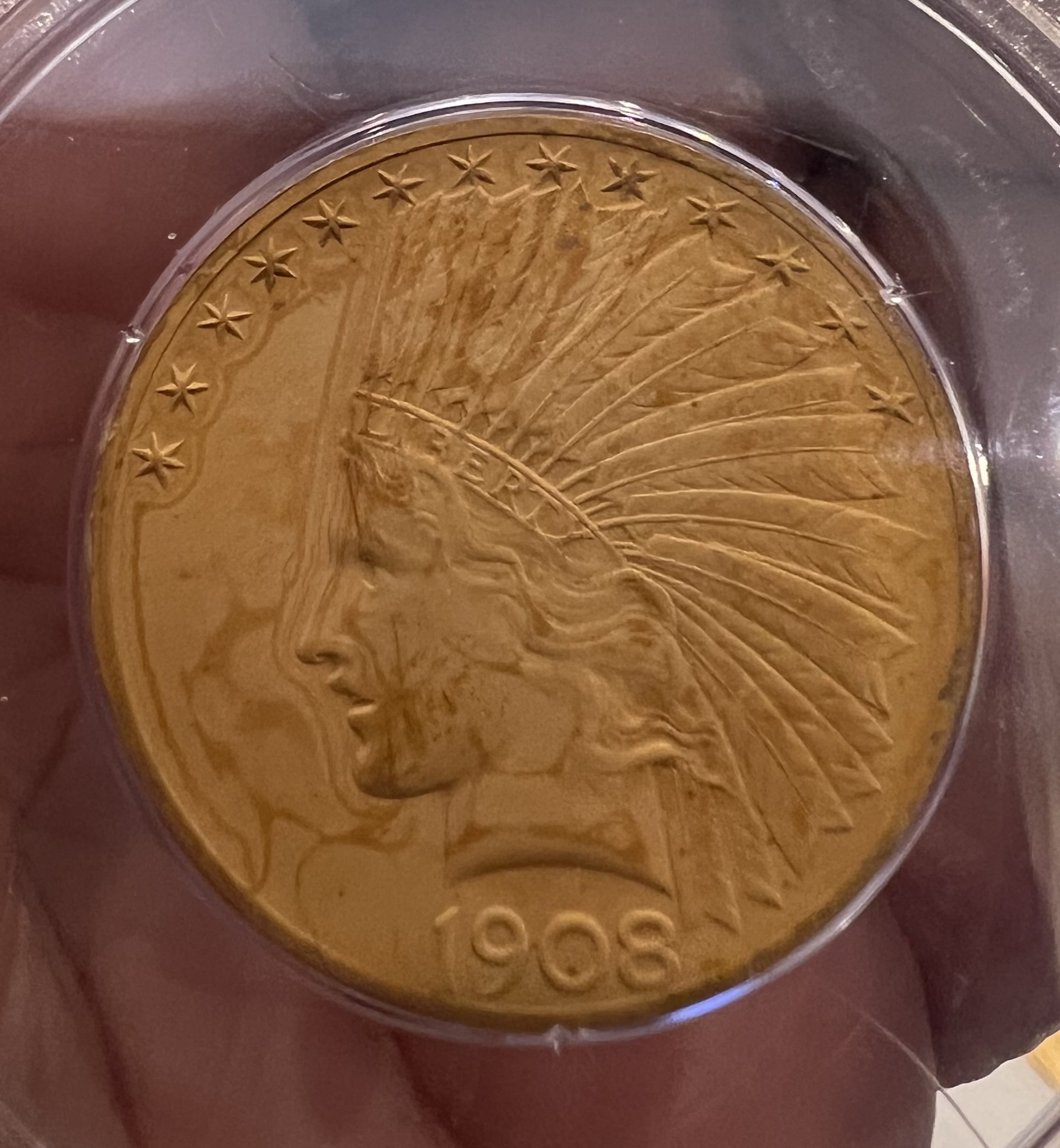
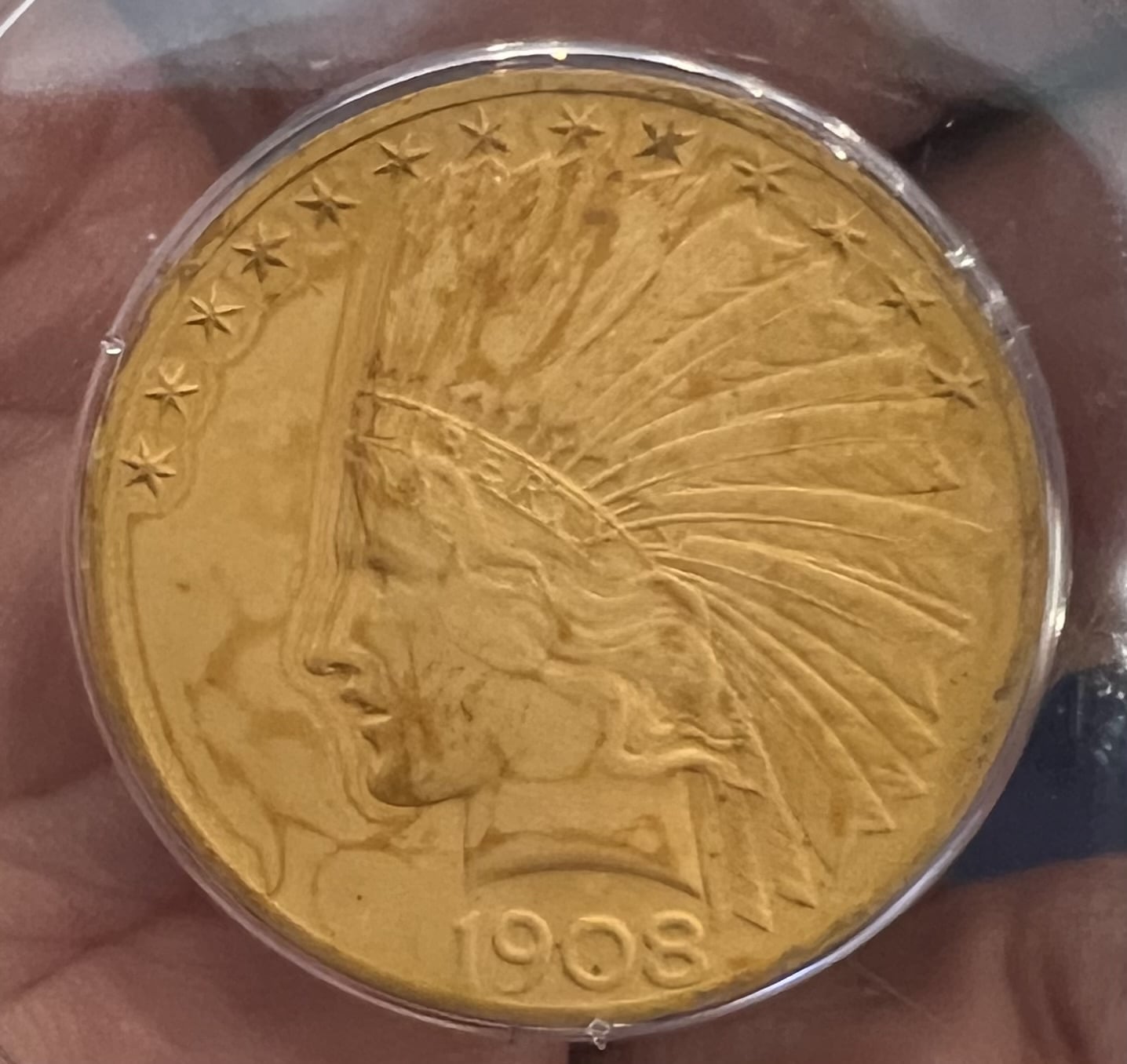
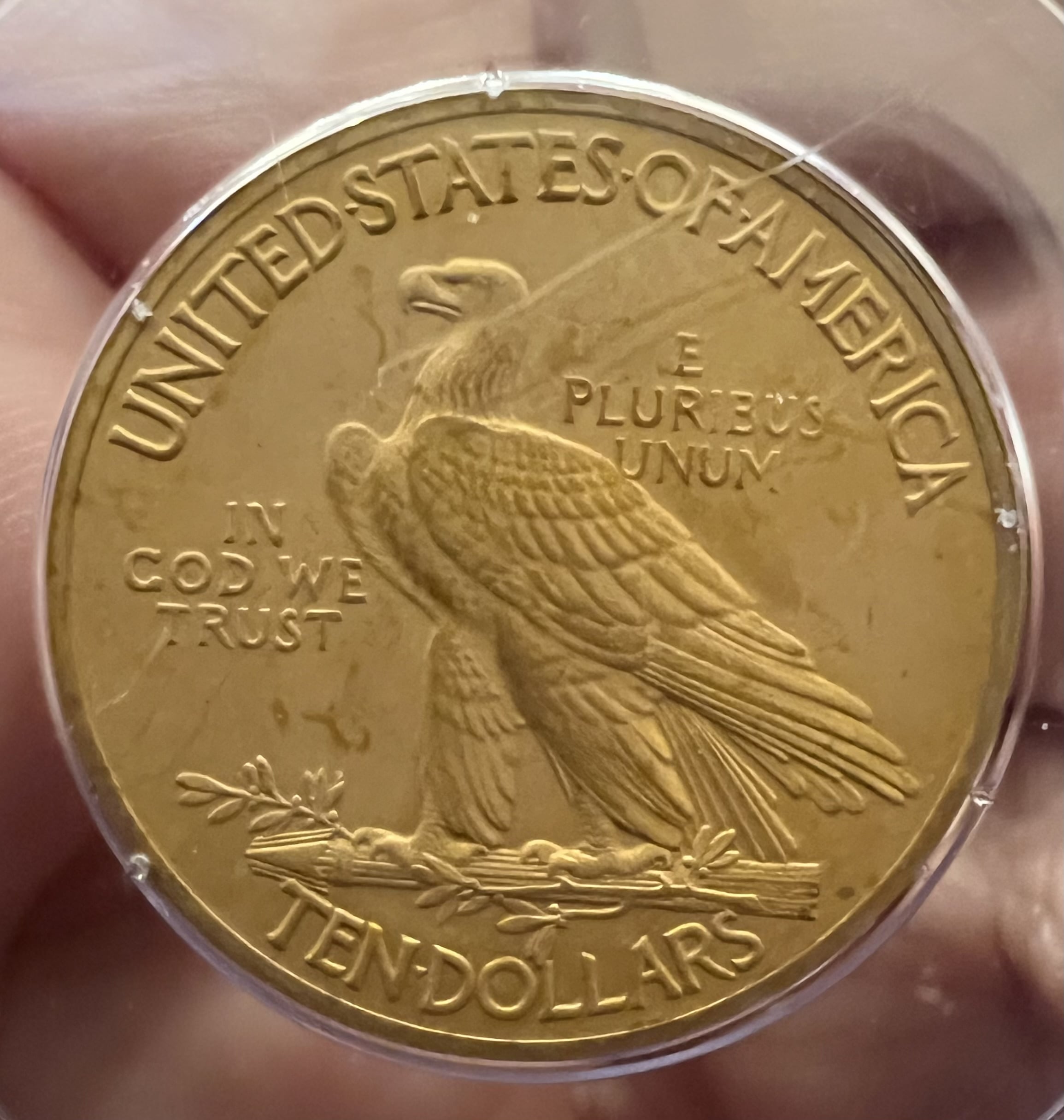
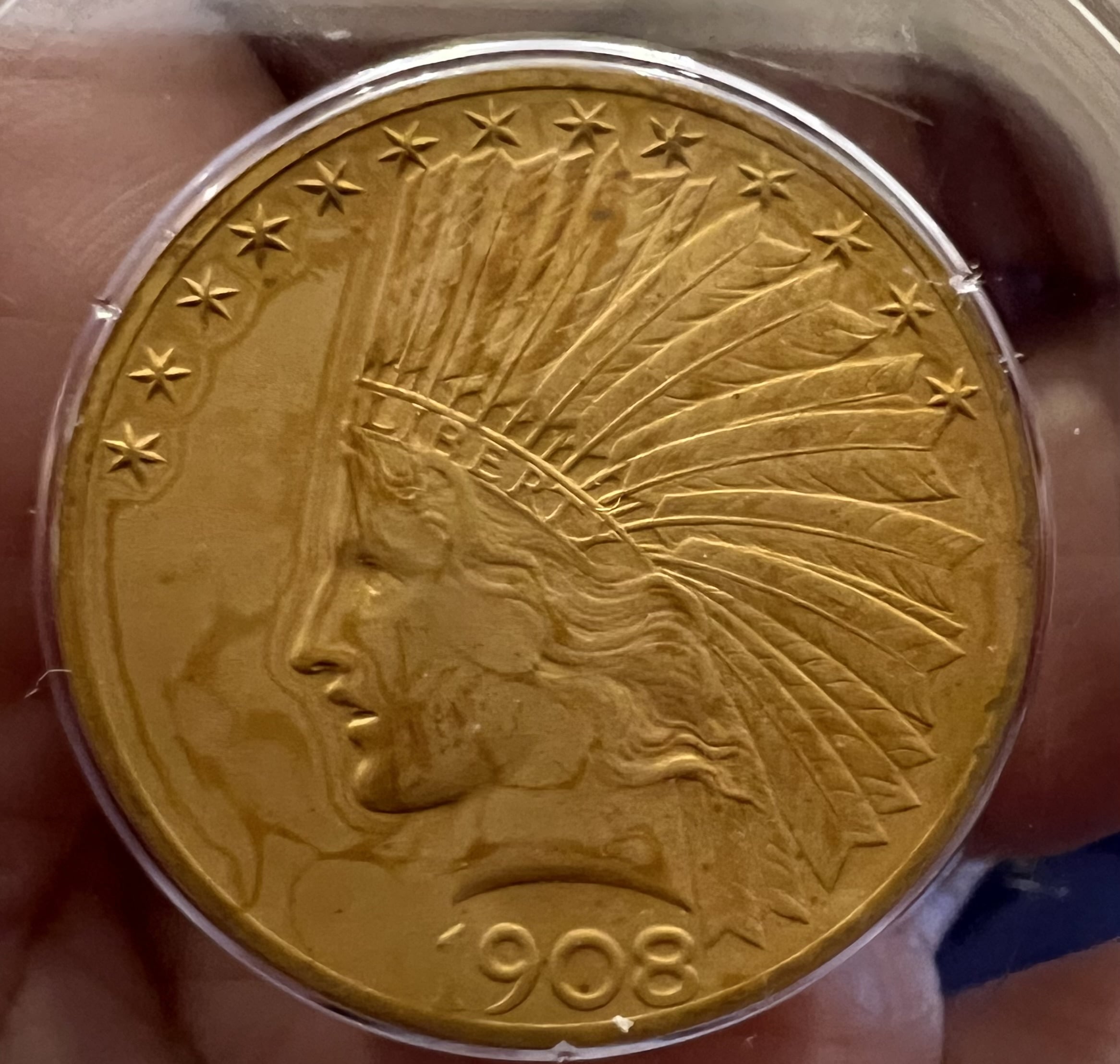
1
Comments
Looks like Peter Maxx and LeRoy Nieman got hold of that piece.
In honor of the memory of Cpl. Michael E. Thompson
Tough call. My guess is yes, but I would let the pros do it.
Coin Photography
I don’t think I’ve ever seen a Proof gold coin turn in the holder that way.
I don’t know if it can be conserved successfully, but my guess is yes, at least to some degree.
Mark Feld* of Heritage Auctions*Unless otherwise noted, my posts here represent my personal opinions.
No clue on the conservation aspect but I sort of dig the obverse in that state.
Gary TheGasMan - Retired Hank Hill
My suggestion is that you send it to either pcgs or ngc and get their opinion.
From what I have heard ngc is the best for what you need done.
That is only my opinion. Others may feel different.
Student of numismatics and collector of Morgan dollars
Successful BST transactions with: Namvet Justindan Mattniss RWW olah_in_MA
Dantheman984 Toyz4geo SurfinxHI greencopper RWW bigjpst bretsan MWallace logger7 JWP BruceS bigjpst
JWP PROMETHIUS88
Has me wondering if something, then invisible, had already been done to it long ago as it outlines the design rather than just appearing like moisture randomly affecting it..
There have been comments, probably on here, and definitely in auction catalogs about Matte Proof gold being treated over the years and decreasing numbers of completely original coins.
Some of the experts likely have an answer. Wonder if it can be helped without looking like a processed example.
"To Be Esteemed Be Useful" - 1792 Birch Cent --- "I personally think we developed language because of our deep need to complain." - Lily Tomlin
Thanks everyone- my plan is to bring it to FUN and show it to JD and maybe have him walk it into the conservation department since it’s already in a PCGS holder (although word in the street says NGC conservation might be a little better- I’m more comfortable in a PCGS holder).
Am I correct that they will put it back in a holder with at least the same grade?
I've seen similar stains caused by water condensation inside a plastic holder. Potentially a very nice sandblast proof. Let experts do their best with it. PCGS has the expertise to evaluate the coin for conservation.
To explain a little.... Sandblasting alters the natural surface of a coin. Depending on grit size, it can increase by 2x, 3x or more the exposed surface area. Although the coin alloy is only 10% copper the total reactive area makes chemical damage more likely and occur more rapidly. (Some medal collectors call this "sandblast activation.") If the coin turns out OK, ask about zero moisture nitrogen atmosphere and a sealed holder.
It looks like, and I could be totally wrong here, but it looks improperly rinsed. Seen a lot of Morgans with that look, or at least that pattern of staining, and that's what one of my mentors told me.
Empty Nest Collection
I believe if they can't conserve it to the same grade, they will pay you the difference.
Unlikely they will keep it at the same grade.
They are also unlikely to pay anything out since they need not cover coins that turn in the holder.
Coin Photography
Another issue I remember reading was that a lot of matte proof gold coins were doctored in the 1980s.
@Floridafacelifter did it turn while you owned it or did you buy it that way?
Student of numismatics and collector of Morgan dollars
Successful BST transactions with: Namvet Justindan Mattniss RWW olah_in_MA
Dantheman984 Toyz4geo SurfinxHI greencopper RWW bigjpst bretsan MWallace logger7 JWP BruceS bigjpst
JWP PROMETHIUS88
It’s certainly worth the attempt to save a numismatic treasure of that caliber. Fingers are crossed for a happy ending for this coin.
Superb collections are built more by omission than by addition.
Treated how ?
The person who submitted it to PCGS originally said it went in clean
Hmm after you restoration can you post it please?
Student of numismatics and collector of Morgan dollars
Successful BST transactions with: Namvet Justindan Mattniss RWW olah_in_MA
Dantheman984 Toyz4geo SurfinxHI greencopper RWW bigjpst bretsan MWallace logger7 JWP BruceS bigjpst
JWP PROMETHIUS88
Wishing you good luck.
I hope so. That piece deserves some love
Not to toot my own horn, but this is not a coin I'd be scared to "handle" if it were mine. A coin such as this should be seen in hand as the usual caveat.
Well, just Love coins, period.
Stay tuned….. update after FUN
Here is a comment by @MrEureka from this 2010 thread. Did not read further in the thread but it may have more info.
Saint-Gaudens $20 & $10 Matte Proof Gold
https://forums.collectors.com/discussion/comment/9204894/#Comment_9204894
"IMHO, perfectly original matte proof gold in grades 65 or better is a great long term value. The problem is finding them, because 90% of the slabbed coins on the market have been dipped or doctored in some other way. While originality is an important consideration for all coins, it's especially important for matte proof gold, because even a light dip will remove much of the Mint-applied finish/color. "
.
.
This first post in this thread about the Koessl Collection of Matte Proof Gold talks about the differerence of original from treated coins but does not say what other treatments. Sounds like most is from dipping. Not certain what other methods there are, though it may be buried in some of the threads which I did not study any further recently.
ANA: Koessl Collection of Matte Proof Gold on Display at GreatCollections ANA Table
https://forums.collectors.com/discussion/1079109/ana-koessl-collection-of-matte-proof-gold-on-display-at-greatcollections-ana-table
"To Be Esteemed Be Useful" - 1792 Birch Cent --- "I personally think we developed language because of our deep need to complain." - Lily Tomlin
I've never seen a matte proof gold coin look like that. I hope that it is some organic residue on the surface that can be removed by using acetone or isopropyl alcohol. As was mentioned, a dip will strip the surface and leave a very processed look even if it is market acceptable. I would see if you could discuss this with someone at a show. It wouldn't hurt to get multiple opinions including from NGC. My honest thought is that both services are kind of dip happy though. It is really a shame.
Please send it to CAC first and then ask JA to write down his thoughts
This is a really good idea too.
Great idea I will show it to him
See, that’s actually a good idea. My post was meant as a joke in its current state, but yes, if you can get it in front of his eyes to ask about what can be done instead of “can this get a sticker?” that would be really valuable advice.
.
My comments and reply to this are based on experience from working with pre-1933 US gold coins.
During various over-striking projects, I have sand-blasted (course/rough finish) and bead-blasted (fine/smooth finish).
900 gold alloy (90% gold with most or all of the balance as copper), will typically have a pinkish color.
To obtain more of a traditional gold color, my understanding is that the US Mint would subject all 900 gold planchets (including business strikes) to an acid which would leach out a small amount of copper from the surface. This leaves higher purity of gold at the surface. After striking, this remains, and so the finished coins have a yellow gold color (less pink).
When I bead-blast or sand-blast such coins, the pinkish color emerges.
Looking at pictures of matte proof gold, they appear to have a pinkish color compared to normal (non-matte) issues.
This fits with my experience in blasting them.
There are many variables that affect the final color:
1. Blasting media particle size, shape, and mass.
2. Air pressure when blasting (velocity of blasting media).
3. Dwell time for the blasting (how long a particular area is blasted).
4. Acid treatment (concentration and duration) on planchet prior to striking.
5. Acid treatment (concentration and duration) on coin after blasting (if any).
All of these factors could vary from one coin to the next.
And so the color of one coin could be different than another, even when both are "original".
Now the question is, what effect would "dipping" have on these coins ?
Pure gold is impervious to coin dip. The exposed copper of 900 gold could be affected by coin dip, if that copper has oxidized to any extent. My experience in dipping sand-blasted 900 gold coins is that is has absolutely no effect at all. However, these coins were blasted shortly before the dipping. So there would have been no oxidation to remove.
My conclusion is that dipping a matte proof 900 gold coin could slightly change the color due to removing 100 years of subtle oxidation and patina. But the affect would not be permanent and over a span of many years the color could (very slowly) revert back to what it was originally (assuming no other contaminants were left of the surface as a result of the dipping).
.
I understand, but this doesn’t quite explain my observations. First, when issued, each year of matte proof gold 1908-1915 has a distinctive color. So much so that an expert can usually tell you the date of a strictly original coin, just by looking at the reverse. And if viewing the completely original Koessl 1908-15 sets scattered randomly across a table reverse up, most of us could arrange them into their respective year sets, just by matching the color of the coins. This is not a function of differences in toning. It’s the way the coins were produced. I can also tell you that back in the day when NCS was conserving a lot of matte proof gold, the color of the “conserved” coins became less dramatic and less distinctive. Honestly, I don’t know what NCS was doing to the coins. Maybe they used some sort of solvent. Maybe they dipped the coins. But whatever they did was enough to change the color of the coins. Anyway, I can’t explain exactly how the coins were made, or how they were treated, but I know what I’ve seen.
Doggedly collecting coins of the Central American Republic.
Visit the Society of US Pattern Collectors at USPatterns.com.
Andy, you probably already know by now, but in case not, and for those who don’t, I’ve had the same observations over a period of roughly 40 years.
Mark Feld* of Heritage Auctions*Unless otherwise noted, my posts here represent my personal opinions.
The problem that @Floridafacelifter will face is that after the coin is conserved, regardless of how it turns out, it will be graded.
I dont think NGC or NCS will return a restored coin raw.
I could be wrong.
I have never had a coin restored. Maybe someone can chime in.
Student of numismatics and collector of Morgan dollars
Successful BST transactions with: Namvet Justindan Mattniss RWW olah_in_MA
Dantheman984 Toyz4geo SurfinxHI greencopper RWW bigjpst bretsan MWallace logger7 JWP BruceS bigjpst
JWP PROMETHIUS88
I would expect nothing less. Those of us who attended all of the major auctions in the 70’s and 80’s saw enough complete original sets come to market that we were able to figure out what original matte proof gold was supposed to look like. Unfortunately, those days are long gone.
A related story, which I’ve probably told here before. Tom Koessl is THE expert on matte proof gold, having spent probably 20+ years assembling the finest perfectly original set that will ever be assembled. He was a stickler on originality, and he had a good enough eye that he could and would replace a 67+ with a better 67+. He had a small group of friends who he would occasionally ask for opinions, asking questions like “Which do you like better?” and “Do you think this one is perfectly original?”. We almost always agreed. Anyway, perhaps 10 years ago, he showed me a coin and neither one of us was 100% sure about the originality of the piece. I told him that I thought we might be getting a little rusty, probably because original coins had become so scarce that we were forgetting what they looked like, and I suggested a trip to the Smithsonian to view the coins they received directly from the US Mint. Which we did. A perfect refresher course.
Doggedly collecting coins of the Central American Republic.
Visit the Society of US Pattern Collectors at USPatterns.com.
You hadn’t told me that before - good story!
There were a few occasions over the years in which Tom asked me to view and assess auction lots for him. I felt honored whenever he asked and thrilled on the one or more occasions when I gave a thumbs up and he won and was happy with the coin.
Mark Feld* of Heritage Auctions*Unless otherwise noted, my posts here represent my personal opinions.
I could be wrong, but I think the grading company will either decline conserving the coin or agree to do it and offer some sort of guaranteed grade/compensation guarantee.
Mark Feld* of Heritage Auctions*Unless otherwise noted, my posts here represent my personal opinions.
Or they may take the position that the slab was stored improperly, damaged in a flood, or something like that.
Doggedly collecting coins of the Central American Republic.
Visit the Society of US Pattern Collectors at USPatterns.com.
@MFeld i dont want you to think I am contradicting you.
I don't know for sure either but I have read on this forum where coins were conserved and when done didnt turn out so good. What the problem was I dont recall.
Maybe someone could chime in.
Student of numismatics and collector of Morgan dollars
Successful BST transactions with: Namvet Justindan Mattniss RWW olah_in_MA
Dantheman984 Toyz4geo SurfinxHI greencopper RWW bigjpst bretsan MWallace logger7 JWP BruceS bigjpst
JWP PROMETHIUS88
And at least sometimes in those cases, as mentioned, a guarantee/compensation is in effect.
Mark Feld* of Heritage Auctions*Unless otherwise noted, my posts here represent my personal opinions.
I sure hope you are right, and the grading service doesn’t pull the environmental damage card. Then there is the issue that even if a coin is “conserved” you must still convince them the coin has decreased in grade not merely that it looks processed and stripped of originality post conservation. I can think of some conservation examples where the coins were inferior after conservation but the coin was not downgraded. Look at what NCS/NGC did to the Norweb 1893-S Morgan.
Keep in mind that I said one potential outcome is that the grading service declines to conserve the coin. I hope that’s not what happens here.
Mark Feld* of Heritage Auctions*Unless otherwise noted, my posts here represent my personal opinions.
If a coin turns in the holder I don't see the tpg on my phone > @cameonut2011 said:
This exactly what I am talking about.
There's also the scenario where someone submits a coin to NGC in a PCGS hopder and something happens.
Anything can happen when a coin gets worked on.
Im not trying to get the OP nervous I would never do that.
From the looks of his coin I believe they can improve it.
They did all the work on the shipwrecked coins after all.
That should be a piece of cake.
The more we learn as collectors the better off we will be.
I have a friend on here that gets coins restored all the times.
Mostly Morgan and Peace dollars.
His results have been mixed.
Gold is a whole different subject.
I cant speak of it because its not in my wheelhouse.
I really hope it goes well.
I want to see the results.
Sorry for the rant but I think this situation warrants it.
Student of numismatics and collector of Morgan dollars
Successful BST transactions with: Namvet Justindan Mattniss RWW olah_in_MA
Dantheman984 Toyz4geo SurfinxHI greencopper RWW bigjpst bretsan MWallace logger7 JWP BruceS bigjpst
JWP PROMETHIUS88
I will definitely keep you posted. My only other conservation effort was a 1794 $ with a stain on the front and back- hardly changed at all after conservation.
Please do.
Thats a nice coin.
Student of numismatics and collector of Morgan dollars
Successful BST transactions with: Namvet Justindan Mattniss RWW olah_in_MA
Dantheman984 Toyz4geo SurfinxHI greencopper RWW bigjpst bretsan MWallace logger7 JWP BruceS bigjpst
JWP PROMETHIUS88
.
That is basically what I was saying - that some years maybe the US Mint used coarser grit and/or stronger acid, or something else different. This would case a variation in appearance from one year to another.
Chemical reactions can be difficult to replicate exactly, unless ALL the variables are consistent (strength of acid, relative humidity and temperature in the room, etc.).
.