Options
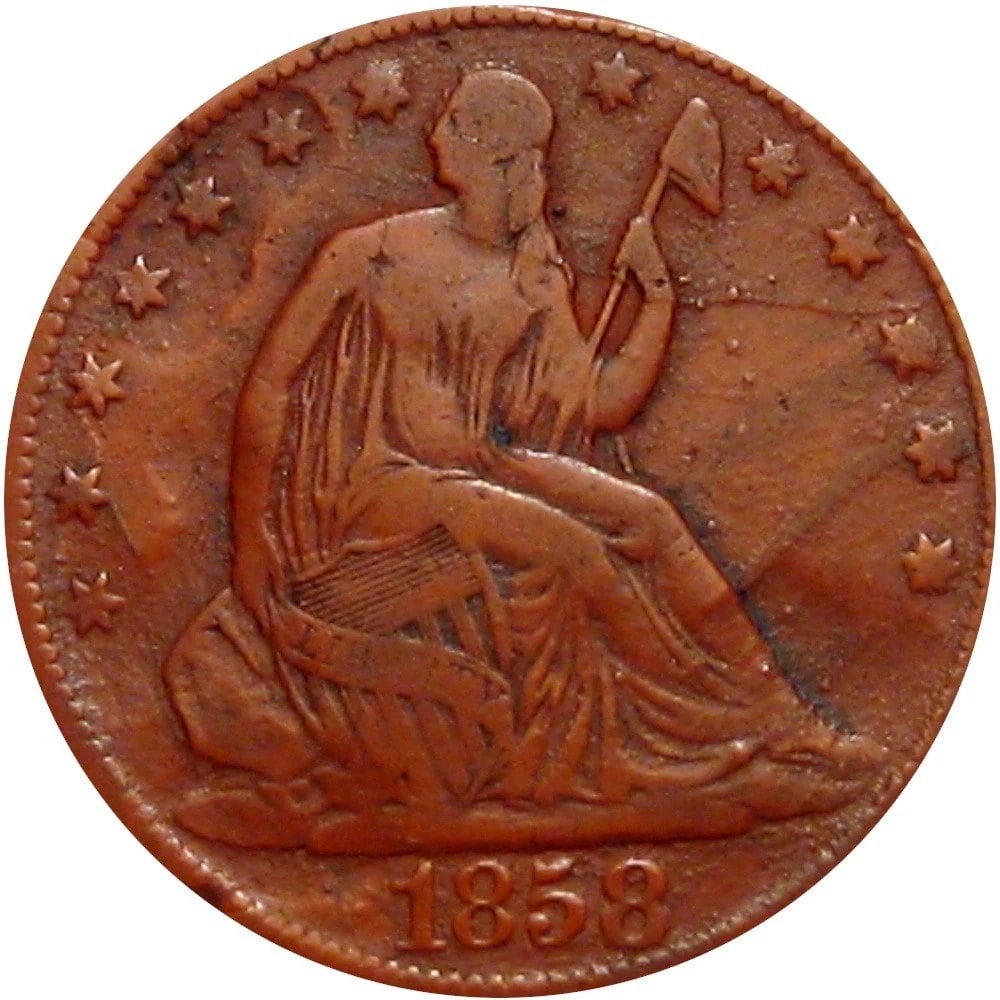
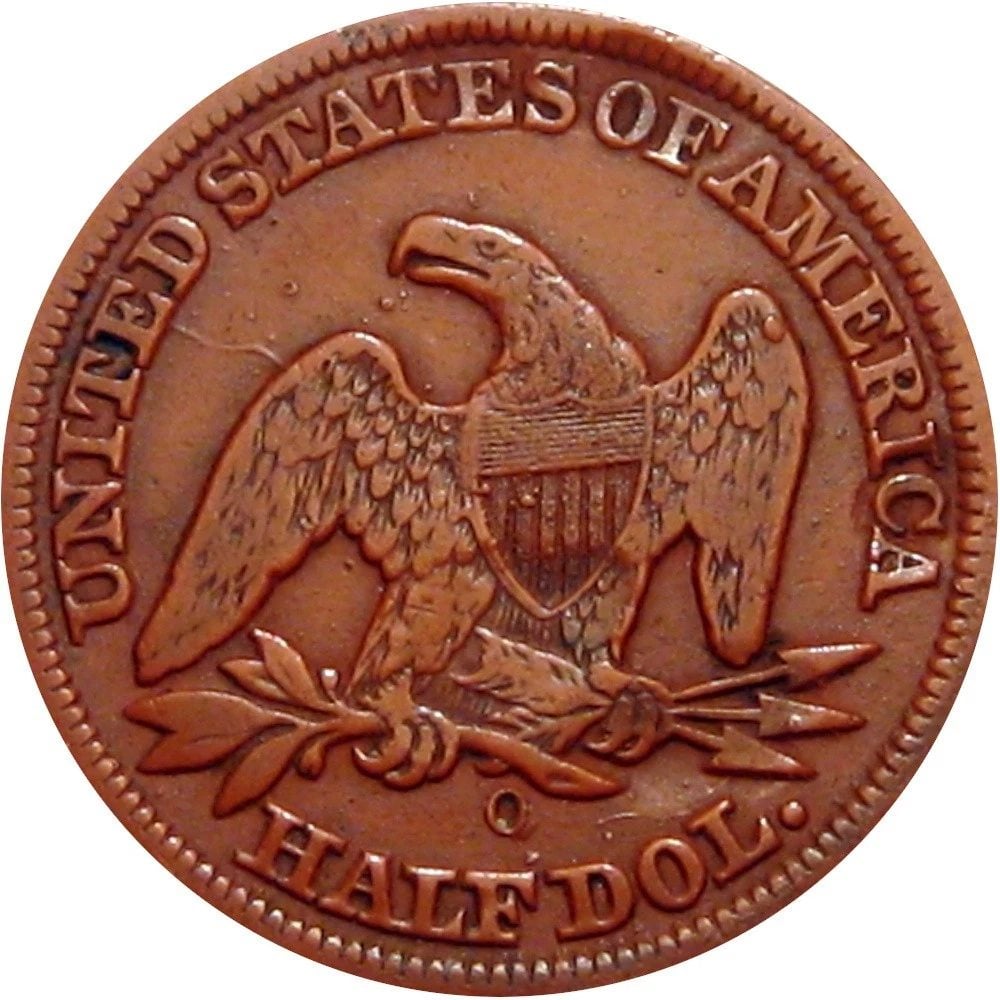
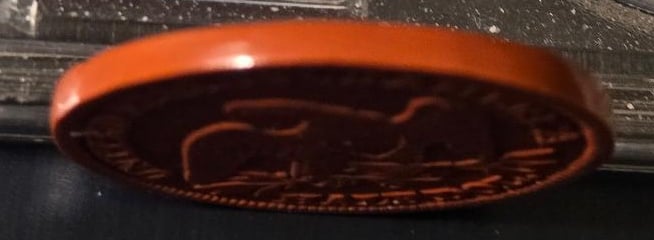
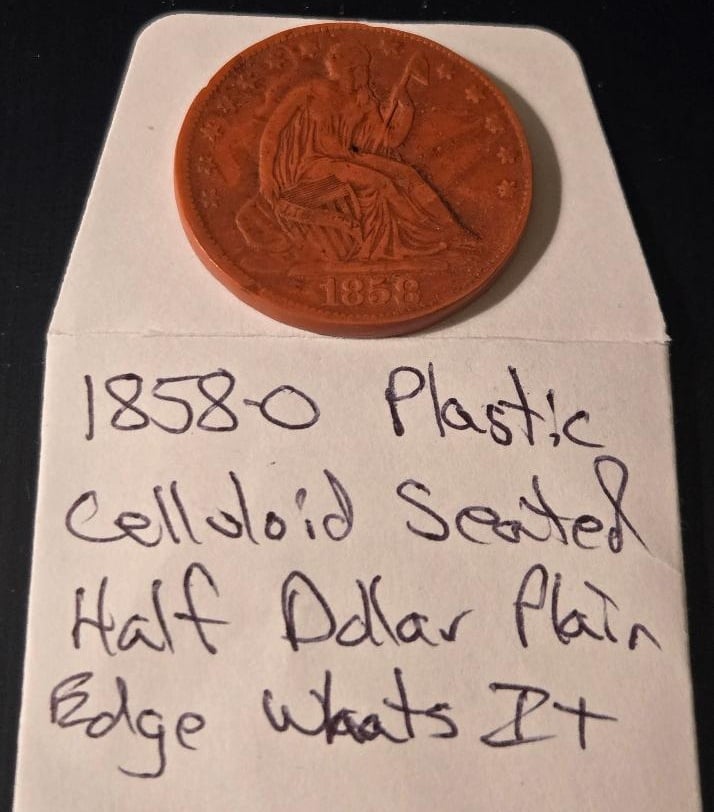
Anyone seen something like this? Plastic 1858-O "Half Dollar"...
 JDark
Posts: 114 ✭✭✭
OK, I buy and add odd things to my collection😎!
"Plastic" 1858-O half dollar just received today. Weight is 2.9 gms.
I will have this in the case at this month's Indy Show; I will include in my next submission to ICG:
Thanks, Jack.
12
Comments
Never seen one , thank's for sharing
I like!
Never seen one either, cool to see
That's pretty wild!
In honor of the memory of Cpl. Michael E. Thompson
Shall I repost my guess over here?
**_YES!_**
That's really cool. Funny how a plastic coin can be so intrinsically fascinating.
"But seek ye first the kingdom of God and His righteousness and all these things shall be added unto you" Matthew 6:33. Young fellow suffering from Bust Half fever.
BHNC #AN-10
JRCS #1606
Thank you.
This is entirely speculation on my part, but in the 19th century there were "business colleges" or "schools" that taught young men how to be a clerk in a store. One of the most important parts of being a clerk was to know how to make change. You may have noticed that this is a lost art in our younger generations.
Towards this end, several of these schools printed up their own practice money, in normal currency denominations, typically with the name of the school on it and maybe a bit of advertisement for it. The standard reference on such practice money was written by Fred L. Reed, III, an old colleague of mine from my days at Coin World.
My speculation is that perhaps one or more such school may have made practice coins as well, in non-metallic substances to avoid problems with the anti-counterfeiting laws, since obviously something like this half could never pass as real money. I have never seen any documentation that would prove or even suggest that this is what happened, but it is a plausible theory that someone may wish to explore.
TD
I agree that counting back change is a lost art, but what I find fascinating about this is even in the 19th century it was being taught in "business colleges" or "schools". I specifically remember being taught how to make change in elementary school.
Looks like it might be bakelite. Maybe a game piece?
Anything is possible, but my gut feeling says no, and my gut is way too big to ignore!

If your total comes to $17.19 and you give the cashier a $20 and a quarter, this often confuses the hell out of them.
This piece would have to have been made in 1907 or later.
According to AI:
Invention of Plastic
Plastic was invented in 1907 by Leo Hendrik Baekeland. He created the first fully synthetic plastic, known as Bakelite. This marked a significant milestone in materials science, as Bakelite was the first plastic that did not contain any natural materials.
Key Details
Bakelite was notable for its durability and heat resistance, making it suitable for various applications, including electrical insulators and household items. This invention laid the foundation for the modern plastics industry, leading to the development of numerous other synthetic materials in the following decades.
Prior to the 20th century they had gutta-percha, a substance made from latex and other ingredients. It sort of looks like plastic but is heavier and harder.
I'm not sure what this token is made from, though.
This invention also helped the antique radio market. It introduced a plethora of plastic table top tube radios in many different colors and styles.
"Celluloid" could refer to nitrocellulose, which was a plastic-like material discovered in 1845-46 and made available in consumer products in the mid to late 19th century. It was famous for its tendency to catch fire or even explode, especially when used in billiard balls.