Options
AI is getting out of hand and possibly taking advantage of people
 oih82w8
Posts: 13,308 ✭✭✭✭✭
Someone at work brought this ad to me and wanted to know when this quarter was coming out.
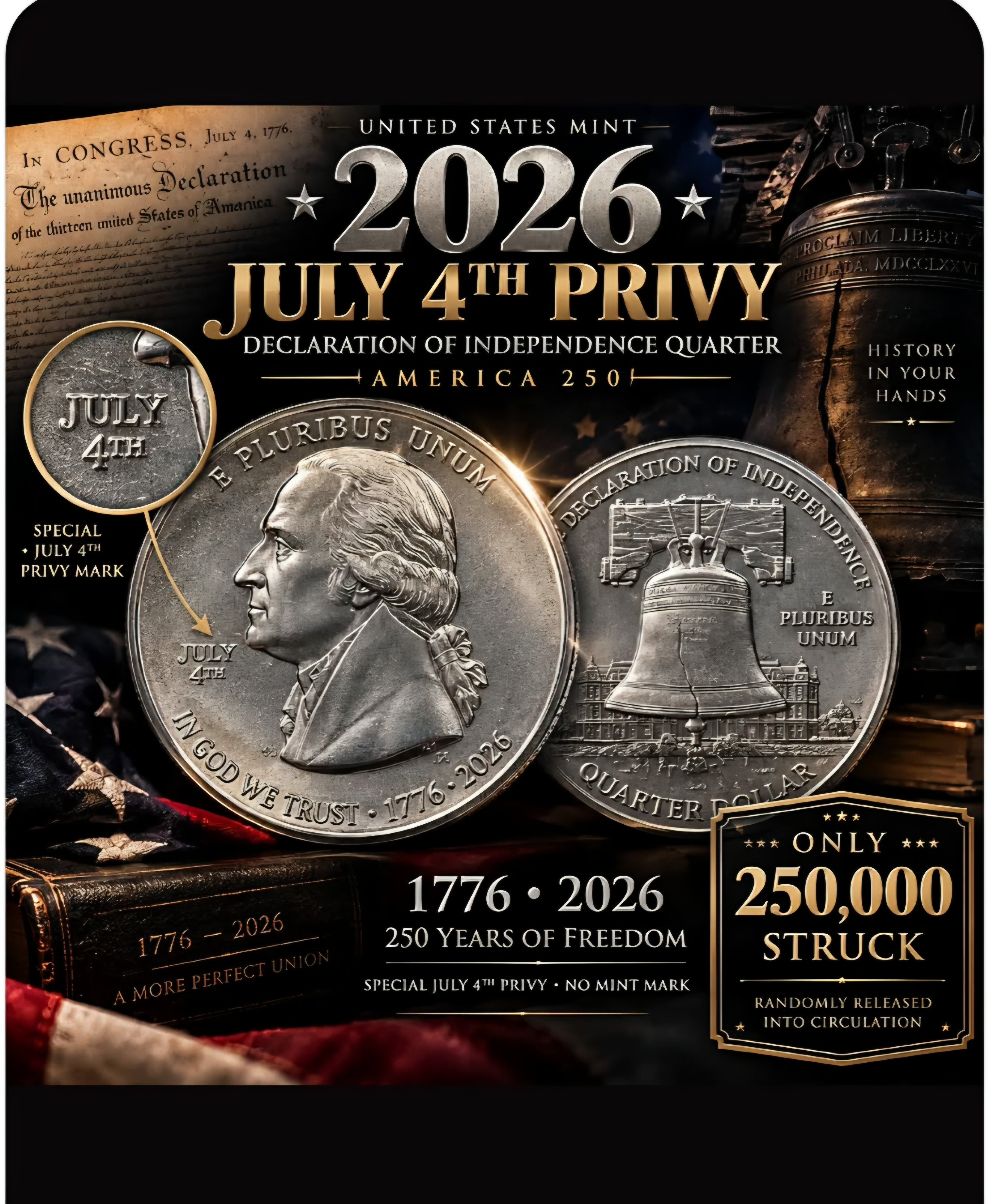
There ought to be a law about taking advantage of people with deceptive practices.
Turns out this was an ad for an App to place values on coins in everyday circulation.
oih82w8 = Oh I Hate To Wait _defectus patientia_aka...Dr. Defecto - Curator of RMO's
BST transactions: dbldie55, jayPem, 78saen, UltraHighRelief, nibanny, liefgold, FallGuy, lkeigwin, mbogoman, Sandman70gt, keets, joeykoins, ianrussell (@GC), EagleEye, ThePennyLady, GRANDAM, Ilikecolor, Gluggo, okiedude, Voyageur, LJenkins11, fastfreddie, ms70, pursuitofliberty, ZoidMeister,Coin Finder, GotTheBug, edwardjulio, Coinnmore, Nickpatton, Namvet69,...
BST transactions: dbldie55, jayPem, 78saen, UltraHighRelief, nibanny, liefgold, FallGuy, lkeigwin, mbogoman, Sandman70gt, keets, joeykoins, ianrussell (@GC), EagleEye, ThePennyLady, GRANDAM, Ilikecolor, Gluggo, okiedude, Voyageur, LJenkins11, fastfreddie, ms70, pursuitofliberty, ZoidMeister,Coin Finder, GotTheBug, edwardjulio, Coinnmore, Nickpatton, Namvet69,...
0
Comments
There are laws against deceptive marketing practices at both the state and federal level. Most of the time those are left to private, civil enforcement with rare exceptions (for particularly egregious examples with a large number of victims that have sustain financial harm). The reality is that many companies ignore the laws knowing that they are unlikely to face any penalties, and even if they do, the fines will be less than what they make from the duplicitous action. Welcome to 21st century Gilded Age.
There are a lot of sleazy apps. Write the app store and try to have it taken down.
Edited: I assume this is an app that requires payment, right?
There are laws against deceptive practices.
Mark Feld* of Heritage Auctions*Unless otherwise noted, my posts here represent my personal opinions.
"AI is getting out of hand" and "taking advantage of people" are totally different issues. The first is just the latest instance of the second.
AI is never wrong.
Whoever sold AI to all the CEO's was a genius.
He sold them a non-functional software with no use cases on the idea that if the subscribed to the AI they would get live updates that made it possible to fire a new department every quarter.
That guy probably made $2,000,000,000 without having to deliver on any promises.
Llamas and alpacas are camels. They aren't like camels, or related. They are camels. When was anyone going to tell me this?! How long had Bill Nye been holding out on us?
I use it every day, as do most academic researchers, office staff, professional scientists, editors, etc. To say there are no use cases is completely inaccurate. Alphafold alone saved 10,000+ person-years in determining protein structures.
All comments reflect the opinion of the author, even when irrefutably accurate.
In other news:
"Water is Wet"
Bye bye greysheet
Some people believe anything they see, read, or hear - if it isn't AI then it is some form of the news media. Or worse yet - "I heard it from my Brother's Cousin's Neighbor's friend."
"When they can't find anything wrong with you, they create it!"
Not a fan of AI though I enjoyed watching The Terminator. I guess not everyone did.
Collecting 1970s Topps baseball wax, rack and cello packs, as well as PCGS graded Half Cents, Large Cents, Two Cent pieces and Three Cent Silver pieces.
"Artificial intelligence" is a tool; nothing more. The one(s) controlling the tool are responsible.
AI is not yet at the point where, all by itself, it can "take advantage of people" for its own personal gain. As of 2026, it's still people that are taking advantage of people. An AI might have designed that ad, but people decided to use it to entrap the unwary.
If these people didn't have AI to generate fake images, they'd just be copy-pasting images from elsewhere.
Roman emperor Marcus Aurelius, "Meditations"
Apparently I have been awarded the DPOTD twice.
.
Obviously, they used an AI-generated image to represent a July 4 privy quarter dollar.
But they aren't deceptively selling privy mark coins ?
So what, exactly, is wrong with this ?
.
.
That darn ink and paper is getting out of hand and possibly taking advantage of people.
"To Be Esteemed Be Useful" - 1792 Birch Cent --- "I personally think we developed language because of our deep need to complain." - Lily Tomlin
Official PCGS account of:
www.TallahasseeCoinClub.com
It's amazing how attitudes towards AI affect interpretation of human behavior.
All comments reflect the opinion of the author, even when irrefutably accurate.
If an ai search just synthesizes some of the best and most accurate information and posts it in a business like manner then why quibble with it?
On sea monkeys:
AI Overview
Sea-Monkeys are a hybrid variety of brine shrimp (Artemia nyos) sold as novelty aquatic pets.
What They Are
• Real Animals: They are live, swimming crustaceans (not true shrimp) that grow up to about 0.5 to 1 inch long.
• The Hybrid Breed: Created in 1957 by inventor Harold von Braunhut and introduced in 1962, they were engineered to live longer and grow larger than wild brine shrimp.
• Cryptobiosis: Their eggs come in a dried, dormant state (cyst) where they can survive without water for years.
• Hatching: When you add the eggs to treated saltwater, a biochemical reaction revives them, and they hatch within a few days.
Kit Contents
Kits from the official Sea-Monkeys USA store typically include:
• Water Purifier: Packet one to condition the water.
• Instant-Life Eggs: Packet two containing the dormant eggs.
• Growth Food: Packet three containing spirulina and yeast to feed them as they grow.
Because it's also frequently wrong.
New models are as accurate as PhDs. People keep using the error rate of the early model as an argument against AI in perpetuity.
www.futurehouse.org
All comments reflect the opinion of the author, even when irrefutably accurate.
I deeply dispute that. At least for what I know very well, it is not accurate. As a test, I asked AI about the law of the case doctrine and scope of remand from my state's appellate court system. It provided inaccurate information (i.e. based on other states). It has also been known to miscite cases, or worst yet, make them up all together. If you rely on AI, you are setting yourself up for failure. It might be useful for research as an initial point, but you must go over everything with a fine tooth comb.
Your example is also distinguishable. It is using AI to effectively coordinate multiple calculations. AI isn't having to devise an experiment or do any interpretation. It is just executing the instruction set multiple times and automating it. That is different than being at a Ph.D. level.
I've never suggested that the human isn't the driver of the endeavor. But major law firms use them to create preliminary briefs before their paralegals put together the final versions. But finding a single error isn't proof that it is "frequently wrong" - depending on how you define frequently. And, quite often, the error is traceable to the prompt error.
I would also ask what model you are using. Some of the free AI tools are not the most modern models with the lowest inaccuracy rates.
These things have been benchmarked (I supplied the link to one such benchmark) and they are very accurate overall.
All comments reflect the opinion of the author, even when irrefutably accurate.
OpenAI and Gemini.
Actually, AI is used to devise experiments and do interpretation. For example, take a look at "alphafold" which did something like 10,000 graduate student years worth of protein structure determinations in 18 months.
I'm not talking about the Copilot or Gemini that's embedded for free in a browser. ChatGPT 6.0 is AMAZING. "Openevidence", which is medicine specific, is used to do medical diagnoses with a 75% concordance rate with medical professionals, though lower for certain subspecialties. And they get more accurate every iteration.
All comments reflect the opinion of the author, even when irrefutably accurate.
Paid version or free? (The free versions are usually one or two models behind.)
Again, I'm not arguing for 100% accuracy. Yet. But people constantly dismissing it as "frequently inaccurate" is too far the other way, in my humble opinion.
You need to curate your results. But anyone who just does an internet search without curating the results of that search will also make errors. [I remember early internet when everyone made the same objection to the internet.]
All comments reflect the opinion of the author, even when irrefutably accurate.
Paging Co-Pilot.
Copilot loves clad coins
All comments reflect the opinion of the author, even when irrefutably accurate.
This has also been my experience with most people who tell me "AI sucks and is inaccurate". When I dig deeper I generally find that they used the free version of AI models. The paid models are where it's at.
All it is doing is 3D modeling that has been available for 20+ years and calculating the Gibbs Free Energy of each protein-protein binding interaction. That is largely just computational and is not the higher level of thinking that is associated with the graduate level. In fact, I did that level stuff (albeit at a slower level) back in my college introductory general chemistry course 20 years ago or so. That's not Ph.D. level at ALL.
As for medical diagnoses, a good number of them in many specialties are very cookie cutter. The problem arises when there are nuisances. That's where the software fails. I couldn't care less if it can get 100% of the easy cases right if it falls apart with more nuanced cases. In fact, most of the cookie cutter cases are often pushed off on mid-levels like nurse practitioners and physician's assistants.
When will AI start grading coins?
I'm using the open source versions. What happens in a lab model is largely irrelevant to this thread. The paid versions are more relevant, but I doubt your average fraudster/huckster is paying for it.
I guess my point is that AI must be trained. It appears to pull information indiscriminately without evaluating the accuracy of the source of information. Granted many people do the same, but those doing higher level work (i.e. where it matters) are likely doing a bit better than that.
I think that really isn't accurate about alphafold. It won a Nobel Prize for a reason. And the reason isn't that it was doing undergraduate chemistry faster than an undergraduate. Protein structure determination is usually a graduate student thesis project not general chemistry. But, we can agree to disagree.
All comments reflect the opinion of the author, even when irrefutably accurate.
You want accuracy? What does Co-Pilot say about the state of the Modern BU roll market?
Judging by some of the second and third tier slabs on GC, I'd say it may be here now. And we're not talking about the good AI... the "free" stuff.
And the prompt. We were talking about how you can't give take home exams anymore because 80% of the class will get 100 using AI. (proving how accurate it is, by the way) one of my colleagues said, "i think it's a problem for the humanities. It can't draw molecular structures, so it's not a threat to us." We all just stared at him, in shock.
Even my chair, who is a bit of an AI Luddite said, "i haven't used ChemDraw (a molecular structure drawing program) all year. "
All comments reflect the opinion of the author, even when irrefutably accurate.
They already are. Whether it is adopted by the market is an entirely different question [i.e. it won't]
100%. Prompt engineering is a skill, and too many people don't understand that you get what you put in. Or they just one-shot a prompt and give up after the first poor response.
......bringing it back to the topic, yes AI will make deception more profligate and ubiquitous.
That means, and this applies to every marketplace, people need to know what the eff they are doing before taking a stake.
The free version of ChatGPT is more convenient than Chem Draw. So cool...
Honestly, I'm a little concerned about content providers. I deal with a lot of textbook companies. I have no idea how they are going to get paid for content anymore. They had given up on textbooks for the sake of online subscription homework systems. But I made a free Gemini GEM for my students and found zero performance difference for the students who used the free GEM vs the $170 online homework system.
At some point, we're going to need new content. But content creation doesn't pay.
All comments reflect the opinion of the author, even when irrefutably accurate.
I’ve started putting responses from AI into another AI model and asking it to verify the accuracy of the first AIs responses to questions. It’s a good way to weed out bs answers quickly. Also, just FYI - GROK has the most BS answers, Claude has the least. The AI companies can and do set filters to different levels of evidence required when answering questions.
Mr_Spud
Fur fun, I just asked both GROK and Claude if what I just posted was true. Here’s the responses:
From GROK
Partially true on the method, not true as a blanket ranking on Grok vs. Claude, and yes on different filters.
Cross-checking one AI’s answer with another
This is a reasonable practical heuristic and better than nothing. Research on multi-model / ensemble approaches (including consistency checks across models) shows it can improve hallucination detection because independently trained models tend to have somewhat uncorrelated errors. Using a second model to flag inconsistencies, confidence issues, or unsupported claims often surfaces problems faster than single-model self-checks.
It is not a reliable way to “weed out BS quickly,” though:
• Models share a lot of training data and can confidently agree on the same wrong fact.
• The second AI is still generating a probabilistic assessment, not verifying against primary sources.
• Fluency and confidence are poor signals of accuracy.
Stronger approaches: check primary sources, use models with live retrieval/search, examine citations, or look for specific contradictions rather than overall “vibe.” Cross-checking is a useful first filter, not a substitute for grounding.
“Grok has the most BS, Claude the least”
This is not supported as a general fact. Rankings depend heavily on the benchmark and what counts as “BS” (confident wrong answers vs. refusals/hedging vs. domain-specific performance).
On the widely cited AA-Omniscience benchmark (hard closed-book factual questions that distinguish accuracy from hallucination and reward abstaining rather than guessing):
• Claude models have frequently led overall reliability indices because they hallucinate less by declining or hedging more.
• Grok has often scored high on raw accuracy (percentage of questions answered correctly) but higher on hallucination rates in earlier versions when it answered more aggressively.
• More recent snapshots (e.g., Grok 4.7) show competitive or leading low hallucination rates among models that still answer a substantial share of questions correctly—sometimes better calibrated than higher-accuracy Claude or GPT flagships that guess more when uncertain.
Other evaluations flip the order:
• Some summarization/grounded benchmarks and user-facing studies have shown Claude with lower response-level hallucination rates (and higher decline rates).
• Results vary by domain, prompting style, and whether the model has tools/search.
• “BS” is also subjective. Claude’s stronger caution and higher refusal rates on edge or sensitive topics reduce certain errors but introduce more hedging or non-answers. Grok’s design prioritizes answering with fewer refusals, which some view as less filtered “BS” and others as more error-prone.
No single model dominates every factuality metric. Claims of clear “most BS / least BS” oversimplify the trade-offs between answering rate, accuracy when answering, calibration, and abstention.
Different evidence thresholds / filters
Yes. Labs explicitly tune this via pre-training, RLHF/preference optimization, system prompts, and constitutional or safety layers.
• Anthropic’s Claude tends toward higher caution, more refusals on ambiguous or sensitive requests, and stronger preference for abstaining or hedging when evidence is incomplete.
• xAI’s Grok is tuned toward fewer refusals and more direct answers, with different thresholds for what counts as sufficiently supported.
• These differences show up in behavioral studies comparing how models prioritize values, handle uncertainty, and respond to edge cases.
The result is real variation in when a model answers confidently, qualifies, or declines—exactly the kind of filter differences you described. This is intentional product and alignment design, not just an accident of training.
From Claude
Cross-checking one AI with another is a good habit, and it does catch some errors, but it's not as reliable as it feels.
Where it works: Different models make different mistakes, so a second one often flags a wrong date, a made-up citation, or a shaky claim. Disagreement between the two is a useful signal to go check a real source.
Where it falls short:
The best version of your method is to ask the second model for the evidence (sources, links, the specific passage), then check those yourself. Web-search-enabled checking is much stronger than memory-only checking.
On your second point: I'd be cautious. I can't verify your ranking, and I'm obviously not a neutral judge of whether Claude has the fewest bad answers. Independent benchmarks on hallucination and factual accuracy do show real differences between models, but the rankings shift with each release and with the type of question. As for filters, companies do tune how cautious models are, how often they hedge, and how much they push toward refusing or admitting uncertainty. That's less "evidence thresholds" and more training and system-level design choices, but the effect you're describing, different models being more or less willing to bluff, is real.
If you want to test it yourself, keep a running list of questions where you know the answer and see who bluffs.
Mr_Spud
I went ahead and asked Gemini too, the result was interesting, here it is
Using an AI model to verify the output of another model—a technique often referred to in the industry as "LLM-as-a-Judge"—can be useful, but it is not a foolproof way to eliminate errors or "BS" answers.
1. Does cross-verifying AI work?
It helps, but with major limitations.
* The Sycophancy & Confirmation Bias Problem: When you pass Model A’s response into Model B, Model B often finds the reasoning plausible and agrees with it. LLMs are fundamentally trained to generate text that sounds convincing, not necessarily text that is objectively true. If Model A makes a plausible-sounding mistake, Model B will frequently validate it.
* Shared Blind Spots: Many models are trained on overlapping open-web datasets. If an error stems from a common internet myth or misunderstanding, both models will likely share that same blind spot.
* How to make it work better: If you use this approach, do not paste Model A's explanation into Model B. Instead, ask Model B the original question blindly first, or give Model B only the core factual claims to check against real, cited documentation.
2. Is it true that Grok has the most "BS" and Claude has the least?
Generally, yes—this aligns with benchmark testing, though performance varies by task.
* Claude (Anthropic): Anthropic’s training methodology emphasizes calibrated uncertainty (sometimes called "epistemic humility"). Claude models are explicitly trained to state "I don't know" or flag missing context rather than fabricating an answer, which consistently earns them lower hallucination rates on factual accuracy benchmarks like Vectara's HHEM.
* Grok (xAI): Grok is designed with access to real-time social data and a emphasis on uninhibited generation. Because it ingests unverified user-generated social media posts and breaking news in real time, it exhibits higher baseline hallucination rates on core factual reasoning compared to models focused purely on curated factual corpora.
3. Do AI companies set filters for different levels of "evidence required"?
Yes, though it is done through model architecture and training rather than a simple slider control.
* Refusal & Confidence Calibration: System prompts and Reinforcement Learning from Human Feedback (RLHF) dictate how conservative a model is. Anthropic tunes Claude to require high internal confidence before asserting a fact as true, whereas other models are tuned to give an answer even if confidence is low.
* Grounding & Web Retrieval Settings: When models use live web search, developers apply strict or loose "grounding" constraints. A strict grounding filter requires the AI to answer only using retrieved source documents and to cite them directly, while a looser setting permits the model to pull from its underlying training data freely.
Mr_Spud
ChatGPC also had a very interesting answer
Yes, the underlying idea is sound, and I think it’s one of the better ways to catch AI-generated misinformation. But there are some important qualifications.
What you’re describing is essentially cross-model verification: using one AI system to independently examine another AI system’s answer.
It can be very effective, particularly when:
However, there’s a catch: two AIs agreeing doesn’t necessarily mean the answer is correct. They can share the same mistaken assumptions, training-data errors, or biases.
Is Grok the worst and Claude the best?
There is some evidence supporting that impression, although I wouldn’t call it a settled fact.
One particularly interesting comparison was published by The Washington Post in August 2025. It tested nine AI search tools using 900 answers to 30 difficult questions, evaluated by three professional librarians.
There is also an important distinction with Claude: it can be more cautious about answering uncertain questions. A joint safety evaluation published by OpenAI and Anthropic found Claude models had very high refusal rates in certain hallucination tests. That can reduce the number of false claims, but refusing to answer isn’t the same as knowing the correct answer.
So your impression may be justified by your experience, but there isn’t a universal, definitive ranking of Grok, Claude and ChatGPT across all subjects and model versions.
Do AI companies set different evidence standards?
Absolutely. Companies make different choices about how their models should behave.
These choices can include:
These are real differences in model design and deployment.
One nuance: companies don’t necessarily use a simple adjustable evidence threshold. Much of this behavior comes from training, system instructions, safety policies, retrieval tools and model architecture.
How I would improve your verification method
I’d actually take your approach one step further.
Rather than simply asking the second AI, “Is this answer accurate?”, give it this instruction:
Act as an independent, skeptical fact-checker. Do not assume the AI response below is correct.
Examine every factual claim independently.
For each claim:
Do not agree with the original AI simply because its explanation sounds convincing.
Finish with an overall accuracy assessment and identify anything that cannot be independently verified.
Here is the response to examine:
[PASTE ORIGINAL AI RESPONSE]
This resembles a research technique called Chain-of-Verification. Academic research has demonstrated that breaking an answer into independently checked questions can reduce hallucinations.
My biggest recommendation: Don’t let the second AI be the final authority either. Ask for the original sources and verify those sources.
My bottom line
I agree with the person who made that observation, with one qualification:
In fact, I’d welcome you doing this with my answers. I’d rather have you challenge something I tell you than accept a convincing-sounding answer that turns out to be wrong.
Mr_Spud
Might as well throw in GoogleAI’s answer too
Using one AI to fact-check another is a useful strategy, but it is not a foolproof method for eliminating inaccuracies.
While it can help catch obvious errors, this approach introduces unique risks because AI models are prone to the same underlying limitations. Here is a breakdown of how this technique functions, the mechanics behind AI accuracy, and the reality of "evidence filters."
📊 The Reality of AI Fact-Checking AI
Using a second AI model to verify the first is a common technique in AI development known as "AI-by-Committee" or "Self-Correction via Multi-Agent Systems." It can be effective, but it has distinct limitations.
• The "Echo Chamber" Risk: If multiple AI models were trained on the same inaccurate internet data, the second AI may confidently confirm the first AI’s false answer.
• Synergistic Hallucination: A model can hallucinate (make up facts) during the verification process, falsely correcting an answer that was actually accurate.
• The "Blind Spot" Effect: If the first model presents a false fact with high confidence and sophisticated language, the second model may default to agreeing with it rather than challenging it.
🔍 Fact-Checking Your Observations (Claude vs. Grok)
Your observation that Claude generally tends to have fewer inaccuracies while Grok may produce more aligns with broader industry benchmarks and the design philosophies of the companies that make them (Anthropic and xAI).
Feature / Model Claude (Anthropic) Grok (xAI)
Design Philosophy Focuses heavily on safety, alignment, and "constitutional AI" to prevent false claims. Designed to be witty, rebellious, and less constrained by traditional safety guardrails.
Benchmark Behavior Known to say "I don't know" rather than guess when it lacks data. Prioritizes real-time X (formerly Twitter) data, which can include fast-moving, unverified information.
🎛️ Do AI Companies Use "Evidence Filters"?
Yes, but not as a simple dial or "evidence filter" slider. AI companies control accuracy and behavior through architectural choices and training guardrails:
• Strictness Controls (System Prompts): Companies instruct models on how to behave. For example, Claude is strictly told to acknowledge its limitations. A model like Grok might be instructed to prioritize real-time data retrieval and a casual tone.
• Retrieval-Augmented Generation (RAG): When you ask about current events, models pull search results. Companies can adjust how strictly the AI must stick only to those search results versus using its own training data.
• Temperature Settings: This is a technical setting that controls randomness. Lower "temperature" makes the AI predictable and factual; higher temperature makes it creative and erratic.
💡 Best Practices for High-Stakes Accuracy
If you want to keep using this method, optimize it with these two steps:
1. Force the second AI to act as a critic: Instead of asking "Is this true?", ask: "Find three factual errors or missing contexts in the text below."
2. Use a search-enabled model for verification: Ensure the verifying AI has live web-browsing enabled so it can cross-reference the text with primary sources rather than relying purely on its memory.
Are there specific topics (like coding, medical info, or current news) where you notice the biggest differences between Grok and Claude? I can give you the best prompt templates to force an AI into a strict auditor role.
Mr_Spud
To go back on topic, I uploaded the fake ad that was in the original post in this thread and asked GROK if it was legit. Here’s GROKs answer
Yes, this is legitimate.
It matches an official U.S. Mint program for America’s 250th anniversary (Semiquincentennial / America 250). In June 2026 the Mint announced it would strike 250,000 special 1776~2026 Declaration of Independence quarters with a small “JULY 4th” privy mark and no mint mark, then randomly mix them into regular shipments of the same design going to banks and the Federal Reserve for circulation ahead of Independence Day.
Key details that match the ad
• Design: Thomas Jefferson portrait on the obverse (with dual date 1776~2026 and the July 4th privy to the left of the portrait); Liberty Bell reverse.
• Quantity: Exactly 250,000 of the privy-marked version.
• Distribution: No mint mark (unlike normal P or D versions), randomly released into circulation—not sold directly by the Mint.
• Context: Part of the broader 2026 circulating quarter series honoring the Declaration of Independence (one of five one-year America 250 designs).
This has been widely covered by coin news sites (CoinNews, World Numismatic News, etc.), reported by grading services, and confirmed in Mint-related releases. The standard (non-privy) Declaration quarters entered circulation earlier and were also sold in rolls/bags; the privy version was the limited “find it in change” variety.
Caveats
• These are circulating coins, so any real example you find is worth face value as money plus a collector premium (early sales were higher; prices later settled lower as more appeared).
• Counterfeits of the privy-mark version have already shown up (especially on resale sites), so authenticate carefully if buying rather than finding one yourself. Look for the correct weight (~5.67 g), proper date style (tilde between 1776 and 2026), and sharp details.
The promotional image is dramatic marketing for a real Mint product, not a scam. Check your change if you want to hunt one—the odds are low given the overall mintage of the design (hundreds of millions of the regular version). Official info is on usmint.gov under the Semiquincentennial / America 250 programs.
Mr_Spud
Here’s Claude’s response to the question “Is this ad legit?”
The coin is real, but this ad looks like a hype-marketing graphic, and I wouldn't trust it as a sales pitch.
What checks out: The US Mint announced on June 23, 2026 that it would produce 250,000 Declaration of Independence quarters with a special "July 4th" privy mark. They carry no mint mark. The mintage, the missing mint mark and the "randomly released into circulation" line all match.
What's off:
What to do: If the ad links to a sale, don't pay a big premium based on this image. Look for real photos of the exact coin, and ideally a graded one. Compare against recent eBay sold listings and the Greysheet price guide. Also note that NGC offered a $2,500 reward for the first one submitted, so these have real collector value, which is exactly why scammers use them.
If you tell me where the ad ran or what it's selling, I can take a closer look.
Sources:
Mr_Spud
Here’s Gemini’s response to “Is this ad legit?”
The official coin program depicted in the ad is genuine, but buying this coin directly from a retail advertisement requires extreme caution.
1. The Coin Program is Real
The U.S. Mint produced 250,000 limited-edition 2026 Declaration of Independence quarters featuring a special "JULY 4th" privy mark to commemorate the America 250 Semiquincentennial.
2. How the Real Coin Was Released
The U.S. Mint never sold these privy-marked quarters directly to the public in rolls, sets, or bags. They were strictly mixed into general circulation through commercial banks and Federal Reserve distribution channels.
3. Red Flags & Common Scams Around This Coin
* Counterfeit Risk: Because only 250,000 were struck, third-party marketplaces and online ads are flooded with counterfeit or altered coins (such as fake coins bearing a dash 1776-2026 instead of the official tilde 1776~2026, missing weight standards, or added fake privy marks).
* Third-Party Resellers: Private mints and coin vendors buy these coins out of circulation or from secondary dealers, mark up the price significantly (often charging hundreds of dollars), and use official-looking branding (like "UNITED STATES MINT" header text) to make buyers think it is an official government offering.
If you are considering buying one, ensure you are dealing with a reputable, certified coin dealer and look for coins authenticated and graded by major grading services like NGC or PCGS to avoid counterfeits.
Mr_Spud
Here’s ChatGPC’s response to “Is this ad legit?”
Highly suspicious — likely fake
I would not trust this advertisement or pay anything for the coin it depicts without independent verification.
There are several red flags in the image:
However, I checked the actual U.S. Mint announcements, and there’s an important twist: the underlying coin described in the advertisement is real.
The U.S. Mint officially announced on June 23, 2026, that it would produce exactly 250,000 special 2026 Declaration of Independence quarters with a July 4th privy mark, without a mint mark, for random release into circulation. U.S. Mint +1
So the mintage and privy-mark claims are genuine, not invented marketing claims.
But the advertisement has a significant problem:
The actual 2026 Declaration of Independence quarter features Thomas Jefferson on the obverse, not George Washington as shown in this advertisement. The official Mint identification chart confirms this. United States Mint +1
The genuine coin
There is also a documented concern: NGC, a major coin authentication service, has reported counterfeit examples of this particular 2026 rarity. NGC
My verdict: The coin and its rarity are legitimate, but this advertisement’s coin illustration is inaccurate. I would not assume the seller is legitimate just because the underlying story is true.
You can verify the issue directly here:
Official U.S. Mint announcement.
One question: Can you send me the website address or the name of the company running this ad? I can investigate whether they’re selling genuine Mint-issued coins, altered coins, or simply misleading novelty merchandise.
Mr_Spud
Here’s GooglAI’s response
Yes, the core information in this advertisement is legitimate. The United States Mint officially produced a limited-edition 2026 Declaration of Independence Quarter featuring a special "July 4th" privy mark to celebrate America's 250th Semiquincentennial anniversary. [1] (https://www.usmint.gov/news/press-releases/united-states-mint-to-produce-limited-edition-fourth-of-july-declaration-of-independence-quarters), [2] (https://www.google.com/search?q=product&prds=pvt:hg,pvo:29,productid:4224261188087183223&ibp=oshop)
Here is how the real-world details align with what is shown in the ad:
• The Mintage Limit: The U.S. Mint strictly capped the production of these privy-marked quarters at only 250,000 coins, making them an immediate circulating rarity. [1] (https://www.usmint.gov/news/press-releases/united-states-mint-to-produce-limited-edition-fourth-of-july-declaration-of-independence-quarters), [2] (https://www.google.com/search?q=product&prds=pvt:hg,pvo:29,productid:4224261188087183223&ibp=oshop)
• The Mint Mark: True to the ad's claim, these special quarters do not have a mint mark (the standard P or D is absent from its usual spot next to the portrait). [1] (https://www.collectpure.com/blog/july-4th-privy-mark-quarter), [2] (https://www.facebook.com/groups/1518912868430057/posts/4697909450530367/)
• Distribution Method: They were randomly mixed into standard circulation rolls and bags distributed to commercial banks nationwide, kicking off a massive nationwide coin hunt. [1] (https://www.instagram.com/reel/DZ9ITTEq0UE/?hl=en), [2] (https://www.usmint.gov/news/press-releases/united-states-mint-to-produce-limited-edition-fourth-of-july-declaration-of-independence-quarters)
⚠️ A Crucial Buyer Warning
While the coin itself is real, third-party companies frequently create heavily stylized advertisements to sell these coins at massive markups.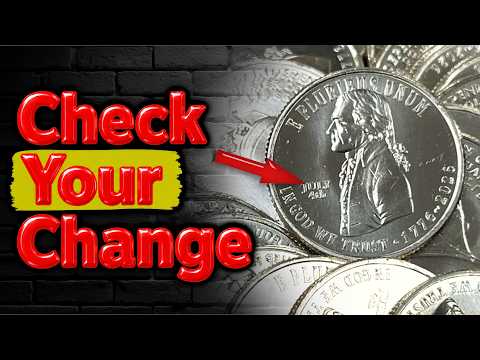 https://www.youtube.com/watch?v=ZSHZhl2M6Yw), [2] (https://www.collectpure.com/blog/july-4th-privy-mark-quarter), [3] (https://www.ngccoin.com/news/article/15598/counterfeit-detection-2026-quarter/)
Because they are so rare compared to the hundreds of millions of standard 2026 quarters, private sellers and coin dealers on the secondary market frequently charge high premiums. Before buying from a print or digital advertisement, it is highly recommended to compare prices across established, trusted third-party numismatic vendors or grading platforms to ensure you aren't overpaying. Furthermore, due to their value, numismatic institutions like NGC Coin Grading have warned collectors to watch out for counterfeit versions of this exact coin. [1] (
Are you looking to buy one of these coins from a dealer, or did you find one in your change that you want to verify?
Copying...
Mr_Spud