The scarcest obverse die variety of 1909-S V.D.B. is this one...
 mr1931S
Posts: 7,438 ✭✭✭✭✭
'S' highest left on 1909-S V.D.B. cent is one that numismatic pioneer Bert Harsche never saw. Note that the top of the 'S' is above the end of the tip of the first '9' in the date not to be confused with 'S' high left with the top of the 'S' slightly below the tip of the first '9' in the date.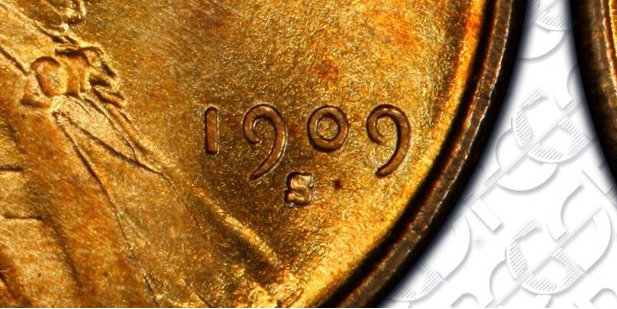
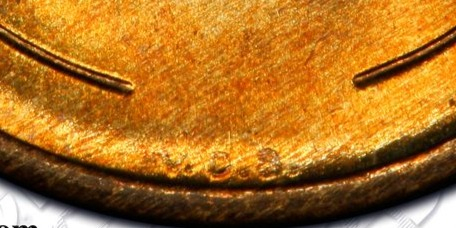
Probably less than 10,000 made. The example shown here has a blurry 's' and a blurry 'V.D.B.' As the story goes, San Francisco mint officials were unhappy with the first strikes of S V.D.B. pennies so production was halted, the dies replaced, and production resumed. A few thousand of these first strikes survived and got into the wild which is not very many out of a total mintage of 484,000. Awhile back I started a "show us your PCGS slabbed 1909-S V.D.B." thread. Only three of the four known obverse varieties showed up with highest left, mm tilting right MIA, despite a good number (a few dozen?) of S. V.D.B.s shown in the thread. This is the only example of highest left 'S' that I found out of over 100 about uncirculated or uncirculated examples in PCGS library.
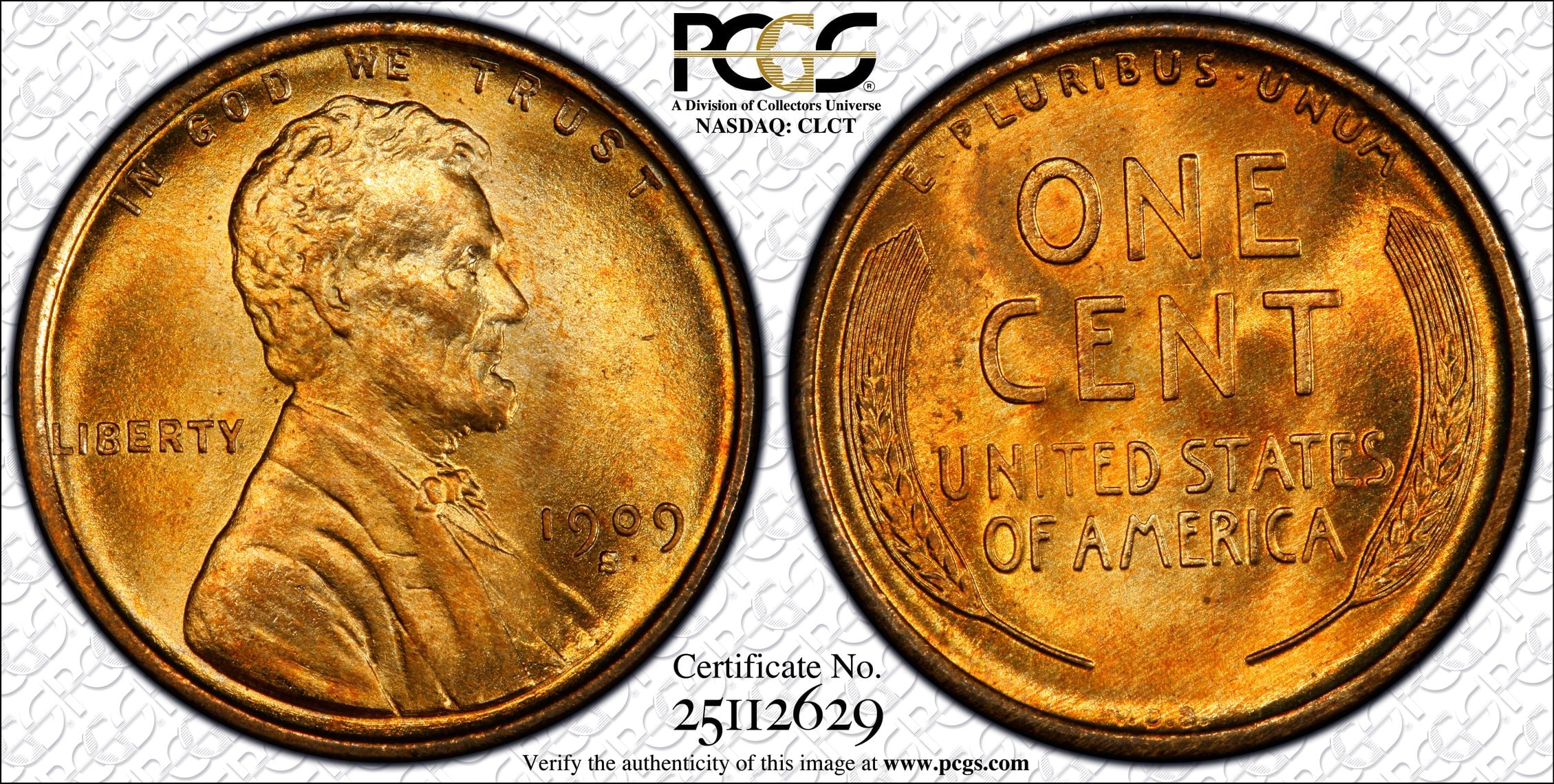
Stunning MS 66, a special S.V.D.B. as it's one of the first made. 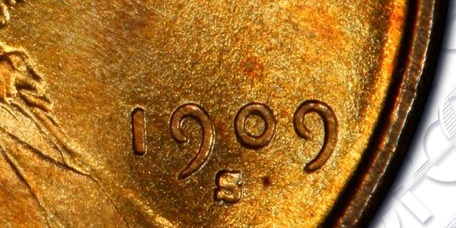
“Never let yesterday use up too much of today.”
Will Rogers
Comments
iirc, the die usage figures from mint research did not show only 10,000 from one obverse die
What die Usage figures are available for the 1909-SVDB cents? I have studied the Denver Mint Die Register for the years 1911 (when they started making one cent pieces) to 1926, and it appears to me that in the early years they tried to be accurate, while by 1922 they were just making shinola up.
wasn't there a pic of a mint doc from the us archives with the die numbers and the coins minted by each? a table.
What verification is there that the San Fran mint officials were unhappy with initial production?
And even if they were, how do we know specifically what the issue they had was and whether or not it was this specific die pair?
Coin Photography
the ledger even had reverse die numbers and number of coins struck
Scarcest of the scarce is 1909-S V.D.B. obverse 1, 'S' highest left. My estimate of survivors is based primarily on 1/100 (as seen in the PCGS library) as approximately equal to 4800/484,000. So, 5000 or less estimated survival with most of those first S.V.D.B.s made scrapped because mint officials were unhappy with them. The 1909-S V.D.B. obverse that Bert Harsche never saw and the reader here will find only one example of in the PCGS library of images at this writing is a very scarce coin indeed. Was striking through grease causing the blurriness of the 'S' and the V.D.B.? Were the dies taken out of service then returned to service after being cleaned of grease?
Feel free to draw your own conclusions. The mint record does exist, provided by Roger Burdette, that shows obverse and reverse die usage for 1909-S cents.
“Never let yesterday use up too much of today.”
Will Rogers
Here is the page from the Denver Mint's 1911-1926 Die Register covering the Cents of 1922, as reproduced in my book at left. Shows when each numbered obverse die was received from the Philadelphia Mint, when it was installed, and when it was retired. Alongside this are a bunch of numbered reverse dies held over from 1920 and mostly used up. Also shown are some numbers that allege to show how many coins were struck from each die.
The numbers struck are crap. Look in the book at my Obverse #8, which comes paired with three different reverse dies. Where is that string of die pairings represented on this die register page?
Look at my Obverse #14, which catastrophically failed in a very early die state with a large cud die break at TRUST. Where is that short mintage represented on this die register page?
In Denver in 1922 they made up numbers that made a good looking report.
TD
I read somewhere long ago that unhappiness of mint officials at the first strikes of 1909-S cent with the V.D.B. reverse was the case. I wish I had made a record of some kind where I read this. Qualifies as anecdotal evidence I suppose. I see the number of uses of one obverse die as a scant 13,000 and one reverse die with 10,000 uses, however. Were these dies used together to produce the first 1909-S V.D.B.s? We can't know for sure.
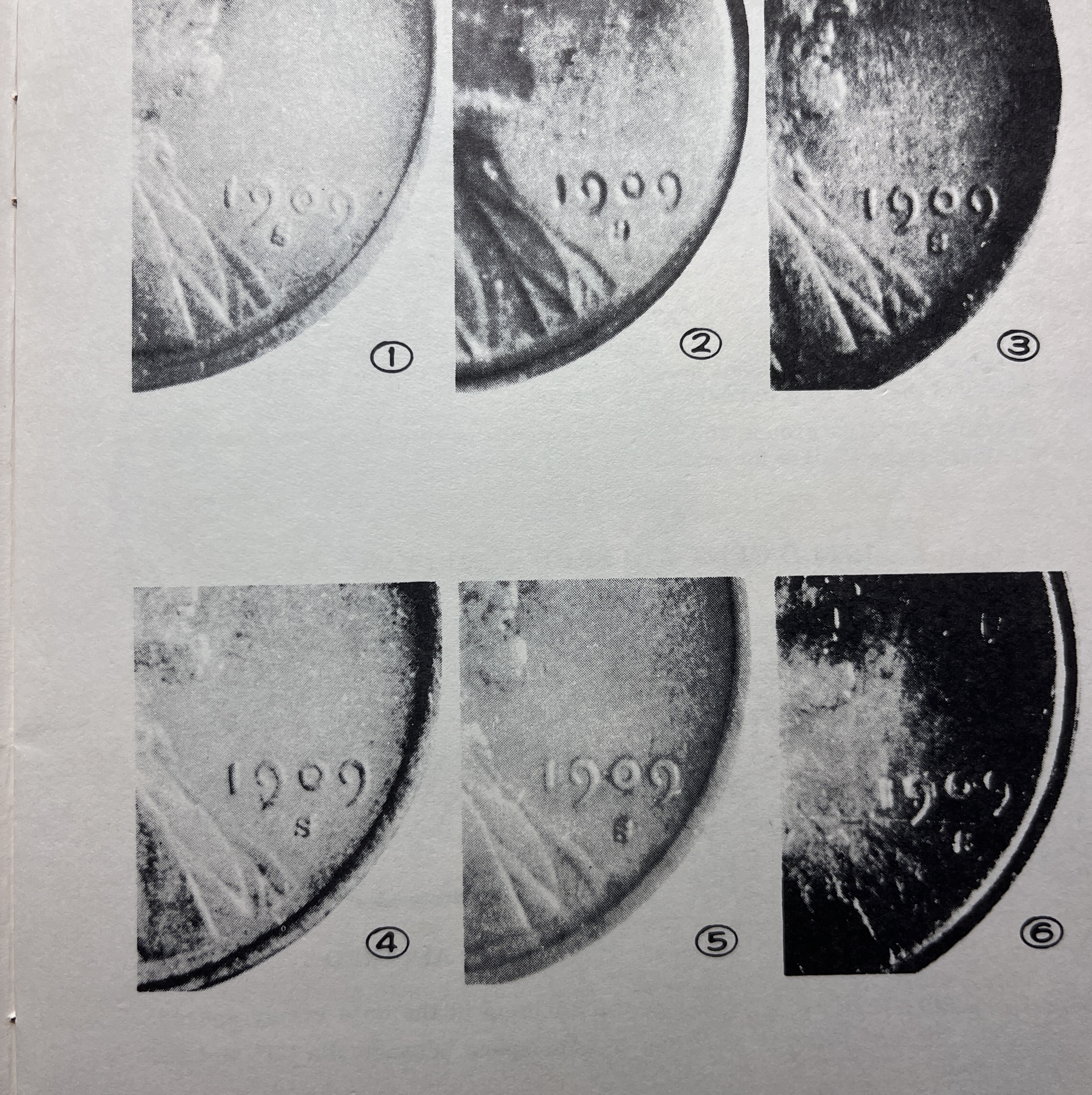
fyi, there are 1909-S Lincoln cents coming from 'S' highest left without V.D.B. on reverse in existence. Examples of these can be seen in the PCGS Truview image library. And never mind the V.D.B. reverse, the 1909-S highest 'S' without V.D.B. is not commonly seen. Fairly commonly seen on 1909-S Lincoln pennies are examples from the die with a slightly lower (or high 'S'). Plenty of examples exist of pieces made from this obverse die both with and without V.D.B. reverse. Shows as ① here in Harsche's pictures of six obverse die varieties for 1909-S Lincoln cents. These six plus the highest 'S' (that Harsche never saw) makes 7. Add the two overmintmark varieties and we have a total of nine (9) confirmed identifiable obverses known to have been used to make 1909-S LC both with and without V.D.B. on the reverse.
“Never let yesterday use up too much of today.”
Will Rogers
The lowest number of strikings seen on the mint document is 13,000 for a 1909-S obverse die called "433".
“Never let yesterday use up too much of today.”
Will Rogers
Note: PCGS used roman numerals for the '1s' in the certificate number.
“Never let yesterday use up too much of today.”
Will Rogers