Home U.S. Coin Forum
Options

Die ring varieties and similar oddballs - any new sightings or possible explanations for these?

IkesTIkesT Posts: 4,591 ✭✭✭✭✭

As defined on error-ref.com, die rings are Tiny rings, semicircles, crescents, and spirals that usually appear in the center of the coin or nearby. Their origin is a mystery and it’s likely that they have more than one cause. Many rings are isolated, while others form concentric arrays.

https://www.error-ref.com/die-rings-tiny-rings-semicircles-crescents-and-spirals/

Mike Diamond ( @errormaven ) wrote an article about die rings for Coin World in 2017. I am particularly interested in an oddball 1982 Lincoln cent variety that was mentioned there. It has concentric arrays of irregular polygonal rings around the center of both the obverse and reverse. Has anyone else come across this one or anything similar? Is this likely just due to unorthodox die polishing, or are there other plausible explanations?
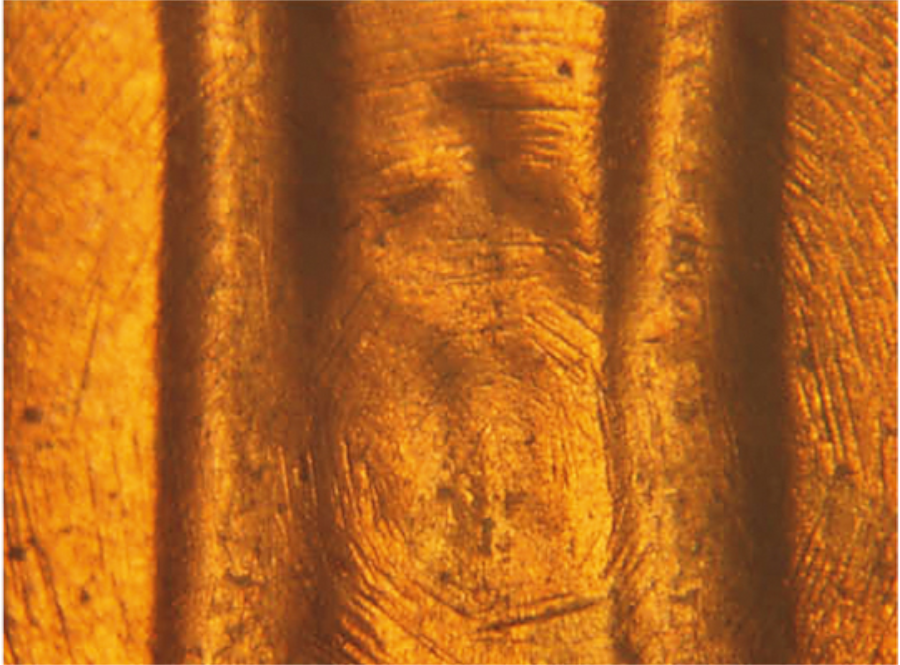
Unfortunately, I do not have any other photos of the coin. I seem to recall seeing additional photos in the past, but cannot find them now. Jason Cuvelier used to have a website (errorvariety.com) that catalogued these types of varieties, and that may have been where I saw the photos, but that site is now defunct.

Comments

  • Options
    CaptHenwayCaptHenway Posts: 34,154 ✭✭✭✭✭

    Never saw this pattern before.

    The best suggestion that I can come up with for the various rings, arcs (including the so-called extra leaves) and lines (such as the extended ray George Washington dollar) is that some employee in the Engraving Department thinks he is Banksy, and adds graffiti to various dies just to see the reactions when they are discovered.

    Then again, why were there dots on certain Morgan dollar dies in the early 1880's?

    Professional Numismatist, Retired. 55 year member ANA. Former ANA Senior Authenticator. Winner of four ANA Heath Literary Awards; three Wayte and Olga Raymond Literary Awards; Numismatist of the Year Award 2009, and ANA Lifetime Achievement Award 2020. Winner of the PNG's 2026 Robert Friedberg Award for "The Enigmatic Lincoln Cents of 1922," Available now from Whitman or Amazon.
  • Options
    davewesendavewesen Posts: 6,980 ✭✭✭✭✭

    I have seen similar on 1938 proof Jefferson nickels. It shows up on the jacket. The only thing I can figure is that the face of the die stock was leveled with a lathe before the impression of the coin was pushed onto it.

  • Options
    coinbufcoinbuf Posts: 12,564 ✭✭✭✭✭

    Aliens are among us.

    My Lincoln Registry
    My Collection of Old Holders

    Never a slave to one plastic brand will I ever be.
  • Options
    MsMorrisineMsMorrisine Posts: 40,033 ✭✭✭✭✭

    new to me too

    Current maintainer of Stone's Master List of Favorite Websites // My BST transactions
  • Options
    johnny9434johnny9434 Posts: 34,010 ✭✭✭✭✭
    edited September 20, 2026 3:36PM

    Its the aliegn edition varity 😣

  • Options
    DesertCoinDesertCoin Posts: 479 ✭✭✭

    Probably the original steel retaining some minor weaknesses/irregularities inside the metal relating to when it was made.

    “Land of the free because of the brave”
    “Saved by grace alone, through faith alone, in Christ alone”
    In Deo solo confidimus
    ΙΧΘΥΣ
    ΙϹ ΧϹ ΝΙΚΑ (ΙΗΣΟΥΣ ΧΡΙΣΤΟΣ ΝΙΚΑ)


    Member since 2026
    Successful BST transactions with: Ted 1, JWP, bigjpst, Vetter, nickelsciolist, ajaan, USMarine6, ad4400, grote15, coinbuf, Gothat3rs, No Headlights, PROMETHIUS88, Harlequin, Coin Finder, Coins3675, CKcollectibles2
  • Options
    BLUEJAYWAYBLUEJAYWAY Posts: 11,790 ✭✭✭✭✭

    It's an "Omega" cent.😀

    Successful transactions:Tookybandit. "Everyone is equal, some are more equal than others".
  • Options
    FlyingAlFlyingAl Posts: 4,468 ✭✭✭✭✭

    Common on Proofs of the 1936-42 era, but can also be found on circulation strikes.

    The current theory that was originally proposed by Roger Burdette is that dies are originally given a quick deburring following hubbing with a polishing lap. This would produce concentric rings from the lap.

  • Options
    CaptHenwayCaptHenway Posts: 34,154 ✭✭✭✭✭

    @FlyingAl said:
    Common on Proofs of the 1936-42 era, but can also be found on circulation strikes.

    The current theory that was originally proposed by Roger Burdette is that dies are originally given a quick deburring following hubbing with a polishing lap. This would produce concentric rings from the lap.

    I politely disagree. Remember that dime with the heavy arc near the ear? Way too deep below the field.

    Professional Numismatist, Retired. 55 year member ANA. Former ANA Senior Authenticator. Winner of four ANA Heath Literary Awards; three Wayte and Olga Raymond Literary Awards; Numismatist of the Year Award 2009, and ANA Lifetime Achievement Award 2020. Winner of the PNG's 2026 Robert Friedberg Award for "The Enigmatic Lincoln Cents of 1922," Available now from Whitman or Amazon.
  • Options
    joeykoinsjoeykoins Posts: 18,838 ✭✭✭✭✭
    edited September 21, 2026 2:15PM

    Interesting???
    I also wasn't aware of these.
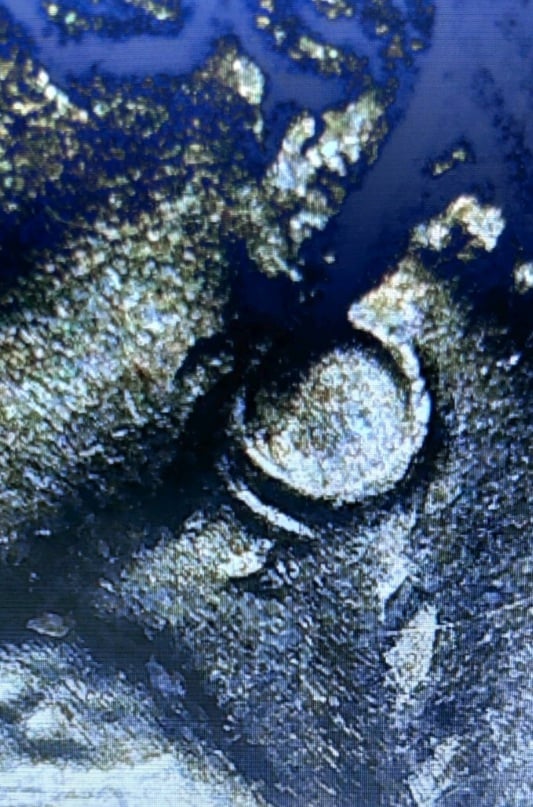
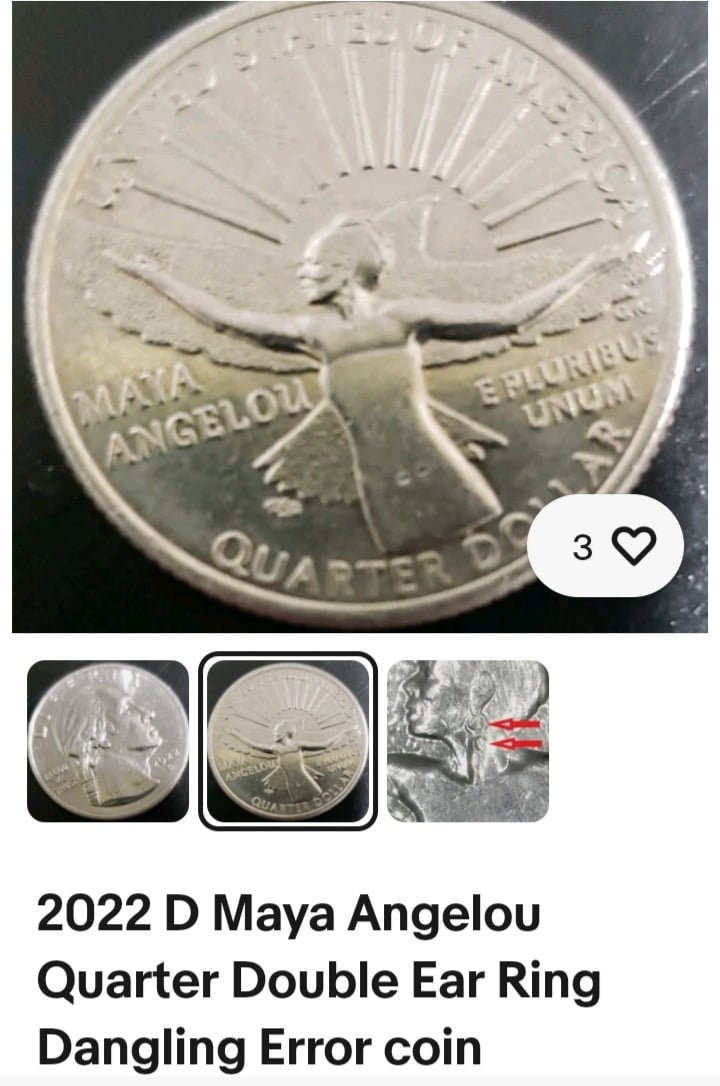
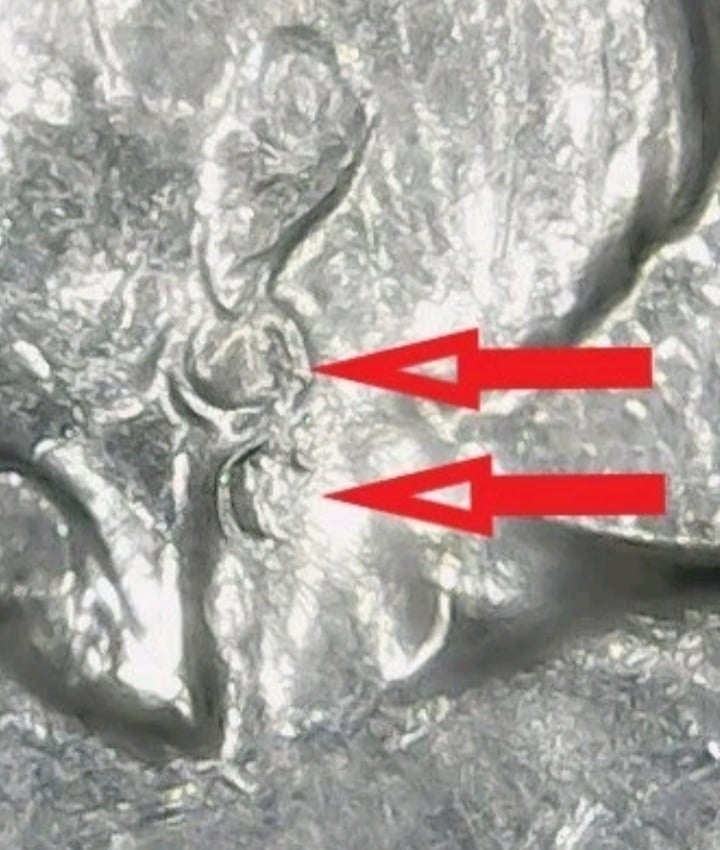
    So, do you mean to tell me. That the 2022 Maya quarters can actually be the "ring" mystery instead of an actual doubled ear ring?
    :*


    This picture, actually does look like the one that's mentioned?
    The "Die-ring Varieties".

    Hmmmmm?

    "Jesus died for you and for me, Thank you,Jesus"!!!

    --- If it should happen I die and leave this world and you want to remember me. Please only remember my opening Sig Line.
  • Options
    PerryHallPerryHall Posts: 47,743 ✭✭✭✭✭

    Are you sure those aren't rare privy marks? ;)

    Worry is the interest you pay on a debt you may not owe.
    "Paper money eventually returns to its intrinsic value---zero."----Voltaire
    "Everything you say should be true, but not everything true should be said."----Voltaire

  • Options
    IkesTIkesT Posts: 4,591 ✭✭✭✭✭

    @CaptHenway said:

    @FlyingAl said:
    Common on Proofs of the 1936-42 era, but can also be found on circulation strikes.

    The current theory that was originally proposed by Roger Burdette is that dies are originally given a quick deburring following hubbing with a polishing lap. This would produce concentric rings from the lap.

    I politely disagree. Remember that dime with the heavy arc near the ear? Way too deep below the field.

    He was answering my question regarding the 1982 cent specifically, which is lumped in with this discussion even though it is not a typical "die ring" variety. And it should be noted that even among typical die ring varieties, it is thought there may be different causes.

  • Options
    IkesTIkesT Posts: 4,591 ✭✭✭✭✭

    @FlyingAl said:
    Common on Proofs of the 1936-42 era, but can also be found on circulation strikes.

    The current theory that was originally proposed by Roger Burdette is that dies are originally given a quick deburring following hubbing with a polishing lap. This would produce concentric rings from the lap.

    Thank you; is this a topic discussed in From Mine to Mint or is it written elsewhere?

    Is there any property of the dies that would be likely to lead to treatment localized around the center of the die and with greater intensity than usual, as on the 1982 cent? Or do you think that is more an example of aberrant and/or heavy handed technique?

  • Options
    mr1931Smr1931S Posts: 7,308 ✭✭✭✭✭

    @IkesT said:

    @CaptHenway said:

    @FlyingAl said:
    Common on Proofs of the 1936-42 era, but can also be found on circulation strikes.

    The current theory that was originally proposed by Roger Burdette is that dies are originally given a quick deburring following hubbing with a polishing lap. This would produce concentric rings from the lap.

    I politely disagree. Remember that dime with the heavy arc near the ear? Way too deep below the field.

    He was answering my question regarding the 1982 cent specifically, which is lumped in with this discussion even though it is not a typical "die ring" variety. And it should be noted that even among typical die ring varieties, it is thought there may be different causes.

    Leave no stone unturned is what the great ones one who went before you would say.

    A human being is a part of the whole called by us universe, a part limited in time and space. He experiences himself, his thoughts and feeling as something separated from the rest, a kind of optical delusion of his consciousness. This delusion is a kind of prison for us, restricting us to our personal desires and to affection for a few persons nearest to us. Our task must be to free ourselves from this prison by widening our circle of compassion to embrace all living creatures and the whole of nature in its beauty.

    Albert Einstein

Leave a Comment

BoldItalicStrikethroughOrdered listUnordered list
Emoji
Image
Align leftAlign centerAlign rightToggle HTML viewToggle full pageToggle lights
Drop image/file