Artificial toning experiment: Can you guess the method?

Let's be honest, who doesn't love coins with colors? Vibrant, eye-catching colors on their coins, especially on the ones we like the most. It also brings a bit of envy when we see old books where, over the years, the coins have developed a truly beautiful toning with a variety of colors that make them stand out.
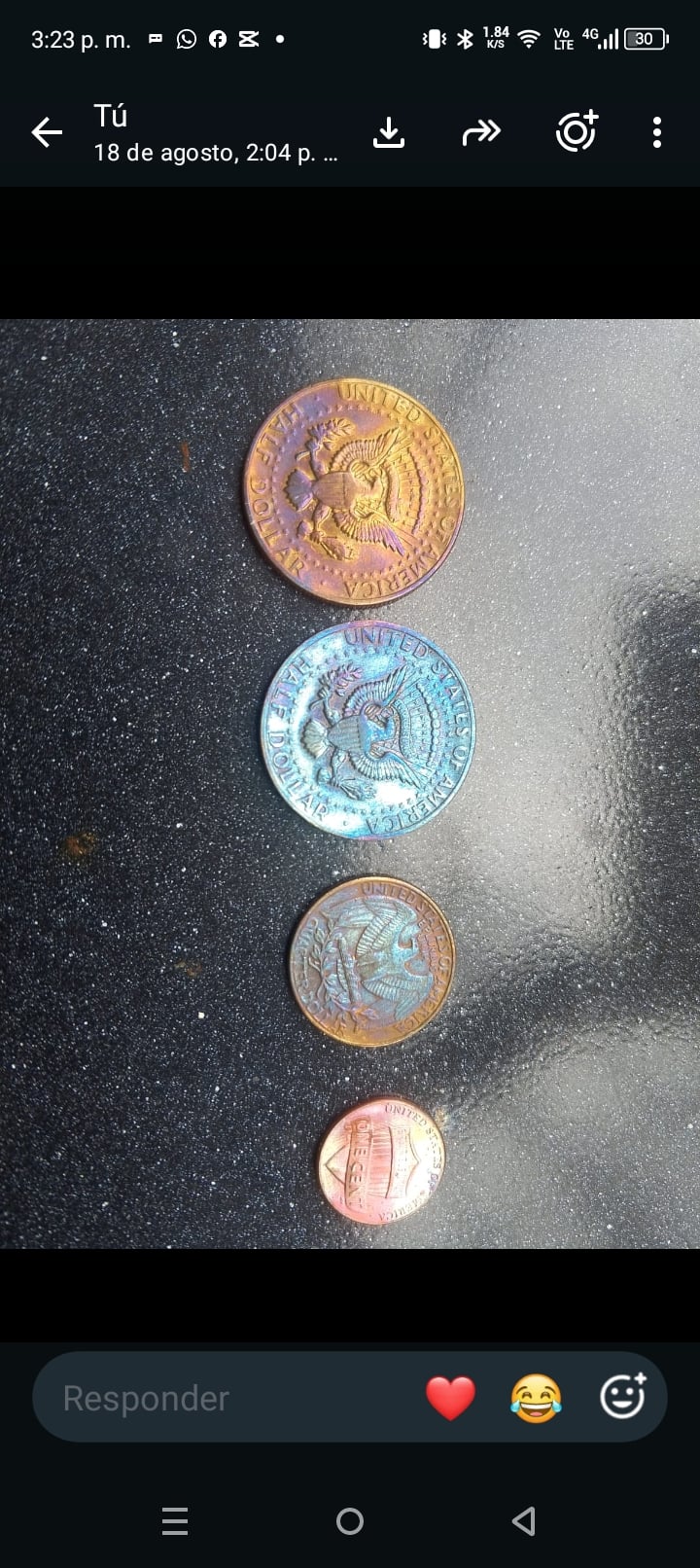
Well, because of this, several ideas have crossed my mind. Just to simulate the process, absolutely not to deceive anyone. I just wanted to give myself the pleasure of seeing a coin with those brilliant, eye-catching colors. So, I started experimenting, and I have reached this point.
To be honest, I really love how these coins look. I hope you enjoy them too.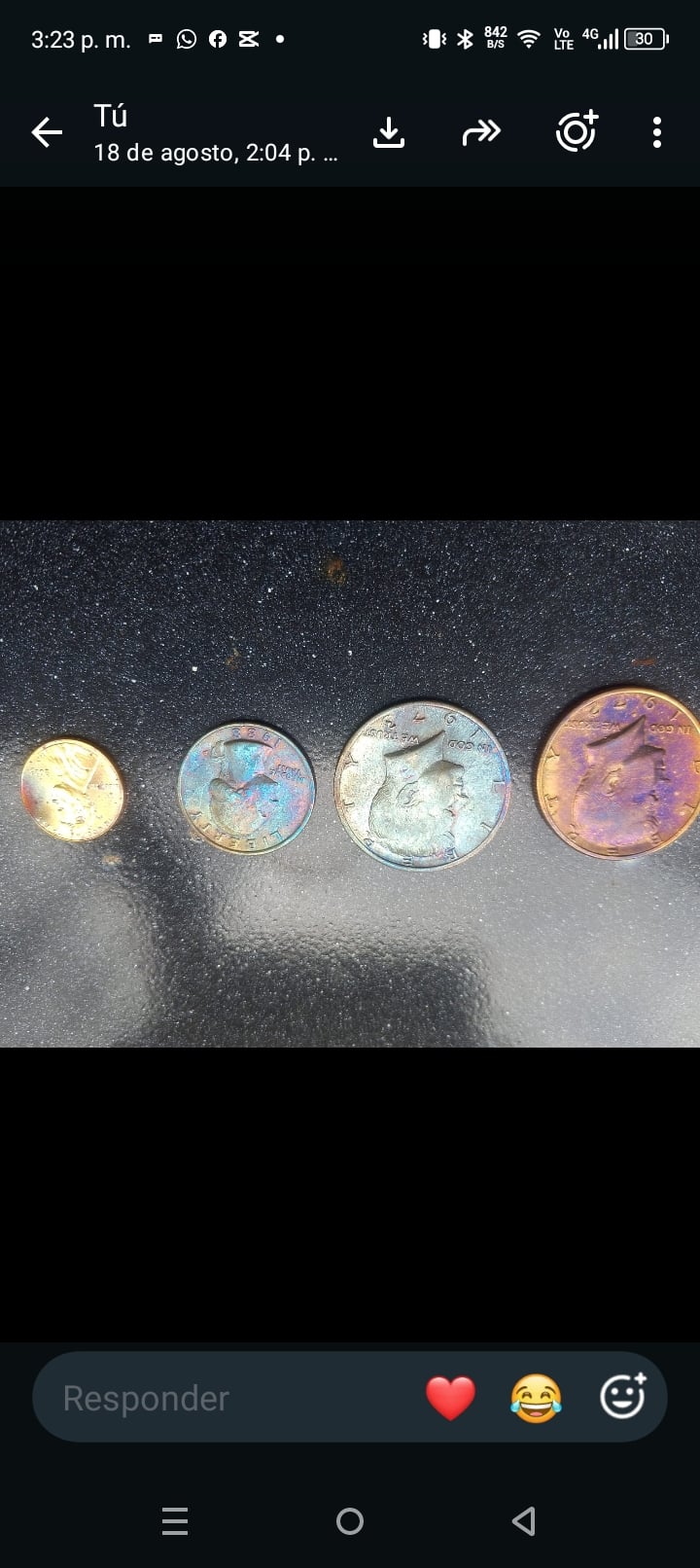
Comments
-
Over the years, I imagine many people in this forum have also experimented with this. They might have reached the same point as me, or maybe not.
I would love to see if you can guess the process! Take a look at the colors and the surfaces. What do you think I used to achieve this?
I'll reveal the answer later in the comments!
0 -
Magic Ugly Stick?
11 -
@ricarf2386 Can you crop and rotate the pictures?
1 -
Heated solution rich in sulfur
0 -
@TomB said:
Magic Ugly Stick?The colors on the Kennedy almost remind of the 1935-S PCGS MS67 CAC quarter in the other thread that we both thought looked AT.
0 -
Those are definitely toned. Not my style of toning or colors. Not something I would look to create or purchase.
3 -
Bath bombs?
I collect world proof sets, coins featuring composers, mid-20th century U.S. proof coins, U.S. type coins, and whatever else I want.
1 -
@cameonut2011 said:
Heated solution rich in sulfurI suspect heat alone for various lengths of time and focused location could do it. They may be pretty be seriously doubt they would straight grade anything of significance. The TPGs may give them MS62's-MS64's if no luster, just to keep submissions coming in and no major financial risk to them, even with their guarantees.
0 -
hard boiled eggs
It is not that life is short, but that you are dead for so very long.1 -
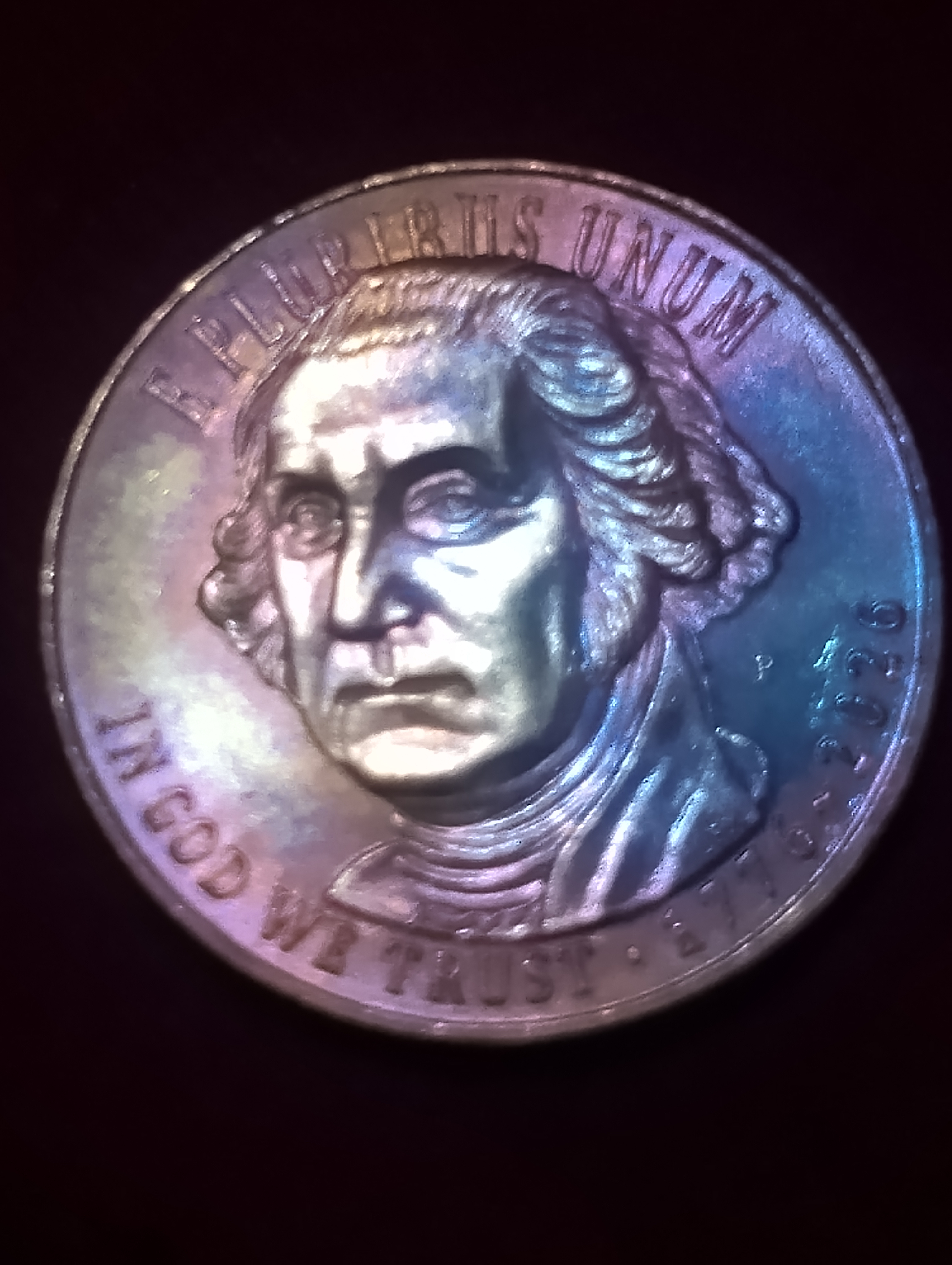
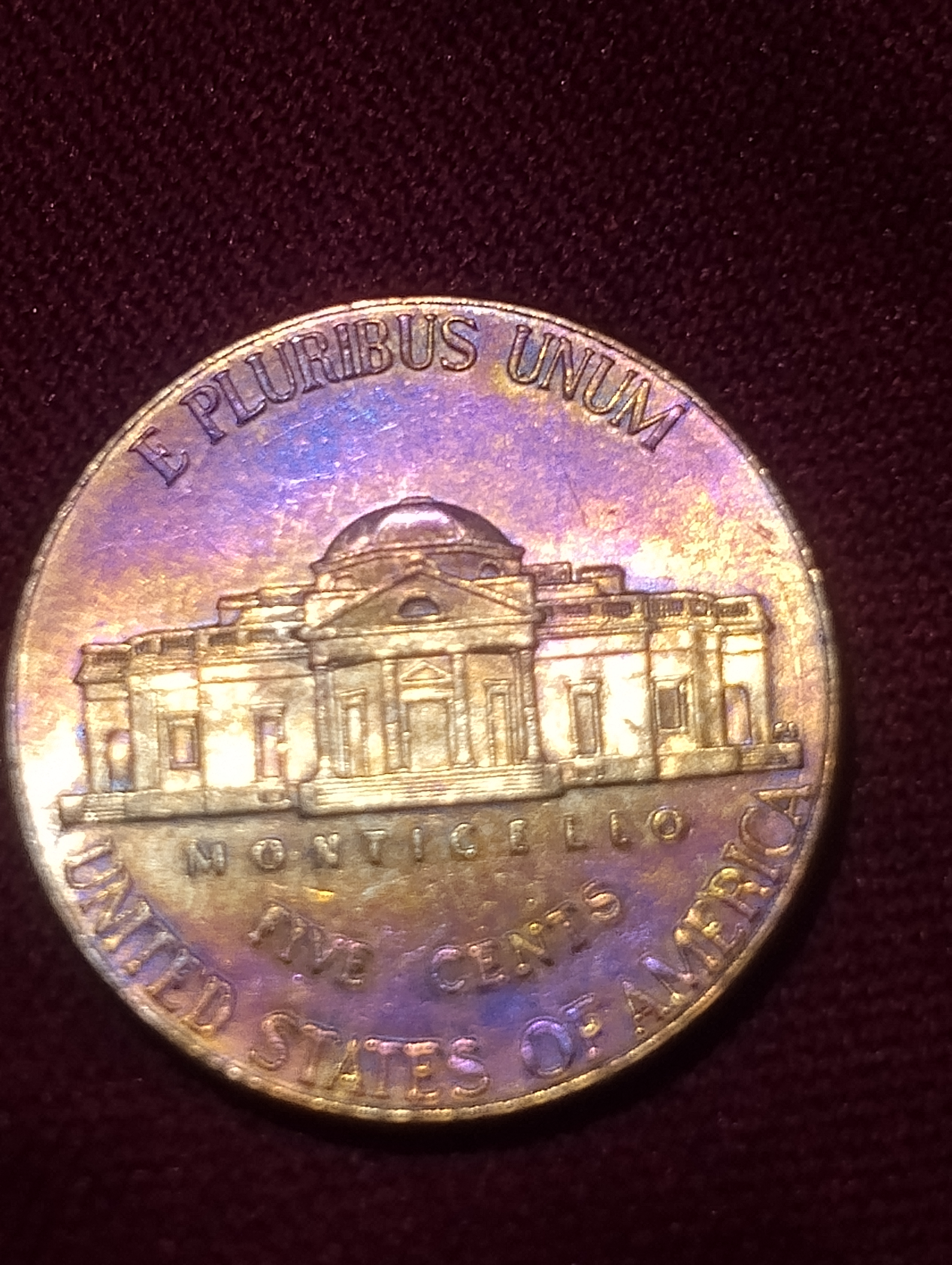
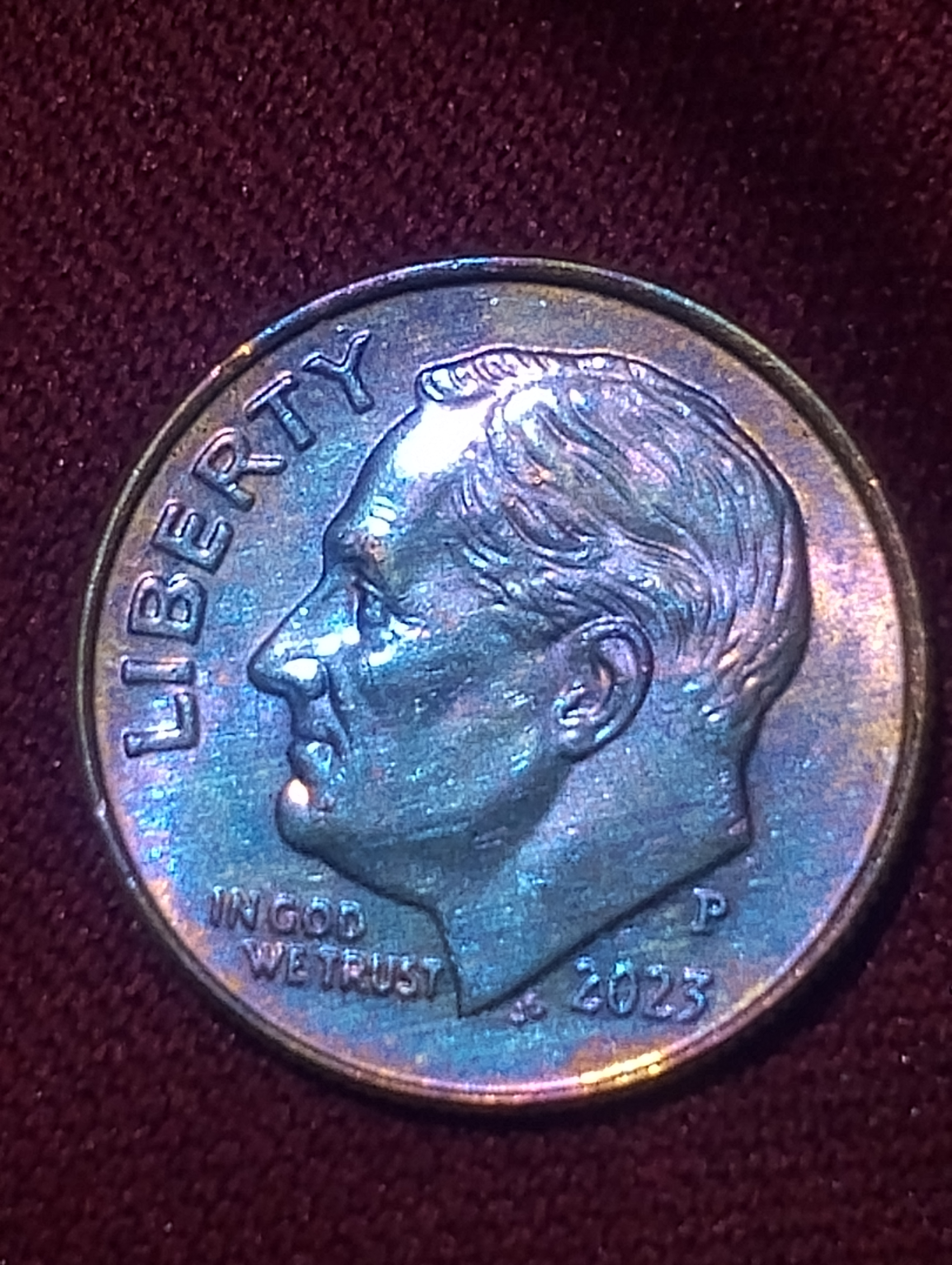
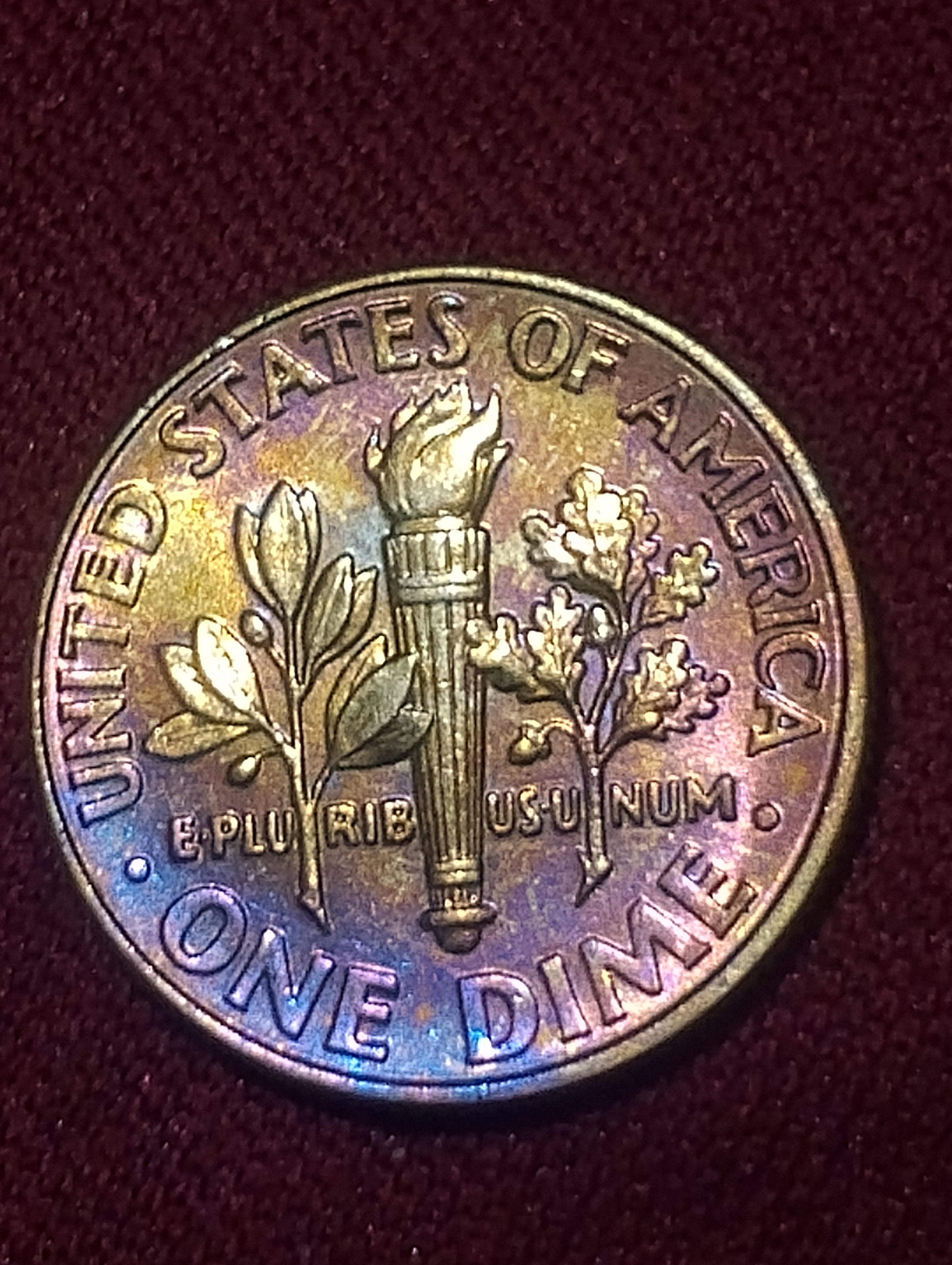
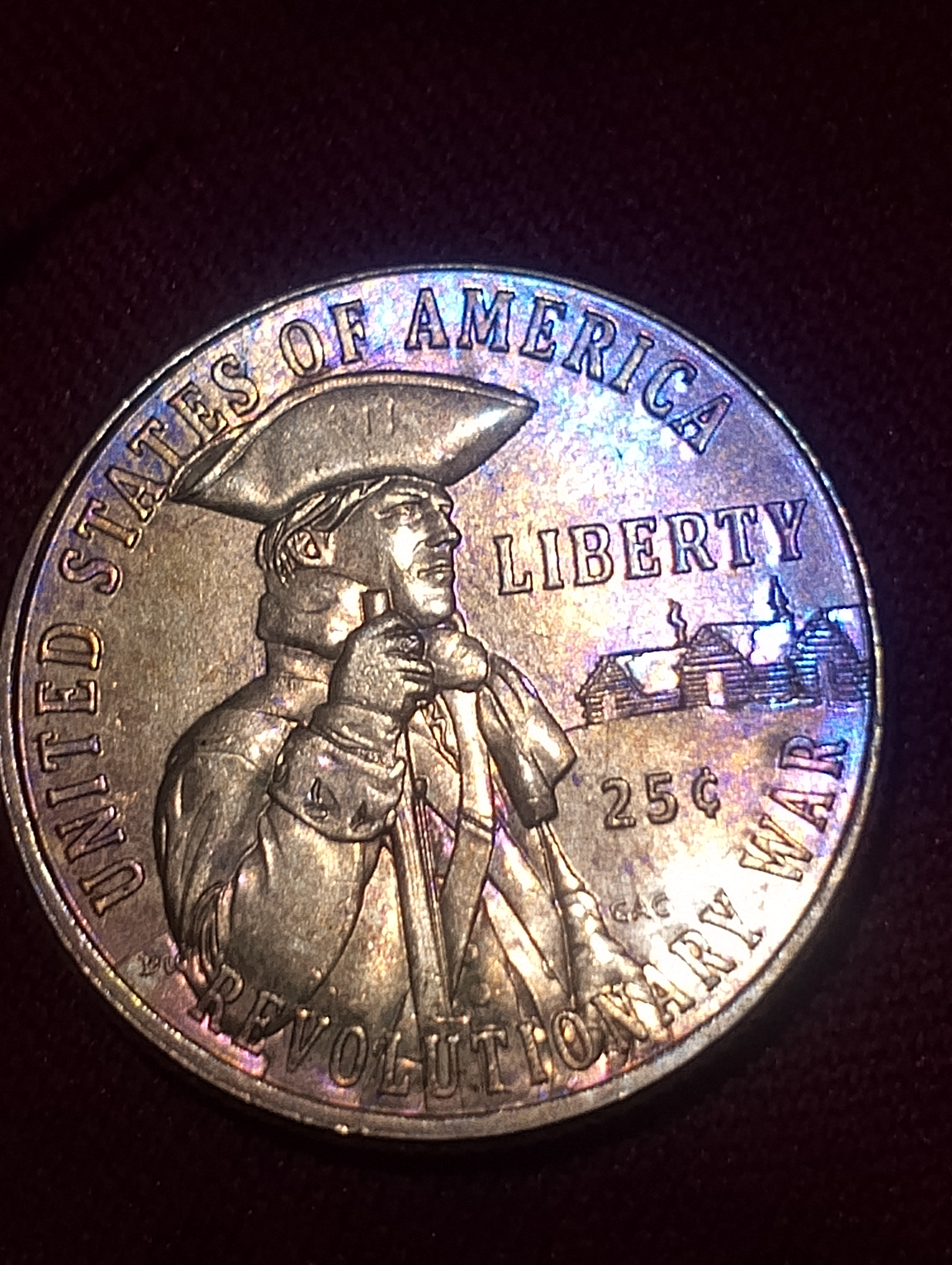
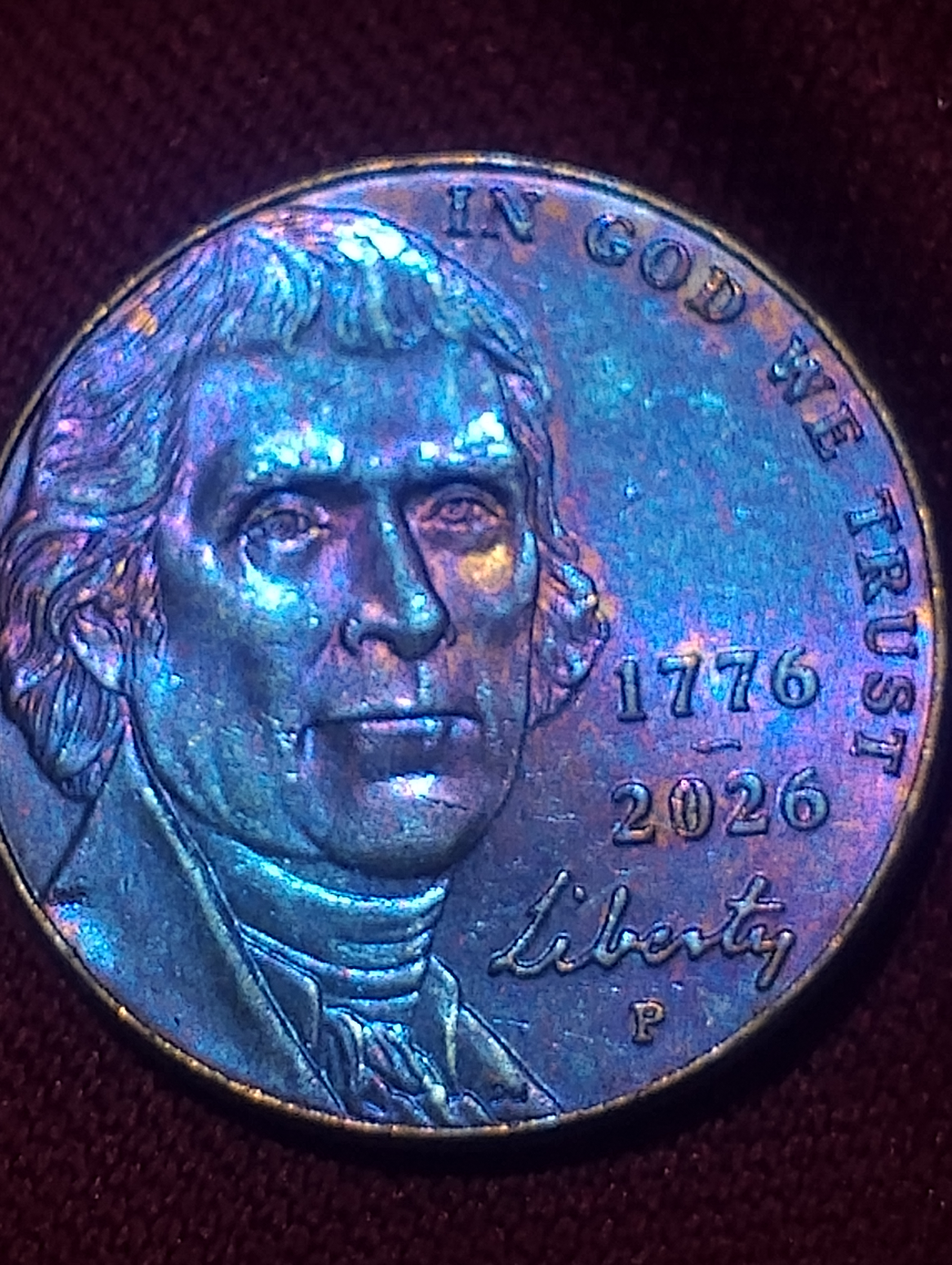
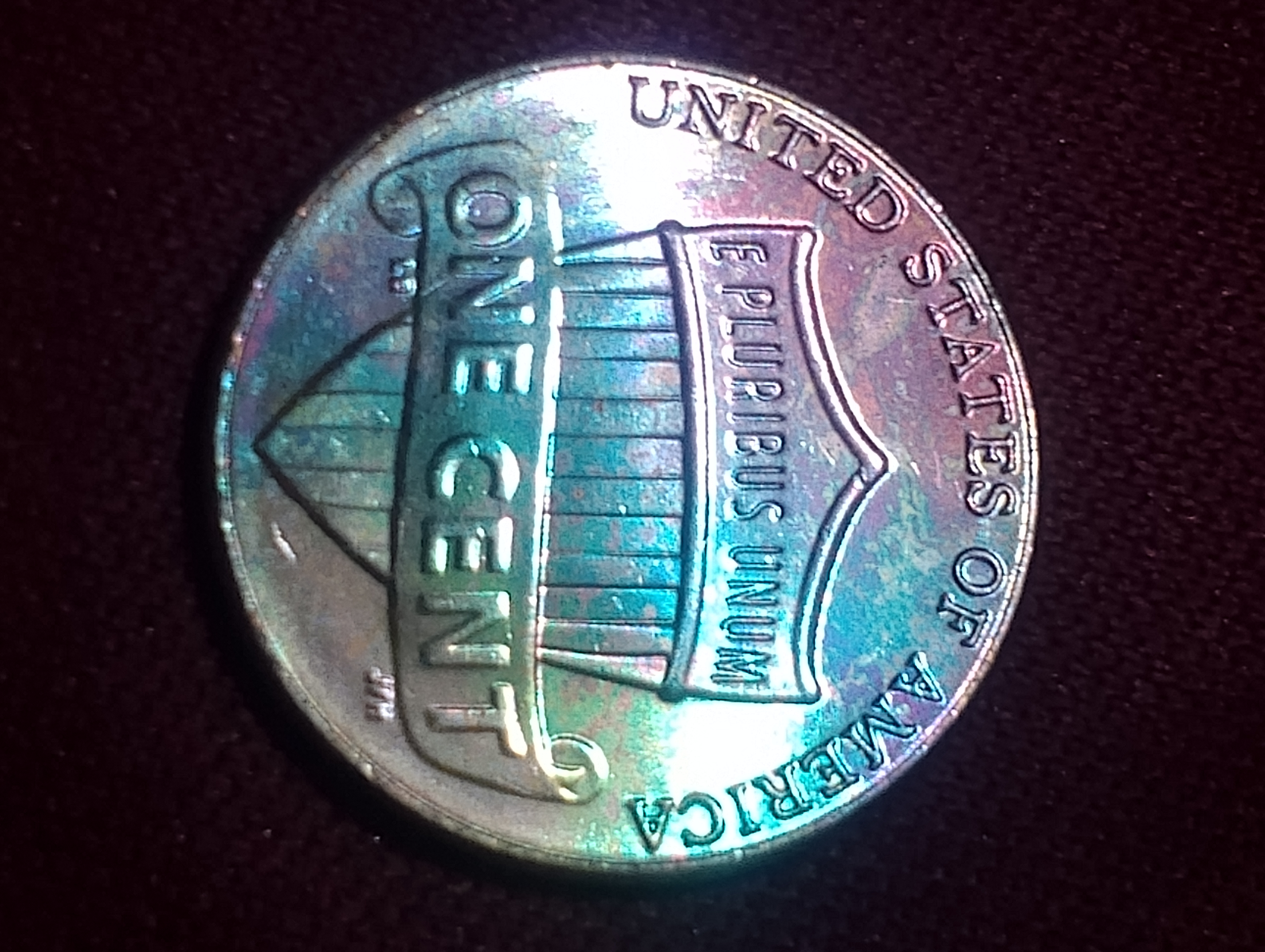
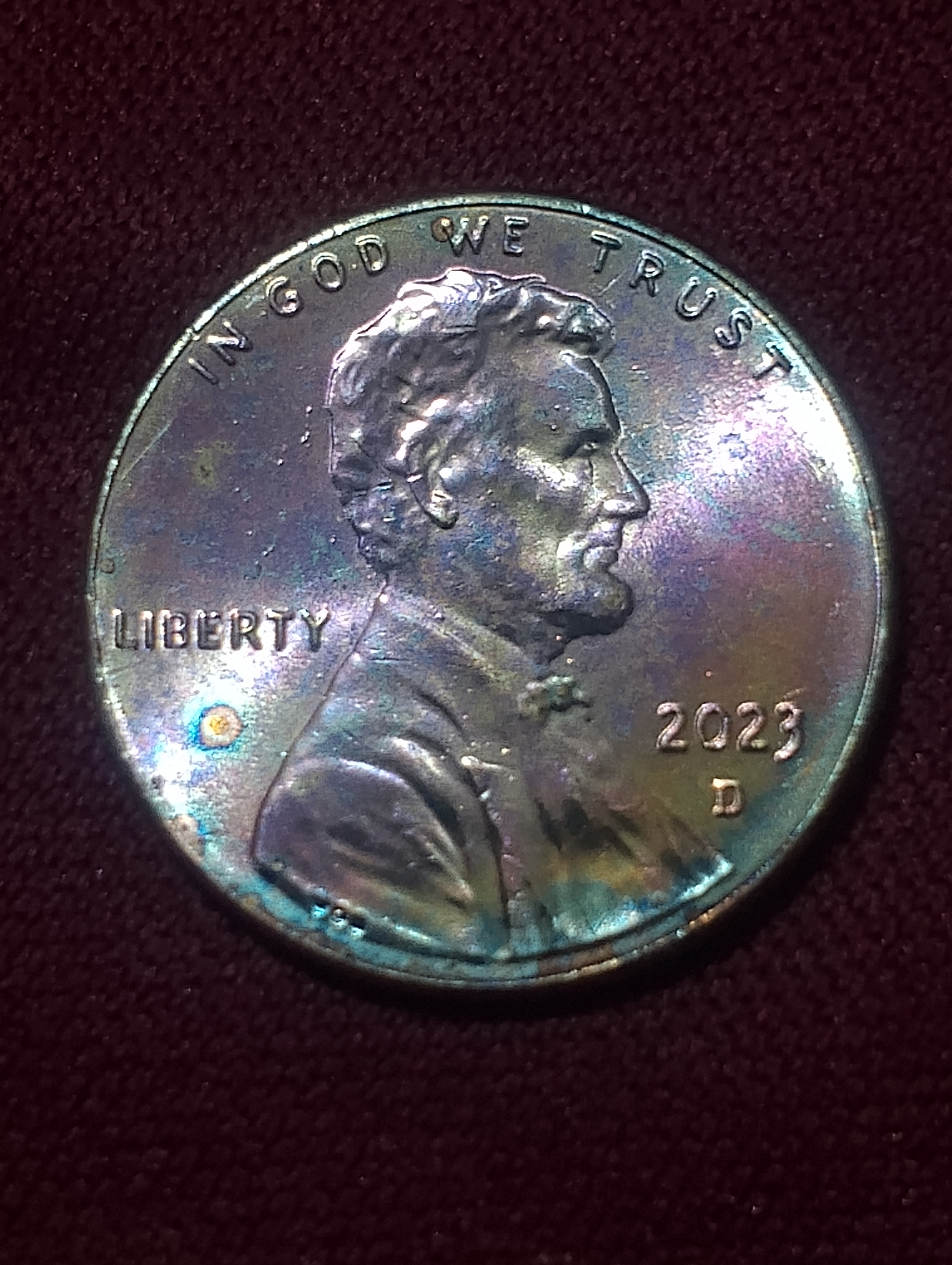
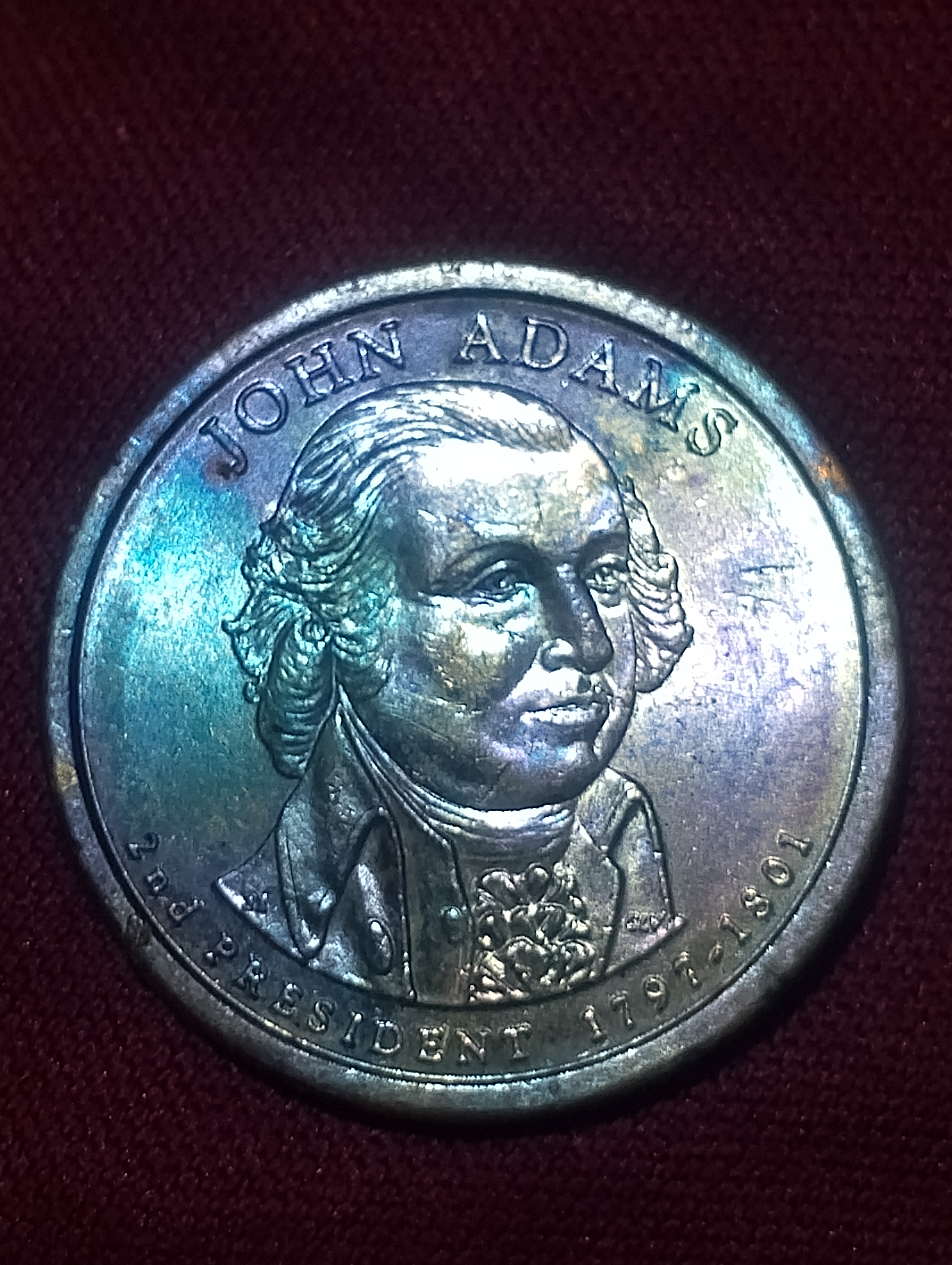
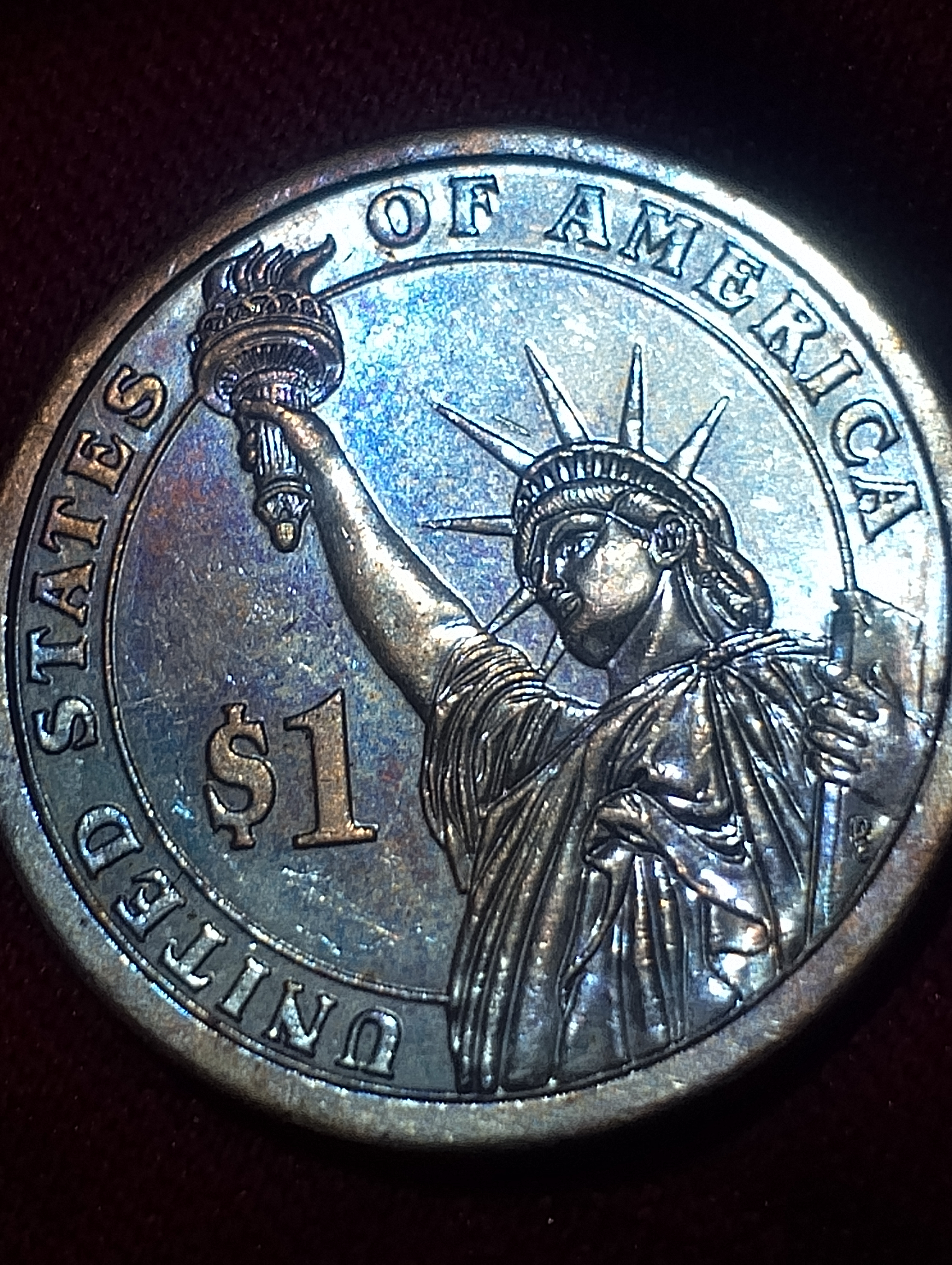
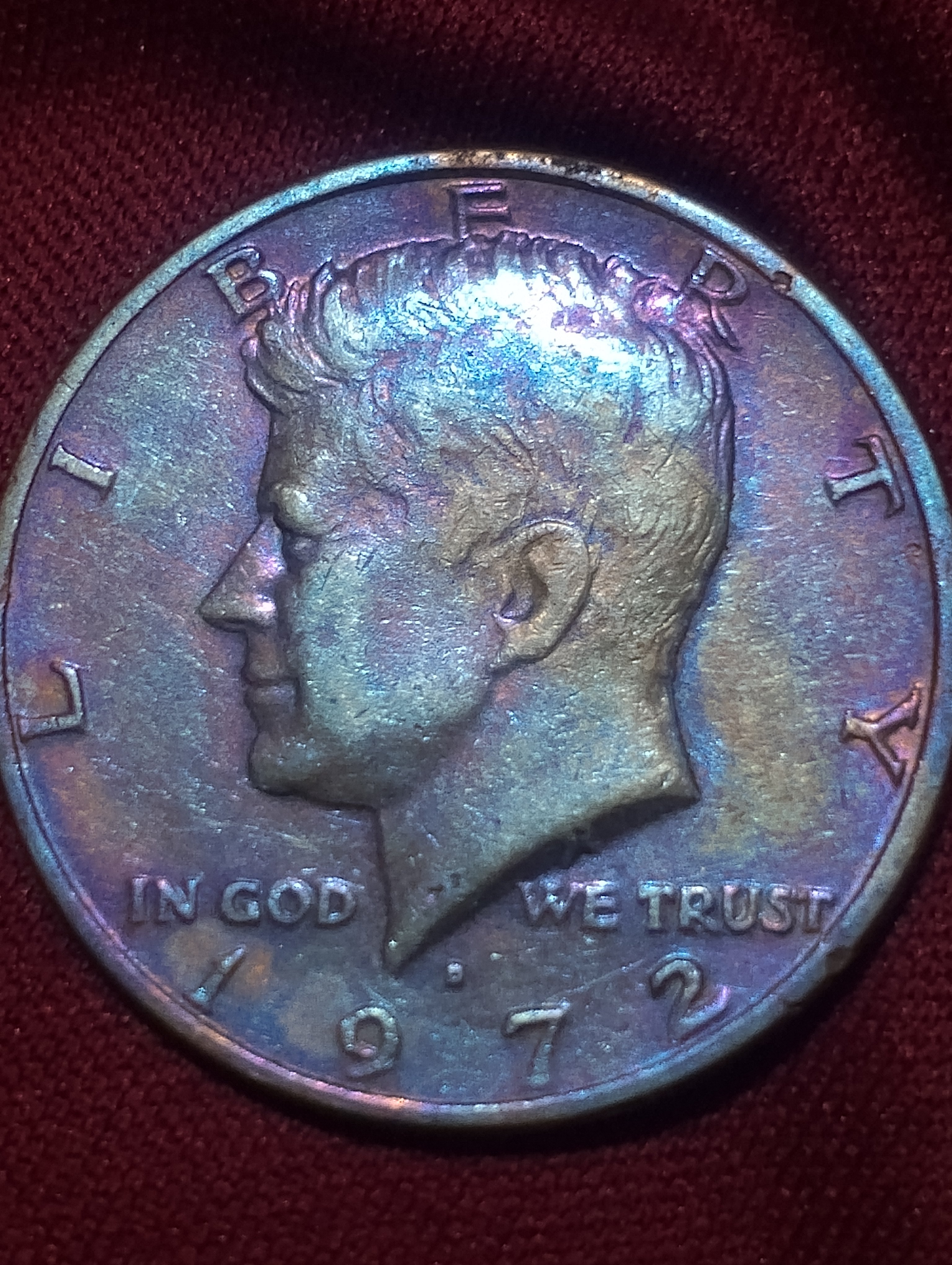
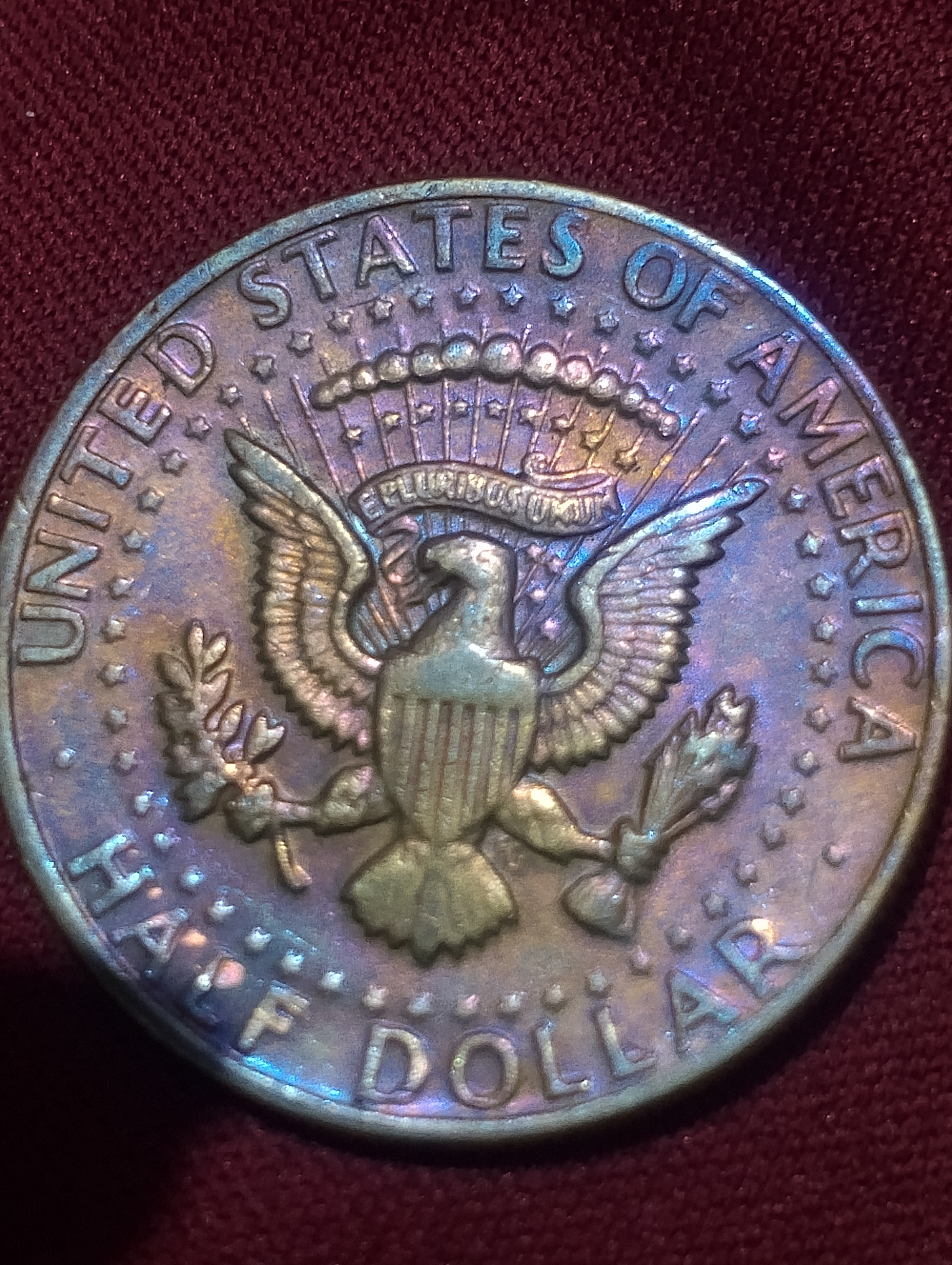
Hello everyone,First of all, my apologies for the quality of the images I posted initially; they were far from ideal.
To make things right and provide proper material for your analysis, I am adding ultra-close macro photos of each denomination involved in this experiment. Now you can clearly appreciate the artificial toning progression across the different metal surfaces.
Take a close look at the color shifts, the surface texture, and how the light reacts to these tones. The forum has been running quite slow today for me and everyone else on the board, which made it a challenge to attach these images earlier.
1 -
Respectfully, who cares the method? It's not a good method, because it won't fool anyone. (I know, you said that wasn't the point.) You can place them in a variety of sulfur-containing media at slightly elevated temperatures and get that to happen fairly quickly. I'm not sure what the point of the guessing game is.
This is like the posts from people asking how a damaged coin could come to be damaged. The specific mechanism is rarely that important, nor can it easily be pinpointed specifically because there are dozens of ways to scratch a coin. Similarly, BADLY artificially toning a coin is simple. Numerous foreign compounds will accelerate oxidation or sulfurization. Sometimes, just laundry detergent will do it with reactive metals.
All comments reflect the opinion of the author, even when irrefutably accurate.
5 -
@jmlanzaf said:
Respectfully, who cares the method? It's not a good method, because it won't fool anyone. (I know, you said that wasn't the point.) You can place them in a variety of sulfur-containing media at slightly elevated temperatures and get that to happen fairly quickly. I'm not sure what the point of the guessing game is.This is like the posts from people asking how a damaged coin could come to be damaged. The specific mechanism is rarely that important, nor can it easily be pinpointed specifically because there are dozens of ways to scratch a coin. Similarly, BADLY artificially toning a coin is simple. Numerous foreign compounds will accelerate oxidation or sulfurization. Sometimes, just laundry detergent will do it with reactive metals.
Hello my friend, to be completely honest, I opened this thread because a few days ago, another member of this forum—whom I now consider a friend and my tutor—recommended that I read through the threads posted by coinscratch, as well as your own threads under jmlanzaf. I was highly entertained and intrigued by how coinscratch once tried to tone a coin using a sparkler flare; that entire thread really brought a smile to my face, and studying your insights on this board has been incredibly educational for me.
So, out of pure curiosity, I discovered this method some time ago and wanted to share it here. As both you and I have correctly stated, I have absolutely no desire to deceive anyone. My real goal is simply to understand how to improve the finish of this toning process just to fill an album for my personal collection. That is my honest explanation.
And by the way... you weren't even close to guessing my actual method! 🙂
0 -
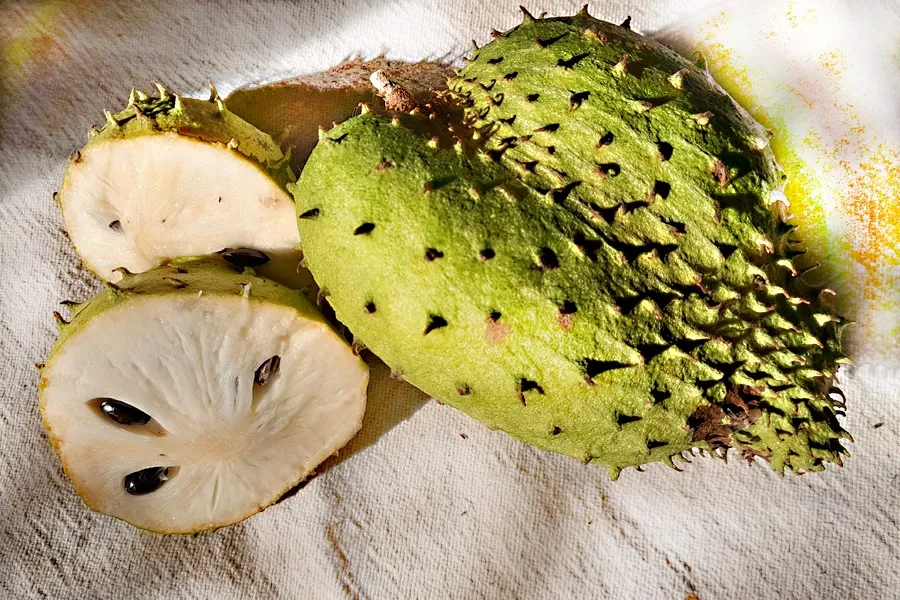
Put the coins into a ripening soursop.
 3
3 -
@jmlanzaf said:
Respectfully, who cares the method? It's not a good method, because it won't fool anyone. (I know, you said that wasn't the point.) You can place them in a variety of sulfur-containing media at slightly elevated temperatures and get that to happen fairly quickly. I'm not sure what the point of the guessing game is.This is like the posts from people asking how a damaged coin could come to be damaged. The specific mechanism is rarely that important, nor can it easily be pinpointed specifically because there are dozens of ways to scratch a coin. Similarly, BADLY artificially toning a coin is simple. Numerous foreign compounds will accelerate oxidation or sulfurization. Sometimes, just laundry detergent will do it with reactive metals.
Hello my friend, to be completely honest, I opened this thread because a few days ago, another member of this forum—whom I now consider a friend and my tutor—recommended that I read through the threads posted by coinscratch, as well as your own threads under jmlanzaf. I was highly entertained and intrigued by how coinscratch once tried to tone a coin using a sparkler flare; that entire thread really brought a smile to my face, and studying your insights on this board has been incredibly educational for me.
So, out of pure curiosity, I discovered this method some time ago and wanted to share it here. As both you and I have correctly stated, I have absolutely no desire to deceive anyone. My real goal is simply to understand how to improve the finish of this toning process just to fill an album for my personal collection. That is my honest explanation.
And by the way... you weren't even close to guessing my actual method! 🙂
Haha, you are actually getting quite close! But you are missing the real secret: the soursop (guanábana) must be picked exactly on a Friday morning at 10:00 AM. Only then can you insert the coin, bury the fruit in the ground, and wait for exactly 10 days... and that's it! 😀
0 -
-
@jmlanzaf said:
Respectfully, who cares the method? It's not a good method, because it won't fool anyone. (I know, you said that wasn't the point.) You can place them in a variety of sulfur-containing media at slightly elevated temperatures and get that to happen fairly quickly. I'm not sure what the point of the guessing game is.This is like the posts from people asking how a damaged coin could come to be damaged. The specific mechanism is rarely that important, nor can it easily be pinpointed specifically because there are dozens of ways to scratch a coin. Similarly, BADLY artificially toning a coin is simple. Numerous foreign compounds will accelerate oxidation or sulfurization. Sometimes, just laundry detergent will do it with reactive metals.
.
Your contention is FALSE that nobody cares what the method is. The method is important because :
to know what natural toning looks like, you have to know how artificial toning is implemented..
5 -
@dcarr said:
Looks like a blowtorch did it.I was going to say the same thing! 😉
1 -
@jmlanzaf said:
Respectfully, who cares the method? It's not a good method, because it won't fool anyone. (I know, you said that wasn't the point.) You can place them in a variety of sulfur-containing media at slightly elevated temperatures and get that to happen fairly quickly. I'm not sure what the point of the guessing game is.This is like the posts from people asking how a damaged coin could come to be damaged. The specific mechanism is rarely that important, nor can it easily be pinpointed specifically because there are dozens of ways to scratch a coin. Similarly, BADLY artificially toning a coin is simple. Numerous foreign compounds will accelerate oxidation or sulfurization. Sometimes, just laundry detergent will do it with reactive metals.
Kill joy 😂
2 -
@dcarr said:
@jmlanzaf said:
Respectfully, who cares the method? It's not a good method, because it won't fool anyone. (I know, you said that wasn't the point.) You can place them in a variety of sulfur-containing media at slightly elevated temperatures and get that to happen fairly quickly. I'm not sure what the point of the guessing game is.This is like the posts from people asking how a damaged coin could come to be damaged. The specific mechanism is rarely that important, nor can it easily be pinpointed specifically because there are dozens of ways to scratch a coin. Similarly, BADLY artificially toning a coin is simple. Numerous foreign compounds will accelerate oxidation or sulfurization. Sometimes, just laundry detergent will do it with reactive metals.
.
Your contention is FALSE that nobody cares what the method is. The method is important because :
to know what natural toning looks like, you have to know how artificial toning is implemented..
No. You don't. There is no good definition of AT vs NT. It's really MA. The only time such a mechanism might be helpful is if the AT looks similar to NT. Even then, the fact that it looks wrong is now important than how it got to look wrong. The only thing you need to know is what NT (MA) looks like.
I don't have to know how a counterfeit was made to know that my 1916-D dime has the wrong mintmark style. Or that my 1923-O Lincoln is fake.
As I specifically stated, the coins look so bad that it is irrelevant how they are made. This is not a case of then being close.
All comments reflect the opinion of the author, even when irrefutably accurate.
1 -
@cameonut2011 said:
@jmlanzaf said:
Respectfully, who cares the method? It's not a good method, because it won't fool anyone. (I know, you said that wasn't the point.) You can place them in a variety of sulfur-containing media at slightly elevated temperatures and get that to happen fairly quickly. I'm not sure what the point of the guessing game is.This is like the posts from people asking how a damaged coin could come to be damaged. The specific mechanism is rarely that important, nor can it easily be pinpointed specifically because there are dozens of ways to scratch a coin. Similarly, BADLY artificially toning a coin is simple. Numerous foreign compounds will accelerate oxidation or sulfurization. Sometimes, just laundry detergent will do it with reactive metals.
Kill joy 😂
Lol. Sorry. But people say it constantly on the "Walmart coin" threads. Does anyone need to know that it was actually found at a Piggly Wiggly? Or that it actually was a belt sander. I mean, Dan Carr thinks it does, but...
My careful research indicates that there are 37 million ways to get that coin to look bad like that.
All comments reflect the opinion of the author, even when irrefutably accurate.
0 -
@dcarr said:
Looks like a blowtorch did it.@dcarr You have a winner here! Even though some earlier comments mentioned heat in general, you nailed the exact method. It was indirect heat using a torch primarily used in HVAC (Heating, Ventilation, and Air Conditioning), which happens to be my line of work.
Seeing the metal react to the heat firsthand triggered a lot of ideas in my head. I have conceptualized a new project that I’ve named "The Time Travel Chamber." I believe this new method could perfectly simulate 50 to 60 years of natural toning—replicating the exact conditions of a coin sitting inside an album under a specific controlled climate.
I promise to return with a Part 2. However, out of respect for this beautiful hobby and to safeguard its integrity, if the chamber achieves absolute perfection, I will keep the device's inner workings to myself and only showcase the results with a proper maker's mark.
Thank you so much to everyone who participated and shared their thoughts in this thread!
0 -
@ricarf2386 said: Let's be honest, who doesn't love coins with colors?
I'll assume you're new here and never had the pleasure of interacting with @ricko. Cheers!!
"Those who would give up essential Liberty, to purchase a little temporary Safety, deserve neither Liberty nor Safety," --- Benjamin Franklin
9 -
This is a link (20 year old) to a MrSpud comment on AT. Most of the pictures do not show up for me. However, the link has some descriptions on it and methods.
.
https://forums.collectors.com/discussion/comment/5740335/#Comment_5740335
.
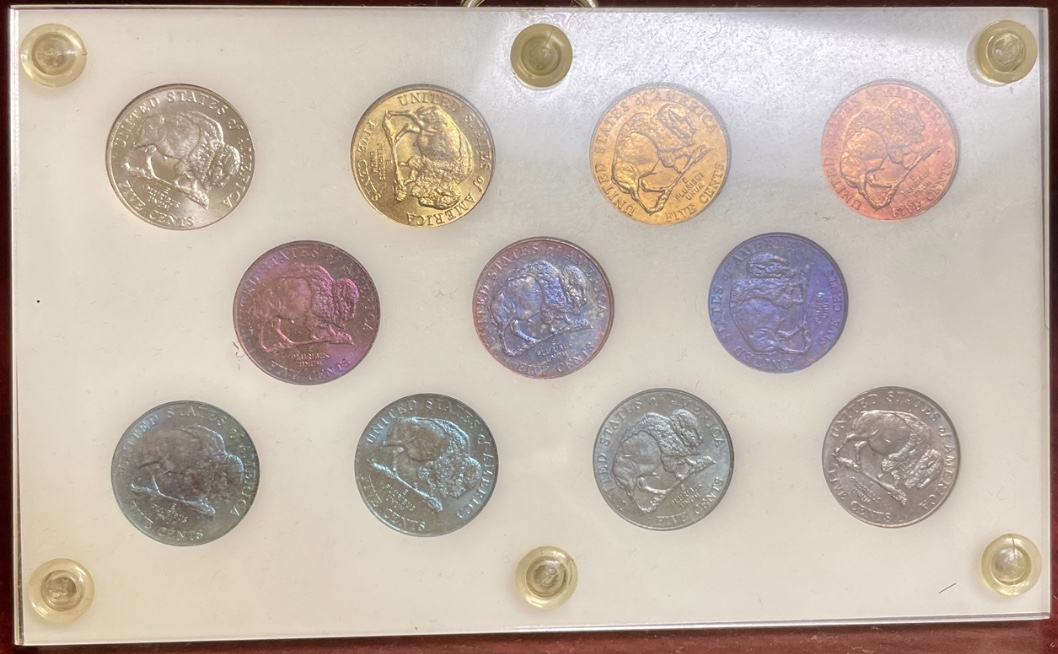
I believe these two might be part of the unseen (for me) photos in the link. This would be the AT progression that I recall 'pulling' from some MrSpud comment.
.
https://youtube.com/watch?v=OwZlYz2V4AM Sophie Lloyd, guitar shred cover Paranoid (Black Sabbath)
https://youtube.com/watch?v=fbEW8BrNctI Haley Reinhart, Don't Know How To Love You Live (direct to record)
RLJ 1958 - 2023
3 -
@ricarf2386 said:
Artificial toning experiment: Can you guess the method?A microwave oven. 😂
3 -
@Maywood said:
@ricarf2386 said: Let's be honest, who doesn't love coins with colors?I'll assume you're new here and never had the pleasure of interacting with @ricko. Cheers!!
@Maywood Greetings, my friend! Thank you so much for the warm welcome. You're absolutely right, I am quite, quite new around here—I've only been browsing the forums for a few months.
It is truly an honor that you mentioned the legendary @ricko. I see his name cited all the time in many of the current threads, but I honestly didn't know about his strict stance against toning! I can only imagine how he would have subtly and politely pulled my ear for saying everyone loves colorful coins.
Thank you so much for bringing up his memory and sharing that piece of forum history with me. Cheers!
2 -
This is a link (20 year old) to a MrSpud comment on AT. Most of the pictures do not show up for me. However, the link has some descriptions on it and methods.
.
https://forums.collectors.com/discussion/comment/5740335/#Comment_5740335
.
I believe these two might be part of the unseen (for me) photos in the link. This would be the AT progression that I recall 'pulling' from some MrSpud comment.
.To be honest, sometimes a lot of crazy ideas have no rhyme or reason. But seeing that my post has stirred up the forum's memory and brought back these historical details from so many years ago gives me a truly rewarding feeling. It proves my "madness" actually has very clear precedents! It's fascinating to see that highly prestigious members right here in this forum have had the exact same ideas cross their minds in the past.
2 -
@USSID18 said:
@ricarf2386 said:
Artificial toning experiment: Can you guess the method?A microwave oven. 😂
Haha, if I try that method, I'd better have the fire department standing by on speed dial! 🚒😂
1 -
Stay gracious, friend. It’s nice to see. The toning is kinda gross. I know a coin nerd ( a customer) who prefers baking them in the oven. Then there are superglue fumes that can add vibrancy , which is also AT. I have a hard time just getting a straight grade on a red or red brown cent. Toners ? They’re all questionable, to me. Just like humans.
1 -
@TwoSides2aCoin said:
Stay gracious, friend. It’s nice to see. The toning is kinda gross. I know a coin nerd ( a customer) who prefers baking them in the oven. Then there are superglue fumes that can add vibrancy , which is also AT. I have a hard time just getting a straight grade on a red or red brown cent. Toners ? They’re all questionable, to me. Just like humans.As I've mentioned before, how could I not be kind and polite when most of you here are exactly like that? I truly appreciate you sharing these insights about the methods other people use in search of that ideal toning.
You are absolutely right about how incredibly difficult it is to tone copper cents. I’ve experimented with it myself, and it is a massive challenge. As I previously hinted, I have a prototype in mind that I plan to build in the coming days. My goal is to see what kind of results it delivers in achieving that ideal, near-perfect toning—making it look as if the coin had been naturally tucked away inside a vintage album for many, many years.
0 -
Many don’t like tarnished coins.
Interesting thread however. I know one guy who does stuff like that (a booming biz) above out of his junk box at shows and coin club meetings
Investor1 -
way back I pulled this out of the pocket of a pair of pants I had just washed. However, the color rubbed off with my fingers.
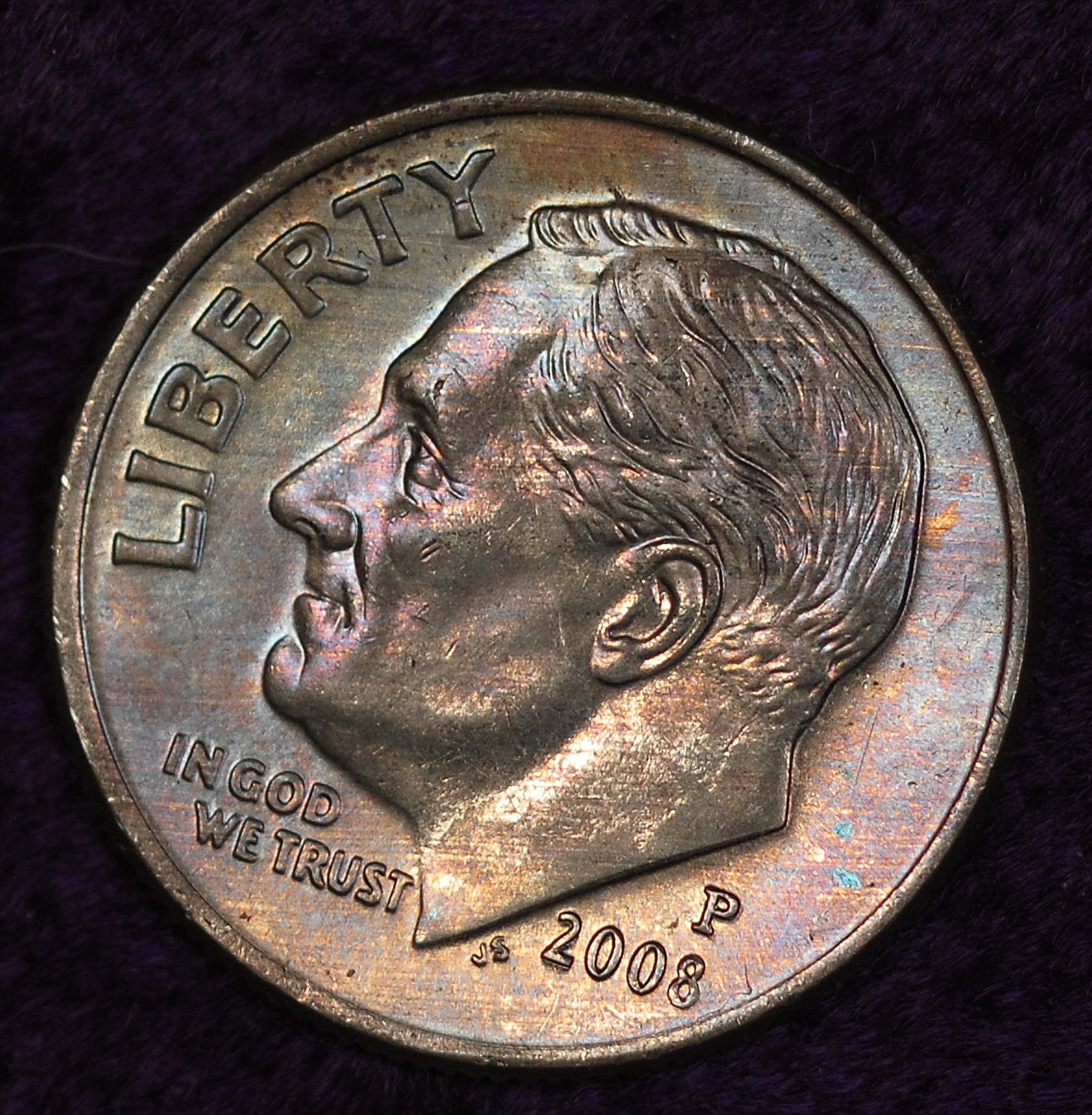 1
1 -
None of the quick methods work; baking in an oven with a sulfur source, torching, nose grease, etc.. I bought a couple Bust halves from a well known dealer connected to a Mid-west auction house that he'd had in Wayte-Raymond holders in a warm attic for a long period of time and both straight graded AU. I sent some $20 gold coins once to the guy who has advertised in "The Numismatist" as a "restoration" service and they call came back worse. I asked him for his opinion before doing anything, and he didn't. Then I sent the three to Anacs. I was surprised that the 1866 $20 came back as AU58 straight, it looked torched to me. The other two came back as details. I had a $20 Lib. that was in a rattler MS63 holder that looked MS64. It had light hairlines so should not have been cracked. First time details, cleaned. Put on a sunny windowsill for a couple months, came back MS64.
0 -
@Cougar1978 said:
Many don’t like tarnished coins.Interesting thread however. I know one guy who does stuff like that (a booming biz) above out of his junk box at shows and coin club meetings
@Cougar1978 I’m glad you find this thread interesting! To be honest, I’ve tried to approach this topic with extreme care—or as we say here in Ecuador, "taking it with tweezers" (cogerlo con pinzas)—so as not to make it seem like I’m doing something that might not look entirely ethical.
However, I can see that this is a reality people in the US market manage all the time. As you mentioned, there are individuals who specialize in this craft and sell these pieces to buyers who are well aware of what they are purchasing. I find it absolutely fascinating. As I previously commented, I plan to dive deeper into this subject and showcase the experimental results once I build the device I have in mind.
0 -
@kaz said:
way back I pulled this out of the pocket of a pair of pants I had just washed. However, the color rubbed off with my fingers.@kaz You are absolutely spot on, my friend! I’ve encountered many coins with those exact visual details myself. As I mentioned earlier, working with industrial appliances—including daily maintenance on washing machines—is part of my line of work.
I have found plenty of coins similar to yours over the years. I’ll even add that some coins end up trapped inside those machines for years on end. When I finally pull them out during repairs, they are covered in a thick crust, looking exactly like the silver cobs salvaged from Spanish galleons after centuries under the sea. It always brings a huge smile to my face!
0 -
I suspect this thread will disappear Tuesday despite myself and others finding it quite entertaining.
0 -
@ricarf2386 said:
@kaz said:
way back I pulled this out of the pocket of a pair of pants I had just washed. However, the color rubbed off with my fingers.@kaz You are absolutely spot on, my friend! I’ve encountered many coins with those exact visual details myself. As I mentioned earlier, working with industrial appliances—including daily maintenance on washing machines—is part of my line of work.
I have found plenty of coins similar to yours over the years. I’ll even add that some coins end up trapped inside those machines for years on end. When I finally pull them out during repairs, they are covered in a thick crust, looking exactly like the silver cobs salvaged from Spanish galleons after centuries under the sea. It always brings a huge smile to my face!
@registrador7 I am very, very happy to run into you again in a thread and to be commenting with you once more. Sending you a big hug from afar, my friend!
You are absolutely right. Your experience confirms that trying to rush the process with fast methods only produces unnatural results that are easily spotted as altered. The anecdote about the coin you placed on the sunny window sill is a brilliant and highly intelligent example. It proves that subtle, environmental heat over time is the real secret behind genuine-looking eye appeal. Thank you for sharing such valuable insights!
0 -
@skier07 said:
I suspect this thread will disappear Tuesday despite myself and others finding it quite entertaining.@esquiador07 I am truly glad to see that this thread is sparking so much interest in you and the others.
Right now, I may not have a true numismatic crown jewel to show you all, like a rare Carson City (CC) Morgan Dollar. But for now, what I can certainly show you is my sheer ingenuity and cleverness! Even if you are right and the thread disappears by Tuesday, it has been highly entertaining and an absolute pleasure sharing these ideas with all of you.
0 -
annoying attempts to curry favor.......
1 -
@Rc5280 said:
annoying attempts to curry favor.......@Rc5280 Dear friend, based on what I understand from my translator, you are implying that I am being overly flattering. Well, to be honest, that is exactly who I am in person. When I meet people I like, I never hesitate to offer a warm greeting and a smile.
I believe this approach is much better; if I had introduced myself as someone rude or arrogant, I would have been excluded from this community from day one. However, if my cordial way of responding seems annoying to you, I sincerely apologize.
0 -
@ricarf2386 said:
@TwoSides2aCoin said:
Stay gracious, friend. It’s nice to see. The toning is kinda gross. I know a coin nerd ( a customer) who prefers baking them in the oven. Then there are superglue fumes that can add vibrancy , which is also AT. I have a hard time just getting a straight grade on a red or red brown cent. Toners ? They’re all questionable, to me. Just like humans.As I've mentioned before, how could I not be kind and polite when most of you here are exactly like that? I truly appreciate you sharing these insights about the methods other people use in search of that ideal toning.
You are absolutely right about how incredibly difficult it is to tone copper cents. I’ve experimented with it myself, and it is a massive challenge. As I previously hinted, I have a prototype in mind that I plan to build in the coming days. My goal is to see what kind of results it delivers in achieving that ideal, near-perfect toning—making it look as if the coin had been naturally tucked away inside a vintage album for many, many years.
I absolutely never said how incredibly difficult it is to tone copper. On the contrary, I enjoy a perfectly natural, well preserved cent. Silver naturally goes black. Copper naturally goes green. But assisting metals to beautify them just isn’t for me, or most coin collectors around this site. The toning has a natural place and timely order. Toying with coins is just folly. Have fun with yours. I work in the coin biz and have no desire to play with them.
0 -
@jmlanzaf said:
@dcarr said:
@jmlanzaf said:
Respectfully, who cares the method? It's not a good method, because it won't fool anyone. (I know, you said that wasn't the point.) You can place them in a variety of sulfur-containing media at slightly elevated temperatures and get that to happen fairly quickly. I'm not sure what the point of the guessing game is.This is like the posts from people asking how a damaged coin could come to be damaged. The specific mechanism is rarely that important, nor can it easily be pinpointed specifically because there are dozens of ways to scratch a coin. Similarly, BADLY artificially toning a coin is simple. Numerous foreign compounds will accelerate oxidation or sulfurization. Sometimes, just laundry detergent will do it with reactive metals.
.
Your contention is FALSE that nobody cares what the method is. The method is important because :
to know what natural toning looks like, you have to know how artificial toning is implemented..
No. You don't. There is no good definition of AT vs NT. It's really MA. The only time such a mechanism might be helpful is if the AT looks similar to NT. Even then, the fact that it looks wrong is now important than how it got to look wrong. The only thing you need to know is what NT (MA) looks like.
I don't have to know how a counterfeit was made to know that my 1916-D dime has the wrong mintmark style. Or that my 1923-O Lincoln is fake.
As I specifically stated, the coins look so bad that it is irrelevant how they are made. This is not a case of then being close.
.
Ugly or not, plausible or not, all methods of artificial toning are a valid topic for discussion.
Maybe you could stop being so negative and such an obstructionist all the time, and let people discuss what they want to discuss on this forum ?
.
6 -
@dcarr said:
@jmlanzaf said:
@dcarr said:
@jmlanzaf said:
Respectfully, who cares the method? It's not a good method, because it won't fool anyone. (I know, you said that wasn't the point.) You can place them in a variety of sulfur-containing media at slightly elevated temperatures and get that to happen fairly quickly. I'm not sure what the point of the guessing game is.This is like the posts from people asking how a damaged coin could come to be damaged. The specific mechanism is rarely that important, nor can it easily be pinpointed specifically because there are dozens of ways to scratch a coin. Similarly, BADLY artificially toning a coin is simple. Numerous foreign compounds will accelerate oxidation or sulfurization. Sometimes, just laundry detergent will do it with reactive metals.
.
Your contention is FALSE that nobody cares what the method is. The method is important because :
to know what natural toning looks like, you have to know how artificial toning is implemented..
No. You don't. There is no good definition of AT vs NT. It's really MA. The only time such a mechanism might be helpful is if the AT looks similar to NT. Even then, the fact that it looks wrong is now important than how it got to look wrong. The only thing you need to know is what NT (MA) looks like.
I don't have to know how a counterfeit was made to know that my 1916-D dime has the wrong mintmark style. Or that my 1923-O Lincoln is fake.
As I specifically stated, the coins look so bad that it is irrelevant how they are made. This is not a case of then being close.
.
Ugly or not, plausible or not, all methods of artificial toning are a valid topic for discussion.
Maybe you could stop being so negative and such an obstructionist all the time, and let people discuss what they want to discuss on this forum ?
.
I made no attempt to stop anyone from discussing anything. I expressed MY OPINION that the method was irrelevant since it was clearly AT. We learn nothing from finding out it was for with a butane lighter, a campfire or buried in a pomegranate for 2 years. That WAS and still IS my opinion.
Maybe YOU could stop being so negative and such an obstructionist all the time and let ME discuss what I want to discuss on this forum?
Ironic, isn't it?
All comments reflect the opinion of the author, even when irrefutably accurate.
3 -
A traffic jam when you're already late.
A no-smoking sign on your cigarette break.
It's like ten thousand spoons when all ya need is a knife.
It's meeting the man of my dreams and then meeting his beautiful wife.[Pre-Chorus]
And isn't it ironic?
Don't you think?
A little too ironic
And, yeah, I really do think2 -
I also did a toning experiment where I put some coins in one of those yellow/orange mailing envelopes for 2 or 3 years. I checked on it recently and found this -
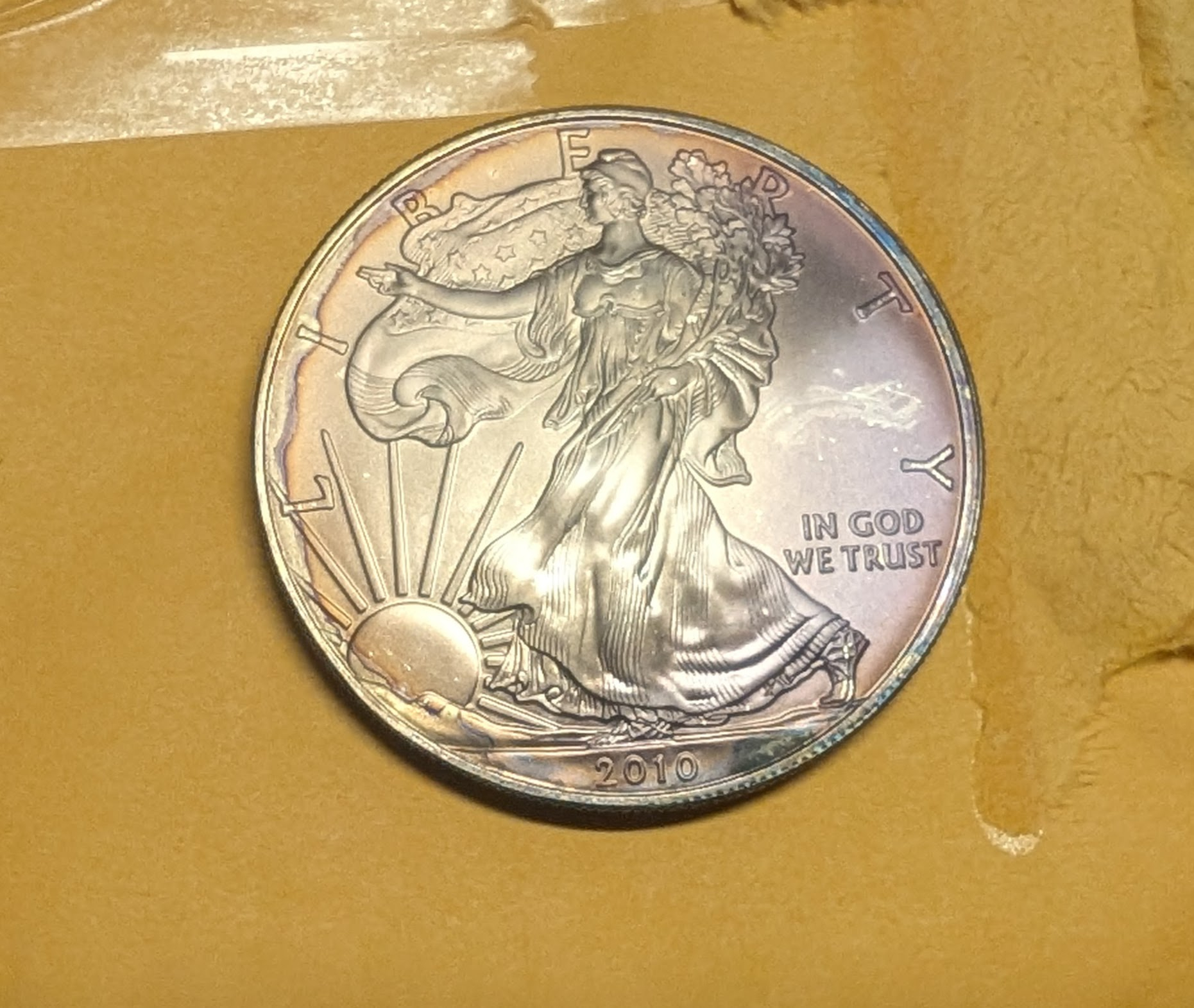
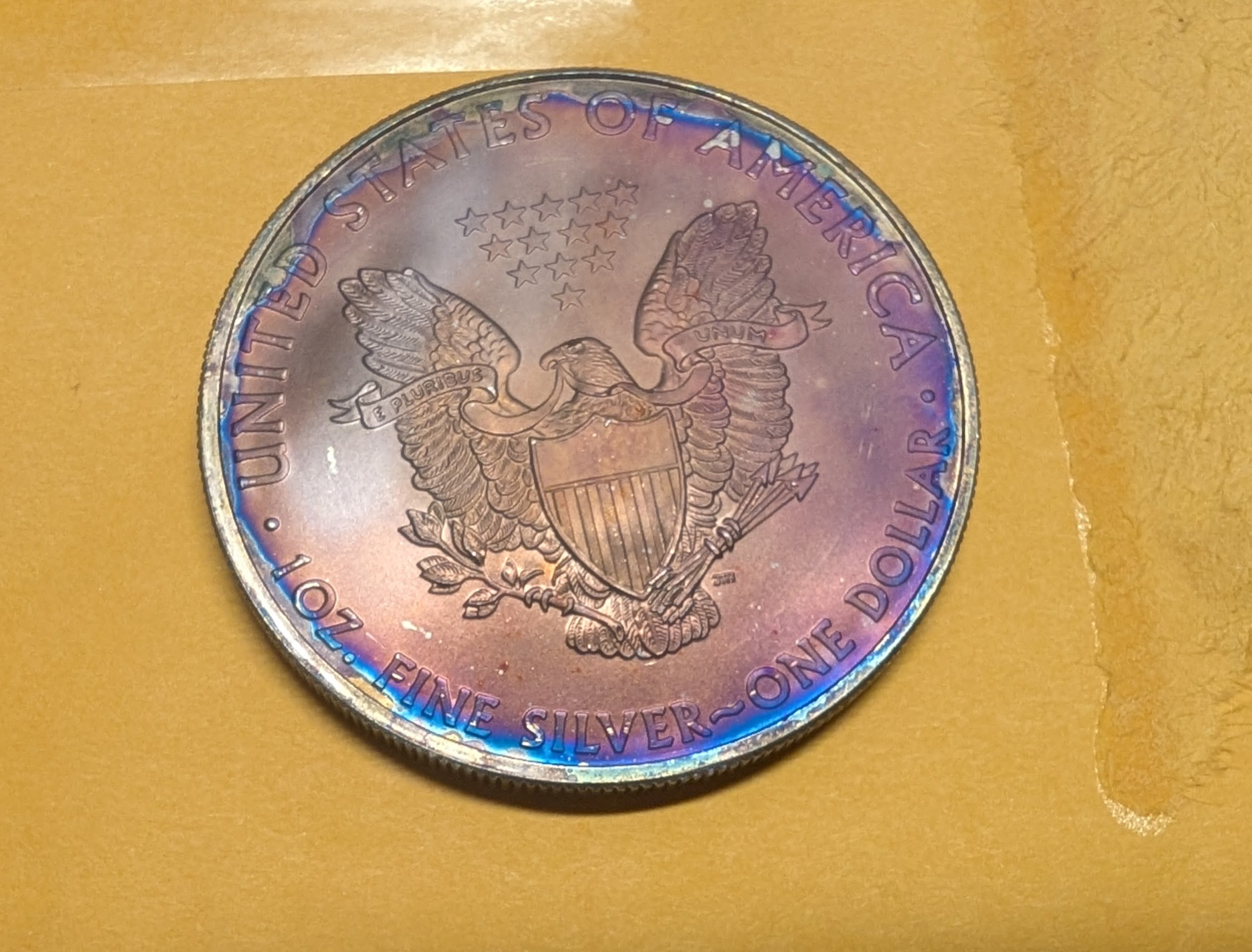
My phone's camera doesn't capture the vibrancy of the colors well. The blue on the reverse is almost opaque.
Does this count as AT?I collect world proof sets, coins featuring composers, mid-20th century U.S. proof coins, U.S. type coins, and whatever else I want.
2 -
“To be honest, I really love how these coins look. I hope you enjoy them too.”
Accccck! My eyes! My eyes!
Ughhhhh
4 -
@dunkleosteus430 said:
I also did a toning experiment where I put some coins in one of those yellow/orange mailing envelopes for 2 or 3 years. I checked on it recently and found this -My phone's camera doesn't capture the vibrancy of the colors well. The blue on the reverse is almost opaque.
Does this count as AT?Probably. It's not MA, so AT or NT isn't going to matter.
All comments reflect the opinion of the author, even when irrefutably accurate.
1 -
@jmlanzaf said:
@dcarr said:
@jmlanzaf said:
@dcarr said:
@jmlanzaf said:
Respectfully, who cares the method? It's not a good method, because it won't fool anyone. (I know, you said that wasn't the point.) You can place them in a variety of sulfur-containing media at slightly elevated temperatures and get that to happen fairly quickly. I'm not sure what the point of the guessing game is.This is like the posts from people asking how a damaged coin could come to be damaged. The specific mechanism is rarely that important, nor can it easily be pinpointed specifically because there are dozens of ways to scratch a coin. Similarly, BADLY artificially toning a coin is simple. Numerous foreign compounds will accelerate oxidation or sulfurization. Sometimes, just laundry detergent will do it with reactive metals.
.
Your contention is FALSE that nobody cares what the method is. The method is important because :
to know what natural toning looks like, you have to know how artificial toning is implemented..
No. You don't. There is no good definition of AT vs NT. It's really MA. The only time such a mechanism might be helpful is if the AT looks similar to NT. Even then, the fact that it looks wrong is now important than how it got to look wrong. The only thing you need to know is what NT (MA) looks like.
I don't have to know how a counterfeit was made to know that my 1916-D dime has the wrong mintmark style. Or that my 1923-O Lincoln is fake.
As I specifically stated, the coins look so bad that it is irrelevant how they are made. This is not a case of then being close.
.
Ugly or not, plausible or not, all methods of artificial toning are a valid topic for discussion.
Maybe you could stop being so negative and such an obstructionist all the time, and let people discuss what they want to discuss on this forum ?
.
I made no attempt to stop anyone from discussing anything. I expressed MY OPINION that the method was irrelevant since it was clearly AT. We learn nothing from finding out it was for with a butane lighter, a campfire or buried in a pomegranate for 2 years. That WAS and still IS my opinion.
Maybe YOU could stop being so negative and such an obstructionist all the time and let ME discuss what I want to discuss on this forum?
Ironic, isn't it?
.
Then why the "who cares" comment ?
That statement is obviously false since people do want to discuss the method..
1 -
@RedRocket said:
@skier07 said:
I suspect this thread will disappear Tuesday despite myself and others finding it quite entertaining.I am curious as to why you think this.
If I owned a TPG I wouldn’t want people discussing how to artificially tone a coin on a forum that I’m paying for.
2 -
It’s good for people to experiment and figure out how to detect AT. So bravo 🤩. Do continue to teach others, not how to AT coins, but how to tell that they are AT.
🔴But if you start giving instructions con artists will learn how to rip people off. Also do continue to show pictures for educational purposes, or you will fall in love with your own work as you get better and you’ll end up a coin doctor and either rip newbies off and hurt the business, or you’ll end up with the FBI going after you for fraud.
🟨I always stuck with pocket change, but recent experimented with some bullion to see if I could make target toned rainbows with at least a hint of emerald green.
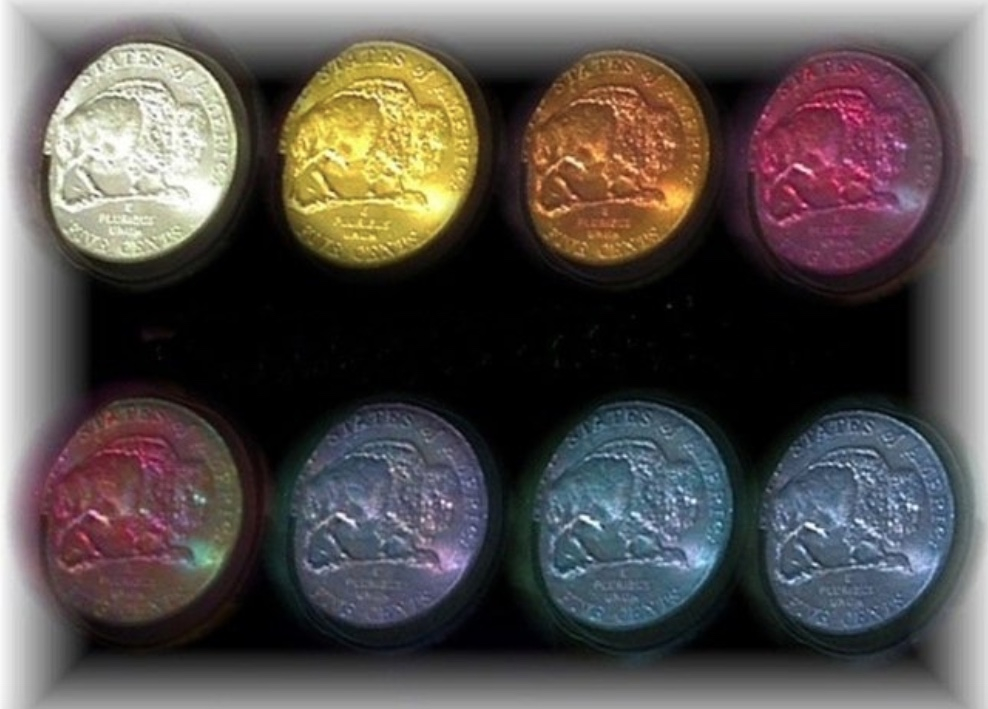
🟧Here’s my latest attempt after talking with @emeraldATV , he’s a genius. I’m not going to reveal how I did it, but pretty much I got bored one day at work in my lab and dreamt up a new technique. Note, I’m the head of R&D at a Pharmaceutical/Nutraceutical company and I have my own lab. An amateur will most likely hurt themselves going through the learning curve, but it’s a fun satisfying hobby if you are trained in how to do things safely. And yes, the nickels to the right are still looking great over 2 decades later, none of that flip them quick before they turn black coin doctor mentality. That set was displayed in an art gallery as an educational display when the artist, Jamie Frankie, first designed the modern buffalo nickels. I did it as an educational ATColor progression tool.
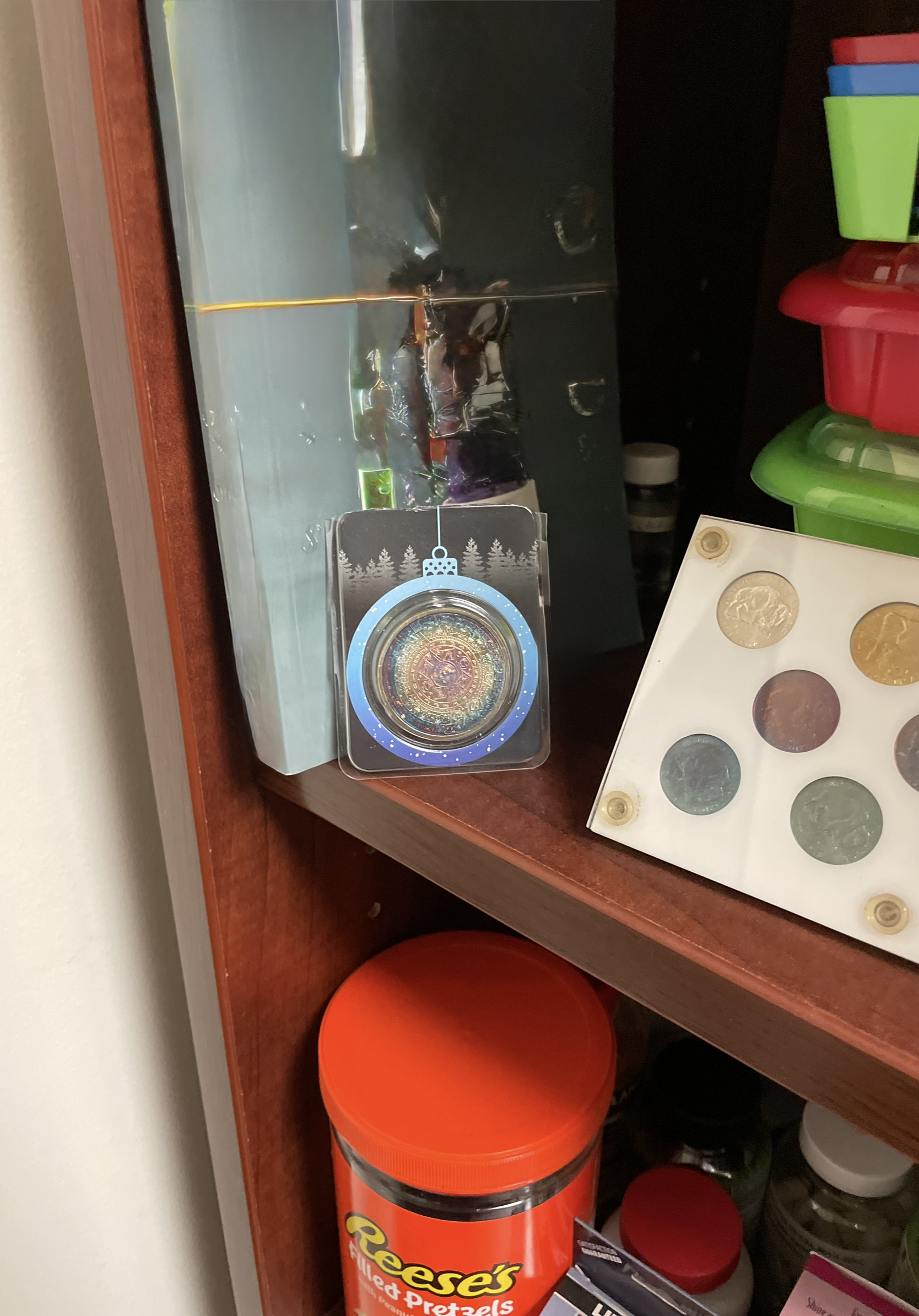
🟩
I’m not gonna sell any as coins, but I might make art projects where the coin has a hole drilled into it to make wire money tree sculptures or I might stamp AT on the coin reverse and blacken and burnish it. Not sure yet, but I’m not gonna become a conman and rip people off.
🟦
🏴🧩
🔴🟨🟧🟩🟦☦️Mr_Spud
3



Leave a Comment
Categories
- All Categories
- 520.1K Coins and Currency - PCGS
- 328.5K U.S. Coin Forum
- 14.8K PCGS Set Registry Forum
- 5.2K Q & A Forum
- 41.4K World & Ancient Coins Forum
- 3K U.S. & World Currency Forum
- 96.4K Buy, Sell, & Trade - U.S. Coins
- 7.3K Buy, Sell & Trade - World & Ancient Coins
- 1.5K Buy, Sell & Trade - Currency
- 61 Random
- 246.2K Trading Cards, Autographs and Memorabilia - PSA
- 90.3K Trading Cards & Memorabilia Forum
- 1.7K Autographs Forum
- 16.4K PSA Set Registry Forum
- 22K Sports Talk
- 115K Buy, Sell & Trade - Cards & Memorabilia
- 663 Buy, Sell & Trade - Autographs
- 2.2K Stamps
- 1.5K Stamps Forum
- 670 Buy, Sell & Trade - Stamps
- 83 Coin Shows
- 83 General Coin Show Information and Discussion
- 11.9K Misc
- 11.9K Testing Forum