Why didn't this 1911-d cac?

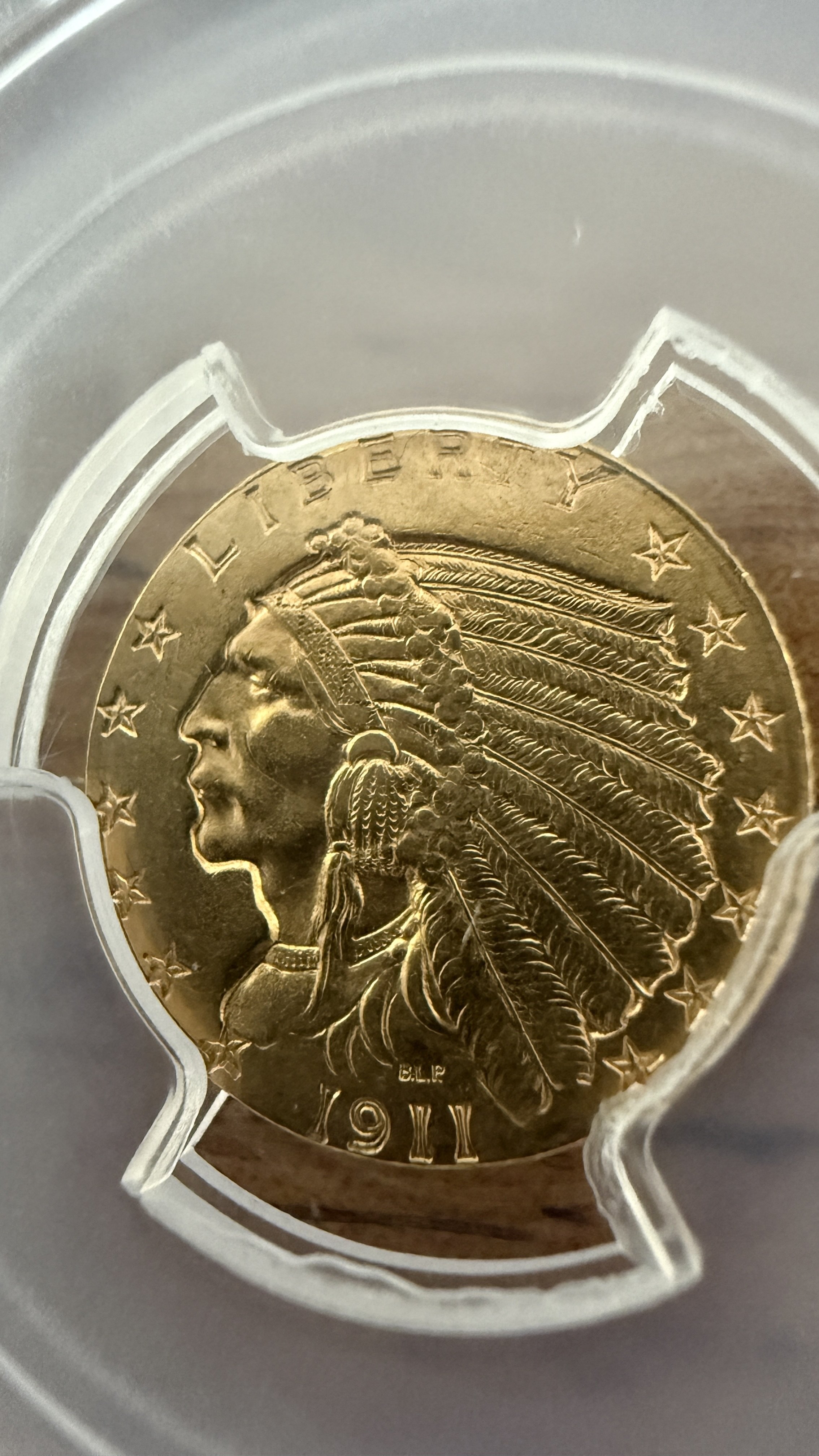
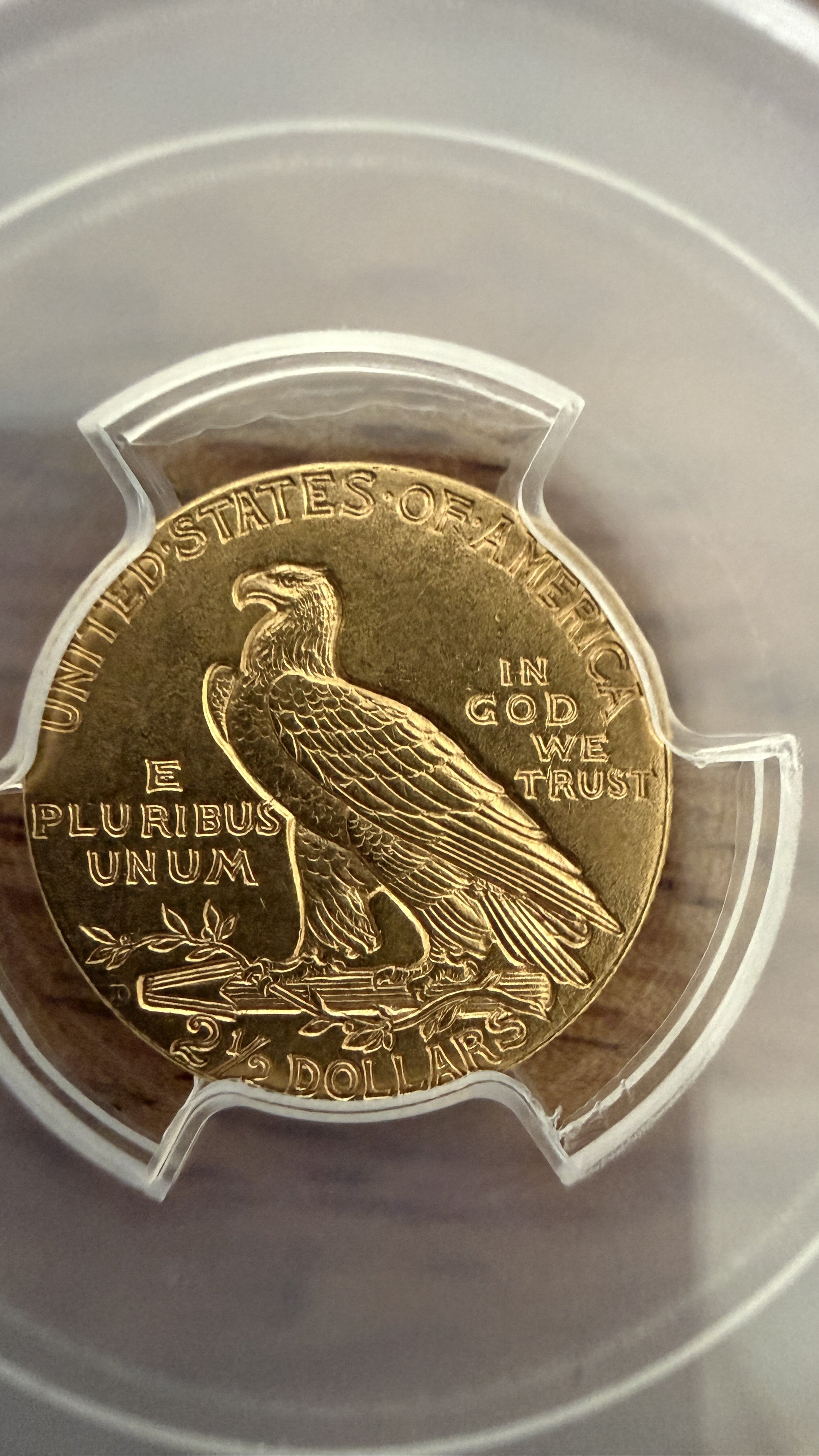
Just opening this up for discussion so I can learn. I got my PCGS 62 1911-d $2.50 Indian back from Cac today with no sticker 
I thought my coin was quite nice for a 62, at least a "B" for the grade. But Cac disagrees.
I'm new to collecting, so I'm not "arguing" the grade, just wanting to learn more about what is wrong with it.
My best guess from looking at coins they sticker is that mine is too bright, and they seem to like gold coins with more patina. Thank you!
Comments
-
Maybe they saw friction or too much of something else or not enough of the pq look?
0 -
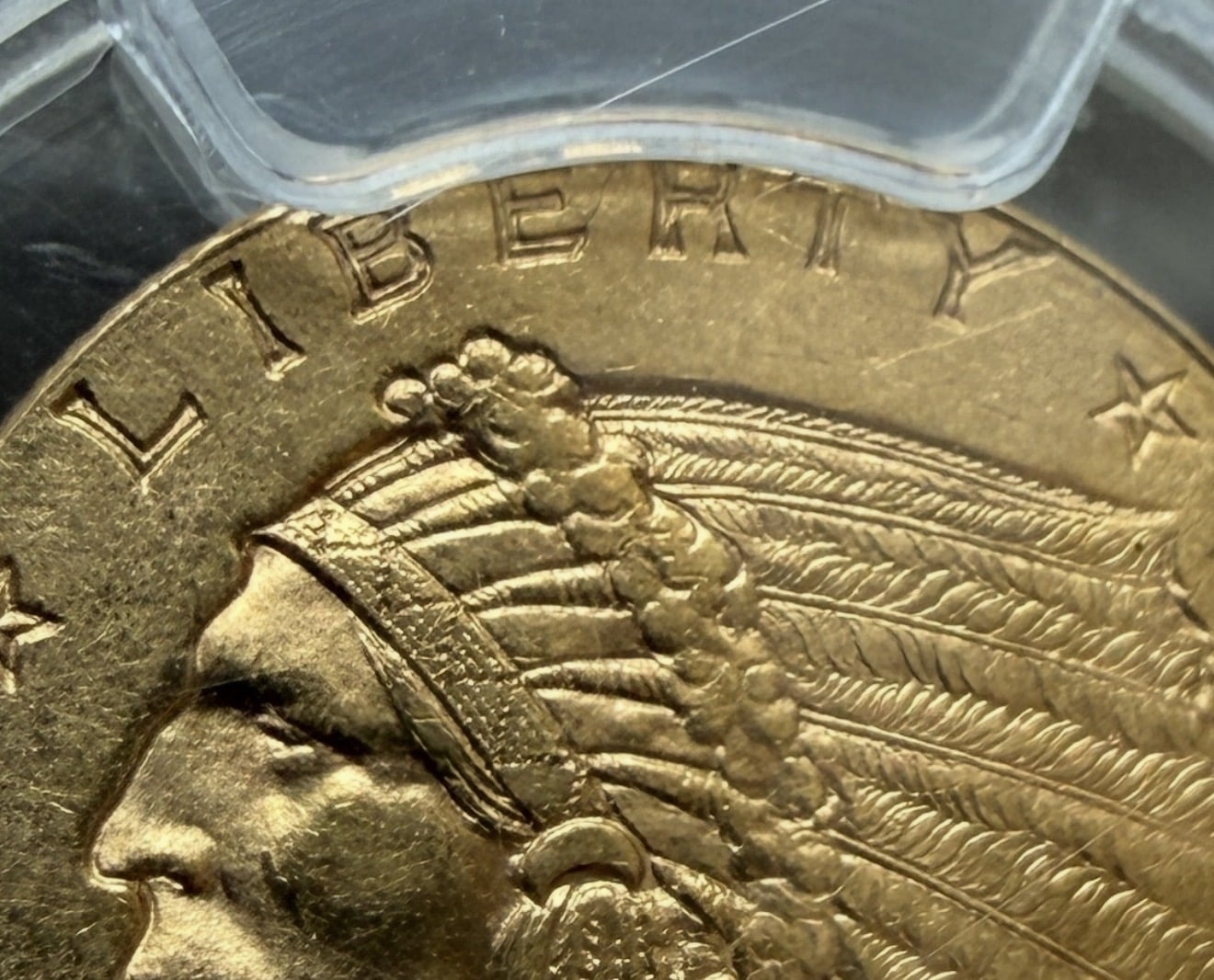
I know its a photo which is not wise to grade from but on the obv at ERTY it looks slightly odd .
2 -
I do not like the scratch on the cheek and above the headdress. You have a good gut instinct to mistrust the brightness as well.
May the wind always be at your back and the road rise to meet you2 -
@CivilWarBuff said:
I know its a photo which is not wise to grade from but on the obv at ERTY it looks slightly odd .Thx. I think in that photo it’s just an issue with the light. Here it is from a different angle
 0
0 -
brightness isn't it
patina isn't it
i'm interested in hearing what the old gold folks have to say on this one
Current maintainer of Stone's Master List of Favorite Websites // My BST transactions1 -
@PKing said:
I do not like the scratch on the cheek and above the headdress. You have a good gut instinct to mistrust the brightness as well.
CAC only gives stickers to A and A+ coinsThat's not true
All comments reflect the opinion of the author, even when irrefutably accurate.
4 -
CAC has been around for nearly 20 years and people still don't understand how it works.
3 -
@dval2929 said:
@CivilWarBuff said:
I know its a photo which is not wise to grade from but on the obv at ERTY it looks slightly odd .Thx. I think in that photo it’s just an issue with the light. Here it is from a different angle
I see very slight wear on the Indian's cheekbone in this pic. I'd grade it AU58+. It's a very nice coin and it has better eye appeal than some of the MS62 CAC Indian $2.5 coins that I've seen.

Worry is the interest you pay on a debt you may not owe.
"Paper money eventually returns to its intrinsic value---zero."----Voltaire
"Everything you say should be true, but not everything true should be said."----Voltaire3 -
Yes ii is difficult to tell from a photo. Especially the incuse indians.
CAC IMO is good at detecting coins that might have a wiped look to them, Again I am just speculating on a photo. Nice coin.
0 -
I don’t see anything wrong with it to keep it from stickering.
Investor0 -
The photos aren't good enough to really provide solid feedback. Common reasons from my submissions are abrasions, signs of cleaning, wear on an MS coin, scratches, spots, or any reason that would make your coin hard to sell (something unacceptable to most of the coin market).
0 -
If I had to guess, it's because it's technically AU58. The term "AU62" is occasionally used to describe $2.50 and $5 Indians that are really AU coins in MS62 holders. There are many of these.
John
Keeper of the VAM Catalog • Professional Coin Imaging • Prime Number Set • World Coins in Early America • British Trade Dollars • Variety Attribution2 -
Opinions.
All glory is fleeting.0 -
Only thing I think of based on the photos is there must be something going on in fields they did not like for a higher end 62. Looks like a strong D. Nice coin though...
The court jester does not play, but gently pulls the strings…
0 -
It's pretty typical in my experience of a sunken-relief Indian with excessive roll friction on the cheekbone, yet manage to get an MS-62 grade at a TPG.
While it could technically have never entered circulation (i.e. "uncirculated"), the equivalent of AU-58 rub has been distributed to the surface during storage.
Official PCGS account of:
www.TallahasseeCoinClub.com
1









Leave a Comment
Categories
- All Categories
- 520.1K Coins and Currency - PCGS
- 328.6K U.S. Coin Forum
- 14.8K PCGS Set Registry Forum
- 5.2K Q & A Forum
- 41.4K World & Ancient Coins Forum
- 3K U.S. & World Currency Forum
- 96.4K Buy, Sell, & Trade - U.S. Coins
- 7.3K Buy, Sell & Trade - World & Ancient Coins
- 1.5K Buy, Sell & Trade - Currency
- 61 Random
- 246.2K Trading Cards, Autographs and Memorabilia - PSA
- 90.3K Trading Cards & Memorabilia Forum
- 1.7K Autographs Forum
- 16.4K PSA Set Registry Forum
- 22K Sports Talk
- 115K Buy, Sell & Trade - Cards & Memorabilia
- 663 Buy, Sell & Trade - Autographs
- 2.2K Stamps
- 1.5K Stamps Forum
- 670 Buy, Sell & Trade - Stamps
- 83 Coin Shows
- 83 General Coin Show Information and Discussion
- 11.9K Misc
- 11.9K Testing Forum