Home U.S. Coin Forum
Options

2011-P Roosevelt Dime Underweight & Undersized? (1.7g / 16.5mm)

ricarf2386ricarf2386 ✭✭✭
edited August 23, 2026 7:38AM in U.S. Coin Forum

2011-P Roosevelt Dime Underweight & Undersized? (1.7g / 16.5mm)

Good morning forum,

I am presenting myself here once again! I would like to ask for your expert help to determine whether or not this 10-cent coin is a genuine mint error.

According to my research, I have already ruled out the "Dryer Coin" or "Spooned" theory. As we know, those processes roll the edges inward, making the diameter smaller but drastically increasing the edge thickness while maintaining the original weight. My coin is the exact opposite: it is smaller, thinner, and significantly underweight.

Here are the precise technical details of the coin in my possession:

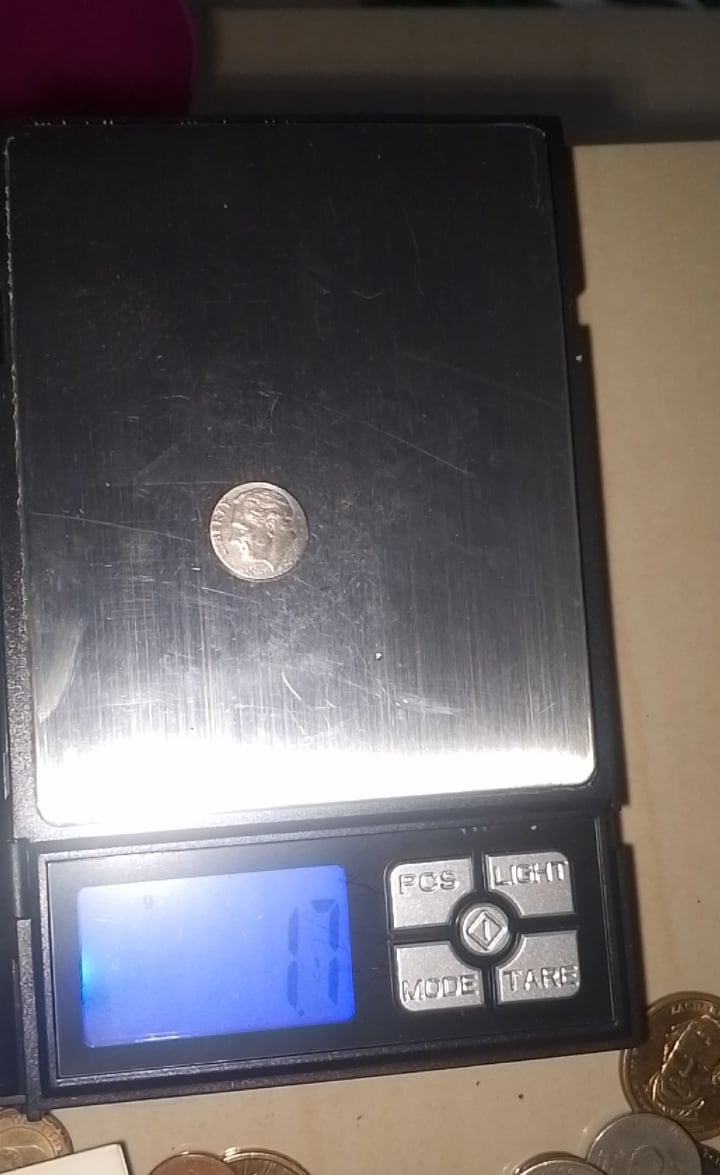
  • Weight: Exactly 1.7 grams (Standard is 2.27g).
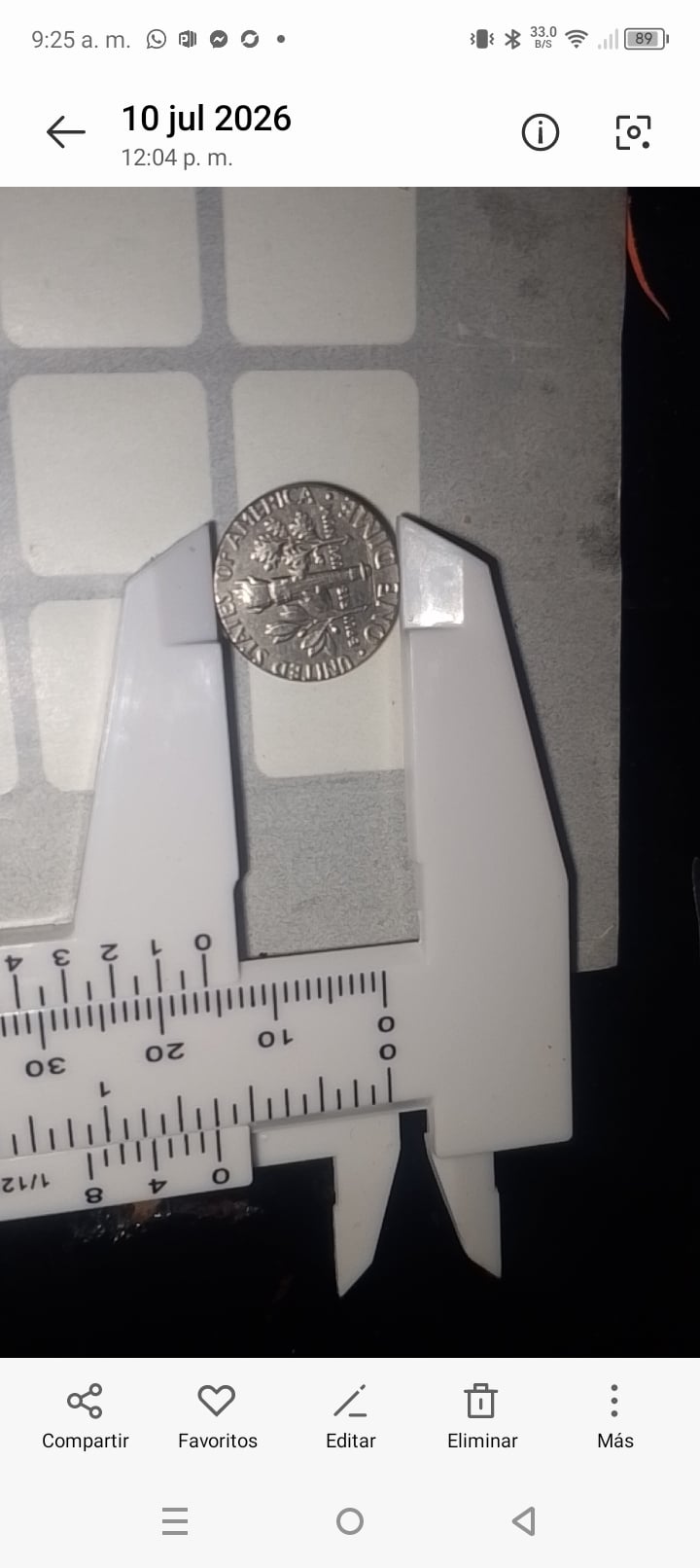
  • Diameter: Measures approx. 16.5 mm (Standard is 17.91 mm).
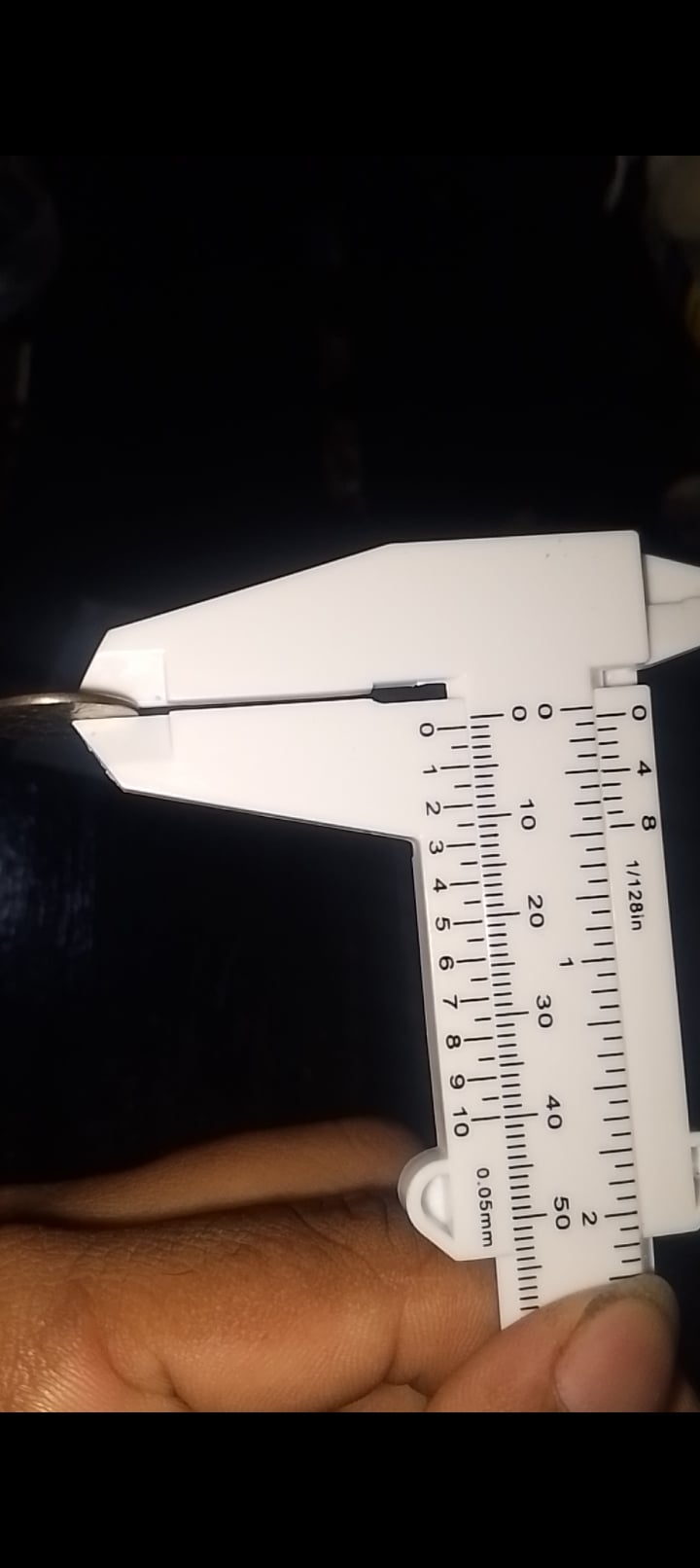
  • Thickness: Measures approx. 1.0 mm (Standard is 1.35 mm).
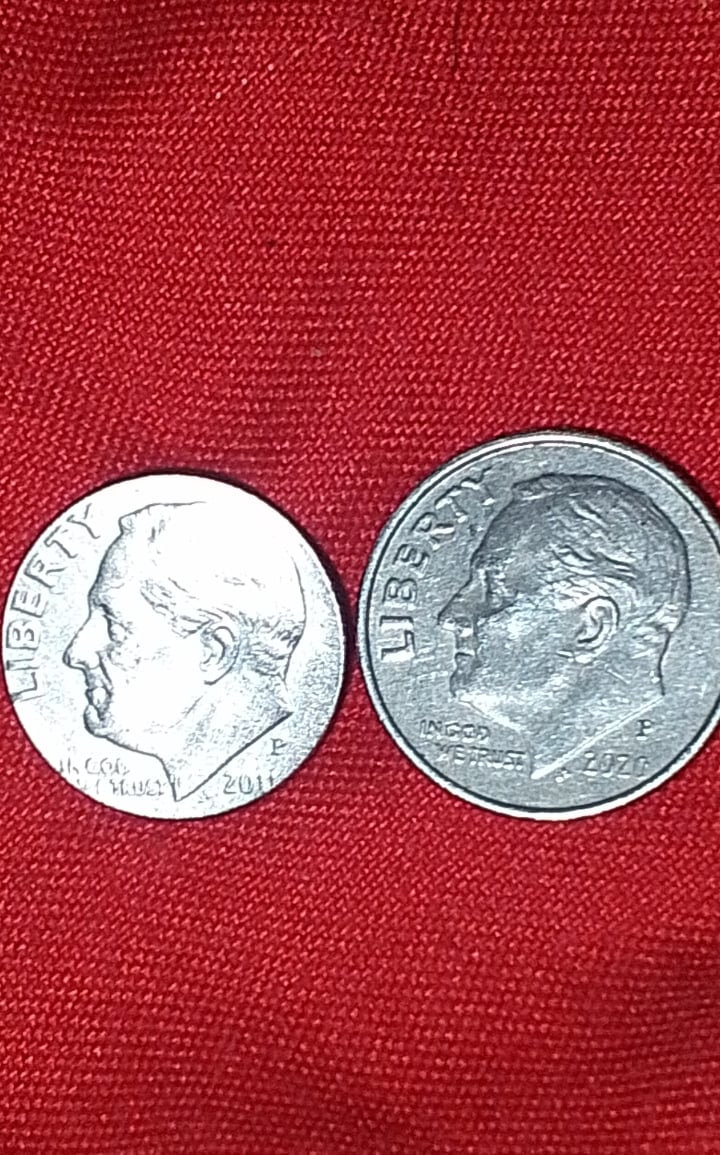
  • Design Details: The rim is extremely weak, and the inscriptions "LIBERTY" and "2011" are nearly merging with the edge due to the lack of metal volume during the strike.

I suspect this could be a genuine error, such as being struck on a rolled-thin, incorrectly punched, or foreign undersized planchet.

I have attached photos for your verification. Also, if you know of any similar known errors, or if you know of any method or way people alter these coins to make them look like this type of error, I would highly appreciate it if you could help me with those details.

Thank you very much in advance for your time, guidance, and expert insights!


Comments

  • Options

    Someone ground off the edge using a sander or some similar power tool.

    If you want a better answer, post better pictures.

  • Options


    @jonathanb said:
    Someone ground off the edge using a sander or some similar power tool.

    If you want a better answer, post better pictures.

    Thank you very much for sharing your expertise. I am adding more photos here from different angles and lighting so you can review the coin. I hope these pictures are helpful. I truly appreciate your time!

  • Options

    Definitely messed with. Damaged.

    All comments reflect the opinion of the author, even when irrefutably accurate.

  • Options

    Hello, thank you for your comment. I have the coin right in my hand and I honestly don't see any tool or smear marks on the edge; that is exactly what caused my doubt and led me to ask you as experts. For this to be altered, a very special tool would have to be used to avoid creating metal burrs on the rim. If the diameter had been cut down, those burrs would be there, and trying to sand them off would have inevitably left scratches on the coin's fields or erased the peripheral letters, which is not the case here. I will do my best to take a photo of the edge to show you this detail. Thank you for your time!

  • Options
    JBKJBK ✭✭✭✭✭

    @ricarf2386 said:
    Hello, thank you for your comment. I have the coin right in my hand and I honestly don't see any tool or smear marks on the edge; that is exactly what caused my doubt and led me to ask you as experts. For this to be altered, a very special tool would have to be used to avoid creating metal burrs on the rim. If the diameter had been cut down, those burrs would be there, and trying to sand them off would have inevitably left scratches on the coin's fields or erased the peripheral letters, which is not the case here. I will do my best to take a photo of the edge to show you this detail. Thank you for your time!

    A rotary tool reducing the diameter, along with subsequent polishing, perfectly explains what you have.

    On the other hand, you have offered no informed speculation, much less evidence, to show how it could have happened at the mint.

  • Options

    @JBK said:

    @ricarf2386 said:
    Hello, thank you for your comment. I have the coin right in my hand and I honestly don't see any tool or smear marks on the edge; that is exactly what caused my doubt and led me to ask you as experts. For this to be altered, a very special tool would have to be used to avoid creating metal burrs on the rim. If the diameter had been cut down, those burrs would be there, and trying to sand them off would have inevitably left scratches on the coin's fields or erased the peripheral letters, which is not the case here. I will do my best to take a photo of the edge to show you this detail. Thank you for your time!

    A rotary tool reducing the diameter, along with subsequent polishing, perfectly explains what you have.

    On the other hand, you have offered no informed speculation, much less evidence, to show how it could have happened at the mint.

    Hello, I understand your point regarding rotary tools. However, I have the coin right in my hand, and the physical analysis does not support that theory. If a rotary tool had been used, the high-speed friction would have generated extreme heat, which inevitably causes thermal discoloration (golden or burnt toning) on the cupronickel. This coin retains its original, uniform silver color. Furthermore, the inner copper core line on the edge is clean, straight, and perfectly defined; the heat and polishing would have smeared and melted the outer nickel layers over the softer copper core, hiding it.

    Regarding how this could happen at the mint, my hypothesis is based on official manufacturing processes: the piece shows the exact characteristics of being struck on a defective blank that came from a rolled-thin strip or an undersized planchet. When there is a lack of mass, the metal fails to expand to fill the coining chamber, naturally resulting in low weight (1.7g) and a reduced diameter. Or, who knows, it could also be a completely different or foreign planchet that accidentally fed into the press. I appreciate the technical debate!

  • Options

    What are you gonna do with it? 🙂

  • Options

    @johnny9434 said:
    What are you gonna do with it? 🙂

    Well, first of all, my main goal in sharing this coin here with you is to determine if it is a genuine mint error and if you know of any similar cases. Living here in Ecuador, the logistics are complicated, and I cannot risk sending just a single coin to be graded (I already have experience with one I sent in the past). My current plan is to gather a group of about 10 error coins so I can send them all together for certification in the future. Or, by any chance, are you interested in the coin? Best regards!

  • Options

    @ricarf2386 said:
    For this to be altered, a very special tool would have to be used to avoid creating metal burrs on the rim. If the diameter had been cut down, those burrs would be there, and trying to sand them off would have inevitably left scratches on the coin's fields

    That statement is not correct. Normal circulation wear would quickly smooth off any burrs or scratches.

    Hello, I understand your point regarding rotary tools. However, I have the coin right in my hand, and the physical analysis does not support that theory. If a rotary tool had been used, the high-speed friction would have generated extreme heat, which inevitably causes thermal discoloration (golden or burnt toning) on the cupronickel.

    Again, not correct.

    the heat and polishing would have smeared and melted the outer nickel layers over the softer copper core, hiding it.

    Not correct.

    Regarding how this could happen at the mint, my hypothesis is based on official manufacturing processes: the piece shows the exact characteristics of being struck on a defective blank that came from a rolled-thin strip or an undersized planchet. When there is a lack of mass, the metal fails to expand to fill the coining chamber, naturally resulting in low weight (1.7g) and a reduced diameter. Or, who knows, it could also be a completely different or foreign planchet that accidentally fed into the press. I appreciate the technical debate!

    It is physically impossible for a smaller-diameter planchet to be struck without showing metal flow at the edges where the planchet expanded into the larger diameter collar at the time of the strike. There are hundreds (thousands?) of pictures available to study online, for example in the Heritage archives.

    Your coin was damaged after it left the mint. There is no debate.

  • Options
    JBKJBK ✭✭✭✭✭

    @ricarf2386 said:

    @JBK said:

    @ricarf2386 said:
    Hello, thank you for your comment. I have the coin right in my hand and I honestly don't see any tool or smear marks on the edge; that is exactly what caused my doubt and led me to ask you as experts. For this to be altered, a very special tool would have to be used to avoid creating metal burrs on the rim. If the diameter had been cut down, those burrs would be there, and trying to sand them off would have inevitably left scratches on the coin's fields or erased the peripheral letters, which is not the case here. I will do my best to take a photo of the edge to show you this detail. Thank you for your time!

    A rotary tool reducing the diameter, along with subsequent polishing, perfectly explains what you have.

    On the other hand, you have offered no informed speculation, much less evidence, to show how it could have happened at the mint.

    Hello, I understand your point regarding rotary tools. However, I have the coin right in my hand, and the physical analysis does not support that theory. If a rotary tool had been used, the high-speed friction would have generated extreme heat, which inevitably causes thermal discoloration (golden or burnt toning) on the cupronickel. This coin retains its original, uniform silver color. Furthermore, the inner copper core line on the edge is clean, straight, and perfectly defined; the heat and polishing would have smeared and melted the outer nickel layers over the softer copper core, hiding it.

    Regarding how this could happen at the mint, my hypothesis is based on official manufacturing processes: the piece shows the exact characteristics of being struck on a defective blank that came from a rolled-thin strip or an undersized planchet. When there is a lack of mass, the metal fails to expand to fill the coining chamber, naturally resulting in low weight (1.7g) and a reduced diameter. Or, who knows, it could also be a completely different or foreign planchet that accidentally fed into the press. I appreciate the technical debate!

    Your hypothesis about discoloration and melting of metal from a rotary tool is flat out false. I have personally used a rotary tool on a clad coin and none of those things happened.

  • Options

    To me it looks like one of those dimes that is cut down to fit into a cent that is hollowed out.

  • Options

    @jonathanb said:

    @ricarf2386 said:
    For this to be altered, a very special tool would have to be used to avoid creating metal burrs on the rim. If the diameter had been cut down, those burrs would be there, and trying to sand them off would have inevitably left scratches on the coin's fields

    That statement is not correct. Normal circulation wear would quickly smooth off any burrs or scratches.

    Hello, I understand your point regarding rotary tools. However, I have the coin right in my hand, and the physical analysis does not support that theory. If a rotary tool had been used, the high-speed friction would have generated extreme heat, which inevitably causes thermal discoloration (golden or burnt toning) on the cupronickel.

    Again, not correct.

    the heat and polishing would have smeared and melted the outer nickel layers over the softer copper core, hiding it.

    Not correct.

    Regarding how this could happen at the mint, my hypothesis is based on official manufacturing processes: the piece shows the exact characteristics of being struck on a defective blank that came from a rolled-thin strip or an undersized planchet. When there is a lack of mass, the metal fails to expand to fill the coining chamber, naturally resulting in low weight (1.7g) and a reduced diameter. Or, who knows, it could also be a completely different or foreign planchet that accidentally fed into the press. I appreciate the technical debate!

    It is physically impossible for a smaller-diameter planchet to be struck without showing metal flow at the edges where the planchet expanded into the larger diameter collar at the time of the strike. There are hundreds (thousands?) of pictures available to study online, for example in the Heritage archives.

    Your coin was damaged after it left the mint. There is no debate.

    Hello, thank you for the feedback, but I respectfully disagree with the rotary tool theory based on fundamental physics and my own hands-on experience.

    I work with metals daily, and I know exactly how material reacts when it is being cut or ground. When using any high-speed rotary tool, the thermodynamic reaction is unavoidable: the friction generates extreme heat that changes the coloration of the metal, leaving a distinct golden or burnt thermal toning. My coin perfectly retains its original, uniform silver mint luster. Furthermore, cutting or grinding always leaves a physical burr. If someone had sanded down those burrs, it would have left obvious abrasion lines across the fields or flattened the peripheral letters, which is not the case here—the design relief remains perfectly sharp and clean right to the edge.

    Regarding the minting process, the press does not have dynamic thickness sensors; the dies drop down to a mechanically fixed stopping point. When an underweight (1.7g) and thin (1.0mm) planchet enters the chamber, the dies hit their fixed limit but lack the metal mass required to force the material into the rim channels or expand it outward against the collar. This lack of volume naturally leaves the coin undersized (16.5mm) and completely flat like a wafer, while still striking a clean, sharp design.

    Thank you for the technical debate!

  • Options
    JBKJBK ✭✭✭✭✭
    edited August 23, 2026 10:32AM

    @ricarf2386 said:

    @jonathanb said:

    @ricarf2386 said:
    For this to be altered, a very special tool would have to be used to avoid creating metal burrs on the rim. If the diameter had been cut down, those burrs would be there, and trying to sand them off would have inevitably left scratches on the coin's fields

    That statement is not correct. Normal circulation wear would quickly smooth off any burrs or scratches.

    Hello, I understand your point regarding rotary tools. However, I have the coin right in my hand, and the physical analysis does not support that theory. If a rotary tool had been used, the high-speed friction would have generated extreme heat, which inevitably causes thermal discoloration (golden or burnt toning) on the cupronickel.

    Again, not correct.

    the heat and polishing would have smeared and melted the outer nickel layers over the softer copper core, hiding it.

    Not correct.

    Regarding how this could happen at the mint, my hypothesis is based on official manufacturing processes: the piece shows the exact characteristics of being struck on a defective blank that came from a rolled-thin strip or an undersized planchet. When there is a lack of mass, the metal fails to expand to fill the coining chamber, naturally resulting in low weight (1.7g) and a reduced diameter. Or, who knows, it could also be a completely different or foreign planchet that accidentally fed into the press. I appreciate the technical debate!

    It is physically impossible for a smaller-diameter planchet to be struck without showing metal flow at the edges where the planchet expanded into the larger diameter collar at the time of the strike. There are hundreds (thousands?) of pictures available to study online, for example in the Heritage archives.

    Your coin was damaged after it left the mint. There is no debate.

    Hello, thank you for the feedback, but I respectfully disagree with the rotary tool theory based on fundamental physics and my own hands-on experience.

    I work with metals daily, and I know exactly how material reacts when it is being cut or ground. When using any high-speed rotary tool, the thermodynamic reaction is unavoidable: the friction generates extreme heat that changes the coloration of the metal, leaving a distinct golden or burnt thermal toning. My coin perfectly retains its original, uniform silver mint luster. Furthermore, cutting or grinding always leaves a physical burr. If someone had sanded down those burrs, it would have left obvious abrasion lines across the fields or flattened the peripheral letters, which is not the case here—the design relief remains perfectly sharp and clean right to the edge.

    Once again, I have personally used a rotary tool on a clad coin and it did not result in the coloration that you describe.

    Hypothesis vs experience..... 🤔

    Why don't you buy a small rotary tool and experiment for yourself? It does not have to be a Dremel brand as long as it's similar in size and performance. Harbor Freight Tools sells a cheaper knockoff.

  • Options

    @ricarf2386 said:
    I work with metals daily, and I know exactly how material reacts when it is being cut or ground. When using any high-speed rotary tool, the thermodynamic reaction is unavoidable: the friction generates extreme heat that changes the coloration of the metal, leaving a distinct golden or burnt thermal toning.

    While that might be true for the tools you have used, it certainly isn't true in general.

    My coin perfectly retains its original, uniform silver mint luster.

    Your coin retains absolutely no mint luster by the standard numismatic meaning of that term.

    the design relief remains perfectly sharp and clean right to the edge.

    That part is accurate when describing this coin. It is also absolute proof that this coin was modified after it left the mint.

    This lack of volume naturally leaves the coin undersized (16.5mm) and completely flat like a wafer, while still striking a clean, sharp design.

    The last part of that statement (clean, sharp design) is categorically false when describing the peripheral details of a coin struck on a too-small planchet.

    How about this: go to the Heritage archives and find an example of a certified error coin struck on a smaller planchet that shows a clear sharp design of all peripheral details. In fact, making comparisons to certify examples is an excellent step for anyone to take when they think they have found an error coin.

  • Options
    CregCreg ✭✭✭✭✭

    Please engage the smug filter on your translation device.

  • Options

    @Creg said:
    Please engage the smug filter on your translation device.

    To be honest, I love debating, and I especially enjoy this forum because members usually come up with impressive technical details and solid bases. I don't consider myself an expert, but I know what I’m talking about, and I’m not just relying on AI or a translator to speak for me—they only help me express my own ideas.

    As we say back home, words only hurt depending on who they come from. The very first messages further back answered me with much more technique and quality. I am still searching for solid arguments to reply to those previous posts, and that is the only reason why I haven't answered them yet.

  • Options

    @IkesT said:
    @ricarf2386

    This is not a "technical debate". You come here as an uneducated newbie, ask for expert information, then, with a veneer of politeness, smugly dismiss that information as soon as it is provided. It's a repeat of your previous threads all over again. Superficially, your demeanor is friendly, but your attitude is atrocious.

    You were advised previously to stop looking for errors and go back to filling Whitman folders, and that is exactly what you should be doing.

    Okay, my friend. I imagine you must be one of the main moderators of this forum, which is why I should probably just stop replying... According to my "ignorance," debating means presenting different points of view, always based on respect, which is the most important thing here. I imagine that back when you were a novice, you filled plenty of Whitman folders yourself. If you happen to have a few extra ones to donate to me, I would truly appreciate it.

  • Options

    I do not see the copper core in your thickness pic. The clad coin should have one, is it there?

  • Options

    it's been worn down

    https://coins.ha.com/itm/errors/1943-s-1c-lincoln-cent-struck-on-a-silver-dime-planchet-ms63-pcgs/a/1344-4575.s?ic4=GalleryView-ShortDescription-071515

    notice the strike at the edge isn't right. i'll use your term and say it looks smeared. also it's not perfectly round

    Current maintainer of Stone's Master List of Favorite Websites // My BST transactions
  • Options


    @davewesen said:
    I do not see the copper core in your thickness pic. The clad coin should have one, is it there?

    @davewesen Here is a clearer look at the edge. The copper core is definitely there, and as you can see, it is completely flush and level with the outer clad layers. There is no internal corrosion or channeling into the copper at all. The wear is perfectly uniform across the entire thickness of the coin.

    I would also like to apologize to the board if my tone came across as stubborn or hardheaded at times. That wasn't my intention; I believe this is just how passionate debates work, where everyone defends their point of view with what they believe is relevant.

    Regarding the previous comments about mechanical tools, I want to add to my point: if this coin had been ground down using an electrical device, it would absolutely require a clamping or fixation point to hold it in place. No one can shave down an object this small and keep it perfectly round without it being securely held against the high RPMs—even at minimum speeds—of a mechanical apparatus, which would inevitably leave structural bite marks or pressure scars on the design.

  • Options
    IkesTIkesT ✭✭✭✭✭

    @ricarf2386 said:
    I would also like to apologize to the board if my tone came across as stubborn or hardheaded at times. That wasn't my intention; I believe this is just how passionate debates work, where everyone defends their point of view with what they believe is relevant.

    An apology is meaningless when it is immediately followed by the same rude behavior. This is not a debate. We are generously giving you our time and knowledge and you are smugly rejecting it with a veneer of politeness.

    Real respect takes more than just a veneer of politeness. The veneer of politeness just makes the lack of sincerity more apparent.

  • Options

    @IkesT said:

    @ricarf2386 said:
    I would also like to apologize to the board if my tone came across as stubborn or hardheaded at times. That wasn't my intention; I believe this is just how passionate debates work, where everyone defends their point of view with what they believe is relevant.

    An apology is meaningless when it is immediately followed by the same rude behavior. This is not a debate. We are generously giving you our time and knowledge and you are smugly rejecting it with a veneer of politeness.

    Real respect takes more than just a veneer of politeness. The veneer of politeness just makes the lack of sincerity more apparent.

    @IkesT If you recall my previous thread, you actually took the time to digitally edit an image I posted just to go against me. So, if you want to talk to me about respect, the truth is that I have simply treated every person exactly how they have treated me. I have never disrespected you with my words.

    Also, regarding your experience and the "generous time" you claim to be losing here: if you feel there is no future in this conversation, please don't waste your time anymore and feel free to go comment on other threads instead.

  • Options
    IkesTIkesT ✭✭✭✭✭

    @ricarf2386 said:

    @IkesT said:

    @ricarf2386 said:
    I would also like to apologize to the board if my tone came across as stubborn or hardheaded at times. That wasn't my intention; I believe this is just how passionate debates work, where everyone defends their point of view with what they believe is relevant.

    An apology is meaningless when it is immediately followed by the same rude behavior. This is not a debate. We are generously giving you our time and knowledge and you are smugly rejecting it with a veneer of politeness.

    Real respect takes more than just a veneer of politeness. The veneer of politeness just makes the lack of sincerity more apparent.

    @IkesT If you recall my previous thread, you actually took the time to digitally edit an image I posted just to go against me. So, if you want to talk to me about respect, the truth is that I have simply treated every person exactly how they have treated me. I have never disrespected you with my words.

    You mean this image? You told me you deeply appreciated it and you used it as your thumbnail photo with my blessing.

  • Options

    @IkesT said:

    @ricarf2386 said:

    @IkesT said:

    @ricarf2386 said:
    I would also like to apologize to the board if my tone came across as stubborn or hardheaded at times. That wasn't my intention; I believe this is just how passionate debates work, where everyone defends their point of view with what they believe is relevant.

    An apology is meaningless when it is immediately followed by the same rude behavior. This is not a debate. We are generously giving you our time and knowledge and you are smugly rejecting it with a veneer of politeness.

    Real respect takes more than just a veneer of politeness. The veneer of politeness just makes the lack of sincerity more apparent.

    @IkesT If you recall my previous thread, you actually took the time to digitally edit an image I posted just to go against me. So, if you want to talk to me about respect, the truth is that I have simply treated every person exactly how they have treated me. I have never disrespected you with my words.

    You mean this image? You told me you deeply appreciated it and you used it as your thumbnail photo with my blessing.


    @IkesT Thank you for confirming my point to the entire board and showing everyone the edit. I honestly appreciate you bringing a smile to my face once again. You and I both know exactly how I meant it when I said it, and it's clear you've been trying to put me down—probably because you are used to treating new members that way to make them feel inferior.

    But not this time. Regarding that previous coin, it wasn't a crude fake; it actually fooled five pairs of eyes: my own, two local experts here in Guayaquil, and even two top graders at NGC who initially authenticated it. It took sending it to ANACS for them to finally detect through microscopical analysis that it was a counterfeit struck from transferred dies. It was only after ANACS gave me that technical proof that I filed an official claim with NGC; even then, NGC defended their stance via WhatsApp, stating that two of their specialists had thoroughly reviewed it and maintained it was a genuine mint product, classifying it only as having surface alteration. I simply chose not to drag the issue further with them and cut the thread there. I am here to discuss and learn from the actual physics and logic of the metal, because that is what truly rules in this forum.

  • Options

    @ricarf2386 said:

    @IkesT said:

    @ricarf2386 said:
    I would also like to apologize to the board if my tone came across as stubborn or hardheaded at times. That wasn't my intention; I believe this is just how passionate debates work, where everyone defends their point of view with what they believe is relevant.

    An apology is meaningless when it is immediately followed by the same rude behavior. This is not a debate. We are generously giving you our time and knowledge and you are smugly rejecting it with a veneer of politeness.

    Real respect takes more than just a veneer of politeness. The veneer of politeness just makes the lack of sincerity more apparent.

    @IkesT If you recall my previous thread, you actually took the time to digitally edit an image I posted just to go against me. So, if you want to talk to me about respect, the truth is that I have simply treated every person exactly how they have treated me. I have never disrespected you with my words.

    Also, regarding your experience and the "generous time" you claim to be losing here: if you feel there is no future in this conversation, please don't waste your time anymore and feel free to go comment on other threads instead.

    There is nothing to be gained be engaging with him over this. It is best to simply ignore him. And anyone put off by you should simply ignore you.

    It is undoubtedly damaged after striking. The exact mechanism need not be debated. It can't have been struck that way for the reasons others have already told you.

    All comments reflect the opinion of the author, even when irrefutably accurate.

  • Options

    Damaged. If in doubt, submit to PCGS.

    “Land of the free because of the brave”
    “Saved by grace alone, through faith alone, in Christ alone”
    In Deo solo confidimus
    ΙΧΘΥΣ
    ΙϹ ΧϹ ΝΙΚΑ (ΙΗΣΟΥΣ ΧΡΙΣΤΟΣ ΝΙΚΑ)


    Member since 2026
    Successful BST transactions with: Ted 1, JWP, bigjpst, Vetter, nickelsciolist, ajaan,
  • Options

    Thank you very much for your comment and your recommendation. For my part, the general consensus remains that it is post-mint damage (PMD) and I completely understand that, so for now I am accepting it as such; in the meantime, it will remain tucked away in my personal collection. The only way I would consider sending it to PCGS for grading in the future is if another similar piece were to surface already certified with that same type of error. Regardless, I greatly appreciate your time and your valuable input on the forum.

Leave a Comment

BoldItalicStrikethroughOrdered listUnordered list
Emoji
Image
Align leftAlign centerAlign rightToggle HTML viewToggle full pageToggle lights
Drop image/file