Options
Kennedy Half Dollar
 mjmartinez13
Posts: 3 ✭
mjmartinez13
Posts: 3 ✭
Howdy!
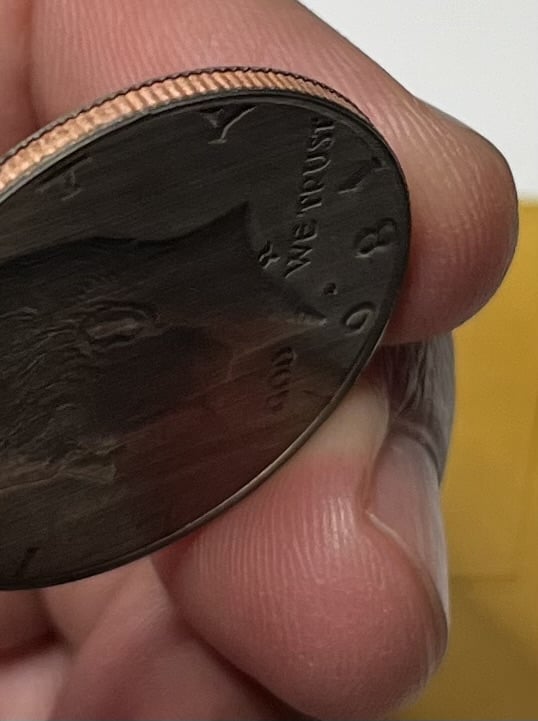
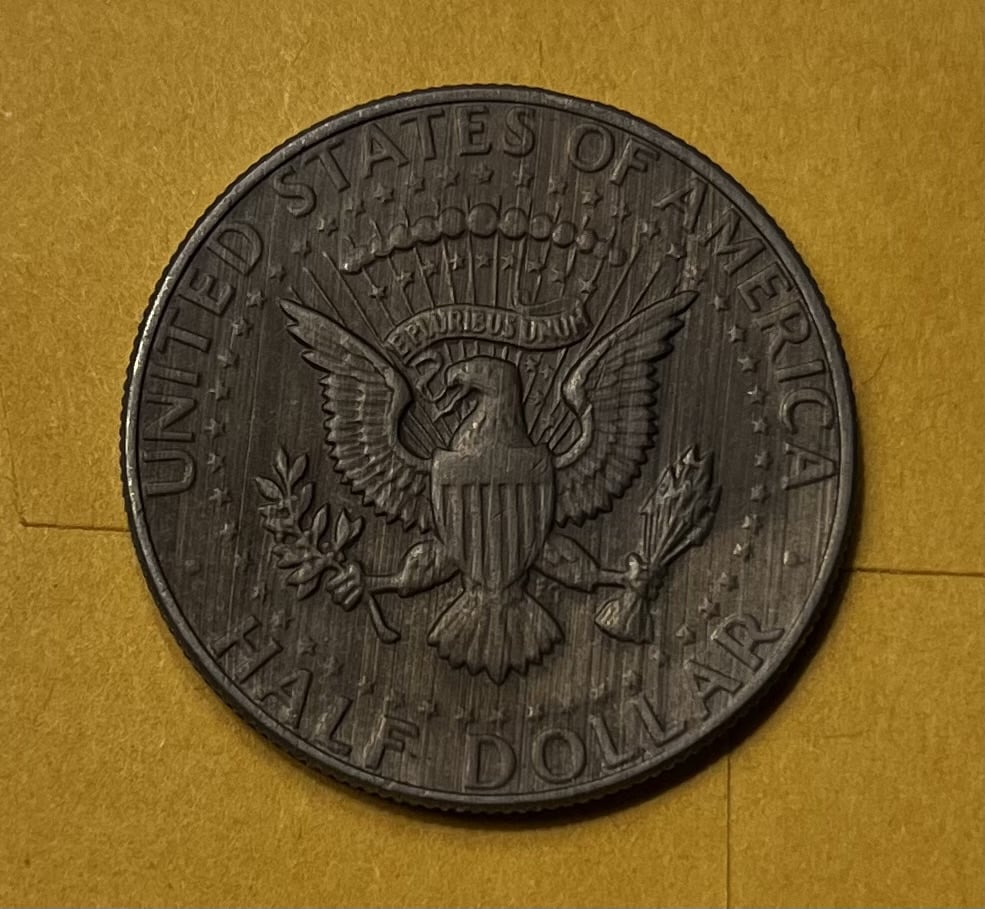
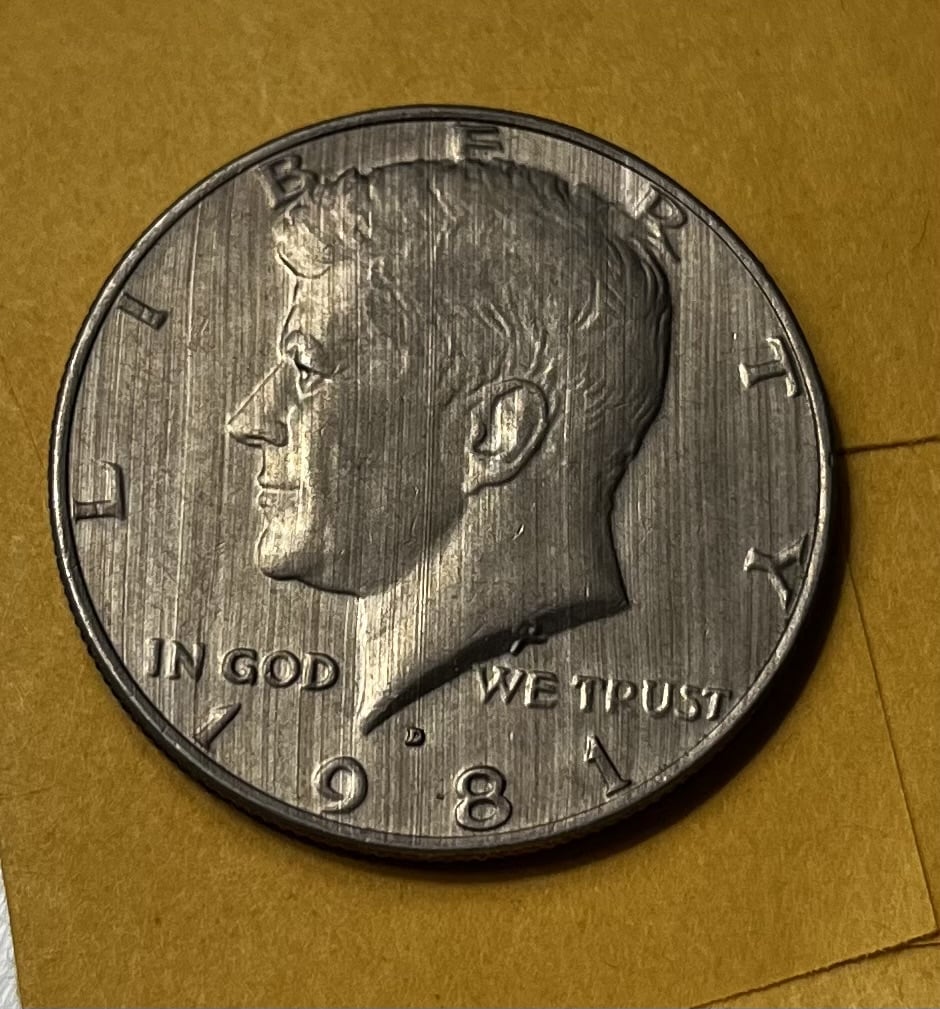
Wanted to post to get opinion on a 1981 Kennedy Half-dollar that is part of my father’s collection. Attempted research but no viable info. Special attention to the edge and lines. You can feel each side of the coin of that makes sense.
Opinions requested.
0
Comments
Would you say that the clad layer has begun to separate from the coin? It looks like this may be the case from your photo.
If so, that is called a clamshell separation error.
Edit: The acid treatment does look like a better explanation, as noted by others below.
Interesting piece it is
@IkesT appreciate the feedback. The picture doesn’t depict this but both sides clad layer is like this for the entire edge.
It feels like the edges were never fully pressed if that makes sense.
Looks like ya got a good thing 👍
Acid treated by some acid that dissolves copper faster than copper-nickel.
That edge looks to me like it took an acid bath. The clad edges are higher than the copper core.
I'll stick my neck out and say acid damage, with the surfaces obverse and reverse being eaten away unevenly (the lines) based on how the metal was rolled out as clad strip.
Similar to the way they raise a serial number that has been filed off a firearm. Areas of metal that were under greater pressure will react differently to the acid.
The reverse reminds me of that
All, appreciate the feedback received. This helps with the documentation I’m putting together for my family.
the general sense is acid treated
that makes it spending money
I'm not convinced it is acid treated. The details are too strong.
Could be, just not there yet with that conclusion.