Home U.S. Coin Forum
Options

1976-P Washington Quarters PCGS Grade Question

USSID18USSID18 Posts: 436 ✭✭✭✭

Are the grades of these Washington quarters based mainly on the toning? Because I have some major questions on the actual wear of these coins.
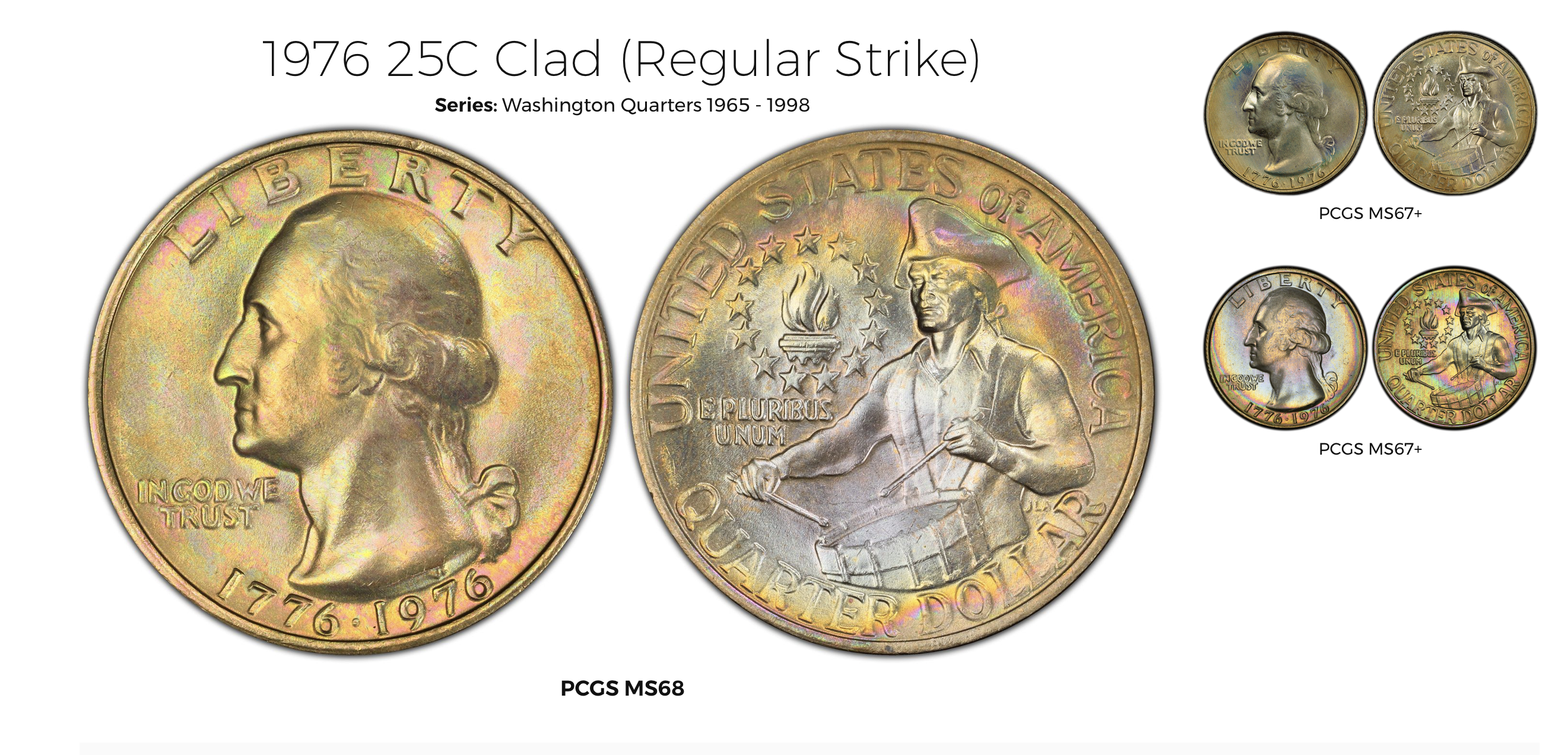
https://www.pcgs.com/coinfacts/coin/1976-25c-clad/5896

Comments

  • Options
    TomBTomB Posts: 23,046 ✭✭✭✭✭

    I would hope there wouldn't be any actual wear on these coins at the MS67/68 level as you have imaged.

    Thomas Bush Numismatics & Numismatic Photography

    In honor of the memory of Cpl. Michael E. Thompson

    image
  • Options
    MFeldMFeld Posts: 16,868 ✭✭✭✭✭

    The grades might have been bumped up, due to color. But even if so, it wouldn’t have been from circulated grades with “wear”.

    Mark Feld* of Heritage Auctions*Unless otherwise noted, my posts here represent my personal opinions.

  • Options
    USSID18USSID18 Posts: 436 ✭✭✭✭

    I don't know @TomB you tell me. Click on the link and mouse over the drums. I believe the outside rim of these drums (devices) are the high point on the reverse. Which would get the most wear or damage.

    The area on all three of these coins are a MESS!!

  • Options
    cladkingcladking Posts: 30,134 ✭✭✭✭✭

    @USSID18 said:
    Are the grades of these Washington quarters based mainly on the toning? Because I have some major questions on the actual wear of these coins.

    https://www.pcgs.com/coinfacts/coin/1976-25c-clad/5896

    The coin is apparently quite clean and the haze will come off in acetone. Strike and die are excellent but improvable.

    It looks like what they call a high grade with attractive toning that bumped it up. The toning appears natural to a 1975 mint set specimen.

    tempus fugit extra philosophiam.
  • Options
    cladkingcladking Posts: 30,134 ✭✭✭✭✭

    Wear is pretty easily seen on clad but there are very very few sliders so if you think it's wear, it probably isn't.

    tempus fugit extra philosophiam.
  • Options
    jonathanbjonathanb Posts: 4,102 ✭✭✭✭✭

    @USSID18 said:
    I don't know @TomB you tell me. Click on the link and mouse over the drums. I believe the outside rim of these drums (devices) are the high point on the reverse. Which would get the most wear or damage.

    The area on all three of these coins are a MESS!!

    You're seeing typical strike weakness. Or maybe even less-than-typical. The area you indicated on the reverse is opposite the center of the head, the highest point on the obverse. It's hard to get full details there.

  • Options
    USSID18USSID18 Posts: 436 ✭✭✭✭

    @jonathanb said:

    @USSID18 said:
    I don't know @TomB you tell me. Click on the link and mouse over the drums. I believe the outside rim of these drums (devices) are the high point on the reverse. Which would get the most wear or damage.

    The area on all three of these coins are a MESS!!

    You're seeing typical strike weakness. Or maybe even less-than-typical. The area you indicated on the reverse is opposite the center of the head, the highest point on the obverse. It's hard to get full details there.

    Strike weakness?.. Okay, that could made sense. How about die deterioration as well?

  • Options
    JBKJBK Posts: 17,565 ✭✭✭✭✭

    As @jonathanb mentioned, I believe the drum issue referenced is usually a result of the design not being fully struck up. Sometimes you are looking at the original planchet surface.

  • Options
    jmlanzafjmlanzaf Posts: 42,020 ✭✭✭✭✭
    edited August 2, 2026 3:09PM

    @USSID18 said:

    @jonathanb said:

    @USSID18 said:
    I don't know @TomB you tell me. Click on the link and mouse over the drums. I believe the outside rim of these drums (devices) are the high point on the reverse. Which would get the most wear or damage.

    The area on all three of these coins are a MESS!!

    You're seeing typical strike weakness. Or maybe even less-than-typical. The area you indicated on the reverse is opposite the center of the head, the highest point on the obverse. It's hard to get full details there.

    Strike weakness?.. Okay, that could made sense. How about die deterioration as well?

    Yes, but not the same issue. You can see some DDD on the letters. The high point is always the first place you'll see strike weakness negate the die doesn't fill. Die deterioration is usually more pronounced at the low points which is why you see it at the base of design and letter elements.

    All comments reflect the opinion of the author, even when irrefutably accurate.

  • Options
    cladkingcladking Posts: 30,134 ✭✭✭✭✭

    Full Drum is common on the Denver but only about 3% on the Philly. The best Phillys are in the '76 mint set.

    tempus fugit extra philosophiam.
  • Options
    cladkingcladking Posts: 30,134 ✭✭✭✭✭

    @USSID18 said:

    This blow up suggests a little insufficient strike pressure. Even with so much extra tonnage on the mint set coins this is still almost typical. The dies are simply set too far apart.

    tempus fugit extra philosophiam.
  • Options
    USSID18USSID18 Posts: 436 ✭✭✭✭

    @cladking said:
    Full Drum is common on the Denver but only about 3% on the Philly. The best Phillys are in the '76 mint set.

    Here's a Philly mint set.

  • Options
    USSID18USSID18 Posts: 436 ✭✭✭✭

    The reason I'm asking. I was searching a box this weekend and this Philly jumped out at me. I have rarely seen a well defined drum rim on these. With the exception of the toning, this coin "almost" looks better then the PCGS examples posted above. The circle looks more like a minor struck thru something, rather then a hit.

  • Options
    MFeldMFeld Posts: 16,868 ✭✭✭✭✭

    @USSID18 said:
    …With the exception of the toning, this coin "almost" looks better than the PCGS examples posted above….

    Toning or no toning, to me, it doesn’t “almost looks better than the PCGS examples posted above”.

    Mark Feld* of Heritage Auctions*Unless otherwise noted, my posts here represent my personal opinions.

  • Options
    jmlanzafjmlanzaf Posts: 42,020 ✭✭✭✭✭
    edited August 2, 2026 5:49PM

    @MFeld said:

    @USSID18 said:
    …With the exception of the toning, this coin "almost" looks better than the PCGS examples posted above….

    Toning or no toning, to me, it doesn’t “almost looks better than the PCGS examples posted above”.

    I would go farther: it doesn't even look remotely close.

    It has a better struck drum (no pun intended). That's it. Everything else is worse, in some cases much worse.

    All comments reflect the opinion of the author, even when irrefutably accurate.

  • Options
    MsMorrisineMsMorrisine Posts: 39,604 ✭✭✭✭✭

    full drum! good eye

    Current maintainer of Stone's Master List of Favorite Websites // My BST transactions
  • Options
    cladkingcladking Posts: 30,134 ✭✭✭✭✭

    @USSID18 said:

    @cladking said:
    Full Drum is common on the Denver but only about 3% on the Philly. The best Phillys are in the '76 mint set.

    Here's a Philly mint set.

    Both dates have a very wide range of quality but the '75 has a bulge a little higher at just a little higher than MS-64 while the bulge in the '76 set is high up in MS-63. The '75 coins are far more likely to be tarnished.

    More importantly though is the range in quality for the philly quarter extends only to about MS-67 in the '75 set and eclipses MS-68 in the '76.

    I do suggest that collectors focus on Full Drums because these are common enough and they are more attractive.

    tempus fugit extra philosophiam.

Leave a Comment

BoldItalicStrikethroughOrdered listUnordered list
Emoji
Image
Align leftAlign centerAlign rightToggle HTML viewToggle full pageToggle lights
Drop image/file