Have you ever had issues conserving a copper coin with acetone or xylene?
 Baylor8670
Posts: 292 ✭✭✭✭
Baylor8670
Posts: 292 ✭✭✭✭
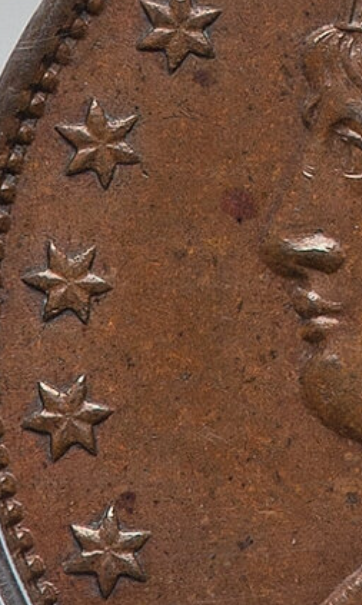
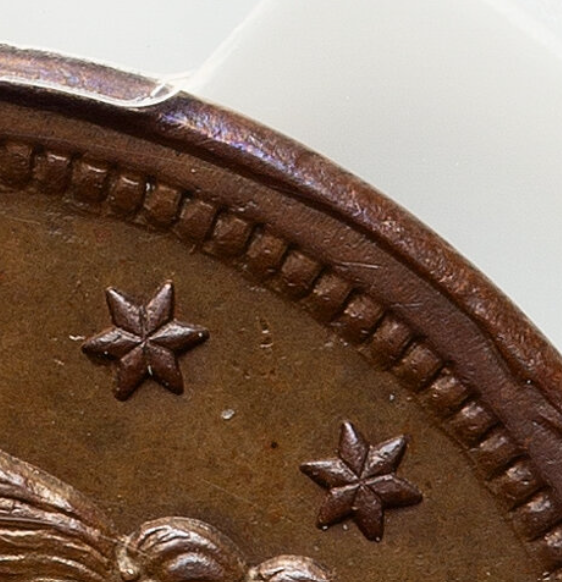
I usually buy gold or silver coins which are relatively speaking a walk in the park to safely conserve compared to copper. I have a low-end 1834 half cent and 1849 large cent with suspicious residue on them that I want to remove. Both were made of pure copper per Wikipedia FWIW.
Step one is a soak in distilled water which may or may not help. I'm trying to figure out step two and am leaning towards xylene.
I've heard MS-70 is fine for most copper coins but can turn them blue in certain situations. I've read this only happens when the copper has rainbow toning but don't rely on my info. I've also heard that acetone is fine for most copper but can cause some coins to change color in a very bad way as well. I have not read any explanation why acetone affects some copper coins but not others but maybe someone on the forum could illuminate us.
So, that's why I'm leaning against MS-70 and acetone. I have read that xylene is safe to use on copper coins FWIW.
I am not sure what exactly the coin doctor residue is. The half cent is slightly darker in the fields where the residue was applied but blends in somewhat well with the rest of the coin even though it's noticeable under close examination.
The cent has a rainbow sheen where the residue is (I'm 99.9% sure the rainbow effect I'm seeing is residue and not toning). The rainbow sheen is tough to see in pics but very easy to see in hand. In the pic below, it's visible on the edge/rim near the tab on the slab. Just about the entire coin is covered in it.
Any tips on safely removing the coin doctor residue would be greatly appreciated. Thanks.
Half Cent:
Cent:
Comments
I noticed ms 70 can leave a shiny like surface on the Lincoln cent. I never tried it on pure copper. Interesting
From your images and descriptions I don't see the issue with either coin.
In honor of the memory of Cpl. Michael E. Thompson
Here is what a highly respected numismatist says about removing crud on a coin (discussing Early American Copper). In my opinion, he is discussing conservation rather than cleaning. There is a significant difference!
“A simple but effective way to remove this crud employs an artist’s brush and a solvent. I use Xylol (Xylene), which is an organic solvent available at most paint supply stores. Using a small artist’s brush with a wood handle and relatively stiff bristles (equivalent to a baby’s toothbrush), follow these steps:
• Keep work area well-ventilated and follow solvent safeguards.
• Paint one side of the coin with solvent.
• Work crud out using tiny circular brush strokes. Don’t drag brush across coin’s surface.
• Concentrate on cruddy areas; then quickly do rest of coin.
• Blot off solvent while surface is still wet (rewet if necessary).
• Repeat process for other side of coin and any areas where some crud remains.
• Add a thin coat of Care, Blue Ribbon, or some similar protectant.
• Brush away excess coating using standard “copper brush.” These are jeweler’s brushes with natural, cream colored bristles and a wooden handle. An old brush (well-used with a greenish tint on the bristles) is preferred.”
from – The Die Varieties of United States Large Cents 1840 – 1857 by John R. Grellman, Jr. page v M & G Publications, 2001
Good stuff, Pete. Thanks. Yes, always a good idea to make sure you understand the difference between conservation and the numismatic definition of cleaning.
I'd be very careful using any kind of brush stroke. I usually blot gently and only vertically to avoid friction as much as possible with the coin but YMMV. Maybe copper can handle gentle brushing without causing detectable damage.
Also, adding protectants, while understandable, should and will prevent a straight grade (which, of course, does not apply to coins that won't be submitted to TPGs).
Admittedly not the best pics for this post but they were both details code 94 and deservedly so imho.
I think those small spots of red corrosion, while once maybe market acceptable, are no longer. On the Half Cent... Ms. Liberty is looking directly at the offending spot... a prime focal area (IMHO). The '49 LC spot between the stars is getting a bit picky, but it's definitely there. Welcome to trying to get early copper holdered! :-/...
Successful BST transactions with: SilverEagles92; Ahrensdad; Smitty; GregHansen; Lablade; Mercury10c; copperflopper; whatsup; KISHU1; scrapman1077, crispy, canadanz, smallchange, robkool, Mission16, ranshdow, ibzman350, Fallguy, Collectorcoins, SurfinxHI, jwitten, Walkerguy21D, dsessom.
The anti-acetone crowd like to cite a few research papers showing that, under certain extreme conditions, acetone in contact with copper can break down and form acetic acid, which can cause corrosion. The "extreme conditions" being:
- exposure to UV light (so you'd need either open direct sunlight or a UV lamp)
- the piece of copper in question is clean bright and shiny (not oxidized or toned)
- The acetone and copper remain in contact for many days under constant UV exposure
As these circumstances are unlikely to be replicated by your typical coin rinser who is not out in bright sunshine, has coins which are nicely toned and is only soaking their coins for a few minutes, acetone is "harmless" in this context.
Now, it's not hard to find people out there saying things like "acetone ruined my coin", and their story on the surface may well be true: they dunked their coin in acetone, and their coin looked worse afterwards. But dig deeper, and you will usually find one of two circumstances:
- The coin had previously been treated or coated with oil, lacquer or something similar; the acetone removed that coating layer, exposing what the coin actually looked like underneath.
- The person using acetone used impure or "dirty" acetone as a final rinse, which left behind a layer of grease, oil or whatever had previously been dissolved in that acetone. This can be particularly problematic in the case of heavy PVC damage, as such "used" acetone is likely to deposit a thin layer of acidic goo.
In terms of acetone vs xylene, they do similar things in terms of "removing oil and goo", but I prefer acetone simply because it's less toxic, and it's water-soluble so the leftover/waste acetone is easier to dispose of. Note that both xylene and acetone are volatile, flammable, and toxic; treat them the same as you would treat gasoline (which is also a reasonably good solvent to use in some circumstances, though the additives the oil companies often put into gasoline might leave deposits behind on your coins). So, no smoking, no kids or pets nearby, and use it in a well ventilated area. Though not so well-ventilated that you're out in bright sunshine, perhaps.
Roman emperor Marcus Aurelius, "Meditations"
Apparently I have been awarded the DPOTD twice.
Under no circumstances would I use MS70 on a copper coin.
Acetone, followed by Blue Ribbon appears to be your best resource here.
Official PCGS account of:
www.TallahasseeCoinClub.com
Ive seen many slabbed copper coins ( especially Lincolns) with the blue shiny sheen so apparently its ok?
If it is certified then by definition of the corresponding service's guarantee, the color is "ok".
Official PCGS account of:
www.TallahasseeCoinClub.com
I have occasionally seem acetone turn Bronze coins a bluish color, but I suspect that this was caused by the coin already having the residue of some other chemical treatment on it.
Before using a solvent or any chemicals on a valuable copper coin, maybe just pull some pennies out of your change jar and do some experimenting.
I found acetone to be fine with silver and gold coins, and also with circulated copper coins. Results seemed less predictable (I.e., some times you get weird AT colors) on AU or mint state copper.
30+ years coin shop experience (ret.) Coins, bullion, currency, scrap & interesting folks. Loved every minute!
Yeah, that's a mixed bag.
PCGS's grading guarantee covered the color designation prior to 2010 but copper changing colors within their holders caused them to rescind that part of the guarantee.
Interestingly, NGC's guarantee DOES include the color designation for copper.... for a ten year period only.
I feel that few collectors are aware of the limitations for either company.
Official PCGS account of:
www.TallahasseeCoinClub.com
Acetone only takes off petroleum products
Menomonee Falls Wisconsin USA
I have seen this on copper with active PVC on the surface. It happens fast!
@Musky1011
Not in my experience. A green/grey ‘snot’ often develops on coins (and jewelry) if they’re stored in leather purses for a long time. Acetone works like a charm.
30+ years coin shop experience (ret.) Coins, bullion, currency, scrap & interesting folks. Loved every minute!
Acetone is non reactive to copper and I've used it many times to remove dirt and loose verdigris from the devices. That said, it has little if any effect on green corrosion (or red corrosion for that matter).
Successful BST transactions with: SilverEagles92; Ahrensdad; Smitty; GregHansen; Lablade; Mercury10c; copperflopper; whatsup; KISHU1; scrapman1077, crispy, canadanz, smallchange, robkool, Mission16, ranshdow, ibzman350, Fallguy, Collectorcoins, SurfinxHI, jwitten, Walkerguy21D, dsessom.
Copper coins can be tough sledding. Dip a roll and perhaps all sorts gaudy color. They do tarnish very easily.
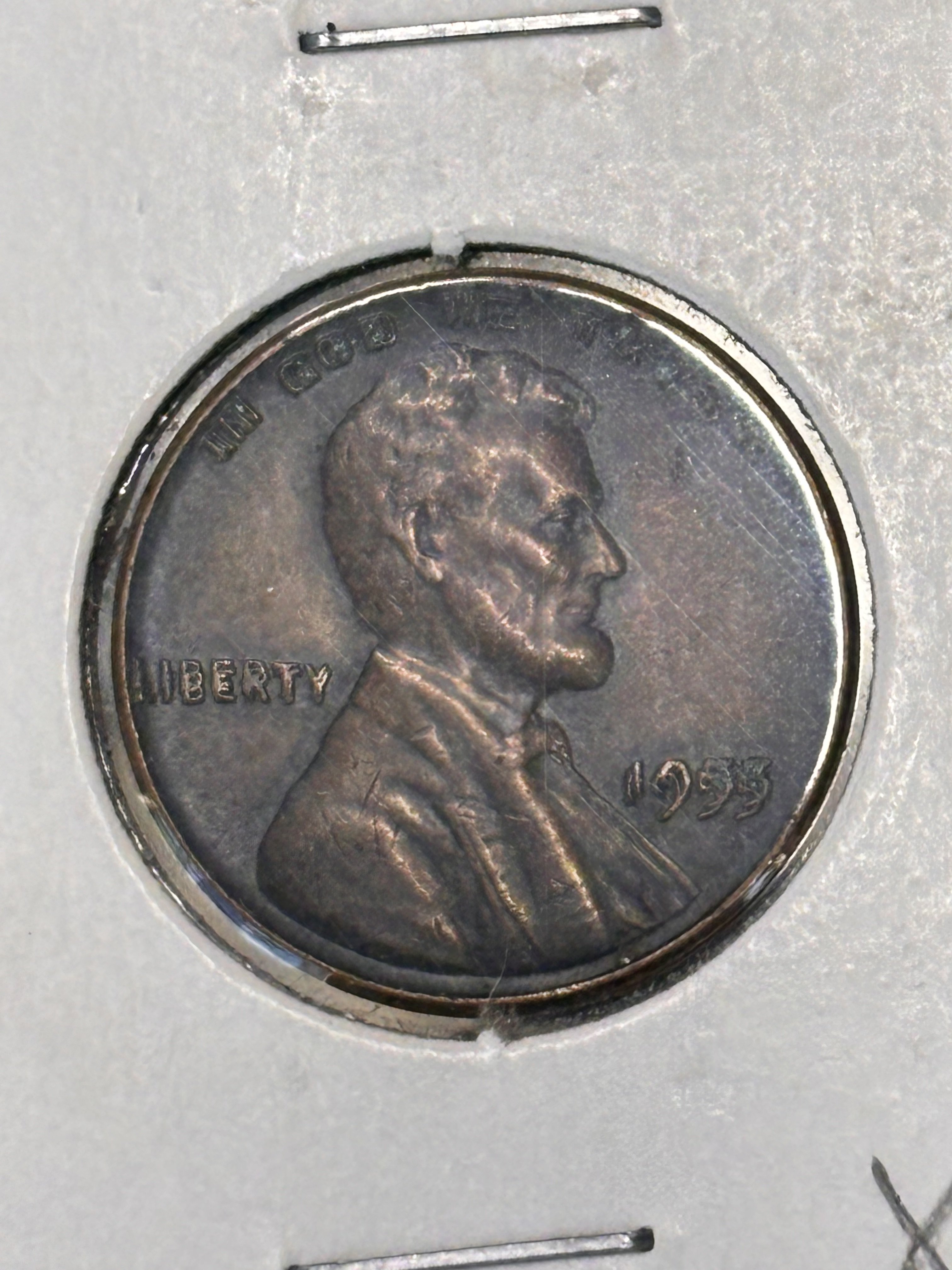
I leave conservation of copper to the experts but personally would probably use virgin olive oil or WD-40. Again, if it needs conservation …. I’m trusting it to the experts. I don’t want to “mess” with it.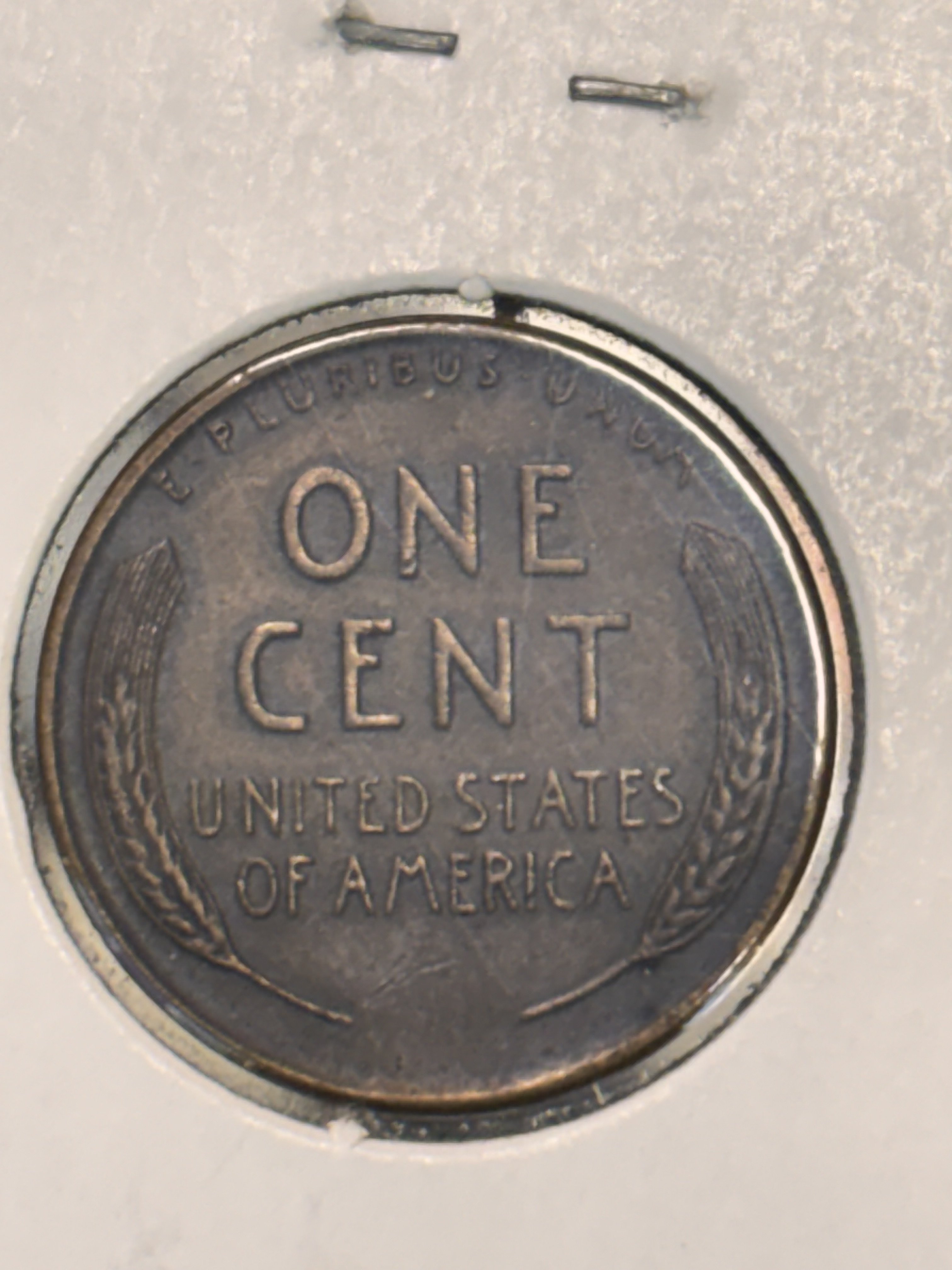
.
Practice makes perfect & nobody is perfect. So, practice being nobody and be perfect !