Options
Pop quiz! Test your deductive reasoning
 SimonW
Posts: 1,608 ✭✭✭✭✭
SimonW
Posts: 1,608 ✭✭✭✭✭
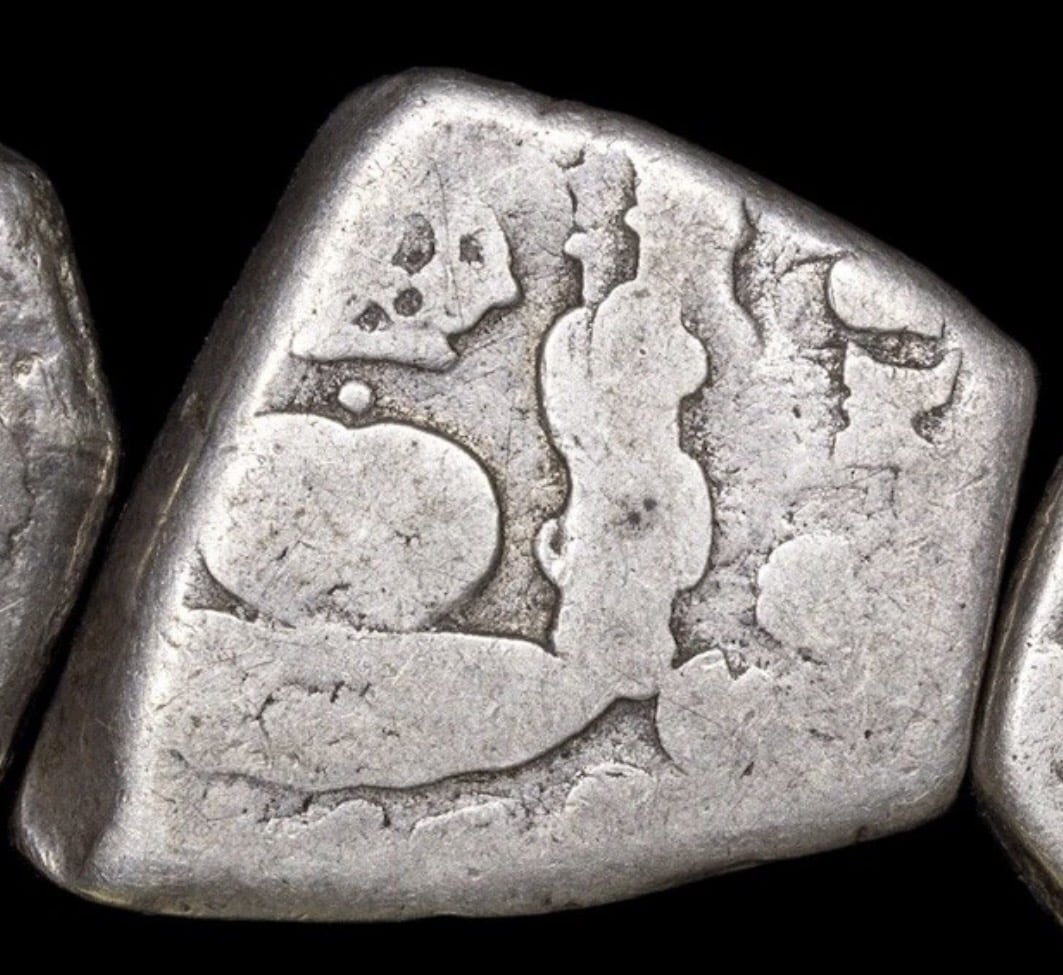
Here is a Guatemala Real “cob” I bought recently on the cheap. I bought it because I thought I could tell what the date is. Whether you think that’s a worthy endeavor from a collecting standpoint or not is a different question. 😂
What do you think the date is? What rationale did you use to arrive at your conclusion?
It’s fun! Eventually I’ll probably submit it to see if I can convince PCGS of my belief.
*Hint——acsearch is your friend
(Seller’s pics)
What say you? 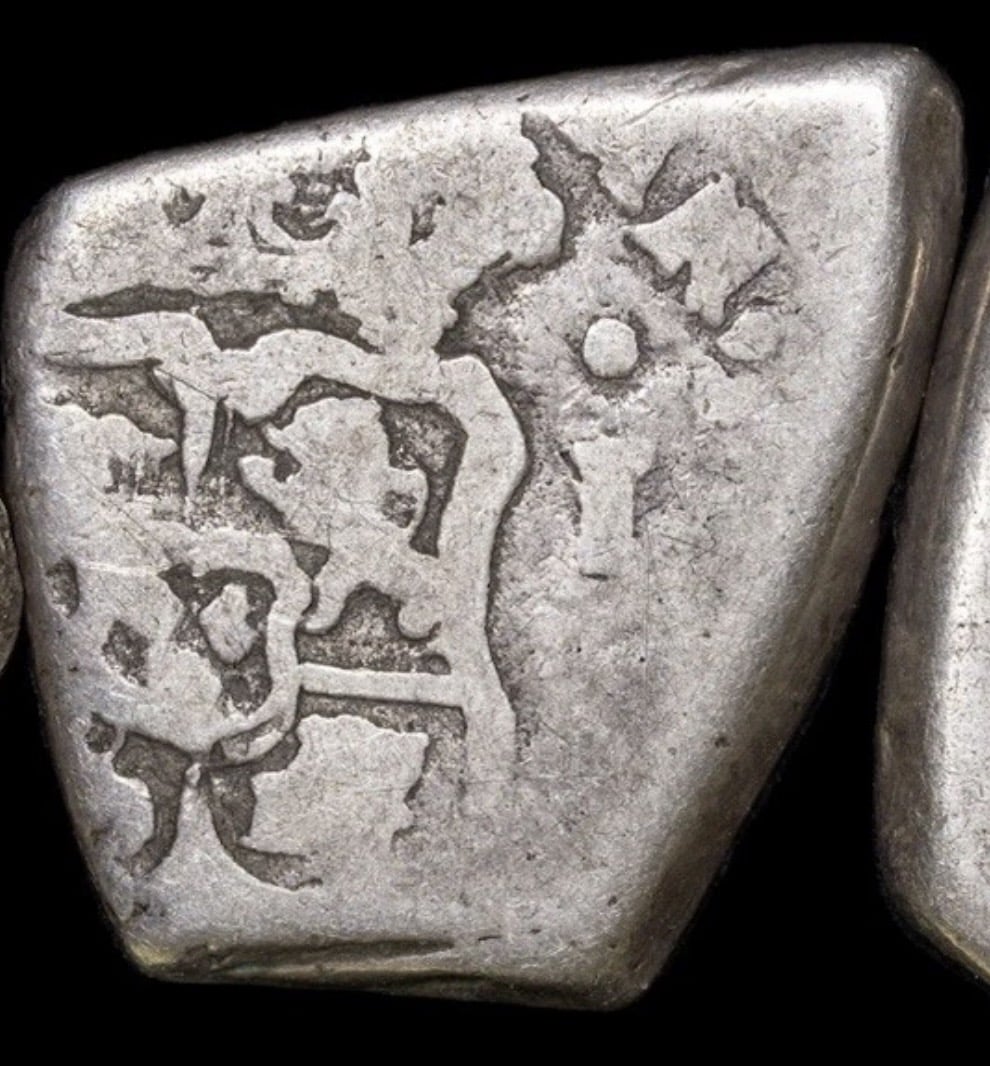
I'm BACK!!! Used to be Billet7 on the old forum.
0
Comments
Based on the curved shape of the third digit I would eliminate 1, 4, 5 & 7.
Then I'd consider what are rounded at the top, 2, 3, 6, 8 & 9
Then knowing that cobs at Guatemala run from 1733 thru 1753, to the best of my knowledge, I would then eliminate the 2, 6, 8, & 9. That would leave only the 3. So now I am assuming 173X.
The last digit also seems like it could be rounded at the top, though perhaps a little differently than the second digit, so I'd eliminate the 1, 4, 5 & 7 again.
The little notch on the right side at about two o'clock makes me want to guess 6.
So, without going to the acsearch, I'd guess 1736.
*wording edit
Looks like 1743 or 1747 to me. Can see the tops of 4 and flat top of either 3 or 7, then rosette after the date, then G of the mintmark (the notched blob)
I think you’re looking at the wrong part. The “notched” digit you refer to is a G for Guatemala. Left of that is a rosette. Left of the rosette is the last digit of the date, which has a flat top.
I agree with you @TwoKopeiki on all counts. Furthermore I believe it’s a 1743, when comparing images of known 1743 vs 1747. You’ll notice the giant center dot just below the crown, which tends to show up on the 1743 with that size and position. Also, the spacing and size of the rosettes in relation to the date and “G.” The1743 has large rosettes crammed together. The 1747 has small rosettes spaced far apart. Here are a bunch of comparables. I think it looks like a 1743. Anyone agree or disagree?
I'm BACK!!! Used to be Billet7 on the old forum.
Wow! Someone sure likes cobs. Yes, the OP coin is 43.
Proximity of the G mintmark to the pillar, size of rosette, and and spacing/orientation of the elements matches the 1743 G J 1R.
.
It is not the one above because the 4 touches the ocean and the G does not touch the pillar.
.
.
It is not this one (above) either, because the spacing between the rosette and the M does not match.
.
I see what you’re saying about the spacing on the M. Might the double strike have any bearing on that?
Changed the position of the G in relation to the M? This is the one I would assume it is.
I'm BACK!!! Used to be Billet7 on the old forum.
It is 1743, it’s the same obverse and reverse dies as these two examples. The spacing is the same, any difference mentioned above is due to strike doubling.
Gobrecht's Engraved Mature Head Large Cent Model
https://www.instagram.com/rexrarities/?hl=en
If the M was formed entirely by one striking event and the rosette was formed entirely by a different striking event, then the spacing between them would not match the spacing on the die. This is unusual for design elements that are in close proximity on the die, but it could happen, I suppose.
It would be a single striking event with die shift, it’s common on older world coins and visible on this coin with the doubled right pillar.
Gobrecht's Engraved Mature Head Large Cent Model
https://www.instagram.com/rexrarities/?hl=en
.
With that far of a shift, and with two separate images, I think the die would have to strike, retract, and strike again. So it is a classic double-strike. A single "striking event" implies a shift while the dies were in contact, like "strike doubling" or "machine doubling" as it is sometimes called. I see no evidence of such a great shift while between the dies.
.
That’s just not true, there are many examples of dramatic die shifts on older world or ancient coins that occurred during a single striking event. I think you are approaching this as if it is a modern coin. If it were struck twice there would be overstriking over a large part or the whole of the design rather than one particular area. It’s really beside the point though, it’s from 1743 dies regardless.
Edit: to further explain the above, this coin was not struck in a collar. Without a collar, vibrations/bouncing/shifting of the dies or planchet during strike are not only plausible but relatively common, and can be much more extreme than mechanical doubling on a coin struck within a collar, which is held in place. This is one of the reasons collars are now used.
Gobrecht's Engraved Mature Head Large Cent Model
https://www.instagram.com/rexrarities/?hl=en
.
I have struck a lot of coins, including many cobs (without collar). Never have I observed anything like that sort of doubling without a true double-strike.
A drop-hammer press could potentially strike a coin, bounce a little (allowing the coin to shift under the die while not in contact with the die) and then come down again. The second impact would be lighter than the first. But I would still classify that situation as a "double strike", if the dies separated enough for there to be space for the coin to shift laterally.
.
What you described is the same physical process that occurs with some forms of machine doubling, just to a greater degree since there is no collar.
https://www.error-ref.com/multiple-machine-doubling-in-one-direction/
There is a name for the type of machine doubling that involves a bounce and shift, without dragging/smearing the design: “push doubling.”
https://www.error-ref.com/push-doubling/
If it were physically struck twice, it would have doubling of relatively uniform strength and covering most or likely all of the design, instead of just in one portion of the design (which implies that when the dies/planchet bounced/ vibrated/shifted, they naturally impacted again at a slight angle). In addition, on the noted coin there is a corresponding fade inward towards the area where the doubling departs from the design, with the strike on the die shift becoming stronger towards the edge (aka where the pressure from the dies impacting the coin was stronger, because of the angle at which they struck). This makes very logical sense as strike doubling, but not very much as a double strike.
Because of these physical characteristics and the fact that it was not physically struck twice, such a coin would not typically be classified as “double struck”. For instance, NGC would call an ancient coin with this issue “die shift”, which they write on their holders. On a world coin like the one mentioned here, neither NGC or PCGS would call it a mint error for “double struck”, they would simply not note the problem as it occurred during a single press of the dies. I’m familiar with the standards on this because I worked as a grader.
Gobrecht's Engraved Mature Head Large Cent Model
https://www.instagram.com/rexrarities/?hl=en
My assumption before this conversation is that it was struck, it looked like crap, so they struck it again. Some of the original strike was obliterated, much of it remained.
I'm BACK!!! Used to be Billet7 on the old forum.
.
For flat machine-made planchets, that tends to be true.
But if the cob blank is not flat (typical) and/or the dies are tilted off the vertical axis, the type of doubling seen on the subject coin is a result of multiple striking.
If you have one, please post a picture of a coin with the widest doubling that is certified as "die shift".
.
It wouldn’t look like that. The struck portion on the top right was struck after the rest of the coin, as it overlaps the rest of the design. You argument would imply that the obverse and reverse were struck once with a nearly complete design, then the dies lifted and struck only this small portion of the obverse, at an angle, with an unnatural fade towards one side, and without the coin further bouncing and shifting against the dies as it naturally would when struck this way. Additionally, even if the coin remained stuck in place in the reverse die so there was no shifting or rotation on that side, there would be visible expansion on the reverse from being struck twice without a collar. You can try to recreate it yourself, it’s not going to look like this.
I don’t have one on hand and this is by no means the widest doubling possible (there is no limit to that), but here are two random ancient certified as such. If you handle a lot of hammered coins you will see a lot of similar effects.
It is very common on cobs and often very extreme precisely because the planchets are often so irregular, which can result in major shifts when the dies impact them. Note again the fade line and the shift occurring only in particular areas of the coin:
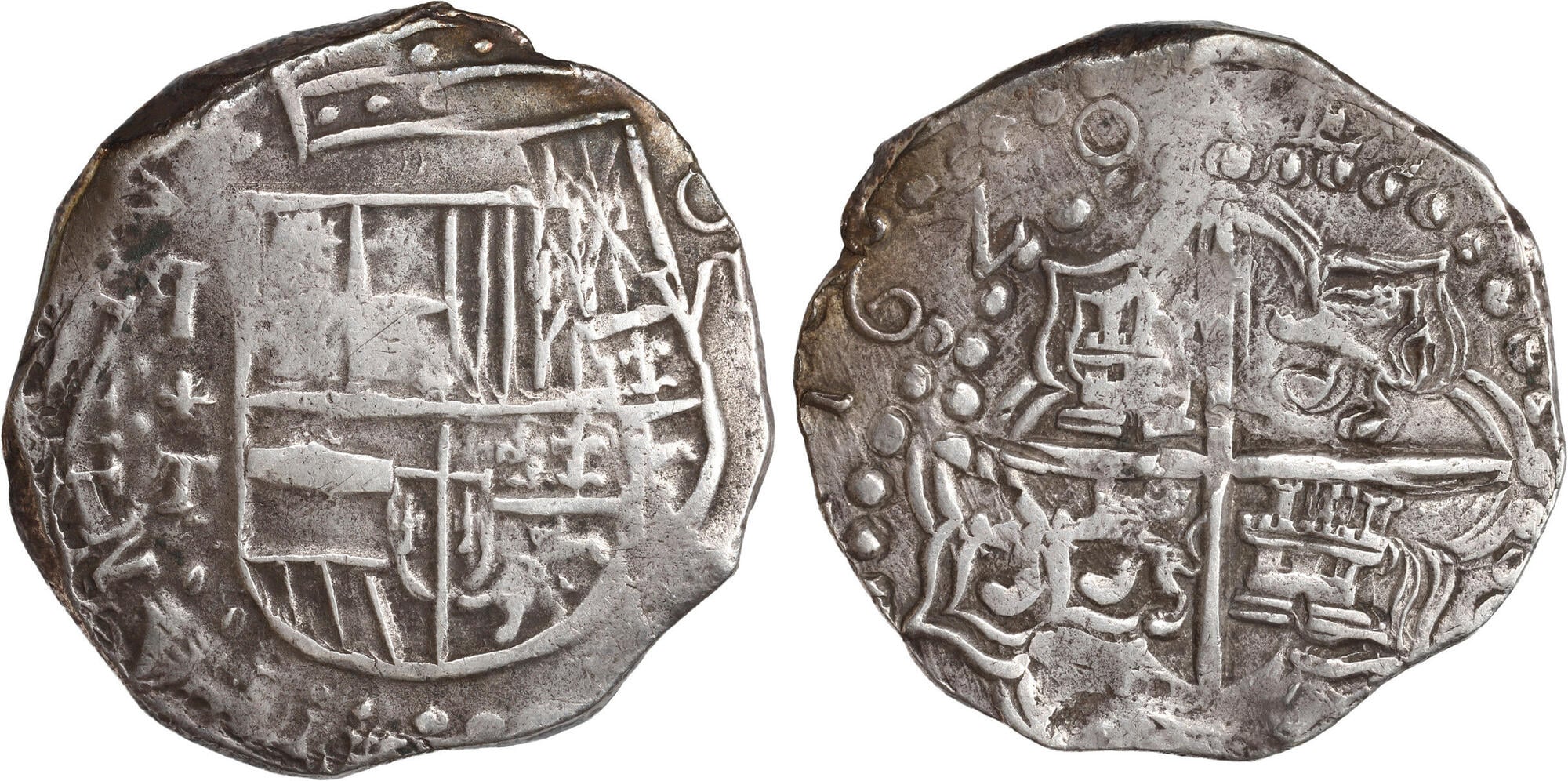
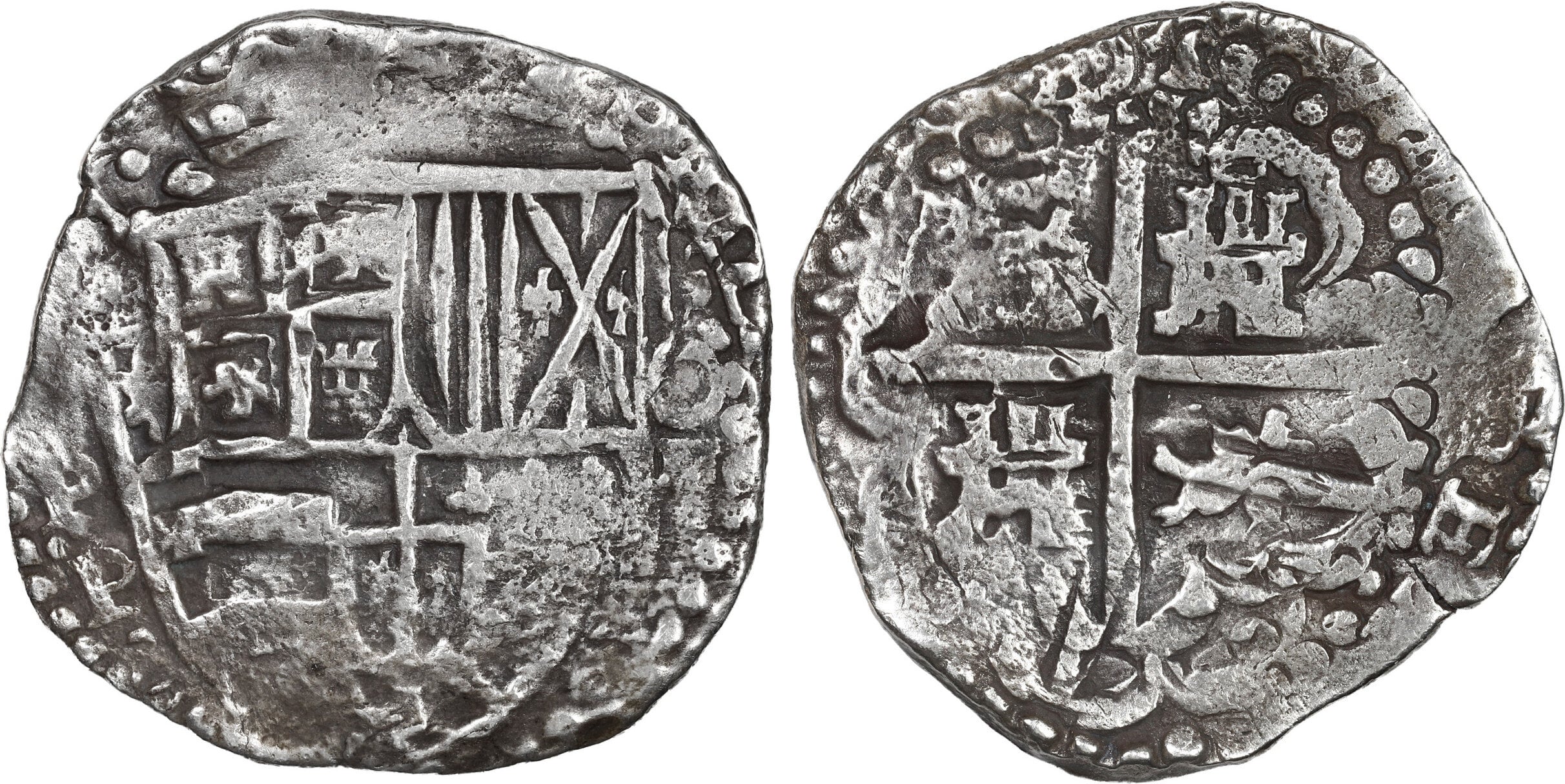
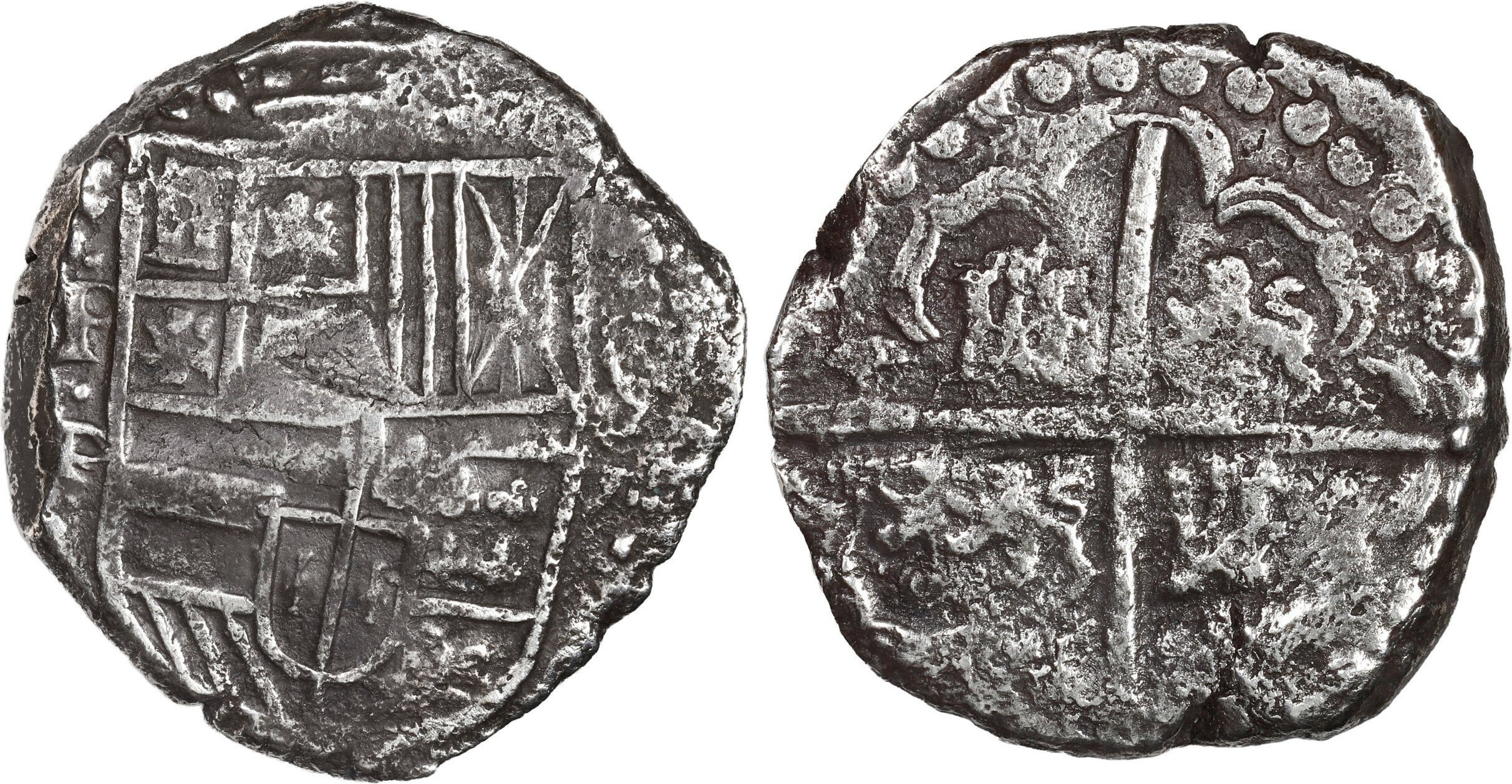
This is different from a double-struck coin, which has overlapping details of fairly uniform strength over most or all of the design:
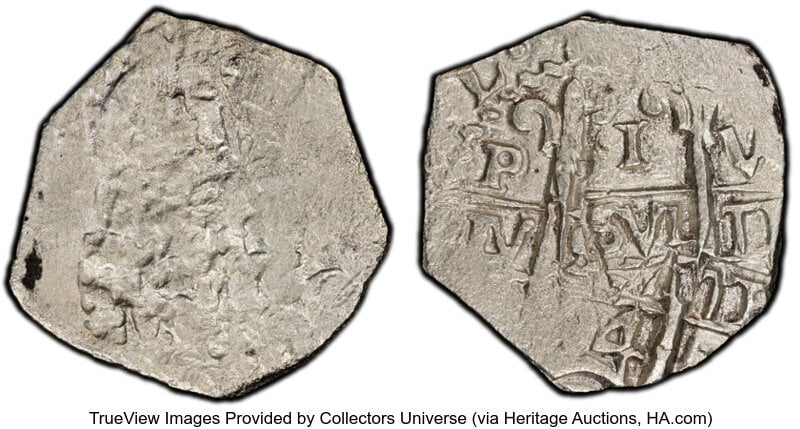
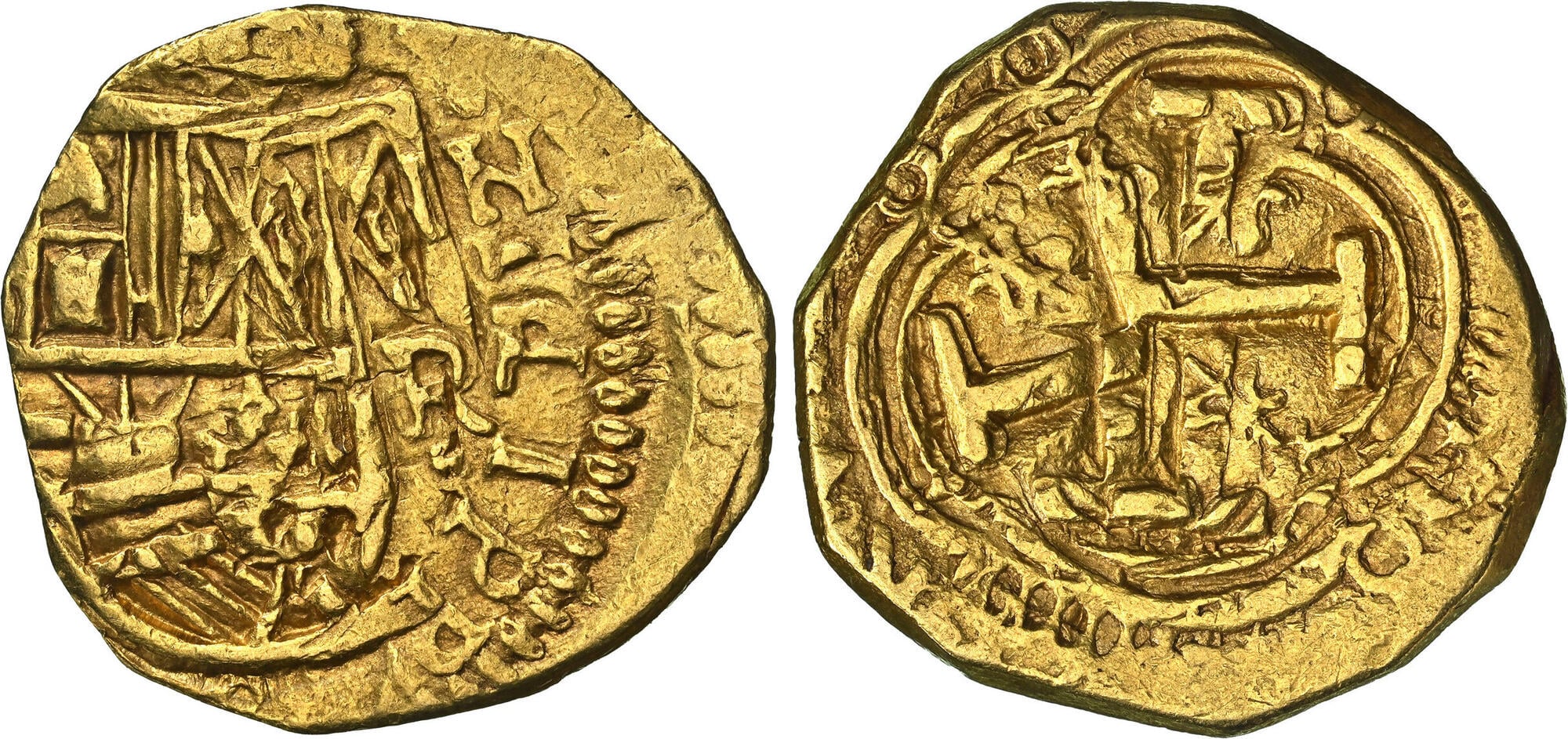
Gobrecht's Engraved Mature Head Large Cent Model
https://www.instagram.com/rexrarities/?hl=en
.
If the die impacted, and then somehow slid sideways, it would have to leave slide marks.
Where are all the slide marks ?
Ask this question: why is this cob pointed right at the dividing line between two images ?
.
PS:
I strike all sorts of things, including cobs.
.
As I noted previously, that is not true. The dies/planchet bounce and vibrate upon contact. Bouncing and vibrating does not necessarily involve sliding, as the dies and planchet separate temporarily before reconnecting in a different spot. Again, there is a name for this type of doubling: push doubling. https://www.error-ref.com/push-doubling/.
What you are referring to is slide doubling: https://www.error-ref.com/slide-doubling/. These are two different things. This is why I think you are approaching this as if it is a modern coin - you’re much less likely to get slide doubling without a collar, especially if there are irregular planchets being used that can result in severe bounces.
Look, it’s easy to visualize:
In the last stage, different parts of the planchet and dies come into contact as they bounce against each other. During this bounce or bounces, there can be lateral shifts, especially if there are tapers or imperfections in the planchet and there’s no collar holding it in place.
Could be no reason, could be because (as I wrote previously) there was a taper in the planchet along that line, and when the dies/planchet came into contact that caused a bounce and shift along that taper. The planchet probably tilts along the taper so the tapered part secondarily impacts the die during the bounce.
So you should know that it’s very feasible for doubling to occur without sliding, right? As evidenced by the site above, it is a well-known phenomenon.
Anyway, I think at this point I’ve repeated myself enough so I will move on from this topic.
Gobrecht's Engraved Mature Head Large Cent Model
https://www.instagram.com/rexrarities/?hl=en
.
"Doubling without sliding" happens as I described it: the die impacts, retracts, shifts laterally relative to the planchet, and impacts again. This is the definition of double-striking. If the die retracts due to bouncing, the result is the same thing.
.