Options
PCGS to grade ancient coins, finally
 atom
Posts: 498 ✭✭✭✭
atom
Posts: 498 ✭✭✭✭
“ At the ANA World's Fair of Money on August 26, we will share more about our impending launch of new ancient coin grading services in the US.”
1
Comments
PCGS cannot keep up with current volumes.
And the bottleneck seems to be attribution and encapsulation, not grading.
How does this make things better?
Wrong priorities if you ask me.
Who said they’re trying to make things better?
The grading turnaround isn’t better.
The dismal Trueviews isn’t better.
The plastic slab prone to chipping isn’t better.
The rate of “mechanical error” isn’t better.
The customer service phone line isn’t better.
The Registry Sets rules changes isn’t better.
The registry set gallery view and digital albums that still don’t load all the coins selected isn’t better.
Their quarterly specials isn’t better.
Their magazine isn’t better.
The message board isn’t better.
The new grading fees effective 8/1 isn’t better.
Have I left anything out?
@atom
So… how many of the new PCGS red boxes can we put you down for?
Experience the World through Numismatics...it's more than you can imagine.
Nobody mentioned the new prices effective 01 August.
https://l.pcgs.com/coin-fees-forum
Two points that I dislike.
1) Walkthrough limit decreasing from $100k to $50k. So coins between $50-100k, the cost will now be $300 plus the 1% GP rather than the current $150 (so maximally up to $1150 extra for a $100k coin).
2) Low-priced world medals now need to go at a minimum of Regular at $42 rather than Economy or Modern/Modern Value.
You can take all the coins in China
Put it in a red box for me
Sail right around all the seven oceans
Drop it straight into the deep blue sea
Mentioned above:
The new grading fees effective 8/1 isn’t better.
NGC used to have red boxes (I presume for China). I bought a bunch and keep all my "do not sell" primary collection NGC coins in them. Maybe now I will do the same for my PCGS coins.
In August 2025, PCGS, with considerable hype, launched their "ancients grading service". To the considerable disappointment of the small minority of ancients collectors who actually wanted this, it turned out that this "ancients grading service" was somewhat restricted in scope:
- They would only accept Chinese cash coins, and only from the Qing Dynasty (1644-1850) - which is not a coin series that your typical ancients collector or even a typical Chinese cash coin collector would have considered truly "ancient". Ancient Greek, Roman, Celtic, Byzantine, Islamic, etc were not going to be accepted.
- They would be using their own bespoke 10-point grading scale, neither the Sheldon scale nor an NGC-Ancients-style multi-parameter grading matrix.
- They would only be operating this system out of the Shanghai office, so US-based collectors will have to pay for shipping to/from China.
Still, these people held out hope that perhaps this was merely the first stage in a multi-stage plan to launch fully comprehensive ancients grading. And so here we are, one year later, with a pending announcement for a US-based ancients service. I can only assume that this too will be another "baby step", rather than jumping in to grading every single type of ancient coin in existence.
Roman emperor Marcus Aurelius, "Meditations"
Apparently I have been awarded the DPOTD twice.
I am willing to give it a try when more details are available.
https://www.pcgs.com/setregistry/gold/liberty-head-2-1-gold-major-sets/liberty-head-2-1-gold-basic-set-circulation-strikes-1840-1907/publishedset/15628
March of Time - 27 Centuries in Gold
https://coins.www.collectors-society.com/WCM/CoinCustomSetView.aspx?s=36590
I think this is great news. Hopefully the grading scale will match NGC's ancient scales. Standardization is key.
Who in their right mind cares about the grade of an ancient? Guaranteeing authenticity, on the other hand...
A few hundred thousand dollars: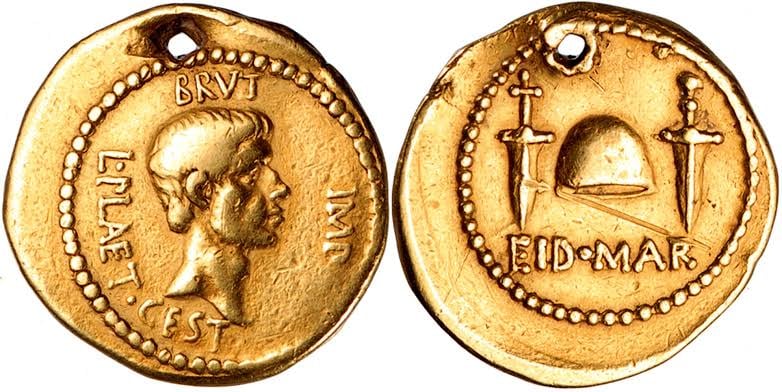
A few million dollars:
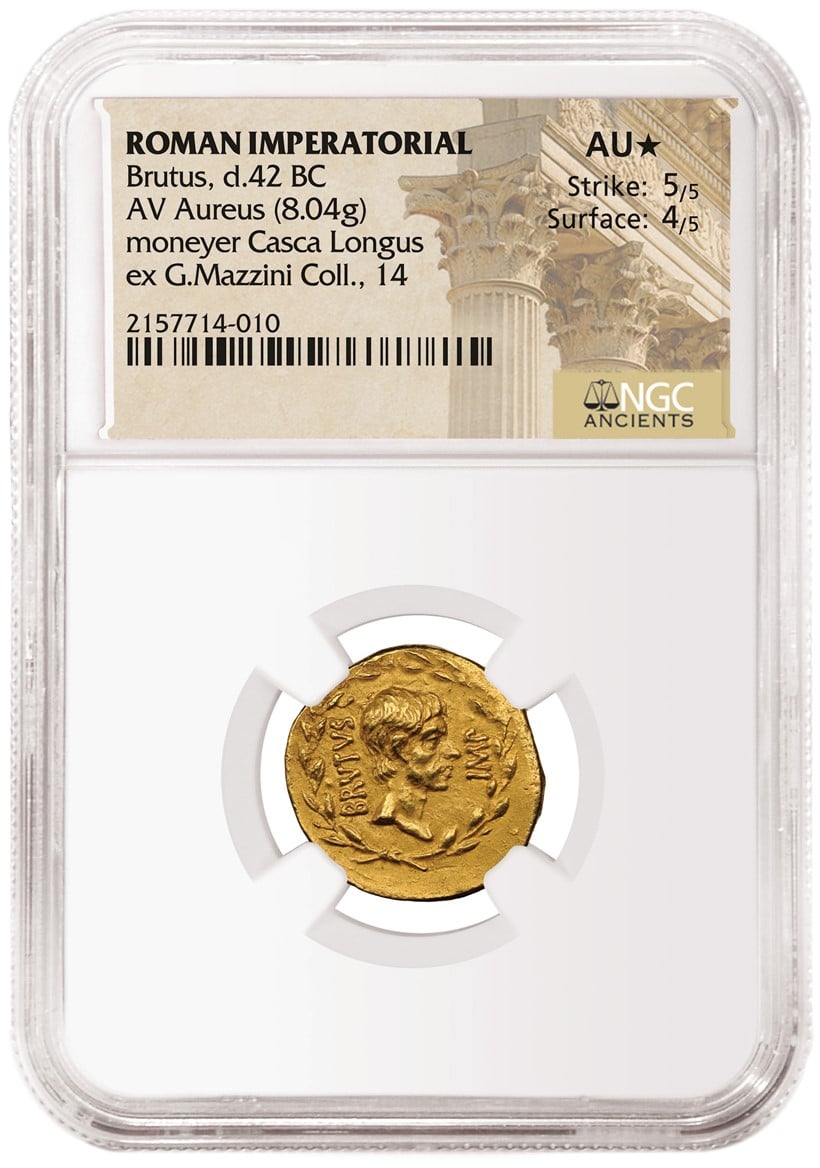
Who cares about the grade? I’ll answer your question with a few pics…
Almost everyone cares about that.
I'm BACK!!! Used to be Billet7 on the old forum.
What's happened here is you've misunderstood.
I can see - using my eyes - the difference between the first and second coin you have posted. That someone graded the second AU* is meaningless to anyone who doesn't collect grades. The fact it is in a slab is not important to the price. If you think that, you are the reason the Emperor's New Clothes are so easy to sell.
Almost everyone cares about the grade? You don't collect ancients, do you? Ancients collectors care moderately about wear amongst many other things, but a TPG grade is not important. Most collectors ignore the grade as they are looking for overall eye appeal. Wear will usually reduce eye appeal but so does centring, corrosion, which bits of the coin are worn etc. I have bought VFs over XFs because of other factors.
In the case of these very expensive coins, the price will also vary due to a coin's provenance and the likelihood that the government will confiscate it.
And by the way, you are way out on the hammer prices.
The first, an Eid Mar, sold for 2,200,000 CHF ($2,300,000 USD) + fees in 2022. Despite the hole.
The second isn't even the same type. That example sold in 2024 for €1.98 million (just over $2 million). Less than the holed coin by $300,000.
So the two examples you posted demonstrate quite nicely how ridiculous it is to go by the slab. It's quite easy to get confused with their terrible labelling, I'll admit. You'd have bought a coin for 'a few million dollars' that's worth $2m, and sold your $2.3m coin for a few hundred thousand. Doh! It's probably best to pay attention to the detail on the coin, not the slab.
Collecting ancients is about history and knowledge, not bs grades and making a quick buck (or not). How pretty a coin is does not always come top of the list for an ancients collector. This is why using the Sheldon scale on ancients is laughable.
I think each collector has the right to do as they wish with their collection so why get worked up over what PCGS will do!?
Personally, I will be sending some of my ancients to PCGS for grading and mainly encapsulation.
Even if you like slabs, the problem is their ancients system is different to NGC and not in a good way. So you have two very different systems, neither of which works.
NGC understood the problem - you can't use the Sheldon scale (which is one dimentional) and you need to account for other factors. Their system doesn't quite work, but at least it's not the Sheldon scale. Rather than improve NGC's system, PCGS have gone for a scale designed for US large cents. Why? To please the collectors of US large cents, not ancients collectors. A big fail for collectors, but Heritage will love the false value created for US collectors.
On the positive side, as I pointed out, you have guaranteed authenticity. NGC does not offer this, which is their biggest drawback. This is, I believe, the main, perhaps only, reason for any ancients collector to slab a coin. So it might mean we see more ancient coins slabbed. Unfortunately, it comes with an awful grading scale and the usual poor labelling.
Slabbed ancients, then, remain the domain of speculators and flippers. If you're a collector, that is always going to alienate you.
I’m not an expert on ancients, but it seems to me the Sheldon scale would work better for a knowledgeable buyer if images of the coin are available. Not so much to rate the overall quality of the coin, but to rate its preservation. On the other hand, an unknowledgeable buyer would be better off with the NGC system. Am I missing something?
Doggedly collecting coins of the Central American Republic.
Visit the Society of US Pattern Collectors at USPatterns.com.
The Sheldon scale gives a score at a minute level, which is fundamentally not the way to 'judge' ancient coins. It is simply not useful except for giving investors a hook to hang their snake oil from. Bear in mind that every ancient coin is unique. Each is struck differently from any other so that each coin will look different before you even get to wear. Even in 'mint state', the flan will be a different shape, one coin will be a different weight to the next and more or less of the design will be be visible on each coin, or it will be struck more clearly, or exhibit more die wear.
Even the same amount of wear will affect one coin differently to another, because different devices are more or less exposed, the alignment varies and the alloys are not identical. What a modern collector would call an 'error' is standard. Moreover, the dies were cut by different engravers and the style of one can be vastly different to another. A grade of MS* is meaningless if the engraver was inexperienced. Compare these two examples of the same coin:
Which has more wear? Which has a better strike? Which demonstrates a higher level of skill? Which looks better? What on earth would the Sheldon scale add to this choice?
You then have the variance in the type of damage, corrosion or deposits that might occur beyond wear. Chips, scrapes, countermarks, peck marks, test cuts, colourful deposits etc. These can add or detract from a coin, so you can't even say it should always be negative. Just as moderns are sometimes designated 'red' or '*' for eye appeal, ancients can have an attractive green patina from being 2000 years in a river or an orange tone from being buried too near Vesuvius. But with ancients, there is a vast array of deposits, patinas and tones that can't be dealt with by a *.
The NGC system is better because it tries to address the above. You get a score for grade, strike and surfaces i.e. wear, centring/crispness and corrosion. It acknowledges that a worn coin might actually be a lot better than an unworn one, so rather than trying to create some unwealdy monster of a net grade it splits them out. It also recognises that such scores become irrelevant in microsopic detail, and only goes up to 5.
Unfortunately, in practice it doesn't quite work. NGC still seem to try to 'net grade' some of the scores - because there are even more variables that wear, strike and surfaces don't deal with adequately e.g. if one part of the coin is struck better than another, as always happens with a hammered coin. Those three scores might not be the top factor affecting a coin's value even based narrowly on preservation, so why score it on them?
I understand your point, but I’m thinking more about the things that aren’t as easy to see and judge in images. Luster, originality, cleaning, hairlines, etc. And I’m not suggesting that the numeric grade should be the primary determinant of value. It’s just one factor to be considered, especially for someone who can’t view the coin in hand.
Doggedly collecting coins of the Central American Republic.
Visit the Society of US Pattern Collectors at USPatterns.com.
Yes, an ancients collector will pay attention simply to the words at the bottom right of the slab label. There you can see whether it is ex jewellery, brushed, harshly cleaned or even part of a hoard, and an ancients collector will care about those things. This is still contraversial since all ancients have been 'cleaned' and quite often collectors are much less sensitive than the TPGs, but it tells you what you might otherwise miss.
Essentially the numerical grade is not needed. What you need is a short list of things to note from an expert who has seen it in hand. Good auction houses do this in their listings but they are incentivised not to. It is an extension of the authenticity guarantee - a description guarantee.
What characterists would you think are necessary on the grading label to get a good picture or an ancient coin that has been graded?
"Strike: #
Surface: #
Cleaned: Y/N"
What else is needed
Llamas and alpacas are camels. They aren't like camels, or related. They are camels. When was anyone going to tell me this?! How long had Bill Nye been holding out on us?
I do collect ancients, thanks for the jab though.
You’re right, it looks like I accidentally downloaded the wrong Coin, it was supposed to be the EID Mar.
I understand the point you’re trying to make, perhaps a little offensively. The Sheldon scale being “laughable” as you call it, isn’t though.. It’s an imperfect system that was implemented a very long time ago, one that we seem to refuse to separate ourselves from. It has served a purpose and filled a need for a very long time, inadequately perhaps, but it’s quite entrenched.
You seem to be insinuating that, among other things, encapsulating and quantifying/qualifying ancient coins is a worthless endeavor. Do you believe that if you’re not more knowledgeable than the graders at a TPG you might as well give up? Should you instead collect Morgans? which have a lot of nuance themselves (I’m told.) If you can’t know all there is to know about a coin by looking at it, you might as well bury your head in the sand I suppose.
I don’t have an endless pool of knowledge about ancients, which is why I appreciate the analysis from those who know more. Not everyone has an encyclopedic knowledge like Sapyx.
I agree that more needs to be done, there will never be a perfect system though, not even for 1900’s US coins, if such a system existed “eye appeal” wouldn’t drastically change prices within the same grades.
I have probably 50 ancient coins. I don’t own any that are worth more than $1500 or so. Some are slabbed, others aren’t. What I buy tends to be in the VF-AU range. I would consider most decent for the grade. I focus on even patinas, nice strikes and generally centered elements. Some inferior strikes I’m ok with, some I’m not. You can’t really qualify something like that though “this bad strike is better than that bad strike.” So they don’t even try to. It’s up to you to decide what you like about a coin that will cause you to value it more than someone else.
Like I say when I’m working on projects, don’t give me problems, give me a solution to a problem you have.
It’s not nearly as helpful in the world to just recognize a problem as it is to come up with solutions to fix the problem. So what’s your solution? You’re keen on telling everyone that the current systems sucks, but are you doing something about it?
I'm BACK!!! Used to be Billet7 on the old forum.