Options
Questions On Slab Cert. Numbers and Barcodes
 USSID18
Posts: 371 ✭✭✭✭
USSID18
Posts: 371 ✭✭✭✭
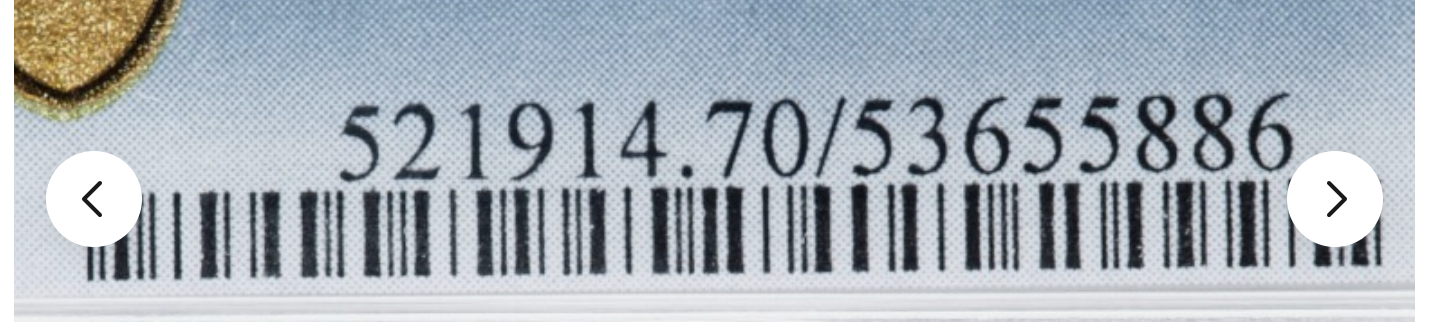
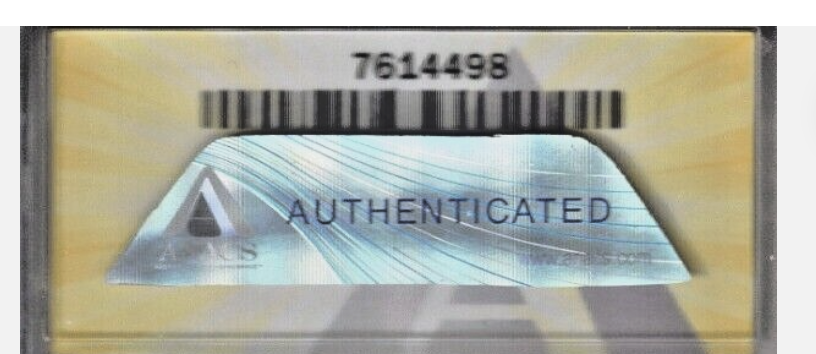
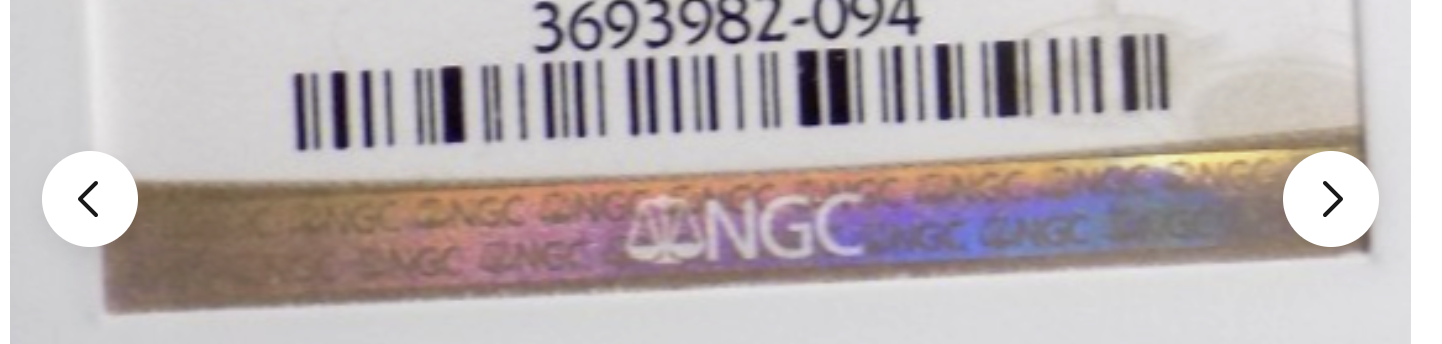
We get a lot of information on coins from these slab cert. numbers, (grades, population, pricing, etc..) I've never scanned one of these barcodes. I'm not even sure if I can. Are these barcodes for our use or just for the grading services? Is the information on the barcodes the same information from the cert. numbers?
Is there a reason the date the coin was encapsulated, is not a part of this information? I think including the date the coin was slabbed, would help us and answer many questions about these coins.
0
Comments
You can scan those labels with your cell phone, but mine always likes the QR code on the back of a PCGS slab better.
Llamas and alpacas are camels. They aren't like camels, or related. They are camels. When was anyone going to tell me this?! How long had Bill Nye been holding out on us?
Hmmm, okay thanks for that. So is the information on the cert number the same as the barcode information?
Yes. You can't embed an infinite amount of information in a barcofe.
https://en.wikipedia.org/wiki/Barcode
All comments reflect the opinion of the author, even when irrefutably accurate.
Thank you for that. I'm not asking for an infinite amount of information. I'm just asking if the same information from a cert number search is the same that's on the barcode information. But I'd really like to know why the date the coin was slabbed isn't available.
They don't record that information in the public database. The public information is all in the coinfacts page.
I don't know why they don't record the date. However, i think that date has no value other than a negative inference about grading standards. Does anyone really care if the coin was graded on December 12, 2025 or on November 11, 2025?
All comments reflect the opinion of the author, even when irrefutably accurate.
Yea it's going to be the same info from the cert lookup if you scan the barcode. Same if you entered the number into the cert lookup.
Llamas and alpacas are camels. They aren't like camels, or related. They are camels. When was anyone going to tell me this?! How long had Bill Nye been holding out on us?
My take is that there is a general consensus that grading was better, or more conservative, or more accurate if done long ago. There’s some value to be had in not providing that information. The ambiguity may also slightly encourage more submissions, and that would be beneficial to our host.
Does anyone really care if the coin was graded on December 12, 2025 or on November 11, 2025? Very funny!! 😂
I'm not looking for negative inference about grading standards. The subject of when a coin was graded has been mentioned in this forum many times over the years.
For example: A slabbed coin that's been straight graded.. You and I look at that coin and we both agree there is "obvious" corrosion and environmental damage on the coin.. Was that coin straight graded that way??.. We don't think so! The coin deteriorated inside the slab over the years. It would be interesting to know how long that process took... Wouldn't you agree?
How much additional effort or money would it take to add the coins slab date to the certification information?.. I say none. But you're probably right. The grading services might view it as some kind of liability thing... Who knows!
https://www.pcgs.com/barcode
No.
All comments reflect the opinion of the author, even when irrefutably accurate.
The issue of coins changing in the holder would be better solved with an image. It does not have to be a glorified photo (like TrueViews of old) but it needs to be good enough. Unfortunately it is too late to go back to cover all the slabbed coins without photos and it does not seem like some companies want to make the image standard on all coins going forward.
How about this one? Do you think back then our host would have straight graded this?
Coins do change in holders but as mentioned, knowing the date of certification won't tell us enough information. The rattler did change in the holder but knowing that it was slabbed in 1987 vs 1989 would not tell us much. It could have been poorly dipped and changed soon after or it could have been stored in a poor environment in the last few years and changed relatively recently.
1D (one-dimensional) bar codes have limited information capacity.
2D (two-dimensional) bar codes, such as the QR code, have more information but increase in size with more information content.
A QR code typically redirects to a web page (as does the code below and NGC's enhanced code); it's a static query.
Take this URL: https://www.pcgs.com/cert/1080014
The enhanced QR code throws a random bit of data into the page name, so you can't sequentially spider the site. But frequently, the "random" data isn't really random (it complicates the website) but is a hash of data, such as the certification # and other items. Not easy to spider, but once you know the scheme, it's doable.
The NFC chip generates the same query, except that the random data changes over time. If you grab the URL now (via, say, a packet sniffer), it'll no longer be valid in 5 minutes.
I posted a datagrab from the chip here: https://forums.collectors.com/discussion/comment/12558059/#Comment_12558059
ANA 50+ year/Life Member (now "Emeritus")
Author: 3rd Edition of the SampleSlabs book, https://sampleslabs.info/
I've reverse-engineered bar codes for PCGS, NGC, CACG, and ANACS for simplifying data entry for my attribution service. This includes inferring the grading service from the format of the bar code. Most, if not all, contain a coin number, grade, and serial number. Over time, some companies changed the format of their bar codes, and not all companies use the same number of digits. It has varied over time from 16 to 24 digits, always an even number. Once in a while, my software confuses NGC and ANACS barcodes, with old ANACS ones being misinterpreted most often. I'll have to see if there's a more robust test I can use to resolve this. Obviously, there was no concern across the industry to standardize anything or identify the grading service. Even if they decided to do this today, there would still millions of slabs with legacy bar code formats.
A timestamp is never present. Originally, it was not meant to matter when a coin was graded. If I recall, PCGS dealers were admonished to not consider that when making sight-unseen offers way back when.
Keeper of the VAM Catalog • Professional Coin Imaging • Prime Number Set • World Coins in Early America • British Trade Dollars • Variety Attribution
Thanks for that John! 👍
Interestingly, this is one area where the real holders are generally quite distinct from those that are not genuine. Unfortunately, they will get to that eventually, or maybe not since they may really want to target the uninformed with bad material.