Looking for examples of 18 mm medalets, circa 1860-1885
 jonathanb
Posts: 4,167 ✭✭✭✭✭
jonathanb
Posts: 4,167 ✭✭✭✭✭
(I made this comment in another thread. I'm going to bump it into a thread of its own.)
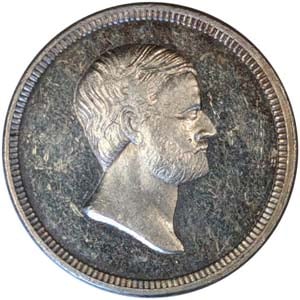
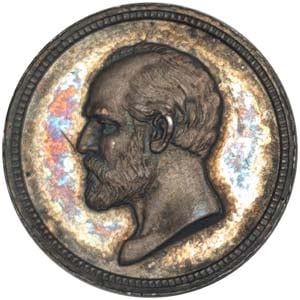
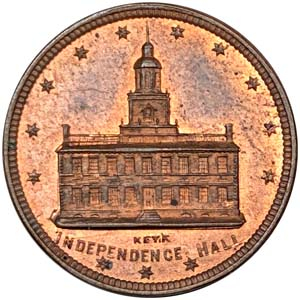
I'm working on a study of 18 mm medalets struck by the US Mint, William Key, and George Soley. So far I've found about 150 varieties. Unfortunately, there are lots of similar dies that were struck in lots and lots of combinations. This is a case where I don't know what I don't know.
If you have examples of 18 mm medalets and you'd like to share pictures with me, I'd love to see if you have something I don't know about. Responding to this thread is fine, or a PM would work also.
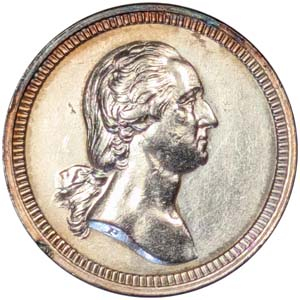
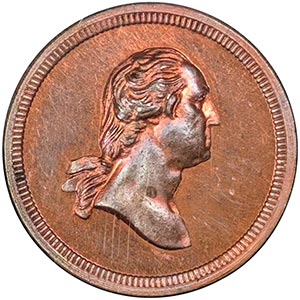
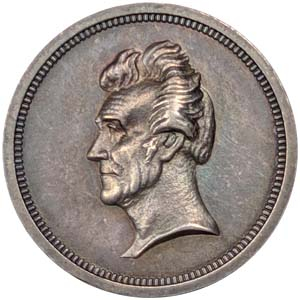
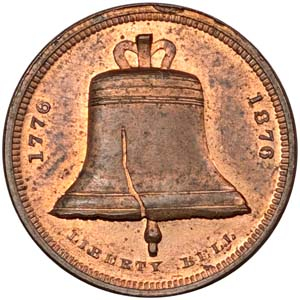
I'll attach some sample pictures in case they jog someone's memory. "Hey, I think I have one of those..." Or even better, "Hey, I have something sort of like that, but different..."
Thanks!
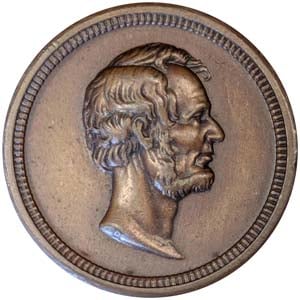
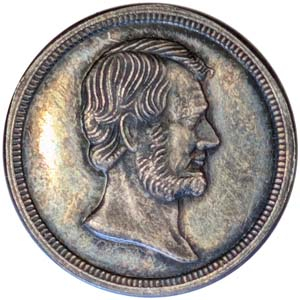
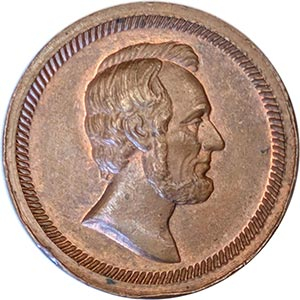
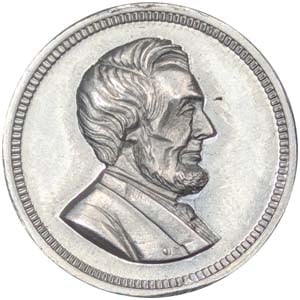
Comments
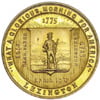
EDITED TO ADD: This is an example of a Soley medal. However it is 13mm, not 18mm as @jonathanb is collecting.
This project is long overdue. Glad you’re taking it on. I will have to see if I have anything of interest!
@SeattleSlammer reminded me that I have an example, then I saw your post here... I bought this one on a whim probably 10 years ago and never did any research. It's sitting with a few other neat pieces in a padded flip box. The reverse may be interesting to you...
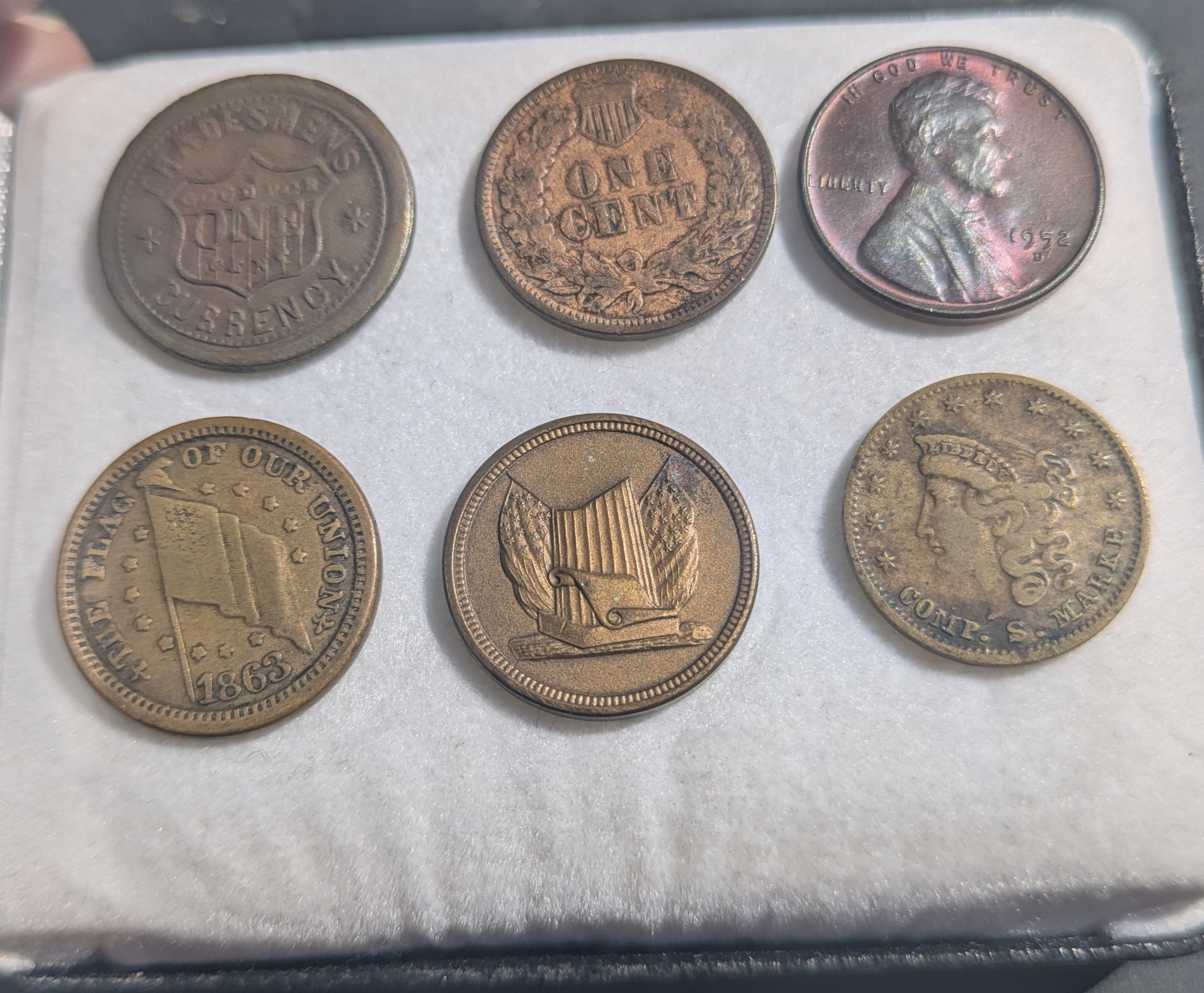
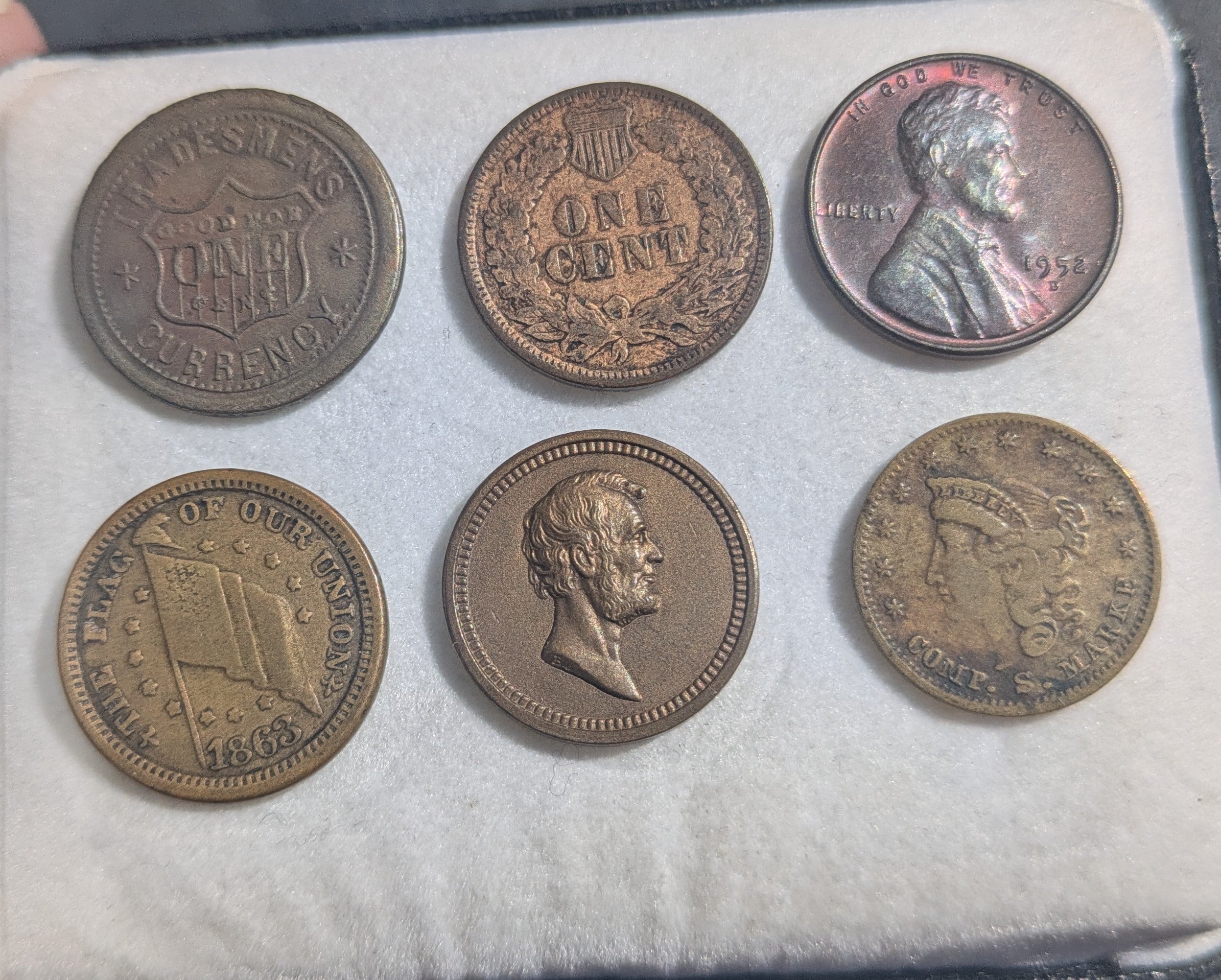
Thanks, @Meltdown. That's the "normal" Julian-listed variety PR-38. There are at least 4 other Lincoln dies that I know of that were also paired with a Broken Column reverse. This is the only pairing that I've seen used on 20th century restrikes such as yours.
Julian also lists PR-37 as a variety with an incuse P on Lincoln's truncation. I'm pretty confident that variety doesn't actually exist, and was one of the few errors in Julian.
Awww. Mine's a re-strike? 😩
Yes, sorry. That's the typical color for restrikes. In my head I call it sort of beige. The originals are much darker.
The originals were also struck with reflective, proof-like surfaces. That part is hard to tell in a picture. If you look at yours in hand, you should be able to see that the fields are matte or "pebbly". In extreme cases the recessed areas in the fields may capture some dirt and you'll be able to see that texture even in pictures. This one from Heritage (https://coins.ha.com/itm/u.s.-mint-medals/lincoln-broken-column-medal-20th-century-restrike-ms67-ngc-julian-pr-38-bronze/a/1158-12575.s shows the matte surfaces pretty clearly in the pictures, especially on the reverse.
My old LCS has a couple. I know I took photos of them when I was helping out there. I'll see if I can locate them at some point.
Custom album maker and numismatic photographer.
Need a personalized album made? Design it on the website below and I'll build it for you.
https://www.donahuenumismatics.com/.
Hi
I'm a new member and I have been trying to learn more about a medlet I have that fits this category.
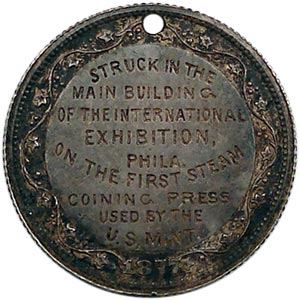
I noticed this thread and also that the obverse of my medlet matches the one second from left in the third row of the picture of medlets posted by jonathanb. Any information would be appreciated. For example, is it authentic, who made it, and is it common?
My medlet measures 18.64mm in diameter, 1.86mm thick and weighs 3.54g. I plan to have it's composition tested but do not have results yet. It came to me as part of a collection I purchased some time ago and the original owner has passed. It was packaged in a coin envelope and marked silver.
Nice pictures!
That medal is mostly self-explanatory, and your pictures are good enough that the explanation is actually readable. George B. Soley, a diesinker at the US Mint, bought an obsolete coining press and used it to strike his own medals at the 1876 Centennial Exhibition and elsewhere.
These medals were made as souvenirs, and they made a lot of them. That means that they're fairly common relative to other medals of the period, while still rare in an absolute sense.
I found one on eBay at https://www.ebay.com/itm/236819997792. That one has been listed since May, and it hasn't found a buyer at $89, so apparently it's worth less than that.
I see no reason to doubt that your example is authentic. There's some chance that yours is silver-plated brass. If you think yours is silver, you're probably right. Authenticity isn't a concern for these pieces. There are enough examples that it's not worth anyone's time to counterfeit them.
Welcome to the board!
Jonathanb - thank you for your comments.
From the research I have done it seemed that George Soley only made 13mm medals but it sounds like I may be wrong on that. Is there a way to know if this medal was by Soley or if not him the who?
Also, my medal is dated 1877 and as you say the Centennial exhibition was in 1876. I did find an excerpt in a Pennsylvania newspaper from 1877 that indicated that an international exhibition was held in the main building in 1877 as well which fits the inscription and date on my medal.
Thank you for the ebay link. That does look like mine although the picture quality isn't great.
I also found a picture of a medal with the same inscriptions and date as mine at the online portal for the American history section of the Smithsonian but in much better condition. It's apparently part of the numismatic collections. The details offered by the portal are scant at best so I messaged the portal to ask if more was available. I'm doubtful of a response but worth a try.
I would provide a link but I'm not sure what the policy is especially for newcomers like me.
My medal does look like it could be silver gilt but I'll know more when I have it analyzed. That will take some time as I don't travel easily.
Again, thank you for the information and I will add to this thread as I learn more. I hope you will also.
Soley made all sorts of medals in all sorts of sizes. There have been some earlier threads. See for example:
I noticed recently that the Smithsonian has moved most of their pictures to the public domain, so not only is it ok to add links, you can copy the images themselves when they are marked with Metadata Usage = CC0. I think that's a recent policy change, probably in the last year. I expect that you were looking at https://www.si.edu/object/lords-prayer-medal-united-states-1877:nmah_1095269. That example is brass. I like your silver one better.
You can also find more info in Abler's reference on Centennial medals, at https://www.centennialmedals.com/page3. Yours is Abler 1440, in the "Struck at the Exhibition" section).
jonathanb thank you for the forum links. I also noticed the post where your book is discussed. Are you still planning to publish?
The Smithsonian example you pointed out is exactly the one I was referring to also. It turns out I did receive an email from one of the curators at the Smithsonian today. No new information but I plan to send an email back.
The Abler's reference was just perfect. I still want to read it over more thoroughly but the example you mentioned looks exactly right. It is bronze though. I noticed the trade card reference pictures in the paragraph above 1440 mentions both silver and plated-silver versions were made. If mine turns out to be either I may have an undocumented version of 1440. Would you agree?
In the Abler 1440 description it mentions 1876 in the description of the reverse? I'm not sure what that's about. Also, I am not sure I am convinced that I see the large beads mentioned in the reverse description either. Can you straighten me out?
Again, I greatly appreciate your help and the Abler reference is a great resource and a keeper for sure. Even though I only have one of this type of small medal.
I'm still planning to publish. I thought I was done. Then I found something else to add. Then I found something else. I'm going to spend a bunch more hours tonight chasing another thread. When I publish, I'd like to have something that can last for a while without a pile of immediate corrections. But yes, I'd also like to get done enough to publish at all.
These Struck in the Main Building / Lord's Prayer medalets were struck in a bunch of compositions in general. That includes brass, silver, and silver-plated brass. Literally yes, Abler only lists 1440 in bronze (I'd call it brass).
a silver or silver-plated version doesn't surprise me at all. Some of these were also struck on seated liberty dimes, although I think that yours wasn't one of them. I don't know of anyone who has studied these more than Abler, and you can see that his data isn't complete either.
The mention of 1876 in the description has to be a copy-and-paste typo from somewhere else. There's no 1876. The mention of large beads is pretty definitely a copy-and-paste typo from Abler 1450 on the next page. There are other typos in Abler. I'd recommend going by the pictures for these.
I can't tell you how many typos I've found in my own draft, some of them bad enough to change the meaning of the listings. AI is very good at spotting many types of typos. I certainly can't tell you how many typos I've missed!
i would be concerned that a xray metallic test would give silver as the primary metal on a plated piece.
best to use a specific gravity test
FWIW, I tested several dozen plated medals from this period. See results and lots of discussion at https://www.so-calleddollars.com/XRF_results.html.
You're right that specific gravity gives the most accurate results when differentiating solid silver from silver-plated pieces. It seems that silver does something wonky with XRF. The values for silver consistently read higher than expected not just for silver-plated pieces but also for regular silver coinage where we can be fairly confident that the .900 fine silver coins truly are .900 fine. I don't understand why silver gives surprising results. Other types of plating (especially gold plating) give results that are much more reasonable.
That said, I expect that XRF results would be just fine in this case. These pieces did not have a thick plating. In fact, I've seen examples where the plating is worn through even without much wear overall.
@jonathanb and @MsMorrisine I want to thank you for your comments. Perhaps I can try to summarize my takeaways for now. Pls. comment if you'd like.
@jonathanb Good luck with your book!
I believe that Abler 1440 is the correct attribution for the example I have. It's composition is yet to be determined perhaps by both XRF and specific gravity testing both of which I need to learn more about. I want to understand more about the capabilities and limitations of each method.
@jonathanb I read your reference on XRF testing of So-Called dollars which I found to be very interesting and informative. I was also impressed with the quality of the images presented. I recommend it as worthwhile reading. You've been a wealth of information and I appreciate it.
@fathom That's a really nice medal you have. Great to see it.
@jonathanb thank you for the additional insights into the Abler 1440 attribution. The centennial medal reference is very helpful. I also enjoyed reading your work on XRF testing of So-Called dollars. It's very well done. Thank you. Also, have you decided how availability of your book would be announced? I'd be interested in knowing when it becomes available.
@MsMorrisine I also appreciate your comments on using SG testing as an alternative methodology. I don't have the suspension type scale capability at the moment but it's an investment worth considering. Thank you.
Apologize for the "duplicate" posts... apparently my posts were being classified as spam but I think that is fixed now.
It sounds like there isn't a "right" way to do book announcements. I suppose I'll post something here, and I'll see what it takes to get an announcement in E-Sylum. It's worth subscribing to E-Sylum if you're not already a subscriber. It's free, see http://e-sylum.org.
As for timing, "soon but not today". I made a bunch of edits yesterday, and I might be able to upgrade one of the pictures over the weekend. I'd like to go at least a few days without making changes, before I pretend that I'm done. :-)
I'll do that thanks!
I just caught up to this thread (been away on a project) & can add what I have in my current show inventory:
From top left:
1. GW-447 (PR-28)
2. GW-448 (PR-29) (B-223A)
3. GW-448
4. GW-468
5. GW-470
6. GW-470 (B-403)
Also a trio of slabs:
GW-448 White Metal (PR-29)
GW-448 Silver (PR-29)
Julian PR-33
I"m sure there are other Soley, Key & Mint silvers hidden back away in the boxes but these were what was readily available.
Very nice... and also very nice that you didn't spring any surprises on me. :-)
I agree that your #7 is Cunningham 22-460S. Very few people realize there are multiple varieties of the Lincoln / Broken Column medalets. Even fewer can to tell them apart, considering how few pictures are in the Cunningham and King references.
Did you notice there are two different Jackson dies? Look at the tip of the bust. As far as I can tell, all examples of PR-28 and PR-33 have a squared truncation, while all examples of PR-29 have a rounded truncation. There's a variety similar to PR-29 that has a rounded bust on Jackson, and a different Washington bust signed AP rather than P as on yours.
Your #9 is PR-26 but it isn't GW-444. PR-26 includes all of the undraped Washington / Born, Died medalets, without distinction. Musante identified several different obverses and reverses, but he missed this pairing that has the Washington bust with P on the truncation and the Born, Died reverse with small letters.
The first slab pic is the most interesting. You call it GW-448 White Metal (PR-29). In fact, it's not GW-448 and it's also not PR-29. It's fully unlisted -- not in Julian or Baker or Musante either. The Washington die with diagonal denticles is traditionally attributed to George Soley, and was almost certainly used outside of the mint. That's the same die that was used on your #4-6 with the Centennial reverses. This variety is probably the rarest of any of yours, although it gets basically no premium when it comes to price.
@jonathanb I finally received the XRF analysis results for the 1877 Lord's Prayer (Abler 1440) medal I posted earlier in this thread.
Cu 82.34 %
Zn 13.18 %
Ag 4.28 %
I am thinking it is a silver-plated brass specimen. Would you agree?
The equipment used was the VantaT GX Precious Metal Analyzer (XRF)
If you ignore the silver, "the rest" is 86% copper, 14% zinc. That's pretty close to the 85/15 values that are typical for brass.
I see no reason to doubt that yours is silver plated brass.
I'm as done as I'm going to get on the medalets book. It's live now on Amazon: https://www.amazon.com/dp/B0HCRG55WR
I've received my own copy, and I'm happy with the production quality. There's a "Read sample" button below the cover images on the Amazon page that will let you read the first 20 pages online. That gets through almost all of the discussion on US Mint medals even though it doesn't show any of the main catalog pages. I've included a few additional interior pages (at lower resolution, unfortunately) a bit further down on the listing.
The "Read sample" button is only visible if you access Amazon from a desktop or laptop computer. It isn't available on a phone, either from the Amazon app or a regular mobile web browser. That's apparently just the way that Amazon does things; the button isn't available on a phone for other books either.
I'm working on a writeup of what I learned in the process of self-publishing a book on Amazon. I'll start a new thread when I'm done with those thoughts.
Now I start counting how many examples I missed! :-}
@jonathanb Congratulations on your book! It's a major accomplishment.
Using a laptop running Windows 10 and the Firefox browser I went to Amazon, found your book and tried the Read Sample button. The following popped up in the browser and I don't see how to navigate to read a sample. Perhaps you can advise... thanks
That looks like a bug in Firefox, but I don't have Windows 10 to check. Even if I'm right, I don't know what to do about it. See if there's an update to Firefox that you can download? Try changing the size or shape or magnification of the browser window? Do you have an option to check with another browser?
You might be able to see a bit more by using the page up / page down keys. That's not going to help you see the right third of the pages, though.
Sorry!
The Microsoft Edge browser works. Sorry, I should have thought of that.