@NJCoin said:
In short, I want them to cater to collectors. Not flippers, and not elitists looking for instant rarities. Nothing I have ever suggested was a "bomb," or would be for anyone other than flippers. Certainly not for the Mint, that could often sell a lot more of whatever at whatever price they are charging if they didn't create flips by restricting quantity.
The mint has the bullion program for people that want that. You can go to any dealer and buy all you want. That is not what the collector market is meant to be.
Let it sink in for once.
The mint tried it your way and it bombed. End of story.
And why did you initially claim nobody would want the liberty bells? Because they weren't round? LOLOLOL
@NJCoin said:
That's going to seriously limit the flipping market.
Just a free option to send them back to the Mint, per the reseller article you helpfully posted. Hard to believe there is going to be organic demand for 6K of these at these prices. Or higher, which will be the plan for many all hot and bothered over these. TBD.
The mint tried it your way and it bombed. Get over it.
How so?
No particular order, not necessarily exclusive to your perceived Mint ideals, and not the only examples of bombed Mint Policy.
1) Strike the full stated Mintage Limits... (bombed)
2) Price the core sets (proof/unc) so low, for so long that net income/seigniorage is zero or in the negative for stated product... (bombed)
3) Create unnecessary front office departments & jobs, ie; DEI/Equity - causing an unnecessarily high Selling, General and Administrative (SG&A) expense percentage... (bombed)
4) Fail to properly survey or to provide better options to collectors as to what they want, ie: BOM sets, Comics... (bombed)
🤣🤣🤣
FINALLY, some detail, But I', not sure what any of this has to do with me.
Who ever said that, if demand doesn't warrant? And what exactly is a "bomb" if it does?
Who ever lost money selling proof or uncirculated sets? To my knowledge, the only things the Mint makes that lose money are cents and nickels for circulation, and commemoratives where Congress dictates subjects and mintages. The Mint as a whole generates a TON of money for the Treasury.
What the hell does any of this have to do with me?
See #3.
Before the Mint raised the prices about 5 years ago, they did lose money every year on proof and uncirculated coin sets. They don't anymore.
Yeah. See my response to the other comment. Only due to overhead and other fixed cost allocations that would need to be reallocated to other product anyway.
Not sure what kind of professor you are, but if it was in business, you'd know that production and pricing decisions are made based on marginal costs. Not fixed costs.
What the Mint is presently doing is squeezing customers, and creating a flip, but artificially reducing supply while increasing price. Especially now with the cents, they could easily sell a lot more, at a far lower price, and still hit their revenue and profit targets. They choose not to.
And, accusing me of advocating that they make more of anything than they could easily sell is simply not true. My complaint is when they post a mintage limit of x, sell out x-y in 10 minutes, and then don't make more.
Not that they should make 50K of something when they make 30K and only sell 20K. Never in a million years would I want them flooding the market with anything. I just want them satisfying the market, up to published limits, while not artificially restricting limits far below organic demand.
In short, I want them to cater to collectors. Not flippers, and not elitists looking for instant rarities. Nothing I have ever suggested was a "bomb," or would be for anyone other than flippers. Certainly not for the Mint, that could often sell a lot more of whatever at whatever price they are charging if they didn't create flips by restricting quantity.
Dude...I just pointed out what they were referring to. Do you have to expand everything to a novel?
🤣🤣🤣🤣🤣🤣🤣
@NJCoin said:
That's going to seriously limit the flipping market.
Just a free option to send them back to the Mint, per the reseller article you helpfully posted. Hard to believe there is going to be organic demand for 6K of these at these prices. Or higher, which will be the plan for many all hot and bothered over these. TBD.
The mint tried it your way and it bombed. Get over it.
How so?
No particular order, not necessarily exclusive to your perceived Mint ideals, and not the only examples of bombed Mint Policy.
1) Strike the full stated Mintage Limits... (bombed)
2) Price the core sets (proof/unc) so low, for so long that net income/seigniorage is zero or in the negative for stated product... (bombed)
3) Create unnecessary front office departments & jobs, ie; DEI/Equity - causing an unnecessarily high Selling, General and Administrative (SG&A) expense percentage... (bombed)
4) Fail to properly survey or to provide better options to collectors as to what they want, ie: BOM sets, Comics... (bombed)
🤣🤣🤣
FINALLY, some detail, But I', not sure what any of this has to do with me.
Who ever said that, if demand doesn't warrant? And what exactly is a "bomb" if it does?
Who ever lost money selling proof or uncirculated sets? To my knowledge, the only things the Mint makes that lose money are cents and nickels for circulation, and commemoratives where Congress dictates subjects and mintages. The Mint as a whole generates a TON of money for the Treasury.
What the hell does any of this have to do with me?
See #3.
Before the Mint raised the prices about 5 years ago, they did lose money every year on proof and uncirculated coin sets. They don't anymore.
Yeah. See my response to the other comment. Only due to overhead and other fixed cost allocations that would need to be reallocated to other product anyway.
Not sure what kind of professor you are, but if it was in business, you'd know that production and pricing decisions are made based on marginal costs. Not fixed costs.
What the Mint is presently doing is squeezing customers, and creating a flip, but artificially reducing supply while increasing price. Especially now with the cents, they could easily sell a lot more, at a far lower price, and still hit their revenue and profit targets. They choose not to.
And, accusing me of advocating that they make more of anything than they could easily sell is simply not true. My complaint is when they post a mintage limit of x, sell out x-y in 10 minutes, and then don't make more.
Not that they should make 50K of something when they make 30K and only sell 20K. Never in a million years would I want them flooding the market with anything. I just want them satisfying the market, up to published limits, while not artificially restricting limits far below organic demand.
In short, I want them to cater to collectors. Not flippers, and not elitists looking for instant rarities. Nothing I have ever suggested was a "bomb," or would be for anyone other than flippers. Certainly not for the Mint, that could often sell a lot more of whatever at whatever price they are charging if they didn't create flips by restricting quantity.
You originally said the mint sets this year were too expensive and they made too many so they wouldn’t do well. Now you’re saying the mint is artificially keeping mintage low on them. LOL 😆
Yes. They are far too expensive. The jury is out on how "well" they did, although, admittedly, they are currently a slight flip so, in spite of all the subscription cancellations, they can sell them all. Not sure how this equates to them doing anything "my way" and it "bombing."
This shows what I ASSUMED. Because it was obvious. Sales revenue exceeds CGS on Annual Core Sets before SG&A allocations.
I can't argue with people who don't understand, but no one running a business makes marginal product or production decisions based on SG&A. Had the Mint not made those core sets at all in 2018, SG&A allocated to them would have been allocated elsewhere, and the Mint would have made exactly $5.9 million less than it actually made.
Period. End of story. Nothing to argue about.
From the table you posted, the precious metal products are clearly the cash cows, and the others are provided as a service. But they did not lose money on a marginal basis on anything in that table. In any year.
And they would have made less money in the aggregate if they only sold precious metal products. This is not complicated, other than to those who do not know how to read and understand a financial statement.
And to those who think they know than me about everything. They don't. Not about this.
This shows what I ASSUMED. Because it was obvious. Sales revenue exceeds CGS on Annual Core Sets before SG&A allocations.
I can't argue with people who don't understand, but no one running a business makes marginal product or production decisions based on SG&A. Had the Mint not made those core sets at all in 2018, SG&A allocated to them would have been allocated elsewhere, and the Mint would have made exactly $5.9 million less than it actually made.
Period. End of story. Nothing to argue about.
From the table you posted, the precious metal products are clearly the cash cows, and the others are provided as a service. But they did not lose money on a marginal basis on anything in that table. In any year.
And they would have made less money in the aggregate if they only sold precious metal products. This is not complicated, other than to those who do not know how to read and understand a financial statement.
And to those who think they know than me about everything. They don't. Not about this.
NO BUSINESS would apply zero overhead to the product. And it is an assumption that you can reallocate those resources. And you have to apply zero overhead to turn a profit Nevada the cost of goods sold is barely lower than gross revenue.
Ah... who asked you to argue with anyone?
With all due respect, that is patently untrue. Overhead obviously has to be accounted for when running a business.
But should not go into the calculus at all when making marginal production decisions. A well run business will do anything on the margin if it has capacity and is profitable on a marginal basis, without taking overhead into account. This is entire basis of cost accounting.
The Mint more than covers its numismatic overhead with the bullion program. EVERYTHING else is gravy. Including uncirculated sets. Whether they sell 2 million of them at $30 each, or 300,000 of them at $200 each.
Keep in mind, they are also a government agency that has a mandate to manufacture circulating coinage, whether or not they can do so at a profit. Due to seigniorage, of course, this is never a concern, even if they are forced to take relatively modest losses on cents and nickels. Keep in mind that the federal government runs a massive annual deficit, and very few agencies actually cover their costs, let alone turn a profit like the Mint does. The numismatic program only adds to it.
So all this discussion of profitability of the numismatic program is really just a red herring. Because, with or without a numismatic program, they have significant overhead. And, with or without a numismatic program, they have it covered many times over.
And, even if they didn't, they would still function with an appropriation from Congress. As I have been saying, repeatedly over the years, people here can play whatever games they want with government accounting to craft an argument, but the table you posted shows nothing they sell to collectors loses money on a marginal basis.
Trust me on this -- right now they are being pigs while not actually modeling out the price and quantity at which they could maximize profit. Given that cents are in demand, and only available in the sets, they could sell a lot more at a lot lower price, and make more money for themselves while destroying the flip. For whatever reason, they choose not to.
"The Mint as a whole generates a TON of money for the Treasury."
Lolol
Director Gibson = 6/17/22 - 3/31/25... She did it your way = (bombed)
.
??? Not sure what this is supposed to show. Not sure exactly what "my way" is. Not sure why I get blame for 2025, after they significantly jacked up prices in the preceding years, and don't get credit for 2021 and 2022, before they did so.
Sorry, but you seem to just be hurling crap my way to see if anything sticks.
This shows what I ASSUMED. Because it was obvious. Sales revenue exceeds CGS on Annual Core Sets before SG&A allocations.
I can't argue with people who don't understand, but no one running a business makes marginal product or production decisions based on SG&A. Had the Mint not made those core sets at all in 2018, SG&A allocated to them would have been allocated elsewhere, and the Mint would have made exactly $5.9 million less than it actually made.
Period. End of story. Nothing to argue about.
From the table you posted, the precious metal products are clearly the cash cows, and the others are provided as a service. But they did not lose money on a marginal basis on anything in that table. In any year.
And they would have made less money in the aggregate if they only sold precious metal products. This is not complicated, other than to those who do not know how to read and understand a financial statement.
And to those who think they know than me about everything. They don't. Not about this.
NO BUSINESS would apply zero overhead to the product. And it is an assumption that you can reallocate those resources. And you have to apply zero overhead to turn a profit Nevada the cost of goods sold is barely lower than gross revenue.
Ah... who asked you to argue with anyone?
With all due respect, that is patently untrue. Overhead obviously has to be accounted for when running a business.
But should not go into the calculus at all when making marginal production decisions. A well run business will do anything on the margin if it has capacity and is profitable on a marginal basis, without taking overhead into account. This is entire basis of cost accounting.
The Mint more than covers its overhead with the bullion program. EVERYTHING else is gravy. Including uncirculated sets. Whether they sell 2 million of them at $30 each, or 300,000 of them at $200 each.
Trust me on this -- right now they are being pigs while not actually modeling out the price and quantity at which they could maximize profit. Given that cents are in demand, and only available in the sets, they could sell a lot more at a lot lower price, and make more money for themselves while destroying the flip. For whatever reason, they choose not to.
Do they strike circulation coins on the proof presses?
Sigh... another assumption. They sold 300,000 sets at $125. Do you really think they would have sold 1.5 million sets at $25. [Hint. Look at last year's sales or 2024.]
If they wanted to destroy the flip, they could have sold the sets at $200 instead of $125. It appears they priced them too cheaply.
Yes, they would have sold a lot of sets. I can't look at 2024, because cents were widely available in circulation. Same with 2025, plus they short struck the sets.
There is nothing to look at, because has never been a year in which they had coins in the sets that were only available in the sets, and minted the sets to demand.
As far as proof presses go, I honestly don't know enough about how coins are made to know whether or not they are special, or how much they cost relative to how many coins they produce.
I know the process is different, but I don't know whether or not they could be repurposed if proof coins were not made, or what portion of overhead or SG&A they represent. But, sure, if they couldn't be used to make profitable precious metal coins, and couldn't be used for anything else, and had to be purchased special to make base metal proof sets, then, yeah, you'd have to take their cost into account when deciding whether or not to make base metal proof sets. But that is not the case, so it's just another "anything is possible" argument from you.
This shows what I ASSUMED. Because it was obvious. Sales revenue exceeds CGS on Annual Core Sets before SG&A allocations.
I can't argue with people who don't understand, but no one running a business makes marginal product or production decisions based on SG&A. Had the Mint not made those core sets at all in 2018, SG&A allocated to them would have been allocated elsewhere, and the Mint would have made exactly $5.9 million less than it actually made.
Period. End of story. Nothing to argue about.
From the table you posted, the precious metal products are clearly the cash cows, and the others are provided as a service. But they did not lose money on a marginal basis on anything in that table. In any year.
And they would have made less money in the aggregate if they only sold precious metal products. This is not complicated, other than to those who do not know how to read and understand a financial statement.
And to those who think they know than me about everything. They don't. Not about this.
NO BUSINESS would apply zero overhead to the product. And it is an assumption that you can reallocate those resources. And you have to apply zero overhead to turn a profit Nevada the cost of goods sold is barely lower than gross revenue.
Ah... who asked you to argue with anyone?
With all due respect, that is patently untrue. Overhead obviously has to be accounted for when running a business.
But should not go into the calculus at all when making marginal production decisions. A well run business will do anything on the margin if it has capacity and is profitable on a marginal basis, without taking overhead into account. This is entire basis of cost accounting.
The Mint more than covers its overhead with the bullion program. EVERYTHING else is gravy. Including uncirculated sets. Whether they sell 2 million of them at $30 each, or 300,000 of them at $200 each.
Trust me on this -- right now they are being pigs while not actually modeling out the price and quantity at which they could maximize profit. Given that cents are in demand, and only available in the sets, they could sell a lot more at a lot lower price, and make more money for themselves while destroying the flip. For whatever reason, they choose not to.
Do they strike circulation coins on the proof presses?
Sigh... another assumption. They sold 300,000 sets at $125. Do you really think they would have sold 1.5 million sets at $25. [Hint. Look at last year's sales or 2024.]
If they wanted to destroy the flip, they could have sold the sets at $200 instead of $125. It appears they priced them too cheaply.
Yes, they would have sold a lot of sets. I can't look at 2024, because cents were widely available in circulation. Same with 2025, plus they short struck the cents.
There is nothing to look at, because has never been a year in which they had coins in the sets that were only available in the sets, and minted the sets to demand.
As far as proof presses go, I honestly don't know enough about how coins are made to know whether or not they are special, or how much they cost relative to how many coins they produce.
I know the process is different, but I don't know whether or not they could be repurposed if proof coins were not made, or what portion of overhead or SG&A they represent. But, sure, if they couldn't be used to make profitable precious metal coins, and couldn't be used for anything else, and had to be purchased special to make base metal proof sets, then, yeah, you'd have to take their cost into account when deciding whether or not to make base metal proof sets. But that is not the case, so it's just another "anything is possible" argument from you.
You can look at 2019-W cents. It's unlikely there are 1.5 million cent collectors.
I have never once said "anything is possible". I have suggested, on occasion, that there is now than one probable explanation. Only a moron would disagree with that.
There are always multiple "possible" explanations for anything, as you always like to point out, but rarely more than one "probable" one. Only a moron would not understand that.
What do 2019-W cents have to do with this? Are they really a reason the Mint couldn't sell more 2026 sets at a lower price and make more money than they will make selling 300K sets at $124.50 each?
This shows what I ASSUMED. Because it was obvious. Sales revenue exceeds CGS on Annual Core Sets before SG&A allocations.
I can't argue with people who don't understand, but no one running a business makes marginal product or production decisions based on SG&A. Had the Mint not made those core sets at all in 2018, SG&A allocated to them would have been allocated elsewhere, and the Mint would have made exactly $5.9 million less than it actually made.
Period. End of story. Nothing to argue about.
From the table you posted, the precious metal products are clearly the cash cows, and the others are provided as a service. But they did not lose money on a marginal basis on anything in that table. In any year.
And they would have made less money in the aggregate if they only sold precious metal products. This is not complicated, other than to those who do not know how to read and understand a financial statement.
And to those who think they know than me about everything. They don't. Not about this.
NO BUSINESS would apply zero overhead to the product. And it is an assumption that you can reallocate those resources. And you have to apply zero overhead to turn a profit because the cost of goods sold is barely lower than gross revenue.
Ah... who asked you to argue with anyone?
You both are assuming the mint has spare production capacity and resources and don't account for opportunity costs. The ASSUMPTION here is that they could make more than 300k sets. But what if making another 100k sets means not being able to make another higher margin product? There are more factors at play than NJCoin would ever admit.
This shows what I ASSUMED. Because it was obvious. Sales revenue exceeds CGS on Annual Core Sets before SG&A allocations.
I can't argue with people who don't understand, but no one running a business makes marginal product or production decisions based on SG&A. Had the Mint not made those core sets at all in 2018, SG&A allocated to them would have been allocated elsewhere, and the Mint would have made exactly $5.9 million less than it actually made.
Period. End of story. Nothing to argue about.
From the table you posted, the precious metal products are clearly the cash cows, and the others are provided as a service. But they did not lose money on a marginal basis on anything in that table. In any year.
And they would have made less money in the aggregate if they only sold precious metal products. This is not complicated, other than to those who do not know how to read and understand a financial statement.
And to those who think they know than me about everything. They don't. Not about this.
NO BUSINESS would apply zero overhead to the product. And it is an assumption that you can reallocate those resources. And you have to apply zero overhead to turn a profit because the cost of goods sold is barely lower than gross revenue.
Ah... who asked you to argue with anyone?
You both are assuming the mint has spare production capacity and resources and don't account for opportunity costs. The ASSUMPTION here is that they could make more than 300k sets. But what if making another 100k sets means not being able to make another higher margin product? There are more factors at play than NJCoin would ever admit.
Correct. I do think they have a ton of capacity, given they have 4, count 'em 4, production facilities, and demand for circulating coinage is a fraction of what it used to be. In fact, demand for bullion is a fraction of what it was at the peak.
In fact, they have so much spare capacity that it has been reported that they are considering permanently closing one of their production facilities. Absolutely no opportunity costs. They could literally make as much as they could sell of anything they choose to make and sell. The only limit being eventually saturating the market if they just continually flood it with product.
Any other assumption is based on nothing other than saying black because I say white.
This shows what I ASSUMED. Because it was obvious. Sales revenue exceeds CGS on Annual Core Sets before SG&A allocations.
I can't argue with people who don't understand, but no one running a business makes marginal product or production decisions based on SG&A. Had the Mint not made those core sets at all in 2018, SG&A allocated to them would have been allocated elsewhere, and the Mint would have made exactly $5.9 million less than it actually made.
Period. End of story. Nothing to argue about.
From the table you posted, the precious metal products are clearly the cash cows, and the others are provided as a service. But they did not lose money on a marginal basis on anything in that table. In any year.
And they would have made less money in the aggregate if they only sold precious metal products. This is not complicated, other than to those who do not know how to read and understand a financial statement.
And to those who think they know than me about everything. They don't. Not about this.
NO BUSINESS would apply zero overhead to the product. And it is an assumption that you can reallocate those resources. And you have to apply zero overhead to turn a profit because the cost of goods sold is barely lower than gross revenue.
Ah... who asked you to argue with anyone?
You both are assuming the mint has spare production capacity and resources and don't account for opportunity costs. The ASSUMPTION here is that they could make more than 300k sets. But what if making another 100k sets means not being able to make another higher margin product? There are more factors at play than NJCoin would ever admit.
Correct. I do think they have a ton of capacity, given they have 4, count 'em 4, production facilities, and demand for circulating coinage is a fraction of what it used to be. In fact, demand for bullion is a fraction of what it was at the peak.
In fact, they have so much spare capacity that it has been reported that they are considering permanently closing one of their production facilities. Absolutely no opportunity costs. They could literally make as much as they could sell of anything they choose to make and sell. The only limit being eventually saturating the market if they just continually flood it with product.
Any other assumption is based on nothing other than saying black because I say white.
Capacity requires more than just buildings and machines. Raw supplies, Labor of all kinds, Packaging, Shipping are the pieces you ignore to make your point.
This shows what I ASSUMED. Because it was obvious. Sales revenue exceeds CGS on Annual Core Sets before SG&A allocations.
I can't argue with people who don't understand, but no one running a business makes marginal product or production decisions based on SG&A. Had the Mint not made those core sets at all in 2018, SG&A allocated to them would have been allocated elsewhere, and the Mint would have made exactly $5.9 million less than it actually made.
Period. End of story. Nothing to argue about.
From the table you posted, the precious metal products are clearly the cash cows, and the others are provided as a service. But they did not lose money on a marginal basis on anything in that table. In any year.
And they would have made less money in the aggregate if they only sold precious metal products. This is not complicated, other than to those who do not know how to read and understand a financial statement.
And to those who think they know than me about everything. They don't. Not about this.
NO BUSINESS would apply zero overhead to the product. And it is an assumption that you can reallocate those resources. And you have to apply zero overhead to turn a profit because the cost of goods sold is barely lower than gross revenue.
Ah... who asked you to argue with anyone?
You both are assuming the mint has spare production capacity and resources and don't account for opportunity costs. The ASSUMPTION here is that they could make more than 300k sets. But what if making another 100k sets means not being able to make another higher margin product? There are more factors at play than NJCoin would ever admit.
Correct. I do think they have a ton of capacity, given they have 4, count 'em 4, production facilities, and demand for circulating coinage is a fraction of what it used to be. In fact, demand for bullion is a fraction of what it was at the peak.
In fact, they have so much spare capacity that it has been reported that they are considering permanently closing one of their production facilities. Absolutely no opportunity costs. They could literally make as much as they could sell of anything they choose to make and sell. The only limit being eventually saturating the market if they just continually flood it with product.
Any other assumption is based on nothing other than saying black because I say white.
Capacity requires more than just buildings and machines. Raw supplies, Labor of all kinds, Packaging, Shipping are the pieces you ignore to make your point.
Yes. Everything is just so, so complicated.
According to Wikipedia, "Today the United States Mint is largest mint manufacturer in the world, operating across six sites and producing as many as 28 billion coins in a single year.[2] Its largest site is the Philadelphia Mint which covers 650,000 square feet[3] (6 hectares) and can produce 32 million coins per day.[4]"
No way they could pull anything together. The logistics are simply too overwhelming. If you say so. 🤣🤣🤣
According to the latest issued of Coin World, they had to go out and buy a special press just to make these. And then chose to spread the cost over a mere 6,000 coins and medals. Likely with more to come in the future.
Because that's all the time they had in their production schedule. Because that was the most efficient use of capital in acquiring the equipment. Not because they made an intentional decision to do this, but because they had no other choice, but had to press forward anyway, because the world was clamoring for American coins and medals shaped like bells, and the Mint had no choice but to accommodate, no matter how low the potential mintages were. 🤣🤣🤣
Believe what you want, because you can conjure up anything, and then throw it out as a possibility. Yeah, sure "Raw supplies, Labor of all kinds, Packaging, Shipping."
Or maybe, just maybe, intentional decisions, because the US Mint really, really, really, with just a little planning, could go out and get a brand new press they never used before, secure odd shaped planchets in whatever quantities it wants, and then put its workforce to work and secure packaging and shipping for whatever it wants. In whatever quantities it wants. It is the largest manufacturer of coinage on the globe. But its hands are tied due to raw supplies, packaging, labor and shipping.
This shows what I ASSUMED. Because it was obvious. Sales revenue exceeds CGS on Annual Core Sets before SG&A allocations.
I can't argue with people who don't understand, but no one running a business makes marginal product or production decisions based on SG&A. Had the Mint not made those core sets at all in 2018, SG&A allocated to them would have been allocated elsewhere, and the Mint would have made exactly $5.9 million less than it actually made.
Period. End of story. Nothing to argue about.
From the table you posted, the precious metal products are clearly the cash cows, and the others are provided as a service. But they did not lose money on a marginal basis on anything in that table. In any year.
And they would have made less money in the aggregate if they only sold precious metal products. This is not complicated, other than to those who do not know how to read and understand a financial statement.
And to those who think they know than me about everything. They don't. Not about this.
NO BUSINESS would apply zero overhead to the product. And it is an assumption that you can reallocate those resources. And you have to apply zero overhead to turn a profit because the cost of goods sold is barely lower than gross revenue.
Ah... who asked you to argue with anyone?
You both are assuming the mint has spare production capacity and resources and don't account for opportunity costs. The ASSUMPTION here is that they could make more than 300k sets. But what if making another 100k sets means not being able to make another higher margin product? There are more factors at play than NJCoin would ever admit.
Correct. I do think they have a ton of capacity, given they have 4, count 'em 4, production facilities, and demand for circulating coinage is a fraction of what it used to be. In fact, demand for bullion is a fraction of what it was at the peak.
In fact, they have so much spare capacity that it has been reported that they are considering permanently closing one of their production facilities. Absolutely no opportunity costs. They could literally make as much as they could sell of anything they choose to make and sell. The only limit being eventually saturating the market if they just continually flood it with product.
Any other assumption is based on nothing other than saying black because I say white.
Capacity requires more than just buildings and machines. Raw supplies, Labor of all kinds, Packaging, Shipping are the pieces you ignore to make your point.
Yes. Everything is just so, so complicated.
According to Wikipedia, "Today the United States Mint is largest mint manufacturer in the world, operating across six sites and producing as many as 28 billion coins in a single year.[2] Its largest site is the Philadelphia Mint which covers 650,000 square feet[3] (6 hectares) and can produce 32 million coins per day.[4]"
No way they could pull anything together. The logistics are simply too overwhelming. If you say so. 🤣🤣🤣
According to the latest issued of Coin World, they had to go out and buy a special press just to make these. And then chose to spread the cost over a mere 6,000 coins and medals. Likely with more to come in the future.
Because that's all the time they had in their production schedule. Because that was the most efficient use of capital in acquiring the equipment. Not because they made an intentional decision to do this, but because they had no other choice, but had to press forward anyway, because the world was clamoring for American coins and medals shaped like bells, and the Mint had no choice but to accommodate, no matter how low the potential mintages were. 🤣🤣🤣
Believe what you want, because you can conjure up anything, and then throw it out as a possibility. Yeah, sure "Raw supplies, Labor of all kinds, Packaging, Shipping."
Or maybe, just maybe, intentional decisions, because the US Mint really, really, really, with just a little planning, could go out and get a brand new press they never used before, secure odd shaped planchets in whatever quantities it wants, and then put its workforce to work and secure packaging and shipping for whatever it wants. In whatever quantities it wants. It is the largest manufacturer of coinage on the globe. But its hands are tied due to raw supplies, packaging, labor and shipping.
You might notice the number of backorders this year. It sure doesn't seem like there's a lot of unused production capacity in the numismatic division.
I am obviously not a production manager, so I can't speak to what they are doing, or why. I can say that they can produce 60K of something as easily as 40K. Or 500K as easily as 300K. And they obviously have the capacity to source entirely new planchets, as well as a press to strike them on, when the mood suits them to.
So it's pretty clear they can do whatever they want. I think those backorders are intentional, not by necessity. Almost certainly because they'd rather make people wait than be stuck with unsold inventory.
Maybe they will back away from that in the future, as they see people want everything NOOOOWWWWWWWWWWW, and that the bloom falls off the rose as they make people wait. Costing them sales.
This shows what I ASSUMED. Because it was obvious. Sales revenue exceeds CGS on Annual Core Sets before SG&A allocations.
I can't argue with people who don't understand, but no one running a business makes marginal product or production decisions based on SG&A. Had the Mint not made those core sets at all in 2018, SG&A allocated to them would have been allocated elsewhere, and the Mint would have made exactly $5.9 million less than it actually made.
Period. End of story. Nothing to argue about.
From the table you posted, the precious metal products are clearly the cash cows, and the others are provided as a service. But they did not lose money on a marginal basis on anything in that table. In any year.
And they would have made less money in the aggregate if they only sold precious metal products. This is not complicated, other than to those who do not know how to read and understand a financial statement.
And to those who think they know than me about everything. They don't. Not about this.
NO BUSINESS would apply zero overhead to the product. And it is an assumption that you can reallocate those resources. And you have to apply zero overhead to turn a profit because the cost of goods sold is barely lower than gross revenue.
Ah... who asked you to argue with anyone?
You both are assuming the mint has spare production capacity and resources and don't account for opportunity costs. The ASSUMPTION here is that they could make more than 300k sets. But what if making another 100k sets means not being able to make another higher margin product? There are more factors at play than NJCoin would ever admit.
Correct. I do think they have a ton of capacity, given they have 4, count 'em 4, production facilities, and demand for circulating coinage is a fraction of what it used to be. In fact, demand for bullion is a fraction of what it was at the peak.
In fact, they have so much spare capacity that it has been reported that they are considering permanently closing one of their production facilities. Absolutely no opportunity costs. They could literally make as much as they could sell of anything they choose to make and sell. The only limit being eventually saturating the market if they just continually flood it with product.
Any other assumption is based on nothing other than saying black because I say white.
Capacity requires more than just buildings and machines. Raw supplies, Labor of all kinds, Packaging, Shipping are the pieces you ignore to make your point.
Yes. Everything is just so, so complicated.
According to Wikipedia, "Today the United States Mint is largest mint manufacturer in the world, operating across six sites and producing as many as 28 billion coins in a single year.[2] Its largest site is the Philadelphia Mint which covers 650,000 square feet[3] (6 hectares) and can produce 32 million coins per day.[4]"
No way they could pull anything together. The logistics are simply too overwhelming. If you say so. 🤣🤣🤣
According to the latest issued of Coin World, they had to go out and buy a special press just to make these. And then chose to spread the cost over a mere 6,000 coins and medals. Likely with more to come in the future.
Because that's all the time they had in their production schedule. Because that was the most efficient use of capital in acquiring the equipment. Not because they made an intentional decision to do this, but because they had no other choice, but had to press forward anyway, because the world was clamoring for American coins and medals shaped like bells, and the Mint had no choice but to accommodate, no matter how low the potential mintages were. 🤣🤣🤣
Believe what you want, because you can conjure up anything, and then throw it out as a possibility. Yeah, sure "Raw supplies, Labor of all kinds, Packaging, Shipping."
Or maybe, just maybe, intentional decisions, because the US Mint really, really, really, with just a little planning, could go out and get a brand new press they never used before, secure odd shaped planchets in whatever quantities it wants, and then put its workforce to work and secure packaging and shipping for whatever it wants. In whatever quantities it wants. It is the largest manufacturer of coinage on the globe. But its hands are tied due to raw supplies, packaging, labor and shipping.
You might notice the number of backorders this year. It sure doesn't seem like there's a lot of unused production capacity in the numismatic division.
The Mint has never been busier than now. And that's without producing the 1C for circulation.
One release after another in the circulating and numi divisions.
This shows what I ASSUMED. Because it was obvious. Sales revenue exceeds CGS on Annual Core Sets before SG&A allocations.
I can't argue with people who don't understand, but no one running a business makes marginal product or production decisions based on SG&A. Had the Mint not made those core sets at all in 2018, SG&A allocated to them would have been allocated elsewhere, and the Mint would have made exactly $5.9 million less than it actually made.
Period. End of story. Nothing to argue about.
From the table you posted, the precious metal products are clearly the cash cows, and the others are provided as a service. But they did not lose money on a marginal basis on anything in that table. In any year.
And they would have made less money in the aggregate if they only sold precious metal products. This is not complicated, other than to those who do not know how to read and understand a financial statement.
And to those who think they know than me about everything. They don't. Not about this.
NO BUSINESS would apply zero overhead to the product. And it is an assumption that you can reallocate those resources. And you have to apply zero overhead to turn a profit because the cost of goods sold is barely lower than gross revenue.
Ah... who asked you to argue with anyone?
You both are assuming the mint has spare production capacity and resources and don't account for opportunity costs. The ASSUMPTION here is that they could make more than 300k sets. But what if making another 100k sets means not being able to make another higher margin product? There are more factors at play than NJCoin would ever admit.
Correct. I do think they have a ton of capacity, given they have 4, count 'em 4, production facilities, and demand for circulating coinage is a fraction of what it used to be. In fact, demand for bullion is a fraction of what it was at the peak.
In fact, they have so much spare capacity that it has been reported that they are considering permanently closing one of their production facilities. Absolutely no opportunity costs. They could literally make as much as they could sell of anything they choose to make and sell. The only limit being eventually saturating the market if they just continually flood it with product.
Any other assumption is based on nothing other than saying black because I say white.
Capacity requires more than just buildings and machines. Raw supplies, Labor of all kinds, Packaging, Shipping are the pieces you ignore to make your point.
Yes. Everything is just so, so complicated.
According to Wikipedia, "Today the United States Mint is largest mint manufacturer in the world, operating across six sites and producing as many as 28 billion coins in a single year.[2] Its largest site is the Philadelphia Mint which covers 650,000 square feet[3] (6 hectares) and can produce 32 million coins per day.[4]"
No way they could pull anything together. The logistics are simply too overwhelming. If you say so. 🤣🤣🤣
According to the latest issued of Coin World, they had to go out and buy a special press just to make these. And then chose to spread the cost over a mere 6,000 coins and medals. Likely with more to come in the future.
Because that's all the time they had in their production schedule. Because that was the most efficient use of capital in acquiring the equipment. Not because they made an intentional decision to do this, but because they had no other choice, but had to press forward anyway, because the world was clamoring for American coins and medals shaped like bells, and the Mint had no choice but to accommodate, no matter how low the potential mintages were. 🤣🤣🤣
Believe what you want, because you can conjure up anything, and then throw it out as a possibility. Yeah, sure "Raw supplies, Labor of all kinds, Packaging, Shipping."
Or maybe, just maybe, intentional decisions, because the US Mint really, really, really, with just a little planning, could go out and get a brand new press they never used before, secure odd shaped planchets in whatever quantities it wants, and then put its workforce to work and secure packaging and shipping for whatever it wants. In whatever quantities it wants. It is the largest manufacturer of coinage on the globe. But its hands are tied due to raw supplies, packaging, labor and shipping.
You might notice the number of backorders this year. It sure doesn't seem like there's a lot of unused production capacity in the numismatic division.
The Mint has never been busier than now.
I'm sure it was when it was cranking out billions of cents and other coins for circulation that it is no longer making at all, or is making in significantly lower quantities due to significantly lower commercial demand. Six thousand Liberty Bells does not constitute "busy."
They made 47 million bullion ASEs in 2015. They made less than 12 million last year.
They have been busier than they are now, even with all the dual dated crap they are making this year. They are the US Mint. They can walk and chew gum at the same time.
Back orders on the Congratulations set were not because 40K was doable, but 60K all at once was too heavy a lift for them, because "the Mint has never been busier than now." Or because they had to scour the Earth for 20K additional planchets.
It was an intentional decision, for whatever reason. Because they somehow managed to make 300K proof ASEs for the first tranche. Not 40K, with 460K to come later, because they were just so darn busy.
By the way, they made all 500K proof ASEs. And everything else they were scheduled to make. If they can make 2K Liberty Bells, they can make 20K. Or 200K. They choose not to.
@RedRocket said: @NJCoin
I am going to stop arguing with you.
You have every right to be wrong.
He is right about everything, don't you know!?
He's not interested in these Bell Coins & Medals at all, and he's describing the 250th dual-dated offerings as crap. But, instead of finding something Mint-made that he enjoys to collect, he remains 100% obsessed with bashing the Mint and the people who are interested in them. Figure that one out.
I love the 250th dual-dated 'crap'. Here's my favorite one - so far...
.
This shows what I ASSUMED. Because it was obvious. Sales revenue exceeds CGS on Annual Core Sets before SG&A allocations.
I can't argue with people who don't understand, but no one running a business makes marginal product or production decisions based on SG&A. Had the Mint not made those core sets at all in 2018, SG&A allocated to them would have been allocated elsewhere, and the Mint would have made exactly $5.9 million less than it actually made.
Period. End of story. Nothing to argue about.
From the table you posted, the precious metal products are clearly the cash cows, and the others are provided as a service. But they did not lose money on a marginal basis on anything in that table. In any year.
And they would have made less money in the aggregate if they only sold precious metal products. This is not complicated, other than to those who do not know how to read and understand a financial statement.
And to those who think they know than me about everything. They don't. Not about this.
NO BUSINESS would apply zero overhead to the product. And it is an assumption that you can reallocate those resources. And you have to apply zero overhead to turn a profit because the cost of goods sold is barely lower than gross revenue.
Ah... who asked you to argue with anyone?
You both are assuming the mint has spare production capacity and resources and don't account for opportunity costs. The ASSUMPTION here is that they could make more than 300k sets. But what if making another 100k sets means not being able to make another higher margin product? There are more factors at play than NJCoin would ever admit.
Correct. I do think they have a ton of capacity, given they have 4, count 'em 4, production facilities, and demand for circulating coinage is a fraction of what it used to be. In fact, demand for bullion is a fraction of what it was at the peak.
In fact, they have so much spare capacity that it has been reported that they are considering permanently closing one of their production facilities. Absolutely no opportunity costs. They could literally make as much as they could sell of anything they choose to make and sell. The only limit being eventually saturating the market if they just continually flood it with product.
Any other assumption is based on nothing other than saying black because I say white.
Capacity requires more than just buildings and machines. Raw supplies, Labor of all kinds, Packaging, Shipping are the pieces you ignore to make your point.
Yes. Everything is just so, so complicated.
According to Wikipedia, "Today the United States Mint is largest mint manufacturer in the world, operating across six sites and producing as many as 28 billion coins in a single year.[2] Its largest site is the Philadelphia Mint which covers 650,000 square feet[3] (6 hectares) and can produce 32 million coins per day.[4]"
No way they could pull anything together. The logistics are simply too overwhelming. If you say so. 🤣🤣🤣
According to the latest issued of Coin World, they had to go out and buy a special press just to make these. And then chose to spread the cost over a mere 6,000 coins and medals. Likely with more to come in the future.
Because that's all the time they had in their production schedule. Because that was the most efficient use of capital in acquiring the equipment. Not because they made an intentional decision to do this, but because they had no other choice, but had to press forward anyway, because the world was clamoring for American coins and medals shaped like bells, and the Mint had no choice but to accommodate, no matter how low the potential mintages were. 🤣🤣🤣
Believe what you want, because you can conjure up anything, and then throw it out as a possibility. Yeah, sure "Raw supplies, Labor of all kinds, Packaging, Shipping."
Or maybe, just maybe, intentional decisions, because the US Mint really, really, really, with just a little planning, could go out and get a brand new press they never used before, secure odd shaped planchets in whatever quantities it wants, and then put its workforce to work and secure packaging and shipping for whatever it wants. In whatever quantities it wants. It is the largest manufacturer of coinage on the globe. But its hands are tied due to raw supplies, packaging, labor and shipping.
You might notice the number of backorders this year. It sure doesn't seem like there's a lot of unused production capacity in the numismatic division.
The Mint has never been busier than now. And that's without producing the 1C for circulation.
One release after another in the circulating and numi divisions.
If you say so. I not only respectfully, disagree, but claim, even if true, that the still have excess capacity. They are probably going to close San Francisco at some point. How could they even be thinking about doing that if they are so overextended?
@RedRocket said: @NJCoin
I am going to stop arguing with you.
You have every right to be wrong.
He is right about everything, don't you know!?
He's not interested in these Bell Coins & Medals at all, and he's describing the 250th dual-dated offerings as crap. But, instead of finding something Mint-made that he enjoys to collect, he remains 100% obsessed with bashing the Mint and the people who are interested in them. Figure that one out.
I love the 250th dual-dated 'crap'. Here's my favorite one - so far...
.
It's fine. I also love that coin. Doesn't mean the Mint isn't trying to exploit an anniversary with an unnecessary amount of celebratory items. If 3 wasn't quite enough in 1976, I'm not sure that ~30 special dual dated items are really an appropriate number either. Total money grab.
This shows what I ASSUMED. Because it was obvious. Sales revenue exceeds CGS on Annual Core Sets before SG&A allocations.
I can't argue with people who don't understand, but no one running a business makes marginal product or production decisions based on SG&A. Had the Mint not made those core sets at all in 2018, SG&A allocated to them would have been allocated elsewhere, and the Mint would have made exactly $5.9 million less than it actually made.
Period. End of story. Nothing to argue about.
From the table you posted, the precious metal products are clearly the cash cows, and the others are provided as a service. But they did not lose money on a marginal basis on anything in that table. In any year.
And they would have made less money in the aggregate if they only sold precious metal products. This is not complicated, other than to those who do not know how to read and understand a financial statement.
And to those who think they know than me about everything. They don't. Not about this.
NO BUSINESS would apply zero overhead to the product. And it is an assumption that you can reallocate those resources. And you have to apply zero overhead to turn a profit because the cost of goods sold is barely lower than gross revenue.
Ah... who asked you to argue with anyone?
You both are assuming the mint has spare production capacity and resources and don't account for opportunity costs. The ASSUMPTION here is that they could make more than 300k sets. But what if making another 100k sets means not being able to make another higher margin product? There are more factors at play than NJCoin would ever admit.
Correct. I do think they have a ton of capacity, given they have 4, count 'em 4, production facilities, and demand for circulating coinage is a fraction of what it used to be. In fact, demand for bullion is a fraction of what it was at the peak.
In fact, they have so much spare capacity that it has been reported that they are considering permanently closing one of their production facilities. Absolutely no opportunity costs. They could literally make as much as they could sell of anything they choose to make and sell. The only limit being eventually saturating the market if they just continually flood it with product.
Any other assumption is based on nothing other than saying black because I say white.
Capacity requires more than just buildings and machines. Raw supplies, Labor of all kinds, Packaging, Shipping are the pieces you ignore to make your point.
Yes. Everything is just so, so complicated.
According to Wikipedia, "Today the United States Mint is largest mint manufacturer in the world, operating across six sites and producing as many as 28 billion coins in a single year.[2] Its largest site is the Philadelphia Mint which covers 650,000 square feet[3] (6 hectares) and can produce 32 million coins per day.[4]"
No way they could pull anything together. The logistics are simply too overwhelming. If you say so. 🤣🤣🤣
According to the latest issued of Coin World, they had to go out and buy a special press just to make these. And then chose to spread the cost over a mere 6,000 coins and medals. Likely with more to come in the future.
Because that's all the time they had in their production schedule. Because that was the most efficient use of capital in acquiring the equipment. Not because they made an intentional decision to do this, but because they had no other choice, but had to press forward anyway, because the world was clamoring for American coins and medals shaped like bells, and the Mint had no choice but to accommodate, no matter how low the potential mintages were. 🤣🤣🤣
Believe what you want, because you can conjure up anything, and then throw it out as a possibility. Yeah, sure "Raw supplies, Labor of all kinds, Packaging, Shipping."
Or maybe, just maybe, intentional decisions, because the US Mint really, really, really, with just a little planning, could go out and get a brand new press they never used before, secure odd shaped planchets in whatever quantities it wants, and then put its workforce to work and secure packaging and shipping for whatever it wants. In whatever quantities it wants. It is the largest manufacturer of coinage on the globe. But its hands are tied due to raw supplies, packaging, labor and shipping.
You might notice the number of backorders this year. It sure doesn't seem like there's a lot of unused production capacity in the numismatic division.
I am obviously not a production manager, so I can't speak to what they are doing, or why. I can say that they can produce 60K of something as easily as 40K. Or 500K as easily as 300K. And they obviously have the capacity to source entirely new planchets, as well as a press to strike them on, when the mood suits them to.
See that's the problem. You think production is ad hoc and they have just have plant and people and materials sitting around and they can just be redirected to fulfill whatever whim the production manager has that day. It's not like that. Yes then can produce millions of any given product but that's not how it works. I am more than confident that they start the beginning of each year with a production plan with every resource and employee allocated to almost full capacity. Sure there may be a little wiggle room for changes or to accommodate machine breakdowns or other problems and undoubtedly they can make changed and adjustments to their plans, but if you are going to insist that they have the ability to just shit out more product when things unexpectedly have more demand than expected, then you are completely ignorant to how factories work.
So it's pretty clear they can do whatever they want. I think those backorders are intentional, not by necessity. Almost certainly because they'd rather make people wait than be stuck with unsold inventory.
Yes, they most certainly planned multiple production runs in case the product turned out to be a turd so they didn't end up with extra unwanted inventory. Smart.
Maybe they will back away from that in the future, as they see people want everything NOOOOWWWWWWWWWWW, and that the bloom falls off the rose as they make people wait. Costing them sales.
They most certainly understand the tradeoffs. So far with recent issues though they seem to be having little problem selling product that is backordered. I'm guessing they feel that it's better to lose a few sales than to have unwanted product sit on the shelves for years. And they're right.
@RedRocket said: @NJCoin
I am going to stop arguing with you.
You have every right to be wrong.
He is right about everything, don't you know!?
He's not interested in these Bell Coins & Medals at all, and he's describing the 250th dual-dated offerings as crap. But, instead of finding something Mint-made that he enjoys to collect, he remains 100% obsessed with bashing the Mint and the people who are interested in them. Figure that one out.
I love the 250th dual-dated 'crap'. Here's my favorite one - so far...
.
It's fine. I also love that coin. Doesn't mean the Mint isn't trying to exploit an anniversary with an unnecessary amount of celebratory items. If 3 wasn't quite enough in 1976, I'm not sure that ~30 special dual dated items are really an appropriate number either. Total money grab.
Money grab? I'm completely fine with that - Go USA Capitalism!!
Maybe this year they'll deposit $$'s into the General Fund instead of $ZERO for 2 out of the last 3 years?
The 250th is a big deal, and the Treasury/Mint have discretion when it comes to Celebratory Gold Coins & Medals that they produce for collectors - accept it. Let it go.
Should a patriotic American Family be limited to just one sole package of Sparklers for the 250th celebration? You sound like you'd be in favor of that.
This shows what I ASSUMED. Because it was obvious. Sales revenue exceeds CGS on Annual Core Sets before SG&A allocations.
I can't argue with people who don't understand, but no one running a business makes marginal product or production decisions based on SG&A. Had the Mint not made those core sets at all in 2018, SG&A allocated to them would have been allocated elsewhere, and the Mint would have made exactly $5.9 million less than it actually made.
Period. End of story. Nothing to argue about.
From the table you posted, the precious metal products are clearly the cash cows, and the others are provided as a service. But they did not lose money on a marginal basis on anything in that table. In any year.
And they would have made less money in the aggregate if they only sold precious metal products. This is not complicated, other than to those who do not know how to read and understand a financial statement.
And to those who think they know than me about everything. They don't. Not about this.
NO BUSINESS would apply zero overhead to the product. And it is an assumption that you can reallocate those resources. And you have to apply zero overhead to turn a profit because the cost of goods sold is barely lower than gross revenue.
Ah... who asked you to argue with anyone?
You both are assuming the mint has spare production capacity and resources and don't account for opportunity costs. The ASSUMPTION here is that they could make more than 300k sets. But what if making another 100k sets means not being able to make another higher margin product? There are more factors at play than NJCoin would ever admit.
Correct. I do think they have a ton of capacity, given they have 4, count 'em 4, production facilities, and demand for circulating coinage is a fraction of what it used to be. In fact, demand for bullion is a fraction of what it was at the peak.
In fact, they have so much spare capacity that it has been reported that they are considering permanently closing one of their production facilities. Absolutely no opportunity costs. They could literally make as much as they could sell of anything they choose to make and sell. The only limit being eventually saturating the market if they just continually flood it with product.
Any other assumption is based on nothing other than saying black because I say white.
Capacity requires more than just buildings and machines. Raw supplies, Labor of all kinds, Packaging, Shipping are the pieces you ignore to make your point.
Yes. Everything is just so, so complicated.
According to Wikipedia, "Today the United States Mint is largest mint manufacturer in the world, operating across six sites and producing as many as 28 billion coins in a single year.[2] Its largest site is the Philadelphia Mint which covers 650,000 square feet[3] (6 hectares) and can produce 32 million coins per day.[4]"
No way they could pull anything together. The logistics are simply too overwhelming. If you say so. 🤣🤣🤣
According to the latest issued of Coin World, they had to go out and buy a special press just to make these. And then chose to spread the cost over a mere 6,000 coins and medals. Likely with more to come in the future.
Because that's all the time they had in their production schedule. Because that was the most efficient use of capital in acquiring the equipment. Not because they made an intentional decision to do this, but because they had no other choice, but had to press forward anyway, because the world was clamoring for American coins and medals shaped like bells, and the Mint had no choice but to accommodate, no matter how low the potential mintages were. 🤣🤣🤣
Believe what you want, because you can conjure up anything, and then throw it out as a possibility. Yeah, sure "Raw supplies, Labor of all kinds, Packaging, Shipping."
Or maybe, just maybe, intentional decisions, because the US Mint really, really, really, with just a little planning, could go out and get a brand new press they never used before, secure odd shaped planchets in whatever quantities it wants, and then put its workforce to work and secure packaging and shipping for whatever it wants. In whatever quantities it wants. It is the largest manufacturer of coinage on the globe. But its hands are tied due to raw supplies, packaging, labor and shipping.
You might notice the number of backorders this year. It sure doesn't seem like there's a lot of unused production capacity in the numismatic division.
I am obviously not a production manager, so I can't speak to what they are doing, or why. I can say that they can produce 60K of something as easily as 40K. Or 500K as easily as 300K. And they obviously have the capacity to source entirely new planchets, as well as a press to strike them on, when the mood suits them to.
See that's the problem. You think production is ad hoc and they have just have plant and people and materials sitting around and they can just be redirected to fulfill whatever whim the production manager has that day. It's not like that. Yes then can produce millions of any given product but that's not how it works. I am more than confident that they start the beginning of each year with a production plan with every resource and employee allocated to almost full capacity. Sure there may be a little wiggle room for changes or to accommodate machine breakdowns or other problems and undoubtedly they can make changed and adjustments to their plans, but if you are going to insist that they have the ability to just shit out more product when things unexpectedly have more demand than expected, then you are completely ignorant to how factories work.
So it's pretty clear they can do whatever they want. I think those backorders are intentional, not by necessity. Almost certainly because they'd rather make people wait than be stuck with unsold inventory.
Yes, they most certainly planned multiple production runs in case the product turned out to be a turd so they didn't end up with extra unwanted inventory. Smart.
Maybe they will back away from that in the future, as they see people want everything NOOOOWWWWWWWWWWW, and that the bloom falls off the rose as they make people wait. Costing them sales.
They most certainly understand the tradeoffs. So far with recent issues though they seem to be having little problem selling product that is backordered. I'm guessing they feel that it's better to lose a few sales than to have unwanted product sit on the shelves for years. And they're right.
Ad hoc?
No, I never said or meant to imply that.
Flexible, and subject to change? Yes.
They clearly did that with both ASEs so far this year. Because it surely would have been more efficient to make them all at once.
I don't care about back orders one way or the other. Others do. If the Mint wants to sacrifice those sales as a hedge against unsold inventory, that is fine with me.
All of which has nothing to do with lack of capacity, or intentionally creating very overpriced rarities. Way to throw a few red herrings around! Does that ever work with anyone else?
Yes. The are the US freaking Mint. They can poop out whatever they want. 50 million bullion ASEs. 2,000 silver Liberty Bells, in a shape they never dealt with before. Yes, they can do it all. Don't sell them short.
@RedRocket said: @NJCoin
I am going to stop arguing with you.
You have every right to be wrong.
He is right about everything, don't you know!?
He's not interested in these Bell Coins & Medals at all, and he's describing the 250th dual-dated offerings as crap. But, instead of finding something Mint-made that he enjoys to collect, he remains 100% obsessed with bashing the Mint and the people who are interested in them. Figure that one out.
I love the 250th dual-dated 'crap'. Here's my favorite one - so far...
.
It's fine. I also love that coin. Doesn't mean the Mint isn't trying to exploit an anniversary with an unnecessary amount of celebratory items. If 3 wasn't quite enough in 1976, I'm not sure that ~30 special dual dated items are really an appropriate number either. Total money grab.
Money grab? I'm completely fine with that - Go USA Capitalism!!
Maybe this year they'll deposit $$'s into the General Fund instead of $ZERO for 2 out of the last 3 years?
The 250th is a big deal, and the Treasury/Mint have discretion when it comes to Celebratory Gold Coins & Medals that they produce for collectors - accept it. Let it go.
Should a patriotic American Family be limited to just one sole package of Sparklers for the 250th celebration? You sound like you'd be in favor of that.
Good. Be "completely fine" with the exploitation of collectors. As a taxpayer, that's great until the golden goose dies. As a customer, not so much.
I'm not accepting it, and not letting it go. But thanks for the helpful advice.
@Bullsitter said:
Don't want one but I will take the opportunity to hone my waiting room techniques............
Me, too!
Maybe I'll jump in just to slow things down a tiny bit more. If anyone changes their mind during the additional delay I caused them then they can thank me later.
@Bullsitter said:
Don't want one but I will take the opportunity to hone my waiting room techniques............
Me, too!
Maybe I'll jump in just to slow things down a tiny bit more. If anyone changes their mind during the additional delay I caused them then they can thank me later.
All the bashing on this thread is only to hopefully scare buyers away. Everybody should log in to help them slow down the waiting room. 🤭🤭🤭🤭
" If you push something hard enough, it will fall over. " The 1st Law of Opposition from The Firesign Theater
This shows what I ASSUMED. Because it was obvious. Sales revenue exceeds CGS on Annual Core Sets before SG&A allocations.
I can't argue with people who don't understand, but no one running a business makes marginal product or production decisions based on SG&A. Had the Mint not made those core sets at all in 2018, SG&A allocated to them would have been allocated elsewhere, and the Mint would have made exactly $5.9 million less than it actually made.
Period. End of story. Nothing to argue about.
From the table you posted, the precious metal products are clearly the cash cows, and the others are provided as a service. But they did not lose money on a marginal basis on anything in that table. In any year.
And they would have made less money in the aggregate if they only sold precious metal products. This is not complicated, other than to those who do not know how to read and understand a financial statement.
And to those who think they know than me about everything. They don't. Not about this.
NO BUSINESS would apply zero overhead to the product. And it is an assumption that you can reallocate those resources. And you have to apply zero overhead to turn a profit Nevada the cost of goods sold is barely lower than gross revenue.
Ah... who asked you to argue with anyone?
With all due respect, that is patently untrue. Overhead obviously has to be accounted for when running a business.
But should not go into the calculus at all when making marginal production decisions. A well run business will do anything on the margin if it has capacity and is profitable on a marginal basis, without taking overhead into account. This is entire basis of cost accounting.
The Mint more than covers its overhead with the bullion program. EVERYTHING else is gravy. Including uncirculated sets. Whether they sell 2 million of them at $30 each, or 300,000 of them at $200 each.
Trust me on this -- right now they are being pigs while not actually modeling out the price and quantity at which they could maximize profit. Given that cents are in demand, and only available in the sets, they could sell a lot more at a lot lower price, and make more money for themselves while destroying the flip. For whatever reason, they choose not to.
Do they strike circulation coins on the proof presses?
Sigh... another assumption. They sold 300,000 sets at $125. Do you really think they would have sold 1.5 million sets at $25. [Hint. Look at last year's sales or 2024.]
If they wanted to destroy the flip, they could have sold the sets at $200 instead of $125. It appears they priced them too cheaply.
My apologies to the OP, sorry for my off topic response to this post.
I do not think the mint should be sucking every premium out of the mint sets before they are sold. After the flippers are done scalping any profits, I expect these will sell for below issue price.
2026 being a different design and the special 250 year anniversary is nothing like 2024 or 2025 for demand.
I would have bought 10 or more sets at $25 or even $35. I very hesitantly bought three 2026 sets at $125. I bought two 2024 and two 2025 sets at what $35? I still have those sets, maybe I should have flipped them for profit... But that takes away from collecting.
If they sold these to demand, that would also destroy the flip. Selling to demand is what the mint should be doing with mint sets. Especially for the 250th anniversary coinage. Selling at a reasonable cost for circulating coinage is also something they should be doing. Maybe I need to send a letter to the mint requesting an example of all circulating coins for face plus postage, just like collectors did 100+ years ago, and forego the $110 in fancy packaging.
You guys keep going back to the cent as justification for the absurd price point. The cent is dead, stop making more of them.
After receiving my 2026 sets, I am very disappointed. They just don't seem to be worth the price point for those of us wanting to collect and hold.
If the 2027 prices are similar to the 2026 prices, I am done with buying these for my collection. More availability for your flipping and the mint looses another customer.
It would be nice if the thread discussions were more related to the subject title. There is a lot of clutter to these threads when someone is just trying to look for relative information. Yet here I am, posting more clutter to this thread that has nothing to do with Liberty bells and whistles. OK, Rant over, carry on.
Comments
Again, exactly what "bombed"?
Apparently, yes! 🤣🤣🤣🤣🤣🤣🤣
Yes. They are far too expensive. The jury is out on how "well" they did, although, admittedly, they are currently a slight flip so, in spite of all the subscription cancellations, they can sell them all. Not sure how this equates to them doing anything "my way" and it "bombing."
This shows what I ASSUMED. Because it was obvious. Sales revenue exceeds CGS on Annual Core Sets before SG&A allocations.
I can't argue with people who don't understand, but no one running a business makes marginal product or production decisions based on SG&A. Had the Mint not made those core sets at all in 2018, SG&A allocated to them would have been allocated elsewhere, and the Mint would have made exactly $5.9 million less than it actually made.
Period. End of story. Nothing to argue about.
From the table you posted, the precious metal products are clearly the cash cows, and the others are provided as a service. But they did not lose money on a marginal basis on anything in that table. In any year.
And they would have made less money in the aggregate if they only sold precious metal products. This is not complicated, other than to those who do not know how to read and understand a financial statement.
And to those who think they know than me about everything. They don't. Not about this.
NJCoin said,
"The Mint as a whole generates a TON of money for the Treasury."
Lolol


Director Gibson = 6/17/22 - 3/31/25... She did it your way = (bombed)
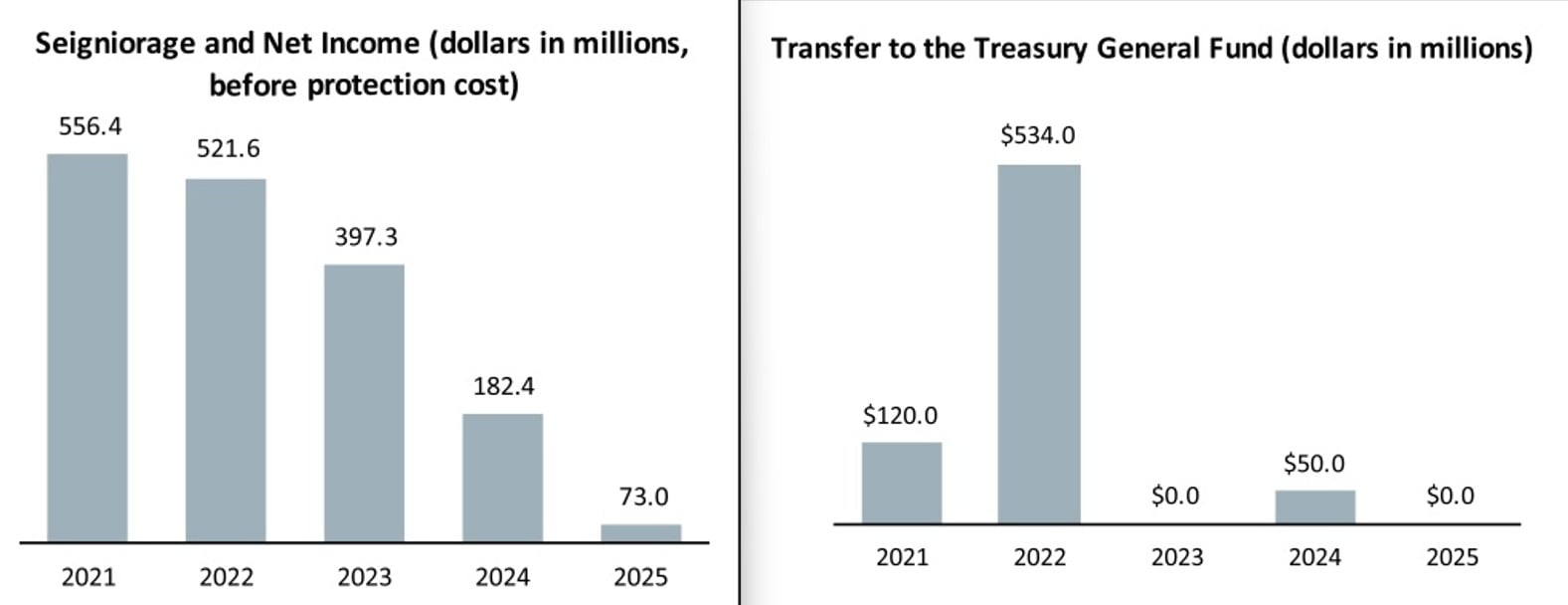
.
With all due respect, that is patently untrue. Overhead obviously has to be accounted for when running a business.
But should not go into the calculus at all when making marginal production decisions. A well run business will do anything on the margin if it has capacity and is profitable on a marginal basis, without taking overhead into account. This is entire basis of cost accounting.
The Mint more than covers its numismatic overhead with the bullion program. EVERYTHING else is gravy. Including uncirculated sets. Whether they sell 2 million of them at $30 each, or 300,000 of them at $200 each.
Keep in mind, they are also a government agency that has a mandate to manufacture circulating coinage, whether or not they can do so at a profit. Due to seigniorage, of course, this is never a concern, even if they are forced to take relatively modest losses on cents and nickels. Keep in mind that the federal government runs a massive annual deficit, and very few agencies actually cover their costs, let alone turn a profit like the Mint does. The numismatic program only adds to it.
So all this discussion of profitability of the numismatic program is really just a red herring. Because, with or without a numismatic program, they have significant overhead. And, with or without a numismatic program, they have it covered many times over.
And, even if they didn't, they would still function with an appropriation from Congress. As I have been saying, repeatedly over the years, people here can play whatever games they want with government accounting to craft an argument, but the table you posted shows nothing they sell to collectors loses money on a marginal basis.
Trust me on this -- right now they are being pigs while not actually modeling out the price and quantity at which they could maximize profit. Given that cents are in demand, and only available in the sets, they could sell a lot more at a lot lower price, and make more money for themselves while destroying the flip. For whatever reason, they choose not to.
??? Not sure what this is supposed to show. Not sure exactly what "my way" is. Not sure why I get blame for 2025, after they significantly jacked up prices in the preceding years, and don't get credit for 2021 and 2022, before they did so.
Sorry, but you seem to just be hurling crap my way to see if anything sticks.
It bombed, get over it.
Yes, they would have sold a lot of sets. I can't look at 2024, because cents were widely available in circulation. Same with 2025, plus they short struck the sets.
There is nothing to look at, because has never been a year in which they had coins in the sets that were only available in the sets, and minted the sets to demand.
As far as proof presses go, I honestly don't know enough about how coins are made to know whether or not they are special, or how much they cost relative to how many coins they produce.
I know the process is different, but I don't know whether or not they could be repurposed if proof coins were not made, or what portion of overhead or SG&A they represent. But, sure, if they couldn't be used to make profitable precious metal coins, and couldn't be used for anything else, and had to be purchased special to make base metal proof sets, then, yeah, you'd have to take their cost into account when deciding whether or not to make base metal proof sets. But that is not the case, so it's just another "anything is possible" argument from you.
🤣🤣🤣
Just keep repeating the same nonsense over and over again, because you have nothing substantive to say. It's fine.
"It bombed." "My way." DEI. Surveys. Making unlimited everything. COVID. The moon landing. 🤣🤣🤣
There are always multiple "possible" explanations for anything, as you always like to point out, but rarely more than one "probable" one. Only a moron would not understand that.
What do 2019-W cents have to do with this? Are they really a reason the Mint couldn't sell more 2026 sets at a lower price and make more money than they will make selling 300K sets at $124.50 each?
@NJCoin said:
This is literally what you do, but it takes you a heck of a lot more words to do it.
Like a broken record
Don’t you guys ever get tired of arguing? Too much time on your hands….
Fair enough. Now we'll try it your way.
The mint tried it your way and it bombed. Get over it.
Speaking of which
The mint tried it your way and it bombed. Get over it.
Yup!! 😀
I 100% agree with you! Probably for the first time ever 😆 Glad they went back to their way instead of my way.
Glad you're glad. Because, at the end of the day, it's all about you, not me.
You both are assuming the mint has spare production capacity and resources and don't account for opportunity costs. The ASSUMPTION here is that they could make more than 300k sets. But what if making another 100k sets means not being able to make another higher margin product? There are more factors at play than NJCoin would ever admit.
Correct. I do think they have a ton of capacity, given they have 4, count 'em 4, production facilities, and demand for circulating coinage is a fraction of what it used to be. In fact, demand for bullion is a fraction of what it was at the peak.
In fact, they have so much spare capacity that it has been reported that they are considering permanently closing one of their production facilities. Absolutely no opportunity costs. They could literally make as much as they could sell of anything they choose to make and sell. The only limit being eventually saturating the market if they just continually flood it with product.
Any other assumption is based on nothing other than saying black because I say white.
Capacity requires more than just buildings and machines. Raw supplies, Labor of all kinds, Packaging, Shipping are the pieces you ignore to make your point.
Yes. Everything is just so, so complicated.
According to Wikipedia, "Today the United States Mint is largest mint manufacturer in the world, operating across six sites and producing as many as 28 billion coins in a single year.[2] Its largest site is the Philadelphia Mint which covers 650,000 square feet[3] (6 hectares) and can produce 32 million coins per day.[4]"
No way they could pull anything together. The logistics are simply too overwhelming. If you say so. 🤣🤣🤣
According to the latest issued of Coin World, they had to go out and buy a special press just to make these. And then chose to spread the cost over a mere 6,000 coins and medals. Likely with more to come in the future.
Because that's all the time they had in their production schedule. Because that was the most efficient use of capital in acquiring the equipment. Not because they made an intentional decision to do this, but because they had no other choice, but had to press forward anyway, because the world was clamoring for American coins and medals shaped like bells, and the Mint had no choice but to accommodate, no matter how low the potential mintages were. 🤣🤣🤣
Believe what you want, because you can conjure up anything, and then throw it out as a possibility. Yeah, sure "Raw supplies, Labor of all kinds, Packaging, Shipping."
Or maybe, just maybe, intentional decisions, because the US Mint really, really, really, with just a little planning, could go out and get a brand new press they never used before, secure odd shaped planchets in whatever quantities it wants, and then put its workforce to work and secure packaging and shipping for whatever it wants. In whatever quantities it wants. It is the largest manufacturer of coinage on the globe. But its hands are tied due to raw supplies, packaging, labor and shipping.
I am obviously not a production manager, so I can't speak to what they are doing, or why. I can say that they can produce 60K of something as easily as 40K. Or 500K as easily as 300K. And they obviously have the capacity to source entirely new planchets, as well as a press to strike them on, when the mood suits them to.
So it's pretty clear they can do whatever they want. I think those backorders are intentional, not by necessity. Almost certainly because they'd rather make people wait than be stuck with unsold inventory.
Maybe they will back away from that in the future, as they see people want everything NOOOOWWWWWWWWWWW, and that the bloom falls off the rose as they make people wait. Costing them sales.
The Mint has never been busier than now. And that's without producing the 1C for circulation.
One release after another in the circulating and numi divisions.
I'm sure it was when it was cranking out billions of cents and other coins for circulation that it is no longer making at all, or is making in significantly lower quantities due to significantly lower commercial demand. Six thousand Liberty Bells does not constitute "busy."
They made 47 million bullion ASEs in 2015. They made less than 12 million last year.
They have been busier than they are now, even with all the dual dated crap they are making this year. They are the US Mint. They can walk and chew gum at the same time.
Back orders on the Congratulations set were not because 40K was doable, but 60K all at once was too heavy a lift for them, because "the Mint has never been busier than now." Or because they had to scour the Earth for 20K additional planchets.
It was an intentional decision, for whatever reason. Because they somehow managed to make 300K proof ASEs for the first tranche. Not 40K, with 460K to come later, because they were just so darn busy.
By the way, they made all 500K proof ASEs. And everything else they were scheduled to make. If they can make 2K Liberty Bells, they can make 20K. Or 200K. They choose not to.
@NJCoin
I am going to stop arguing with you.
You have every right to be wrong.
He is right about everything, don't you know!?
He's not interested in these Bell Coins & Medals at all, and he's describing the 250th dual-dated offerings as crap. But, instead of finding something Mint-made that he enjoys to collect, he remains 100% obsessed with bashing the Mint and the people who are interested in them. Figure that one out.
I love the 250th dual-dated 'crap'. Here's my favorite one - so far...
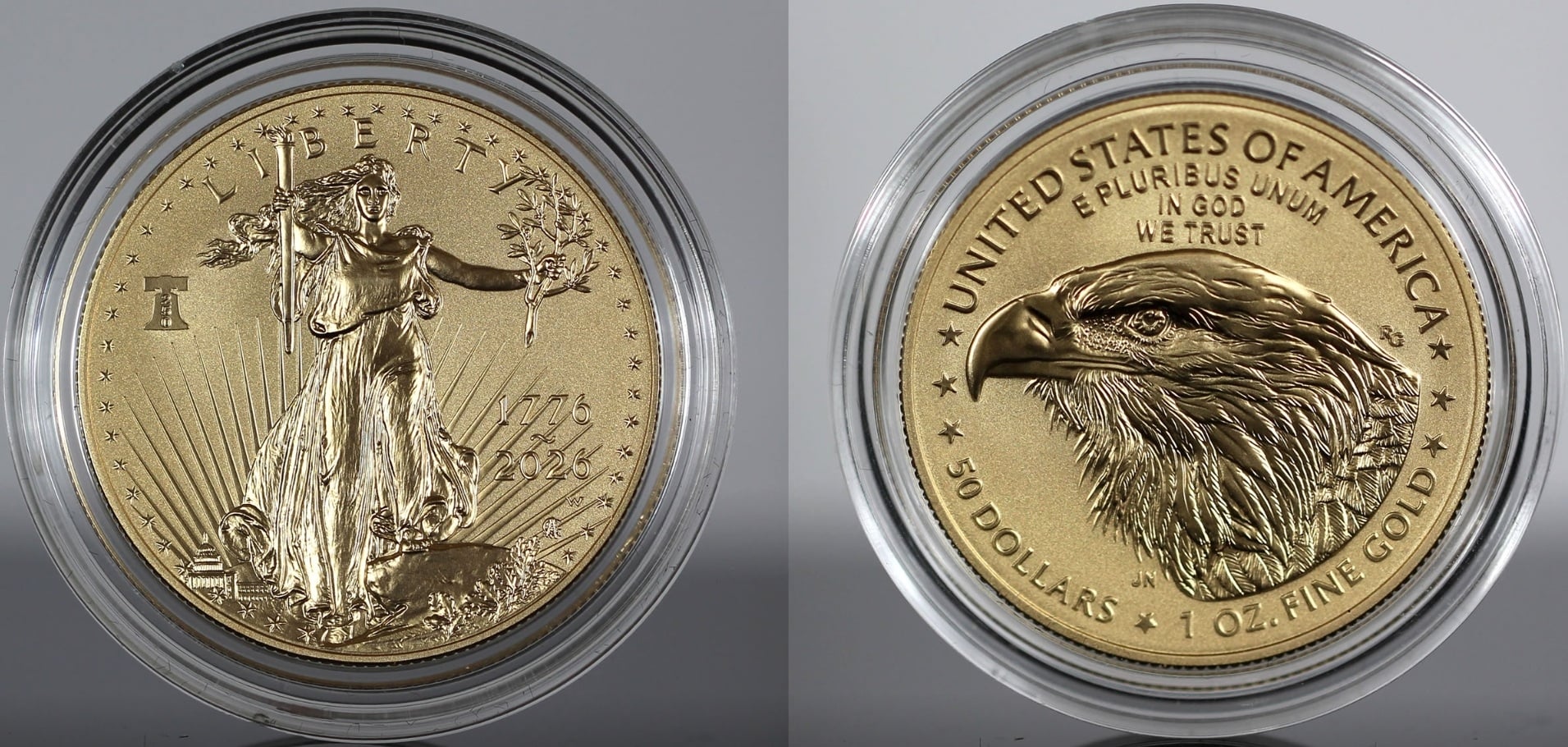
.
If you say so. I not only respectfully, disagree, but claim, even if true, that the still have excess capacity. They are probably going to close San Francisco at some point. How could they even be thinking about doing that if they are so overextended?
Sorry. I didn't even realize you were part of this. I also have every right to be right.
Either way, thanks for checking in and joining the party. It wasn't the same without you.
It's fine. I also love that coin. Doesn't mean the Mint isn't trying to exploit an anniversary with an unnecessary amount of celebratory items. If 3 wasn't quite enough in 1976, I'm not sure that ~30 special dual dated items are really an appropriate number either. Total money grab.
See that's the problem. You think production is ad hoc and they have just have plant and people and materials sitting around and they can just be redirected to fulfill whatever whim the production manager has that day. It's not like that. Yes then can produce millions of any given product but that's not how it works. I am more than confident that they start the beginning of each year with a production plan with every resource and employee allocated to almost full capacity. Sure there may be a little wiggle room for changes or to accommodate machine breakdowns or other problems and undoubtedly they can make changed and adjustments to their plans, but if you are going to insist that they have the ability to just shit out more product when things unexpectedly have more demand than expected, then you are completely ignorant to how factories work.
Yes, they most certainly planned multiple production runs in case the product turned out to be a turd so they didn't end up with extra unwanted inventory. Smart.
They most certainly understand the tradeoffs. So far with recent issues though they seem to be having little problem selling product that is backordered. I'm guessing they feel that it's better to lose a few sales than to have unwanted product sit on the shelves for years. And they're right.
Money grab? I'm completely fine with that - Go USA Capitalism!!
Maybe this year they'll deposit $$'s into the General Fund instead of $ZERO for 2 out of the last 3 years?
The 250th is a big deal, and the Treasury/Mint have discretion when it comes to Celebratory Gold Coins & Medals that they produce for collectors - accept it. Let it go.
Should a patriotic American Family be limited to just one sole package of Sparklers for the 250th celebration? You sound like you'd be in favor of that.
Ad hoc?
No, I never said or meant to imply that.
Flexible, and subject to change? Yes.
They clearly did that with both ASEs so far this year. Because it surely would have been more efficient to make them all at once.
I don't care about back orders one way or the other. Others do. If the Mint wants to sacrifice those sales as a hedge against unsold inventory, that is fine with me.
All of which has nothing to do with lack of capacity, or intentionally creating very overpriced rarities. Way to throw a few red herrings around! Does that ever work with anyone else?
Yes. The are the US freaking Mint. They can poop out whatever they want. 50 million bullion ASEs. 2,000 silver Liberty Bells, in a shape they never dealt with before. Yes, they can do it all. Don't sell them short.
Good. Be "completely fine" with the exploitation of collectors. As a taxpayer, that's great until the golden goose dies. As a customer, not so much.
I'm not accepting it, and not letting it go. But thanks for the helpful advice.
…. But then in fact DOES speak to what they are doing and why they are doing it and if it will be hot or not and why you are wrong and he is right.
Don't want one but I will take the opportunity to hone my waiting room techniques............
Correct! Because being a production manager has nothing to do with any of that.
Boo, bad deal.
Me, too!
Maybe I'll jump in just to slow things down a tiny bit more. If anyone changes their mind during the additional delay I caused them then they can thank me later.

Hooray, good deal! Post of the thread!
I’m gonna practice getting the 1/2 ounce gold.
ATS on that one still zero - immediate back orders?
All the bashing on this thread is only to hopefully scare buyers away. Everybody should log in to help them slow down the waiting room. 🤭🤭🤭🤭
My apologies to the OP, sorry for my off topic response to this post.
I do not think the mint should be sucking every premium out of the mint sets before they are sold. After the flippers are done scalping any profits, I expect these will sell for below issue price.
2026 being a different design and the special 250 year anniversary is nothing like 2024 or 2025 for demand.
I would have bought 10 or more sets at $25 or even $35. I very hesitantly bought three 2026 sets at $125. I bought two 2024 and two 2025 sets at what $35? I still have those sets, maybe I should have flipped them for profit... But that takes away from collecting.
If they sold these to demand, that would also destroy the flip. Selling to demand is what the mint should be doing with mint sets. Especially for the 250th anniversary coinage. Selling at a reasonable cost for circulating coinage is also something they should be doing. Maybe I need to send a letter to the mint requesting an example of all circulating coins for face plus postage, just like collectors did 100+ years ago, and forego the $110 in fancy packaging.
You guys keep going back to the cent as justification for the absurd price point. The cent is dead, stop making more of them.
After receiving my 2026 sets, I am very disappointed. They just don't seem to be worth the price point for those of us wanting to collect and hold.
If the 2027 prices are similar to the 2026 prices, I am done with buying these for my collection. More availability for your flipping and the mint looses another customer.
It would be nice if the thread discussions were more related to the subject title. There is a lot of clutter to these threads when someone is just trying to look for relative information. Yet here I am, posting more clutter to this thread that has nothing to do with Liberty bells and whistles. OK, Rant over, carry on.