So they want to help you but they never did a specific gravity test that would have answered every question. It seems like you just got a delay email and no one wants to bother.
Go easy on the OP. He could have thrown it away after being slabbed by NGC as a normal 1983 cent or quietly sold it as a bronze planchet as originally stated by PCGS. He sincerely seems to want to get all the information he can on the coin just for the sake of knowing and having it correct.
@TrickleCharge said:
Go easy on the OP. He could have thrown it away after being slabbed by NGC as a normal 1983 cent or quietly sold it as a bronze planchet as originally stated by PCGS. He sincerely seems to want to get all the information he can on the coin just for the sake of knowing and having it correct.
Based on the OP's good nature and ability to handle inquiries within this thread- whether sincere or sarcastic- leans toward the conclusion he doesn't need your help.
This is what the specialist from the company that analyzed the coin sent me. (He also used a 2016 cent as a sample of a modern coin.):
"Ok so XRF data came back and the two coins are identical. It looks like the coin being a thicker coating of copper is the likely option here. I will still do one more X-ray test but not looking promising based on the XRF data. "
Did they examine it out of the plastic? If so, might I ask,
(drum roll )
WHAT WAS THE SPECIFIC GRAVITY?????
Professional Numismatist, Retired. 55 year member ANA. Former ANA Senior Authenticator. Winner of four ANA Heath Literary Awards; three Wayte and Olga Raymond Literary Awards; Numismatist of the Year Award 2009, and ANA Lifetime Achievement Award 2020. Winner of the PNG's 2026 Robert Friedberg Award for "The Enigmatic Lincoln Cents of 1922," Available now from Whitman or Amazon.
@CaptHenway said:
Did they examine it out of the plastic? If so, might I ask,
WHAT WAS THE SPECIFIC GRAVITY?????
That is, after all this time, still the only question that matters. It just seems so obvious that I cannot understand why one would not be done.
Not really necessary if it's shooting zinc with the XRF.
True, but there are always people who will deny the probable if it is not proven 100% with facts.
Professional Numismatist, Retired. 55 year member ANA. Former ANA Senior Authenticator. Winner of four ANA Heath Literary Awards; three Wayte and Olga Raymond Literary Awards; Numismatist of the Year Award 2009, and ANA Lifetime Achievement Award 2020. Winner of the PNG's 2026 Robert Friedberg Award for "The Enigmatic Lincoln Cents of 1922," Available now from Whitman or Amazon.
After taking the coin out of the slab, I decided to do a simple ping test — something I probably should have done right at the beginning, before sending the coin anywhere.
I compared it with a 1983 Lincoln cent weighing 2.5 grams, which is known to have a zinc core with copper plating, and with a solid copper 1975 Lincoln cent weighing 3.1 grams.
Comments
I still haven't received a response from PCGS regarding my question about the basis for their change in attribution.
Doubtful and Debatable.
Please don't continue to confuse and thus derail this thread by providing facts.
Thanks, in advance.
Apparently, that extremely complex and confusing test is beyond the capability of the team undertaking this Herculean project.
For the love of God, from among whatever it is you're choosing to do- DON'T do a specific gravity test. That'd kill the thread for sure.
I nominate this thread for the forum’s Top 10 “The Dead Horse Has Been Beaten So Badly That He Might Have Come Back To Life” thread.
Mark Feld* of Heritage Auctions*Unless otherwise noted, my posts here represent my personal opinions.
An oldie but goodie...
it won't be over until the fat penny has rung
I've got the comment from PCGS:
So they want to help you but they never did a specific gravity test that would have answered every question. It seems like you just got a delay email and no one wants to bother.
In honor of the memory of Cpl. Michael E. Thompson
I decided to open the coin and conduct all possible examinations.
I'm afraid to ask, yet will do so. . .
What do you mean you "opened the coin"?
I see. The taco cents.
I guess you just made PCGS happy.
In honor of the memory of Cpl. Michael E. Thompson
I mean I would brake the slab.
Brake or break?!
Go easy on the OP. He could have thrown it away after being slabbed by NGC as a normal 1983 cent or quietly sold it as a bronze planchet as originally stated by PCGS. He sincerely seems to want to get all the information he can on the coin just for the sake of knowing and having it correct.
Based on the OP's good nature and ability to handle inquiries within this thread- whether sincere or sarcastic- leans toward the conclusion he doesn't need your help.
This is what the specialist from the company that analyzed the coin sent me. (He also used a 2016 cent as a sample of a modern coin.):
"Ok so XRF data came back and the two coins are identical. It looks like the coin being a thicker coating of copper is the likely option here. I will still do one more X-ray test but not looking promising based on the XRF data. "
Did they examine it out of the plastic? If so, might I ask,
(drum roll )
WHAT WAS THE SPECIFIC GRAVITY?????
That is, after all this time, still the only question that matters. It just seems so obvious that I cannot understand why one would not be done.
True, but there are always people who will deny the probable if it is not proven 100% with facts.
Nine pages of posts and I stick with PMD by some kid playing around with electroplating.
Hello to all that has time to have a look.
Trying to find out if this reverse die crack has some value or is it "PMD"?
"Coin Know" says it's pretty well beat up, they gave it a MS 61-63
Thanks for listening!!
Homer
Oops !!!! Forgot attachment.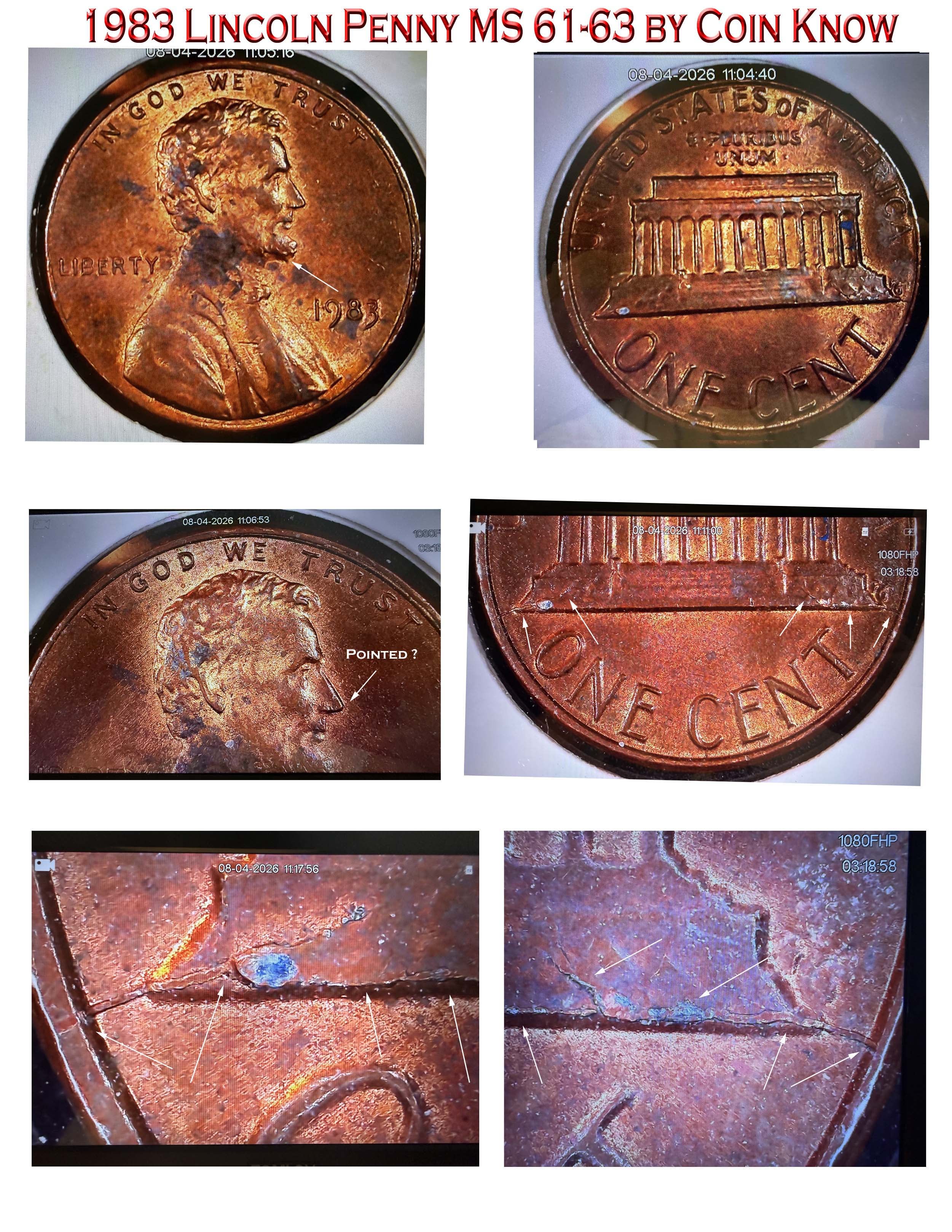
can you start a new thread for your coin and drag-and-drop in pictures of both sides?
At my age I'm lucky to what time it is.
Sorry, I'm not very good at using this website, It's little over my head.
I have no idea what I'm doing.
Might be moseying along before I get in somebodies' way.
Don't mean to offend.
Thanks
those are die cracks on the reverse. there's no big deal about the shape of the nose. value? 1 cent
Thanks again.
After taking the coin out of the slab, I decided to do a simple ping test — something I probably should have done right at the beginning, before sending the coin anywhere.
I compared it with a 1983 Lincoln cent weighing 2.5 grams, which is known to have a zinc core with copper plating, and with a solid copper 1975 Lincoln cent weighing 3.1 grams.
The results of the comparison can be heard in the video:
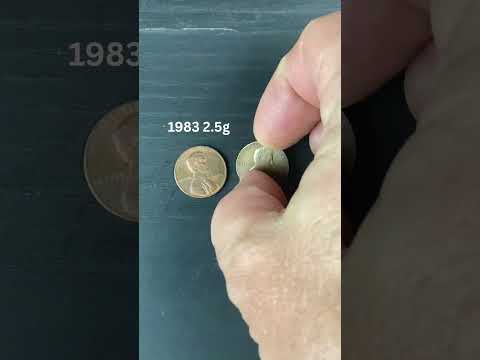 https://www.youtube.com/watch?v=gNi6fZuWwcw
And we still never got the specific gravity.
I found this coin's weight to be very interesting
https://forums.collectors.com/discussion/1124995/2026-p-lincoln-cent-possible-die-chip