The Wisconsin quarter is the 30th in the 50 State Quarters Program. On May 29, 1848, Wisconsin became the 30th state to be admitted into the Union. The Wisconsin design depicts an agricultural theme, featuring the head a cow, a round of cheese, and an ear of corn. The design also bears an inscription of the State motto, "Forward."
Wisconsin adopted the State motto, "Forward," in 1851, reflecting the state's continuous drive to be a national leader. Wisconsin produces more than 15 percent of the Nation's milk and more than 350 varieties, types and styles of award–winning of cheeses. Wisconsin is also a major corn producer. State corn production contributed $882.4 million to the Wisconsin economy in 2003.
Characteristics
The obverse (heads) design features the familiar image of George Washington by John Flanagan, used on the quarter since 1932.
The reverse (tails) design features an agricultural theme which features the head of a cow, a round of cheese and an ear of corn.
The 2018 Apostle Islands National Lakeshore Quarter is the 42nd coin in the America the Beautiful Quarters® Program.
Wisconsin’s Apostle Islands National Lakeshore was established in 1970 to protect “certain significant islands, shoreline, and light stations of the U.S. and their related geographic, scenic, historic, and scientific values.” The park includes 21 islands in Lake Superior and a 12-mile-long strip of mainland shoreline encompassing more than 69,000 acres. The park features pristine stretches of sand beaches and coves; spectacular sea caves; remnant old-growth upper forests; a diverse population of birds, mammals, amphibians, and fish; and a number of lighthouses and lighthouse complexes.
Characteristics
The obverse (heads) design features the familiar image of George Washington by John Flanagan, used on the quarter since 1932. It has been restored to bring out subtle details and the beauty of the original.
The reverse (tails) depicts the sea caves at Devils Island with the lighthouse in the background and a kayaker paddling in the foreground. Design candidates were developed in consultation with representatives of Apostle Islands National Lakeshore.
“The American Innovation $1 Coin for the State of Wisconsin celebrates the world-class invention of the Cray-1 supercomputer, which was designed and built in the state of Wisconsin and is often associated with the beginning of the modern era of supercomputing,” said Paul Hollis, Director of the Mint. “The Mint is honored to highlight this groundbreaking innovation and recognize its importance to both Wisconsin and the United States.”
“Here in Wisconsin, we have a proud history of leading advancements in technology, industry, infrastructure—you name it—and I'm thrilled that the Wisconsin Innovation $1 Coin celebrates one of our proudest home-grown innovations, the Cray-1 supercomputer, which was known as the world's fastest computer at the time of its creation," said Wisconsin Governor Tony Evers. “Seymour Cray, the Wisconsinite and innovator behind the Cray-1 supercomputer, represents the best of our state, and his work has shaped countless aspects of the modern world that we know today. We're incredibly proud to recognize the Cray-1 supercomputer as an icon of Wisconsin's capacity for innovation."
Cool name, comes with faults, though.
Esplandian, the Black Knight, in the novel of his adventures, finds California, an island ruled by warrior queen Califia. They get married after he defeats her army. The author drew the name from the Arabic word “kalifah”, leader. I had this poster and it is a fun read. The references are regional and decades old.
California has the place of lowest elevation, (-282 ft.) in North America and the highest peak in the contiguous United States (Mt. Whitney - 14,505 ft.) The Badwater 135 Ultramarathon starts in Badwater Basin, in Death Valley National Park and ends 8,360’ high at Mount Portal. Participants get a cool belt buckle like in rodeos and wrestling.
Bob Meyers was a Californian who designed and built the Manx. They’ve resurrected it with electric motors. It’s twice as fast for somersaults in the dunes.
California cuisine rules drive-thrus at breakfast time.
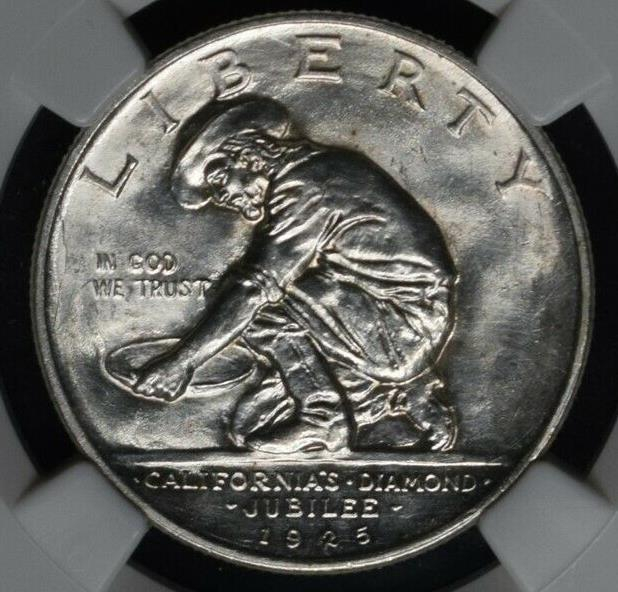
California - To celebrate the exact date of the Jubilee (September 9, 1925), a special promotion gave 494 of these coins as gifts to California children born on that day.
The Commission of Fine Arts strongly disliked Jo Mora's designs, but the local San Francisco Citizens' Committee stubbornly refused to change them—and won!
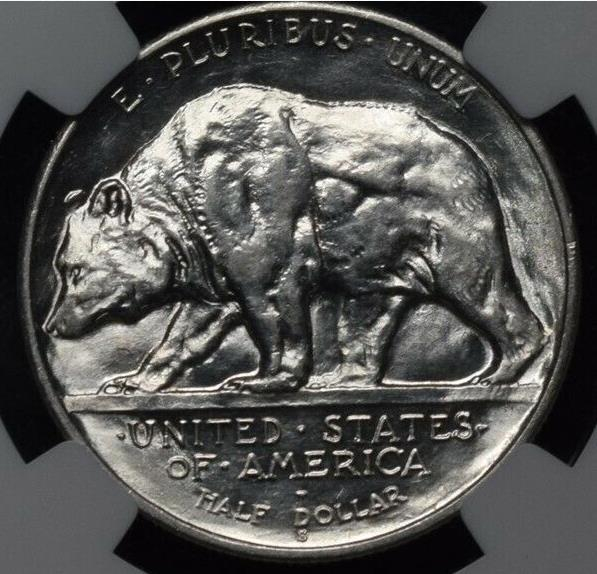
The coin's reverse depicts a walking California grizzly bear, which officially became the state animal in 1953—more than two decades after the coin was struck.
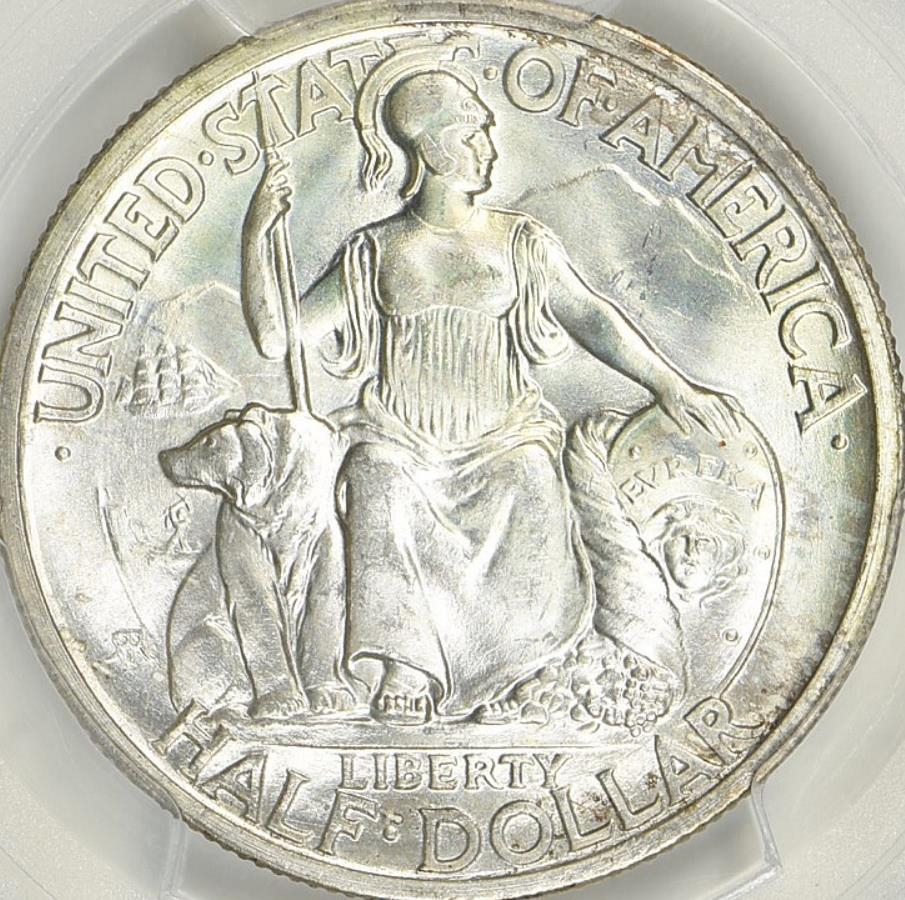
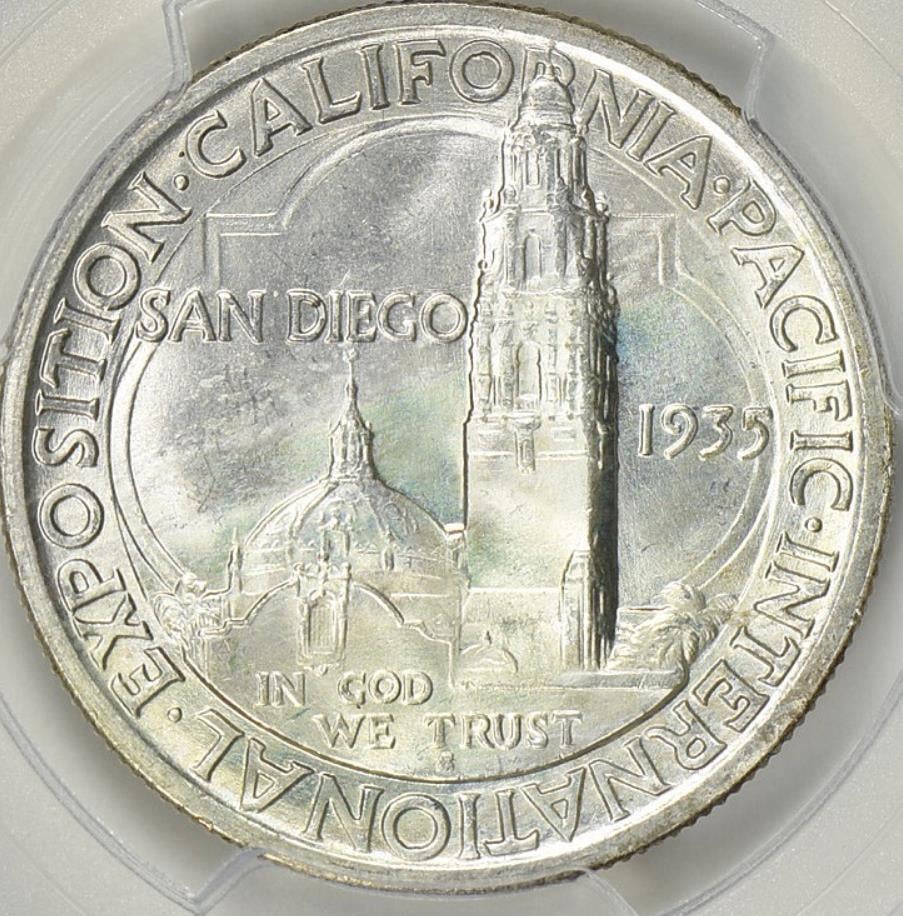
San Diego - The obverse showcases Minerva seated beside a grizzly bear and a shield. However, in Greek/Roman mythology, Minerva is heavily associated with the goddess Athena, whose primary symbol is the Gorgoneion (the severed head of Medusa) featured on her aegis. Separately, while the coin itself represents historical milestones, the exposition it honors featured incredibly unusual, unscientific attractions—including a Zoro Garden Nudist Colony and an entire exhibit dedicated to the mythical Lost Continent of Mu.
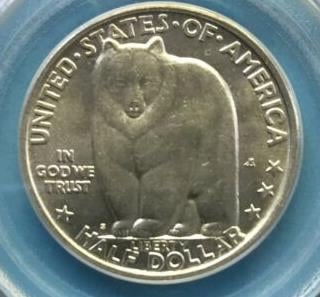
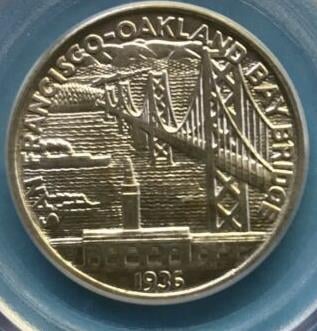
Bay Bridge - The obverse (bear side) features four unexplainable small stars. They have no historical significance, and numismatists believe the designer simply added them to balance out the coin's artistic composition. The grizzly bear on the obverse wasn't just a generic symbol; it was modeled after "Monarch II," a famous California grizzly that lived in a dedicated enclosure at San Francisco's Golden Gate Park.
I’ll be sitting out tomorrow as we examine Minnesota.
Steve
A day without fine wine and working on your coin collection is like a day without sunshine!!!
The Richard M. Nixon Presidential $1 Coin honors the 37th President of the United States.
Richard Milhous Nixon was born January 9, 1913, in Yorba Linda, California, and raised in nearby Whittier. He attended Whittier College and Duke University Law School, and then went on to practice law. During World War II, he served as a lieutenant commander in the U.S. Navy.
Once the war ended, Nixon successfully ran for Congress in 1946, where he gained national attention for his role in the investigation of charges against former State Department official Alger Hiss. In 1950, he won a seat in the U.S. Senate, serving until 1952, when he was elected vice president.
Nixon campaigned for the presidency in 1960 but lost by less than 120,000 votes or 0.2 percent of the popular vote. A subsequent bid for governor in 1962 also ended in defeat. In 1968 Nixon campaigned for president again and won. He served until 1974, when he resigned to avoid impeachment for his role in the Watergate scandal. He is the only president to resign the office.
Released January 31, 2005, the California State Quarter is the 31st coin released in the 50 State Quarters Program and the first released in 2005. California was admitted into the Union on September 9, 1850, becoming our Nation's 31st State.
In 1849, the year before California gained statehood, the family of 11–year–old John Muir emigrated from Scotland to the United States, settling in Wisconsin. In 1868, at the age of 30, Muir sailed up the West Coast and landed in San Francisco. He made his home in the Yosemite Valley, describing the Sierra Nevada Mountains as "the Range of Light… the most divinely beautiful of all the mountain chains I have seen." He devoted the rest of his life to the conservation of natural beauty, publishing more than 300 articles and 10 books that expanded his naturalist philosophy.
In 1890, Congress established Yosemite National Park, and, in 1892, John Muir helped form the Sierra Club to protect it, serving as that organization's President until his death in 1914.
The California condor, with a wingspan as long as nine feet, is also featured on the coin in a tribute to the successful repopulation of the bird that was once nearly extinct.
Characteristics
The obverse (heads) design features the familiar image of George Washington by John Flanagan, used on the quarter since 1932.
The reverse (tails) design features an image of naturalist and conservationist John Muir admiring Yosemite Valley's monolithic granite headwall and a soaring California condor.
The 2010 Yosemite National Park Quarter is the third coin in the America the Beautiful Quarters® Program.
Yosemite National Park, one of the first wilderness parks in the United States, is best known for its waterfalls, but within its nearly 1,200 square miles are deep valleys, grand meadows and ancient giant sequoias. It was first established as a national site on October 1, 1890 (26 Stat. 650).
Characteristics
The obverse (heads) design features the familiar image of George Washington by John Flanagan, used on the quarter since 1932. It has been restored to bring out subtle details and the beauty of the original.
The reverse (tails) image depicts the iconic El Capitan, which rises more than 3,000 feet above the valley floor and is the largest monolith of granite in the world. Design candidates were developed in consultation with representatives of Yosemite National Park.
The reverse (tails) design presents a young Steve Jobs sitting in front of a quintessentially northern California landscape of oak-covered rolling hills. Captured in a moment of reflection, his posture and expression reflect how this environment inspired his vision to transform complex technology into something as intuitive and organic as nature itself.
1948 · HK-497
Reference HK-497
Date 1948
Metal Bronze
Diameter 40 mm
Obverse depicts a miner panning for gold in Coloma, California with Sutter’s Mill in the background, the location where gold was discovered in California in 1848. Reverse is a variation of the California State Seal.
Minnesotans won more Olympic medals in the 2026 Winter Games than athletes from any other state.
Residents of Minnesota took home 10 gold medals, one silver and two bronze from the games, according to Team USA. The Olympics ended Sunday in Milan and Cortina.
This design features a 1940s-era truck with an early front-mounted refrigeration unit. The icons adorning the side of the truck identify the diverse temperature-sensitive goods whose widespread transportation was made possible by this innovation. Inscriptions are “UNITED STATES OF AMERICA” and “MINNESOTA.” The additional inscription is “MOBILE REFRIGERATION.”
Released on April 4, 2005, this is the 32nd coin released in the 50 State Quarters Program and the second released in 2005. Minnesota, admitted into the Union on May 11, 1858, themed the coin, Land of 10,000 Lakes. It highlights an image of a tree-lined lake with two people fishing, a loon on the water, and a textured outline of the state surrounding its nickname, Land of 10,000 Lakes.
Characteristics
The obverse (heads) design features the familiar image of George Washington by John Flanagan, used on the quarter since 1932.
The reverse (tails) design features two people fishing on a lake, a loon, and a textured outline of the State surrounding its nickname, "Land of 10,000 Lakes."
The 2018 Voyageurs National Park Quarter is the 43rd coin in the America the Beautiful Quarters® Program.
Minnesota’s Voyageurs National Park was established in 1971 “to preserve . . . the outstanding scenery, geological conditions, and waterway system” inherent to the park, which protects 218,054 acres, including 84,000 acres of water. It consists of miles of undeveloped shoreline, with hundreds of islands and numerous lakes. The combination of rocky shorelines, southern boreal and northern hardwood forests, and open water create a distinct home for bald eagles, loons, black bears, moose, and wolves.
Characteristics
The obverse (heads) design features the familiar image of George Washington by John Flanagan, used on the quarter since 1932. It has been restored to bring out subtle details and the beauty of the original.
The reverse (tails) depicts a common loon with a rock cliff in the background. Design candidates were developed in consultation with representatives of Voyageurs National Park.
Oregon Trail - Spanning 14 years, this is the longest-running issue of any classic commemorative coin in United States history. To raise funds, the Oregon Trail Memorial Association convinced Congress to authorize 6 million coins. However, they released very small mintages across different years and mints, purposely creating artificial scarcity to drive up prices. The high prices and distribution tactics angered collectors who protested to Congress, leading lawmakers to officially end the series in 1939. Ironically, the Association had so much trouble selling them that the successor organization was still selling remaining pieces from their vault as late as 1953.
I’ll be taking a hiatus from posting on this thread for quite a few days since I can’t comfortably tie any Classic Commems to the upcoming states. However, I’ll look forward to viewing this post every day to see your numismatic items!
Steve
A day without fine wine and working on your coin collection is like a day without sunshine!!!
Comments
Move over, Extra Leaves; here comes the Telekenetic Cow!
The Wisconsin quarter is the 30th in the 50 State Quarters Program. On May 29, 1848, Wisconsin became the 30th state to be admitted into the Union. The Wisconsin design depicts an agricultural theme, featuring the head a cow, a round of cheese, and an ear of corn. The design also bears an inscription of the State motto, "Forward."
Wisconsin adopted the State motto, "Forward," in 1851, reflecting the state's continuous drive to be a national leader. Wisconsin produces more than 15 percent of the Nation's milk and more than 350 varieties, types and styles of award–winning of cheeses. Wisconsin is also a major corn producer. State corn production contributed $882.4 million to the Wisconsin economy in 2003.
Characteristics
The obverse (heads) design features the familiar image of George Washington by John Flanagan, used on the quarter since 1932.
The reverse (tails) design features an agricultural theme which features the head of a cow, a round of cheese and an ear of corn.
The 2018 Apostle Islands National Lakeshore Quarter is the 42nd coin in the America the Beautiful Quarters® Program.
Wisconsin’s Apostle Islands National Lakeshore was established in 1970 to protect “certain significant islands, shoreline, and light stations of the U.S. and their related geographic, scenic, historic, and scientific values.” The park includes 21 islands in Lake Superior and a 12-mile-long strip of mainland shoreline encompassing more than 69,000 acres. The park features pristine stretches of sand beaches and coves; spectacular sea caves; remnant old-growth upper forests; a diverse population of birds, mammals, amphibians, and fish; and a number of lighthouses and lighthouse complexes.
Characteristics
The obverse (heads) design features the familiar image of George Washington by John Flanagan, used on the quarter since 1932. It has been restored to bring out subtle details and the beauty of the original.
The reverse (tails) depicts the sea caves at Devils Island with the lighthouse in the background and a kayaker paddling in the foreground. Design candidates were developed in consultation with representatives of Apostle Islands National Lakeshore.
“The American Innovation $1 Coin for the State of Wisconsin celebrates the world-class invention of the Cray-1 supercomputer, which was designed and built in the state of Wisconsin and is often associated with the beginning of the modern era of supercomputing,” said Paul Hollis, Director of the Mint. “The Mint is honored to highlight this groundbreaking innovation and recognize its importance to both Wisconsin and the United States.”
“Here in Wisconsin, we have a proud history of leading advancements in technology, industry, infrastructure—you name it—and I'm thrilled that the Wisconsin Innovation $1 Coin celebrates one of our proudest home-grown innovations, the Cray-1 supercomputer, which was known as the world's fastest computer at the time of its creation," said Wisconsin Governor Tony Evers. “Seymour Cray, the Wisconsinite and innovator behind the Cray-1 supercomputer, represents the best of our state, and his work has shaped countless aspects of the modern world that we know today. We're incredibly proud to recognize the Cray-1 supercomputer as an icon of Wisconsin's capacity for innovation."
Tuesday June 16 - California
Cool name, comes with faults, though.
Esplandian, the Black Knight, in the novel of his adventures, finds California, an island ruled by warrior queen Califia. They get married after he defeats her army. The author drew the name from the Arabic word “kalifah”, leader. I had this poster and it is a fun read. The references are regional and decades old.
California has the place of lowest elevation, (-282 ft.) in North America and the highest peak in the contiguous United States (Mt. Whitney - 14,505 ft.) The Badwater 135 Ultramarathon starts in Badwater Basin, in Death Valley National Park and ends 8,360’ high at Mount Portal. Participants get a cool belt buckle like in rodeos and wrestling.
Bob Meyers was a Californian who designed and built the Manx. They’ve resurrected it with electric motors. It’s twice as fast for somersaults in the dunes.
California cuisine rules drive-thrus at breakfast time.
1939 Golden Gate Exposition.
California - To celebrate the exact date of the Jubilee (September 9, 1925), a special promotion gave 494 of these coins as gifts to California children born on that day.
The Commission of Fine Arts strongly disliked Jo Mora's designs, but the local San Francisco Citizens' Committee stubbornly refused to change them—and won!
The coin's reverse depicts a walking California grizzly bear, which officially became the state animal in 1953—more than two decades after the coin was struck.
San Diego - The obverse showcases Minerva seated beside a grizzly bear and a shield. However, in Greek/Roman mythology, Minerva is heavily associated with the goddess Athena, whose primary symbol is the Gorgoneion (the severed head of Medusa) featured on her aegis. Separately, while the coin itself represents historical milestones, the exposition it honors featured incredibly unusual, unscientific attractions—including a Zoro Garden Nudist Colony and an entire exhibit dedicated to the mythical Lost Continent of Mu.
Bay Bridge - The obverse (bear side) features four unexplainable small stars. They have no historical significance, and numismatists believe the designer simply added them to balance out the coin's artistic composition. The grizzly bear on the obverse wasn't just a generic symbol; it was modeled after "Monarch II," a famous California grizzly that lived in a dedicated enclosure at San Francisco's Golden Gate Park.
I’ll be sitting out tomorrow as we examine Minnesota.
Steve
My collecting “Pride & Joy” is my PCGS Registry Dansco 7070 Set:
https://www.pcgs.com/setregistry/type-sets/design-type-sets/complete-dansco-7070-modified-type-set-1796-date/publishedset/213996
One of my favorite designs...AU58
MS66
MS63
Casual collector slowly building a collection....
Rpm as well, the coin is a 36 D
The Richard M. Nixon Presidential $1 Coin honors the 37th President of the United States.
Richard Milhous Nixon was born January 9, 1913, in Yorba Linda, California, and raised in nearby Whittier. He attended Whittier College and Duke University Law School, and then went on to practice law. During World War II, he served as a lieutenant commander in the U.S. Navy.
Once the war ended, Nixon successfully ran for Congress in 1946, where he gained national attention for his role in the investigation of charges against former State Department official Alger Hiss. In 1950, he won a seat in the U.S. Senate, serving until 1952, when he was elected vice president.
Nixon campaigned for the presidency in 1960 but lost by less than 120,000 votes or 0.2 percent of the popular vote. A subsequent bid for governor in 1962 also ended in defeat. In 1968 Nixon campaigned for president again and won. He served until 1974, when he resigned to avoid impeachment for his role in the Watergate scandal. He is the only president to resign the office.
Released January 31, 2005, the California State Quarter is the 31st coin released in the 50 State Quarters Program and the first released in 2005. California was admitted into the Union on September 9, 1850, becoming our Nation's 31st State.
In 1849, the year before California gained statehood, the family of 11–year–old John Muir emigrated from Scotland to the United States, settling in Wisconsin. In 1868, at the age of 30, Muir sailed up the West Coast and landed in San Francisco. He made his home in the Yosemite Valley, describing the Sierra Nevada Mountains as "the Range of Light… the most divinely beautiful of all the mountain chains I have seen." He devoted the rest of his life to the conservation of natural beauty, publishing more than 300 articles and 10 books that expanded his naturalist philosophy.
In 1890, Congress established Yosemite National Park, and, in 1892, John Muir helped form the Sierra Club to protect it, serving as that organization's President until his death in 1914.
The California condor, with a wingspan as long as nine feet, is also featured on the coin in a tribute to the successful repopulation of the bird that was once nearly extinct.
Characteristics
The obverse (heads) design features the familiar image of George Washington by John Flanagan, used on the quarter since 1932.
The reverse (tails) design features an image of naturalist and conservationist John Muir admiring Yosemite Valley's monolithic granite headwall and a soaring California condor.
The 2010 Yosemite National Park Quarter is the third coin in the America the Beautiful Quarters® Program.
Yosemite National Park, one of the first wilderness parks in the United States, is best known for its waterfalls, but within its nearly 1,200 square miles are deep valleys, grand meadows and ancient giant sequoias. It was first established as a national site on October 1, 1890 (26 Stat. 650).
Characteristics
The obverse (heads) design features the familiar image of George Washington by John Flanagan, used on the quarter since 1932. It has been restored to bring out subtle details and the beauty of the original.
The reverse (tails) image depicts the iconic El Capitan, which rises more than 3,000 feet above the valley floor and is the largest monolith of granite in the world. Design candidates were developed in consultation with representatives of Yosemite National Park.
The reverse (tails) design presents a young Steve Jobs sitting in front of a quintessentially northern California landscape of oak-covered rolling hills. Captured in a moment of reflection, his posture and expression reflect how this environment inspired his vision to transform complex technology into something as intuitive and organic as nature itself.
https://www.so-calleddollar.com/scd/california-gold-discovery-centennial/
California Gold Discovery Centennial
1948 · HK-497
Reference HK-497
Date 1948
Metal Bronze
Diameter 40 mm
Obverse depicts a miner panning for gold in Coloma, California with Sutter’s Mill in the background, the location where gold was discovered in California in 1848. Reverse is a variation of the California State Seal.
Wednesday June 17 - Minnesota
Grilled walleye
Minnesota, Mining and Manufacturing stock certificate
Tonkatoys, Mound, MN
Dylan, Duluth - Madive Islands commemorative postal sheet
One of the few varieties of the state quarter series
Mr_Spud
Minnesotans won more Olympic medals in the 2026 Winter Games than athletes from any other state.
Residents of Minnesota took home 10 gold medals, one silver and two bronze from the games, according to Team USA. The Olympics ended Sunday in Milan and Cortina.
Michigan was the state that had the second-highest number of medals, with 11, and California and Colorado tied for third, with eight each.
https://patch.com/minnesota/across-mn/mn-olympians-won-most-medals-state
MINNESOTA STATEHOOD CENTENNIAL
1958
https://www.so-calleddollars.com/Events/Minnesota_Statehood_Centennial.html
This design features a 1940s-era truck with an early front-mounted refrigeration unit. The icons adorning the side of the truck identify the diverse temperature-sensitive goods whose widespread transportation was made possible by this innovation. Inscriptions are “UNITED STATES OF AMERICA” and “MINNESOTA.” The additional inscription is “MOBILE REFRIGERATION.”
Released on April 4, 2005, this is the 32nd coin released in the 50 State Quarters Program and the second released in 2005. Minnesota, admitted into the Union on May 11, 1858, themed the coin, Land of 10,000 Lakes. It highlights an image of a tree-lined lake with two people fishing, a loon on the water, and a textured outline of the state surrounding its nickname, Land of 10,000 Lakes.
Characteristics
The obverse (heads) design features the familiar image of George Washington by John Flanagan, used on the quarter since 1932.
The reverse (tails) design features two people fishing on a lake, a loon, and a textured outline of the State surrounding its nickname, "Land of 10,000 Lakes."
The 2018 Voyageurs National Park Quarter is the 43rd coin in the America the Beautiful Quarters® Program.
Minnesota’s Voyageurs National Park was established in 1971 “to preserve . . . the outstanding scenery, geological conditions, and waterway system” inherent to the park, which protects 218,054 acres, including 84,000 acres of water. It consists of miles of undeveloped shoreline, with hundreds of islands and numerous lakes. The combination of rocky shorelines, southern boreal and northern hardwood forests, and open water create a distinct home for bald eagles, loons, black bears, moose, and wolves.
Characteristics
The obverse (heads) design features the familiar image of George Washington by John Flanagan, used on the quarter since 1932. It has been restored to bring out subtle details and the beauty of the original.
The reverse (tails) depicts a common loon with a rock cliff in the background. Design candidates were developed in consultation with representatives of Voyageurs National Park.
Thursday June 18 - Oregon
Dungeoness Crabs
Astoria-Megler Bridge is the longest continuous truss bridge in North America, crossing the four-mile wide mouth of the Columbia River.
Dog license, Portland,1965
Nike ball marker, headquarters, Beaverton. Columbia (clothing) has headquarters in Portland
Oregon Trail - Spanning 14 years, this is the longest-running issue of any classic commemorative coin in United States history. To raise funds, the Oregon Trail Memorial Association convinced Congress to authorize 6 million coins. However, they released very small mintages across different years and mints, purposely creating artificial scarcity to drive up prices. The high prices and distribution tactics angered collectors who protested to Congress, leading lawmakers to officially end the series in 1939. Ironically, the Association had so much trouble selling them that the successor organization was still selling remaining pieces from their vault as late as 1953.
I’ll be taking a hiatus from posting on this thread for quite a few days since I can’t comfortably tie any Classic Commems to the upcoming states. However, I’ll look forward to viewing this post every day to see your numismatic items!
Steve
My collecting “Pride & Joy” is my PCGS Registry Dansco 7070 Set:
https://www.pcgs.com/setregistry/type-sets/design-type-sets/complete-dansco-7070-modified-type-set-1796-date/publishedset/213996