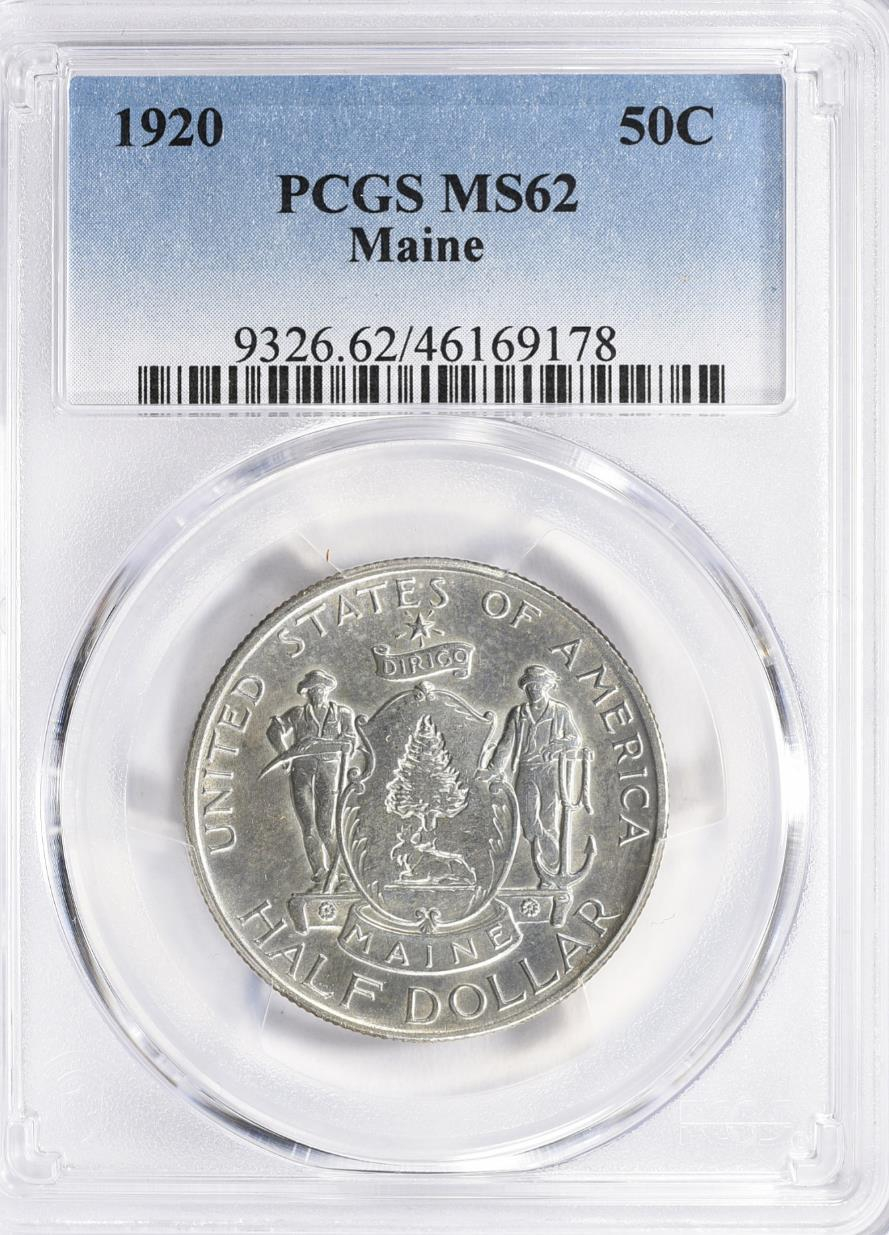
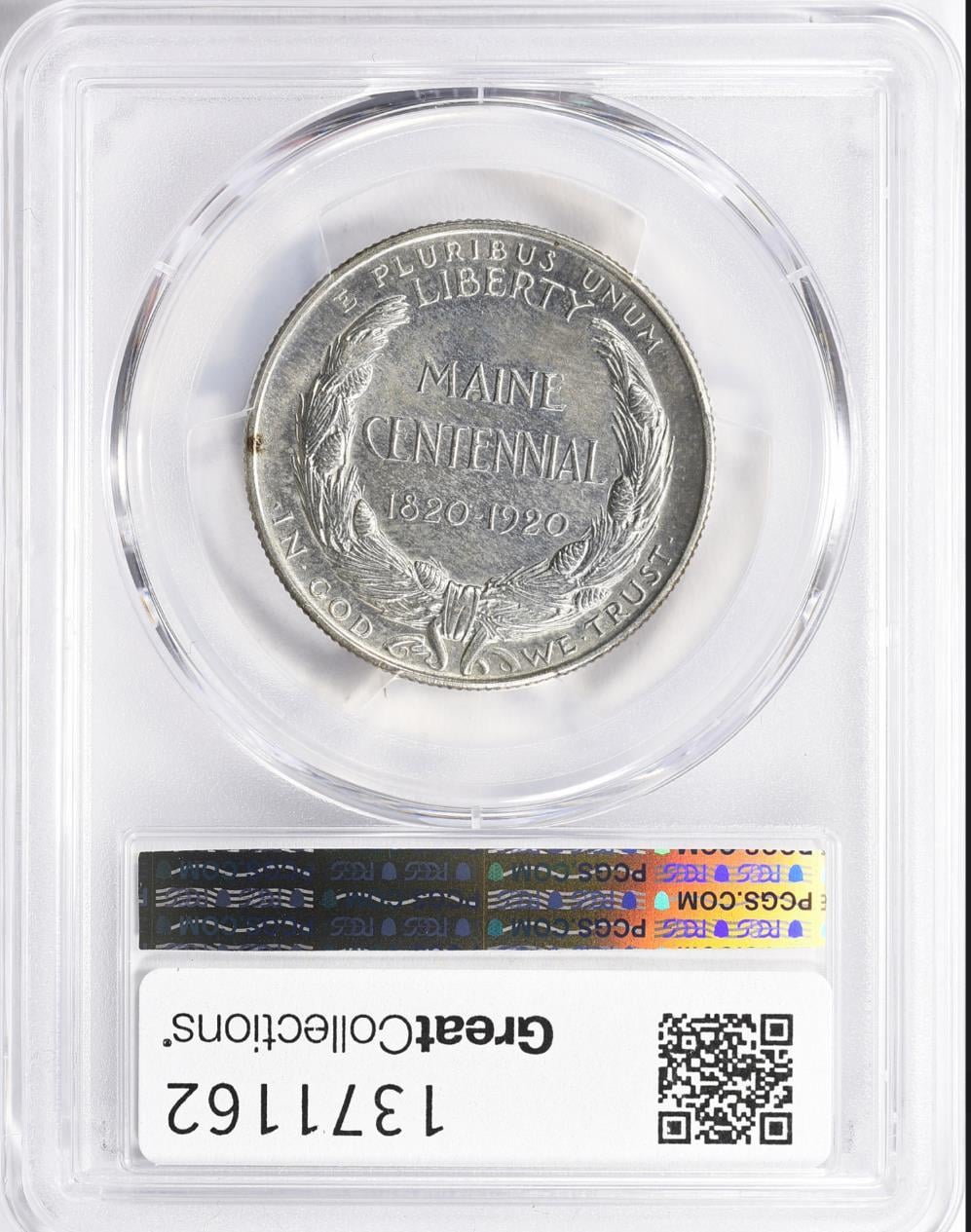
Maine - Designed by a Legend: The obverse and reverse were sculpted by Anthony de Francisci. If his style feels familiar, it is because he is most famously known for designing the iconic Peace Dollar.
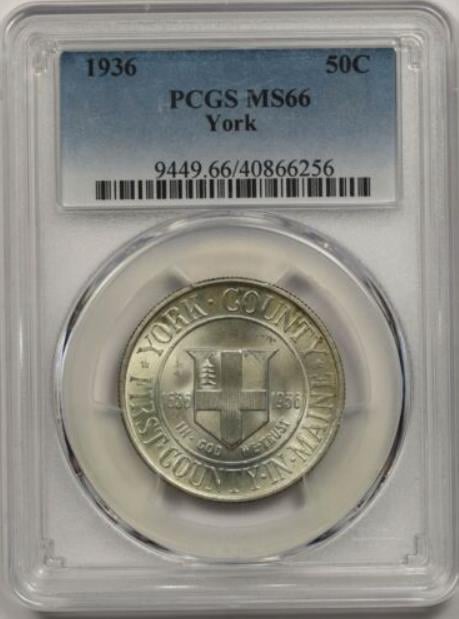
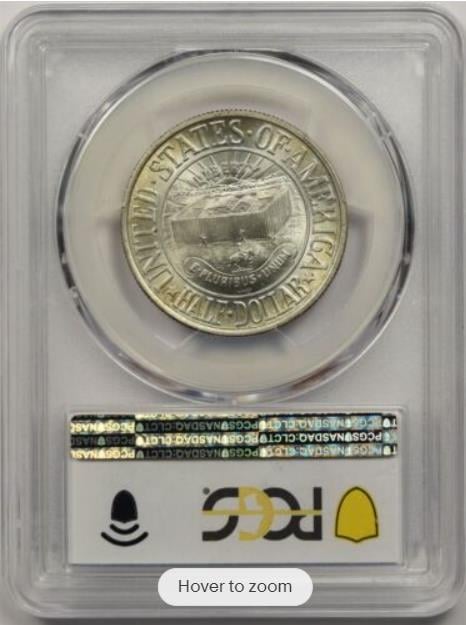
York - The York County Tercentenary Commemorative Coin Association purposely set aside 10,000 coins specifically for Maine residents before opening up nationwide mail orders.
Steve
A day without fine wine and working on your coin collection is like a day without sunshine!!!
The Maine quarter is the third to be released in 2003. Coins in the 50 State Quarters Program are released in the order the states were admitted into the Union. Maine became the 23rd state to be admitted into the Union on March 15, 1820.
The Maine quarter design also features the image of a schooner resembling Victory Chimes, the last three–masted schooner of the Windjammer Fleet. Victory Chimes has become synonymous with Maine windjamming.
Pemaquid Point Light is located in New Harbor, and marks the entrance to Muscongus Bay and Johns Bay. Since the beginning of ship activity in the area, a shoal created hazardous navigation conditions, causing many shipwrecks. As maritime trade increased in the area, so did the need for a lighthouse. In 1826, Congress appropriated funds to build a lighthouse at Pemaquid Point. The original building was replaced in 1835. The light is still a beacon for ships and remains one of Maine's most popular tourist attractions.
Characteristics
The obverse (heads) design features the familiar image of George Washington by John Flanagan, used on the quarter since 1932.
The reverse (tails) design features the incorporated rendition of the Pemaquid Point Light atop a granite coast and a schooner at sea.
The 2012 Acadia National Park Quarter is the 13th coin in the America the Beautiful Quarters® Program.
Awed by its beauty and diversity, early 20th-century visionaries donated the land on the rugged coast of Maine that became Acadia National Park, the first national park east of the Mississippi River. The park is home to the tallest mountain on the U.S. Atlantic Coast. Visitors come to Acadia to hike over granite peaks, bike on historic carriage roads and enjoy the spectacular scenery. It was first established as a national site on July 8, 1916 (39 Stat. 1785).
Characteristics
The obverse (heads) design features the familiar image of George Washington by John Flanagan, used on the quarter since 1932. It has been restored to bring out subtle details and the beauty of the original.
The reverse (tails) depicts a view to the Bass Harbor Head Lighthouse and Acadia's rough coastline. The design captures many representative elements of Acadia: the coastline, the lighthouse, the pine trees and the ocean. Design candidates were developed in consultation with representatives of Acadia National Park.
The Maine American Innovation $1 Coin reverse (tail) design presents a profile portrait of Dr. Bernard Lown with his direct current defibrillator in operation below. The design includes the inscriptions “UNITED STATES OF AMERICA,” “BERNARD LOWN, M.D.,” “DIRECT CURRENT DEFIBRILLATOR,” and “MAINE.”
Missouri
1. It is only the second US commemorative coin in history to feature an individual on both the obverse and reverse sides (the first being the 1900 Lafayette dollar).
2. The coin features a portrait of frontiersman Daniel Boone wearing a coon-skin cap. However, historical records indicate that Boone much preferred wearing a wide-brimmed felt hat to protect his eyes from the sun.
3. Due to the extremely high, medal-like relief of the design and lack of space, the coin completely omits any standard US coin inscriptions like "LIBERTY", "E PLURIBUS UNUM", and "IN GOD WE TRUST".
Steve
A day without fine wine and working on your coin collection is like a day without sunshine!!!
Released on August 4, 2003, this is the 24th coin released in the 50 State Quarters Program and the fourth released in 2003. Missouri, admitted into the Union on August 10, 1821, themed the coin, Corps of Discovery. The quarter is the first circulating coin to depict Lewis and Clark's historic expedition over 200 years ago, depicting the explorers' return to Saint Louis down the Missouri River. The Jefferson National Expansion Memorial (the Gateway Arch) is illustrated in the background, with the inscription "Corps of Discovery 1804–2004."
Characteristics
The obverse (heads) design features the familiar image of George Washington by John Flanagan, used on the quarter since 1932.
The reverse (tails) design features Lewis and Clark's historic return to St. Louis down the Missouri River, with the Jefferson National Expansion Memorial Gateway Arch in the the background.
The 2017 Ozark National Scenic Riverways Quarter is the 38th coin in the America the Beautiful Quarters® Program.
Ozark National Scenic Riverways was established in 1964 to protect 134 miles of the Current and Jacks Fork Rivers in the Ozark Highlands of southeastern Missouri. The park encompasses 80,785 acres of unique natural resources, including a world-class spring system that is unparalleled in North America, more than 400 caves, and other special geologic features. The rivers offer remarkably clean, clear water that is complemented by the breathtaking blue shade of the waters of the large springs. The spectacular natural beauty of the area attracts park visitors to participate in a variety of recreational opportunities, such as john boating, canoeing, swimming, and fishing. Hiking, hunting, and horseback riding are also enjoyed across the landscape.
In addition to the unique natural features of the Ozarks, the National Park Service preserves the heritage and lifeways of the Ozark culture, which was heavily shaped by the remote and rugged landscape. The park manages 249 historic structures that are scattered throughout the park and also preserves the history and remnants of prehistoric peoples who settled in the region during the past 12,000 years.
Characteristics
The obverse (heads) design features the familiar image of George Washington by John Flanagan, used on the quarter since 1932. It has been restored to bring out subtle details and the beauty of the original.
The reverse (tails) depicts Alley Mill, a steel roller mill built in 1894. This merchant mill was used to convert wheat into flour. Much of the original milling equipment is still in place, and visitors to the park can tour the mill. Design candidates were developed in consultation with representatives of Ozark National Scenic Riverways.
The Missouri American Innovation $1 Coin reverse (tail) design presents a depiction of George Washington Carver gently smiling while examining a sample of his work in his laboratory. The leaves, blossoms, and fruits of a peanut plant weave between scientific equipment. Inscriptions include “UNITED STATES OF AMERICA,” “MISSOURI,” and “GEORGE WASHINGTON CARVER.”
Arkansas - Although a centennial typically calls for a one-year coin, Congress authorized the Arkansas half dollar to be struck annually for a massive five years - from 1935 through 1939 across multiple mints!
Robinson - In 1936, a variation of the Arkansas Commem, known as the Robinson-Arkansas Half Dollar was released. It featured Arkansas Senator Joseph T. Robinson. Remarkably, this was minted while Robinson was still alive—a rarity for United States coinage. Tragically, Senator Robinson passed away just a year later in July 1937. The reverse of the Robinson version is identical to that of the Arkansas Commem!
MS66+ with CAC:
I’m taking tomorrow off, as I cannot comfortably tie a Commem to Michigan.
Steve
A day without fine wine and working on your coin collection is like a day without sunshine!!!
Released on October 20, 2003, this is the 25th coin released in the 50 State Quarters Program and the fifth released in 2003. Arkansas was admitted into the Union on June 15, 1836. The land was acquired through the Louisiana Purchase and became the Arkansas Territory before gaining statehood.
Arkansas themed the coin the Natural State. Arkansas' Crater of Diamonds State Park is the only diamond mine in the United States that is open to the public. Visitors can search the crater for precious gems, including, of course, diamonds. The state also has an abundance of clear streams and rivers, boasts more than 600,000 acres of natural lakes, and is renowned for its outstanding waterfowl hunting. Arkansas is also the nation's leading producer of rice.
Characteristics
The obverse (heads) design features the familiar image of George Washington by John Flanagan, used on the quarter since 1932.
The reverse (tails) design features an image of rice stalks, a diamond and a mallard gracefully flying above a lake.
The 2010 Hot Springs National Park Quarter is the first coin in the America the Beautiful Quarters® Program.
Hot Springs National Park, destination of the Dunbar-Hunter Expedition sent by President Thomas Jefferson in 1804, features prehistoric American Indian quarries. A bustling town grew up around the hot springs to provide health services. Hot Springs was first established as a national site on April 20, 1832 (4 Stat. 505), to conserve the water from the 47 springs that emerge from Hot Springs Mountain and to ensure that water was made available for drinking and therapy.
Characteristics
The obverse (heads) design features the familiar image of George Washington by John Flanagan, used on the quarter since 1932. It has been restored to bring out subtle details and the beauty of the original.
The reverse (tails) depicts the façade of the Hot Springs National Park headquarters building with a thermal fountain in the foreground. The headquarters was built in the Spanish colonial revival style and completed in 1936. The National Park Service emblem is featured to the right of the door. Design candidates were developed in consultation with representatives of Hot Springs National Park.
The Arkansas American Innovation $1 Coin reverse (tail) design features Raye Montague visualizing a United States Navy Oliver Hazard Perry-class frigate, a ship she designed by computer. The grid pattern over the sea evokes the engineering and drafting techniques she digitized to accomplish her design. Included inscriptions are “UNITED STATES OF AMERICA,” “ARKANSAS,” and “RAYE MONTAGUE.”
The Arkansas State Fund so-called dollar, produced by Whitehead & Hoag of Newark, NJ, celebrates aluminum production in the state. A view of the Arkansas Building at the exposition on the obverse signed W & H Co below the bottom legend, the State seal on the reverse.
Category
1915 Panama-Pacific International Exposition
Reference SH 18-13 AL / HK-403
Date 1915
Metal Aluminum
Weight
Diameter 38 mm
Designed By
Engraved By
Minted By
Rarity
Orientation
The Michigan State quarter was released on January 26, 2004, exactly 167 years after the state became the 26th state admitted into the Union. Michigan, who was admitted into the Union on January 26, 1837, themed the coin Great Lakes State. This quarter is the 26th coin released in the 50 State Quarters Program.
The Michigan quarter depicts a textured outline of the State and the Great Lakes system. The quarter is inscribed "Great Lakes State." Michigan borders four of the five Great Lakes, more than any other state. Standing anywhere in Michigan, a person is within 85 miles of one of the Great Lakes.
Characteristics
The obverse (heads) design features the familiar image of George Washington by John Flanagan, used on the quarter since 1932.
The reverse (tails) design features an outline of Michigan and the Great Lakes system.
The 2018 Pictured Rocks National Lakeshore Quarter is the 41st coin in the America the Beautiful Quarters® Program.
Established in 1966 as our first national lakeshore, Michigan’s Pictured Rocks National Lakeshore is a narrow strip of a park that hugs the Lake Superior coast for more than 40 miles. The shoreline consists of 200-foot-high colorful sandstone cliffs, numerous beaches, and 300-foot-tall sand dunes. The shoreline is bordered by boreal and eastern hardwood forests with numerous waterfalls, streams, and lakes. There is abundant wildlife, including black bears, deer, and porcupine, with bald eagles and peregrine falcons dotting the skies.
Characteristics
The obverse (heads) design features the familiar image of George Washington by John Flanagan, used on the quarter since 1932. It has been restored to bring out subtle details and the beauty of the original.
The reverse (tails) depicts a Chapel Rock and the white pine tree that grows atop. Design candidates were developed in consultation with representatives of Pictured Rocks National Lakeshore.
The Michigan American Innovation $1 Coin reverse design features a 1930s-era assembly line where a team of auto workers lowers an automobile cab into place. Included inscriptions are “UNITED STATES OF AMERICA,” “MICHIGAN,” and “AUTO ASSEMBLY LINE.” United States Mint Medallic Artist John P. McGraw sculpted, and Artistic Infusion Program (AIP) Designer Ron Sanders designed, the image.
Comments
Maine - Designed by a Legend: The obverse and reverse were sculpted by Anthony de Francisci. If his style feels familiar, it is because he is most famously known for designing the iconic Peace Dollar.
York - The York County Tercentenary Commemorative Coin Association purposely set aside 10,000 coins specifically for Maine residents before opening up nationwide mail orders.
Steve
My collecting “Pride & Joy” is my PCGS Registry Dansco 7070 Set:
https://www.pcgs.com/setregistry/type-sets/design-type-sets/complete-dansco-7070-modified-type-set-1796-date/publishedset/213996
WOW, most excellant
The Maine quarter is the third to be released in 2003. Coins in the 50 State Quarters Program are released in the order the states were admitted into the Union. Maine became the 23rd state to be admitted into the Union on March 15, 1820.
The Maine quarter design also features the image of a schooner resembling Victory Chimes, the last three–masted schooner of the Windjammer Fleet. Victory Chimes has become synonymous with Maine windjamming.
Pemaquid Point Light is located in New Harbor, and marks the entrance to Muscongus Bay and Johns Bay. Since the beginning of ship activity in the area, a shoal created hazardous navigation conditions, causing many shipwrecks. As maritime trade increased in the area, so did the need for a lighthouse. In 1826, Congress appropriated funds to build a lighthouse at Pemaquid Point. The original building was replaced in 1835. The light is still a beacon for ships and remains one of Maine's most popular tourist attractions.
Characteristics
The obverse (heads) design features the familiar image of George Washington by John Flanagan, used on the quarter since 1932.
The reverse (tails) design features the incorporated rendition of the Pemaquid Point Light atop a granite coast and a schooner at sea.
The 2012 Acadia National Park Quarter is the 13th coin in the America the Beautiful Quarters® Program.
Awed by its beauty and diversity, early 20th-century visionaries donated the land on the rugged coast of Maine that became Acadia National Park, the first national park east of the Mississippi River. The park is home to the tallest mountain on the U.S. Atlantic Coast. Visitors come to Acadia to hike over granite peaks, bike on historic carriage roads and enjoy the spectacular scenery. It was first established as a national site on July 8, 1916 (39 Stat. 1785).
Characteristics
The obverse (heads) design features the familiar image of George Washington by John Flanagan, used on the quarter since 1932. It has been restored to bring out subtle details and the beauty of the original.
The reverse (tails) depicts a view to the Bass Harbor Head Lighthouse and Acadia's rough coastline. The design captures many representative elements of Acadia: the coastline, the lighthouse, the pine trees and the ocean. Design candidates were developed in consultation with representatives of Acadia National Park.
The Maine American Innovation $1 Coin reverse (tail) design presents a profile portrait of Dr. Bernard Lown with his direct current defibrillator in operation below. The design includes the inscriptions “UNITED STATES OF AMERICA,” “BERNARD LOWN, M.D.,” “DIRECT CURRENT DEFIBRILLATOR,” and “MAINE.”
A little late today!
Casual collector slowly building a collection....
Tuesday June 9 - Missouri
Walt Disney, Surrender of Japanese, Tokyo Bay ribbon.
Missouri
1. It is only the second US commemorative coin in history to feature an individual on both the obverse and reverse sides (the first being the 1900 Lafayette dollar).
2. The coin features a portrait of frontiersman Daniel Boone wearing a coon-skin cap. However, historical records indicate that Boone much preferred wearing a wide-brimmed felt hat to protect his eyes from the sun.
3. Due to the extremely high, medal-like relief of the design and lack of space, the coin completely omits any standard US coin inscriptions like "LIBERTY", "E PLURIBUS UNUM", and "IN GOD WE TRUST".
Steve
My collecting “Pride & Joy” is my PCGS Registry Dansco 7070 Set:
https://www.pcgs.com/setregistry/type-sets/design-type-sets/complete-dansco-7070-modified-type-set-1796-date/publishedset/213996
Casual collector slowly building a collection....
Released on August 4, 2003, this is the 24th coin released in the 50 State Quarters Program and the fourth released in 2003. Missouri, admitted into the Union on August 10, 1821, themed the coin, Corps of Discovery. The quarter is the first circulating coin to depict Lewis and Clark's historic expedition over 200 years ago, depicting the explorers' return to Saint Louis down the Missouri River. The Jefferson National Expansion Memorial (the Gateway Arch) is illustrated in the background, with the inscription "Corps of Discovery 1804–2004."
Characteristics
The obverse (heads) design features the familiar image of George Washington by John Flanagan, used on the quarter since 1932.
The reverse (tails) design features Lewis and Clark's historic return to St. Louis down the Missouri River, with the Jefferson National Expansion Memorial Gateway Arch in the the background.
The 2017 Ozark National Scenic Riverways Quarter is the 38th coin in the America the Beautiful Quarters® Program.
Ozark National Scenic Riverways was established in 1964 to protect 134 miles of the Current and Jacks Fork Rivers in the Ozark Highlands of southeastern Missouri. The park encompasses 80,785 acres of unique natural resources, including a world-class spring system that is unparalleled in North America, more than 400 caves, and other special geologic features. The rivers offer remarkably clean, clear water that is complemented by the breathtaking blue shade of the waters of the large springs. The spectacular natural beauty of the area attracts park visitors to participate in a variety of recreational opportunities, such as john boating, canoeing, swimming, and fishing. Hiking, hunting, and horseback riding are also enjoyed across the landscape.
In addition to the unique natural features of the Ozarks, the National Park Service preserves the heritage and lifeways of the Ozark culture, which was heavily shaped by the remote and rugged landscape. The park manages 249 historic structures that are scattered throughout the park and also preserves the history and remnants of prehistoric peoples who settled in the region during the past 12,000 years.
Characteristics
The obverse (heads) design features the familiar image of George Washington by John Flanagan, used on the quarter since 1932. It has been restored to bring out subtle details and the beauty of the original.
The reverse (tails) depicts Alley Mill, a steel roller mill built in 1894. This merchant mill was used to convert wheat into flour. Much of the original milling equipment is still in place, and visitors to the park can tour the mill. Design candidates were developed in consultation with representatives of Ozark National Scenic Riverways.
The Missouri American Innovation $1 Coin reverse (tail) design presents a depiction of George Washington Carver gently smiling while examining a sample of his work in his laboratory. The leaves, blossoms, and fruits of a peanut plant weave between scientific equipment. Inscriptions include “UNITED STATES OF AMERICA,” “MISSOURI,” and “GEORGE WASHINGTON CARVER.”
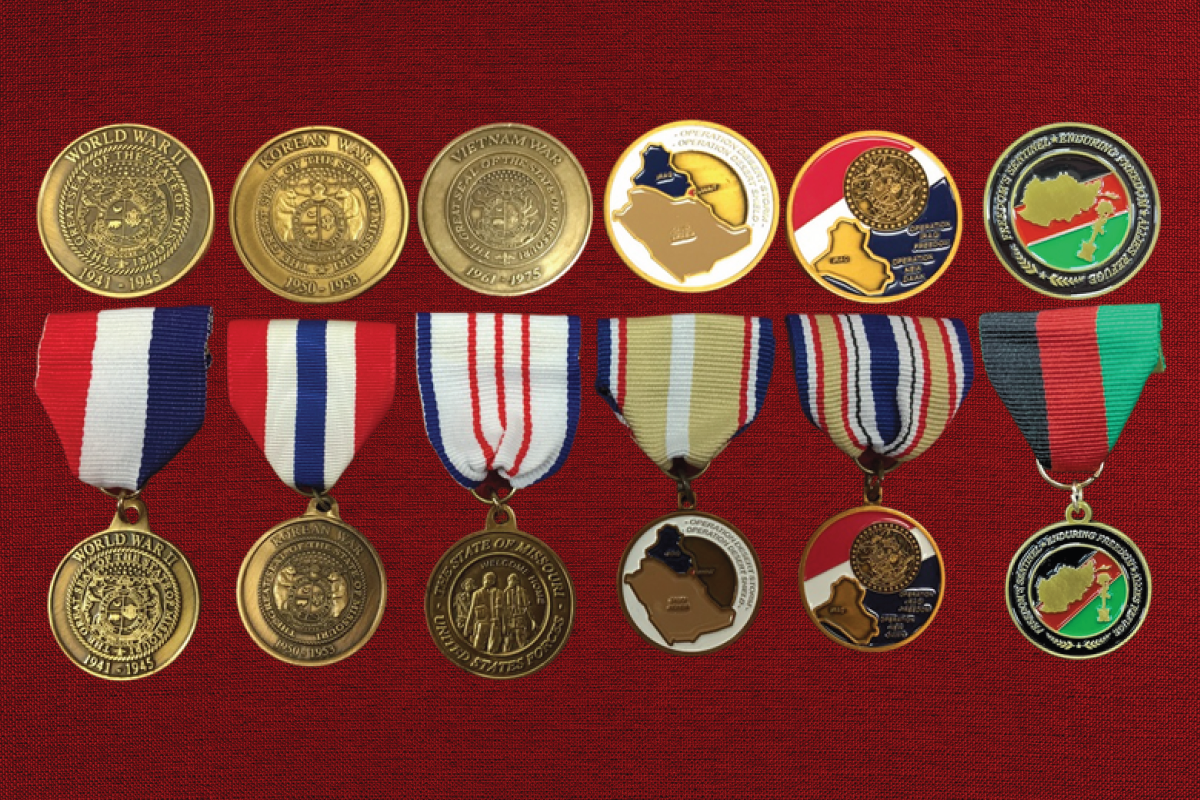
Missouri Veterans Recognition War Medallion Program
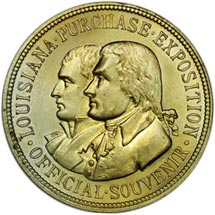
https://www.so-calleddollars.com/Events/Louisiana_Purchase_Exposition.html
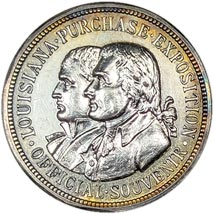
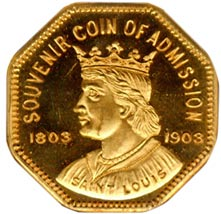
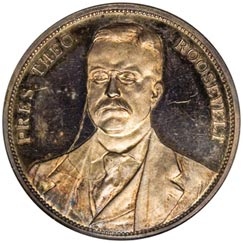
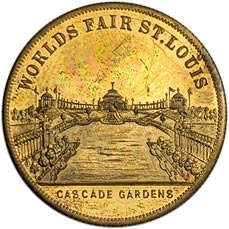
and MANY MORE so called dollars on their page:
https://www.so-calleddollars.com/Events/Louisiana_Purchase_Exposition.html
Wednesday June 10 - Arkansas
Daisy Corporation - Rogers, Arkansas
Arkansas State Firearm: Shotgun
Ozark farm
Shire Post Mint - West Fork, Arkansas
Arkansas - Although a centennial typically calls for a one-year coin, Congress authorized the Arkansas half dollar to be struck annually for a massive five years - from 1935 through 1939 across multiple mints!
Robinson - In 1936, a variation of the Arkansas Commem, known as the Robinson-Arkansas Half Dollar was released. It featured Arkansas Senator Joseph T. Robinson. Remarkably, this was minted while Robinson was still alive—a rarity for United States coinage. Tragically, Senator Robinson passed away just a year later in July 1937. The reverse of the Robinson version is identical to that of the Arkansas Commem!
MS66+ with CAC:
I’m taking tomorrow off, as I cannot comfortably tie a Commem to Michigan.
Steve
My collecting “Pride & Joy” is my PCGS Registry Dansco 7070 Set:
https://www.pcgs.com/setregistry/type-sets/design-type-sets/complete-dansco-7070-modified-type-set-1796-date/publishedset/213996
Casual collector slowly building a collection....
Released on October 20, 2003, this is the 25th coin released in the 50 State Quarters Program and the fifth released in 2003. Arkansas was admitted into the Union on June 15, 1836. The land was acquired through the Louisiana Purchase and became the Arkansas Territory before gaining statehood.
Arkansas themed the coin the Natural State. Arkansas' Crater of Diamonds State Park is the only diamond mine in the United States that is open to the public. Visitors can search the crater for precious gems, including, of course, diamonds. The state also has an abundance of clear streams and rivers, boasts more than 600,000 acres of natural lakes, and is renowned for its outstanding waterfowl hunting. Arkansas is also the nation's leading producer of rice.
Characteristics
The obverse (heads) design features the familiar image of George Washington by John Flanagan, used on the quarter since 1932.
The reverse (tails) design features an image of rice stalks, a diamond and a mallard gracefully flying above a lake.
The 2010 Hot Springs National Park Quarter is the first coin in the America the Beautiful Quarters® Program.
Hot Springs National Park, destination of the Dunbar-Hunter Expedition sent by President Thomas Jefferson in 1804, features prehistoric American Indian quarries. A bustling town grew up around the hot springs to provide health services. Hot Springs was first established as a national site on April 20, 1832 (4 Stat. 505), to conserve the water from the 47 springs that emerge from Hot Springs Mountain and to ensure that water was made available for drinking and therapy.
Characteristics
The obverse (heads) design features the familiar image of George Washington by John Flanagan, used on the quarter since 1932. It has been restored to bring out subtle details and the beauty of the original.
The reverse (tails) depicts the façade of the Hot Springs National Park headquarters building with a thermal fountain in the foreground. The headquarters was built in the Spanish colonial revival style and completed in 1936. The National Park Service emblem is featured to the right of the door. Design candidates were developed in consultation with representatives of Hot Springs National Park.
The Arkansas American Innovation $1 Coin reverse (tail) design features Raye Montague visualizing a United States Navy Oliver Hazard Perry-class frigate, a ship she designed by computer. The grid pattern over the sea evokes the engineering and drafting techniques she digitized to accomplish her design. Included inscriptions are “UNITED STATES OF AMERICA,” “ARKANSAS,” and “RAYE MONTAGUE.”
https://www.so-calleddollar.com/scd/arkansas-state/
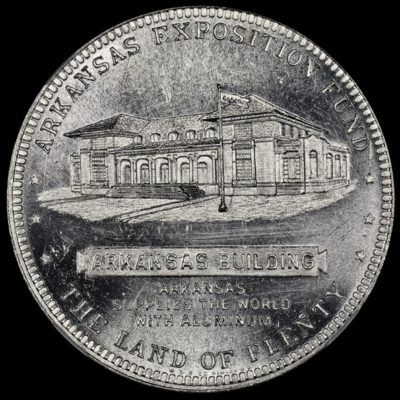
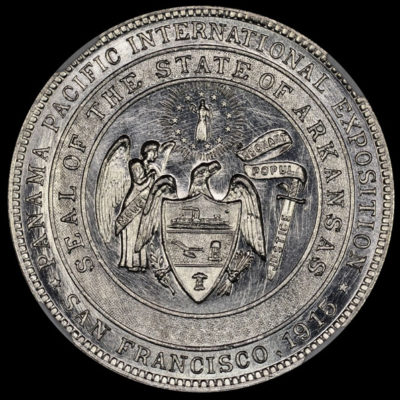
Arkansas State
1915 · SH 18-13 AL · HK-403
The Arkansas State Fund so-called dollar, produced by Whitehead & Hoag of Newark, NJ, celebrates aluminum production in the state. A view of the Arkansas Building at the exposition on the obverse signed W & H Co below the bottom legend, the State seal on the reverse.
Category
1915 Panama-Pacific International Exposition
Reference SH 18-13 AL / HK-403
Date 1915
Metal Aluminum
Weight
Diameter 38 mm
Designed By
Engraved By
Minted By
Rarity
Orientation
the So Called Dollars site has a ton of great stuff:
https://www.so-calleddollar.com/scd/arkansas-state/
Thursday June 11 - Michigan
Mackinac Bridge
Lake Michigan
General Motors Motorama 1954
GM 1955
1940 Oldsmobile
Chrysler Airflow
Casual collector slowly building a collection....
The Michigan State quarter was released on January 26, 2004, exactly 167 years after the state became the 26th state admitted into the Union. Michigan, who was admitted into the Union on January 26, 1837, themed the coin Great Lakes State. This quarter is the 26th coin released in the 50 State Quarters Program.
The Michigan quarter depicts a textured outline of the State and the Great Lakes system. The quarter is inscribed "Great Lakes State." Michigan borders four of the five Great Lakes, more than any other state. Standing anywhere in Michigan, a person is within 85 miles of one of the Great Lakes.
Characteristics
The obverse (heads) design features the familiar image of George Washington by John Flanagan, used on the quarter since 1932.
The reverse (tails) design features an outline of Michigan and the Great Lakes system.
The 2018 Pictured Rocks National Lakeshore Quarter is the 41st coin in the America the Beautiful Quarters® Program.
Established in 1966 as our first national lakeshore, Michigan’s Pictured Rocks National Lakeshore is a narrow strip of a park that hugs the Lake Superior coast for more than 40 miles. The shoreline consists of 200-foot-high colorful sandstone cliffs, numerous beaches, and 300-foot-tall sand dunes. The shoreline is bordered by boreal and eastern hardwood forests with numerous waterfalls, streams, and lakes. There is abundant wildlife, including black bears, deer, and porcupine, with bald eagles and peregrine falcons dotting the skies.
Characteristics
The obverse (heads) design features the familiar image of George Washington by John Flanagan, used on the quarter since 1932. It has been restored to bring out subtle details and the beauty of the original.
The reverse (tails) depicts a Chapel Rock and the white pine tree that grows atop. Design candidates were developed in consultation with representatives of Pictured Rocks National Lakeshore.
The Michigan American Innovation $1 Coin reverse design features a 1930s-era assembly line where a team of auto workers lowers an automobile cab into place. Included inscriptions are “UNITED STATES OF AMERICA,” “MICHIGAN,” and “AUTO ASSEMBLY LINE.” United States Mint Medallic Artist John P. McGraw sculpted, and Artistic Infusion Program (AIP) Designer Ron Sanders designed, the image.