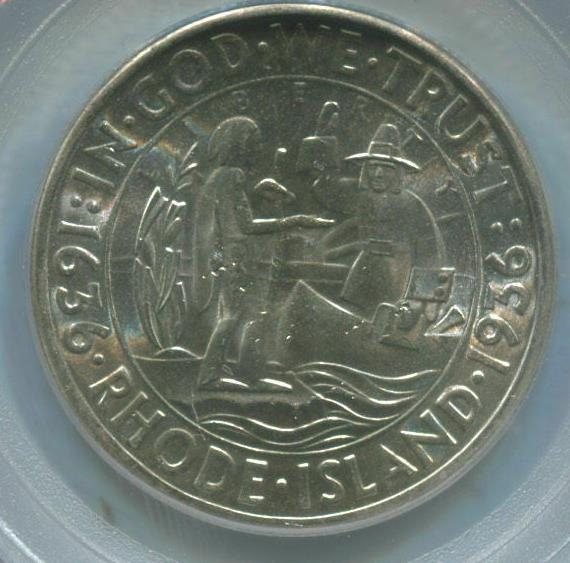
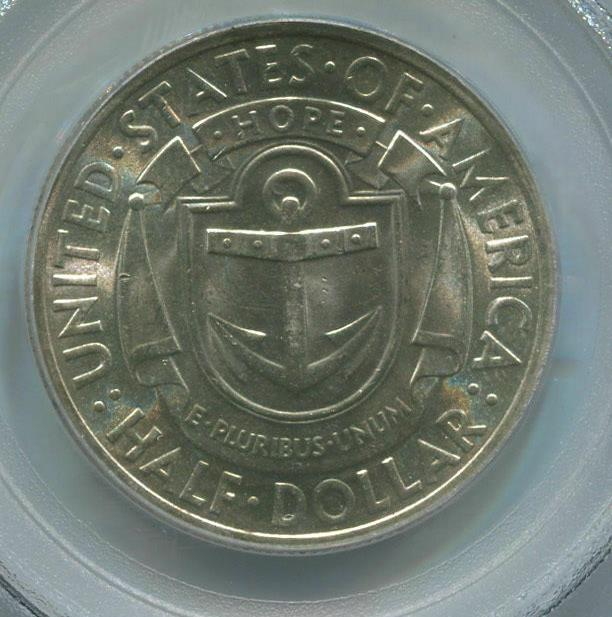
While this coin marks 300 years since Roger Williams founded Providence in 1636, it never mentions "Providence": Even though the coin was specifically issued to celebrate the founding of the city of Providence, the city's name doesn't appear anywhere on it!
Steve
A day without fine wine and working on your coin collection is like a day without sunshine!!!
To award a Congressional Gold Medal, collectively, to the First Rhode Island Regiment, in recognition of their dedicated service during the Revolutionary War.
On December 17, 2021, we marked the 273rd birthday of General James Mitchell Varnum. One of George Washington’s most trusted officers during the American Revolution, he achieved a remarkable career before his untimely passing. One of his inspired accomplishments was the establishment of a then unique military unit, the 1st Rhode Island Regiment.
During the winter of 1777-78, American troops, including the Rhode Islanders, survived an arduous winter at Valley Forge. Varnum remained strongly motivated to address the brutal British occupation of Newport and defended his home state’s reluctance to provide more troops to the Continental Army given the British presence. It is here that the 1st Rhode Island, the “Black Regiment,” was born. Varnum convinced George Washington of the merit of recruiting enslaved Blacks and freedmen as well as Native Americans from Rhode Island into a military unit. Consolidating the 1st and 2nd Rhode Island Regiments at Valley Forge, Colonel Christopher Greene, Lt. Col. Jeremiah Olney, and Major Samuel Ward were sent back to Rhode Island to raise the regiment.
The General Assembly, in spite of vocal opposition by slave owners from the southern part of the state, agreed to the plan in February 1778. By order of the assembly, “every able-bodied negro, mulatto, or Indian man slave that chose to enlist would be freed on their acceptance into the unit and completion of military service.” Slave owners were to be compensated by the Rhode Island Assembly who would then be reimbursed by the Continental Congress (or so it was hoped) for the market value of the individual enslaved recruits.
Following training in East Greenwich, RI, the unit’s first engagement was at the Battle of Rhode Island which took place at the northern end of Aquidneck Island in August of 1778 under command of General John Sullivan.
Even though this engagement (the only land battle of the Revolution to be fought in the Ocean State) is considered a defeat for Continental forces, the Black Regiment averted a complete rout. Because weather conditions prevented expected support by newly arrived French naval forces, Sullivan knew he could not press a large confrontation with the well-entrenched enemy forces defending Newport. The American forces were arrayed in three elements. The men of the 1st Rhode Island under Col. Greene held the line against repeated attacks by British and Hessian troops on the west flank.
The Battle of Rhode Island (also known as the Battle of Quaker Hill) took place on August 29, 1778. Continental Army and militia forces under the command of Major-general John Sullivan had been besieging British forces in Newport, Rhode Island on Aquidneck Island, but they had finally abandoned their siege and were withdrawing to the northern part of the island. The British then sortied, supported by recently arrived Royal Navy ships, and they attacked the retreating Americans. The battle ended inconclusively, but the Continental forces withdrew to the mainland and left Aquidneck Island in British hands.
The Rhode Island ship medal at first glance bears resemblance to a coin, although it is not legal tender of any kind. The medal was cast in England around 1779 and depicts British Admiral Richard Howe’s flagship on the obverse. On the reverse, the medal depicts the Continental Army fleeing across Aquidneck Island in the face of the British Navy. The medal makes a powerful statement regarding the comparative strength of the British and American navies by depicting the British fleet as comprised of impressive men-of-war while its American counterpart seems to be comprised largely of canoe-like vessels.
The medal originated in England, however the inscriptions are Dutch. The inscription on the obverse simply identifies the ship as the flagship of British Admiral Howe, while the inscription on the reverse reads “The flight of the Americans from Rhode Island, August 1778” in Dutch. The medal directly refers to the Battle of Rhode Island, which took place on August 29th, 1778. The Battle of Rhode Island—also known as the Siege of Newport or the Battle of Quaker Hill.
Given the events of the battle, the purpose of the Dutch inscription on the reverse becomes clear. The medal is propaganda intended to dissuade the Dutch from taking any action against the British in the American War of Independence. Specifically, the Colonial Williamsburg Foundation states that the medal was struck to attempt to convince the Dutch not to sign the Treat of Armed Neutrality . During the War of American Independence, the British instituted a very liberal search and seizure policy, in which they asserted their right to search all neutral shipping and inspect it for French contraband bound for the new world. The Treaty of Armed Neutrality, comprised of Russia, Prussia, Denmark, Sweden, Portugal and others challenged the legitimacy of this practice and responded by arming their merchant convoys. As evidenced by the production of the medal, the British were concerned about the Dutch signing the Treaty of Armed Neutrality, and struck the medal as a propaganda campaign to attempt to prevent that from happening.
In 1778, American ground forces and French naval forces teamed up to try to dislodge the British from their dugin position at Newport, Rhode Island. It was the first such coordinated effort between the new allies.
...
It was an embarrassment, and the maker of the Rhode Island Ship medal wanted to make sure the largely pro-American Dutch knew about it before they advanced toward a financial or military alliance. So the maker produced a medal that showed Admiral Richard Howe’s flagship, the HMS Eagle, standing strong and firm with an appropriate motto: DE ADMIRAALS FLAG van ADMIRAAL HOWE 1779. The Eagle is depicted at anchor, sails furled, still and confident in its position. The contrast drawn between obverse and reverse would be a contrast between Howe’s strength and resolve and the Americans’ lack of it. A stylized map of Aquidneck Island, where Newport is located, is depicted in easily recognizable form. The British fleet is visible at the left shore of the island, in Narraganset Bay, while American boats are seen lined up on the right shore of the island to cross the Sakonnet River to escape to the mainland. American troops are seen, muskets shouldered, marching toward their boats, with a peripheral legend of D’vlugtende AMERICAANEN van ROHDE YLAND Aug’t 1778. The implication was clear: the British are steadfast, and the Americans are retreating cowards.
But cheap medals are made cheaply, and that means mistakes happen. When the die sinker produced the piece, he added the word “vlugtende” — meaning “fleeing” — to the piece to drive home what the Americans were doing. Murphy’s Law was discovered well before the 18th century, though, and the die sinker added it in the wrong place, beneath Howe’s anchored flagship instead of beneath the scene of the scampering Americans. Oops.
The mistake, given the rarity of the vlugtende variety, was discovered almost immediately. Rather than melt and restrike the medals that had been struck thus far, the minter instead removed the incorrectly placed word with a single chisel stroke directly from the soft-metal medals. It’s easy, but repetitive and time consuming. Some chisel strokes took out the whole word, others left portions of it slightly visible at the margins. Another remedy was settled upon: the addition of a floral spray into the die atop the word “vlugtende,” neatly covering it. Production was continued, and today’s numismatists can see the letters l, t, and d of “vlugtende” pretty clearly among the floral decoration.
The three varieties are now known as Betts-561 (with vlugtende), Betts-562 (vlugtende removed), and Betts-563 (ornament below ship).
This Commem actually commemorates a New York battle: The Battle of Bennington is the coin's namesake event, but the actual battle took place about 10 miles west in Walloomsac, New York! Separately, Keck's portrait of founder Ira Allen and the walking catamount were struck in the highest relief of any early commemorative half dollar, giving it exceptional frosty luster.
Steve
A day without fine wine and working on your coin collection is like a day without sunshine!!!
The Battle of Bennington was a battle of the American Revolutionary War, part of the Saratoga campaign, that took place on August 16, 1777, on the John Green farm in Walloomsac, New York, about 10 miles (16 km) from its namesake, Bennington, Vermont. An American force of 2,000 men, primarily New Hampshire and Massachusetts militiamen, led by General John Stark, and reinforced by militiamen from the independent Vermont Republic led by Colonel Seth Warner and members of the Green Mountain Boys, decisively defeated a detachment of General John Burgoyne's army led by Lieutenant-Colonel Friedrich Baum, and supported by additional troops under Lieutenant-Colonel Heinrich von Breymann.
Baum's detachment of 700 men consisted of Hessian and British Army troops, Canadian and Loyalist irregulars and a number of Iroquois warriors.[8] He was sent by Burgoyne to raid Bennington in the disputed New Hampshire Grants area for horses, draft animals, provisions, and other supplies.
1878 Pair of Commemorative Medals, Major General John Stark. Two medallions, a silver version and a brown copper one, issued to commemorate the Battle of Bennington, Vermont, in 1777. These medals measure approximately 40 mm each and were issued by the Vermont Numismatic Society. The obverse of each medal depicts Major General John Stark. The medals were die-sunk by Robert Lovett and engraved by Hennrick of Delaware. A nice pair from an early numismatic organization. The market value is about $125-$175.
1878 Battle of Bennington Centennial Medal. Unlisted SCD-273. Silver. MS-63 (PCGS). 40 mm. Click here for certification details from PCGS. Image with the PCGS TrueView logo is obtained from and is subject to a license agreement with Collectors Universe, Inc. and its divisions PCGS and PSA.
The Vermont Distinguished Service Medal is awarded to U.S. veterans from Vermont who served in a combat theater. The medal was established in 1999, but is retroactively available to veterans of prior military service.
The Vermont Distinguished Service Medal is a state award, presented by the Vermont Department of Veterans Affairs. U.S. military active duty regulations allow their members to accept but not wear state awards. In addition, activated National Guard members may not wear their state awards while serving in Title 10 (federal) status.
The Vermont Patriots Medal is an award of the state of Vermont. It is presented to the next of kin of each Vermont military service member who is killed in armed conflict. The award was first authorized in 1966, during the Vietnam War, but presentations did not commence until 1996.
Eligibility
Award of the Vermont Patriots Medal is managed by the Vermont Office of Veterans Affairs. The adjutant general of the Vermont National Guard is authorized to present the medal and a scroll acknowledging Vermont's debt to the family to the next of kin of each Vermont service member whose life is given in an armed conflict. The costs associated with creating the medal, and presenting the award and scroll are paid for from the state's legislative budget.
The 2020 Marsh-Billings-Rockefeller National Historical Park Quarter is the 54th coin in the America the Beautiful Quarters® Program.
The Marsh-Billings-Rockefeller National Historical Park in Vermont is the only national park dedicated to telling the story of conservation history and the evolving nature of land stewardship in America. It was the boyhood home of George Perkins Marsh, one of America’s first conservationists, and later the home of Frederick Billings. The property was given to the American people by its most recent owners, Laurance S. and Mary French Rockefeller.
Characteristics
The obverse (heads) design features the familiar image of George Washington by John Flanagan, used on the quarter since 1932. It has been restored to bring out subtle details and the beauty of the original.
The reverse (tails) design depicts a young girl completing the planting of a Norway spruce seedling near an established tree, continuing the life cycle of the forest. The child represents the conservationist, seeking to maintain a sustainable forest for future enjoyment and education.
Released on August 6, 2001, this is the 14th coin released in the 50 State Quarters Program and the fourth released in 2001. Vermont, admitted into the Union on March 4, 1791, themed, Freedom & Unity. The quarter honoring the "Green Mountain State" features two maple trees with a view of one of Vermont's most significant landmarks, Camel's Hump Mountain, and the inscription, "Freedom and Unity.
Two Town Committees, One Designer: The coin’s designer, Chester Beach, had his $1,250 design fee split directly between the town committees of Lexington and Concord. The Concord committee chose the obverse image, while the Lexington committee chose the reverse.
Steve
A day without fine wine and working on your coin collection is like a day without sunshine!!!
Abraham Lincoln was born on February 12, 1809, in a small log cabin like the one shown on this one-cent coin. Nolin Creek ran nearby, and the closest town, three miles away, is now called Hodgenville. Abraham was named after his grandfather on his father’s side and was Thomas and Nancy Lincoln’s second child.
When Abraham was two years old, the Lincolns moved to Knob Creek Farm, not far away. They worked a 30-acre section of the 228-acre farm. By the time they moved again in 1816, Abraham was old enough to fetch water and firewood.
This coin reminds us of one of the most amazing aspects of Lincoln’s life: that his humble beginnings on the Kentucky frontier were the first step on the road to the nation’s presidency.
Characteristics
The obverse (heads) shows the familiar Victor David Brenner likeness of President Abraham Lincoln used on the penny since 1909.
The reverse (tails) features a log cabin that represents Lincoln's humble beginnings in Kentucky.
Ron Guth: This coin is really a reference to the United States, not just to a particular state, but because the star at the top of the pyramid bears the abbreviation "K", this coin has become known as the Kentucky Token (sometimes called a "Cent"). All of the different varieties of the Kentucky token were struck in England and they are collected as 1) part of the series of American Colonial coins and 2) as part of the series of Merchant (and other) tokens catalogued by Dalton & Hamer -- otherwise known as Conder Tokens.
Obverse: "UNANIMITY IS THE STRENGTH OF SOCIETY" surrounds a hand holding a scroll that reads, "OUR CAUSE IS JUST"
The Great Kentucky Hoard is a hoard of more than 700 gold coins unearthed in an undisclosed part of Kentucky, United States, in the 2020s by a man on his own land. The finder of the hoard has remained anonymous.
There were a total of more than 800 Civil War–era coins, of which over 700 were gold coins. The Numismatic Guaranty Company (NGC), a coin-certifying company, put the coins in coin slabs (sealed holders). The website GOVMINT sold the coins. https://en.wikipedia.org/wiki/Great_Kentucky_Hoard
Kentucky County, also known as Kentucke County and the District of Kentucky, was the westernmost county in the commonwealth of Virginia from 1776 until it was admitted to the Union as the 15th state in 1792.
The entire existence of Kentucky County was in the context of the Western theater of the American Revolutionary War. Except for the old French settlements in Illinois country, Kentucky was the western theater, and several major battles of the War occurred during its existence including the siege of Boonesborough, siege of Logan's Fort, and Bird's invasion of Kentucky. Other events include the invalidation of Transylvania Colony and the survey of Walker's Line, Kentucky's southern boundary. The Cherokee-American wars were initiated in Kentucky in 1776 by disgruntled Cherokee. General George Rogers Clark conducted his infamous Illinois Campaign from his base at the Falls of the Ohio in 1778–79. During its 4 years, the population of Kentucky County rose from about 300 to a little less than 1000 in 1780.
Kentucky County was abolished effective November 1, 1780, when it was divided into Fayette, Jefferson, and Lincoln counties. Afterward, these counties and those set off from them later in that decade were designated collectively as the District of Kentucky by the Virginia House of Delegates. On March 7, 1789, the Virginia General Assembly officially changed the spelling of Kentucke to Kentucky. The counties of the district frequently petitioned both the Virginia legislature and the Continental Congress seeking statehood. Finally successful, the Commonwealth of Kentucky was admitted to the United States as the 15th state in 1792. Harrodsburg, which had become the seat of government for Lincoln County and then Mercer County, was the seat of the federal court for the district until the legislature of the new state designated Frankfort as its capital in 1792.
The siege of Boonesborough was a military engagement which took place in September 1778 during the American Revolutionary War. On September 7, Shawnee chief Blackfish, who was allied to the British, led an attack on the Kentucky settlement of Boonesborough.
The Daniel Boone Bicentennial half dollar was designed by Henry Augustus Lukeman and minted in 1934, commemorating the 200th birthday of frontiersman Daniel Boone.[1] The obverse depicts Boone while the reverse depicts a frontiersman (Boone) standing next to an Indian Chief (Shawnee Chief Black Fish) in front of a stockade on the left and the rising Sun on the right.
The Daniel Boone Bicentennial half dollar was authorized on May 26, 1934 with passage of Public Law No. 258.[3][4] Sculptor Henry Augustus Lukeman was hired by the Kentucky Daniel Boone Bicentennial Commission to prepare designs for the upcoming commemorative coin honoring the frontiersman.
Abraham Lincoln once said Henry Clay was “my idea of a great man.” Lincoln delivered a eulogy in the Illinois statehouse upon Clay’s death in 1852 that closed with the following: “Our country is prosperous and powerful; but could it have been quite all it has been, and is, and is to be, without Henry Clay? Such a man the times have demanded, and such, in the providence of God was given us.”
Those who are not avid scholars of American history may be forgiven for asking. Clay may be the most under-appreciated American historical figure. He was a candidate or presidential hopeful in every election from 1824 through 1848, save for 1828 when he supported incumbent John Quincy Adams for re-election. While that ultimate prize eluded him, Henry Clay cast a bigger shadow over the politics of his era than many who have occupied the White House, leading Abraham Lincoln to characterize him as "my ideal of a great man."
Clay was born in Virginia in 1777, the son of a Baptist minister and owner of a prosperous plantation. He studied law in Virginia before relocating at age twenty to pursue opportunities in Lexington, Kentucky, where he would reside for the remainder of his life. He quickly developed a successful law practice, gaining a reputation as a sharp attorney with great oratorical skills. Perhaps his most famous client was former vice president Aaron Burr, whom Clay defended successfully in 1806 when Burr came up on serious charges stemming from his plot to invade and seize land west of the Mississippi River then governed by Spain.
Massive U.S. Mint Medal of "Pure California Gold," Struck for Presentation to Henry Clay, Lincoln's own "ideal of a great man," in Recognition of His Half Century of Public Service. The medal, presented to Clay in 1852, is 3.5 inches in diameter and approximately a half inch thick, containing nearly 30 ounces of gold. The dies were engraved by Charles Cushing Wright, the premier engraver of his time, who also created the large silver case in the form of a hunter's case pocket watch, designed to protect the medal's delicate proof finish. The reverse of the medal itself features just a partial list of Clay's lifetime achievements, while the silver case depicts the U.S. Capitol building as it appeared before the now-familiar dome was added, as well as the Clay monument and his famous Kentucky mansion, Ashland. Also included are the original handwritten vellum document which accompanied the presentation of the medal to Clay and the original velvet-lined case.
The medal's stunning design, imposing size and mass, historic importance, and distinguished, thoroughly documented provenance establish it as one of the premier examples of American Medallic art.
Description
Six coal tokens or scrip made from various metals issued by the South East Coal Company. The worth of these coins varies from .01 to 1.00 in terms of currency. Each coin has a three tiered pyramid cut out of its center. Possible metal combinations in these tokens include nickel and copper. Manufactured by the Osborne Register Co. of Cincinnati, each coin is marked "Orco Patented". Each scrip also bears the mark "Seco Incorporated" and "Payable in Merchandise Only - Not Transferable."
Notes
Donated by Harry Monroe Caudill, an American author, historian, lawyer, legislator, and environmentalist from Letcher County, in the coalfields of southeastern Kentucky. In a letter written to former KHS director Col. George Chinn, Caudill states he obtained these scrip coins issued by the Southeast Coal Company through the kindness of Victor Banks of Seco, Kentucky. The Southeast Coal Company operated in Seco from 1915 through 1957.
Caudill goes on to write, "At one time this company money circulated very widely throughout the Kentucky coal filed and was for many people the only medium of exchange. They symbolize an era in the history of the Kentucky mountains that is gone -- a colorful era of coal mining on a gigantic scale and largely by hand labor. It was an era when the workmen were almost entirely dependent upon the companies for whom they worked for practically everything they used from the cradle to the grave."
Due to isolation, coal companies began issuing their own token money in the 1880s to meet their payroll. The prices in their stores were higher and the stores extremely profitable. Other stores accepted the company script, but only at a discount. Miners were often issued scrip as an advance on wages, and were only paid cash when they were out of debt to the company, a rare occurence.
Released on October 15, 2001, this is the 15th coin released in the 50 State Quarters Program and the fifth released in 2001. Kentucky, admitted into the Union on June 1, 1792, themed the coin, My Old Kentucky Home. Kentucky is the home of the Kentucky Derby, the longest running annual horse race in the country, and is grazing ground for some of the world's finest racehorses. This quarter's design features Federal Hill, a prominent symbol of the state, known as "My Old Kentucky Home." The design also shows a side view of the famous Bardstown home where Stephen Foster penned the state song, "My Old Kentucky Home," and a thoroughbred racehorse standing behind a fence in the foreground.
Characteristics
The obverse (heads) design features the familiar image of George Washington by John Flanagan, used on the quarter since 1932.
The reverse (tails) design features the stately mansion, Federal Hill and a thoroughbred racehorse positioned behind a fence in the foreground.
The 2016 Cumberland Gap National Historical Park Quarter is the 32nd coin in the America the Beautiful Quarters® Program.
The buffalo, the Native American, the lone hunter, the pioneer . . . they all traveled through Cumberland Gap, the first gateway to the West, into the wilderness of Kentucky. Modern day explorers and travelers stand in awe at this great break in the Appalachian Mountain chain, carved by wind and water. Visitors to Cumberland Gap National Historical Park enjoy many miles of trails and scenic features, as the park stretches for 26 miles along Cumberland Mountain, ranging from one to four miles in width and containing 24,000 acres. The natural beauty of Appalachian mountain country, lush with vegetation, supports diverse animal life including white-tailed deer, black bear and wild turkey. It was established as a national site in 1940.
Characteristics
The obverse (heads) design features the familiar image of George Washington by John Flanagan, used on the quarter since 1932. It has been restored to bring out subtle details and the beauty of the original.
The reverse (tails) depicts a frontiersman gazing across the mountains to the West. Many pioneers used Cumberland Gap on their journey into the western frontiers of Kentucky and Tennessee. Design candidates were developed in consultation with representatives of Cumberland Gap National Historical Park.
Franklin proposed itself as an independent state—half-dozen now Tennessee counties on the western side of the Eastern Continental Divide. The first secession, as North Carolina extended to the Mississippi River then. In its four years as a governing body they devolved to an economy based on deerskin and pissed off the Cherokees. They also proposed statehood.
Washington never wrote an official edict on Franklin, but his arguments:
Poor, hungry folks in a border state would destabilize the new republic.
The mountains were a barrier to the East and the Franklinites would tie themselves economically to the Spanish and French through the Ohio and Mississippi Rivers.
They were unable to protect themselves from the Cherokee.
Franklin never minted coin.
The second battleship with the name Tennessee suffered two bomb strikes at Pearl Harbor and a kamikaze hit toward the end of the war. She saw much action in between.
Because no confirmed life portraits of Daniel Boone exist, the obverse portrait on the coin is entirely the artist's conception. It looks significantly different from the Boone depicted on the 1921 Missouri Centennial half dollar. The reverse features Boone standing opposite a Native American. This depicts Shawnee Chief Black Fish, who was so impressed with Boone's survival skills that he adopted him as an honorary son and named him "Big Turtle".
Steve
A day without fine wine and working on your coin collection is like a day without sunshine!!!
Although the Battle of Kings Mountain took place during the Revolutionary War, there were almost no British troops that fought during the battle, except for one Major. The battle was fought between Patriots and Loyalists.
Tennessee Connection: A group of Patriots called the Overmountain Men were a reason why historians think Kings Mountain was a Patriot success. Due to the battle taking place in South Carolina, the Overmountain Men got their nickname because, well, they came OVER the mountain in what we now call East Tennessee and the western part of the Carolinas. This group of men were not a trained army, but instead frontiersmen.
but no numis- items i felt like this was good, one-off trivia
David Crockett (August 17, 1786 – March 6, 1836) was an American politician, militia officer and frontiersman. Often referred to in popular culture as the "King of the Wild Frontier", he represented Tennessee in the United States House of Representatives and fought in the Texas Revolution.
Crockett grew up in East Tennessee, where he gained a reputation for hunting and storytelling. He was made a colonel in the militia of Lawrence County, Tennessee, and was elected to the Tennessee state legislature in 1821. In 1827, he was elected to the U.S. Congress where he vehemently opposed many of the policies of President Andrew Jackson, especially the Indian Removal Act. Crockett's opposition to Jackson's policies led to his defeat in the 1831 elections. He was re-elected in 1833, then narrowly lost in 1835, prompting his angry departure to Texas (then the Mexican state of Tejas) shortly thereafter. In early 1836, he took part in the Texas Revolution and died at the Battle of the Alamo. It is unclear whether he died in battle or was executed after being captured by the Mexican Army.
Alvin Cullum York (December 13, 1887 – September 2, 1964), also known by his rank as Sergeant York, was an American soldier who was one of the most decorated United States Army soldiers of World War I.[1] He received the Medal of Honor for leading an attack on a German machine gun nest, gathering 35 machine guns, killing at least 25[2] enemy soldiers, and capturing 132 prisoners. York's Medal of Honor action occurred during the United States-led portion of the Meuse–Argonne offensive in France, in which he intended to breach the Hindenburg line and force the Germans to surrender. He earned decorations from several Allied countries during the war, including France, Italy, and Montenegro.
York was born in rural Tennessee, in what is now the community of Pall Mall in Fentress County. His parents farmed, and his father also worked as a blacksmith. The 11 York children had minimal schooling because they helped provide for the family, including hunting, fishing, and working as laborers. After the death of his father, York assisted in caring for his younger siblings and found work as a blacksmith.
i could show the MoH but we know that one
here is the second highest award that he also earned. he also earned several other decorations both domestic and foreign
The Distinguished Service Cross (DSC) is the United States Army's second highest military decoration for soldiers who display extraordinary heroism in combat with an armed enemy force.
Released on January 2, 2002, this is the 16th coin released in the 50 State Quarters Program and the first released in 2002. The Tennessee design features a trumpet, a fiddle, a guitar, and a musical score, symbolizing the State's many contributions to American music, with the inscription "Musical Heritage" and three stars for each geographical region of the state. The fiddle represents the Appalachian music of East Tennessee, the guitar the country music of Nashville in Central Tennessee, and the trumpet the blues of West Tennessee.
Characteristics
The obverse (heads) design features the familiar image of George Washington by John Flanagan, used on the quarter since 1932.
The reverse (tails) design features the image of several musical instruments, the fiddle, the trumpet, and the guitar.
The 2014 Great Smoky Mountains National Park Quarter is the 21st coin in the America the Beautiful Quarters® Program.
The Great Smoky Mountains National Park quarter is the first of 2014 and the 21st overall in the America the Beautiful Quarters® Program. This national park features wondrous biodiversity, with ridge upon ridge of forest straddling the border between Tennessee and North Carolina. Great Smoky Mountains National Park is world renowned for its diverse plant and animal life, the beauty of its ancient mountains, and the quality of its remnants of southern Appalachian mountain culture. It is America’s most-visited national park. It was first established as a national site on May 22, 1926 (44 Stat. 616).
Characteristics
The obverse (heads) design features the familiar image of George Washington by John Flanagan, used on the quarter since 1932. It has been restored to bring out subtle details and the beauty of the original.
The reverse (tails) depicts a historic log cabin found within Great Smoky Mountains National Park. It features a segment of the lush green forest and hawk circling above. Design candidates were developed in consultation with representatives of Great Smoky Mountains National Park.
The American Innovation $1 Coin representing Tennessee recognizes the formation of the Tennessee Valley Authority. In 1933, Congress created the Tennessee Valley Authority (TVA) to construct transmission lines to serve "farms and small villages that are not otherwise supplied with electricity at reasonable rates." As late as the mid-1930s, nine out of ten rural homes were without electric service.
The TVA built 16 hydroelectric dams in the Tennessee Valley between 1933 and 1944. Through the power of the TVA projects, Tennessee quickly became the nation's largest public utility supplier.
The TVA organized an experimental farmer-owned rural electric cooperative to serve the area around Tupelo, Mississippi. The cooperative succeeded, and the federal government created a special agency dedicated solely to rural electrification, the Rural Electrification Administration (REA).
The REA gave loans and other help to rural organizations setting up their own power systems. By 1939, the REA had helped to establish 417 rural electric cooperatives across the United States. Most rural electrification is the product of these cooperatives.
Characteristics
The obverse (heads) design features a dramatic representation of the Statue of Liberty in profile. The obverse also includes a privy mark of a stylized gear, representing industry and innovation.
The reverse (tails) design depicts a Tennessee farm with newly installed power lines lining the road.
Comments
PCGS MS64
Casual collector slowly building a collection....
While this coin marks 300 years since Roger Williams founded Providence in 1636, it never mentions "Providence": Even though the coin was specifically issued to celebrate the founding of the city of Providence, the city's name doesn't appear anywhere on it!
Steve
My collecting “Pride & Joy” is my PCGS Registry Dansco 7070 Set:
https://www.pcgs.com/setregistry/type-sets/design-type-sets/complete-dansco-7070-modified-type-set-1796-date/publishedset/213996
https://www.congress.gov/bill/119th-congress/house-bill/1277/text
119th CONGRESS
1st Session
H. R. 1277
To award a Congressional Gold Medal, collectively, to the First Rhode Island Regiment, in recognition of their dedicated service during the Revolutionary War.
https://varnumcontinentals.org/feature-article-varnums-1st-rhode-island-regiment-proposed-for-congressional-gold-medal/
On December 17, 2021, we marked the 273rd birthday of General James Mitchell Varnum. One of George Washington’s most trusted officers during the American Revolution, he achieved a remarkable career before his untimely passing. One of his inspired accomplishments was the establishment of a then unique military unit, the 1st Rhode Island Regiment.
During the winter of 1777-78, American troops, including the Rhode Islanders, survived an arduous winter at Valley Forge. Varnum remained strongly motivated to address the brutal British occupation of Newport and defended his home state’s reluctance to provide more troops to the Continental Army given the British presence. It is here that the 1st Rhode Island, the “Black Regiment,” was born. Varnum convinced George Washington of the merit of recruiting enslaved Blacks and freedmen as well as Native Americans from Rhode Island into a military unit. Consolidating the 1st and 2nd Rhode Island Regiments at Valley Forge, Colonel Christopher Greene, Lt. Col. Jeremiah Olney, and Major Samuel Ward were sent back to Rhode Island to raise the regiment.
The General Assembly, in spite of vocal opposition by slave owners from the southern part of the state, agreed to the plan in February 1778. By order of the assembly, “every able-bodied negro, mulatto, or Indian man slave that chose to enlist would be freed on their acceptance into the unit and completion of military service.” Slave owners were to be compensated by the Rhode Island Assembly who would then be reimbursed by the Continental Congress (or so it was hoped) for the market value of the individual enslaved recruits.
Following training in East Greenwich, RI, the unit’s first engagement was at the Battle of Rhode Island which took place at the northern end of Aquidneck Island in August of 1778 under command of General John Sullivan.
Even though this engagement (the only land battle of the Revolution to be fought in the Ocean State) is considered a defeat for Continental forces, the Black Regiment averted a complete rout. Because weather conditions prevented expected support by newly arrived French naval forces, Sullivan knew he could not press a large confrontation with the well-entrenched enemy forces defending Newport. The American forces were arrayed in three elements. The men of the 1st Rhode Island under Col. Greene held the line against repeated attacks by British and Hessian troops on the west flank.
https://en.wikipedia.org/wiki/Battle_of_Rhode_Island
The Battle of Rhode Island (also known as the Battle of Quaker Hill) took place on August 29, 1778. Continental Army and militia forces under the command of Major-general John Sullivan had been besieging British forces in Newport, Rhode Island on Aquidneck Island, but they had finally abandoned their siege and were withdrawing to the northern part of the island. The British then sortied, supported by recently arrived Royal Navy ships, and they attacked the retreating Americans. The battle ended inconclusively, but the Continental forces withdrew to the mainland and left Aquidneck Island in British hands.
https://www.pcgs.com/coinfacts/category/colonials/post-1776-private-regional-issues/rhode-island-ship-tokens/813
https://hist1002.omeka.fas.harvard.edu/exhibits/show/daniel-palmer--newport--rhode-/rhode-island-ship-medal
The Rhode Island ship medal at first glance bears resemblance to a coin, although it is not legal tender of any kind. The medal was cast in England around 1779 and depicts British Admiral Richard Howe’s flagship on the obverse. On the reverse, the medal depicts the Continental Army fleeing across Aquidneck Island in the face of the British Navy. The medal makes a powerful statement regarding the comparative strength of the British and American navies by depicting the British fleet as comprised of impressive men-of-war while its American counterpart seems to be comprised largely of canoe-like vessels.
The medal originated in England, however the inscriptions are Dutch. The inscription on the obverse simply identifies the ship as the flagship of British Admiral Howe, while the inscription on the reverse reads “The flight of the Americans from Rhode Island, August 1778” in Dutch. The medal directly refers to the Battle of Rhode Island, which took place on August 29th, 1778. The Battle of Rhode Island—also known as the Siege of Newport or the Battle of Quaker Hill.
Given the events of the battle, the purpose of the Dutch inscription on the reverse becomes clear. The medal is propaganda intended to dissuade the Dutch from taking any action against the British in the American War of Independence. Specifically, the Colonial Williamsburg Foundation states that the medal was struck to attempt to convince the Dutch not to sign the Treat of Armed Neutrality . During the War of American Independence, the British instituted a very liberal search and seizure policy, in which they asserted their right to search all neutral shipping and inspect it for French contraband bound for the new world. The Treaty of Armed Neutrality, comprised of Russia, Prussia, Denmark, Sweden, Portugal and others challenged the legitimacy of this practice and responded by arming their merchant convoys. As evidenced by the production of the medal, the British were concerned about the Dutch signing the Treaty of Armed Neutrality, and struck the medal as a propaganda campaign to attempt to prevent that from happening.
https://stacksbowers.com/sydney-f-martin-collection/press-media/rhode-island-ship-medals-from-the-sydney-f-martin-collection-part-i/
In 1778, American ground forces and French naval forces teamed up to try to dislodge the British from their dugin position at Newport, Rhode Island. It was the first such coordinated effort between the new allies.
...
It was an embarrassment, and the maker of the Rhode Island Ship medal wanted to make sure the largely pro-American Dutch knew about it before they advanced toward a financial or military alliance. So the maker produced a medal that showed Admiral Richard Howe’s flagship, the HMS Eagle, standing strong and firm with an appropriate motto: DE ADMIRAALS FLAG van ADMIRAAL HOWE 1779. The Eagle is depicted at anchor, sails furled, still and confident in its position. The contrast drawn between obverse and reverse would be a contrast between Howe’s strength and resolve and the Americans’ lack of it. A stylized map of Aquidneck Island, where Newport is located, is depicted in easily recognizable form. The British fleet is visible at the left shore of the island, in Narraganset Bay, while American boats are seen lined up on the right shore of the island to cross the Sakonnet River to escape to the mainland. American troops are seen, muskets shouldered, marching toward their boats, with a peripheral legend of D’vlugtende AMERICAANEN van ROHDE YLAND Aug’t 1778. The implication was clear: the British are steadfast, and the Americans are retreating cowards.
But cheap medals are made cheaply, and that means mistakes happen. When the die sinker produced the piece, he added the word “vlugtende” — meaning “fleeing” — to the piece to drive home what the Americans were doing. Murphy’s Law was discovered well before the 18th century, though, and the die sinker added it in the wrong place, beneath Howe’s anchored flagship instead of beneath the scene of the scampering Americans. Oops.
The mistake, given the rarity of the vlugtende variety, was discovered almost immediately. Rather than melt and restrike the medals that had been struck thus far, the minter instead removed the incorrectly placed word with a single chisel stroke directly from the soft-metal medals. It’s easy, but repetitive and time consuming. Some chisel strokes took out the whole word, others left portions of it slightly visible at the margins. Another remedy was settled upon: the addition of a floral spray into the die atop the word “vlugtende,” neatly covering it. Production was continued, and today’s numismatists can see the letters l, t, and d of “vlugtende” pretty clearly among the floral decoration.
The three varieties are now known as Betts-561 (with vlugtende), Betts-562 (vlugtende removed), and Betts-563 (ornament below ship).
https://learn.apmex.com/coin-guide/guide-to-colonial-values/rhode-island-ship-medals-1778-1779/
https://www.greysheet.com/prices/sp/rhode-island-ship-medals-colonial-coinage/9805
A 1786 Rhode Island bank note featuring the state seal
Saturday May 30 - Vermont
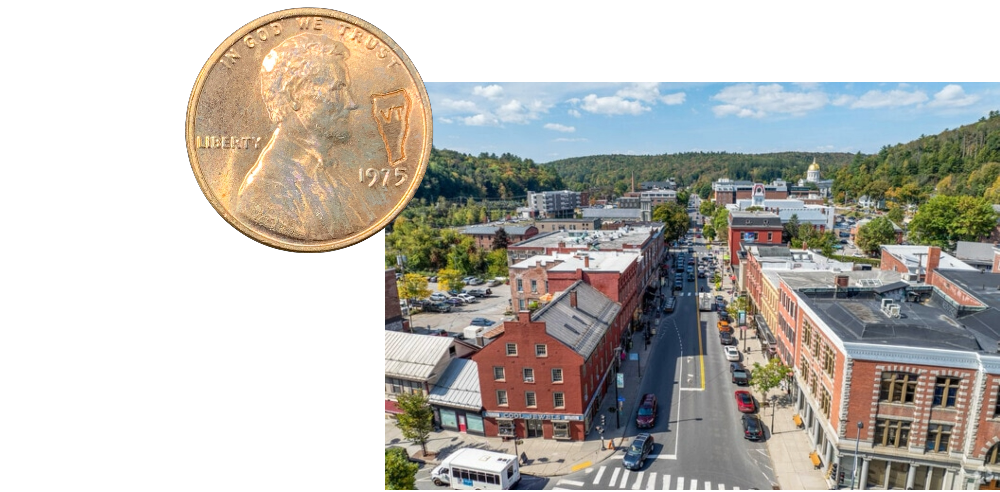
Montpelier has the least population of the capital cities.
Thank you Ira Allen
This Commem actually commemorates a New York battle: The Battle of Bennington is the coin's namesake event, but the actual battle took place about 10 miles west in Walloomsac, New York! Separately, Keck's portrait of founder Ira Allen and the walking catamount were struck in the highest relief of any early commemorative half dollar, giving it exceptional frosty luster.
Steve
My collecting “Pride & Joy” is my PCGS Registry Dansco 7070 Set:
https://www.pcgs.com/setregistry/type-sets/design-type-sets/complete-dansco-7070-modified-type-set-1796-date/publishedset/213996
Not quite as pretty as @winesteven's version!
Casual collector slowly building a collection....
The Battle of Bennington was a battle of the American Revolutionary War, part of the Saratoga campaign, that took place on August 16, 1777, on the John Green farm in Walloomsac, New York, about 10 miles (16 km) from its namesake, Bennington, Vermont. An American force of 2,000 men, primarily New Hampshire and Massachusetts militiamen, led by General John Stark, and reinforced by militiamen from the independent Vermont Republic led by Colonel Seth Warner and members of the Green Mountain Boys, decisively defeated a detachment of General John Burgoyne's army led by Lieutenant-Colonel Friedrich Baum, and supported by additional troops under Lieutenant-Colonel Heinrich von Breymann.
Baum's detachment of 700 men consisted of Hessian and British Army troops, Canadian and Loyalist irregulars and a number of Iroquois warriors.[8] He was sent by Burgoyne to raid Bennington in the disputed New Hampshire Grants area for horses, draft animals, provisions, and other supplies.
https://www.so-calleddollars.com/Events/Vermont_Statehood_Centennial.html
VERMONT STATEHOOD CENTENNIAL
1891
BENNINGTON BATTLE MONUMENT DEDICATION
BENNINGTON, VT
Purpose: To celebrate 100th anniversary of Statehood; to dedicate Bennington Battle Monument.
Medals: Official Medal designed by Centennial Commission and Monument Association; extent of issue not known.
HK-150 Bronze. 38mm.
HK-151 White Metal.
GENERAL STARK-COLONEL WARNER DOLLAR
Struck by Philadelphia medalist William H. Warner, who was also the brother of Col. Seth Warner.
HK-152 Brass. 38mm.
HK-152a Bronze.
HK-153 White Metal.
HK-153a Aluminum.
https://coins.ha.com/itm/military-medals/1878-pair-of-commemorative-medals-major-general-john-stark-two-medallions-a-silver-version-and-a-brown-copper-one-issued-total-2/a/430-731.s#
1878 Pair of Commemorative Medals, Major General John Stark. Two medallions, a silver version and a brown copper one, issued to commemorate the Battle of Bennington, Vermont, in 1777. These medals measure approximately 40 mm each and were issued by the Vermont Numismatic Society. The obverse of each medal depicts Major General John Stark. The medals were die-sunk by Robert Lovett and engraved by Hennrick of Delaware. A nice pair from an early numismatic organization. The market value is about $125-$175.
https://auctions.stacksbowers.com/lots/view/3-Q8HD9/1878-battle-of-bennington-centennial-medal-unlisted-scd-273-silver-ms-63-pcgs
1878 Battle of Bennington Centennial Medal. Unlisted SCD-273. Silver. MS-63 (PCGS). 40 mm. Click here for certification details from PCGS. Image with the PCGS TrueView logo is obtained from and is subject to a license agreement with Collectors Universe, Inc. and its divisions PCGS and PSA.
The Vermont Distinguished Service Medal is awarded to U.S. veterans from Vermont who served in a combat theater. The medal was established in 1999, but is retroactively available to veterans of prior military service.
The Vermont Distinguished Service Medal is a state award, presented by the Vermont Department of Veterans Affairs. U.S. military active duty regulations allow their members to accept but not wear state awards. In addition, activated National Guard members may not wear their state awards while serving in Title 10 (federal) status.
The Vermont Patriots Medal is an award of the state of Vermont. It is presented to the next of kin of each Vermont military service member who is killed in armed conflict. The award was first authorized in 1966, during the Vietnam War, but presentations did not commence until 1996.
Eligibility
Award of the Vermont Patriots Medal is managed by the Vermont Office of Veterans Affairs. The adjutant general of the Vermont National Guard is authorized to present the medal and a scroll acknowledging Vermont's debt to the family to the next of kin of each Vermont service member whose life is given in an armed conflict. The costs associated with creating the medal, and presenting the award and scroll are paid for from the state's legislative budget.
The 2020 Marsh-Billings-Rockefeller National Historical Park Quarter is the 54th coin in the America the Beautiful Quarters® Program.
The Marsh-Billings-Rockefeller National Historical Park in Vermont is the only national park dedicated to telling the story of conservation history and the evolving nature of land stewardship in America. It was the boyhood home of George Perkins Marsh, one of America’s first conservationists, and later the home of Frederick Billings. The property was given to the American people by its most recent owners, Laurance S. and Mary French Rockefeller.
Characteristics
The obverse (heads) design features the familiar image of George Washington by John Flanagan, used on the quarter since 1932. It has been restored to bring out subtle details and the beauty of the original.
The reverse (tails) design depicts a young girl completing the planting of a Norway spruce seedling near an established tree, continuing the life cycle of the forest. The child represents the conservationist, seeking to maintain a sustainable forest for future enjoyment and education.
Released on August 6, 2001, this is the 14th coin released in the 50 State Quarters Program and the fourth released in 2001. Vermont, admitted into the Union on March 4, 1791, themed, Freedom & Unity. The quarter honoring the "Green Mountain State" features two maple trees with a view of one of Vermont's most significant landmarks, Camel's Hump Mountain, and the inscription, "Freedom and Unity.
Sunday May 31 - Kentucky
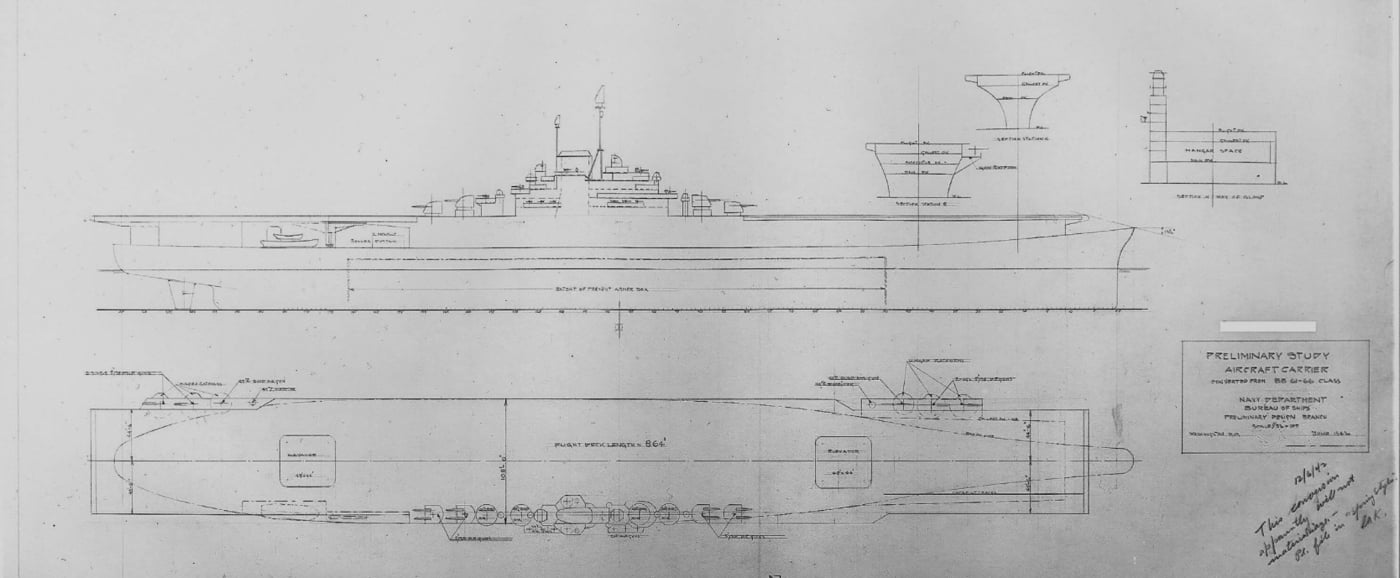
The replacement Kentucky never reached completion at the end of WWII
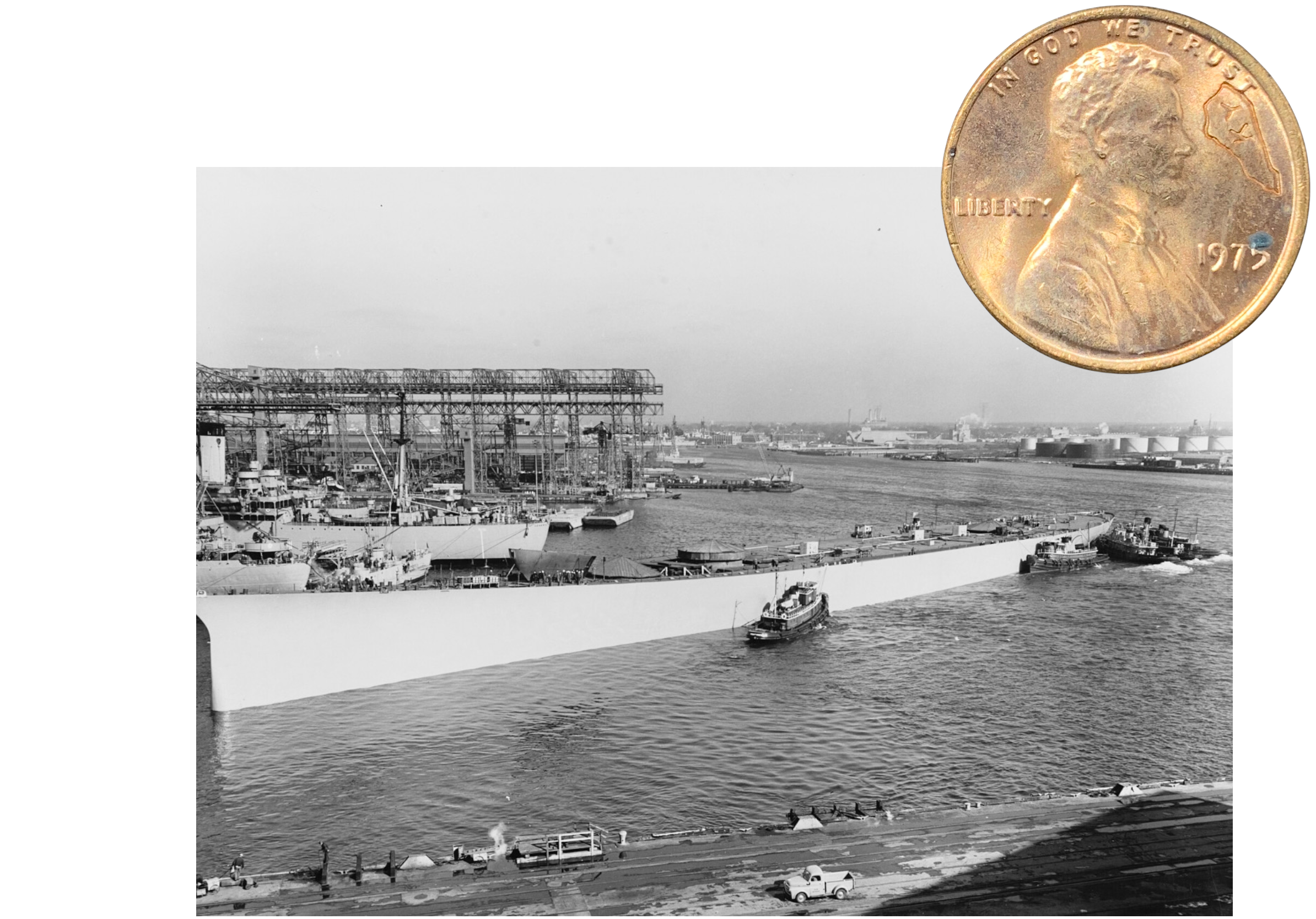
The plans to convert it to a carrier, also a bust.
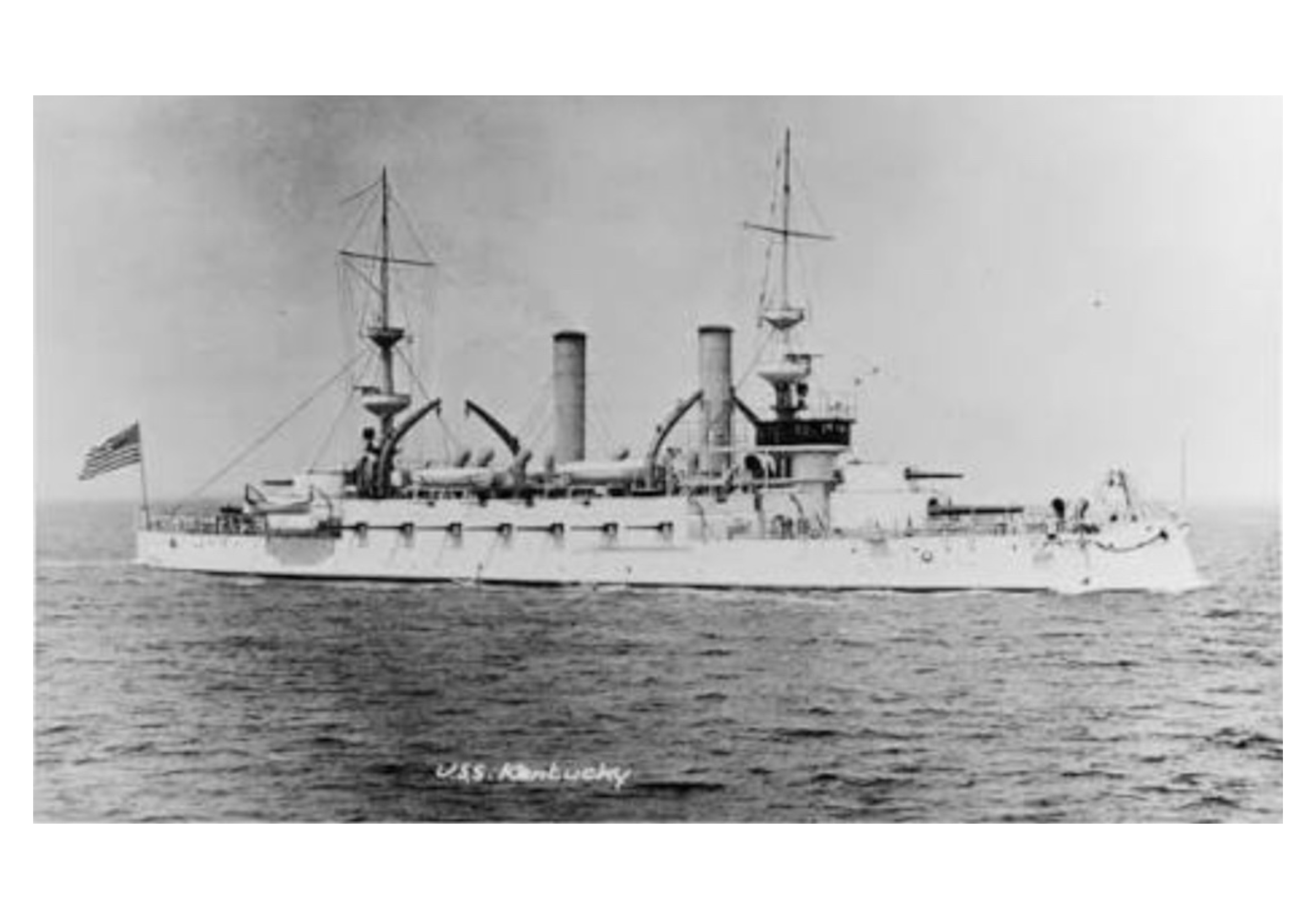
The first USS Kentucky - never saw combat in twenty years.
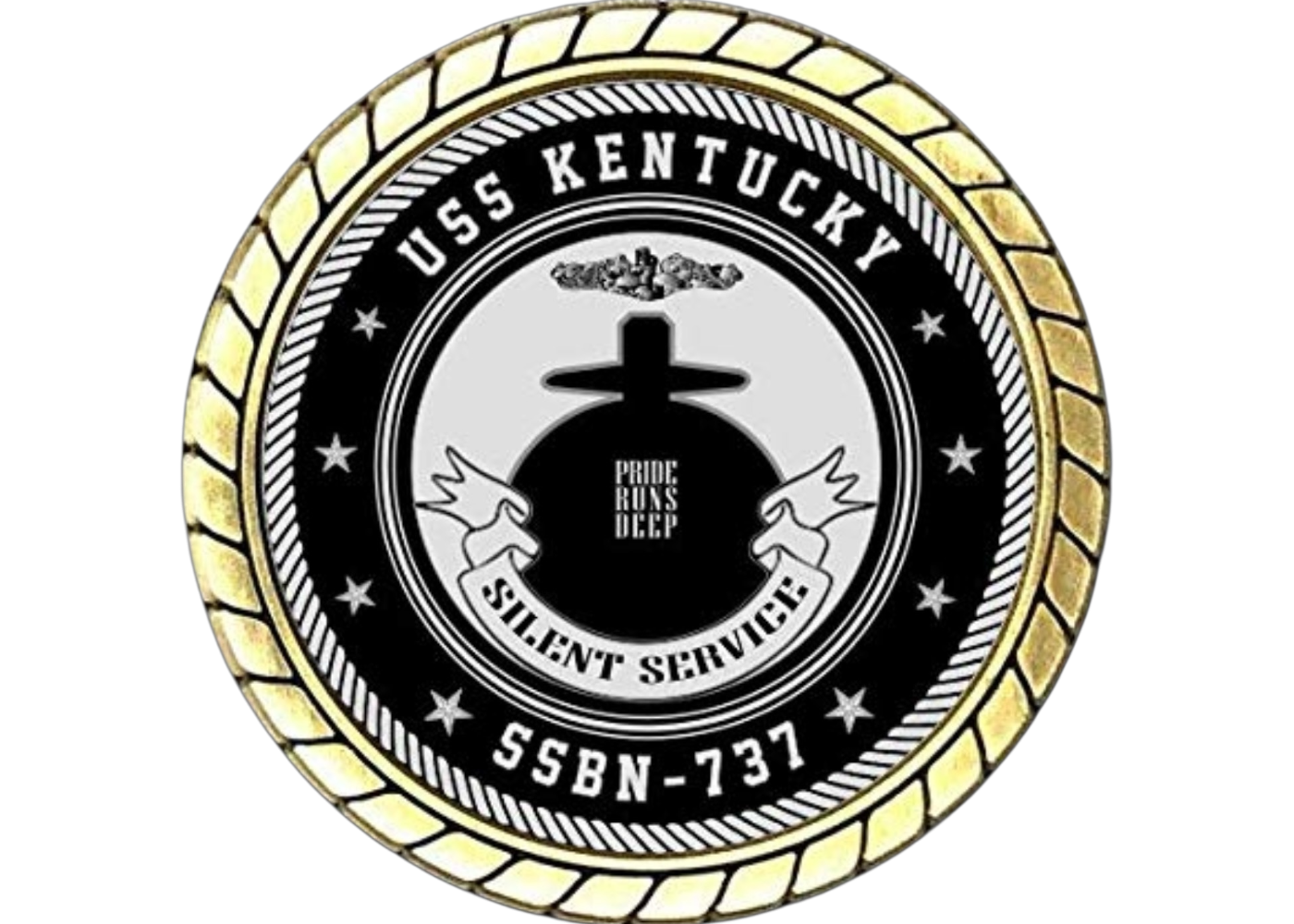
Today an Ohio-class Sub carries the name.
Two Town Committees, One Designer: The coin’s designer, Chester Beach, had his $1,250 design fee split directly between the town committees of Lexington and Concord. The Concord committee chose the obverse image, while the Lexington committee chose the reverse.
Steve
My collecting “Pride & Joy” is my PCGS Registry Dansco 7070 Set:
https://www.pcgs.com/setregistry/type-sets/design-type-sets/complete-dansco-7070-modified-type-set-1796-date/publishedset/213996
Abraham Lincoln was born on February 12, 1809, in a small log cabin like the one shown on this one-cent coin. Nolin Creek ran nearby, and the closest town, three miles away, is now called Hodgenville. Abraham was named after his grandfather on his father’s side and was Thomas and Nancy Lincoln’s second child.
When Abraham was two years old, the Lincolns moved to Knob Creek Farm, not far away. They worked a 30-acre section of the 228-acre farm. By the time they moved again in 1816, Abraham was old enough to fetch water and firewood.
This coin reminds us of one of the most amazing aspects of Lincoln’s life: that his humble beginnings on the Kentucky frontier were the first step on the road to the nation’s presidency.
Characteristics
The obverse (heads) shows the familiar Victor David Brenner likeness of President Abraham Lincoln used on the penny since 1909.
The reverse (tails) features a log cabin that represents Lincoln's humble beginnings in Kentucky.
PCGS 66RB
Top 10 Cal Fractional Type Set
successful BST with Ankurj, BigAl, Bullsitter, CommemKing, DCW(7), DesertMoon, Downtown1974, Elmerfusterpuck, Joelewis, Mach1ne, Minuteman810430, Modcrewman, Nankraut, Nederveit2, Philographer(5), Proofcollection, Realgator, Silverpop, SurfinxHI, TomB and Yorkshireman(3)
Kentucky Tokens
Ron Guth: This coin is really a reference to the United States, not just to a particular state, but because the star at the top of the pyramid bears the abbreviation "K", this coin has become known as the Kentucky Token (sometimes called a "Cent"). All of the different varieties of the Kentucky token were struck in England and they are collected as 1) part of the series of American Colonial coins and 2) as part of the series of Merchant (and other) tokens catalogued by Dalton & Hamer -- otherwise known as Conder Tokens.
Obverse: "UNANIMITY IS THE STRENGTH OF SOCIETY" surrounds a hand holding a scroll that reads, "OUR CAUSE IS JUST"
Reverse: "E PLURIBUS UNUM" above a fifteen star pyramid in rays of glory. Each of the stars bears the initial of one of the fifteen United States existing at the time. The top star bears the letter "K" (for Kentucky - the fifteenth State), hence the name of the token.
https://www.pcgs.com/coinfacts/category/colonials/post-1776-private-regional-issues/kentucky-tokens/836
https://auctions.stacksbowers.com/lots/view/3-11DNOJ/undated-ca-1793-1795-kentucky-token-w-8822-rarity-8-copper-birmingham-edge-unc-details-cleaning-pcgs
https://learn.apmex.com/coin-guide/guide-to-colonial-values/kentucky-token-1792-1794/
https://www.greysheet.com/prices/sp/kentucky-coppers-colonial-coinage/9803/Kentucky
Trove of 700 Civil War-Era Gold Coins Discovered in Kentucky
https://www.smithsonianmag.com/smart-news/trove-of-700-civil-war-era-gold-coins-discovered-in-kentucky-180982569/
The Great Kentucky Hoard is a hoard of more than 700 gold coins unearthed in an undisclosed part of Kentucky, United States, in the 2020s by a man on his own land. The finder of the hoard has remained anonymous.
There were a total of more than 800 Civil War–era coins, of which over 700 were gold coins. The Numismatic Guaranty Company (NGC), a coin-certifying company, put the coins in coin slabs (sealed holders). The website GOVMINT sold the coins.
https://en.wikipedia.org/wiki/Great_Kentucky_Hoard
Kentucky County, also known as Kentucke County and the District of Kentucky, was the westernmost county in the commonwealth of Virginia from 1776 until it was admitted to the Union as the 15th state in 1792.
The entire existence of Kentucky County was in the context of the Western theater of the American Revolutionary War. Except for the old French settlements in Illinois country, Kentucky was the western theater, and several major battles of the War occurred during its existence including the siege of Boonesborough, siege of Logan's Fort, and Bird's invasion of Kentucky. Other events include the invalidation of Transylvania Colony and the survey of Walker's Line, Kentucky's southern boundary. The Cherokee-American wars were initiated in Kentucky in 1776 by disgruntled Cherokee. General George Rogers Clark conducted his infamous Illinois Campaign from his base at the Falls of the Ohio in 1778–79. During its 4 years, the population of Kentucky County rose from about 300 to a little less than 1000 in 1780.
Kentucky County was abolished effective November 1, 1780, when it was divided into Fayette, Jefferson, and Lincoln counties. Afterward, these counties and those set off from them later in that decade were designated collectively as the District of Kentucky by the Virginia House of Delegates. On March 7, 1789, the Virginia General Assembly officially changed the spelling of Kentucke to Kentucky. The counties of the district frequently petitioned both the Virginia legislature and the Continental Congress seeking statehood. Finally successful, the Commonwealth of Kentucky was admitted to the United States as the 15th state in 1792. Harrodsburg, which had become the seat of government for Lincoln County and then Mercer County, was the seat of the federal court for the district until the legislature of the new state designated Frankfort as its capital in 1792.
https://en.wikipedia.org/wiki/Kentucky_County,_Virginia
The siege of Boonesborough was a military engagement which took place in September 1778 during the American Revolutionary War. On September 7, Shawnee chief Blackfish, who was allied to the British, led an attack on the Kentucky settlement of Boonesborough.
https://en.wikipedia.org/wiki/Daniel_Boone_Bicentennial_half_dollar
The Daniel Boone Bicentennial half dollar was designed by Henry Augustus Lukeman and minted in 1934, commemorating the 200th birthday of frontiersman Daniel Boone.[1] The obverse depicts Boone while the reverse depicts a frontiersman (Boone) standing next to an Indian Chief (Shawnee Chief Black Fish) in front of a stockade on the left and the rising Sun on the right.
The Daniel Boone Bicentennial half dollar was authorized on May 26, 1934 with passage of Public Law No. 258.[3][4] Sculptor Henry Augustus Lukeman was hired by the Kentucky Daniel Boone Bicentennial Commission to prepare designs for the upcoming commemorative coin honoring the frontiersman.
Abraham Lincoln once said Henry Clay was “my idea of a great man.” Lincoln delivered a eulogy in the Illinois statehouse upon Clay’s death in 1852 that closed with the following: “Our country is prosperous and powerful; but could it have been quite all it has been, and is, and is to be, without Henry Clay? Such a man the times have demanded, and such, in the providence of God was given us.”
https://intelligentcollector.com/henry-clay-presentation-medal/
Who Was Henry Clay?
Those who are not avid scholars of American history may be forgiven for asking. Clay may be the most under-appreciated American historical figure. He was a candidate or presidential hopeful in every election from 1824 through 1848, save for 1828 when he supported incumbent John Quincy Adams for re-election. While that ultimate prize eluded him, Henry Clay cast a bigger shadow over the politics of his era than many who have occupied the White House, leading Abraham Lincoln to characterize him as "my ideal of a great man."
Clay was born in Virginia in 1777, the son of a Baptist minister and owner of a prosperous plantation. He studied law in Virginia before relocating at age twenty to pursue opportunities in Lexington, Kentucky, where he would reside for the remainder of his life. He quickly developed a successful law practice, gaining a reputation as a sharp attorney with great oratorical skills. Perhaps his most famous client was former vice president Aaron Burr, whom Clay defended successfully in 1806 when Burr came up on serious charges stemming from his plot to invade and seize land west of the Mississippi River then governed by Spain.
https://historical.ha.com/itm/political/massive-us-mint-medal-of-pure-california-gold-struck-for-presentation-to-henry-clay-lincoln-s-own-ideal-of-a-great-man-total-2-items-/a/6163-43082.s?ic4=GalleryView-ShortDescription-071515#
Massive U.S. Mint Medal of "Pure California Gold," Struck for Presentation to Henry Clay, Lincoln's own "ideal of a great man," in Recognition of His Half Century of Public Service. The medal, presented to Clay in 1852, is 3.5 inches in diameter and approximately a half inch thick, containing nearly 30 ounces of gold. The dies were engraved by Charles Cushing Wright, the premier engraver of his time, who also created the large silver case in the form of a hunter's case pocket watch, designed to protect the medal's delicate proof finish. The reverse of the medal itself features just a partial list of Clay's lifetime achievements, while the silver case depicts the U.S. Capitol building as it appeared before the now-familiar dome was added, as well as the Clay monument and his famous Kentucky mansion, Ashland. Also included are the original handwritten vellum document which accompanied the presentation of the medal to Clay and the original velvet-lined case.
The medal's stunning design, imposing size and mass, historic importance, and distinguished, thoroughly documented provenance establish it as one of the premier examples of American Medallic art.
https://www.scripcollectors.org
https://kyhistory.pastperfectonline.com/webobject/0995FF79-9721-495F-AA12-077760199183
Description
Six coal tokens or scrip made from various metals issued by the South East Coal Company. The worth of these coins varies from .01 to 1.00 in terms of currency. Each coin has a three tiered pyramid cut out of its center. Possible metal combinations in these tokens include nickel and copper. Manufactured by the Osborne Register Co. of Cincinnati, each coin is marked "Orco Patented". Each scrip also bears the mark "Seco Incorporated" and "Payable in Merchandise Only - Not Transferable."
Notes
Donated by Harry Monroe Caudill, an American author, historian, lawyer, legislator, and environmentalist from Letcher County, in the coalfields of southeastern Kentucky. In a letter written to former KHS director Col. George Chinn, Caudill states he obtained these scrip coins issued by the Southeast Coal Company through the kindness of Victor Banks of Seco, Kentucky. The Southeast Coal Company operated in Seco from 1915 through 1957.
Caudill goes on to write, "At one time this company money circulated very widely throughout the Kentucky coal filed and was for many people the only medium of exchange. They symbolize an era in the history of the Kentucky mountains that is gone -- a colorful era of coal mining on a gigantic scale and largely by hand labor. It was an era when the workmen were almost entirely dependent upon the companies for whom they worked for practically everything they used from the cradle to the grave."
Due to isolation, coal companies began issuing their own token money in the 1880s to meet their payroll. The prices in their stores were higher and the stores extremely profitable. Other stores accepted the company script, but only at a discount. Miners were often issued scrip as an advance on wages, and were only paid cash when they were out of debt to the company, a rare occurence.
Released on October 15, 2001, this is the 15th coin released in the 50 State Quarters Program and the fifth released in 2001. Kentucky, admitted into the Union on June 1, 1792, themed the coin, My Old Kentucky Home. Kentucky is the home of the Kentucky Derby, the longest running annual horse race in the country, and is grazing ground for some of the world's finest racehorses. This quarter's design features Federal Hill, a prominent symbol of the state, known as "My Old Kentucky Home." The design also shows a side view of the famous Bardstown home where Stephen Foster penned the state song, "My Old Kentucky Home," and a thoroughbred racehorse standing behind a fence in the foreground.
Characteristics
The obverse (heads) design features the familiar image of George Washington by John Flanagan, used on the quarter since 1932.
The reverse (tails) design features the stately mansion, Federal Hill and a thoroughbred racehorse positioned behind a fence in the foreground.
The 2016 Cumberland Gap National Historical Park Quarter is the 32nd coin in the America the Beautiful Quarters® Program.
The buffalo, the Native American, the lone hunter, the pioneer . . . they all traveled through Cumberland Gap, the first gateway to the West, into the wilderness of Kentucky. Modern day explorers and travelers stand in awe at this great break in the Appalachian Mountain chain, carved by wind and water. Visitors to Cumberland Gap National Historical Park enjoy many miles of trails and scenic features, as the park stretches for 26 miles along Cumberland Mountain, ranging from one to four miles in width and containing 24,000 acres. The natural beauty of Appalachian mountain country, lush with vegetation, supports diverse animal life including white-tailed deer, black bear and wild turkey. It was established as a national site in 1940.
Characteristics
The obverse (heads) design features the familiar image of George Washington by John Flanagan, used on the quarter since 1932. It has been restored to bring out subtle details and the beauty of the original.
The reverse (tails) depicts a frontiersman gazing across the mountains to the West. Many pioneers used Cumberland Gap on their journey into the western frontiers of Kentucky and Tennessee. Design candidates were developed in consultation with representatives of Cumberland Gap National Historical Park.
Monday June 1 - Tennessee
Franklin proposed itself as an independent state—half-dozen now Tennessee counties on the western side of the Eastern Continental Divide. The first secession, as North Carolina extended to the Mississippi River then. In its four years as a governing body they devolved to an economy based on deerskin and pissed off the Cherokees. They also proposed statehood.
Washington never wrote an official edict on Franklin, but his arguments:
Poor, hungry folks in a border state would destabilize the new republic.
The mountains were a barrier to the East and the Franklinites would tie themselves economically to the Spanish and French through the Ohio and Mississippi Rivers.
They were unable to protect themselves from the Cherokee.
Franklin never minted coin.
The second battleship with the name Tennessee suffered two bomb strikes at Pearl Harbor and a kamikaze hit toward the end of the war. She saw much action in between.
Daniel Boone is DEEPLY tied to Tennessee.
Because no confirmed life portraits of Daniel Boone exist, the obverse portrait on the coin is entirely the artist's conception. It looks significantly different from the Boone depicted on the 1921 Missouri Centennial half dollar. The reverse features Boone standing opposite a Native American. This depicts Shawnee Chief Black Fish, who was so impressed with Boone's survival skills that he adopted him as an honorary son and named him "Big Turtle".
Steve
My collecting “Pride & Joy” is my PCGS Registry Dansco 7070 Set:
https://www.pcgs.com/setregistry/type-sets/design-type-sets/complete-dansco-7070-modified-type-set-1796-date/publishedset/213996
Casual collector slowly building a collection....
Although the Battle of Kings Mountain took place during the Revolutionary War, there were almost no British troops that fought during the battle, except for one Major. The battle was fought between Patriots and Loyalists.
Tennessee Connection: A group of Patriots called the Overmountain Men were a reason why historians think Kings Mountain was a Patriot success. Due to the battle taking place in South Carolina, the Overmountain Men got their nickname because, well, they came OVER the mountain in what we now call East Tennessee and the western part of the Carolinas. This group of men were not a trained army, but instead frontiersmen.
but no numis- items i felt like this was good, one-off trivia
those aren't smithsonian pictures, but i think the smithsonian has this in its collection
https://americanhistory.si.edu/collections/object/nmah_954587
https://en.wikipedia.org/wiki/Davy_Crockett
David Crockett (August 17, 1786 – March 6, 1836) was an American politician, militia officer and frontiersman. Often referred to in popular culture as the "King of the Wild Frontier", he represented Tennessee in the United States House of Representatives and fought in the Texas Revolution.
Crockett grew up in East Tennessee, where he gained a reputation for hunting and storytelling. He was made a colonel in the militia of Lawrence County, Tennessee, and was elected to the Tennessee state legislature in 1821. In 1827, he was elected to the U.S. Congress where he vehemently opposed many of the policies of President Andrew Jackson, especially the Indian Removal Act. Crockett's opposition to Jackson's policies led to his defeat in the 1831 elections. He was re-elected in 1833, then narrowly lost in 1835, prompting his angry departure to Texas (then the Mexican state of Tejas) shortly thereafter. In early 1836, he took part in the Texas Revolution and died at the Battle of the Alamo. It is unclear whether he died in battle or was executed after being captured by the Mexican Army.
https://en.wikipedia.org/wiki/Alvin_York
Alvin Cullum York (December 13, 1887 – September 2, 1964), also known by his rank as Sergeant York, was an American soldier who was one of the most decorated United States Army soldiers of World War I.[1] He received the Medal of Honor for leading an attack on a German machine gun nest, gathering 35 machine guns, killing at least 25[2] enemy soldiers, and capturing 132 prisoners. York's Medal of Honor action occurred during the United States-led portion of the Meuse–Argonne offensive in France, in which he intended to breach the Hindenburg line and force the Germans to surrender. He earned decorations from several Allied countries during the war, including France, Italy, and Montenegro.
York was born in rural Tennessee, in what is now the community of Pall Mall in Fentress County. His parents farmed, and his father also worked as a blacksmith. The 11 York children had minimal schooling because they helped provide for the family, including hunting, fishing, and working as laborers. After the death of his father, York assisted in caring for his younger siblings and found work as a blacksmith.
i could show the MoH but we know that one
here is the second highest award that he also earned. he also earned several other decorations both domestic and foreign
https://en.wikipedia.org/wiki/Distinguished_Service_Cross_(United_States)
The Distinguished Service Cross (DSC) is the United States Army's second highest military decoration for soldiers who display extraordinary heroism in combat with an armed enemy force.
Released on January 2, 2002, this is the 16th coin released in the 50 State Quarters Program and the first released in 2002. The Tennessee design features a trumpet, a fiddle, a guitar, and a musical score, symbolizing the State's many contributions to American music, with the inscription "Musical Heritage" and three stars for each geographical region of the state. The fiddle represents the Appalachian music of East Tennessee, the guitar the country music of Nashville in Central Tennessee, and the trumpet the blues of West Tennessee.
Characteristics
The obverse (heads) design features the familiar image of George Washington by John Flanagan, used on the quarter since 1932.
The reverse (tails) design features the image of several musical instruments, the fiddle, the trumpet, and the guitar.
The 2014 Great Smoky Mountains National Park Quarter is the 21st coin in the America the Beautiful Quarters® Program.
The Great Smoky Mountains National Park quarter is the first of 2014 and the 21st overall in the America the Beautiful Quarters® Program. This national park features wondrous biodiversity, with ridge upon ridge of forest straddling the border between Tennessee and North Carolina. Great Smoky Mountains National Park is world renowned for its diverse plant and animal life, the beauty of its ancient mountains, and the quality of its remnants of southern Appalachian mountain culture. It is America’s most-visited national park. It was first established as a national site on May 22, 1926 (44 Stat. 616).
Characteristics
The obverse (heads) design features the familiar image of George Washington by John Flanagan, used on the quarter since 1932. It has been restored to bring out subtle details and the beauty of the original.
The reverse (tails) depicts a historic log cabin found within Great Smoky Mountains National Park. It features a segment of the lush green forest and hawk circling above. Design candidates were developed in consultation with representatives of Great Smoky Mountains National Park.
The American Innovation $1 Coin representing Tennessee recognizes the formation of the Tennessee Valley Authority. In 1933, Congress created the Tennessee Valley Authority (TVA) to construct transmission lines to serve "farms and small villages that are not otherwise supplied with electricity at reasonable rates." As late as the mid-1930s, nine out of ten rural homes were without electric service.
The TVA built 16 hydroelectric dams in the Tennessee Valley between 1933 and 1944. Through the power of the TVA projects, Tennessee quickly became the nation's largest public utility supplier.
The TVA organized an experimental farmer-owned rural electric cooperative to serve the area around Tupelo, Mississippi. The cooperative succeeded, and the federal government created a special agency dedicated solely to rural electrification, the Rural Electrification Administration (REA).
The REA gave loans and other help to rural organizations setting up their own power systems. By 1939, the REA had helped to establish 417 rural electric cooperatives across the United States. Most rural electrification is the product of these cooperatives.
Characteristics
The obverse (heads) design features a dramatic representation of the Statue of Liberty in profile. The obverse also includes a privy mark of a stylized gear, representing industry and innovation.
The reverse (tails) design depicts a Tennessee farm with newly installed power lines lining the road.
tennessee was tough