Options
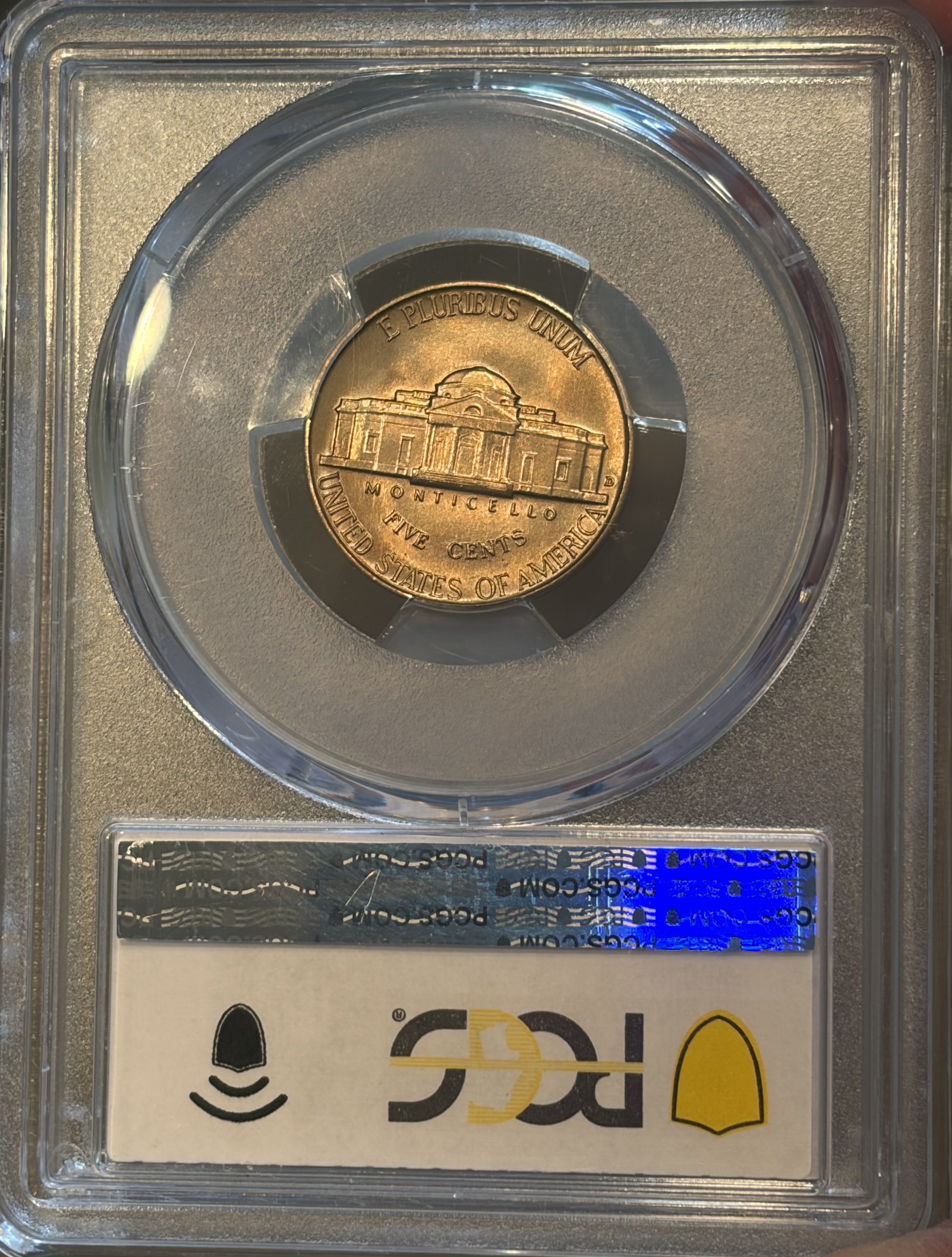
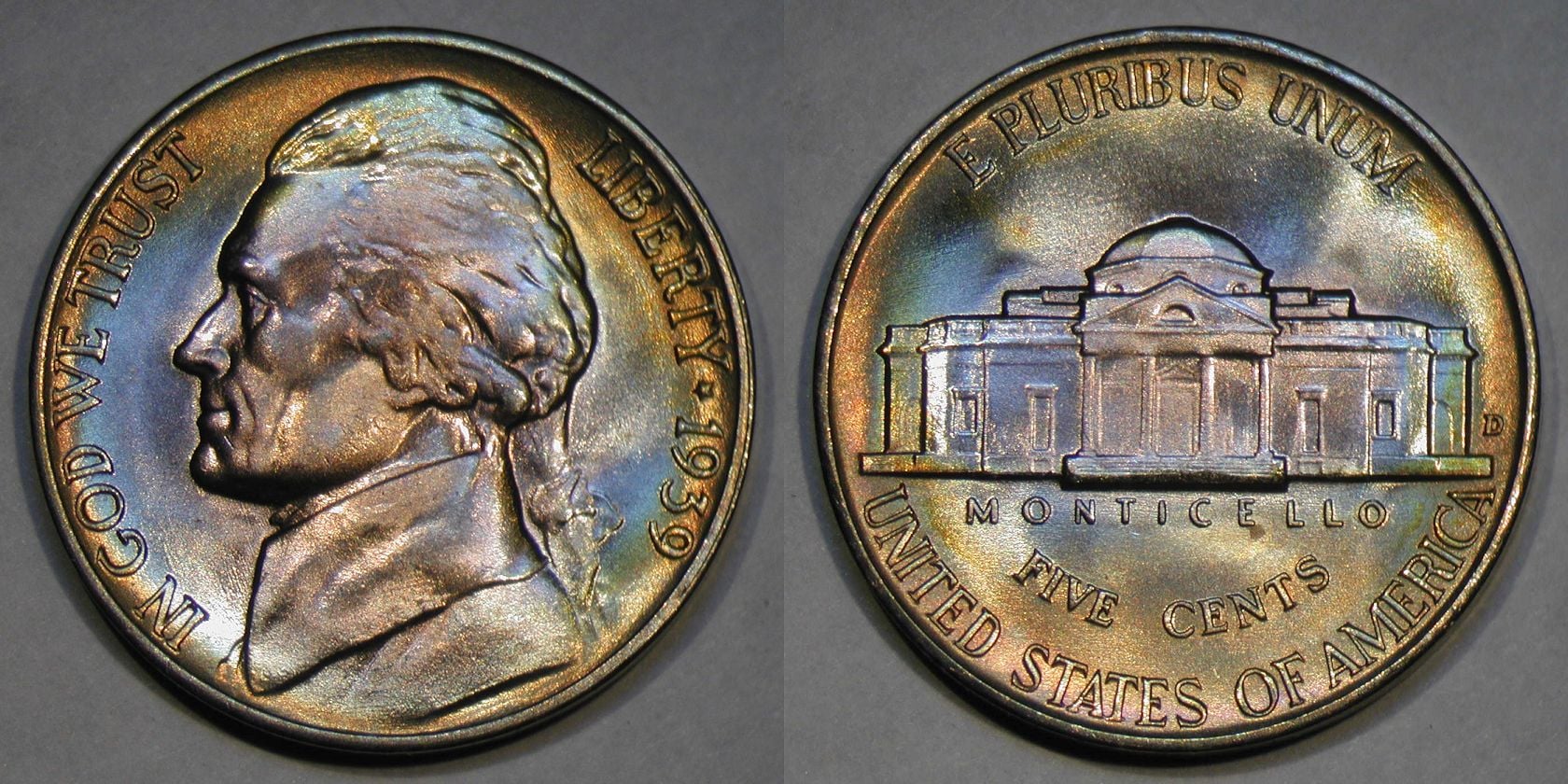
1939-D Jefferson Nickel, Reverse of 1940.
 jfriedm56
Posts: 3,101 ✭✭✭✭✭
jfriedm56
Posts: 3,101 ✭✭✭✭✭
Was wondering if someone would be able to explain to me why the PCGS price guide currently values this coin with down arrows at $65, along with a population of around 1,493 coins. While on the other hand, the 1939-D, reverse of 1938 has a green arrow in the guide with a larger population of 1,780 coins and a value of $115 and rising.
So while the rev. of ‘38 has a higher pop. by almost 300 coins, why is there such a discrepancy in price? To me, this defies logical thinking.
Is the guide just wrong, or is the 1938 reverse more popular? Thoughts?
Zack.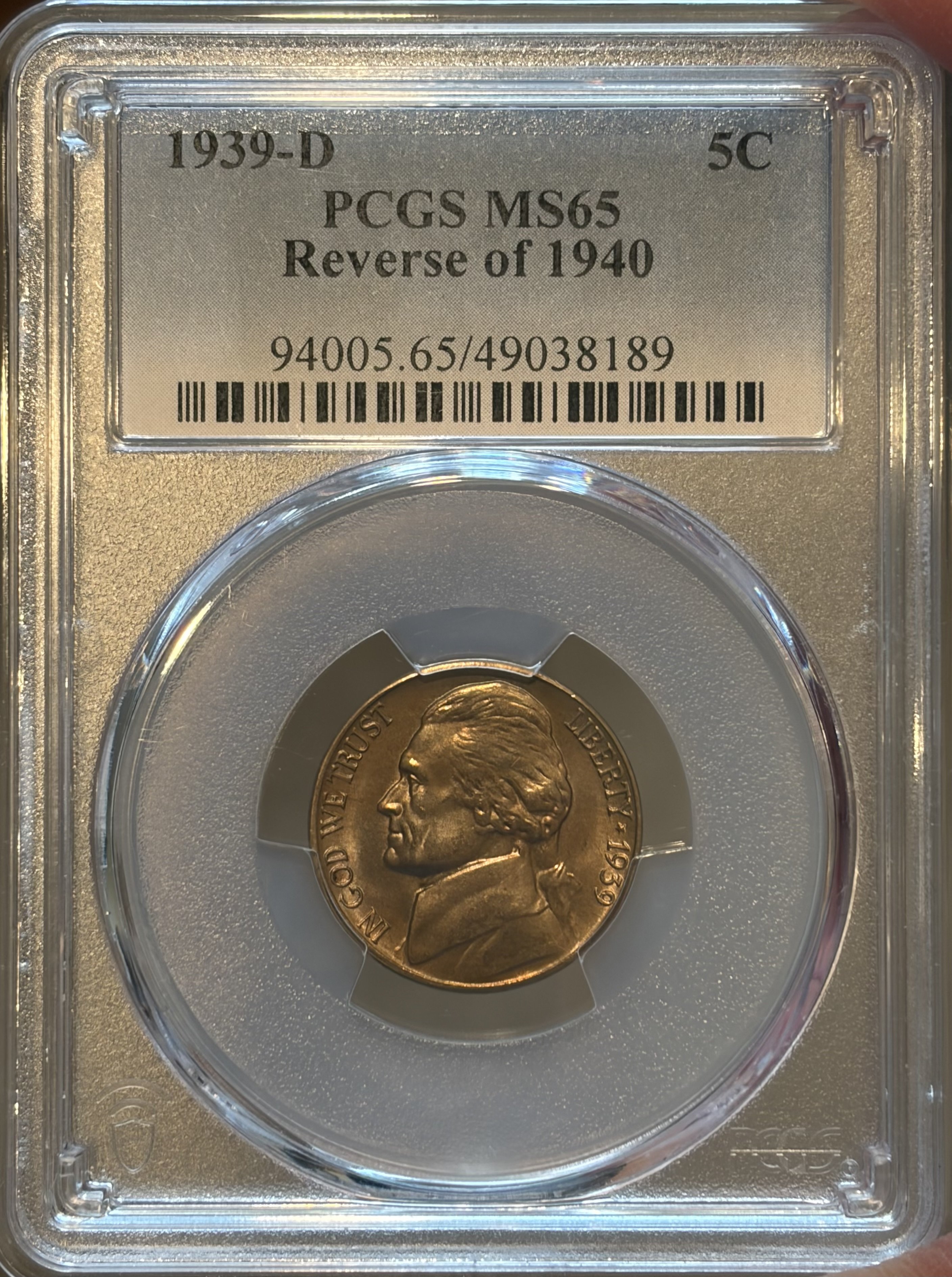
1
Comments
Survival population and value is not equivalent to PCGS graded population. Rarer more valuable coins are sent in for grading more often.
Compare the values of a 1909 Lincoln in RD MS64 to the same values and population of a 1909-S VDB Lincoln cent.
I’m still not understanding why a coin with a higher pop. is valued at almost double the amount of the coin I purchased. It doesn’t make sense. There has to be other factors involved. All things considered, the coin with a lower pop. should be valued higher.
Other factors I look at in such cases are auction prices realized and populations of each issue in other grades - not just the grade in question. Another considerstion is simple supply and demand for each variety, though that should be largely reflected in auction prices.
Mark Feld* of Heritage Auctions*Unless otherwise noted, my posts here represent my personal opinions.
To begin with, your reasoning is flawed.
Looking at the entire all-graded population to determine the price of a specific grade is the first mistake. If you consider the grade of your coin, MS65, and look at both non-Full Steps and Full Step grades the numbers are quite close.
Rev. 38 --- 483/21.
Rev. 40 --- 437/23.
As @davewesen stated, the better variety is typically submitted more often when nicer coins are found. Add to that the scarcity of step detail with the 1938 Reverse and it should be clear why more coins were submitted. Collectors tend to look for coins which are Full Steps. The Reverse of 1940 coins are on average far nicer than the Reverse of 1938 coins, the strike is better. Prior to maybe 2005 or thereabouts when PCGS changed how they grade the Reverse of 1938 Step detail getting them to designate a coin was near impossible.
"Those who would give up essential Liberty, to purchase a little temporary Safety, deserve neither Liberty nor Safety," --- Benjamin Franklin
I have this one with NGC only putting an $80 value on it.
My Original Song Written to my late wife-"Plus other original music by me"
https://youtube.com/playlist?list=PL8A11CC8CC6093D80
U.S. Army Veteran 1/11 ACR Fulda, Germany
I think you’re incorrect by not taking the laws of supply and demand into consideration. If the supply is lower, then the demand should be higher. Simple economics such as no gas moving through the straits-higher demand and price. Fewer houses being built- higher demand and price. Less coins of one type available- Higher price, but that doesn’t apply here.
Demand for coins (and other items) isn’t necessarily higher just because supply is lower. If that were the case, there are many coins (such as extremely low pop patterns) which would trade at much higher prices. On the other hand, coins with higher populations (such as 1909-S V.D.B. cents and 1907 High Relief $20’s) trade at considerably higher prices than would be expected based on their plentiful supply. The reason is very strong demand.
Mark Feld* of Heritage Auctions*Unless otherwise noted, my posts here represent my personal opinions.
Supply and Demand………….. In this case, even though there are more R.38 PCGS MS65 1939-D coins available there seems to be more collectors that want them. Hence, the price is higher.
"Those who would give up essential Liberty, to purchase a little temporary Safety, deserve neither Liberty nor Safety," --- Benjamin Franklin
Your entire argument and logic is flawed, but this part is the most flawed of all. You cannot assume the same price movements when comparing necessities of life (gas, housing) to a luxury item like a coin.
My Collection of Old Holders
Never a slave to one plastic brand will I ever be.
Thank you all for your responses
It might be about finding a 1939-D, Reverse of 1938 example with 5 complete steps, something like the following coin. It's the closes I've seen plus possibly a couple others that I haven't seen in hand that actually show 5 complete steps. There must be separation/an incused line showing between the 4th and 5th step under the 3rd pillar. But others have accepted a nice quarter 6th step showing under the 1st pillar giving a QSC 6545 which adds up to 20 quarter steps (the old FSNC method to dividing up and counting quarter steps) but this has been way too confusing to many..... Point is, while the pop in higher for the R38 over the R40, the R38 is in greater demand because very few collectors can actually claim to have a 1939-D R38 with 5 complete steps that match all their other coins that have 5 to 6 complete steps. It's all about Groucho Marx's famous saying, "the have and have not" club syndrome very few can join if they understand. Go to GC and look at past sales, the differences in the price range between the two. But all those are missing that quarter step and more to be FS, a couple are close but no cigar!
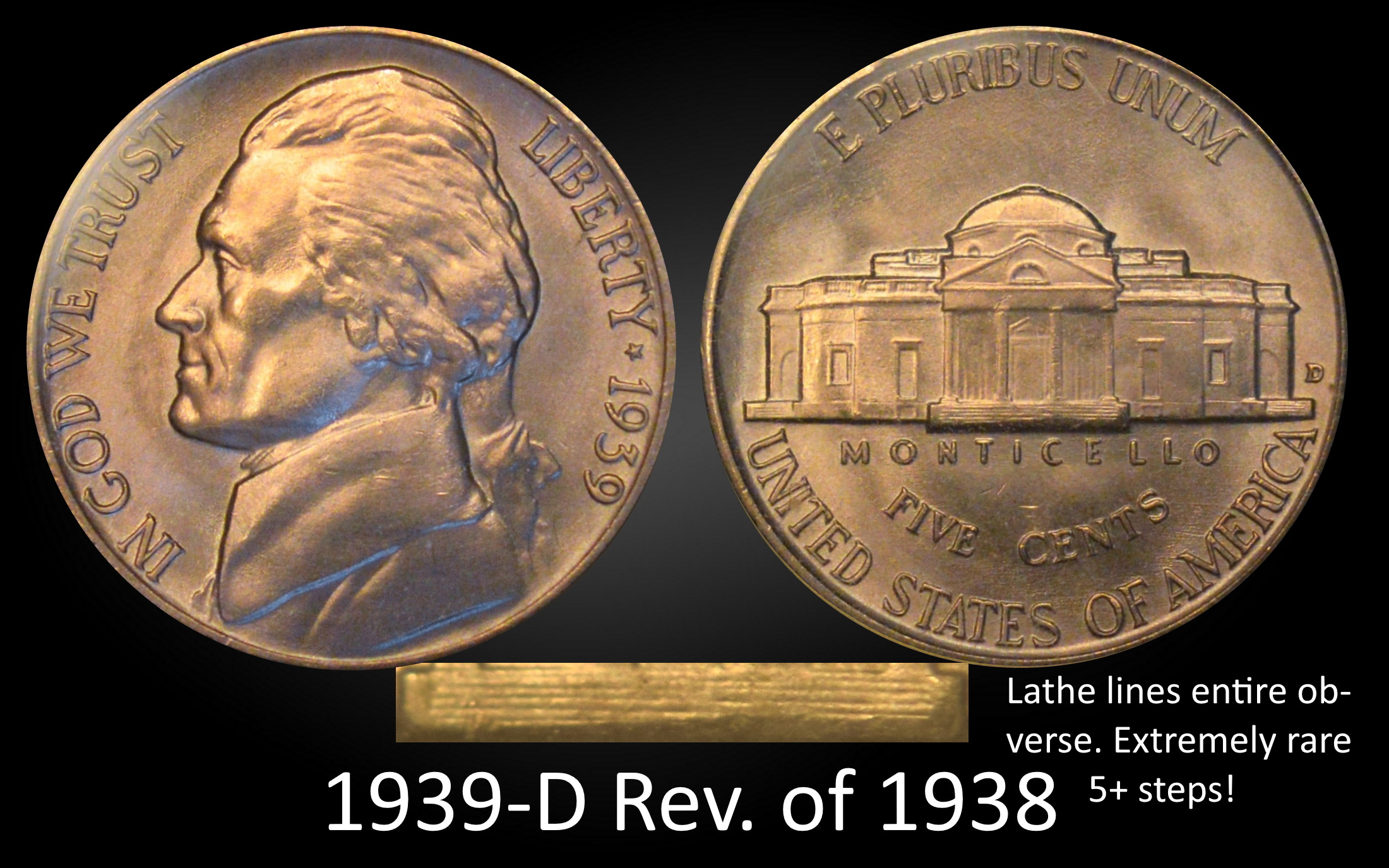
I forgot to add; the overall strike must be full/complete itself before the steps are counted! Another misunderstood conception about collecting Jefferson nickels.
Leo
The more qualities observed in a coin, the more desirable that coin becomes!
My Jefferson Nickel Collection
To be sure, that coin posted by Leo isn't a Full Step coin no matter how much you try to manipulate the counting method. Keep looking. Someone will see the thread and post an image of a true Full Step R.38 issue, it most likely just won't be on a 1939-D coin. I made a 1938-D MS66FS years ago, maybe around 2005, with a free submission offered by the PCGS Collectors Club but the coin is long gone. The 1938 issues are much more likely to be found.
"Those who would give up essential Liberty, to purchase a little temporary Safety, deserve neither Liberty nor Safety," --- Benjamin Franklin
It's a proof but here is my 39 reverse of 38. Just wanted to share.
Successful transactions with forum members commoncents05, dmarks, Coinscratch, Bullsitter, DCW, TwoSides2aCoin, Namvet69 (facilitated for 3rd party), Tetromibi, ProfLizMay, MASSU2, MWallace, Bruce7789, Twobitcollector, 78saen, U1chicago, Rob41281, PROMETHIUS88, ZoidMeister
Just to highlight the striking issues with the R. 38 step detail and why that part of the dies were changed, go to CoinFacts. Virtually every coin dated 1938-1940 with the R. 38 will show weak detail at steps 5-6, and in particular under pillar three. This section includes coins graded MS68.
That in itself should emphasize why the pricing is as it is.
"Those who would give up essential Liberty, to purchase a little temporary Safety, deserve neither Liberty nor Safety," --- Benjamin Franklin
I have to agree! There's a MS68FS example coming up for sale in the GC auctions. That area under the 3rd pillar is not there and shows only 4 1/2 steps, not FS. But there is a nice quarter 6th step showing (it must reach the side of the 2nd pillar) under the 1st pillar. So maybe it has a QSC of 6545 which adds up to the needed 20 quarter steps required to qualify for the FS designation. But does our host recognize the old FSNC method of counting steps for those few dates where some segments of the steps details weren't simply impressed into the die?
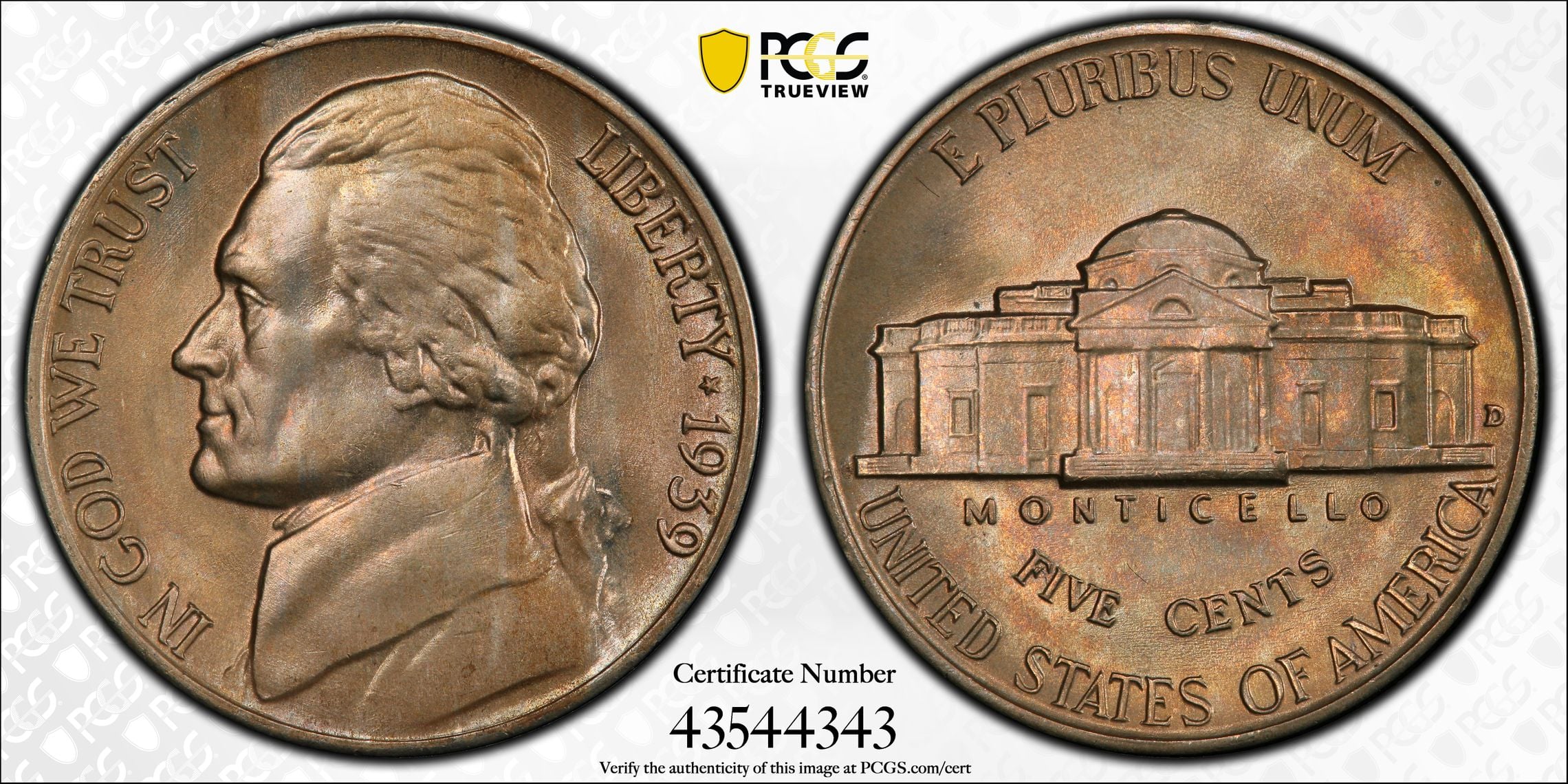
I forgot to add; many of those photos of coins in CoinFacts are not on display anymore....what's up with that?
Here's another 1939-D with the R38 steps I very recently acquired. Any expert analyst opinion you can shed on your part on this coin will be greatly appreciated. One special quality about this coin that should be taken into consideration are all the swirling raised lathe lines that appear on the obverse. Those lathe lines tell me that the strike details can't get much stronger thereby suggesting the steps can't get much better than how the steps are displayed on this coin and the 1st coin I posted.
Leo
The more qualities observed in a coin, the more desirable that coin becomes!
My Jefferson Nickel Collection
This one is from an original roll that I got to pick through many years ago (before the days of "slabbing").
Reverse of 1938. Still have it:
Nice one!!
The more qualities observed in a coin, the more desirable that coin becomes!
My Jefferson Nickel Collection