Models, Markets, & Mania: How AI Is Destroying the Coin Industry (And What We Can Do About It)
 AlbumNerd
Posts: 280 ✭✭✭✭
AlbumNerd
Posts: 280 ✭✭✭✭
I thought forum members here would enjoy this synopsis of the presentation I delivered at the 2026 Central States Numismatic Society Convention. I was invited to speak at the Newman Numismatic Portal Symposium to address a critical, rapidly evolving frontier: the intersection of artificial intelligence and its impact on numismatics. Throughout this post, I have included several key slides and images from the original presentation to illustrate where our hobby stands today. Note that I changed the presentation subtitle from "[And How It Can Save Us]" to "[And What We Can Do About It]" to better emphasize my advocacy of proposals I believe our industry should adopt. A link to a video of the presentation is included at the bottom of this post.
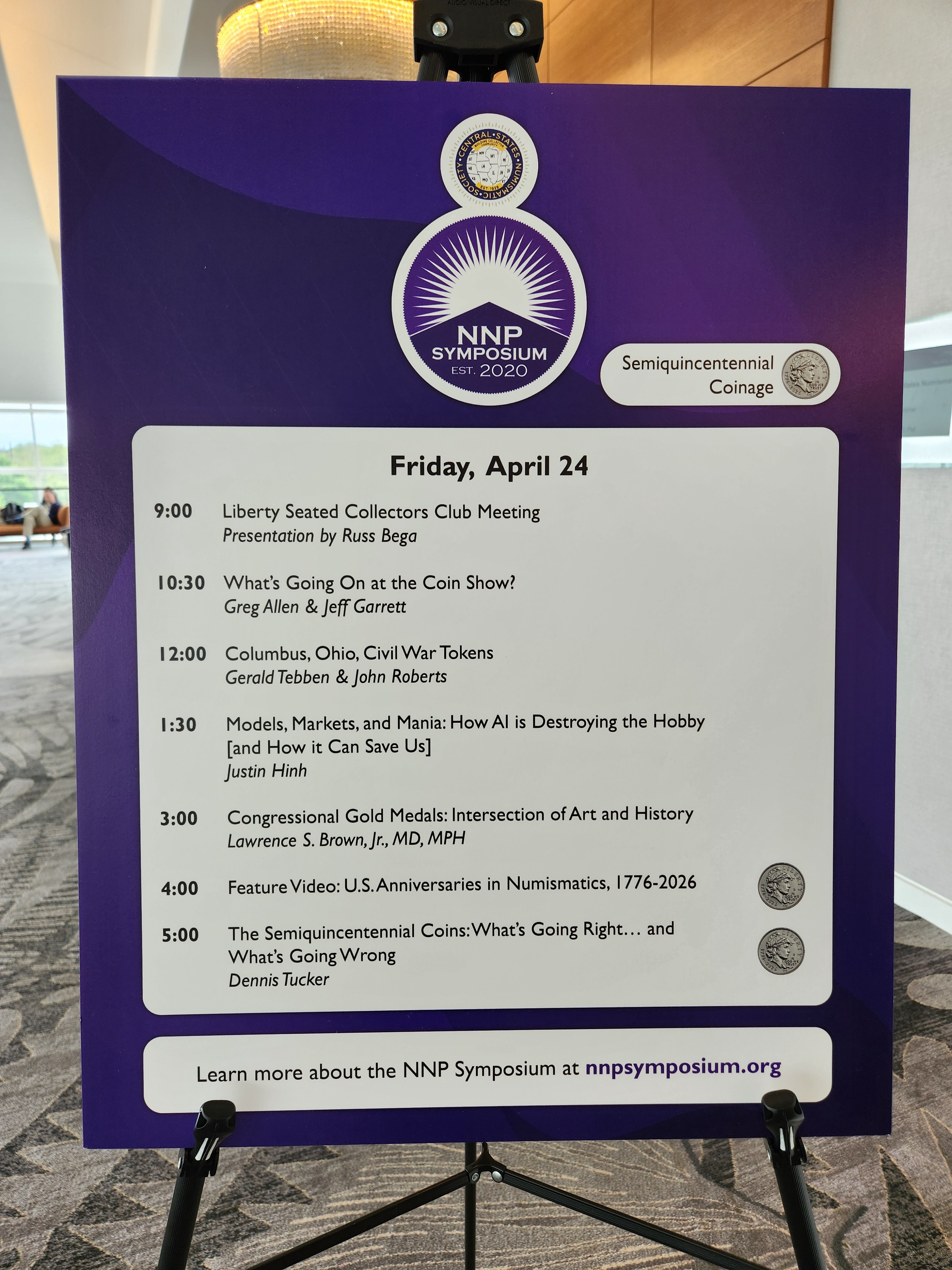
Source: Photo taken outside the presentation room
Online I am known as the Dansco Dude, and my personal mission is to collect one of every Dansco album ever made, a collection that currently stands at over 1,000 unique albums and folders. What most people do not know is that in my former career I worked as a Digital Product Manager leading software teams at major companies. This technical background gave me a unique lens to analyze the modern intersection of technology and coins. You can explore some of my past work on my portfolio page. This dual perspective as a software professional and a numismatic researcher drove me to explore artificial intelligence deeply, evaluating how it can be leveraged to support our hobby rather than exploit it.
My journey down this rabbit hole began with an attempt to build a mobile app for AI coin grading. Over time, I realized that while AI coin grading will eventually achieve technical consistency, widespread industry adoption faces massive cultural and institutional hurdles. Recognizing this, I shifted my engineering focus toward a different problem, pivoting to design and build a fully automated coin-sorting robot. Yet, the deeper I dug into the under the hood of modern AI, the more I kept returning to one uncomfortable question:
After countless hours of technical research and reviewing hundreds of patent documents, I ultimately reached a sobering conclusion. Artificial intelligence is already disrupting the coin industry, and the current trajectory is dangerous. Even though it required valuable time and money that I actively needed for my coin-sorting robotics project, I feel that AI's negative impact on our hobby is so urgent that I had to prioritize preparing this presentation. I am passionate about warning our community and advocating for five specific proposals that the numismatic industry must adopt to survive the AI era.
Part 1: Models — The Technical Reality of the AI Era
To understand the macro shifts soon to hit the show floor, we have to establish what artificial intelligence actually means for the average collector. To put it simply, AI systems are:
Many old-timers in the hobby dismiss the current technical wave as pure marketing hype, but the underlying hardware tells a different story. We have seen a staggering 1,000-fold increase in computing power per constant dollar since 1980.
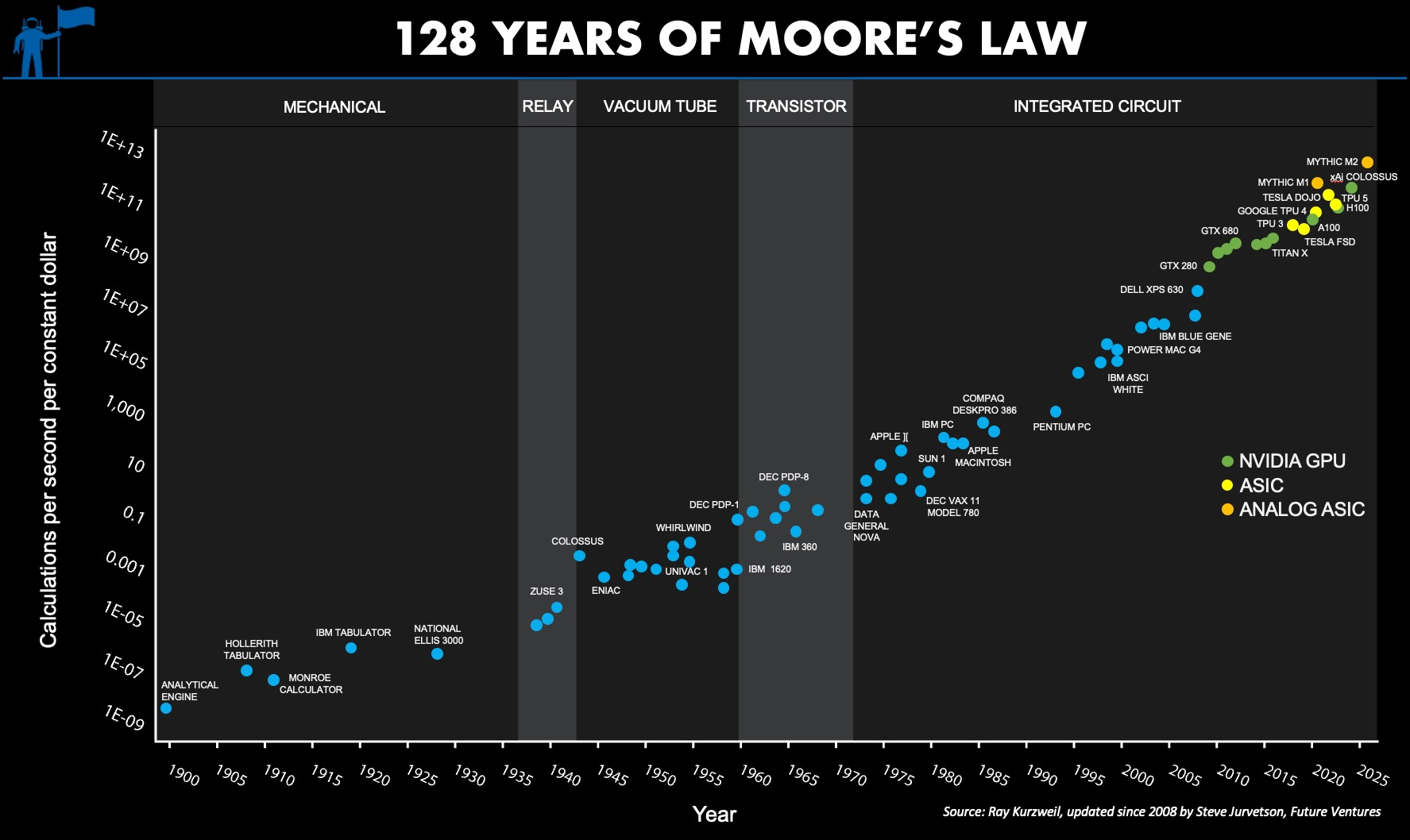
Source: Ray Kurzweil, updated since 2008 by Steve Jurvetson, Future Ventures
This exponential scaling means that modern machine learning models are no longer basic automated scripts. Modern neural networks are actively exceeding human-level performance baselines across almost every major cognitive domain.
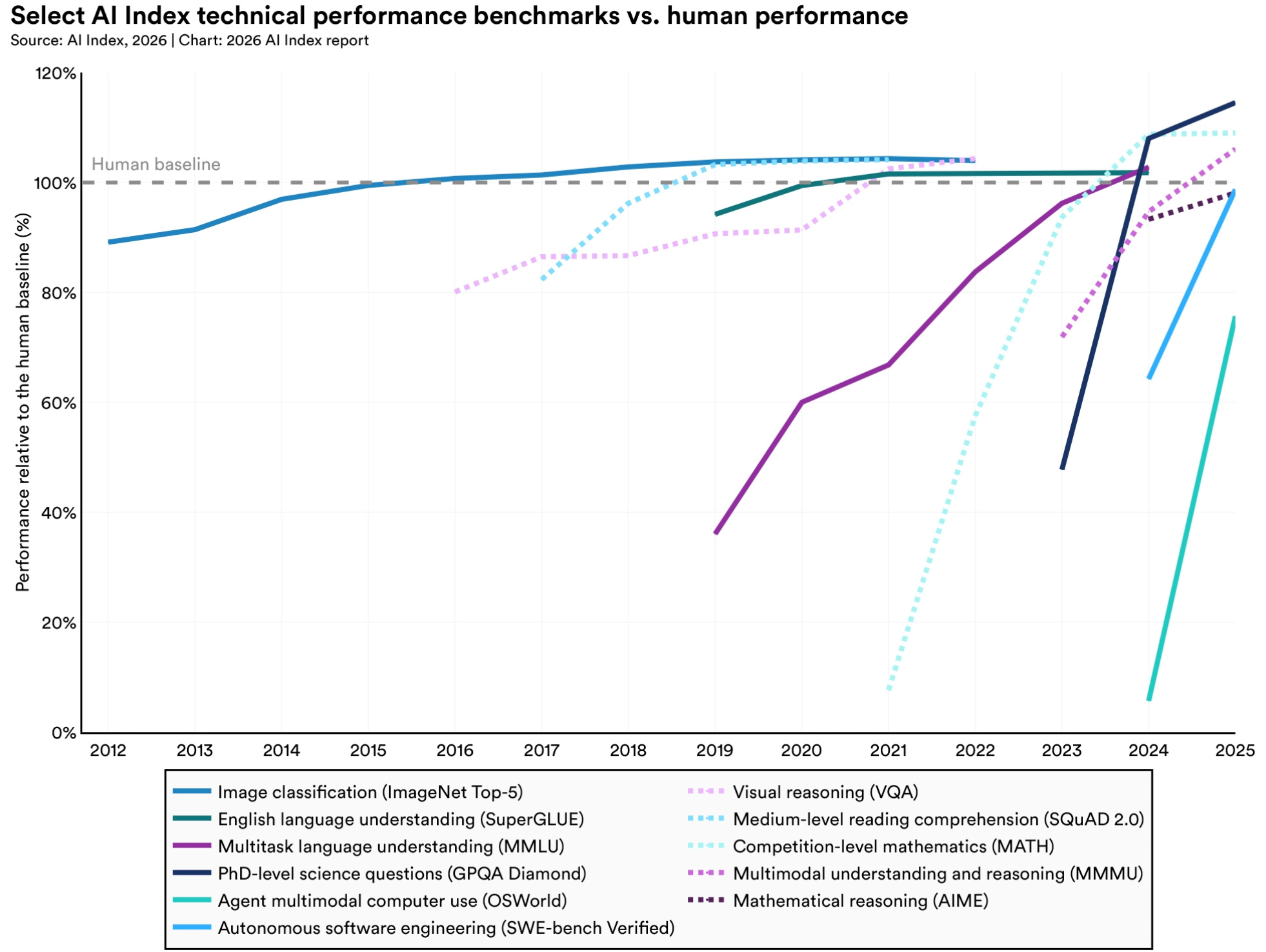
Source: Source: Stanford University AI Index Report [2026]
The rise of AI isn't a recent phenomenon. We interact with these models daily when doing tasks like checking navigation arrival times, filtering email spam, or relying on automated banking fraud alerts. It was only a matter of time before AI models started targeting the coin world.
Part 2: Markets — The History and Future of AI Coin Grading
The concept of using automation to establish true objectivity is not new to the coin industry.

The First AI War (1990 to 1991)
In 1986, the Professional Coin Grading Service revolutionized the industry by introducing a universal grading standard.
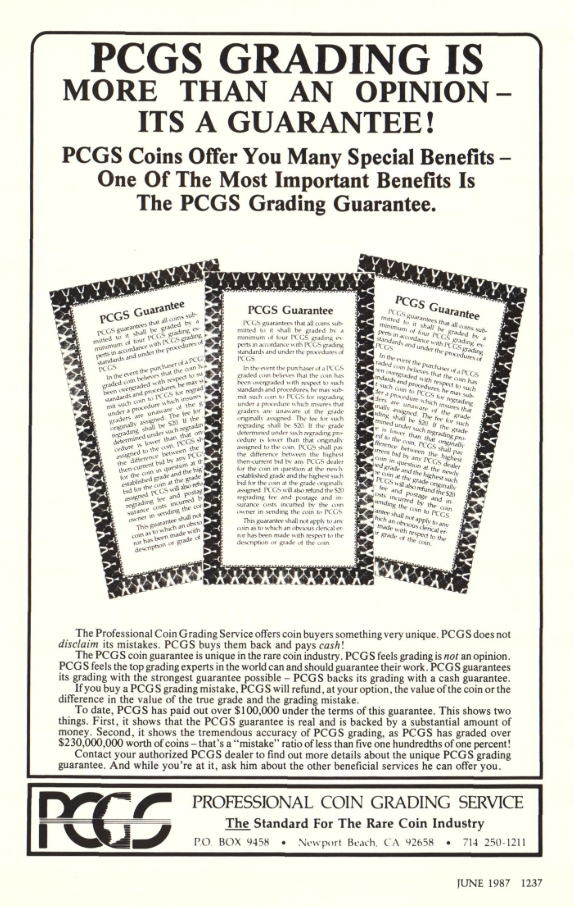
Source: The Numismatist, June 1987
They promised the community absolute grading consistency, a formal guarantee of authenticity, instant market liquidity, and the ability to use third-party graded coins as collateral. However, human subjectivity quickly caught up to the system. By 1990, numismatic legends like Q. David Bowers publicly detailed the community's frustration, noting that collectors were routinely resubmitting the exact same coins multiple times and receiving wildly different grades. Bowers famously declared that grading remained a volatile matter of opinion.
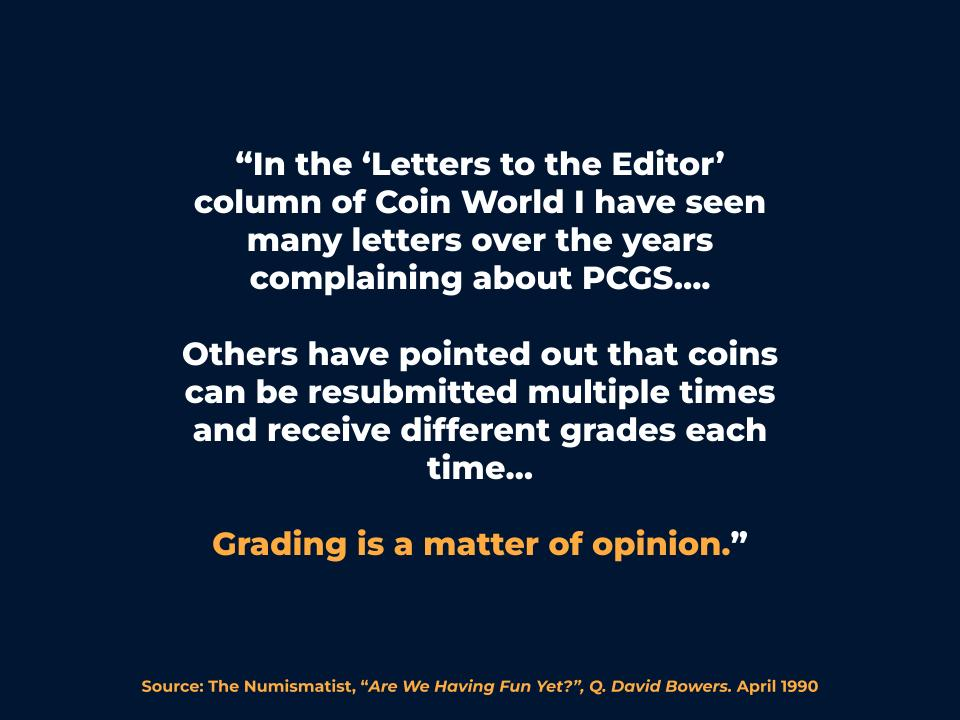
The question of whether PCGS grading was objective or subjective led to a massive Federal Trade Commission investigation in 1990, resulting in a permanent injunction against PCGS prohibiting it from making false representations about the total objectivity or consistency of its coin grades.
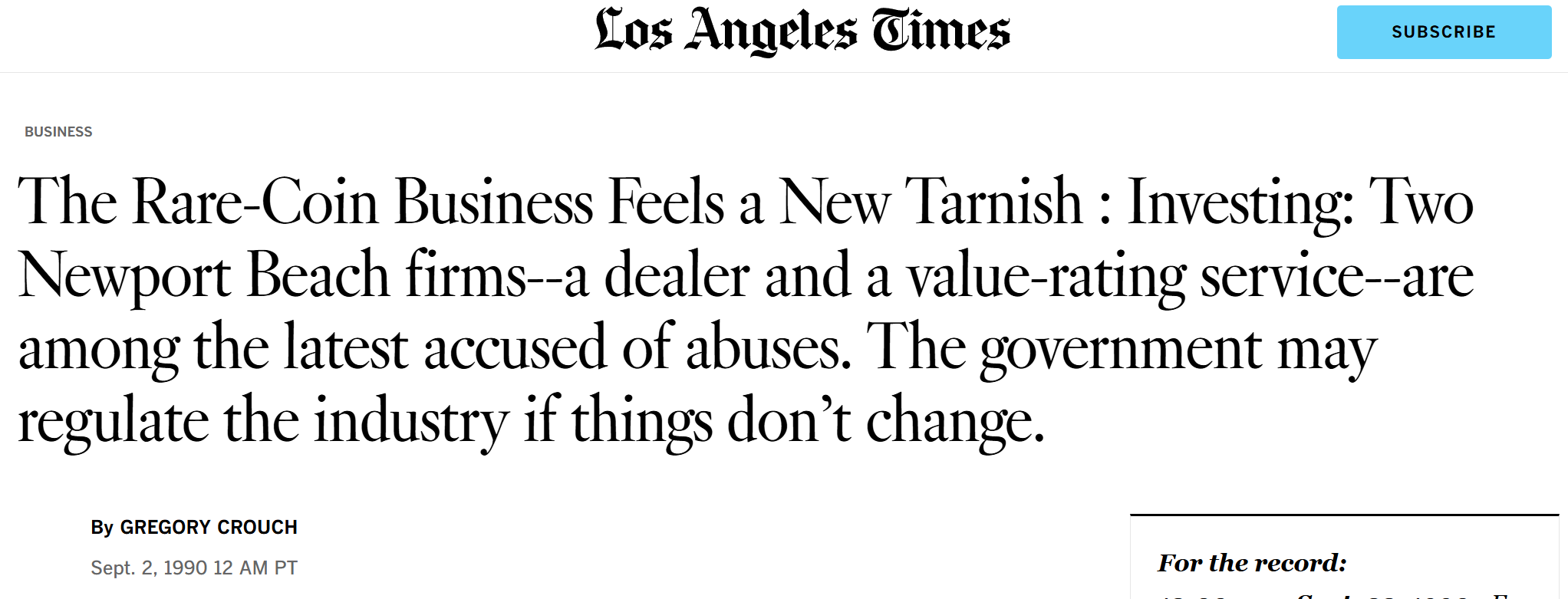
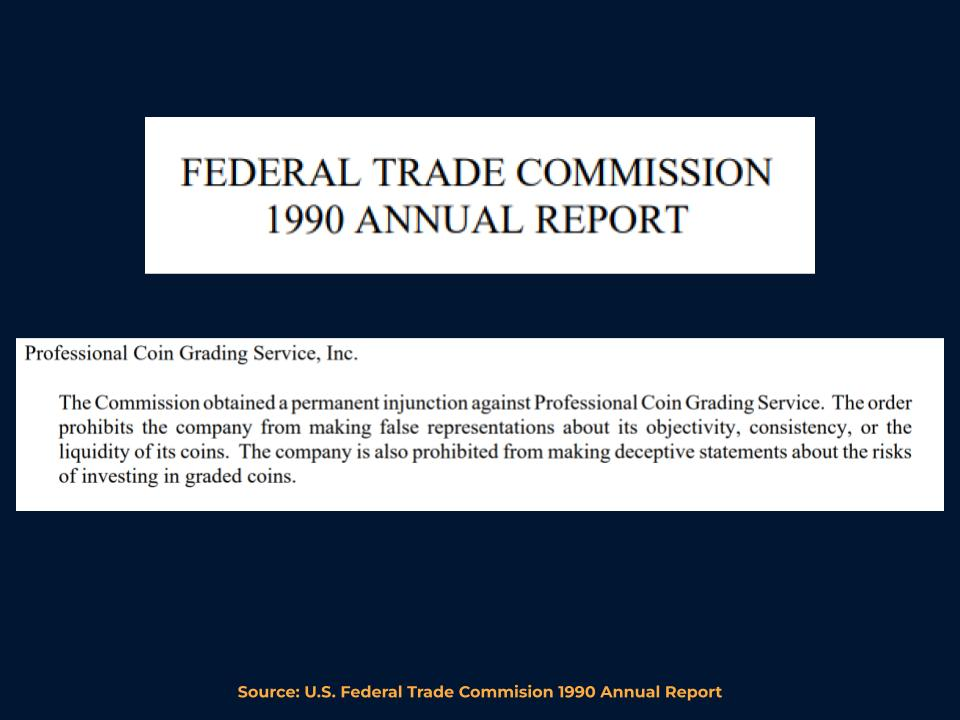
Faced with this regulatory crisis and a belief that collectors were demanding a system for objectivity, the race for AI coin grading officially began. PCGS filed software patents and announced a computer grading initiative called "The Expert" system.
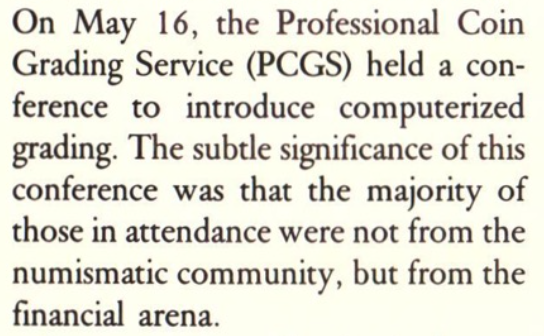
Source: The Numismatist, “Of Computers and Royal Proof Sets”, Michael R. Fuljenz, July 1990
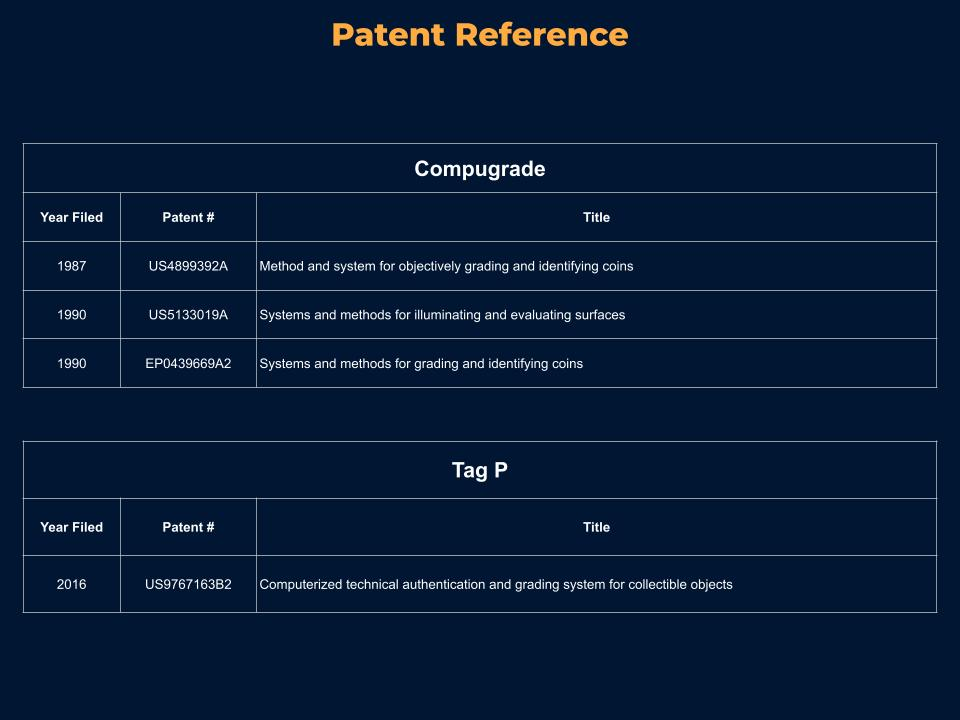
Simultaneously, an aggressive competitor, Compugrade, officially launched in 1991 under the corporate motto "Because to Err is Human".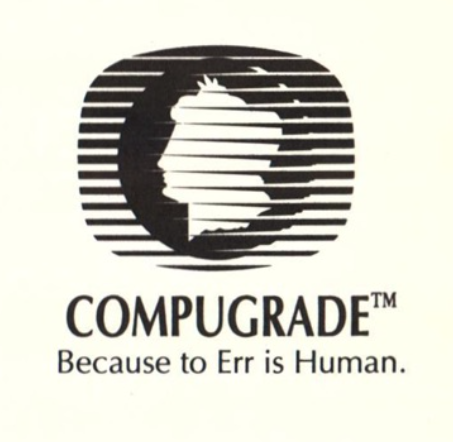
Source: The Numismatist, December 1991
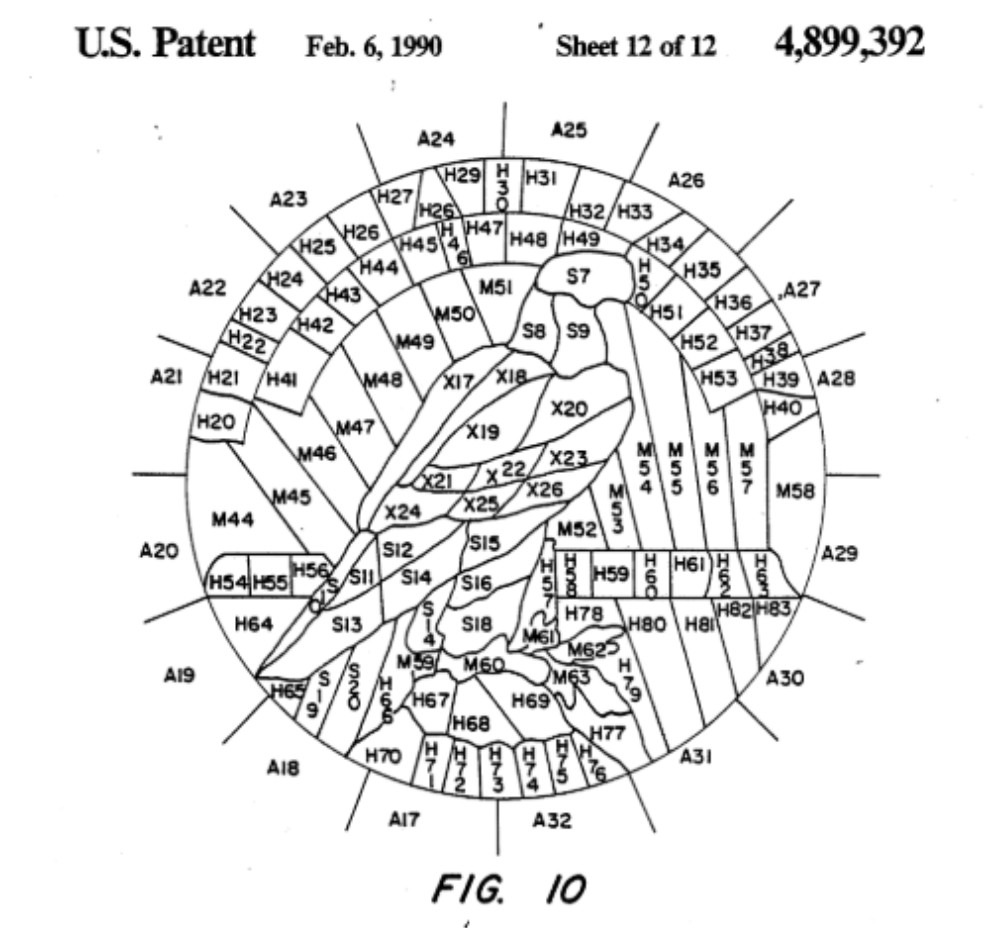
Compugrade utilized a patented image scanning process to isolate coin attributes, introduced a unique coin "fingerprinting" system to identify resubmissions, and even pioneered fractional decimal grading such as assigning a coin a grade of MS 62.6.
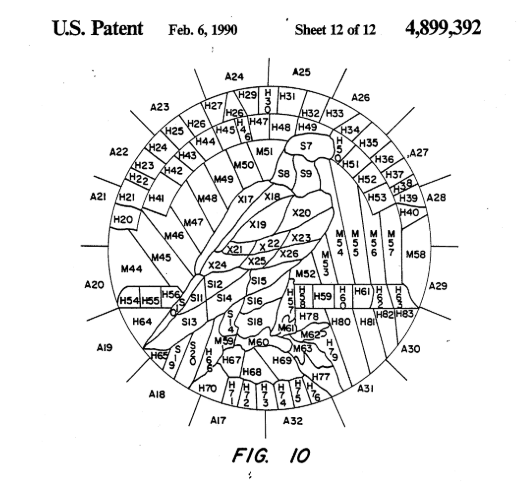
Source: Compugrade Inc. Patent #US4899392A [Feb 1990]
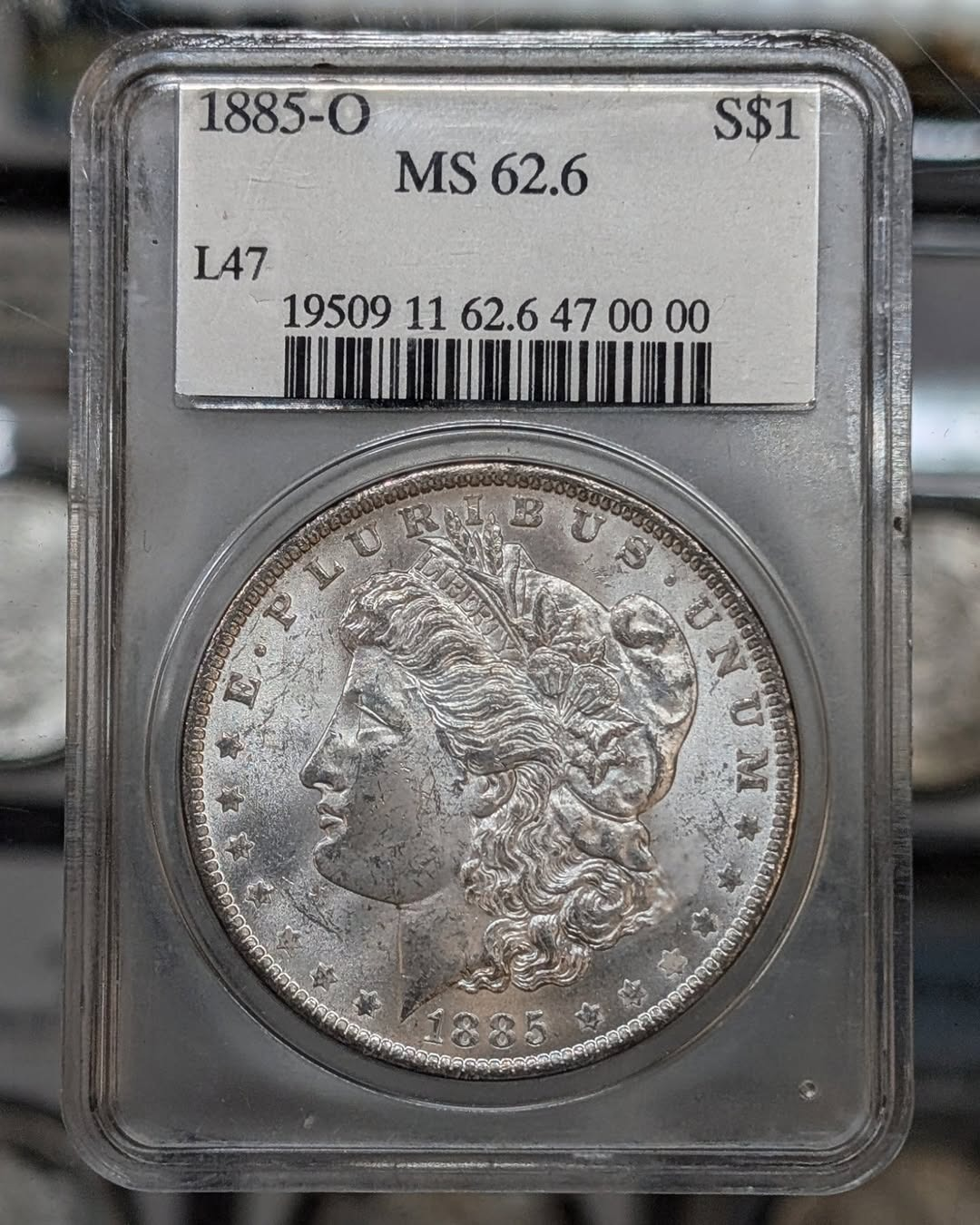
Source: Instagram, Black Eagle Coins
Who won this first technology war? Nobody did. The processing systems of the early 1990s were too inaccurate, highly inconsistent, and operationally unreliable for the commercial market. But more importantly, the entire market shifted its philosophy from strict technical grading to a more subjective grading system, leaving objectivity behind.
AI is not new to the coin world. History has shown that the industry is willing to experiment and adapt to changing technologies.
The Second AI War
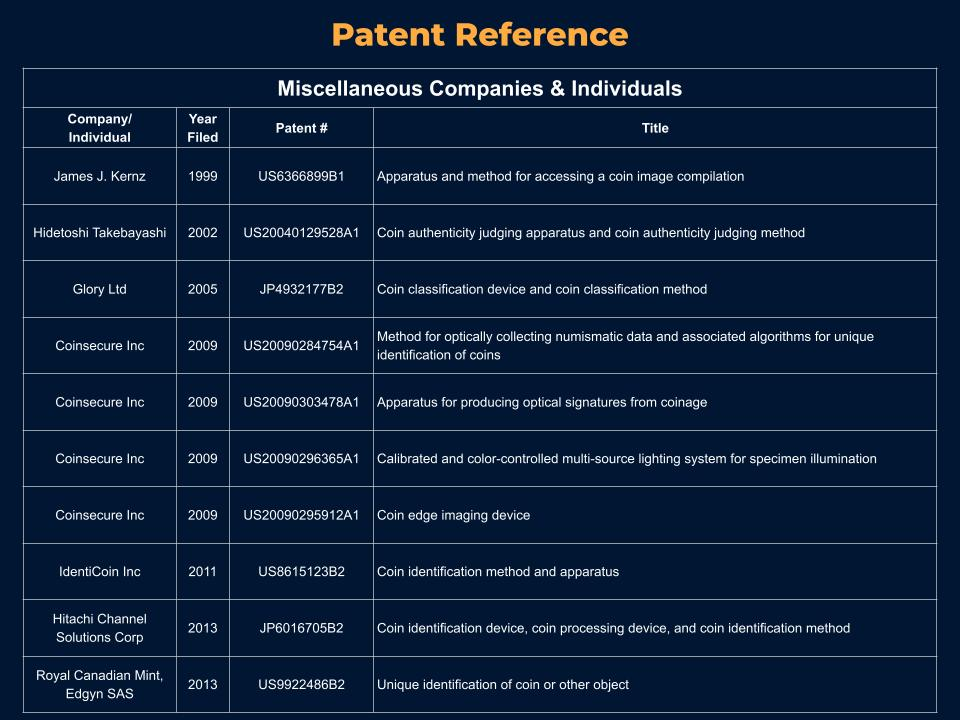
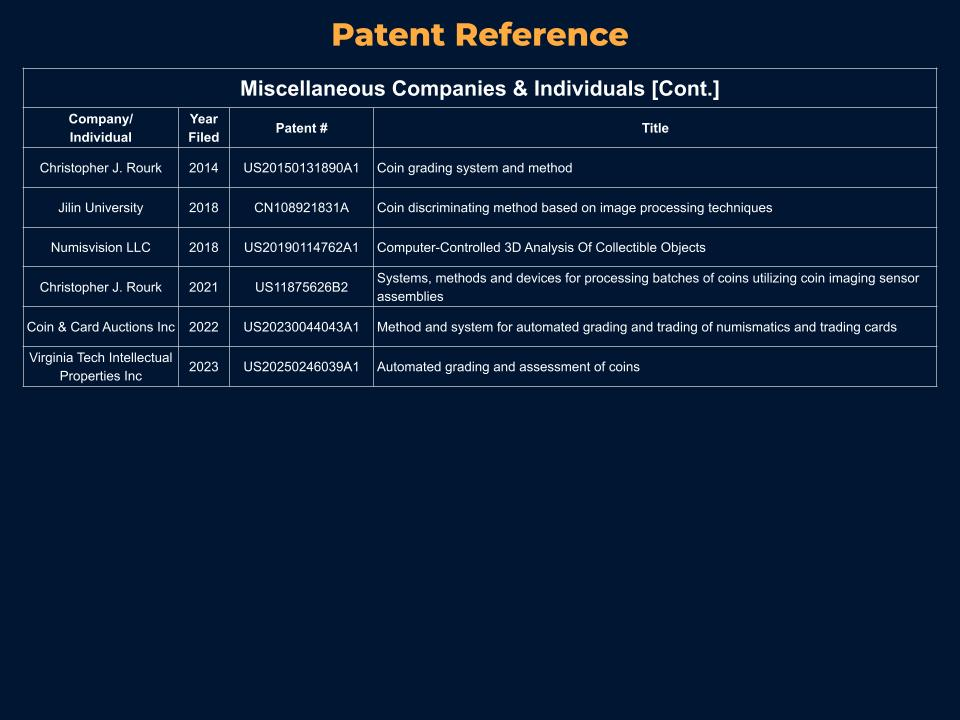
Today, the second major AI war has arrived. Over the past five years alone, 19 advanced computer-assisted coin grading and analysis patents were filed in the US.
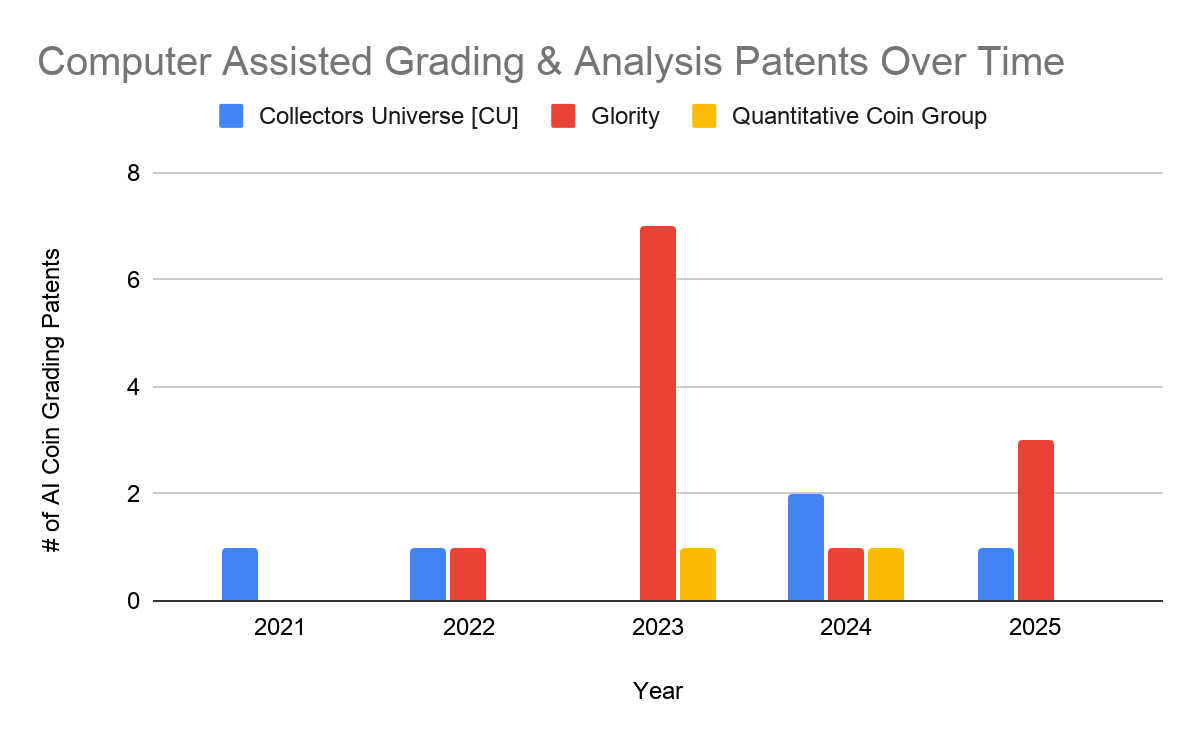
Source: Google Patent Searches
My research indicates that two corporate giants are currently locked in a battle to control the future of our hobby:
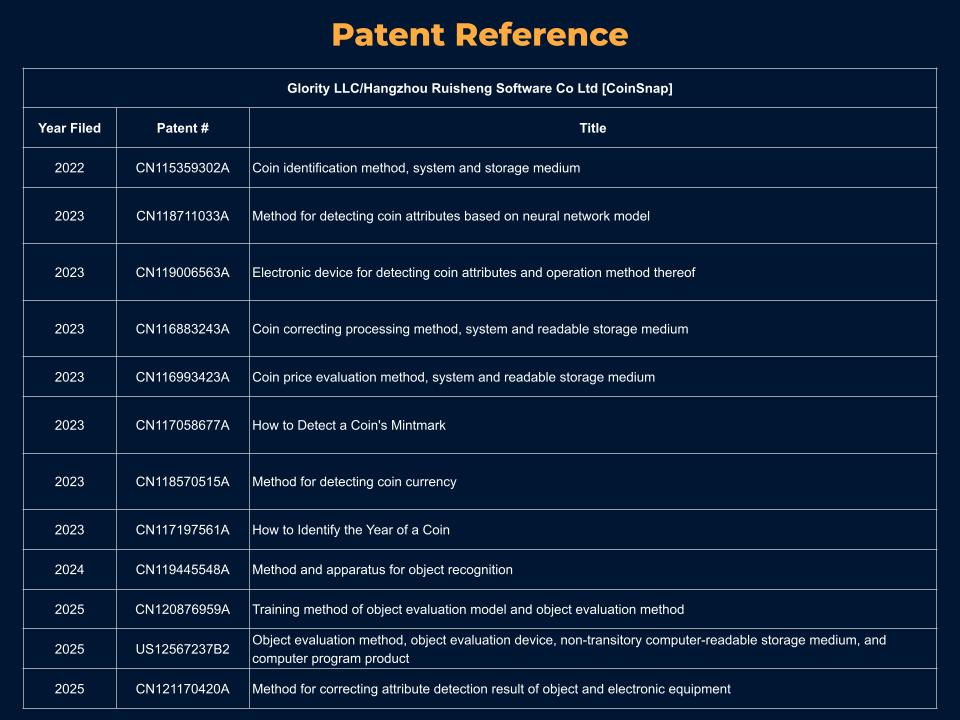
Glority LLC (The Creators of the CoinSnap mobile app)
- Market Penetration: Glority operates the world's most popular coin mobile app, with over 10 million downloads.
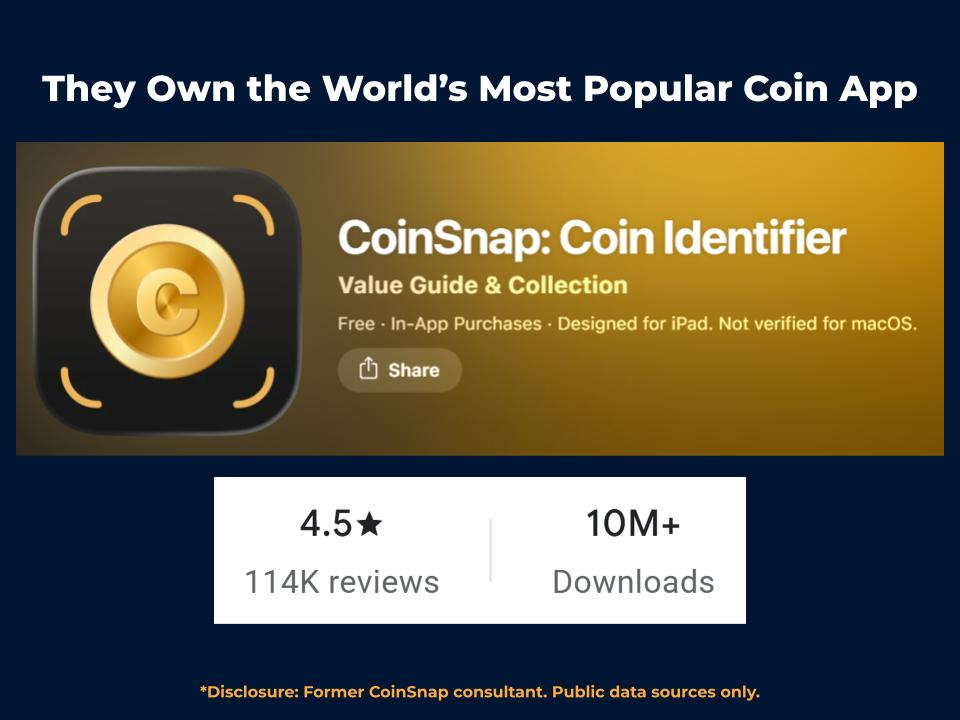
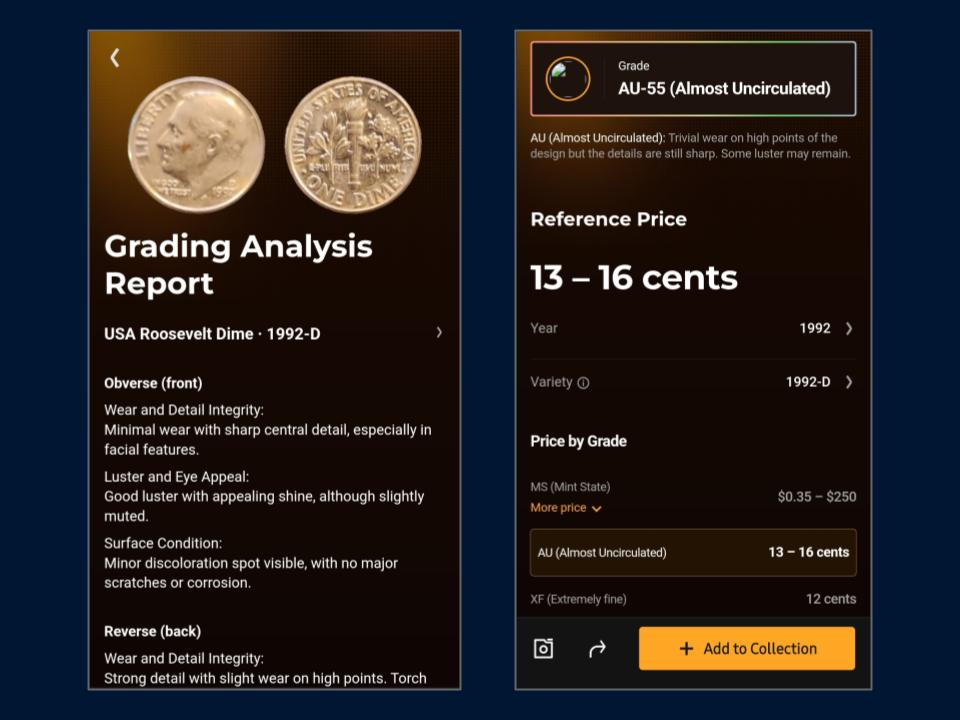
Source: Screenshots from CoinSnap app
- Financial Footprint: I estimate their app has generated $4.8 million in revenue in the past year alone.
- Patent Strategy: Their patent filings focus heavily on utilizing proprietary AI models to identify minute coin attributes directly from smartphones.
- Key Innovations: They have successfully secured specialized patents covering advanced methods for detecting a coin's specific mintmark, systems for reading the year on a coin, and automated real-time price evaluation.
So what do I predict is Glority's AI endgame?
I predict that Glority and other AI coin app makers are aiming to capture the top of the funnel for incoming new coin collectors. Once they bring them into their ecosystem, they then branch out to cover all their needs. Effectively replacing collectors' local coin with CoinSnap.
Disclosure: I was a former consultant to CoinSnap. Only public data was used in my analysis.
2. Collectors Universe (The Parent Company of PCGS)
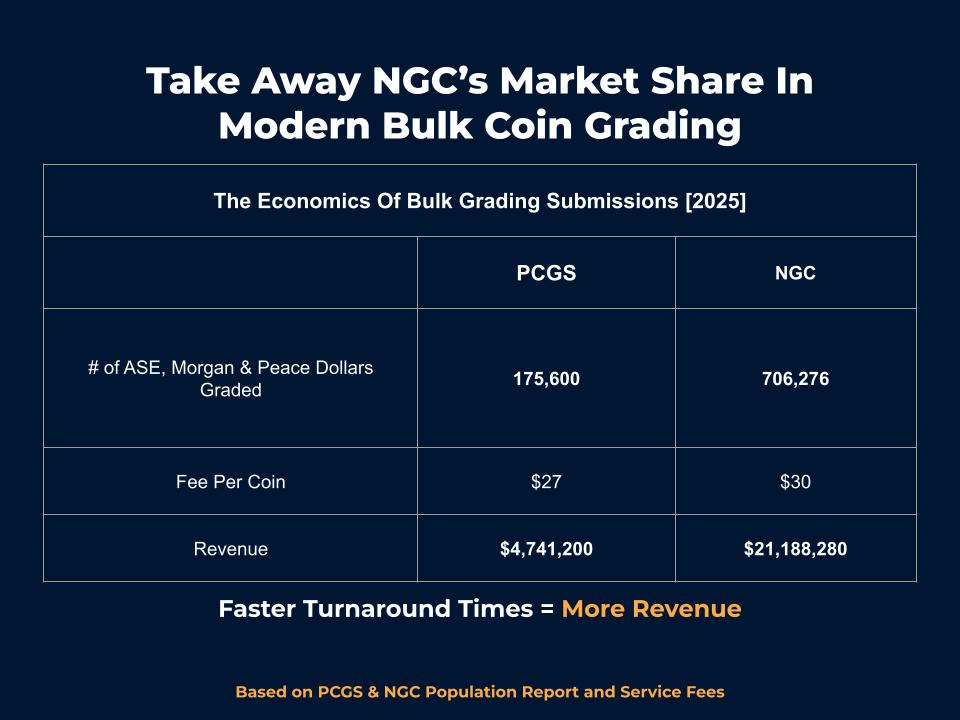
The Financial Defensive Plan: In the short term, modern bulk grading is a multi-million-dollar battlefield. The Numismatic Guaranty Company [NGC] graded 706,276 bulk modern coins compared to PCGS grading 175,600 units. PCGS is missing out on millions of dollars in highly profitable bulk modern-coin processing revenue. My guess is that PCGS is losing to NGC because of its long turnaround times. If PCGS can process coins faster with AI, it can take away NGC's market share in modern bulk coin grading.
Patent Strategy: Collectors Universe is responding by filing highly specific automation patents designed around heavy robotic hardware and specialized physical sorting environments.
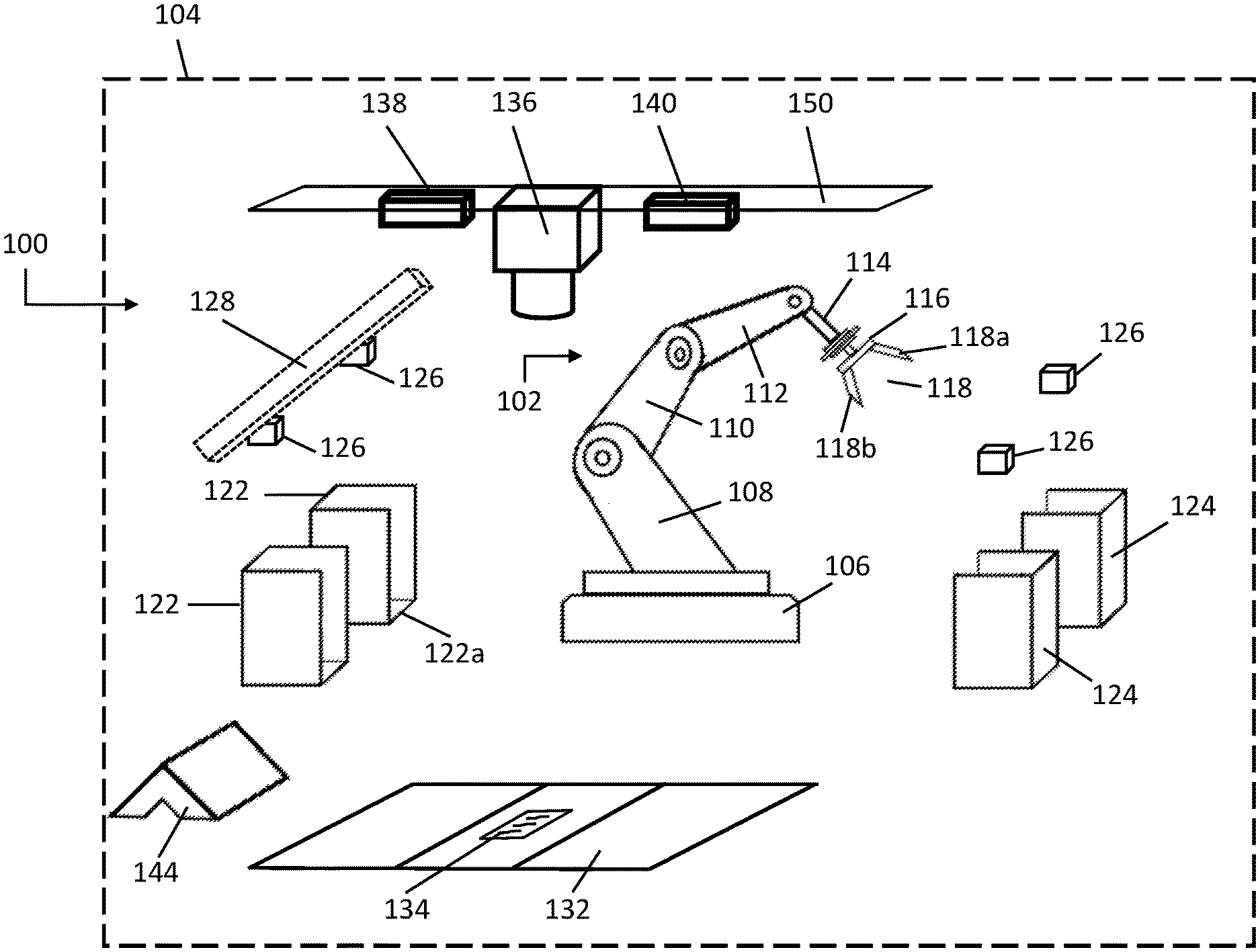
Source: Collectors Universe Patent #US20220036371A1 [Jan 2021]
- Key Innovations: Their primary hardware patents protect fully automated collectible identification systems featuring articulating robotic limbs, integrated conveyor tracks, and processing automated multi-angle captured images.

Collectors Universe Patent #US12400462B2 [Feb 2024]

Collectors Universe Patent #US12400462B2 [Feb 2024]
So what do I predict is Collectors Universe's AI endgame?
Part 3: Mania — Fleeceware, Scams, and the Destruction of Trust
While Glority and Collectors execute their long-term strategic rollouts, malicious actors are actively deploying consumer-facing artificial intelligence to exploit everyday collectors. This digital manipulation manifests across two primary threat vectors:
1. The Proliferation of "Fleeceware" Apps
Mobile app stores are being flooded with predatory, low-tier AI coin apps designed to trap novice collectors in financial subscription loops.
A prime example is an app known as CoinIn, which has successfully tricked consumers into over 1 million downloads through marketing gimmicks like AI-generated ads promising to make them rich with their pocket change.
CoinIn AI Video #1
The app lures unsuspecting collectors in with a temporary free trial to analyze their 'valuable' pocket change. Once downloaded, the app initiates aggressive dark patterns [tech speak for manipulative tricks] designed to steer users into signing up for a subscription. This video walkthrough shows those dark patterns in action.
Video Link
Many users report that, before the trial ends, the app deliberately processes the payment anyway, ignoring refund requests and routing customer service messages into dead ends.
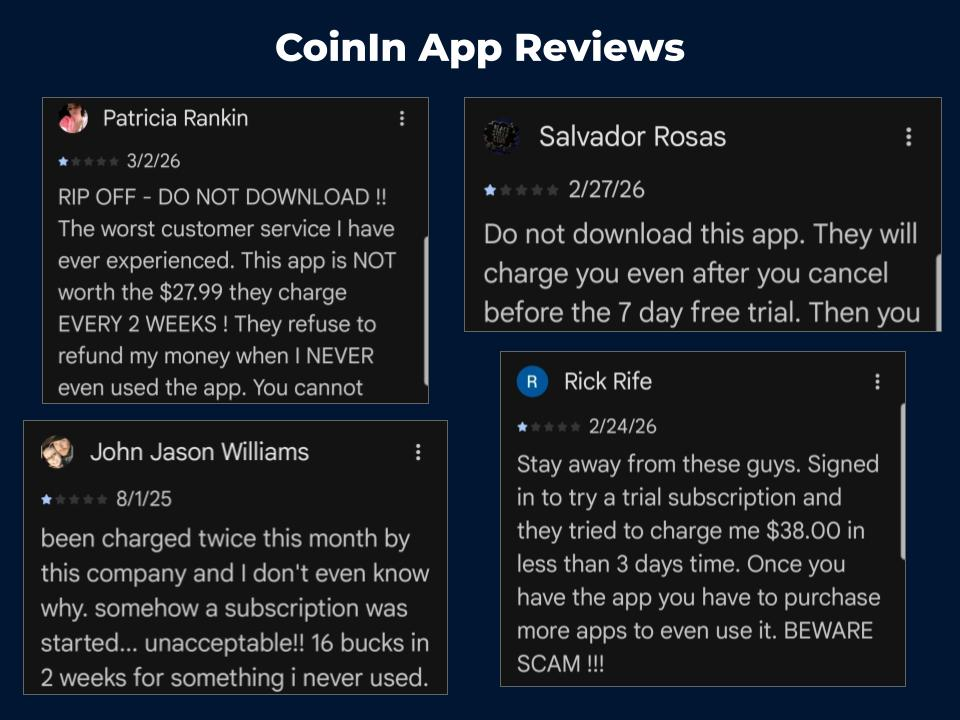
Source: Google Play Store
To protect this lucrative scheme, app developers can buy thousands of fake 5 star app reviews on freelance marketplaces to stay listed on top of the app store.

Source: Fiver.com
Across the top ten coin apps on Android alone, I estimate this ecosystem pulled in a massive $11.25 million in revenue over a single calendar year, built on top of 15 million aggregated downloads.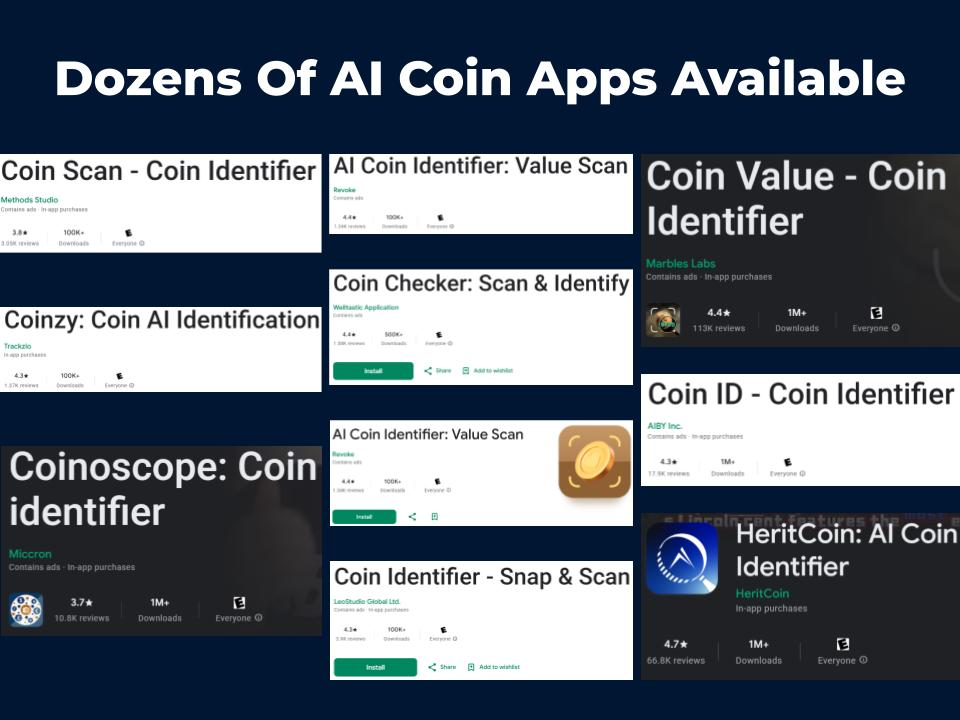
What I fear most is that these predatory apps luring in collectors with false promises of riches are doing long-term damage to the coin hobby. If a person's first experience with coin collecting is a highly negative one:
2. Deepfakes and Synthetic Numismatic Media
Advanced generative models like Seedream 4.5 and Google Veo 3.1 have made it incredibly simple to create photorealistic coin images, video clips, and synthetic audio tracks that are completely indistinguishable from real life.
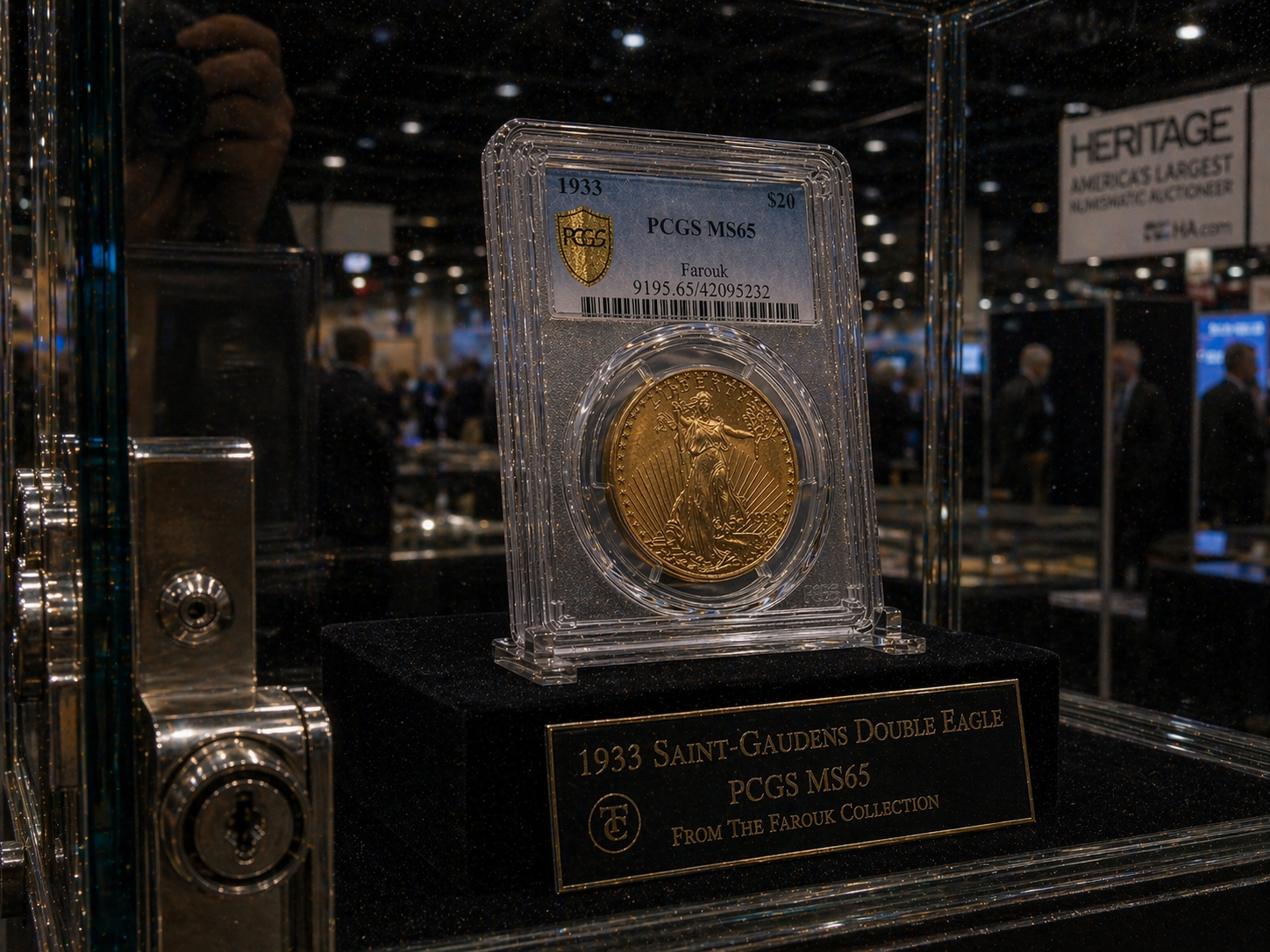
Created with Seedream 4.5
Video of AI Generated Coin Display
Other photorealistic AI video examples
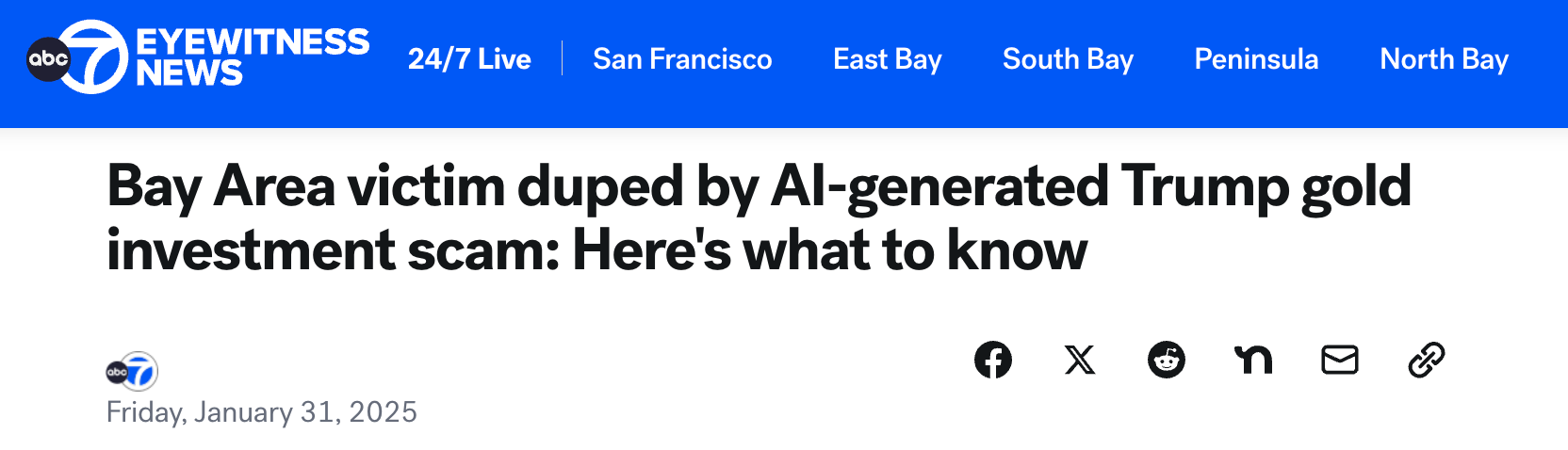
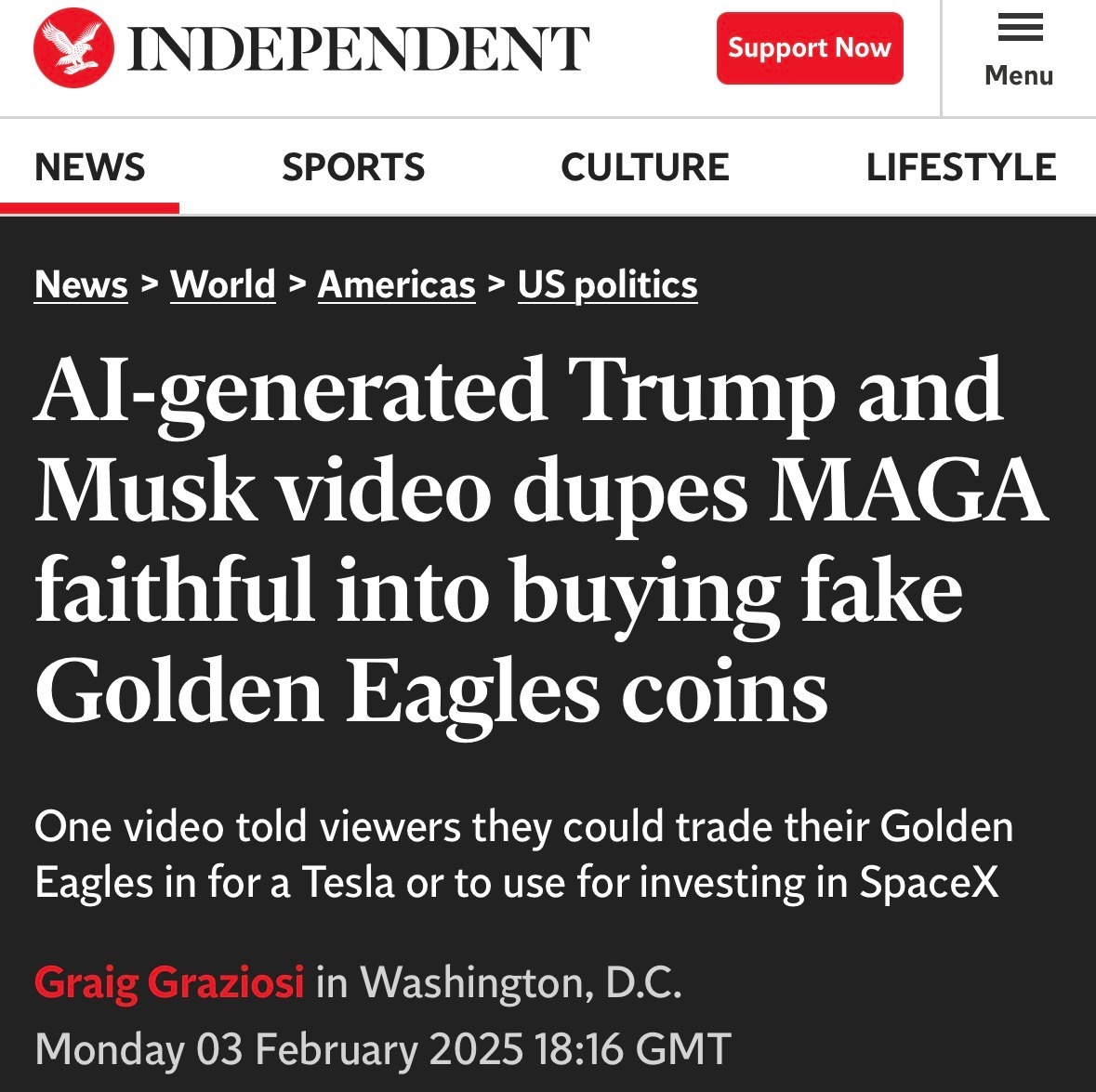
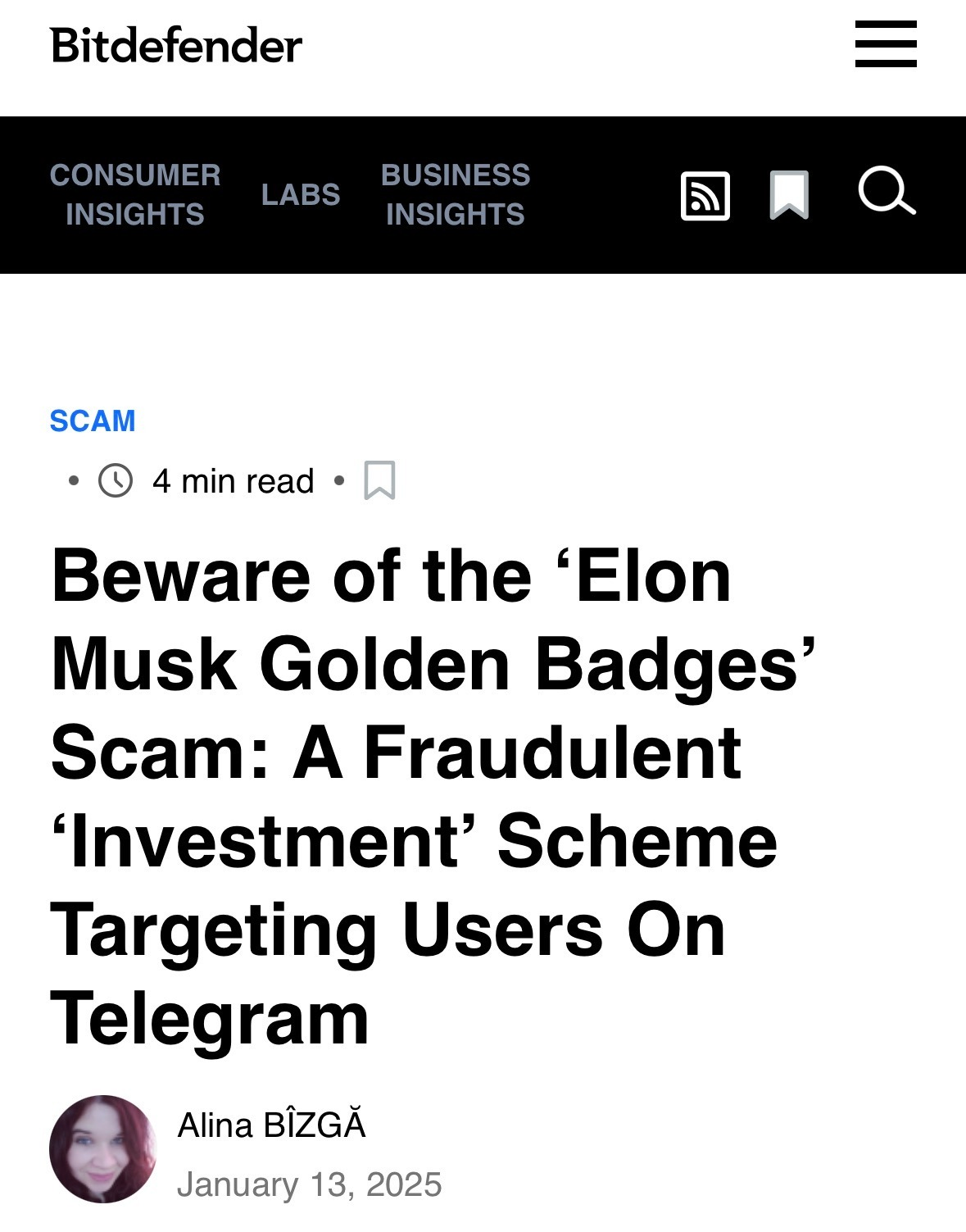
Fraudsters now have the tools to generate ultra-rare physical coin portfolios that do not exist, fabricating historical provenances and posting them directly onto secondary online auction sites to execute wire fraud. On a larger scale, organized ring operations have deployed deepfake video advertisements on social media. These operations create fake videos of public figures like Elon Musk and Donald Trump falsely endorsing speculative investments like "Elon Musk's Golden Badges" and fake "Trump Gold Eagles" coins. Thousands have been duped on the false premise that these tokens are valuable. When in reality they are worthless.
Some Bright Spots
Despite this widespread manipulation, AI provides incredible protective benefits when used ethically. The United States Mint currently uses theNewton Labs Press Die Vision System, which applies computer vision directly to the high-speed production line to identify and isolate mechanical coin errors in real time.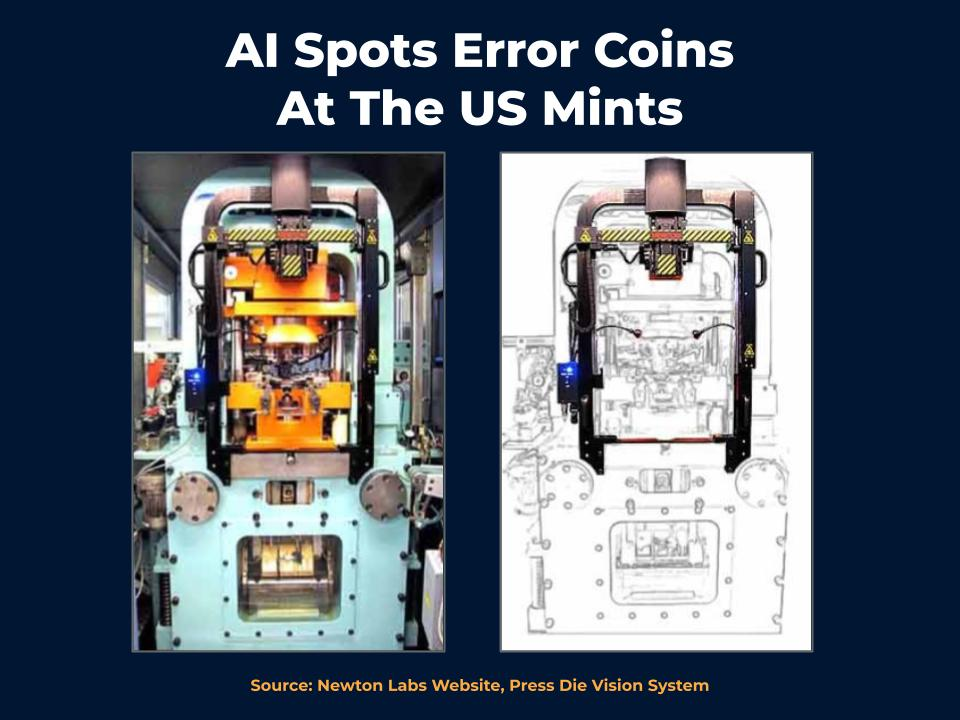
Furthermore, academic researchers like Dr. Saeed Khazaee working at Concordia University have developed highly accurate counterfeit detection models built around microscopic 3D height-map analysis. These systems evaluate height inconsistencies down to the micron level, generating structural heat maps that immediately flag cast or struck counterfeits by exposing tiny surface deviations that human eyes cannot catch.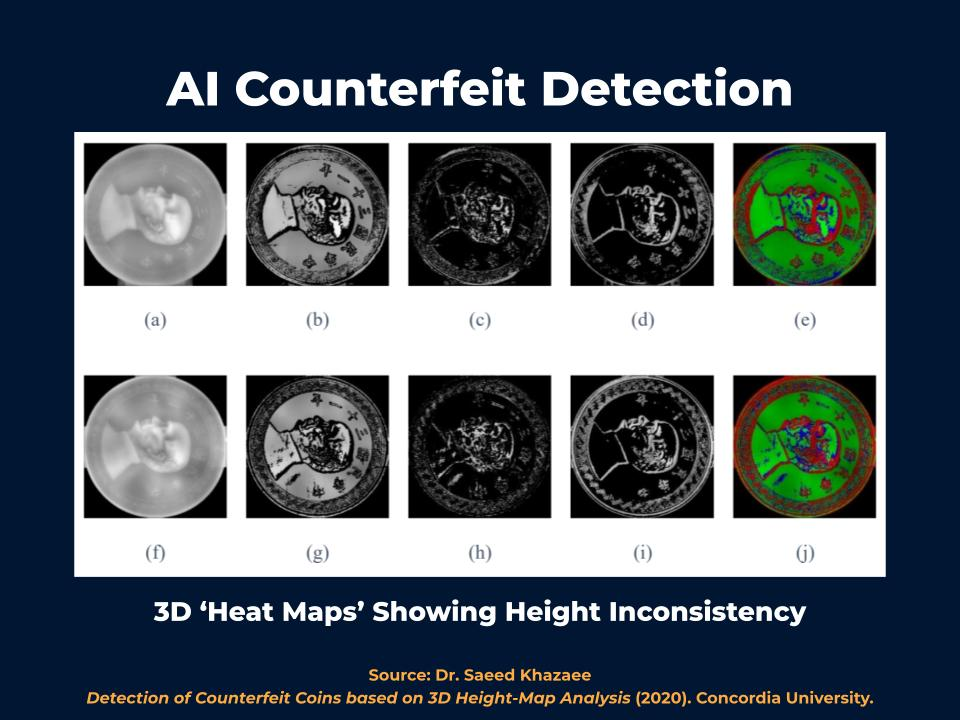
What We Can Do About It
We cannot simply ban artificial intelligence from our community; we must work together to ensure that human trust remains at the core of the hobby. To achieve this goal, I have five proposals for the industry leadership:
Proposal 1: Create an Industry AI Benchmark Test
Establish an AI Benchmark Test to measure how accurate today's AI models are with numismatic research, facts, grading, etc. This way the industry can, in one voice, alert the public if an AI model [like ChatGPT] accurately answers numismatic questions.
Proposal 2: Digitize Numismatic Research For AI Learning
Systematically digitize the entire archival record of physical numismatic literature, making these verified texts completely available to machine learning researchers and AI companies to ensure future models are trained on real historical facts and research rather than incorrect information from the internet.
Proposal 3: Launch a Decentralized Digital Counterfeit Exchange
All major third-party grading services actively participate in an open digital repository, immediately alerting the industry when they detect a new and highly sophisticated counterfeit.
Proposal 4: Establish a Global Blockchain Pedigree Ledger
Build a unified, cryptographically secure digital ledger to permanently record ownership chains and pedigree histories for elite numismatic rarities, completely eliminating the threat of physical pedigree tampering or fake auction provenances.
Proposal 5: Form a Cross-Industry Numismatic Consortium
Assemble a dedicated group of industry leaders, including museums, third-party graders, dealers, collectors, and auction houses, to establish and enforce these proposals.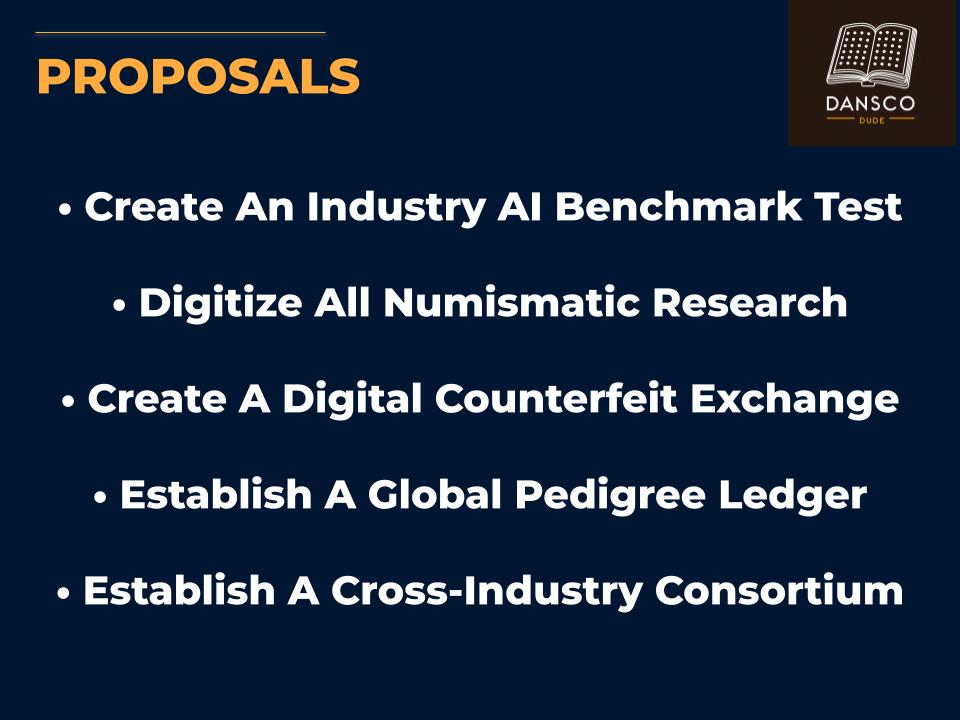
Closing Thoughts
As we cross into the AI era, I frequently return to a brilliant warning found inside an IBM training manual published back in 1979: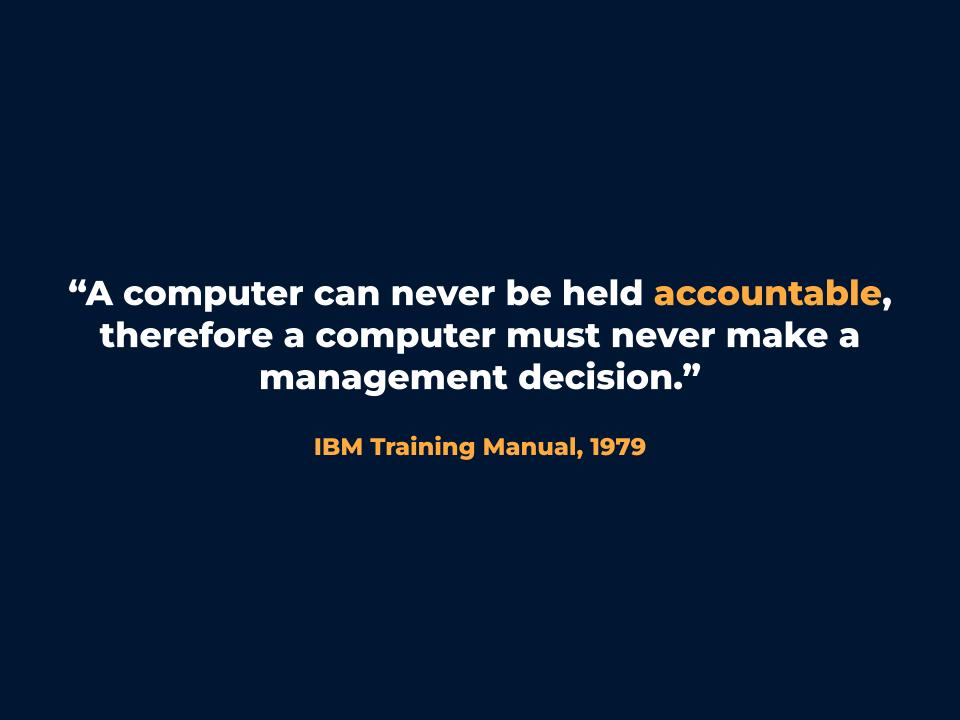
AI can never truly understand our passion for coins, the stories that draws us to collect, and cultural preservation that makes collecting coins vital to our shared history. AI must always remain an analytical tool for the collector, never the ultimate arbiter of our hobby.
Sources, Credits, & Resources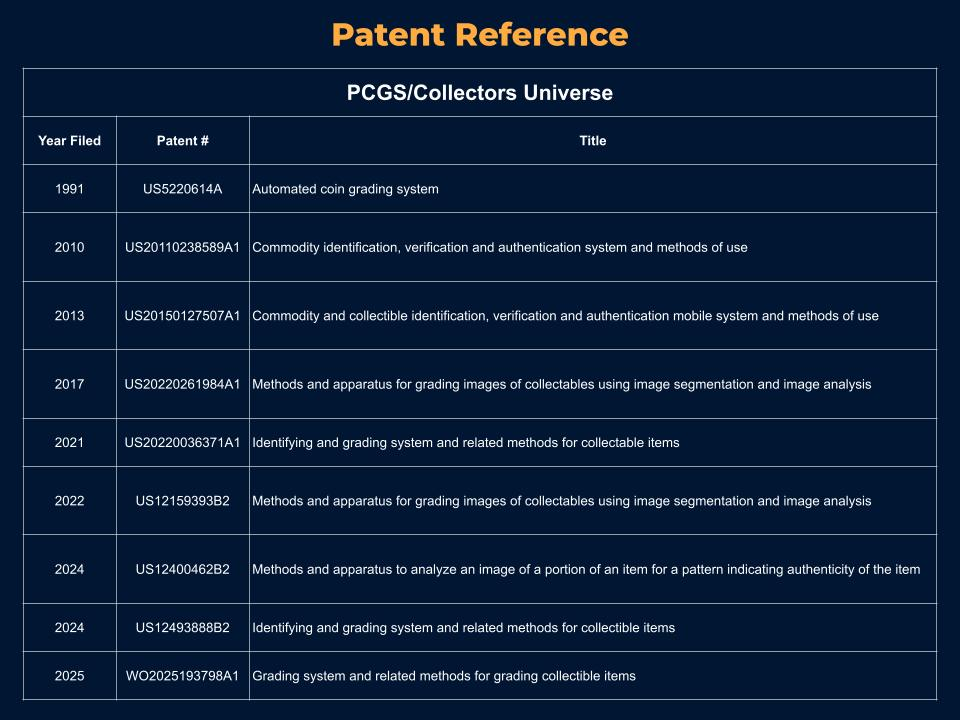
If you would like to see a video of this presentation, you can view it on YouTube [59 minutes]. Thank you to the NNP Symposium team for organizing this event and for the opportunity to present about this important topic! If you would like to share your thoughts or suggestions on how we can better prepare our hobby for AI, please reach out!
Comments
I haven’t finished reading yet, but thus far, it looks like a great presentation.
Mark Feld* of Heritage Auctions*Unless otherwise noted, my posts here represent my personal opinions.
It's good to be informed. I find some of this factual information to be breathtakingly frightening and can only imagine what all of this means today and worse- what it'll mean five to ten years from now.