Home U.S. Coin Forum

Modern Counterfeit Morgan Composition

airplanenutairplanenut Posts: 22,679 ✭✭✭✭✭

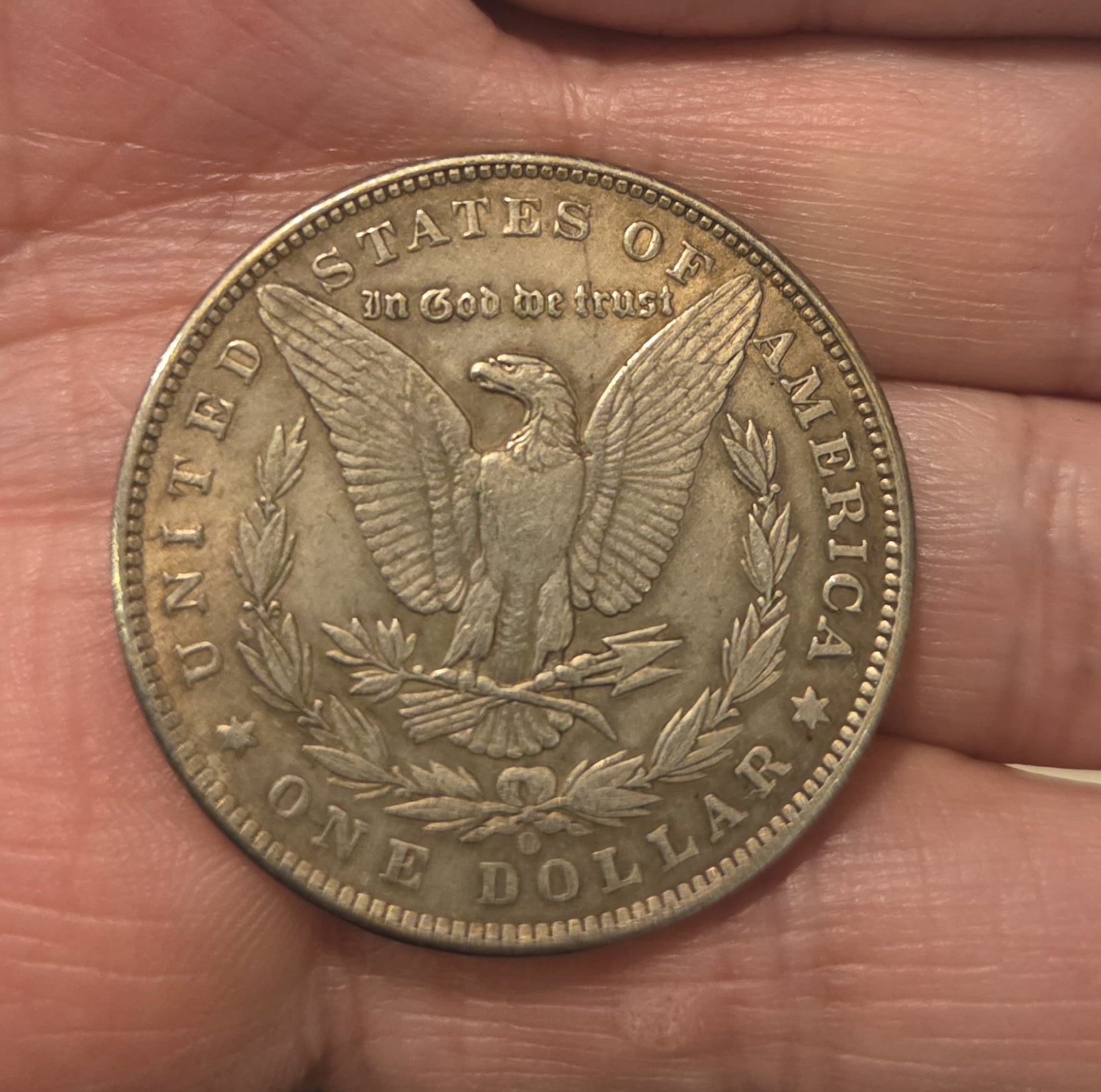
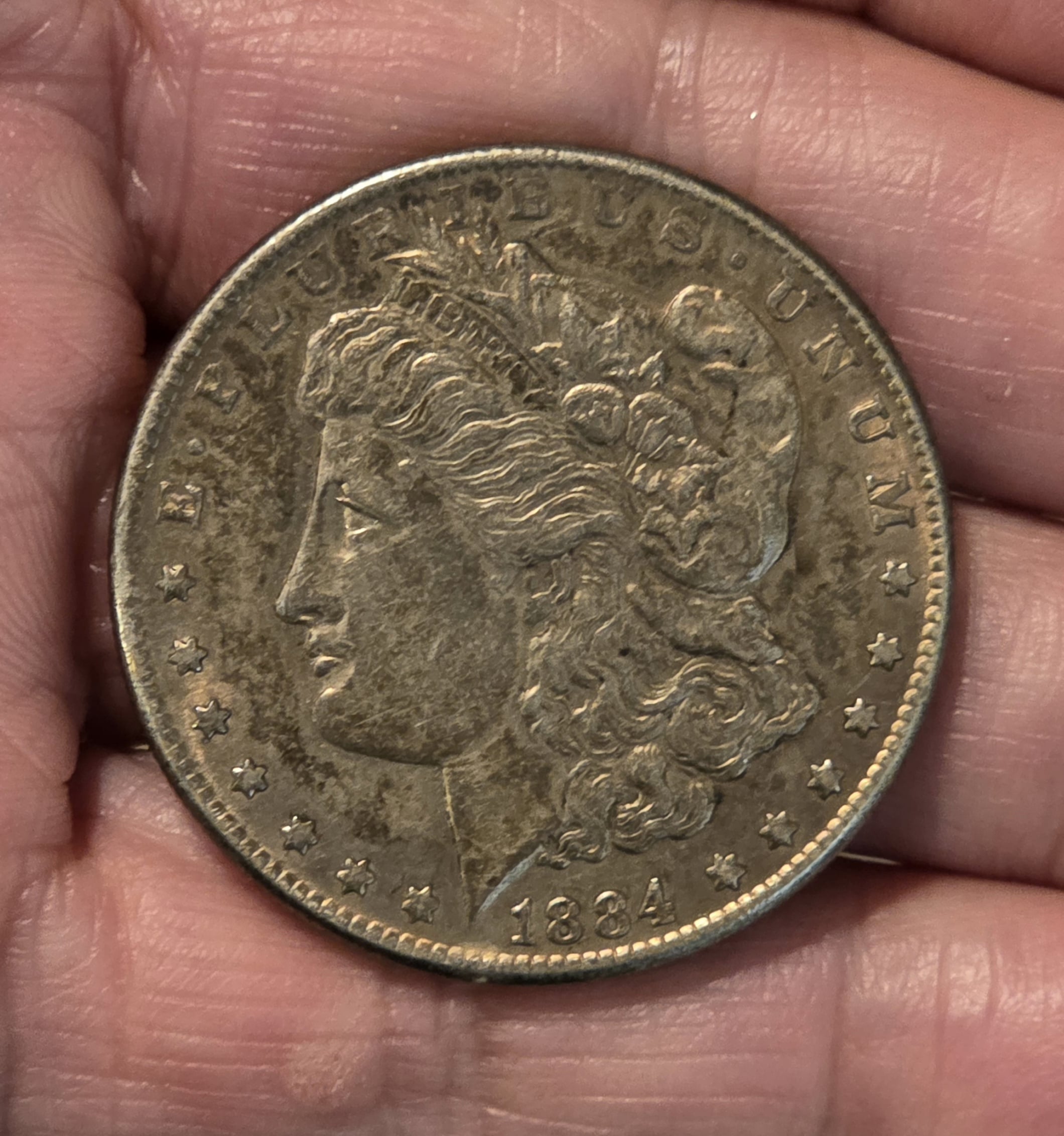
This counterfeit Morgan came with a consignment I received. There's no disagreement from the consignor regarding the coin being counterfeit, but there is a question about the composition of the piece. He bought it as silver, but my thought it that with the low cost you can acquire similar (if not identical) counterfeits, I'd assume it's a base metal, and plated at best. The only comparison I have on hand is another modern counterfeit Morgan which is holed, and the inside of the hole is yellowish, so I assume it's brass. Both pieces ring.

The piece is slightly underweight, at 26.1g. If there's any chance this could be silver we can go to more effort to figure that out, but if it's definitely just a base metal piece, there's no need to do any additional work.
JK Coin Photography - eBay Consignments | High Quality Photos | LOW Prices | 20% of Consignment Proceeds Go to Pancreatic Cancer Research

Comments

  • PerryHallPerryHall Posts: 47,481 ✭✭✭✭✭

    @airplanenut said:
    Both pieces ring.

    I read somewhere a long time ago that some counterfeiters would add a small amount of very fine sand to their metal mix to improve the "ring" of their fake coins. Also, the old-time cash registers had a marble ledge over the cash drawer so the merchant could drop a suspicious coin on the marble ledge and listen to the tone of the ring.

    Worry is the interest you pay on a debt you may not owe.
    "Paper money eventually returns to its intrinsic value---zero."----Voltaire
    "Everything you say should be true, but not everything true should be said."----Voltaire

  • MedalCollectorMedalCollector Posts: 2,072 ✭✭✭✭✭

    It does not have the appearance of silver to me. And the likelihood of a modern counterfeit being silver, especially an unconvincing one like this, is unlikely, in my opinion.

  • MsMorrisineMsMorrisine Posts: 39,147 ✭✭✭✭✭

    the issue is that xrf only goes so deep. you could see if you can find someone to do it for free, but it's going to come back Ag/Cu if real and if it is plated bras mostly Ag/Cu

    the best way would be a specific gravity test

    Current maintainer of Stone's Master List of Favorite Websites // My BST transactions
  • AUandAGAUandAG Posts: 25,027 ✭✭✭✭✭

    A specific gravity test would be conclusive. Google how to do one (easy peasy).
    bob :)

    Registry: CC lowballs (boblindstrom), bobinvegas1989@yahoo.com
  • SwampboySwampboy Posts: 13,230 ✭✭✭✭✭

    Jeremy this fake weighs 26.7
    A PNG member friend gave it to me for my education.
    It's not as brassy looking in hand and it gives off a nice thud when dropped on the counter

    "Inspiration exists, but it has to find you working" Pablo Picasso

  • MsMorrisineMsMorrisine Posts: 39,147 ✭✭✭✭✭

    i forgot - you can't sell counterfeits on ebay even if marked copy

    Current maintainer of Stone's Master List of Favorite Websites // My BST transactions
  • MsMorrisineMsMorrisine Posts: 39,147 ✭✭✭✭✭

    if you go the way of xrf - take your holed, plated one and compare the two results

    Current maintainer of Stone's Master List of Favorite Websites // My BST transactions
  • airplanenutairplanenut Posts: 22,679 ✭✭✭✭✭

    @PerryHall said:

    @airplanenut said:
    Both pieces ring.

    I read somewhere a long time ago that some counterfeiters would add a small amount of very fine sand to their metal mix to improve the "ring" of their fake coins.

    Interesting little tidbit. I'd never use the ring test as conclusive that something is good (after all, the one I know is plated rings), but it's a good start and finish when the coin doesn't ring and you don't have to think about it any further.

    @MedalCollector said:
    It does not have the appearance of silver to me. And the likelihood of a modern counterfeit being silver, especially an unconvincing one like this, is unlikely, in my opinion.

    The color is pretty close to a satin finish modern silver coin (like a Silver Eagle), but certainly the surfaces are very, very odd compared to a real coin. Not to say the coin is silver based on color, but I think the odd surfaces make the coin just look off, and whatever metal it is, I don't think it will ever look normal.

    @MsMorrisine said:
    i forgot - you can't sell counterfeits on ebay even if marked copy

    Yup--the piece was sent as just silver, but even if I knew for sure it was silver, it would have still been pulled because it can't be sold there. Now it's just a question of what the piece is and thus what we can do with it.

    JK Coin Photography - eBay Consignments | High Quality Photos | LOW Prices | 20% of Consignment Proceeds Go to Pancreatic Cancer Research
  • MrScienceMrScience Posts: 783 ✭✭✭

    This handy Youtube video demonstrates the measurement of specific gravity of real and counterfeit coins:

    https://youtube.com/watch?v=xw-2kqjtEdI

  • jmlanzafjmlanzaf Posts: 40,817 ✭✭✭✭✭

    @MsMorrisine said:
    the issue is that xrf only goes so deep. you could see if you can find someone to do it for free, but it's going to come back Ag/Cu if real and if it is plated bras mostly Ag/Cu

    the best way would be a specific gravity test

    The "best way" would be to test cut the edge with an XRF. For a bullion coin, scratching/cutting it is not going to impact the value.

    All comments reflect the opinion of the author, even when irrefutably accurate.

  • jmlanzafjmlanzaf Posts: 40,817 ✭✭✭✭✭

    @MrScience said:
    This handy Youtube video demonstrates the measurement of specific gravity of real and counterfeit coins:

    https://youtube.com/watch?v=xw-2kqjtEdI

    @AUandAG said:
    A specific gravity test would be conclusive. Google how to do one (easy peasy).
    bob :)

    I think zinc over lead could match the specific gravity of 90% silver.

    All comments reflect the opinion of the author, even when irrefutably accurate.

  • MrScienceMrScience Posts: 783 ✭✭✭

    @jmlanzaf said:

    @MrScience said:
    This handy Youtube video demonstrates the measurement of specific gravity of real and counterfeit coins:

    https://youtube.com/watch?v=xw-2kqjtEdI

    @AUandAG said:
    A specific gravity test would be conclusive. Google how to do one (easy peasy).
    bob :)

    I think zinc over lead could match the specific gravity of 90% silver.

    Good point. Would a zinc-coated lead slug 'ring?'

  • messydeskmessydesk Posts: 20,722 ✭✭✭✭✭

    @MrScience said:

    @jmlanzaf said:

    @MrScience said:
    This handy Youtube video demonstrates the measurement of specific gravity of real and counterfeit coins:

    https://youtube.com/watch?v=xw-2kqjtEdI

    @AUandAG said:
    A specific gravity test would be conclusive. Google how to do one (easy peasy).
    bob :)

    I think zinc over lead could match the specific gravity of 90% silver.

    Good point. Would a zinc-coated lead slug 'ring?'

    More of a "clunk" than a "ring". I'm thinking Pizza Hut red cups instead of Riedel stemware.

  • Old_CollectorOld_Collector Posts: 920 ✭✭✭✭✭
    edited May 18, 2026 4:57PM

    @MrScience said:

    @jmlanzaf said:

    @MrScience said:
    This handy Youtube video demonstrates the measurement of specific gravity of real and counterfeit coins:

    https://youtube.com/watch?v=xw-2kqjtEdI

    @AUandAG said:
    A specific gravity test would be conclusive. Google how to do one (easy peasy).
    bob :)

    I think zinc over lead could match the specific gravity of 90% silver.

    Good point. Would a zinc-coated lead slug 'ring?'

    A zinc plated lead coin could NOT POSSIBLY match the SG of an 80% silver/20% copper Morgan dollar.

    It would have to be a composition alloy of about 80% lead and 20% zinc with a zinc plating.

    A solid lead core with a zinc plating would have a specific gravity far too high, very close to 11.3, which greatly exceeds the 10.18 midpoint (10.16-10.20) of an actual minted silver Morgan.

    Moreover, lead and zinc are very difficult to combine in an alloy due to limited mutual solubility.

  • CaptHenwayCaptHenway Posts: 33,761 ✭✭✭✭✭

    If the potential numismatic value of a counterfeit is several multiples of the melt value of the genuine coin, why not use good metal to make the counterfeit more credible?
    Do a specific gravity test.

    Numismatist. 54 year member ANA. Former ANA Senior Authenticator. Winner of four ANA Heath Literary Awards; three Wayte and Olga Raymond Literary Awards; Numismatist of the Year Award 2009, and ANA Lifetime Achievement Award 2020. Also won the PNG's Robert Friedberg Award for "The Enigmatic Lincoln Cents of 1922," Available now from Whitman or Amazon.
  • Old_CollectorOld_Collector Posts: 920 ✭✭✭✭✭

    @CaptHenway said:
    If the potential numismatic value of a counterfeit is several multiples of the melt value of the genuine coin, why not use good metal to make the counterfeit more credible?
    Do a specific gravity test.

    Now that would make sense to me, but it seems not to be the practice of the Chinese mass producers.

  • jmlanzafjmlanzaf Posts: 40,817 ✭✭✭✭✭
    edited May 19, 2026 7:05AM

    @Old_Collector said:

    @MrScience said:

    @jmlanzaf said:

    @MrScience said:
    This handy Youtube video demonstrates the measurement of specific gravity of real and counterfeit coins:

    https://youtube.com/watch?v=xw-2kqjtEdI

    @AUandAG said:
    A specific gravity test would be conclusive. Google how to do one (easy peasy).
    bob :)

    I think zinc over lead could match the specific gravity of 90% silver.

    Good point. Would a zinc-coated lead slug 'ring?'

    A zinc plated lead coin could NOT POSSIBLY match the SG of an 80% silver/20% copper Morgan dollar.

    It would have to be a composition alloy of about 80% lead and 20% zinc with a zinc plating.

    A solid lead core with a zinc plating would have a specific gravity far too high, very close to 11.3, which greatly exceeds the 10.18 midpoint (10.16-10.20) of an actual minted silver Morgan.

    Moreover, lead and zinc are very difficult to combine in an alloy due to limited mutual solubility.

    This is true. Except for the part that it could "not possibly". You just need a thick zinc layer.

    For bonus points, it is actually possible to match the specific gravity of 90/10 silver dollars with 100% lead!

    However, my point is only that specific gravity is more definitive as a negative test than a positive one. They are not unique.

    An 80% silver Morgan would be counterfeit. 😀

    All comments reflect the opinion of the author, even when irrefutably accurate.

  • PeakRaritiesPeakRarities Posts: 4,818 ✭✭✭✭✭

    @jmlanzaf said:

    @MsMorrisine said:
    the issue is that xrf only goes so deep. you could see if you can find someone to do it for free, but it's going to come back Ag/Cu if real and if it is plated bras mostly Ag/Cu

    the best way would be a specific gravity test

    The "best way" would be to test cut the edge with an XRF. For a bullion coin, scratching/cutting it is not going to impact the value.

    This.

    Founder- Peak Rarities
    Website
    Instagram
    Facebook

  • jmlanzafjmlanzaf Posts: 40,817 ✭✭✭✭✭

    @Old_Collector said:

    @CaptHenway said:
    If the potential numismatic value of a counterfeit is several multiples of the melt value of the genuine coin, why not use good metal to make the counterfeit more credible?
    Do a specific gravity test.

    Now that would make sense to me, but it seems not to be the practice of the Chinese mass producers.

    Actually, Aliexpress sells 90% silver varieties as well as base metal varieties.

    All comments reflect the opinion of the author, even when irrefutably accurate.

  • messydeskmessydesk Posts: 20,722 ✭✭✭✭✭

    @jmlanzaf said:

    @MsMorrisine said:
    the issue is that xrf only goes so deep. you could see if you can find someone to do it for free, but it's going to come back Ag/Cu if real and if it is plated bras mostly Ag/Cu

    the best way would be a specific gravity test

    The "best way" would be to test cut the edge with an XRF. For a bullion coin, scratching/cutting it is not going to impact the value.

    The best way would be a fire assay. Destructive, yes, but it's fake, so who cares?

  • ChrisH821ChrisH821 Posts: 7,074 ✭✭✭✭✭

    It's definitely platinum ;)

    Collector, occasional seller

  • jmlanzafjmlanzaf Posts: 40,817 ✭✭✭✭✭
    edited May 20, 2026 2:13PM

    @messydesk said:

    @jmlanzaf said:

    @MsMorrisine said:
    the issue is that xrf only goes so deep. you could see if you can find someone to do it for free, but it's going to come back Ag/Cu if real and if it is plated bras mostly Ag/Cu

    the best way would be a specific gravity test

    The "best way" would be to test cut the edge with an XRF. For a bullion coin, scratching/cutting it is not going to impact the value.

    The best way would be a fire assay. Destructive, yes, but it's fake, so who cares?

    Access to an XRF is more common. If he can do a fire assay, sure.

    All comments reflect the opinion of the author, even when irrefutably accurate.

  • PeakRaritiesPeakRarities Posts: 4,818 ✭✭✭✭✭

    Just cut it in half with tin snips and depending on how much progress you make, we should be able to determine (with about 60-70% visual accuracy). I like where @messydesk head is at here. If that doesn’t work, to the crucible she goes! :D

    Founder- Peak Rarities
    Website
    Instagram
    Facebook

  • DesertCoinDesertCoin Posts: 364 ✭✭✭

    Magnet first. Then ping test. Get one if you don't already have it, it's a very helpful tool.

    “Land of the free because of the brave”
    “Saved by grace alone, through faith alone, in Christ alone”
    In Deo solo confidimus
    ΙΧΘΥΣ
    ΙϹ ΧϹ ΝΙΚΑ (ΙΗΣΟΥΣ ΧΡΙΣΤΟΣ ΝΙΚΑ)


    Member since 2026
    Successful BST transactions with: Ted 1, JWP, bigjpst, Vetter, nickelsciolist,

Leave a Comment

BoldItalicStrikethroughOrdered listUnordered list
Emoji
Image
Align leftAlign centerAlign rightToggle HTML viewToggle full pageToggle lights
Drop image/file