@jmlanzaf said:
People do that on ebay all the time. They ask for an offer, i give it. They counter. I reject it. They offer to "split the difference". I always counter with the original price.
The same thing happens to me a couple of times a year.
@jmlanzaf said:
On occasion, I've countered higher and offered to split the difference. They don't find it funny.
I've done this before but never heard back from the "buyer".
I go to a lot of shows and never ever pay asking price. I collect Morgan Dollars so there are always many dealers to choose from. I usually offer 85-90 % of asking price and if the offer is declined i move on,no harm no foul.
I find i have the best luck with my offers late in the day,on the last day of the show
Many times I may quote a price like for example $120 they come back with a counter offer, I may just simply say “I said it’s $120 (haggling burnout).
This one show the table fee is $150. That’s the most I can lose. But the psychology can be the walkup buyers have no idea what the price should be or any concept how to price coins, hence the haggling. On that scenario sellers may quote the price little bit higher (play game) then if haggling then room at least get the price they want.
I think a lot of them I encounter at shows are incompetent about pricing or want buy wholesale. I am not a wholesaler lol. If they want to buy like a dealer take a table at a show.
With my Accounting background I know exactly what I need to get for sales to offset fixed opex plus have a successful show in the green.
I welcome them if they buy in the green (positive p&l). Gotta move them. But if their offer in red - adious.
I think a lot of them really don’t know how to price coins. One guy always just wanted 10 pct off no matter what it was. Once you know their angle you can have a play call to offset it. Which is how I roll.
At shows I am commonly a buyer and infrequently a seller.
I avoid haggling as I view it as disrespectful to the dealer. When serious about an item I will ask for the seller's price. If I view the price as fair I will agree to the purchase price. If I think the price is a bit high I will make a note of the table location-item specifics-cost and tell the dealer that I will keep that item in mind. It is not uncommon that the dealer will then offer a better price. Those unsolicited reductions often result in my purchases. If I believe the seller's first offer is too optimistic I thank the dealer and move on but never criticize the seller's proposed price.
@MorganFanatic said:
I go to a lot of shows and never ever pay asking price. I collect Morgan Dollars so there are always many dealers to choose from. I usually offer 85-90 % of asking price and if the offer is declined i move on,no harm no foul.
I find i have the best luck with my offers late in the day,on the last day of the show
Good to know. If I raise my prices by 20%, I'll accept your offer and you'll happily pay more than my asking price.
@jmlanzaf you don't believe this actually happens already?
So if a dealer has quoted a price that is 20% higher than a more realistic price it's rude to ask for a best price?
I think it's common to see overpriced coins expecting a negotiation.
Added: So do you think that a collector should pay this 20% high retail price if they want the coin.
Student of numismatics and collector of Morgan dollars
Successful BST transactions with: Namvet Justindan Mattniss RWW olah_in_MA
Dantheman984 Toyz4geo SurfinxHI greencopper RWW bigjpst bretsan MWallace logger7 JWP BruceS bigjpst
JWP PROMETHIUS88
@Morgan13 said:
I think it's common to see overpriced coins expecting a negotiation.
It's this belief that finally encouraged me to increase my BIN eBay prices. They're still not overpriced (half my listings sell at the listed price), but I set them higher than I used to. I'd prefer to not play the game, but enough buyers are insisting on it anymore that it's financially imprudent not to.
@OnlyGoldIsMoney said:
At shows I am commonly a buyer and infrequently a seller.
I avoid haggling as I view it as disrespectful to the dealer. When serious about an item I will ask for the seller's price. If I view the price as fair I will agree to the purchase price. If I think the price is a bit high I will make a note of the table location-item specifics-cost and tell the dealer that I will keep that item in mind. It is not uncommon that the dealer will then offer a better price. Those unsolicited reductions often result in my purchases. If I believe the seller's first offer is too optimistic I thank the dealer and move on but never criticize the seller's proposed price.
Guy in coin club bumps his stuff up (shows) abt 10-20 pct above CDN CPG then lets them haggle him down to what he would want anyway, he says “its all just fun and games.”
I recall a dealer back in Ohio many years ago who used to tell customers that he sells at Bid to collectors, why should they pay more than the dealers…. That sounds great, but the problem was that he overgraded everything. Paying Bid for a Bust quarter that he labeled as XF that is really VF looks pretty good if you don’t know how to grade.
Based on the great advice from members of this forum, I’m seeing great value in checking recent sales on the Great Collections, Heritage and eBay websites. Let’s say these sites, particularly the first two, show that a 1881-S Morgan MS65 PCGS CAC Green has been selling for around $750 in the last month or two.
Now, a week or two later you’re at a coin show, and you see a dealer selling the same date and grade of coin at $1000. I know that no two coins are exactly alike, but do you mention to the seller that recent online sales have been lower?
@cinque1543 said:
Based on the great advice from members of this forum, I’m seeing great value in checking recent sales on the Great Collretions, Heritage and eBay websites. Let’s say these sites, particularly the first two, show that a 1881-S Morgan MS65 PCGS CAC Green has been selling for around $750 in the last month or two.
Now, a week or two later you’re at a coin show, and you see a dealer selling the same date and grade of coin at $1000. I know that no two coins are exactly alike, but do you mention to the seller that recent online sales have been lower?
That dealer might have been the one who bought the coin at the prior auction.
I'd assume the dealer knows what the coin has been selling for.
@cinque1543 said:
Now, a week or two later you’re at a coin show, and you see a dealer selling the same date and grade of coin at $1000. I know that no two coins are exactly alike, but do you mention to the seller that recent online sales have been lower?
Depending on the seller, you might be advised to buy one online.
@cinque1543 said:
Based on the great advice from members of this forum, I’m seeing great value in checking recent sales on the Great Collections, Heritage and eBay websites. Let’s say these sites, particularly the first two, show that a 1881-S Morgan MS65 PCGS CAC Green has been selling for around $750 in the last month or two.
Now, a week or two later you’re at a coin show, and you see a dealer selling the same date and grade of coin at $1000. I know that no two coins are exactly alike, but do you mention to the seller that recent online sales have been lower?
First off, that must be some special 81-S in 65 to command $750. But that's neither here nor there.
As a general rule of thumb that I follow, the more equipped you are with hard knowledge, the better. From the buyer's perspective, you absolutely can and should mention to the seller, respectfully, that you're aware of trending auction prices on Great Collections and Heritage that show recent sales for (insert blast white or toned here) coins of same date / grade around $X. Shows them that you're a knowledgeable buyer who is respectful but budget-conscious.
With that said, the seller may not care, they may offer you a counter price, or they may ask you to make then an offer. Or perhaps, you might want to accompany your insight with an offer of your own showing that you're there to try and buy a coin, not just waste their time by telling them their inventory is overpriced (though it may be).
Generally from my perspective, the more common the date / grade, the less likely that trending auction prices matter; it's more about the seller making their desired margin based on how much they paid for it. The rarer the condition or the date or both, the more likely that trending auction prices matter to dictate the eventual price.
@cinque1543 said:
Based on the great advice from members of this forum, I’m seeing great value in checking recent sales on the Great Collections, Heritage and eBay websites. Let’s say these sites, particularly the first two, show that a 1881-S Morgan MS65 PCGS CAC Green has been selling for around $750 in the last month or two.
Now, a week or two later you’re at a coin show, and you see a dealer selling the same date and grade of coin at $1000. I know that no two coins are exactly alike, but do you mention to the seller that recent online sales have been lower?
Back when I was working I would have told you that you should have bought that other one.
Professional Numismatist, Retired. 55 year member ANA. Former ANA Senior Authenticator. Winner of four ANA Heath Literary Awards; three Wayte and Olga Raymond Literary Awards; Numismatist of the Year Award 2009, and ANA Lifetime Achievement Award 2020. Winner of the PNG's 2026 Robert Friedberg Award for "The Enigmatic Lincoln Cents of 1922," Available now from Whitman or Amazon.
Now, a week or two later you’re at a coin show, and you see a dealer selling the same date and grade of coin at $1000. I know that no two coins are exactly alike, but do you mention to the seller that recent online sales have been lower?
Generally from my perspective, the more common the date / grade, the less likely that trending auction prices matter; it's more about the seller making their desired margin based on how much they paid for it. The rarer the condition or the date or both, the more likely that trending auction prices matter to dictate the eventual price.
This surprises me. Can you say more? For common date, I would have thought the trending data would be more reliable, as it likely clusters closer around a mean. It's the rarer date/grade coins that I thought would vary more widely in price, because it often comes down to a single (or very small number) of motivated buyers. Have I got that wrong?
Many hagglers have run into are incompetent in pricing coins. Hence they will try talk u down. So in those instances haggle with them accordingly and whup up on them (bump up your stuff) so come out in the green at the margin you’re looking for. Just fun n games. Leave good negotiating room in quoting prices.
At shows there to move my stuff. If deal leaving me in green negotiated then perhaps time let the item go and then chalk up a sale.
@cinque1543 said:
Based on the great advice from members of this forum, I’m seeing great value in checking recent sales on the Great Collections, Heritage and eBay websites. Let’s say these sites, particularly the first two, show that a 1881-S Morgan MS65 PCGS CAC Green has been selling for around $750 in the last month or two.
Now, a week or two later you’re at a coin show, and you see a dealer selling the same date and grade of coin at $1000. I know that no two coins are exactly alike, but do you mention to the seller that recent online sales have been lower?
I was at a show, once, and that same scenario happened to me… the dealer had a coin I was interested in for $1000. I showed him previous recent sales from the Heritage archives at $650. He agreed that that was reasonable, and I walked away with the coin for that price. Do your research, folks, and don’t be afraid to ask.
Sometimes, it’s better to be LUCKY than good. 🍀 🍺👍
I was at a show, once, and that same scenario happened to me… the dealer had a coin I was interested in for $1000. I showed him previous recent sales from the Heritage archives at $650. He agreed that that was reasonable, and I walked away with the coin for that price. Do your research, folks, and don’t be afraid to ask.
Nice outcome. In any type of market, the party with better, more up-to-date information often has an edge in negotiations. In numismatics, the availability of recent and reliable price data from online auctions seems to have leveled the playing field between the prepared buyer (who might be a dealer or a retail customer) and the prepared seller (who also might be a dealer or a retail customer).
I am astounded he discounted it 35 pct like that, especially a big ticket coin. He must not have had much in it, maybe in inventory too long, having a bad show, or really needed the money. Wb curious what CDN bid was for it. Seems like to me he was leaving too much money on the table.
Auction sales can be what somebody gave it away for or what ultra rich bidders bumped it up to.
If you really don’t want to haggle with some player, just tell them “that’s the lowest the consignor will go.” Stuffs them in the backfield.
As far as somebody quoting auction numbers to me in order to talk me down I ignore it / they are blowing in the wind. That auction coin could have been a dog or buyers were broke that day.
@MorganFanatic said:
I go to a lot of shows and never ever pay asking price. I collect Morgan Dollars so there are always many dealers to choose from. I usually offer 85-90 % of asking price and if the offer is declined i move on,no harm no foul.
I find i have the best luck with my offers late in the day,on the last day of the show
Good to know. If I raise my prices by 20%, I'll accept your offer and you'll happily pay more than my asking price.
Good to know! If your prices are 20% higher than the other tables i'll wish you well and i'll hope you will enjoy keeping them.
Like i said I collect Morgan Dollars which are very plentiful and if you dont want to sell i'll find someone who does. I encounter dealers with your attitude every so often,and i am happy to keep my cash in my pocket .
People that pay full asking price for ANYTHING have more money than sense
@Cougar1978 said:
I am astounded he discounted it 35 pct like that, especially a big ticket coin. He must not have had much in it, maybe in inventory too long, having a bad show, or really needed the money. Wb curious what CDN bid was for it. Seems like to me he was leaving too much money on the table.
Auction sales can be what somebody gave it away for or what ultra rich bidders bumped it up to.
If you really don’t want to haggle with some player, just tell them “that’s the lowest the consignor will go.” Stuffs them in the backfield.
As far as somebody quoting auction numbers to me in order to talk me down I ignore it / they are blowing in the wind. That auction coin could have been a dog or buyers were broke that day.
If comps sell at $650 and the dealer sold at $650, nothing was left on the table. It's more likely that the dealer was trying to find a sucker, or someone desperate for that coin at the $1000 price. And like you said, they were almost certainly in it for less than $650 if that's where they sold it.
If comps sell at $650 and the dealer sold at $650, nothing was left on the table. It's more likely that the dealer was trying to find a sucker, or someone desperate for that coin at the $1000 price. And like you said, they were almost certainly in it for less than $650 if that's where they sold it.
Please know this is not directed at you, but I felt like commenting on the "in it" phrase in your post. I get that sellers want to recover their costs and make some profit. That's a natural, rational behavior. But in a free market, the value of an item is based on ever-changing demand and supply, not sunk cost. If, for example, I had purchased Nike stock one year ago at $60 per share, today it is valued at $44 per share. No one is going to buy it from me for what I have "in it". IMHO, it's the same with numismatics. The fact that a seller (be it a dealer or retail customer) purchased a coin one year ago at $1,000, today it might be worth only $600. That's just the way it works.
I know I've not said anything new here. Everyone knows the above. As a relative newcomer to numismatics though, it surprises me a bit that what one has "in it" is used to justify a certain price level. Or maybe that's just how numismatics works.
If comps sell at $650 and the dealer sold at $650, nothing was left on the table. It's more likely that the dealer was trying to find a sucker, or someone desperate for that coin at the $1000 price. And like you said, they were almost certainly in it for less than $650 if that's where they sold it.
Please know this is not directed at you, but I felt like commenting on the "in it" phrase in your post. I get that sellers want to recover their costs and make some profit. That's a natural, rational behavior. But in a free market, the value of an item is based on ever-changing demand and supply, not sunk cost. If, for example, I had purchased Nike stock one year ago at $60 per share, today it is valued at $44 per share. No one is going to buy it from me for what I have "in it". IMHO, it's the same with numismatics. The fact that a seller (be it a dealer or retail customer) purchased a coin one year ago at $1,000, today it might be worth only $600. That's just the way it works.
I know I've not said anything new here. Everyone knows the above. As a relative newcomer to numismatics though, it surprises me a bit that what one has "in it" is used to justify a certain price level. Or maybe that's just how numismatics works.
I completely agree. Amount "In it" has no bearing on what an item should sell for, but it is the metric that a seller has to use to calculate profit/loss.
As a relative newcomer to numismatics though, it surprises me a bit that what one has "in it" is used to justify a certain price level.
I don't remember even once considering how much a seller might have paid for a coin I'm interested in. As someone relatively experienced in numismatics, it surprises me a bit (although by now, it probably shouldn't) how many buyers think as much as they do about how much a seller has "in it".
@jmlanzaf said:
But, as a buyer, I also don't need to care what the comp is.
I don't worry much about comps. I'm mostly buying world coins to resell and have been doing it for a long time so I've got a pretty good sense for what price point I need to be at in order to make a profit. Most of the time, it works out fine and for the times it doesn't, I just sell the mistake for whatever I can get and move on. And since my personal collection consists of "Coins I Like", there's nothing I need so I don't find myself ending up in the position of paying more than I want for something.
Bought a couple gold eagles today. When the customer did not squawk at my offer, I wanted haggle…
…instead, I said,”you did pretty good with these, if you bought them in ‘21”. He said “I did”.
Practice makes perfect & nobody is perfect. So, practice being nobody and be perfect !
If comps sell at $650 and the dealer sold at $650, nothing was left on the table. It's more likely that the dealer was trying to find a sucker, or someone desperate for that coin at the $1000 price. And like you said, they were almost certainly in it for less than $650 if that's where they sold it.
Please know this is not directed at you, but I felt like commenting on the "in it" phrase in your post. I get that sellers want to recover their costs and make some profit. That's a natural, rational behavior. But in a free market, the value of an item is based on ever-changing demand and supply, not sunk cost. If, for example, I had purchased Nike stock one year ago at $60 per share, today it is valued at $44 per share. No one is going to buy it from me for what I have "in it". IMHO, it's the same with numismatics. The fact that a seller (be it a dealer or retail customer) purchased a coin one year ago at $1,000, today it might be worth only $600. That's just the way it works.
I know I've not said anything new here. Everyone knows the above. As a relative newcomer to numismatics though, it surprises me a bit that what one has "in it" is used to justify a certain price level. Or maybe that's just how numismatics works.
Conversely, some dealer price based on the highest amount they would have paid. If they bought it for $600 (ie. cheaply) but were willing to go to $1000, they charge based on the $1000. (Granted, this doesn’t usually happen with coins that have a tight spread like most US Federal coins.)
The best customers online are women, they usually don't haggle and when they offer and you counter they usually accept. Same thing with online sellers especially when it comes to used goods and clothing, footwear, etc.. They sell quality at good prices and ship their products with great care unlike a lot of the guys.
I don't see anything wrong with a seller asking whatever he wants, for whatever reason makes sense to him.
Maybe that's just me.
Of course, the seller can ask whatever he wants. I don't think anyone here would disagree with you. Of course, a potential buyer can pass and just move on for whatever reason if the seller's ask price makes no sense to the potential buyer.
Worry is the interest you pay on a debt you may not owe.
"Paper money eventually returns to its intrinsic value---zero."----Voltaire
"Everything you say should be true, but not everything true should be said."----Voltaire
Comments
Sometimes when people ask my "best price" I'll mess with them by saying best for who? best price for me or best price for you??
Michael Kittle Rare Coins --- 1908-S Indian Head Cent Grading Set --- No. 1 1909 Mint Set --- Kittlecoins on Facebook --- Long Beach Table 700
The same thing happens to me a couple of times a year.
I've done this before but never heard back from the "buyer".
I go to a lot of shows and never ever pay asking price. I collect Morgan Dollars so there are always many dealers to choose from. I usually offer 85-90 % of asking price and if the offer is declined i move on,no harm no foul.
I find i have the best luck with my offers late in the day,on the last day of the show
Many times I may quote a price like for example $120 they come back with a counter offer, I may just simply say “I said it’s $120 (haggling burnout).
This one show the table fee is $150. That’s the most I can lose. But the psychology can be the walkup buyers have no idea what the price should be or any concept how to price coins, hence the haggling. On that scenario sellers may quote the price little bit higher (play game) then if haggling then room at least get the price they want.
I think a lot of them I encounter at shows are incompetent about pricing or want buy wholesale. I am not a wholesaler lol. If they want to buy like a dealer take a table at a show.
With my Accounting background I know exactly what I need to get for sales to offset fixed opex plus have a successful show in the green.
I would never survive in the Turkish bazaars, I hate haggling.
If the price is a couple of hundred dollars and I like the coin, I just buy it. I have money and they are in the business of selling coins.
If I buy multiple coins from a seller, I will ask for a "best price" or a group buy discount. I usually get 5-7% and that is great.
I welcome them if they buy in the green (positive p&l). Gotta move them. But if their offer in red - adious.
I think a lot of them really don’t know how to price coins. One guy always just wanted 10 pct off no matter what it was. Once you know their angle you can have a play call to offset it. Which is how I roll.
At shows I am commonly a buyer and infrequently a seller.
I avoid haggling as I view it as disrespectful to the dealer. When serious about an item I will ask for the seller's price. If I view the price as fair I will agree to the purchase price. If I think the price is a bit high I will make a note of the table location-item specifics-cost and tell the dealer that I will keep that item in mind. It is not uncommon that the dealer will then offer a better price. Those unsolicited reductions often result in my purchases. If I believe the seller's first offer is too optimistic I thank the dealer and move on but never criticize the seller's proposed price.
https://www.pcgs.com/setregistry/gold/liberty-head-2-1-gold-major-sets/liberty-head-2-1-gold-basic-set-circulation-strikes-1840-1907/publishedset/15628
March of Time - 27 Centuries in Gold
https://coins.www.collectors-society.com/WCM/CoinCustomSetView.aspx?s=36590
@jmlanzaf you don't believe this actually happens already?
So if a dealer has quoted a price that is 20% higher than a more realistic price it's rude to ask for a best price?
I think it's common to see overpriced coins expecting a negotiation.
Added: So do you think that a collector should pay this 20% high retail price if they want the coin.
Student of numismatics and collector of Morgan dollars
Successful BST transactions with: Namvet Justindan Mattniss RWW olah_in_MA
Dantheman984 Toyz4geo SurfinxHI greencopper RWW bigjpst bretsan MWallace logger7 JWP BruceS bigjpst
JWP PROMETHIUS88
It's this belief that finally encouraged me to increase my BIN eBay prices. They're still not overpriced (half my listings sell at the listed price), but I set them higher than I used to. I'd prefer to not play the game, but enough buyers are insisting on it anymore that it's financially imprudent not to.
As a dealer I don't find it disrespectful at all
Micah Langford - https://www.oldglorycoinsandcurrency.com/
Guy in coin club bumps his stuff up (shows) abt 10-20 pct above CDN CPG then lets them haggle him down to what he would want anyway, he says “its all just fun and games.”
I recall a dealer back in Ohio many years ago who used to tell customers that he sells at Bid to collectors, why should they pay more than the dealers…. That sounds great, but the problem was that he overgraded everything. Paying Bid for a Bust quarter that he labeled as XF that is really VF looks pretty good if you don’t know how to grade.
Based on the great advice from members of this forum, I’m seeing great value in checking recent sales on the Great Collections, Heritage and eBay websites. Let’s say these sites, particularly the first two, show that a 1881-S Morgan MS65 PCGS CAC Green has been selling for around $750 in the last month or two.
Now, a week or two later you’re at a coin show, and you see a dealer selling the same date and grade of coin at $1000. I know that no two coins are exactly alike, but do you mention to the seller that recent online sales have been lower?
That dealer might have been the one who bought the coin at the prior auction.
I'd assume the dealer knows what the coin has been selling for.
Depending on the seller, you might be advised to buy one online.
First off, that must be some special 81-S in 65 to command $750. But that's neither here nor there.
As a general rule of thumb that I follow, the more equipped you are with hard knowledge, the better. From the buyer's perspective, you absolutely can and should mention to the seller, respectfully, that you're aware of trending auction prices on Great Collections and Heritage that show recent sales for (insert blast white or toned here) coins of same date / grade around $X. Shows them that you're a knowledgeable buyer who is respectful but budget-conscious.
With that said, the seller may not care, they may offer you a counter price, or they may ask you to make then an offer. Or perhaps, you might want to accompany your insight with an offer of your own showing that you're there to try and buy a coin, not just waste their time by telling them their inventory is overpriced (though it may be).
Generally from my perspective, the more common the date / grade, the less likely that trending auction prices matter; it's more about the seller making their desired margin based on how much they paid for it. The rarer the condition or the date or both, the more likely that trending auction prices matter to dictate the eventual price.
Back when I was working I would have told you that you should have bought that other one.
Can I watch you do this, please?
Keeper of the VAM Catalog • Professional Coin Imaging • Prime Number Set • World Coins in Early America • British Trade Dollars • Variety Attribution
You are correct. I just invented the numbers for the example.
This surprises me. Can you say more? For common date, I would have thought the trending data would be more reliable, as it likely clusters closer around a mean. It's the rarer date/grade coins that I thought would vary more widely in price, because it often comes down to a single (or very small number) of motivated buyers. Have I got that wrong?
Many hagglers have run into are incompetent in pricing coins. Hence they will try talk u down. So in those instances haggle with them accordingly and whup up on them (bump up your stuff) so come out in the green at the margin you’re looking for. Just fun n games. Leave good negotiating room in quoting prices.
At shows there to move my stuff. If deal leaving me in green negotiated then perhaps time let the item go and then chalk up a sale.
I was at a show, once, and that same scenario happened to me… the dealer had a coin I was interested in for $1000. I showed him previous recent sales from the Heritage archives at $650. He agreed that that was reasonable, and I walked away with the coin for that price. Do your research, folks, and don’t be afraid to ask.
Sometimes, it’s better to be LUCKY than good. 🍀 🍺👍
My Full Walker Registry Set (1916-1947):
https://www.ngccoin.com/registry/competitive-sets/16292/
Nice outcome. In any type of market, the party with better, more up-to-date information often has an edge in negotiations. In numismatics, the availability of recent and reliable price data from online auctions seems to have leveled the playing field between the prepared buyer (who might be a dealer or a retail customer) and the prepared seller (who also might be a dealer or a retail customer).
I am astounded he discounted it 35 pct like that, especially a big ticket coin. He must not have had much in it, maybe in inventory too long, having a bad show, or really needed the money. Wb curious what CDN bid was for it. Seems like to me he was leaving too much money on the table.
Auction sales can be what somebody gave it away for or what ultra rich bidders bumped it up to.
If you really don’t want to haggle with some player, just tell them “that’s the lowest the consignor will go.” Stuffs them in the backfield.
As far as somebody quoting auction numbers to me in order to talk me down I ignore it / they are blowing in the wind. That auction coin could have been a dog or buyers were broke that day.
Good to know! If your prices are 20% higher than the other tables i'll wish you well and i'll hope you will enjoy keeping them.
Like i said I collect Morgan Dollars which are very plentiful and if you dont want to sell i'll find someone who does. I encounter dealers with your attitude every so often,and i am happy to keep my cash in my pocket .
People that pay full asking price for ANYTHING have more money than sense
If comps sell at $650 and the dealer sold at $650, nothing was left on the table. It's more likely that the dealer was trying to find a sucker, or someone desperate for that coin at the $1000 price. And like you said, they were almost certainly in it for less than $650 if that's where they sold it.
Collector, occasional seller
Please know this is not directed at you, but I felt like commenting on the "in it" phrase in your post. I get that sellers want to recover their costs and make some profit. That's a natural, rational behavior. But in a free market, the value of an item is based on ever-changing demand and supply, not sunk cost. If, for example, I had purchased Nike stock one year ago at $60 per share, today it is valued at $44 per share. No one is going to buy it from me for what I have "in it". IMHO, it's the same with numismatics. The fact that a seller (be it a dealer or retail customer) purchased a coin one year ago at $1,000, today it might be worth only $600. That's just the way it works.
I know I've not said anything new here. Everyone knows the above. As a relative newcomer to numismatics though, it surprises me a bit that what one has "in it" is used to justify a certain price level. Or maybe that's just how numismatics works.
I completely agree. Amount "In it" has no bearing on what an item should sell for, but it is the metric that a seller has to use to calculate profit/loss.
Collector, occasional seller
The question is "how do you handle hagglers at shows"; the answer is I tell them to keep their dreck and move on to the next table.
My Collection of Old Holders
Never a slave to one plastic brand will I ever be.
I don't remember even once considering how much a seller might have paid for a coin I'm interested in. As someone relatively experienced in numismatics, it surprises me a bit (although by now, it probably shouldn't) how many buyers think as much as they do about how much a seller has "in it".
To be honest, as a buyer I don't care about any of that. All I want to know is the price and I'll make a decision from there.
I don't worry much about comps. I'm mostly buying world coins to resell and have been doing it for a long time so I've got a pretty good sense for what price point I need to be at in order to make a profit. Most of the time, it works out fine and for the times it doesn't, I just sell the mistake for whatever I can get and move on. And since my personal collection consists of "Coins I Like", there's nothing I need so I don't find myself ending up in the position of paying more than I want for something.
Bought a couple gold eagles today. When the customer did not squawk at my offer, I wanted haggle…
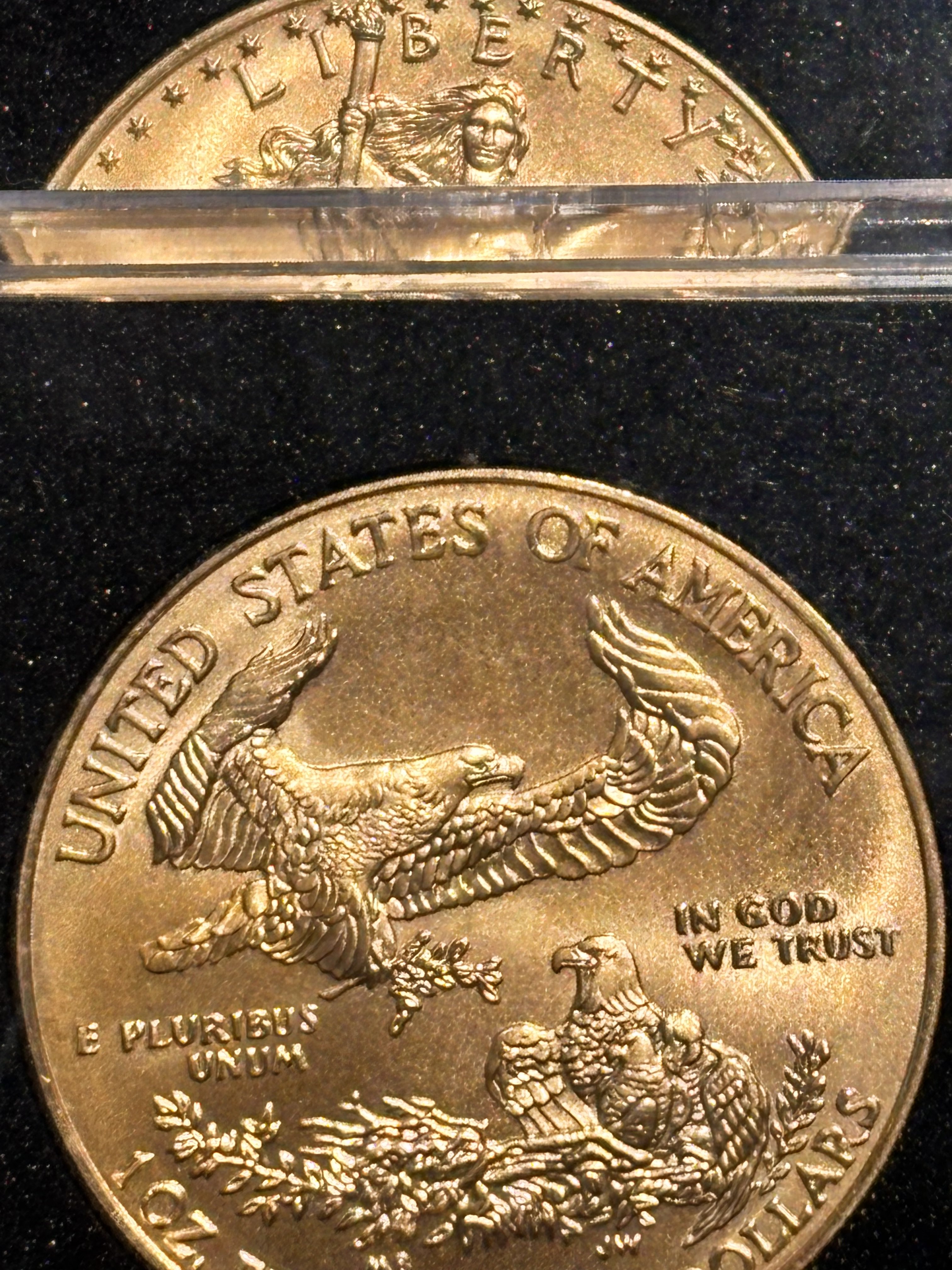
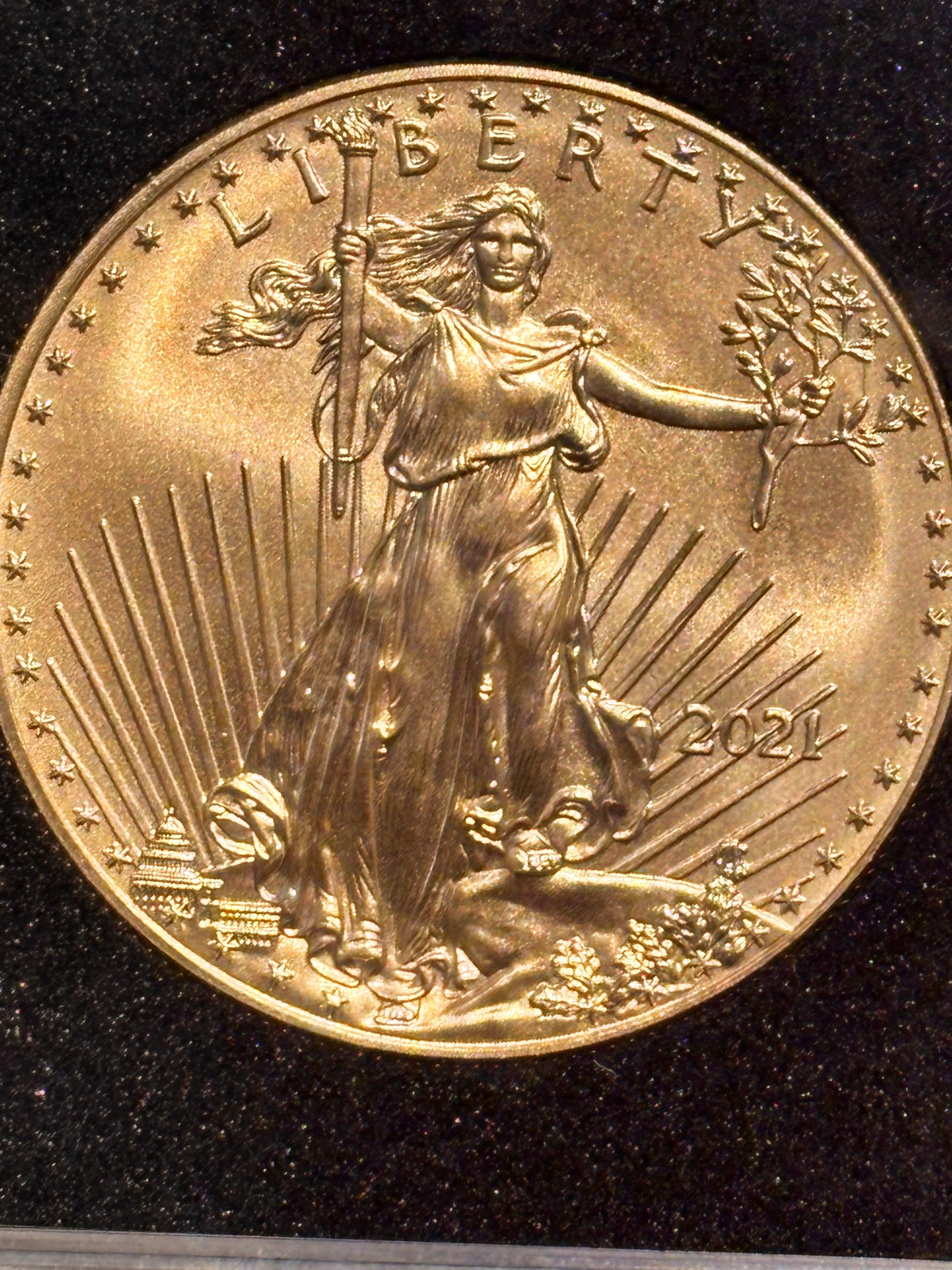
…instead, I said,”you did pretty good with these, if you bought them in ‘21”. He said “I did”.
Practice makes perfect & nobody is perfect. So, practice being nobody and be perfect !
One thing have noticed is many experienced players don’t haggle. If haggler they just ignore the person. Have done that myself.
Others just have a cost code on back of slab and if asked price it might be some pct above cost as per the seller.
One guy his haggle low offer - just asked if he had one to sell to me at that lol.
Conversely, some dealer price based on the highest amount they would have paid. If they bought it for $600 (ie. cheaply) but were willing to go to $1000, they charge based on the $1000. (Granted, this doesn’t usually happen with coins that have a tight spread like most US Federal coins.)
Is that fair?
I don't see anything wrong with a seller asking whatever he wants, for whatever reason makes sense to him.
Maybe that's just me.
The best customers online are women, they usually don't haggle and when they offer and you counter they usually accept. Same thing with online sellers especially when it comes to used goods and clothing, footwear, etc.. They sell quality at good prices and ship their products with great care unlike a lot of the guys.
Of course, the seller can ask whatever he wants. I don't think anyone here would disagree with you. Of course, a potential buyer can pass and just move on for whatever reason if the seller's ask price makes no sense to the potential buyer.
Worry is the interest you pay on a debt you may not owe.
"Paper money eventually returns to its intrinsic value---zero."----Voltaire
"Everything you say should be true, but not everything true should be said."----Voltaire
I made my case for my offer to a dealer and he told me “that’s a lot of words for just a little money”.
There are no little collectors, only collectors with little money.
chopmarkedtradedollars.com