1968 Kennedy Half Dollar: Retained Wire Strike-Through Study (11.43g)
 WireStrike64
Posts: 22 ✭
WireStrike64
Posts: 22 ✭
Greetings to all,
I am sharing a 1968 Kennedy Half Dollar from my collection that I believe warrants a closer look. It presents a rather distinct retained wire strike-through error on the obverse.
Technical observations:
Weight: 11.43 grams.
Magnet Test: The wire is non-magnetic.
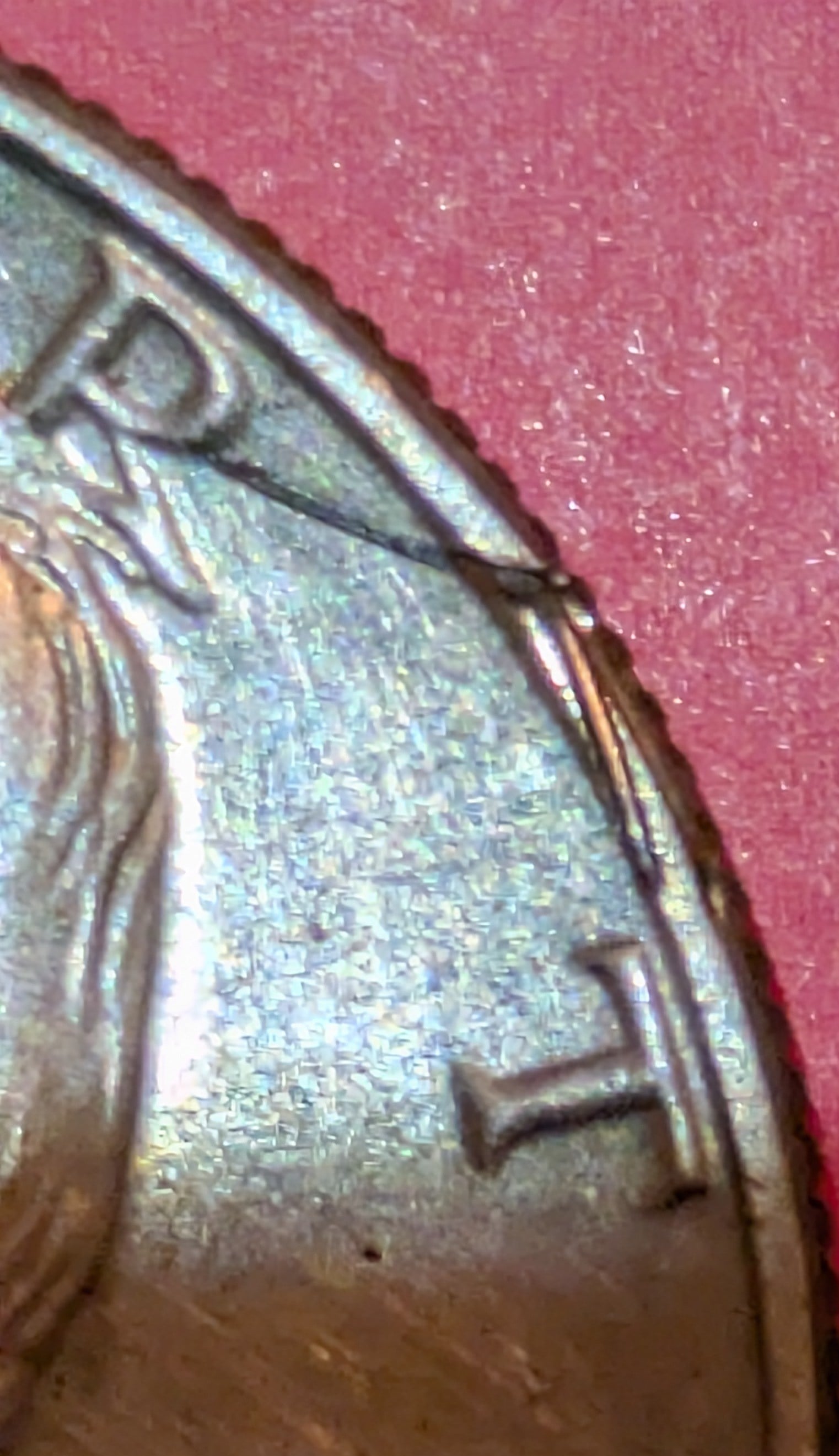
Description: A metal wire is embedded in the coin’s body. Approximately 0.5 cm of the wire is seated deep within the metal near the letters 'R' and 'T', while the remaining 0.5 cm protrudes and follows the natural curve of the rim.
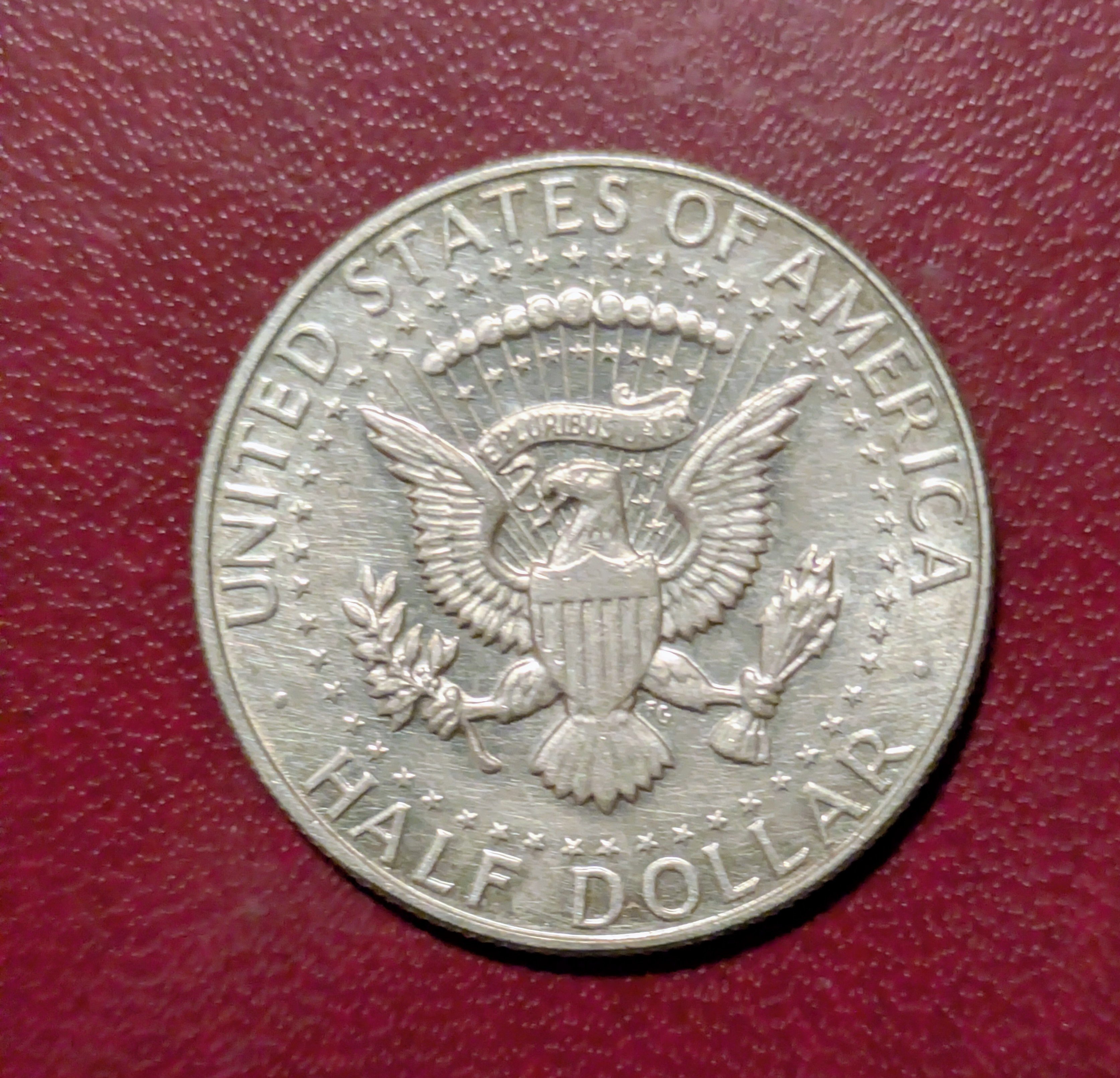
Based on my examination, the wire is firmly integrated into the planchet, which suggests it is an authentic mint error rather than any form of post-mint damage (PMD). The reverse of the coin is normal and very clean.
(Please see the attached photos for your evaluation.)
Best regards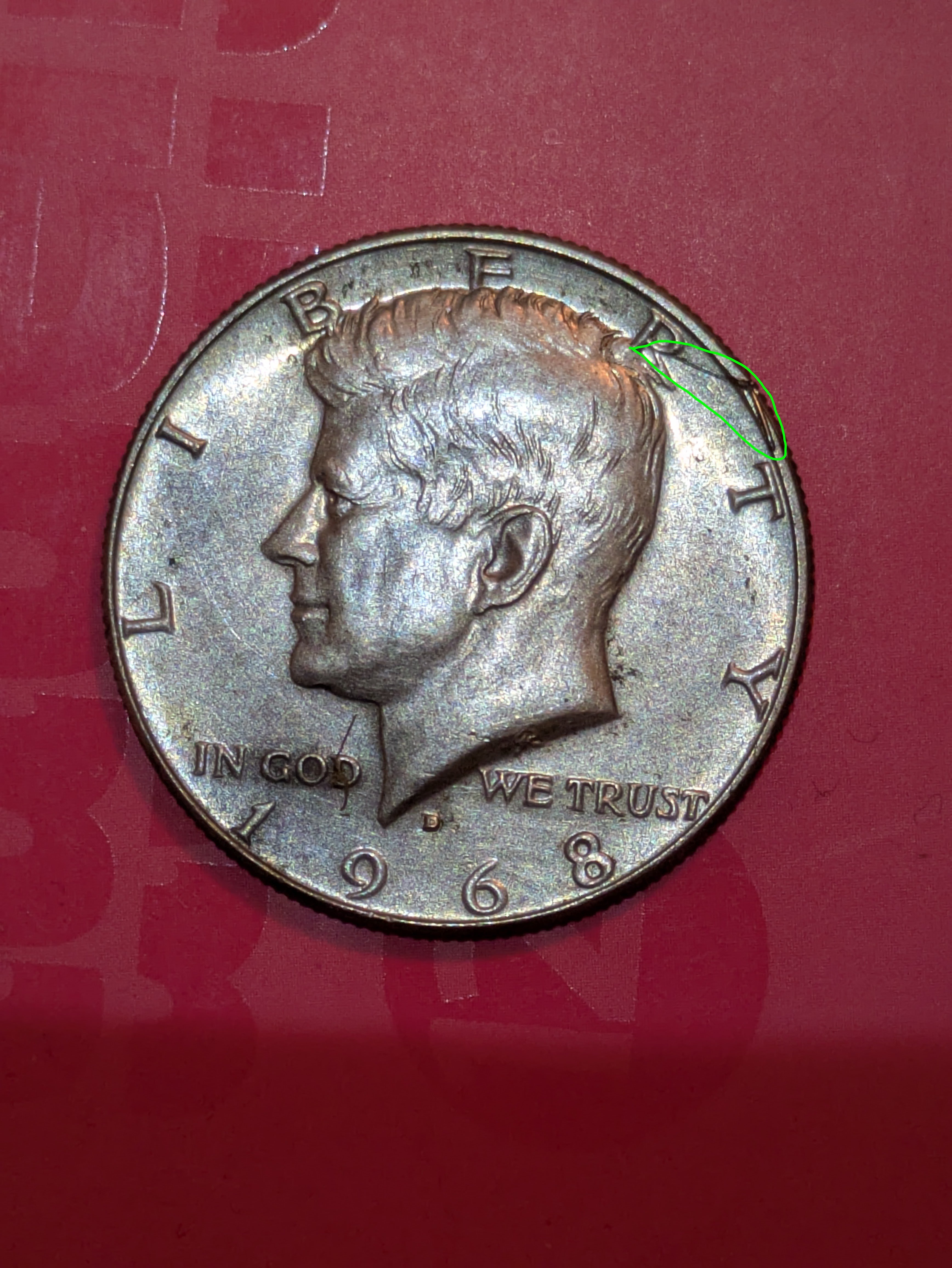
Comments
don't touch that wire!
don't clean the coin any more than it already has been
yes, retained strike through - XF details grade because of cleaning
Thank you very much for your evaluation and your important advice. I will definitely not touch the wire, nor will I attempt any further cleaning.> @MsMorrisine said:
I am guessing that it is a bristle from a wire brush used to harshly clean dies.
Thank you. The wire is stiff and non-magnetic
Thank you. It truly is a wonderful mint error
The wire is not just resting on the surface; it is actually embedded deep within the planchet metal. This indicates that it was caught during the striking process
He knows that. He's telling you where he thinks the wire originated.
@CaptHenway and @JBK, thank you both for the clarification. It is very interesting to learn about the technical background of how such a piece could end up in the minting process
If it is a bristle from a cleaning brush, it might be brass.
I sometimes use brass brushes to clean dies while they are still mounted in the coin press.
Here is my retained strike-through error - a magnetic wire embedded (presumably a staple):
Thank you for sharing your example; that Lincoln Penny is a very impressive piece. Your explanation about the brass brushes makes perfect sense, especially since the wire on my coin is also non-magnetic. It’s fascinating to learn the potential story behind it.
I was wondering, is your Lincoln Penny a graded/slabbed coin? In your opinion, should these types of error coins be professionally graded? I would value your thoughts on this. Thank you again for your interest!
Slabbing provides zero value for authenticity in this case. The error is unquestionable.
Slabbing might provide some value if you're worried about the wire falling off. I don't think that's a concern here either.
Slabbing would provide some value if you're trying to find a buyer. It's easier to sell slabbed coins as a general rule. Whether the added value makes up for the cost of slabbing, that's another question.
One concern with slabbing your half would be the prongs in the slab. If it has a prong in the upper right it might cover or even dislodge the piece of wire.
CaptHenway@Thank you for your time and your helpful insights. I hadn't considered the potential issue between the slab prongs and the wire; that is a very important warning for me. Thanks again
jonathanb@You are right, the error is obvious and there is no doubt about it. I will consider slabbing only when I feel completely certain it is necessary. Thank you for your helpful insights and for the time you've dedicated to this
Slabbing is necessary if you ever want to sell it through one of the big groups like Great Collections. You could send it to them and they would send it off to be slabbed (at your cost out of your total sale amount) and then you would have a huge number of collectors looking at it and bidding for it. It's the easiest way to sell something like this, at least in my opinion.
get one of these from a coin store. plentiful and cheap
https://www.wizardcoinsupply.com/products/2x2-flips/
or a air-tite - ring is recommended instead of direct fit. they are a devil to open and a ring give some room to crack it if it is giving someone trouble
Klif50@I will definitely keep this option in mind if I decide to sell the piece. I am grateful for your guidance
MsMorrisine, thank you for the excellent recommendation. I will definitely look into the ring-type 'Air-tite' holders. I am being extremely careful with the preservation of this coin, and your advice is very much appreciated.