Options
What guidelines are followed by PCGS when giving a error coin a no grade?
 Craigr
Posts: 10 ✭
Craigr
Posts: 10 ✭
in Q & A Forum
I have an Indiana coin with a cud or a die break that is Major. The coin was returned with no comments at all. With no holder and no grade. Upon calling customer service they directed me to my grade of a 96 no grade. She had me read it twice. But still did not give me a reason why it was a no-grade. I think she was trying to tell me that it was post mint and that somebody created the cud or die break. My question is are they ever wrong?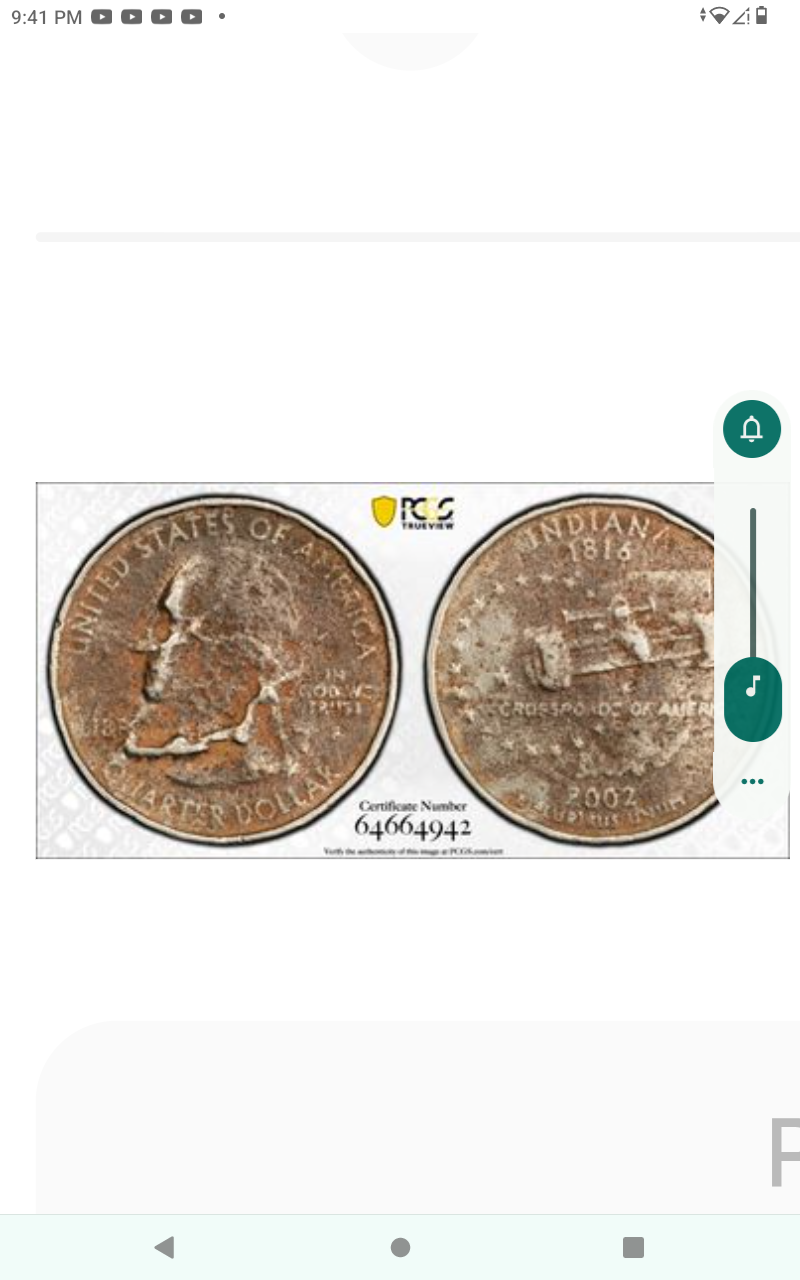
Tagged:
0
Comments
PCGS is correct, this coin is not an error it is just damaged. It was most likely in a fire which caused the outer clad layer to separate and bubble up.
PCGS did you a favor by not putting it in a holder, as you would have been charged the holder fee if they had. Any amount that you spend on the coin is too much, as it is only worth 25 cents.
Regarding your question, any grading company can make a mistake on occasion, but this is not one of those occasions. To be frank, you do not have the eye or the knowledge to identify gradable coins or Mint errors, let alone second-guess a grading company's determination. Hopefully, this experience serves as a wakeup call that you are not ready to submit coins on your own.
What did I do to you to make you be so rude to me. All I was saying was everyone makes mistakes. What makes you say that that is not an error coin? Yes I am new here but I'm here to learn. Even you started somewhere.
Thank you for explaining to me the reason why it's not an error coin.
Who, me? I just wanted to help you avoid wasting your money on coin submissions. I'm sure Icutler wouldn't want you to waste your money either. You're not ready to submit, but seem to be in some denial about it. That can cost you a lot of money if you let yourself get carried away, but I'm hoping for your sake that this doesn't happen.
There is no way for the minting process to produce a coin that looks like that. One must learn the minting process and study what real errors actually look like in order to correctly identify errors. Studying what damaged coins look like doesn't hurt either.
That is all well and good, but you should have realistic expectations. We don't often see people in your position turn into expert submitters. Stick around and have fun learning, but don't get overconfident, especially when it comes to putting your hard-earned money at risk.
You should have come here first to ask questions about the quarter, before you submitted it.
If you've atleast learned that lesson then you got some benefit from the tuition you paid.
This question you asked represents a backwards approach:
The question should be, what makes you think it is an error coin?
Just because a coin looks strange does not mean it is an error. 99.99% of strange looking coins are just damaged.
If someone thinks a coin is an error, then they need to be able to explain exactly how it happened in the minting process. If you're a newer collector, then of course you will need help with that part. But its better to get the help here for free rather than as a result of a rejected submission.
https://www.pcgs.com/grades
scroll down for "No Grades" then just below select "More No Grades"
you got a 96. meaning you also get your grading fee back.
they would normally give it a 98 and keep the fee for having to look it over.
a cud is a broken die on the edge. what you are thinking is a large chip out of the interior of the die is the edges of bubble from it having been in a fire, which is also evidenced by the rough surfaces on both sides coupled with the discoloration
the picture isn't good enough and the cert number isn't working for me right now, but maybe you can tell if there are any wavy surfaces anywhere else on the coin.
this picture is from another thread and is not my coin
that's a die crack. the giveaway for you on yours it the surface of the rest of the coin and the discoloration
https://forums.collectors.com/discussion/1122529/can-anyone-tell-me-about-this
https://forums.collectors.com/discussion/1060895/heat-damage-can-cause-bubbles-or-blisters-on-coins