Options
What’s a fair offer for 3 silver ancient roman coins that my buddy is selling?
 pcgs69
Posts: 4,410 ✭✭✭✭
pcgs69
Posts: 4,410 ✭✭✭✭
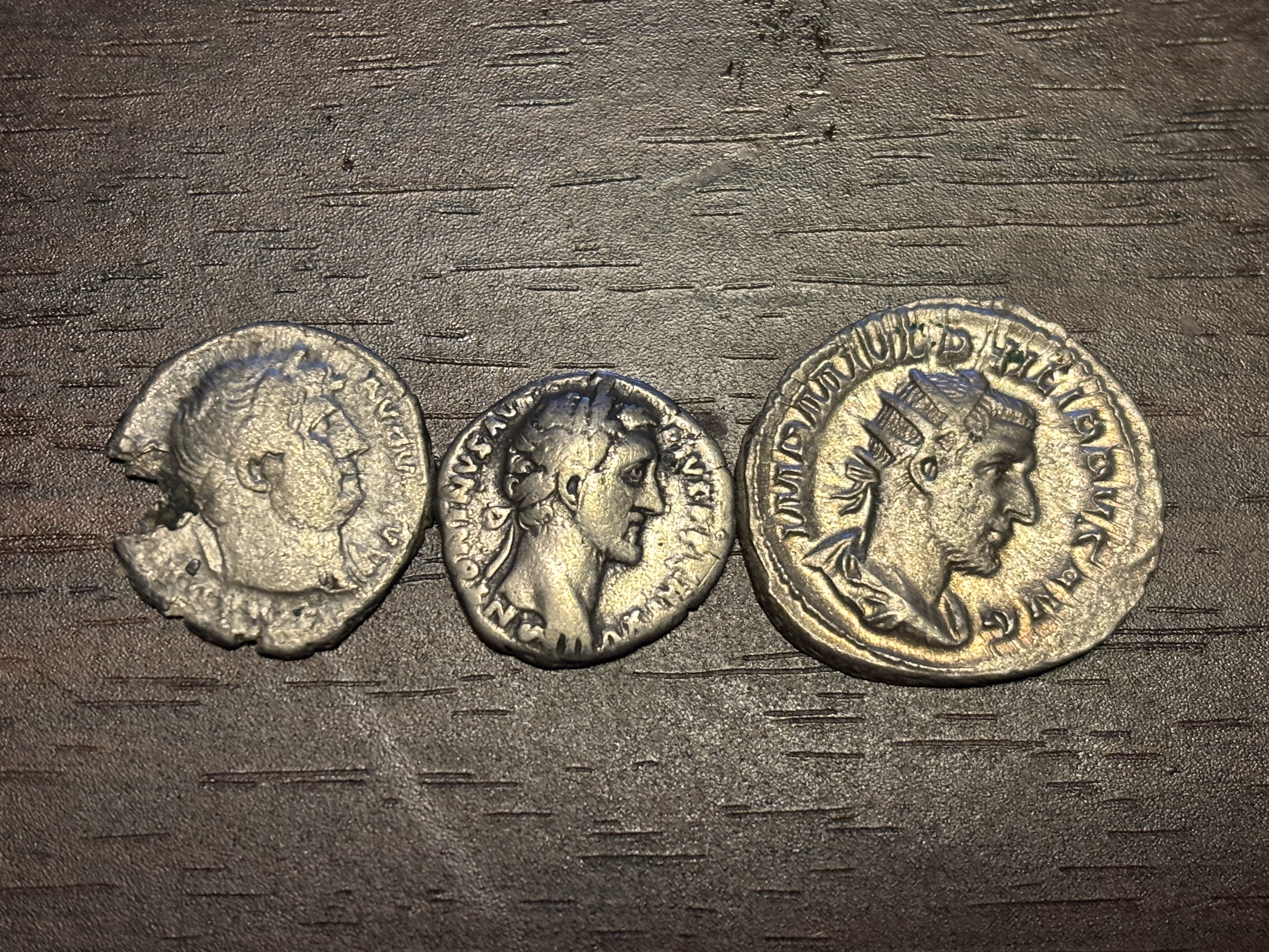
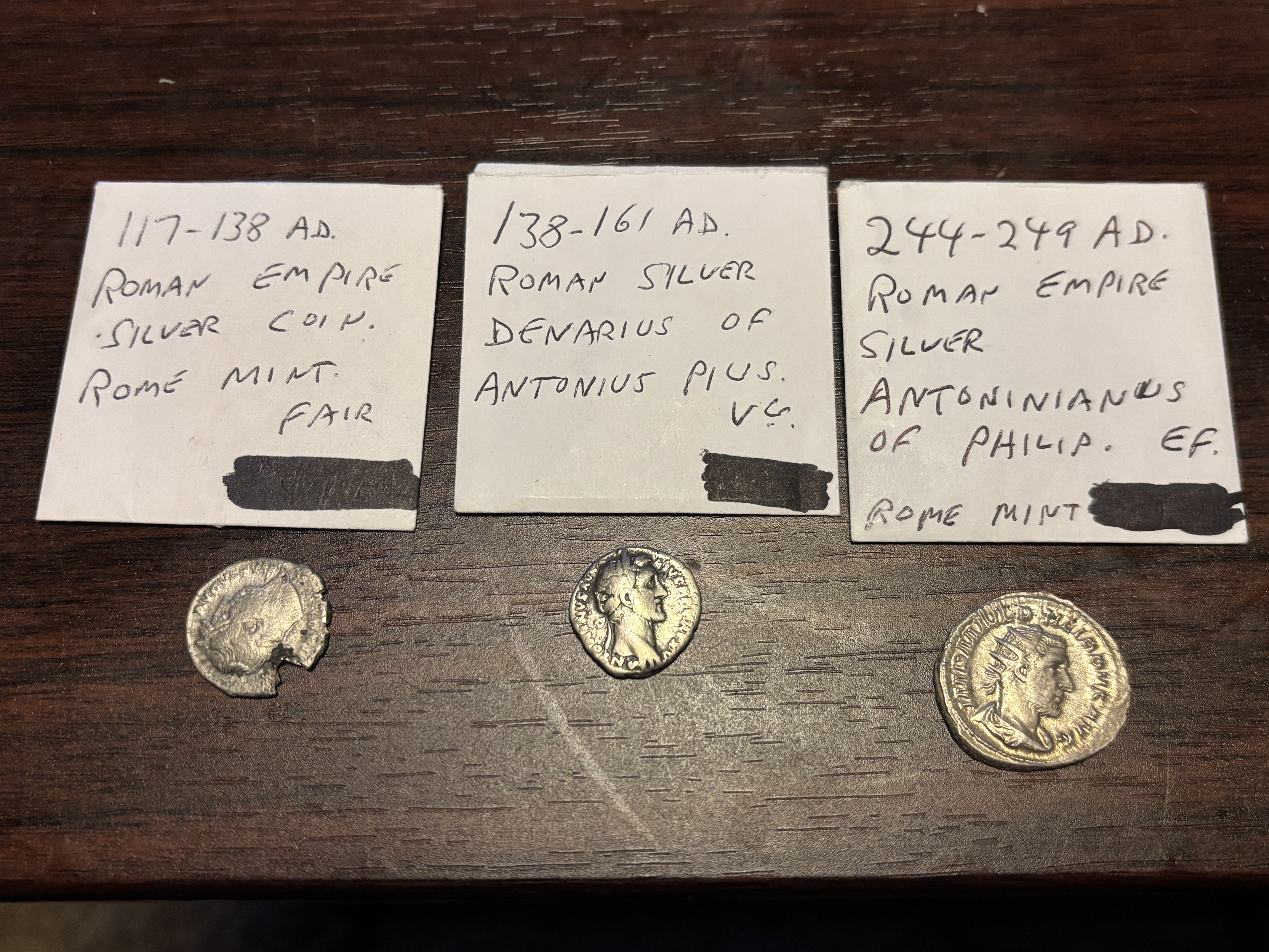
My buddy is selling and I’d like to buy them to have a few in my collection. I don’t really know anything about ancients as I’m a U.S coin collector. What’s a fair offer for these three? I’m not the biggest fan of the one with the chunk missing. Is it even real? Thanks for any help!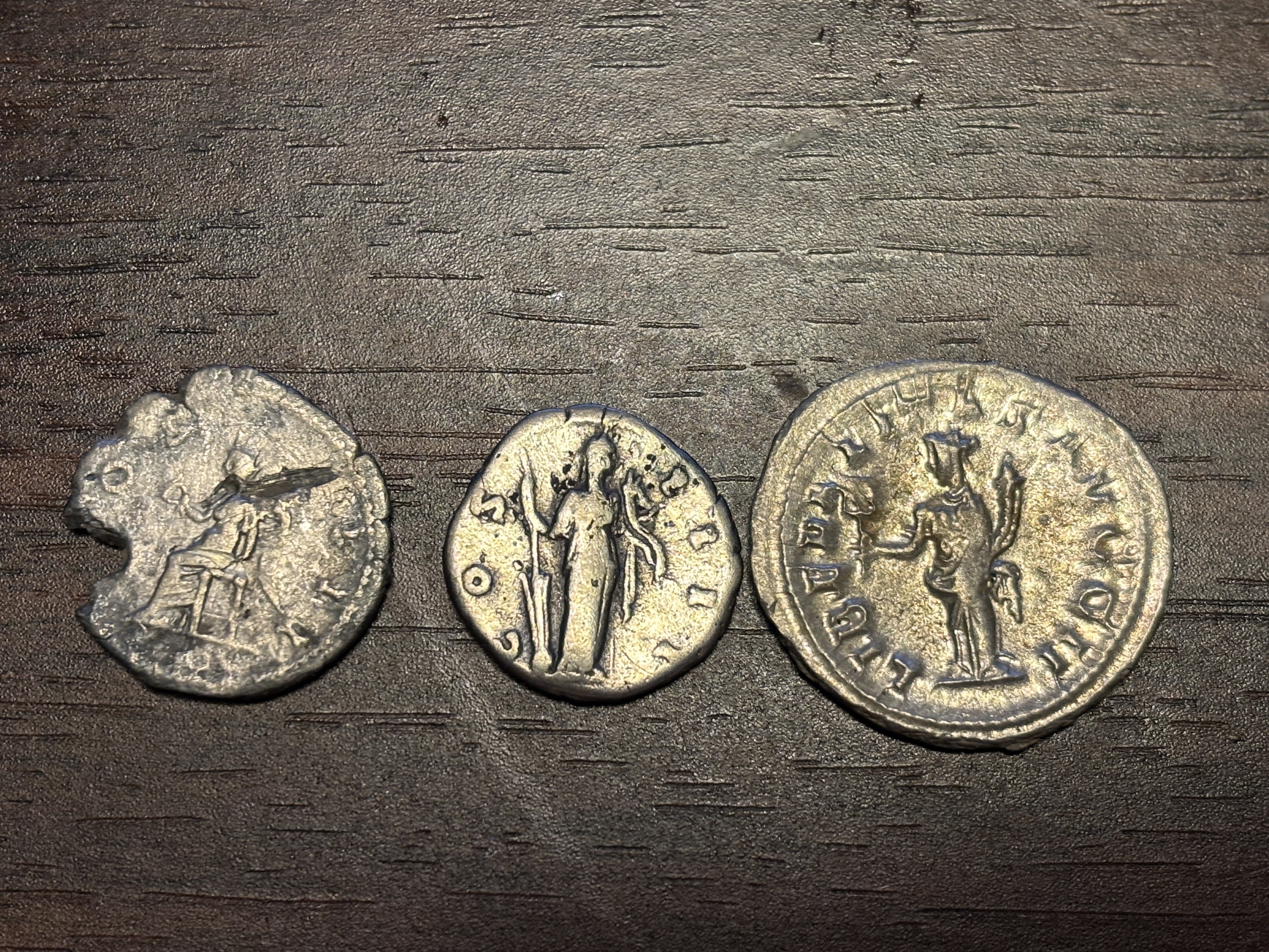
0
Comments
I dunno, $150 or so. The last one is nice, probably worth close to a hundred maybe $75, I would think. The Pius probably $50 or so, the one with the chuck missing is Hadrian I think, probably less than $20.
I'm BACK!!! Used to be Billet7 on the old forum.
I'd say $20-ish on the Hadrian, $35-40-ish on the Antoninus Pius, and $50-ish on the Philip the Arab.
Collector since 1976. On the CU forums here since 2001.
The Philip I coin has an interesting back-story. The reverse design is LIBERALITAS AVGG II, and depicts Liberalitas, the Roman goddess/personification of Generosity. She is on that coin, holding an abacus, for a very interesting and numismatic-related reason.
The ancient Romans had a public ceremony known as a congiarium, where the emperor gave away government money for free to every citizen who showed up. Kind of like a tax return, but it was done on an ad-hoc irregular basis rather than regularly. The coins the emperor gave away at these ceremonies often depicted the ceremony itself, or otherwise non-subtly reminded everybody how generous the emperor was in giving away his money. On this coin, the goddess of generosity herself is there, holding an abacus to count out everybody's fair share of the money.
The legend states this was the second congiarium of emperor Philip I. We know from external records when this happened: 245 AD, commemorating the elevation of Philip's son Philip II to the rank of Emperor, thus narrowing down the date of issue of this coin to that specific year. Most Roman coins do not bear such specific dates on them. The records also state that at this congiarium, every citizen received 150 denarii, which would have amounted to 75 of these double-denarius coins. Gold coins with this same design are known from this congiarium, meaning that some people probably were given just a couple of gold coins rather than a bag full of silver (the working exchange rate at the time being 1 gold aureus = 21 silver antoniniani).
Roman emperor Marcus Aurelius, "Meditations"
Apparently I have been awarded the DPOTD twice.
The problem is, they are all common and you can easily and cheaply get better ones. Those are worth little more that $50 together. The first (Hadrian) is $50 if not broken and overcleaned, so a lot less than that - maybe $5. Who would even want it if you can get a whole one for $30? The Antoninus Pius is worth about $70 in good condition but that one is pretty worn. Maybe $30? The Philip I is at least in better condition but you can buy even better for $40. So $75 for all three without any sort of bulk-buying, private-sale discount.
Looks like I shot high
I'm BACK!!! Used to be Billet7 on the old forum.
The Hadrian is a fouree, so you are right to question if it’s real.
I think it is ancient. My presumption is a contemporary counterfeit, plated with silver but of some base metal which can be seen in the areas of damage. The base core makes it more brittle so not surprising it is chipped. The denarii are typically thick good silver coins and don’t chip easily.
Thank you guys for the info and for the history lessons! We have an XRF at work so I'll put the Hadrian on it tomorrow and see what it reads where it's broken (more for curiosity than anything). So looks like the other two are relatively common and not too expensive. I'll try putting them under a metal detector to see if the signal profile differs - more of a curiosity thing too. Thank you all again for taking the time to add your input.