@BLUEJAYWAY said:
Wonder if Fred Weinberg was in the examination mix?
Fred did not see it.
mikebyers.com Dealer in Major Mint Errors, Die Trials & Patterns - Author of NLG Best World Coin Book World's Greatest Mint Errors - Publisher & Editor of minterrornews.com.
@MFeld said:
This is a most interesting thread. Thanks to the contributors.
You are welcome Mark. The purpose of this thread was to inform people about this counterfeit. Participation was lively, making it a very interesting thread about a very interesting ‘coin’.
mikebyers.com Dealer in Major Mint Errors, Die Trials & Patterns - Author of NLG Best World Coin Book World's Greatest Mint Errors - Publisher & Editor of minterrornews.com.
Without giving instructions on how to make a better counterfeit... Can you describe what category of problem gives this away? Size? Weight? Die characteristics? Composition? Something else?
@jonathanb said:
Without giving instructions on how to make a better counterfeit... Can you describe what category of problem gives this away? Size? Weight? Die characteristics? Composition? Something else?
In the high magnification image there appear to be some very small raised pimples from the transfer process and perhaps some tooling (although it's hard to tell looking at just the image). They did a good job though.
@jonathanb said:
Without giving instructions on how to make a better counterfeit... Can you describe what category of problem gives this away? Size? Weight? Die characteristics? Composition? Something else?
In the high magnification image there appear to be some very small raised pimples from the transfer process and perhaps some tooling (although it's hard to tell looking at just the image). They did a good job though.
Yes, my high resolution image shows raised pimples. It is from transfer dies. Here is part of the explanation from the NGC website, and the link to the article:
mikebyers.com Dealer in Major Mint Errors, Die Trials & Patterns - Author of NLG Best World Coin Book World's Greatest Mint Errors - Publisher & Editor of minterrornews.com.
@jonathanb said:
Without giving instructions on how to make a better counterfeit... Can you describe what category of problem gives this away? Size? Weight? Die characteristics? Composition? Something else?
The size, weight and composition, IMHO have nothing to do with it, although creating a gold die trial for a U.S. coin looking like this didn’t help the counterfeiter.
Die trials come in all shapes, sizes and compositions and can be die struck both sides but usually uniface.
The telltale sign are the pimples in the fields, visible upon very high magnification.
This die trial was extremely deceptive. It had the ‘look’ of a 1900 era proof gold $2.5 Liberty. Deeply prooflike, sharply struck, wth an original looking skin, color, film and patina that would make any expert in U.S. proof gold coins… nervous!
Examining it in your hands (without high magnification) gives you the immediate impression that it is genuine. It looks and feels genuine.
Rusted dies also leave very similiar pimples. That is why there was some confusion and varying opinions on this die trial prior to being viewed under high magnification.
mikebyers.com Dealer in Major Mint Errors, Die Trials & Patterns - Author of NLG Best World Coin Book World's Greatest Mint Errors - Publisher & Editor of minterrornews.com.
For those of you who are not familiar with gold die trials of earlier U.S. coins, they often look like this:
mikebyers.com Dealer in Major Mint Errors, Die Trials & Patterns - Author of NLG Best World Coin Book World's Greatest Mint Errors - Publisher & Editor of minterrornews.com.
@WinLoseWin said:
Is this the kind of thing Paul Franklin might have made?
Very possibly
mikebyers.com Dealer in Major Mint Errors, Die Trials & Patterns - Author of NLG Best World Coin Book World's Greatest Mint Errors - Publisher & Editor of minterrornews.com.
Deeply prooflike, sharply struck, wth an original looking skin, color, film and patina.
It is dripping in luster. The fields are deep mirrors.
If it was genuine (which it is not) I would grade it a Proof 64+.
mikebyers.com Dealer in Major Mint Errors, Die Trials & Patterns - Author of NLG Best World Coin Book World's Greatest Mint Errors - Publisher & Editor of minterrornews.com.
@7Jaguars said:
I always wonder how on "one-offs" they can be determined false/counterfeit when it seems the possibilities for a genuine MINT PRODUCED die are nearly endless. How do we know that the die was not some creation of a mint employee or engraver that potentially could be a trial or experiment for virtually any purpose that was not employed immediately; rather, what if the die was left on a back shelf somewhere and then later hauled out and used by somebody within or without the mint to strike this piece up.
One suggestion is to back up from the designation of "not genuine, false dies, counterfeit" similar in some way to what had been proposed: "questionable authenticity" or "die does not match known reverse dies".
I don't have an interest in this piece other than an open-minded discussion. I would hesitate to condemn on basis of die rust or uneven denticles, etc. I suppose although not exactly the same issue that one thinks of Paquet....
They can determine such fakes to be fakes because transfer counterfeits have consistent characteristics that will generally not be seen on genuine items. Essentially every decent fake of a milled coin is a transfer of some kind from a genuine example.
The difference between a “good quality” and a “bad quality” transfer counterfeit comes down to the quantity and severity of those detectable characteristics. This piece is not, in my opinion from the images, of particularly good quality, and I am surprised that it passed as genuine for as long as it did.
@7Jaguars said:
I always wonder how on "one-offs" they can be determined false/counterfeit when it seems the possibilities for a genuine MINT PRODUCED die are nearly endless. How do we know that the die was not some creation of a mint employee or engraver that potentially could be a trial or experiment for virtually any purpose that was not employed immediately; rather, what if the die was left on a back shelf somewhere and then later hauled out and used by somebody within or without the mint to strike this piece up.
One suggestion is to back up from the designation of "not genuine, false dies, counterfeit" similar in some way to what had been proposed: "questionable authenticity" or "die does not match known reverse dies".
I don't have an interest in this piece other than an open-minded discussion. I would hesitate to condemn on basis of die rust or uneven denticles, etc. I suppose although not exactly the same issue that one thinks of Paquet....
They can determine such fakes to be fakes because transfer counterfeits have consistent characteristics that will generally not be seen on genuine items. Essentially every decent fake of a milled coin is a transfer of some kind from a genuine example.
The difference between a “good quality” and a “bad quality” transfer counterfeit comes down to the quantity and severity of those detectable characteristics. This piece is not, in my opinion from the images, of particularly good quality, and I am surprised that it passed as genuine for as long as it did.
It passed as genuine because it looks genuine in person, without high magnification. Obviously you are basing your opinion on the images. But viewing it in person is a totally different experience.
mikebyers.com Dealer in Major Mint Errors, Die Trials & Patterns - Author of NLG Best World Coin Book World's Greatest Mint Errors - Publisher & Editor of minterrornews.com.
@7Jaguars said:
I always wonder how on "one-offs" they can be determined false/counterfeit when it seems the possibilities for a genuine MINT PRODUCED die are nearly endless. How do we know that the die was not some creation of a mint employee or engraver that potentially could be a trial or experiment for virtually any purpose that was not employed immediately; rather, what if the die was left on a back shelf somewhere and then later hauled out and used by somebody within or without the mint to strike this piece up.
One suggestion is to back up from the designation of "not genuine, false dies, counterfeit" similar in some way to what had been proposed: "questionable authenticity" or "die does not match known reverse dies".
I don't have an interest in this piece other than an open-minded discussion. I would hesitate to condemn on basis of die rust or uneven denticles, etc. I suppose although not exactly the same issue that one thinks of Paquet....
They can determine such fakes to be fakes because transfer counterfeits have consistent characteristics that will generally not be seen on genuine items. Essentially every decent fake of a milled coin is a transfer of some kind from a genuine example.
The difference between a “good quality” and a “bad quality” transfer counterfeit comes down to the quantity and severity of those detectable characteristics. This piece is not, in my opinion from the images, of particularly good quality, and I am surprised that it passed as genuine for as long as it did.
It passed as genuine because it looks genuine in person, without high magnification. Obviously you are basing your opinion on the images. But viewing it in person is a totally different experience.
I don’t think so, generally these things are easier to judge in person. The luster looks like it would be way off from a genuine mint product, the devices look mushy and granular, and the field texture is pretty bad - and that’s ignoring the odd planchet and composition. In hand I imagine there’s more to observe. I’m also not sure why such a strange piece wouldn’t be observed under magnification before accepting it as genuine - that wouldn’t be doing one’s due diligence.
I personally can not conclusively condemn it based on the pictures posted here so far.
Below is a comparison to the item, with a PCGS certified [1900] proof strike.
Other than some over-polishing of the die on the neck and wing (to the left of the shield), the other thing I notice is the slightly less-well-defined neck feathers and a rounded upper lip to the beak (not fully squared-off).
Also note that the piece in question has been struck at least twice, and with both (or all) strikes broad (out of collar). This will cause distortions of design elements.
Also, the 1900 proof shown has rippled mirrors, just like the subject piece.
@7Jaguars said:
I always wonder how on "one-offs" they can be determined false/counterfeit when it seems the possibilities for a genuine MINT PRODUCED die are nearly endless. How do we know that the die was not some creation of a mint employee or engraver that potentially could be a trial or experiment for virtually any purpose that was not employed immediately; rather, what if the die was left on a back shelf somewhere and then later hauled out and used by somebody within or without the mint to strike this piece up.
One suggestion is to back up from the designation of "not genuine, false dies, counterfeit" similar in some way to what had been proposed: "questionable authenticity" or "die does not match known reverse dies".
I don't have an interest in this piece other than an open-minded discussion. I would hesitate to condemn on basis of die rust or uneven denticles, etc. I suppose although not exactly the same issue that one thinks of Paquet....
They can determine such fakes to be fakes because transfer counterfeits have consistent characteristics that will generally not be seen on genuine items. Essentially every decent fake of a milled coin is a transfer of some kind from a genuine example.
The difference between a “good quality” and a “bad quality” transfer counterfeit comes down to the quantity and severity of those detectable characteristics. This piece is not, in my opinion from the images, of particularly good quality, and I am surprised that it passed as genuine for as long as it did.
It passed as genuine because it looks genuine in person, without high magnification. Obviously you are basing your opinion on the images. But viewing it in person is a totally different experience.
I don’t think so, generally these things are easier to judge in person. The luster looks like it would be way off from a genuine mint product, the devices look granular, and the field texture is pretty bad - and that’s ignoring the odd planchet and composition. In hand I imagine there’s more to observe. I’m also not sure why such a strange piece wouldn’t be observed under magnification before accepting it as genuine - that wouldn’t be doing one’s due diligence.
It fooled many world class experts for many years. And you haven’t seen it in person. You are basing it on an image. Images often look different than the coin. Your observations on luster, devices and texture are based on an image, not examing it in person. It would be a different story had you examined it in person. That’s why the TPG services need to examine coins in person before making those observations.
mikebyers.com Dealer in Major Mint Errors, Die Trials & Patterns - Author of NLG Best World Coin Book World's Greatest Mint Errors - Publisher & Editor of minterrornews.com.
@BLUEJAYWAY said:
Wonder if Fred Weinberg was in the examination mix?
Fred did not see it.
Thank you for your reply.
If Fred had attended the Long Beach coin show, I would have shown it to him.
mikebyers.com Dealer in Major Mint Errors, Die Trials & Patterns - Author of NLG Best World Coin Book World's Greatest Mint Errors - Publisher & Editor of minterrornews.com.
@7Jaguars said:
I always wonder how on "one-offs" they can be determined false/counterfeit when it seems the possibilities for a genuine MINT PRODUCED die are nearly endless. How do we know that the die was not some creation of a mint employee or engraver that potentially could be a trial or experiment for virtually any purpose that was not employed immediately; rather, what if the die was left on a back shelf somewhere and then later hauled out and used by somebody within or without the mint to strike this piece up.
One suggestion is to back up from the designation of "not genuine, false dies, counterfeit" similar in some way to what had been proposed: "questionable authenticity" or "die does not match known reverse dies".
I don't have an interest in this piece other than an open-minded discussion. I would hesitate to condemn on basis of die rust or uneven denticles, etc. I suppose although not exactly the same issue that one thinks of Paquet....
They can determine such fakes to be fakes because transfer counterfeits have consistent characteristics that will generally not be seen on genuine items. Essentially every decent fake of a milled coin is a transfer of some kind from a genuine example.
The difference between a “good quality” and a “bad quality” transfer counterfeit comes down to the quantity and severity of those detectable characteristics. This piece is not, in my opinion from the images, of particularly good quality, and I am surprised that it passed as genuine for as long as it did.
It passed as genuine because it looks genuine in person, without high magnification. Obviously you are basing your opinion on the images. But viewing it in person is a totally different experience.
I don’t think so, generally these things are easier to judge in person. The luster looks like it would be way off from a genuine mint product, the devices look granular, and the field texture is pretty bad - and that’s ignoring the odd planchet and composition. In hand I imagine there’s more to observe. I’m also not sure why such a strange piece wouldn’t be observed under magnification before accepting it as genuine - that wouldn’t be doing one’s due diligence.
It fooled many world class experts for many years. And you haven’t seen it in person. You are basing it on an image. Images often look different than the coin. Your observations on luster, devices and texture are based on an image, not examing it in person. It would be a different story had you examined it in person.
It sounds like the TPGs weren’t fooled with it in hand.
There is visible empty space between the feathers where the detail didn’t transfer well enough from the original coin...come on now.
@dcarr said:
I personally can not conclusively condemn it based on the pictures posted here so far.
Below is a comparison to the item, with a PCGS certified [1900] proof strike.
Other than some over-polishing of the die on the neck and wing (to the left of the shield), the other thing I notice is the slightly less-well-defined neck feathers and a rounded upper lip to the beak (not fully squared-off).
Also note that the piece in question has been struck at least twice, and with both (or all) strikes broad (out of collar). This will cause distortions of design elements.
Also, the 1900 proof shown has rippled mirrors, just like the subject piece.
Dan- yes the coin in question was double struck. There are 2 sets of denticles. The surface is slightly wavy. It is slightly broadstruck and slightly distorted.
I compared it to a 1900 Proof $2.5 Lib because several experts who examined it compared it to a 1900 piece.
The image that you chose of the die trial in question, is a better representative of the look, and it looks very similiar to the 1900 image of the genuine proof $2.5 Lib.
mikebyers.com Dealer in Major Mint Errors, Die Trials & Patterns - Author of NLG Best World Coin Book World's Greatest Mint Errors - Publisher & Editor of minterrornews.com.
@7Jaguars said:
I always wonder how on "one-offs" they can be determined false/counterfeit when it seems the possibilities for a genuine MINT PRODUCED die are nearly endless. How do we know that the die was not some creation of a mint employee or engraver that potentially could be a trial or experiment for virtually any purpose that was not employed immediately; rather, what if the die was left on a back shelf somewhere and then later hauled out and used by somebody within or without the mint to strike this piece up.
One suggestion is to back up from the designation of "not genuine, false dies, counterfeit" similar in some way to what had been proposed: "questionable authenticity" or "die does not match known reverse dies".
I don't have an interest in this piece other than an open-minded discussion. I would hesitate to condemn on basis of die rust or uneven denticles, etc. I suppose although not exactly the same issue that one thinks of Paquet....
They can determine such fakes to be fakes because transfer counterfeits have consistent characteristics that will generally not be seen on genuine items. Essentially every decent fake of a milled coin is a transfer of some kind from a genuine example.
The difference between a “good quality” and a “bad quality” transfer counterfeit comes down to the quantity and severity of those detectable characteristics. This piece is not, in my opinion from the images, of particularly good quality, and I am surprised that it passed as genuine for as long as it did.
It passed as genuine because it looks genuine in person, without high magnification. Obviously you are basing your opinion on the images. But viewing it in person is a totally different experience.
I don’t think so, generally these things are easier to judge in person. The luster looks like it would be way off from a genuine mint product, the devices look granular, and the field texture is pretty bad - and that’s ignoring the odd planchet and composition. In hand I imagine there’s more to observe. I’m also not sure why such a strange piece wouldn’t be observed under magnification before accepting it as genuine - that wouldn’t be doing one’s due diligence.
It fooled many world class experts for many years. And you haven’t seen it in person. You are basing it on an image. Images often look different than the coin. Your observations on luster, devices and texture are based on an image, not examing it in person. It would be a different story had you examined it in person. That’s why the TPG services need to examine coins in person before making those observations.
Did the TPGs examine it in person and come to a different conclusion than I am?
@7Jaguars said:
I always wonder how on "one-offs" they can be determined false/counterfeit when it seems the possibilities for a genuine MINT PRODUCED die are nearly endless. How do we know that the die was not some creation of a mint employee or engraver that potentially could be a trial or experiment for virtually any purpose that was not employed immediately; rather, what if the die was left on a back shelf somewhere and then later hauled out and used by somebody within or without the mint to strike this piece up.
One suggestion is to back up from the designation of "not genuine, false dies, counterfeit" similar in some way to what had been proposed: "questionable authenticity" or "die does not match known reverse dies".
I don't have an interest in this piece other than an open-minded discussion. I would hesitate to condemn on basis of die rust or uneven denticles, etc. I suppose although not exactly the same issue that one thinks of Paquet....
They can determine such fakes to be fakes because transfer counterfeits have consistent characteristics that will generally not be seen on genuine items. Essentially every decent fake of a milled coin is a transfer of some kind from a genuine example.
The difference between a “good quality” and a “bad quality” transfer counterfeit comes down to the quantity and severity of those detectable characteristics. This piece is not, in my opinion from the images, of particularly good quality, and I am surprised that it passed as genuine for as long as it did.
It passed as genuine because it looks genuine in person, without high magnification. Obviously you are basing your opinion on the images. But viewing it in person is a totally different experience.
I don’t think so, generally these things are easier to judge in person. The luster looks like it would be way off from a genuine mint product, the devices look granular, and the field texture is pretty bad - and that’s ignoring the odd planchet and composition. In hand I imagine there’s more to observe. I’m also not sure why such a strange piece wouldn’t be observed under magnification before accepting it as genuine - that wouldn’t be doing one’s due diligence.
It fooled many world class experts for many years. And you haven’t seen it in person. You are basing it on an image. Images often look different than the coin. Your observations on luster, devices and texture are based on an image, not examing it in person. It would be a different story had you examined it in person.
It sounds like the TPGs weren’t fooled with it in hand.
There is visible empty space between the feathers where the detail didn’t transfer well enough from the original coin...come on now.
.
A little over-polishing of the die can easily cause a loss of low-lying detail. That is what happened here.
I have had the same thing happen to my own dies when I have polished them. Like this :
@7Jaguars said:
I always wonder how on "one-offs" they can be determined false/counterfeit when it seems the possibilities for a genuine MINT PRODUCED die are nearly endless. How do we know that the die was not some creation of a mint employee or engraver that potentially could be a trial or experiment for virtually any purpose that was not employed immediately; rather, what if the die was left on a back shelf somewhere and then later hauled out and used by somebody within or without the mint to strike this piece up.
One suggestion is to back up from the designation of "not genuine, false dies, counterfeit" similar in some way to what had been proposed: "questionable authenticity" or "die does not match known reverse dies".
I don't have an interest in this piece other than an open-minded discussion. I would hesitate to condemn on basis of die rust or uneven denticles, etc. I suppose although not exactly the same issue that one thinks of Paquet....
They can determine such fakes to be fakes because transfer counterfeits have consistent characteristics that will generally not be seen on genuine items. Essentially every decent fake of a milled coin is a transfer of some kind from a genuine example.
The difference between a “good quality” and a “bad quality” transfer counterfeit comes down to the quantity and severity of those detectable characteristics. This piece is not, in my opinion from the images, of particularly good quality, and I am surprised that it passed as genuine for as long as it did.
It passed as genuine because it looks genuine in person, without high magnification. Obviously you are basing your opinion on the images. But viewing it in person is a totally different experience.
I don’t think so, generally these things are easier to judge in person. The luster looks like it would be way off from a genuine mint product, the devices look granular, and the field texture is pretty bad - and that’s ignoring the odd planchet and composition. In hand I imagine there’s more to observe. I’m also not sure why such a strange piece wouldn’t be observed under magnification before accepting it as genuine - that wouldn’t be doing one’s due diligence.
It fooled many world class experts for many years. And you haven’t seen it in person. You are basing it on an image. Images often look different than the coin. Your observations on luster, devices and texture are based on an image, not examing it in person. It would be a different story had you examined it in person.
It sounds like the TPGs weren’t fooled with it in hand.
There is visible empty space between the feathers where the detail didn’t transfer well enough from the original coin...come on now.
.
A little over-polishing of the die can easily cause a loss of low-lying detail. That is what happened here.
I have had the same thing happen to my own dies when I have polished them. Like this :
.
Thank you Dan, for explaining what happens when a die is over polished. Many reading this thread might not know that.
mikebyers.com Dealer in Major Mint Errors, Die Trials & Patterns - Author of NLG Best World Coin Book World's Greatest Mint Errors - Publisher & Editor of minterrornews.com.
Dan- I just emailed you a video. Check your email. Thanks!
mikebyers.com Dealer in Major Mint Errors, Die Trials & Patterns - Author of NLG Best World Coin Book World's Greatest Mint Errors - Publisher & Editor of minterrornews.com.
@7Jaguars said:
I always wonder how on "one-offs" they can be determined false/counterfeit when it seems the possibilities for a genuine MINT PRODUCED die are nearly endless. How do we know that the die was not some creation of a mint employee or engraver that potentially could be a trial or experiment for virtually any purpose that was not employed immediately; rather, what if the die was left on a back shelf somewhere and then later hauled out and used by somebody within or without the mint to strike this piece up.
One suggestion is to back up from the designation of "not genuine, false dies, counterfeit" similar in some way to what had been proposed: "questionable authenticity" or "die does not match known reverse dies".
I don't have an interest in this piece other than an open-minded discussion. I would hesitate to condemn on basis of die rust or uneven denticles, etc. I suppose although not exactly the same issue that one thinks of Paquet....
They can determine such fakes to be fakes because transfer counterfeits have consistent characteristics that will generally not be seen on genuine items. Essentially every decent fake of a milled coin is a transfer of some kind from a genuine example.
The difference between a “good quality” and a “bad quality” transfer counterfeit comes down to the quantity and severity of those detectable characteristics. This piece is not, in my opinion from the images, of particularly good quality, and I am surprised that it passed as genuine for as long as it did.
It passed as genuine because it looks genuine in person, without high magnification. Obviously you are basing your opinion on the images. But viewing it in person is a totally different experience.
I don’t think so, generally these things are easier to judge in person. The luster looks like it would be way off from a genuine mint product, the devices look granular, and the field texture is pretty bad - and that’s ignoring the odd planchet and composition. In hand I imagine there’s more to observe. I’m also not sure why such a strange piece wouldn’t be observed under magnification before accepting it as genuine - that wouldn’t be doing one’s due diligence.
It fooled many world class experts for many years. And you haven’t seen it in person. You are basing it on an image. Images often look different than the coin. Your observations on luster, devices and texture are based on an image, not examing it in person. It would be a different story had you examined it in person.
It sounds like the TPGs weren’t fooled with it in hand.
There is visible empty space between the feathers where the detail didn’t transfer well enough from the original coin...come on now.
.
A little over-polishing of the die can easily cause a loss of low-lying detail. That is what happened here.
I have had the same thing happen to my own dies when I have polished them. Like this :
.
It’s also a common feature of transfer counterfeits, especially spark erosion dies. It’s significantly less common as overpolishing to that degree on a genuine mint trial or pattern. When combined with the other visible surface issues it should be clear that it’s a fake.
From NGC regarding spark-erosion fakes:
“Once complete, the dies are heavily polished to remove the pitting this counterfeiting method typically leaves. The polishing process cannot remove the pitting from the recesses of the die, however, and, as a result, the raised elements of the counterfeits have a granular appearance.”
“Counterfeits made by this process lose some design detail and lack Mint-quality luster.”
@7Jaguars said:
I always wonder how on "one-offs" they can be determined false/counterfeit when it seems the possibilities for a genuine MINT PRODUCED die are nearly endless. How do we know that the die was not some creation of a mint employee or engraver that potentially could be a trial or experiment for virtually any purpose that was not employed immediately; rather, what if the die was left on a back shelf somewhere and then later hauled out and used by somebody within or without the mint to strike this piece up.
One suggestion is to back up from the designation of "not genuine, false dies, counterfeit" similar in some way to what had been proposed: "questionable authenticity" or "die does not match known reverse dies".
I don't have an interest in this piece other than an open-minded discussion. I would hesitate to condemn on basis of die rust or uneven denticles, etc. I suppose although not exactly the same issue that one thinks of Paquet....
They can determine such fakes to be fakes because transfer counterfeits have consistent characteristics that will generally not be seen on genuine items. Essentially every decent fake of a milled coin is a transfer of some kind from a genuine example.
The difference between a “good quality” and a “bad quality” transfer counterfeit comes down to the quantity and severity of those detectable characteristics. This piece is not, in my opinion from the images, of particularly good quality, and I am surprised that it passed as genuine for as long as it did.
It passed as genuine because it looks genuine in person, without high magnification. Obviously you are basing your opinion on the images. But viewing it in person is a totally different experience.
I don’t think so, generally these things are easier to judge in person. The luster looks like it would be way off from a genuine mint product, the devices look granular, and the field texture is pretty bad - and that’s ignoring the odd planchet and composition. In hand I imagine there’s more to observe. I’m also not sure why such a strange piece wouldn’t be observed under magnification before accepting it as genuine - that wouldn’t be doing one’s due diligence.
It fooled many world class experts for many years. And you haven’t seen it in person. You are basing it on an image. Images often look different than the coin. Your observations on luster, devices and texture are based on an image, not examing it in person. It would be a different story had you examined it in person.
It sounds like the TPGs weren’t fooled with it in hand.
There is visible empty space between the feathers where the detail didn’t transfer well enough from the original coin...come on now.
.
A little over-polishing of the die can easily cause a loss of low-lying detail. That is what happened here.
I have had the same thing happen to my own dies when I have polished them. Like this :
.
It’s also a common feature of transfer counterfeits, especially spark erosion dies. It’s significantly less common as overpolishing to that degree on a genuine mint trial or pattern. When combined with the other visible surface issues it should be clear that it’s a fake.
From NGC regarding spark-erosion fakes:
“Once complete, the dies are heavily polished to remove the pitting this counterfeiting method typically leaves. The polishing process cannot remove the pitting from the recesses of the die, however, and, as a result, the raised elements of the counterfeits have a granular appearance.”
“Counterfeits made by this process lose some design detail and lack Mint-quality luster.”
The surface texture of the subject item is not much different than a genuine [1900] proof. See the areas I outlined in the image below. Genuine gold proofs of that era have a distinctive field texture that is not as flat and smooth as one might expect. The detail sharpness and granularity is hard to judge, but I don't see a lot of difference. It would require a side-by-side examination with identical lighting.
@7Jaguars said:
I always wonder how on "one-offs" they can be determined false/counterfeit when it seems the possibilities for a genuine MINT PRODUCED die are nearly endless. How do we know that the die was not some creation of a mint employee or engraver that potentially could be a trial or experiment for virtually any purpose that was not employed immediately; rather, what if the die was left on a back shelf somewhere and then later hauled out and used by somebody within or without the mint to strike this piece up.
One suggestion is to back up from the designation of "not genuine, false dies, counterfeit" similar in some way to what had been proposed: "questionable authenticity" or "die does not match known reverse dies".
I don't have an interest in this piece other than an open-minded discussion. I would hesitate to condemn on basis of die rust or uneven denticles, etc. I suppose although not exactly the same issue that one thinks of Paquet....
They can determine such fakes to be fakes because transfer counterfeits have consistent characteristics that will generally not be seen on genuine items. Essentially every decent fake of a milled coin is a transfer of some kind from a genuine example.
The difference between a “good quality” and a “bad quality” transfer counterfeit comes down to the quantity and severity of those detectable characteristics. This piece is not, in my opinion from the images, of particularly good quality, and I am surprised that it passed as genuine for as long as it did.
It passed as genuine because it looks genuine in person, without high magnification. Obviously you are basing your opinion on the images. But viewing it in person is a totally different experience.
I don’t think so, generally these things are easier to judge in person. The luster looks like it would be way off from a genuine mint product, the devices look granular, and the field texture is pretty bad - and that’s ignoring the odd planchet and composition. In hand I imagine there’s more to observe. I’m also not sure why such a strange piece wouldn’t be observed under magnification before accepting it as genuine - that wouldn’t be doing one’s due diligence.
It fooled many world class experts for many years. And you haven’t seen it in person. You are basing it on an image. Images often look different than the coin. Your observations on luster, devices and texture are based on an image, not examing it in person. It would be a different story had you examined it in person.
It sounds like the TPGs weren’t fooled with it in hand.
There is visible empty space between the feathers where the detail didn’t transfer well enough from the original coin...come on now.
.
A little over-polishing of the die can easily cause a loss of low-lying detail. That is what happened here.
I have had the same thing happen to my own dies when I have polished them. Like this :
.
It’s also a common feature of transfer counterfeits, especially spark erosion dies. It’s significantly less common as overpolishing to that degree on a genuine mint trial or pattern. When combined with the other visible surface issues it should be clear that it’s a fake.
From NGC regarding spark-erosion fakes:
“Once complete, the dies are heavily polished to remove the pitting this counterfeiting method typically leaves. The polishing process cannot remove the pitting from the recesses of the die, however, and, as a result, the raised elements of the counterfeits have a granular appearance.”
“Counterfeits made by this process lose some design detail and lack Mint-quality luster.”
The surface texture of the subject item is not much different than a genuine [1900] proof. See the areas I outlined in the image below. Genuine gold proofs of that era have a distinctive field texture that is not as flat and smooth as one might expect. The detail sharpness and granularity is hard to judge, but I don't see a lot of difference. It would require a side-by-side examination with identical lighting.
It is visibly different. Pitting and orange peel are not the same texture. The devices are also visibly granular and there are very clear differences in the level of detail. Look at the fine detail in the tops of the feathers, the neck, the feathers on the arrows, etc. Everything is rounded and mushy. I don’t need a side-by-side examination in hand.
Do you have much experience with transfer die counterfeits?
@7Jaguars said:
I always wonder how on "one-offs" they can be determined false/counterfeit when it seems the possibilities for a genuine MINT PRODUCED die are nearly endless. How do we know that the die was not some creation of a mint employee or engraver that potentially could be a trial or experiment for virtually any purpose that was not employed immediately; rather, what if the die was left on a back shelf somewhere and then later hauled out and used by somebody within or without the mint to strike this piece up.
One suggestion is to back up from the designation of "not genuine, false dies, counterfeit" similar in some way to what had been proposed: "questionable authenticity" or "die does not match known reverse dies".
I don't have an interest in this piece other than an open-minded discussion. I would hesitate to condemn on basis of die rust or uneven denticles, etc. I suppose although not exactly the same issue that one thinks of Paquet....
They can determine such fakes to be fakes because transfer counterfeits have consistent characteristics that will generally not be seen on genuine items. Essentially every decent fake of a milled coin is a transfer of some kind from a genuine example.
The difference between a “good quality” and a “bad quality” transfer counterfeit comes down to the quantity and severity of those detectable characteristics. This piece is not, in my opinion from the images, of particularly good quality, and I am surprised that it passed as genuine for as long as it did.
It passed as genuine because it looks genuine in person, without high magnification. Obviously you are basing your opinion on the images. But viewing it in person is a totally different experience.
I don’t think so, generally these things are easier to judge in person. The luster looks like it would be way off from a genuine mint product, the devices look granular, and the field texture is pretty bad - and that’s ignoring the odd planchet and composition. In hand I imagine there’s more to observe. I’m also not sure why such a strange piece wouldn’t be observed under magnification before accepting it as genuine - that wouldn’t be doing one’s due diligence.
It fooled many world class experts for many years. And you haven’t seen it in person. You are basing it on an image. Images often look different than the coin. Your observations on luster, devices and texture are based on an image, not examing it in person. It would be a different story had you examined it in person.
It sounds like the TPGs weren’t fooled with it in hand.
There is visible empty space between the feathers where the detail didn’t transfer well enough from the original coin...come on now.
.
A little over-polishing of the die can easily cause a loss of low-lying detail. That is what happened here.
I have had the same thing happen to my own dies when I have polished them. Like this :
.
It’s also a common feature of transfer counterfeits, especially spark erosion dies. It’s significantly less common as overpolishing to that degree on a genuine mint trial or pattern. When combined with the other visible surface issues it should be clear that it’s a fake.
From NGC regarding spark-erosion fakes:
“Once complete, the dies are heavily polished to remove the pitting this counterfeiting method typically leaves. The polishing process cannot remove the pitting from the recesses of the die, however, and, as a result, the raised elements of the counterfeits have a granular appearance.”
“Counterfeits made by this process lose some design detail and lack Mint-quality luster.”
The surface texture of the subject item is not much different than a genuine [1900] proof. See the areas I outlined in the image below. Genuine gold proofs of that era have a distinctive field texture that is not as flat and smooth as one might expect. The detail sharpness and granularity is hard to judge, but I don't see a lot of difference. It would require a side-by-side examination with identical lighting.
It is visibly different. Pitting and orange peel are not the same texture. The devices are also visibly granular and there are very clear differences in the level of detail. Look at the fine detail in the tops of the feathers, the neck, the feathers on the arrows, etc. Everything is rounded and mushy. I don’t need a side-by-side examination in hand.
Do you have much experience with transfer die counterfeits?
.
Of course the two pictures look different - the lighting is not even close to being the same in the two pictures.
There is no "pitting" visible on the subject item. Please point the out the pits specifically if you think you see some.
It does have some raised bumps in the fields, but so does the genuine proof coin. Keep in mind that the subject item is broad-struck, which will result in those small raised lumps being smoothed over a little bit.
You mentioned "wrong luster". But that is not really applicable because both are proofs and neither one really has any "mint luster" (nor should they).
Do you have much experience with transfer die counterfeits?
A few people would say "yes"
I make dies. All the time.
I am also credited with discovering some of the VAM-listed vintage-counterfeit die-struck silver Morgan Dollar "privately made" counterfeits, including : 1893-O VAM-7 ; 1893-O VAM-8 ; 1893-O VAM-9 ; 1894-O VAM-vna-A ; 1894-O VAM-vna-B ; 1902-O VAM-92 .
@7Jaguars said:
I always wonder how on "one-offs" they can be determined false/counterfeit when it seems the possibilities for a genuine MINT PRODUCED die are nearly endless. How do we know that the die was not some creation of a mint employee or engraver that potentially could be a trial or experiment for virtually any purpose that was not employed immediately; rather, what if the die was left on a back shelf somewhere and then later hauled out and used by somebody within or without the mint to strike this piece up.
One suggestion is to back up from the designation of "not genuine, false dies, counterfeit" similar in some way to what had been proposed: "questionable authenticity" or "die does not match known reverse dies".
I don't have an interest in this piece other than an open-minded discussion. I would hesitate to condemn on basis of die rust or uneven denticles, etc. I suppose although not exactly the same issue that one thinks of Paquet....
They can determine such fakes to be fakes because transfer counterfeits have consistent characteristics that will generally not be seen on genuine items. Essentially every decent fake of a milled coin is a transfer of some kind from a genuine example.
The difference between a “good quality” and a “bad quality” transfer counterfeit comes down to the quantity and severity of those detectable characteristics. This piece is not, in my opinion from the images, of particularly good quality, and I am surprised that it passed as genuine for as long as it did.
It passed as genuine because it looks genuine in person, without high magnification. Obviously you are basing your opinion on the images. But viewing it in person is a totally different experience.
I don’t think so, generally these things are easier to judge in person. The luster looks like it would be way off from a genuine mint product, the devices look granular, and the field texture is pretty bad - and that’s ignoring the odd planchet and composition. In hand I imagine there’s more to observe. I’m also not sure why such a strange piece wouldn’t be observed under magnification before accepting it as genuine - that wouldn’t be doing one’s due diligence.
It fooled many world class experts for many years. And you haven’t seen it in person. You are basing it on an image. Images often look different than the coin. Your observations on luster, devices and texture are based on an image, not examing it in person. It would be a different story had you examined it in person.
It sounds like the TPGs weren’t fooled with it in hand.
There is visible empty space between the feathers where the detail didn’t transfer well enough from the original coin...come on now.
.
A little over-polishing of the die can easily cause a loss of low-lying detail. That is what happened here.
I have had the same thing happen to my own dies when I have polished them. Like this :
.
It’s also a common feature of transfer counterfeits, especially spark erosion dies. It’s significantly less common as overpolishing to that degree on a genuine mint trial or pattern. When combined with the other visible surface issues it should be clear that it’s a fake.
From NGC regarding spark-erosion fakes:
“Once complete, the dies are heavily polished to remove the pitting this counterfeiting method typically leaves. The polishing process cannot remove the pitting from the recesses of the die, however, and, as a result, the raised elements of the counterfeits have a granular appearance.”
“Counterfeits made by this process lose some design detail and lack Mint-quality luster.”
The surface texture of the subject item is not much different than a genuine [1900] proof. See the areas I outlined in the image below. Genuine gold proofs of that era have a distinctive field texture that is not as flat and smooth as one might expect. The detail sharpness and granularity is hard to judge, but I don't see a lot of difference. It would require a side-by-side examination with identical lighting.
It is visibly different. Pitting and orange peel are not the same texture. The devices are also visibly granular and there are very clear differences in the level of detail. Look at the fine detail in the tops of the feathers, the neck, the feathers on the arrows, etc. Everything is rounded and mushy. I don’t need a side-by-side examination in hand.
Do you have much experience with transfer die counterfeits?
.
Of course the two pictures look different - the lighting is not even close to being the same in the two pictures.
I’m not concerned whatsoever with the lighting differences. So apparently first the images make the counterfeit characteristics more obvious than they would be in hand, and now they make them less clear?
There is no "pitting" visible on the subject item. Please point the out the pits specifically if you think you see some.
You circled some. The pitting is on the die, not the coin…
It does have some raised bumps in the fields, but so does the genuine proof coin. Keep in mind that the subject item is broad-struck, which will result in those small raised lumps being smoothed over a little bit.
Oh brother.
You mentioned "wrong luster". But that is not really applicable because both are proofs and neither one really has any "mint luster" (nor should they).
Huh? Genuine proofs have mirror reflectivity appropriate for a coin struck at the US Mint using US Mint die and planchet prep. A transfer counterfeit will not, the luster will be at least slightly off - especially on a fake “proof” coin. I can see in the photos that the luster is too soft on the fake. It is not a US Mint product.
Do you have much experience with transfer die counterfeits?
A few people would say "yes"
I make dies. All the time.
Are you saying that you make transfer die counterfeits? Otherwise that’s not really relevant - making new imitative/fantasy dies is not the same thing. But even if you were a counterfeiter, that wouldn’t make you an authenticator. Do you know the characteristics you would likely see on a transfer die? Do you know the characteristics you would likely see on a spark erosion die in particular? How does this coin differ from a spark erosion fake? Do you know how easy it is to make a fake like this? It’s even easier than normal when you only have to fake one side and you strike it on a blob of metal rather than having to make a convincing planchet or collar!
I am also credited with discovering some of the VAM-listed vintage-counterfeit die-struck silver Morgan Dollar "privately made" counterfeits, including : 1893-O VAM-7 ; 1893-O VAM-8 ; 1893-O VAM-9 ; 1894-O VAM-vna-A ; 1894-O VAM-vna-B ; 1902-O VAM-92 .
@7Jaguars said:
I always wonder how on "one-offs" they can be determined false/counterfeit when it seems the possibilities for a genuine MINT PRODUCED die are nearly endless. How do we know that the die was not some creation of a mint employee or engraver that potentially could be a trial or experiment for virtually any purpose that was not employed immediately; rather, what if the die was left on a back shelf somewhere and then later hauled out and used by somebody within or without the mint to strike this piece up.
One suggestion is to back up from the designation of "not genuine, false dies, counterfeit" similar in some way to what had been proposed: "questionable authenticity" or "die does not match known reverse dies".
I don't have an interest in this piece other than an open-minded discussion. I would hesitate to condemn on basis of die rust or uneven denticles, etc. I suppose although not exactly the same issue that one thinks of Paquet....
They can determine such fakes to be fakes because transfer counterfeits have consistent characteristics that will generally not be seen on genuine items. Essentially every decent fake of a milled coin is a transfer of some kind from a genuine example.
The difference between a “good quality” and a “bad quality” transfer counterfeit comes down to the quantity and severity of those detectable characteristics. This piece is not, in my opinion from the images, of particularly good quality, and I am surprised that it passed as genuine for as long as it did.
It passed as genuine because it looks genuine in person, without high magnification. Obviously you are basing your opinion on the images. But viewing it in person is a totally different experience.
I don’t think so, generally these things are easier to judge in person. The luster looks like it would be way off from a genuine mint product, the devices look granular, and the field texture is pretty bad - and that’s ignoring the odd planchet and composition. In hand I imagine there’s more to observe. I’m also not sure why such a strange piece wouldn’t be observed under magnification before accepting it as genuine - that wouldn’t be doing one’s due diligence.
It fooled many world class experts for many years. And you haven’t seen it in person. You are basing it on an image. Images often look different than the coin. Your observations on luster, devices and texture are based on an image, not examing it in person. It would be a different story had you examined it in person.
It sounds like the TPGs weren’t fooled with it in hand.
There is visible empty space between the feathers where the detail didn’t transfer well enough from the original coin...come on now.
.
A little over-polishing of the die can easily cause a loss of low-lying detail. That is what happened here.
I have had the same thing happen to my own dies when I have polished them. Like this :
.
It’s also a common feature of transfer counterfeits, especially spark erosion dies. It’s significantly less common as overpolishing to that degree on a genuine mint trial or pattern. When combined with the other visible surface issues it should be clear that it’s a fake.
From NGC regarding spark-erosion fakes:
“Once complete, the dies are heavily polished to remove the pitting this counterfeiting method typically leaves. The polishing process cannot remove the pitting from the recesses of the die, however, and, as a result, the raised elements of the counterfeits have a granular appearance.”
“Counterfeits made by this process lose some design detail and lack Mint-quality luster.”
The surface texture of the subject item is not much different than a genuine [1900] proof. See the areas I outlined in the image below. Genuine gold proofs of that era have a distinctive field texture that is not as flat and smooth as one might expect. The detail sharpness and granularity is hard to judge, but I don't see a lot of difference. It would require a side-by-side examination with identical lighting.
It is visibly different. Pitting and orange peel are not the same texture. The devices are also visibly granular and there are very clear differences in the level of detail. Look at the fine detail in the tops of the feathers, the neck, the feathers on the arrows, etc. Everything is rounded and mushy. I don’t need a side-by-side examination in hand.
Do you have much experience with transfer die counterfeits?
.
Of course the two pictures look different - the lighting is not even close to being the same in the two pictures.
There is no "pitting" visible on the subject item. Please point the out the pits specifically if you think you see some.
It does have some raised bumps in the fields, but so does the genuine proof coin. Keep in mind that the subject item is broad-struck, which will result in those small raised lumps being smoothed over a little bit.
You mentioned "wrong luster". But that is not really applicable because both are proofs and neither one really has any "mint luster" (nor should they).
Do you have much experience with transfer die counterfeits?
A few people would say "yes"
I make dies. All the time.
I am also credited with discovering some of the VAM-listed vintage-counterfeit die-struck silver Morgan Dollar "privately made" counterfeits, including : 1893-O VAM-7 ; 1893-O VAM-8 ; 1893-O VAM-9 ; 1894-O VAM-vna-A ; 1894-O VAM-vna-B ; 1902-O VAM-92 .
Post of the Year!
All comments reflect the opinion of the author, even when irrefutably accurate.
@7Jaguars said:
I always wonder how on "one-offs" they can be determined false/counterfeit when it seems the possibilities for a genuine MINT PRODUCED die are nearly endless. How do we know that the die was not some creation of a mint employee or engraver that potentially could be a trial or experiment for virtually any purpose that was not employed immediately; rather, what if the die was left on a back shelf somewhere and then later hauled out and used by somebody within or without the mint to strike this piece up.
One suggestion is to back up from the designation of "not genuine, false dies, counterfeit" similar in some way to what had been proposed: "questionable authenticity" or "die does not match known reverse dies".
I don't have an interest in this piece other than an open-minded discussion. I would hesitate to condemn on basis of die rust or uneven denticles, etc. I suppose although not exactly the same issue that one thinks of Paquet....
They can determine such fakes to be fakes because transfer counterfeits have consistent characteristics that will generally not be seen on genuine items. Essentially every decent fake of a milled coin is a transfer of some kind from a genuine example.
The difference between a “good quality” and a “bad quality” transfer counterfeit comes down to the quantity and severity of those detectable characteristics. This piece is not, in my opinion from the images, of particularly good quality, and I am surprised that it passed as genuine for as long as it did.
It passed as genuine because it looks genuine in person, without high magnification. Obviously you are basing your opinion on the images. But viewing it in person is a totally different experience.
I don’t think so, generally these things are easier to judge in person. The luster looks like it would be way off from a genuine mint product, the devices look granular, and the field texture is pretty bad - and that’s ignoring the odd planchet and composition. In hand I imagine there’s more to observe. I’m also not sure why such a strange piece wouldn’t be observed under magnification before accepting it as genuine - that wouldn’t be doing one’s due diligence.
It fooled many world class experts for many years. And you haven’t seen it in person. You are basing it on an image. Images often look different than the coin. Your observations on luster, devices and texture are based on an image, not examing it in person. It would be a different story had you examined it in person.
It sounds like the TPGs weren’t fooled with it in hand.
There is visible empty space between the feathers where the detail didn’t transfer well enough from the original coin...come on now.
.
A little over-polishing of the die can easily cause a loss of low-lying detail. That is what happened here.
I have had the same thing happen to my own dies when I have polished them. Like this :
.
It’s also a common feature of transfer counterfeits, especially spark erosion dies. It’s significantly less common as overpolishing to that degree on a genuine mint trial or pattern. When combined with the other visible surface issues it should be clear that it’s a fake.
From NGC regarding spark-erosion fakes:
“Once complete, the dies are heavily polished to remove the pitting this counterfeiting method typically leaves. The polishing process cannot remove the pitting from the recesses of the die, however, and, as a result, the raised elements of the counterfeits have a granular appearance.”
“Counterfeits made by this process lose some design detail and lack Mint-quality luster.”
The surface texture of the subject item is not much different than a genuine [1900] proof. See the areas I outlined in the image below. Genuine gold proofs of that era have a distinctive field texture that is not as flat and smooth as one might expect. The detail sharpness and granularity is hard to judge, but I don't see a lot of difference. It would require a side-by-side examination with identical lighting.
It is visibly different. Pitting and orange peel are not the same texture. The devices are also visibly granular and there are very clear differences in the level of detail. Look at the fine detail in the tops of the feathers, the neck, the feathers on the arrows, etc. Everything is rounded and mushy. I don’t need a side-by-side examination in hand.
Do you have much experience with transfer die counterfeits?
.
Of course the two pictures look different - the lighting is not even close to being the same in the two pictures.
There is no "pitting" visible on the subject item. Please point the out the pits specifically if you think you see some.
It does have some raised bumps in the fields, but so does the genuine proof coin. Keep in mind that the subject item is broad-struck, which will result in those small raised lumps being smoothed over a little bit.
You mentioned "wrong luster". But that is not really applicable because both are proofs and neither one really has any "mint luster" (nor should they).
Do you have much experience with transfer die counterfeits?
A few people would say "yes"
I make dies. All the time.
I am also credited with discovering some of the VAM-listed vintage-counterfeit die-struck silver Morgan Dollar "privately made" counterfeits, including : 1893-O VAM-7 ; 1893-O VAM-8 ; 1893-O VAM-9 ; 1894-O VAM-vna-A ; 1894-O VAM-vna-B ; 1902-O VAM-92 .
What I’m getting out of this is that counterfeiters should make more of these. If a 60-year-old spark erosion fake is enough to get by the experts, they’ll have no problems with a better quality modern transfer.
@7Jaguars said:
I always wonder how on "one-offs" they can be determined false/counterfeit when it seems the possibilities for a genuine MINT PRODUCED die are nearly endless. How do we know that the die was not some creation of a mint employee or engraver that potentially could be a trial or experiment for virtually any purpose that was not employed immediately; rather, what if the die was left on a back shelf somewhere and then later hauled out and used by somebody within or without the mint to strike this piece up.
One suggestion is to back up from the designation of "not genuine, false dies, counterfeit" similar in some way to what had been proposed: "questionable authenticity" or "die does not match known reverse dies".
I don't have an interest in this piece other than an open-minded discussion. I would hesitate to condemn on basis of die rust or uneven denticles, etc. I suppose although not exactly the same issue that one thinks of Paquet....
They can determine such fakes to be fakes because transfer counterfeits have consistent characteristics that will generally not be seen on genuine items. Essentially every decent fake of a milled coin is a transfer of some kind from a genuine example.
The difference between a “good quality” and a “bad quality” transfer counterfeit comes down to the quantity and severity of those detectable characteristics. This piece is not, in my opinion from the images, of particularly good quality, and I am surprised that it passed as genuine for as long as it did.
It passed as genuine because it looks genuine in person, without high magnification. Obviously you are basing your opinion on the images. But viewing it in person is a totally different experience.
I don’t think so, generally these things are easier to judge in person. The luster looks like it would be way off from a genuine mint product, the devices look granular, and the field texture is pretty bad - and that’s ignoring the odd planchet and composition. In hand I imagine there’s more to observe. I’m also not sure why such a strange piece wouldn’t be observed under magnification before accepting it as genuine - that wouldn’t be doing one’s due diligence.
It fooled many world class experts for many years. And you haven’t seen it in person. You are basing it on an image. Images often look different than the coin. Your observations on luster, devices and texture are based on an image, not examing it in person. It would be a different story had you examined it in person.
It sounds like the TPGs weren’t fooled with it in hand.
There is visible empty space between the feathers where the detail didn’t transfer well enough from the original coin...come on now.
.
A little over-polishing of the die can easily cause a loss of low-lying detail. That is what happened here.
I have had the same thing happen to my own dies when I have polished them. Like this :
.
It’s also a common feature of transfer counterfeits, especially spark erosion dies. It’s significantly less common as overpolishing to that degree on a genuine mint trial or pattern. When combined with the other visible surface issues it should be clear that it’s a fake.
From NGC regarding spark-erosion fakes:
“Once complete, the dies are heavily polished to remove the pitting this counterfeiting method typically leaves. The polishing process cannot remove the pitting from the recesses of the die, however, and, as a result, the raised elements of the counterfeits have a granular appearance.”
“Counterfeits made by this process lose some design detail and lack Mint-quality luster.”
The surface texture of the subject item is not much different than a genuine [1900] proof. See the areas I outlined in the image below. Genuine gold proofs of that era have a distinctive field texture that is not as flat and smooth as one might expect. The detail sharpness and granularity is hard to judge, but I don't see a lot of difference. It would require a side-by-side examination with identical lighting.
It is visibly different. Pitting and orange peel are not the same texture. The devices are also visibly granular and there are very clear differences in the level of detail. Look at the fine detail in the tops of the feathers, the neck, the feathers on the arrows, etc. Everything is rounded and mushy. I don’t need a side-by-side examination in hand.
Do you have much experience with transfer die counterfeits?
.
Of course the two pictures look different - the lighting is not even close to being the same in the two pictures.
I’m not concerned whatsoever with the lighting differences. So apparently first the images make the counterfeit characteristics more obvious than they would be in hand, and now they make them less clear?
There is no "pitting" visible on the subject item. Please point the out the pits specifically if you think you see some.
You circled some. The pitting is on the die, not the coin…
It does have some raised bumps in the fields, but so does the genuine proof coin. Keep in mind that the subject item is broad-struck, which will result in those small raised lumps being smoothed over a little bit.
Oh brother.
You mentioned "wrong luster". But that is not really applicable because both are proofs and neither one really has any "mint luster" (nor should they).
Huh? Genuine proofs have mirror reflectivity appropriate for a coin struck at the US Mint using US Mint die and planchet prep. A transfer counterfeit will not, the luster will be at least slightly off - especially on a fake “proof” coin. I can see in the photos that the luster is too soft on the fake. It is not a US Mint product.
Do you have much experience with transfer die counterfeits?
A few people would say "yes"
I make dies. All the time.
Are you saying that you make transfer die counterfeits? Otherwise that’s not really relevant - making new imitative/fantasy dies is not the same thing. But even if you were a counterfeiter, that wouldn’t make you an authenticator. Do you know the characteristics you would likely see on a transfer die? Do you know the characteristics you would likely see on a spark erosion die in particular? How does this coin differ from a spark erosion fake? Do you know how easy it is to make a fake like this? It’s even easier than normal when you only have to fake one side and you strike it on a blob of metal rather than having to make a convincing planchet or collar!
I am also credited with discovering some of the VAM-listed vintage-counterfeit die-struck silver Morgan Dollar "privately made" counterfeits, including : 1893-O VAM-7 ; 1893-O VAM-8 ; 1893-O VAM-9 ; 1894-O VAM-vna-A ; 1894-O VAM-vna-B ; 1902-O VAM-92 .
Cool, but not the same ballpark.
.
A spark-erosion counterfeit will have tiny raised pimples on the struck item, typicially on the higher areas and slopes of the design (on the struck item).
Where do you see these "pimples" on the subject item ?
Please point out some specific pimples that you see on some elevated design elements.
How do you explain the similarity to the field ripples on the genuine coin ?
Oh brother
Dismissing the effects of broad-striking off-hand in that manner does not demonstrate much thought about it.
The VAM-listed "privately-made" vintage counterfeits are from transfer-dies. So not only are they in the same "ballpark", they are both in the infield.
@7Jaguars said:
I always wonder how on "one-offs" they can be determined false/counterfeit when it seems the possibilities for a genuine MINT PRODUCED die are nearly endless. How do we know that the die was not some creation of a mint employee or engraver that potentially could be a trial or experiment for virtually any purpose that was not employed immediately; rather, what if the die was left on a back shelf somewhere and then later hauled out and used by somebody within or without the mint to strike this piece up.
One suggestion is to back up from the designation of "not genuine, false dies, counterfeit" similar in some way to what had been proposed: "questionable authenticity" or "die does not match known reverse dies".
I don't have an interest in this piece other than an open-minded discussion. I would hesitate to condemn on basis of die rust or uneven denticles, etc. I suppose although not exactly the same issue that one thinks of Paquet....
They can determine such fakes to be fakes because transfer counterfeits have consistent characteristics that will generally not be seen on genuine items. Essentially every decent fake of a milled coin is a transfer of some kind from a genuine example.
The difference between a “good quality” and a “bad quality” transfer counterfeit comes down to the quantity and severity of those detectable characteristics. This piece is not, in my opinion from the images, of particularly good quality, and I am surprised that it passed as genuine for as long as it did.
It passed as genuine because it looks genuine in person, without high magnification. Obviously you are basing your opinion on the images. But viewing it in person is a totally different experience.
I don’t think so, generally these things are easier to judge in person. The luster looks like it would be way off from a genuine mint product, the devices look granular, and the field texture is pretty bad - and that’s ignoring the odd planchet and composition. In hand I imagine there’s more to observe. I’m also not sure why such a strange piece wouldn’t be observed under magnification before accepting it as genuine - that wouldn’t be doing one’s due diligence.
It fooled many world class experts for many years. And you haven’t seen it in person. You are basing it on an image. Images often look different than the coin. Your observations on luster, devices and texture are based on an image, not examing it in person. It would be a different story had you examined it in person.
It sounds like the TPGs weren’t fooled with it in hand.
There is visible empty space between the feathers where the detail didn’t transfer well enough from the original coin...come on now.
.
A little over-polishing of the die can easily cause a loss of low-lying detail. That is what happened here.
I have had the same thing happen to my own dies when I have polished them. Like this :
.
It’s also a common feature of transfer counterfeits, especially spark erosion dies. It’s significantly less common as overpolishing to that degree on a genuine mint trial or pattern. When combined with the other visible surface issues it should be clear that it’s a fake.
From NGC regarding spark-erosion fakes:
“Once complete, the dies are heavily polished to remove the pitting this counterfeiting method typically leaves. The polishing process cannot remove the pitting from the recesses of the die, however, and, as a result, the raised elements of the counterfeits have a granular appearance.”
“Counterfeits made by this process lose some design detail and lack Mint-quality luster.”
The surface texture of the subject item is not much different than a genuine [1900] proof. See the areas I outlined in the image below. Genuine gold proofs of that era have a distinctive field texture that is not as flat and smooth as one might expect. The detail sharpness and granularity is hard to judge, but I don't see a lot of difference. It would require a side-by-side examination with identical lighting.
It is visibly different. Pitting and orange peel are not the same texture. The devices are also visibly granular and there are very clear differences in the level of detail. Look at the fine detail in the tops of the feathers, the neck, the feathers on the arrows, etc. Everything is rounded and mushy. I don’t need a side-by-side examination in hand.
Do you have much experience with transfer die counterfeits?
.
Of course the two pictures look different - the lighting is not even close to being the same in the two pictures.
There is no "pitting" visible on the subject item. Please point the out the pits specifically if you think you see some.
It does have some raised bumps in the fields, but so does the genuine proof coin. Keep in mind that the subject item is broad-struck, which will result in those small raised lumps being smoothed over a little bit.
You mentioned "wrong luster". But that is not really applicable because both are proofs and neither one really has any "mint luster" (nor should they).
Do you have much experience with transfer die counterfeits?
A few people would say "yes"
I make dies. All the time.
I am also credited with discovering some of the VAM-listed vintage-counterfeit die-struck silver Morgan Dollar "privately made" counterfeits, including : 1893-O VAM-7 ; 1893-O VAM-8 ; 1893-O VAM-9 ; 1894-O VAM-vna-A ; 1894-O VAM-vna-B ; 1902-O VAM-92 .
@7Jaguars said:
I always wonder how on "one-offs" they can be determined false/counterfeit when it seems the possibilities for a genuine MINT PRODUCED die are nearly endless. How do we know that the die was not some creation of a mint employee or engraver that potentially could be a trial or experiment for virtually any purpose that was not employed immediately; rather, what if the die was left on a back shelf somewhere and then later hauled out and used by somebody within or without the mint to strike this piece up.
One suggestion is to back up from the designation of "not genuine, false dies, counterfeit" similar in some way to what had been proposed: "questionable authenticity" or "die does not match known reverse dies".
I don't have an interest in this piece other than an open-minded discussion. I would hesitate to condemn on basis of die rust or uneven denticles, etc. I suppose although not exactly the same issue that one thinks of Paquet....
They can determine such fakes to be fakes because transfer counterfeits have consistent characteristics that will generally not be seen on genuine items. Essentially every decent fake of a milled coin is a transfer of some kind from a genuine example.
The difference between a “good quality” and a “bad quality” transfer counterfeit comes down to the quantity and severity of those detectable characteristics. This piece is not, in my opinion from the images, of particularly good quality, and I am surprised that it passed as genuine for as long as it did.
It passed as genuine because it looks genuine in person, without high magnification. Obviously you are basing your opinion on the images. But viewing it in person is a totally different experience.
I don’t think so, generally these things are easier to judge in person. The luster looks like it would be way off from a genuine mint product, the devices look granular, and the field texture is pretty bad - and that’s ignoring the odd planchet and composition. In hand I imagine there’s more to observe. I’m also not sure why such a strange piece wouldn’t be observed under magnification before accepting it as genuine - that wouldn’t be doing one’s due diligence.
It fooled many world class experts for many years. And you haven’t seen it in person. You are basing it on an image. Images often look different than the coin. Your observations on luster, devices and texture are based on an image, not examing it in person. It would be a different story had you examined it in person.
It sounds like the TPGs weren’t fooled with it in hand.
There is visible empty space between the feathers where the detail didn’t transfer well enough from the original coin...come on now.
.
A little over-polishing of the die can easily cause a loss of low-lying detail. That is what happened here.
I have had the same thing happen to my own dies when I have polished them. Like this :
.
It’s also a common feature of transfer counterfeits, especially spark erosion dies. It’s significantly less common as overpolishing to that degree on a genuine mint trial or pattern. When combined with the other visible surface issues it should be clear that it’s a fake.
From NGC regarding spark-erosion fakes:
“Once complete, the dies are heavily polished to remove the pitting this counterfeiting method typically leaves. The polishing process cannot remove the pitting from the recesses of the die, however, and, as a result, the raised elements of the counterfeits have a granular appearance.”
“Counterfeits made by this process lose some design detail and lack Mint-quality luster.”
The surface texture of the subject item is not much different than a genuine [1900] proof. See the areas I outlined in the image below. Genuine gold proofs of that era have a distinctive field texture that is not as flat and smooth as one might expect. The detail sharpness and granularity is hard to judge, but I don't see a lot of difference. It would require a side-by-side examination with identical lighting.
It is visibly different. Pitting and orange peel are not the same texture. The devices are also visibly granular and there are very clear differences in the level of detail. Look at the fine detail in the tops of the feathers, the neck, the feathers on the arrows, etc. Everything is rounded and mushy. I don’t need a side-by-side examination in hand.
Do you have much experience with transfer die counterfeits?
.
Of course the two pictures look different - the lighting is not even close to being the same in the two pictures.
There is no "pitting" visible on the subject item. Please point the out the pits specifically if you think you see some.
It does have some raised bumps in the fields, but so does the genuine proof coin. Keep in mind that the subject item is broad-struck, which will result in those small raised lumps being smoothed over a little bit.
You mentioned "wrong luster". But that is not really applicable because both are proofs and neither one really has any "mint luster" (nor should they).
Do you have much experience with transfer die counterfeits?
A few people would say "yes"
I make dies. All the time.
I am also credited with discovering some of the VAM-listed vintage-counterfeit die-struck silver Morgan Dollar "privately made" counterfeits, including : 1893-O VAM-7 ; 1893-O VAM-8 ; 1893-O VAM-9 ; 1894-O VAM-vna-A ; 1894-O VAM-vna-B ; 1902-O VAM-92 .
Post of the Year!
That would be really sad.
Lol. I'm not sure you recognize why I said that. But it has been a sad year.
I actually agree with you about the "trial piece". The gold alone makes it suspect.
All comments reflect the opinion of the author, even when irrefutably accurate.
@7Jaguars said:
I always wonder how on "one-offs" they can be determined false/counterfeit when it seems the possibilities for a genuine MINT PRODUCED die are nearly endless. How do we know that the die was not some creation of a mint employee or engraver that potentially could be a trial or experiment for virtually any purpose that was not employed immediately; rather, what if the die was left on a back shelf somewhere and then later hauled out and used by somebody within or without the mint to strike this piece up.
One suggestion is to back up from the designation of "not genuine, false dies, counterfeit" similar in some way to what had been proposed: "questionable authenticity" or "die does not match known reverse dies".
I don't have an interest in this piece other than an open-minded discussion. I would hesitate to condemn on basis of die rust or uneven denticles, etc. I suppose although not exactly the same issue that one thinks of Paquet....
They can determine such fakes to be fakes because transfer counterfeits have consistent characteristics that will generally not be seen on genuine items. Essentially every decent fake of a milled coin is a transfer of some kind from a genuine example.
The difference between a “good quality” and a “bad quality” transfer counterfeit comes down to the quantity and severity of those detectable characteristics. This piece is not, in my opinion from the images, of particularly good quality, and I am surprised that it passed as genuine for as long as it did.
It passed as genuine because it looks genuine in person, without high magnification. Obviously you are basing your opinion on the images. But viewing it in person is a totally different experience.
I don’t think so, generally these things are easier to judge in person. The luster looks like it would be way off from a genuine mint product, the devices look granular, and the field texture is pretty bad - and that’s ignoring the odd planchet and composition. In hand I imagine there’s more to observe. I’m also not sure why such a strange piece wouldn’t be observed under magnification before accepting it as genuine - that wouldn’t be doing one’s due diligence.
It fooled many world class experts for many years. And you haven’t seen it in person. You are basing it on an image. Images often look different than the coin. Your observations on luster, devices and texture are based on an image, not examing it in person. It would be a different story had you examined it in person.
It sounds like the TPGs weren’t fooled with it in hand.
There is visible empty space between the feathers where the detail didn’t transfer well enough from the original coin...come on now.
.
A little over-polishing of the die can easily cause a loss of low-lying detail. That is what happened here.
I have had the same thing happen to my own dies when I have polished them. Like this :
.
It’s also a common feature of transfer counterfeits, especially spark erosion dies. It’s significantly less common as overpolishing to that degree on a genuine mint trial or pattern. When combined with the other visible surface issues it should be clear that it’s a fake.
From NGC regarding spark-erosion fakes:
“Once complete, the dies are heavily polished to remove the pitting this counterfeiting method typically leaves. The polishing process cannot remove the pitting from the recesses of the die, however, and, as a result, the raised elements of the counterfeits have a granular appearance.”
“Counterfeits made by this process lose some design detail and lack Mint-quality luster.”
The surface texture of the subject item is not much different than a genuine [1900] proof. See the areas I outlined in the image below. Genuine gold proofs of that era have a distinctive field texture that is not as flat and smooth as one might expect. The detail sharpness and granularity is hard to judge, but I don't see a lot of difference. It would require a side-by-side examination with identical lighting.
It is visibly different. Pitting and orange peel are not the same texture. The devices are also visibly granular and there are very clear differences in the level of detail. Look at the fine detail in the tops of the feathers, the neck, the feathers on the arrows, etc. Everything is rounded and mushy. I don’t need a side-by-side examination in hand.
Do you have much experience with transfer die counterfeits?
.
Of course the two pictures look different - the lighting is not even close to being the same in the two pictures.
I’m not concerned whatsoever with the lighting differences. So apparently first the images make the counterfeit characteristics more obvious than they would be in hand, and now they make them less clear?
There is no "pitting" visible on the subject item. Please point the out the pits specifically if you think you see some.
You circled some. The pitting is on the die, not the coin…
It does have some raised bumps in the fields, but so does the genuine proof coin. Keep in mind that the subject item is broad-struck, which will result in those small raised lumps being smoothed over a little bit.
Oh brother.
You mentioned "wrong luster". But that is not really applicable because both are proofs and neither one really has any "mint luster" (nor should they).
Huh? Genuine proofs have mirror reflectivity appropriate for a coin struck at the US Mint using US Mint die and planchet prep. A transfer counterfeit will not, the luster will be at least slightly off - especially on a fake “proof” coin. I can see in the photos that the luster is too soft on the fake. It is not a US Mint product.
Do you have much experience with transfer die counterfeits?
A few people would say "yes"
I make dies. All the time.
Are you saying that you make transfer die counterfeits? Otherwise that’s not really relevant - making new imitative/fantasy dies is not the same thing. But even if you were a counterfeiter, that wouldn’t make you an authenticator. Do you know the characteristics you would likely see on a transfer die? Do you know the characteristics you would likely see on a spark erosion die in particular? How does this coin differ from a spark erosion fake? Do you know how easy it is to make a fake like this? It’s even easier than normal when you only have to fake one side and you strike it on a blob of metal rather than having to make a convincing planchet or collar!
I am also credited with discovering some of the VAM-listed vintage-counterfeit die-struck silver Morgan Dollar "privately made" counterfeits, including : 1893-O VAM-7 ; 1893-O VAM-8 ; 1893-O VAM-9 ; 1894-O VAM-vna-A ; 1894-O VAM-vna-B ; 1902-O VAM-92 .
Cool, but not the same ballpark.
.
A spark-erosion counterfeit will have tiny raised pimples on the struck item, typicially on the higher areas and slopes of the design (on the struck item).
Where do you see these "pimples" on the subject item ?
Please point out some specific pimples that you see on some elevated design elements.
The entirety of the devices has a granular appearance. That said, I’ve only just pulled up the higher resolution photos from PCGS and I’m going to walk back the spark erosion argument. This is just a straight up mechanical transfer die fake. Mechanical and spark erosion are both types of transfer dies and share some characteristics. There is granularity, but it’s a little different from the spark erosion look and typical of a bad mechanical transfer. After looking at higher res images the whole thing looks awful though. Just totally unnatural texture over the whole of the devices.
Compare the completely different texture of the devices and strike quality on the fake vs a genuine 1900 proof:
Below:
-Major overpolishing, they clearly really wanted to scrub the fields of detectable evidence and to give an imitation of proof luster.
-Random blobs around the devices (no, this is not from a double-strike or the broadstrike).
-Examples of very suspicious indents that would almost certainly repeat on other fakes from these dies if they existed (shield, beak)
-Die crack on wing that really shouldn’t be there if this is a trial.
-Wormy raised marks and irregular texture that is very consistent with a mechanical transfer die.
And let’s not get started on the planchet! Does this look like something the mint would make? (Ignoring even the oddness of using a gold planchet for a trial at all).
Oh brother
Dismissing the effects of broad-striking off-hand in that manner does not demonstrate much thought about it.
Yeah, I don’t find that convincing at all.
The VAM-listed "privately-made" vintage counterfeits are from transfer-dies. So not only are they in the same "ballpark", they are both in the infield.
They are transfers, but I think matching anachronistic obv/rev dies is a little different of a task. They’re also worn coins and the physical characteristics to look for are going to be a bit different - at that point there’s no luster to go off of. But ok, maybe an outfield and infield.
@Rexford - thanks for posting the close-up pictures. Some of the artifacts in your pictures are small post-strike contact marks. I think you underestimate the types and quantity of irregularities that can exist on a genuine master hub of that era, especially one that has been in use for multiple years.
Here is a 1900 proof that has similar artifacts in the "A", So it is likely from the same master hub as the 1899.
And look at the overall warping and rippling of the polished fields:
@dcarr said: @Rexford - thanks for posting the close-up pictures. Some of the artifacts in your pictures are small post-strike contact marks. I think you underestimate the types and quantity of irregularities that can exist on a genuine master hub of that era, especially one that has been in use for multiple years.
Here is a 1900 proof that has similar artifacts in the "A", So it is likely from the same master hub as the 1899.
And look at the overall warping and rippling of the polished fields:
Neither of those examples are comparable. There are significantly more artifacts around the lettering on the fake, and I am aware of what orange peel is and do not agree that that is what’s going on here.
Every characteristic I posted is consistent with a mechanical (impact) transfer die counterfeit. None of them are post-strike. The wormy raised line on the U could almost singlehandedly condemn the coin.
PS:
I make my dies using a digital transfer method. The cutting of the die is similar to a reduction lathe, but the original model is digital rather than a physical plaster, galvano, or bronze casting.
@dcarr said:
PS:
I make my dies using a digital transfer method. The cutting of the die is similar to a reduction lathe, but the model is digital rather than a physical plaster, galvano, or bronze casting.
That’s what I expected. That’s not going to end up with the same characteristics as a typical transfer fake - I imagine much of the surface texture is reworked entirely through the digital process. The characteristics I am referencing are ones regularly seen on these types of fakes.
This is a bit of a silly discussion at this point. I’ve given a bunch of comparisons and evidence - even if one were to argue with one or two points, the overwhelming evidence is that the coin is fake. I’m not really sure what more evidence could be provided, and at some point it’s just one person saying “this looks bad” and one person choosing whether or not to believe that. But the thing is, there are many, many coins that are much better fakes than this piece and that have far less physical evidence of being fake. It takes far less than this for a coin to be condemned by a TPG. So while this has been fun, it’s time for me to bow out.
Neither of those examples are comparable. There are significantly more artifacts around the lettering on the fake, and I am aware of what orange peel is and do not agree that that is what’s going on here.
Every characteristic I posted is consistent with a mechanical (impact) transfer die counterfeit. None of them are post-strike. The wormy raised line on the U could almost single handedly condemn the coin.
.
What you have been posting is characteristics of the genuine master hub for the Quarter Eagle reverse, circa 1900.
You don't seem to recognize what you are looking at.
Your condemnation of the wormy line on the "U" is incorrect.
This is not the same thing as the Omega Saint-Gaudens high-relief.
Here is a genuine 1900 proof reverse that has a faint instance of that same line:
My compliments on the many fine photographs, and comments, in this thread. This is numismatics at its finest.
Personally, I suspect that had this come through ANACS on my watch we would have "No Decisioned" it, but that is just my thought.
Numismatist. 54 year member ANA. Former ANA Senior Authenticator. Winner of four ANA Heath Literary Awards; three Wayte and Olga Raymond Literary Awards; Numismatist of the Year Award 2009, and ANA Lifetime Achievement Award 2020. Author of "The Enigmatic Lincoln Cents of 1922," Available now from Whitman or Amazon.
One thing to consider when evaluating unusual pieces like this is the possibility that they are unofficial Mint made concoctions. So with this piece, you can’t assume that an authentic piece would have to be struck by a fresh dies created by a fresh hub. The dies could be old and degraded, or they could be new but created by an old and degraded hub. Which doesn’t mean that I think that’s what we’re looking at here, but it’s important to at least consider the possibility.
Andy Lustig
Doggedly collecting coins of the Central American Republic.
Visit the Society of US Pattern Collectors at USPatterns.com.
@CaptHenway said:
My compliments on the many fine photographs, and comments, in this thread. This is numismatics at its finest.
Personally, I suspect that had this come through ANACS on my watch we would have "No Decisioned" it, but that is just my thought.
100%
The best part of this board is when two extremely informed and seasoned Numismatists share their expertise, even if they disagree on the outcome. The road to getting to their individual conclusions is an exciting and educational one.
@MrEureka said:
One thing to consider when evaluating unusual pieces like this is the possibility that they are unofficial Mint made concoctions. So with this piece, you can’t assume that an authentic piece would have to be struck by a fresh dies created by a fresh hub. The dies could be old and degraded, or they could be new but created by an old and degraded hub. Which doesn’t mean that I think that’s what we’re looking at here, but it’s important to at least consider the possibility.
Andy is correct. All possibilities should be explored.
Well it is on a $3 gold blank planchet.
Not every unofficial concoction created in the U.S. Mint are struck under normal and ideal circumstances. Some are out of this world and the grading services initially decline to certify them.
I have had more than my share of unofficial Mint made concoctions, as evident in my sold archives. There were a few occasions when a coin was rejected for certification, only to be authenticated later.
mikebyers.com Dealer in Major Mint Errors, Die Trials & Patterns - Author of NLG Best World Coin Book World's Greatest Mint Errors - Publisher & Editor of minterrornews.com.
As the first professional to see this coin after 40ish years of hiding, I feel like I should chime in. I figured it was bad within a few minutes of having it in my hands. It wasn't until we discovered it was published in the Judd book that we considered the possibility that it might be a legitimate US Mint product. I remained extremely skeptical. Key part here: All of my coworkers, who I won't run around name dropping, but are all very well-known and respected within the business, didn't like it either.
Do you know who I am? I'm a nobody. I'm a grunt. If I was able to pick this out that quickly, as far as I'm concerned, it's inexcusable that so many highly regarded industry luminaries missed it in the past. Embarrassing, even.
Know who had counterfeit $3 gold blanks laying around after 1900? The major counterfeiting operation out of the Middle East circa the 1940s-1960's. That is the most likely origin of this piece based on my research when it was in my possession. I tried to match it up with proof reverse dies from the entire run based on a few die markers I picked up in-hand and could find nothing that matched well enough to sell me on it.
"It's like God, Family, Country, except Sticker, Plastic, Coin."
Comments
Fred did not see it.
Out of all coins/trials etc to counterfeit why this one?
give it a few years
You are welcome Mark. The purpose of this thread was to inform people about this counterfeit. Participation was lively, making it a very interesting thread about a very interesting ‘coin’.
Without giving instructions on how to make a better counterfeit... Can you describe what category of problem gives this away? Size? Weight? Die characteristics? Composition? Something else?
Very interesting thread!
In the high magnification image there appear to be some very small raised pimples from the transfer process and perhaps some tooling (although it's hard to tell looking at just the image). They did a good job though.
Is this the kind of thing Paul Franklin might have made?
"To Be Esteemed Be Useful" - 1792 Birch Cent --- "I personally think we developed language because of our deep need to complain." - Lily Tomlin
Yes, my high resolution image shows raised pimples. It is from transfer dies. Here is part of the explanation from the NGC website, and the link to the article:
https://www.ngccoin.com/news/article/842/#:~:text=The minutely pitted surface is,and lack Mint-quality luster.
The size, weight and composition, IMHO have nothing to do with it, although creating a gold die trial for a U.S. coin looking like this didn’t help the counterfeiter.
Die trials come in all shapes, sizes and compositions and can be die struck both sides but usually uniface.
The telltale sign are the pimples in the fields, visible upon very high magnification.
This die trial was extremely deceptive. It had the ‘look’ of a 1900 era proof gold $2.5 Liberty. Deeply prooflike, sharply struck, wth an original looking skin, color, film and patina that would make any expert in U.S. proof gold coins… nervous!
Examining it in your hands (without high magnification) gives you the immediate impression that it is genuine. It looks and feels genuine.
Rusted dies also leave very similiar pimples. That is why there was some confusion and varying opinions on this die trial prior to being viewed under high magnification.
For those of you who are not familiar with gold die trials of earlier U.S. coins, they often look like this:
Very possibly
commentary on luster in hand?
Deeply prooflike, sharply struck, wth an original looking skin, color, film and patina.
It is dripping in luster. The fields are deep mirrors.
If it was genuine (which it is not) I would grade it a Proof 64+.
They can determine such fakes to be fakes because transfer counterfeits have consistent characteristics that will generally not be seen on genuine items. Essentially every decent fake of a milled coin is a transfer of some kind from a genuine example.
The difference between a “good quality” and a “bad quality” transfer counterfeit comes down to the quantity and severity of those detectable characteristics. This piece is not, in my opinion from the images, of particularly good quality, and I am surprised that it passed as genuine for as long as it did.
Gobrecht's Engraved Mature Head Large Cent Model
https://www.instagram.com/rexrarities/?hl=en
It passed as genuine because it looks genuine in person, without high magnification. Obviously you are basing your opinion on the images. But viewing it in person is a totally different experience.
I don’t think so, generally these things are easier to judge in person. The luster looks like it would be way off from a genuine mint product, the devices look mushy and granular, and the field texture is pretty bad - and that’s ignoring the odd planchet and composition. In hand I imagine there’s more to observe. I’m also not sure why such a strange piece wouldn’t be observed under magnification before accepting it as genuine - that wouldn’t be doing one’s due diligence.
Gobrecht's Engraved Mature Head Large Cent Model
https://www.instagram.com/rexrarities/?hl=en
Thank you for your reply.
I personally can not conclusively condemn it based on the pictures posted here so far.
Below is a comparison to the item, with a PCGS certified [1900] proof strike.
Other than some over-polishing of the die on the neck and wing (to the left of the shield), the other thing I notice is the slightly less-well-defined neck feathers and a rounded upper lip to the beak (not fully squared-off).
Also note that the piece in question has been struck at least twice, and with both (or all) strikes broad (out of collar). This will cause distortions of design elements.
Also, the 1900 proof shown has rippled mirrors, just like the subject piece.
It fooled many world class experts for many years. And you haven’t seen it in person. You are basing it on an image. Images often look different than the coin. Your observations on luster, devices and texture are based on an image, not examing it in person. It would be a different story had you examined it in person. That’s why the TPG services need to examine coins in person before making those observations.
If Fred had attended the Long Beach coin show, I would have shown it to him.
It sounds like the TPGs weren’t fooled with it in hand.
There is visible empty space between the feathers where the detail didn’t transfer well enough from the original coin...come on now.
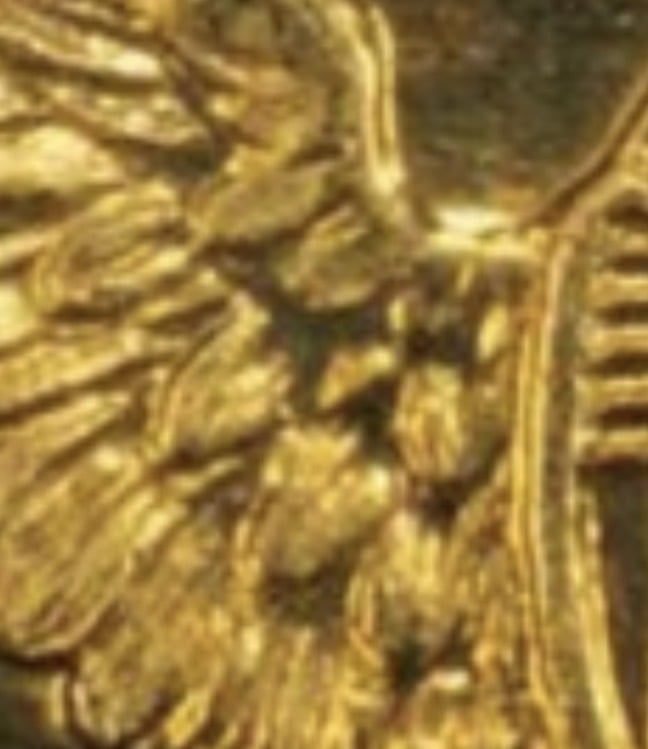
Gobrecht's Engraved Mature Head Large Cent Model
https://www.instagram.com/rexrarities/?hl=en
Dan- yes the coin in question was double struck. There are 2 sets of denticles. The surface is slightly wavy. It is slightly broadstruck and slightly distorted.
I compared it to a 1900 Proof $2.5 Lib because several experts who examined it compared it to a 1900 piece.
The image that you chose of the die trial in question, is a better representative of the look, and it looks very similiar to the 1900 image of the genuine proof $2.5 Lib.
Did the TPGs examine it in person and come to a different conclusion than I am?
Gobrecht's Engraved Mature Head Large Cent Model
https://www.instagram.com/rexrarities/?hl=en
.
A little over-polishing of the die can easily cause a loss of low-lying detail. That is what happened here.
I have had the same thing happen to my own dies when I have polished them. Like this :
.
Thank you Dan, for explaining what happens when a die is over polished. Many reading this thread might not know that.
Dan- I just emailed you a video. Check your email. Thanks!
It’s also a common feature of transfer counterfeits, especially spark erosion dies. It’s significantly less common as overpolishing to that degree on a genuine mint trial or pattern. When combined with the other visible surface issues it should be clear that it’s a fake.
From NGC regarding spark-erosion fakes:
“Once complete, the dies are heavily polished to remove the pitting this counterfeiting method typically leaves. The polishing process cannot remove the pitting from the recesses of the die, however, and, as a result, the raised elements of the counterfeits have a granular appearance.”
“Counterfeits made by this process lose some design detail and lack Mint-quality luster.”
Overpolishing, pitted surfaces, mushy detail, wrong luster…sounds familiar.
Gobrecht's Engraved Mature Head Large Cent Model
https://www.instagram.com/rexrarities/?hl=en
.
The surface texture of the subject item is not much different than a genuine [1900] proof. See the areas I outlined in the image below. Genuine gold proofs of that era have a distinctive field texture that is not as flat and smooth as one might expect. The detail sharpness and granularity is hard to judge, but I don't see a lot of difference. It would require a side-by-side examination with identical lighting.
It is visibly different. Pitting and orange peel are not the same texture. The devices are also visibly granular and there are very clear differences in the level of detail. Look at the fine detail in the tops of the feathers, the neck, the feathers on the arrows, etc. Everything is rounded and mushy. I don’t need a side-by-side examination in hand.
Do you have much experience with transfer die counterfeits?
Gobrecht's Engraved Mature Head Large Cent Model
https://www.instagram.com/rexrarities/?hl=en
.
Of course the two pictures look different - the lighting is not even close to being the same in the two pictures.
There is no "pitting" visible on the subject item. Please point the out the pits specifically if you think you see some.
It does have some raised bumps in the fields, but so does the genuine proof coin. Keep in mind that the subject item is broad-struck, which will result in those small raised lumps being smoothed over a little bit.
You mentioned "wrong luster". But that is not really applicable because both are proofs and neither one really has any "mint luster" (nor should they).
A few people would say "yes"
I make dies. All the time.
I am also credited with discovering some of the VAM-listed vintage-counterfeit die-struck silver Morgan Dollar "privately made" counterfeits, including : 1893-O VAM-7 ; 1893-O VAM-8 ; 1893-O VAM-9 ; 1894-O VAM-vna-A ; 1894-O VAM-vna-B ; 1902-O VAM-92 .
I’m not concerned whatsoever with the lighting differences. So apparently first the images make the counterfeit characteristics more obvious than they would be in hand, and now they make them less clear?
You circled some. The pitting is on the die, not the coin…
Oh brother.
Huh? Genuine proofs have mirror reflectivity appropriate for a coin struck at the US Mint using US Mint die and planchet prep. A transfer counterfeit will not, the luster will be at least slightly off - especially on a fake “proof” coin. I can see in the photos that the luster is too soft on the fake. It is not a US Mint product.
Are you saying that you make transfer die counterfeits? Otherwise that’s not really relevant - making new imitative/fantasy dies is not the same thing. But even if you were a counterfeiter, that wouldn’t make you an authenticator. Do you know the characteristics you would likely see on a transfer die? Do you know the characteristics you would likely see on a spark erosion die in particular? How does this coin differ from a spark erosion fake? Do you know how easy it is to make a fake like this? It’s even easier than normal when you only have to fake one side and you strike it on a blob of metal rather than having to make a convincing planchet or collar!
Cool, but not the same ballpark.
Gobrecht's Engraved Mature Head Large Cent Model
https://www.instagram.com/rexrarities/?hl=en
Post of the Year!
All comments reflect the opinion of the author, even when irrefutably accurate.
That would be really sad.
Gobrecht's Engraved Mature Head Large Cent Model
https://www.instagram.com/rexrarities/?hl=en
What I’m getting out of this is that counterfeiters should make more of these. If a 60-year-old spark erosion fake is enough to get by the experts, they’ll have no problems with a better quality modern transfer.
Gobrecht's Engraved Mature Head Large Cent Model
https://www.instagram.com/rexrarities/?hl=en
.
A spark-erosion counterfeit will have tiny raised pimples on the struck item, typicially on the higher areas and slopes of the design (on the struck item).
Where do you see these "pimples" on the subject item ?
Please point out some specific pimples that you see on some elevated design elements.
How do you explain the similarity to the field ripples on the genuine coin ?
Dismissing the effects of broad-striking off-hand in that manner does not demonstrate much thought about it.
The VAM-listed "privately-made" vintage counterfeits are from transfer-dies. So not only are they in the same "ballpark", they are both in the infield.
PS:
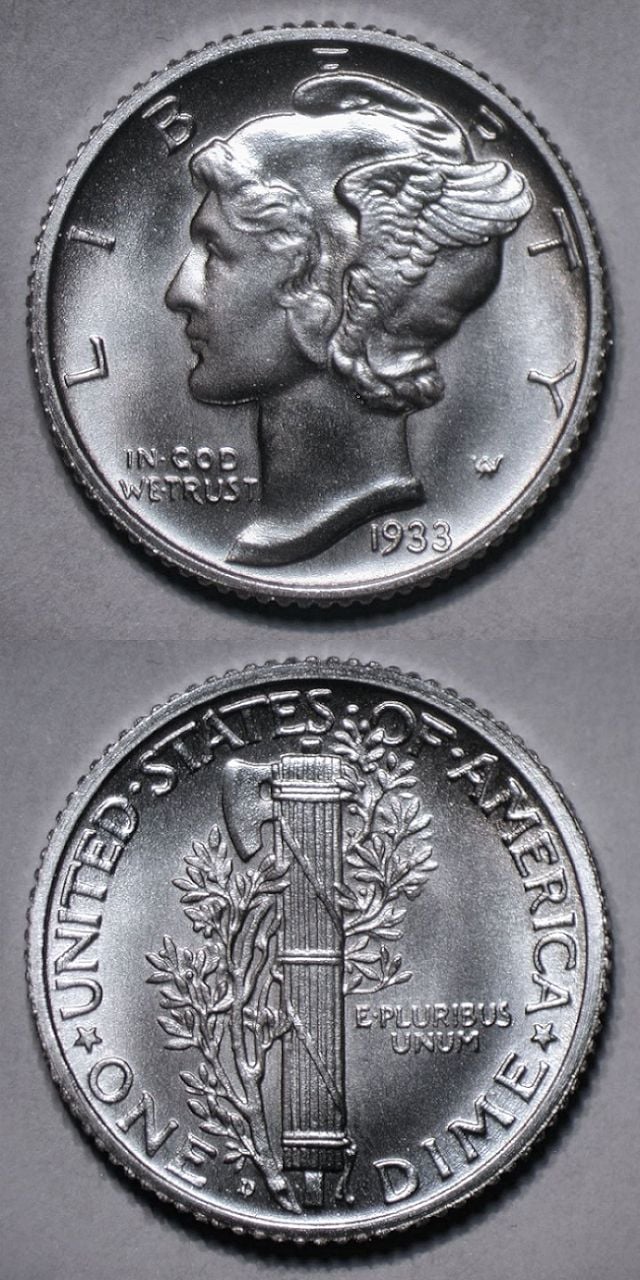
I made these dies:
.
I am constantly amazed of how little I actually know.
Post of the Year!> @Rexford said:
Lol. I'm not sure you recognize why I said that. But it has been a sad year.
I actually agree with you about the "trial piece". The gold alone makes it suspect.
All comments reflect the opinion of the author, even when irrefutably accurate.
The entirety of the devices has a granular appearance. That said, I’ve only just pulled up the higher resolution photos from PCGS and I’m going to walk back the spark erosion argument. This is just a straight up mechanical transfer die fake. Mechanical and spark erosion are both types of transfer dies and share some characteristics. There is granularity, but it’s a little different from the spark erosion look and typical of a bad mechanical transfer. After looking at higher res images the whole thing looks awful though. Just totally unnatural texture over the whole of the devices.
Compare the completely different texture of the devices and strike quality on the fake vs a genuine 1900 proof:
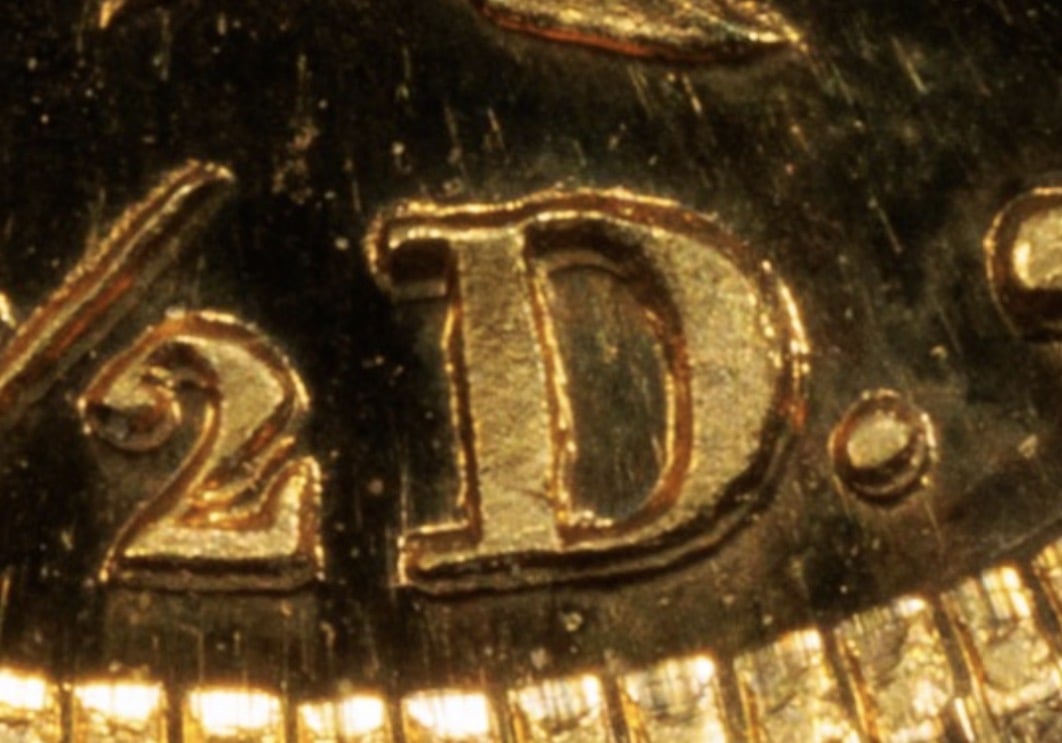
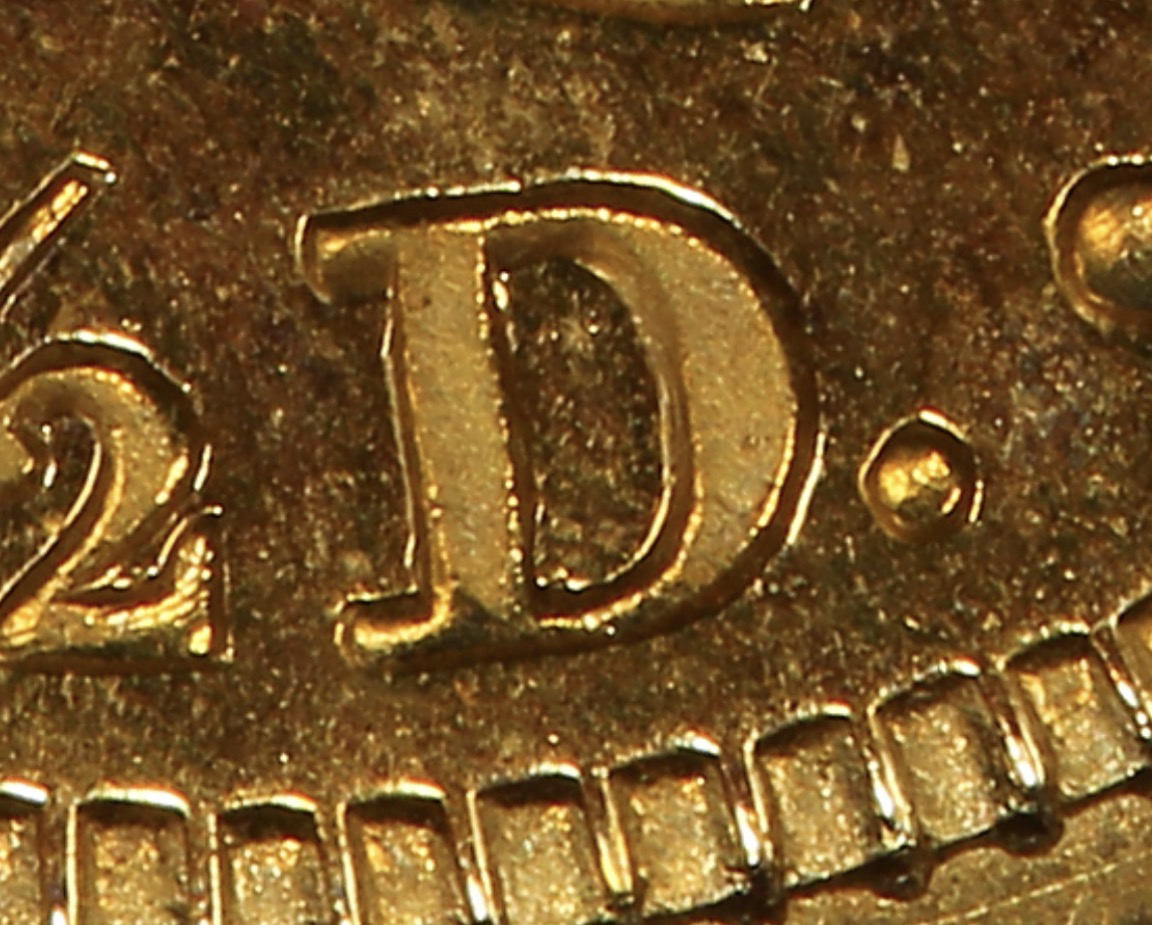
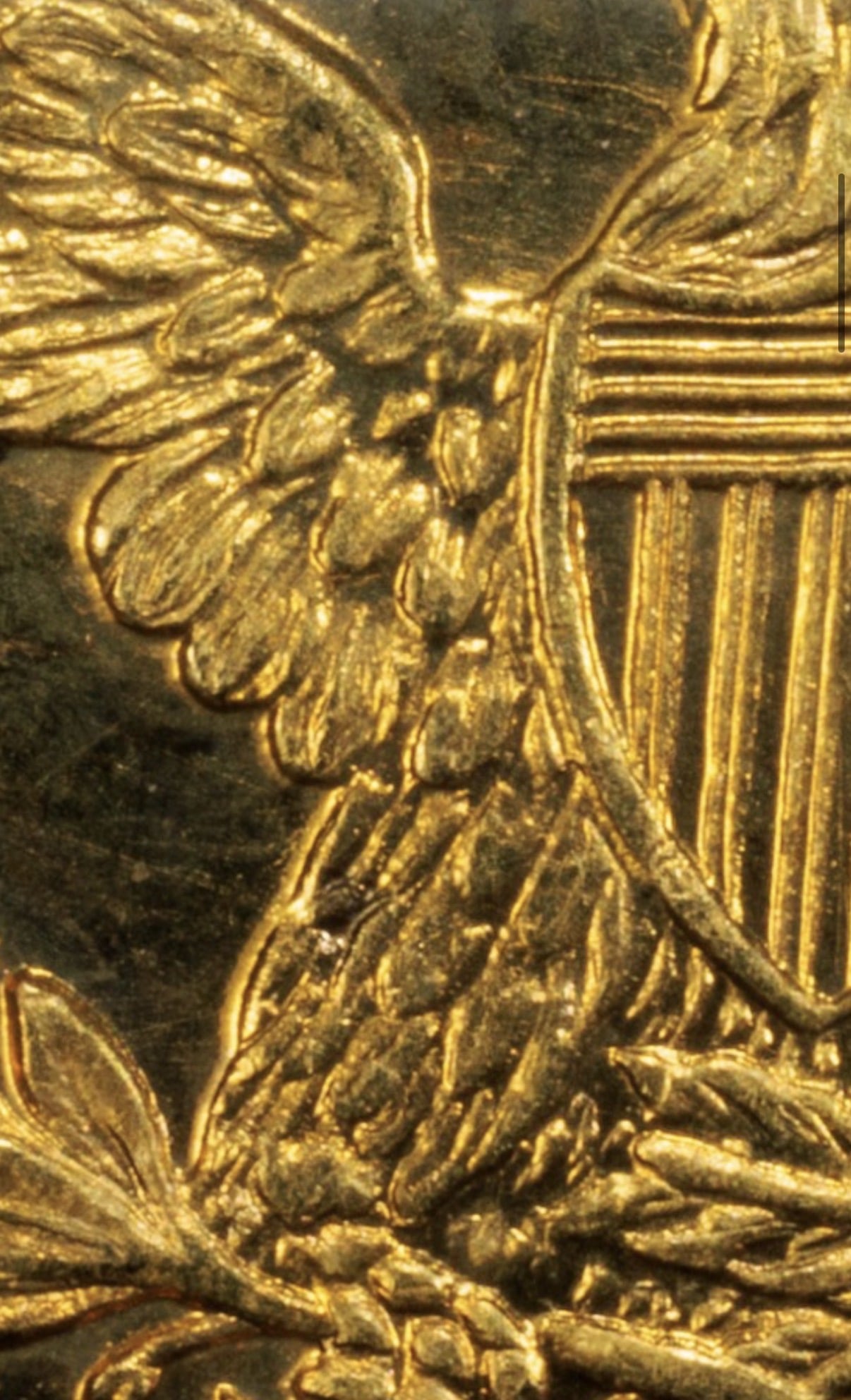
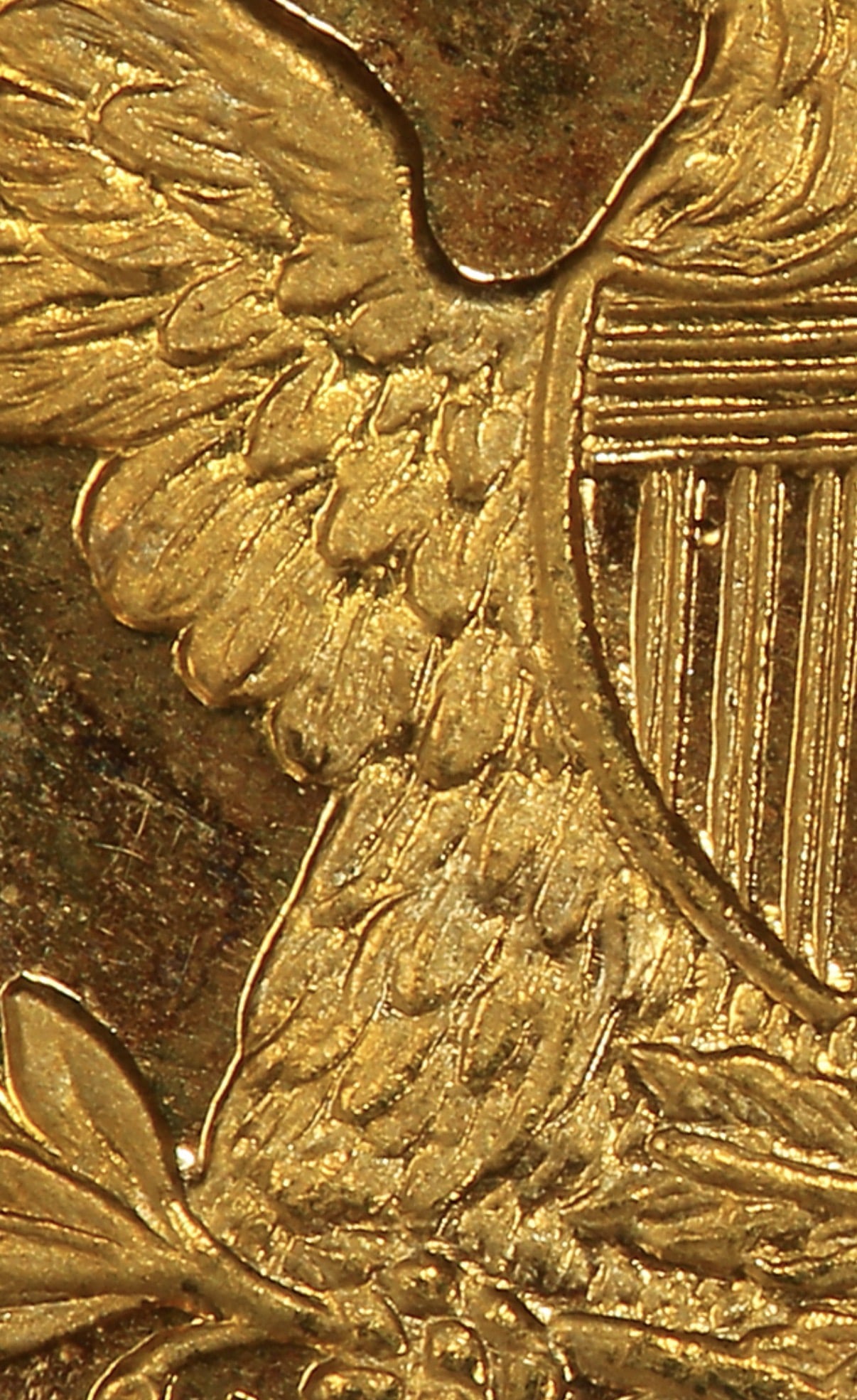
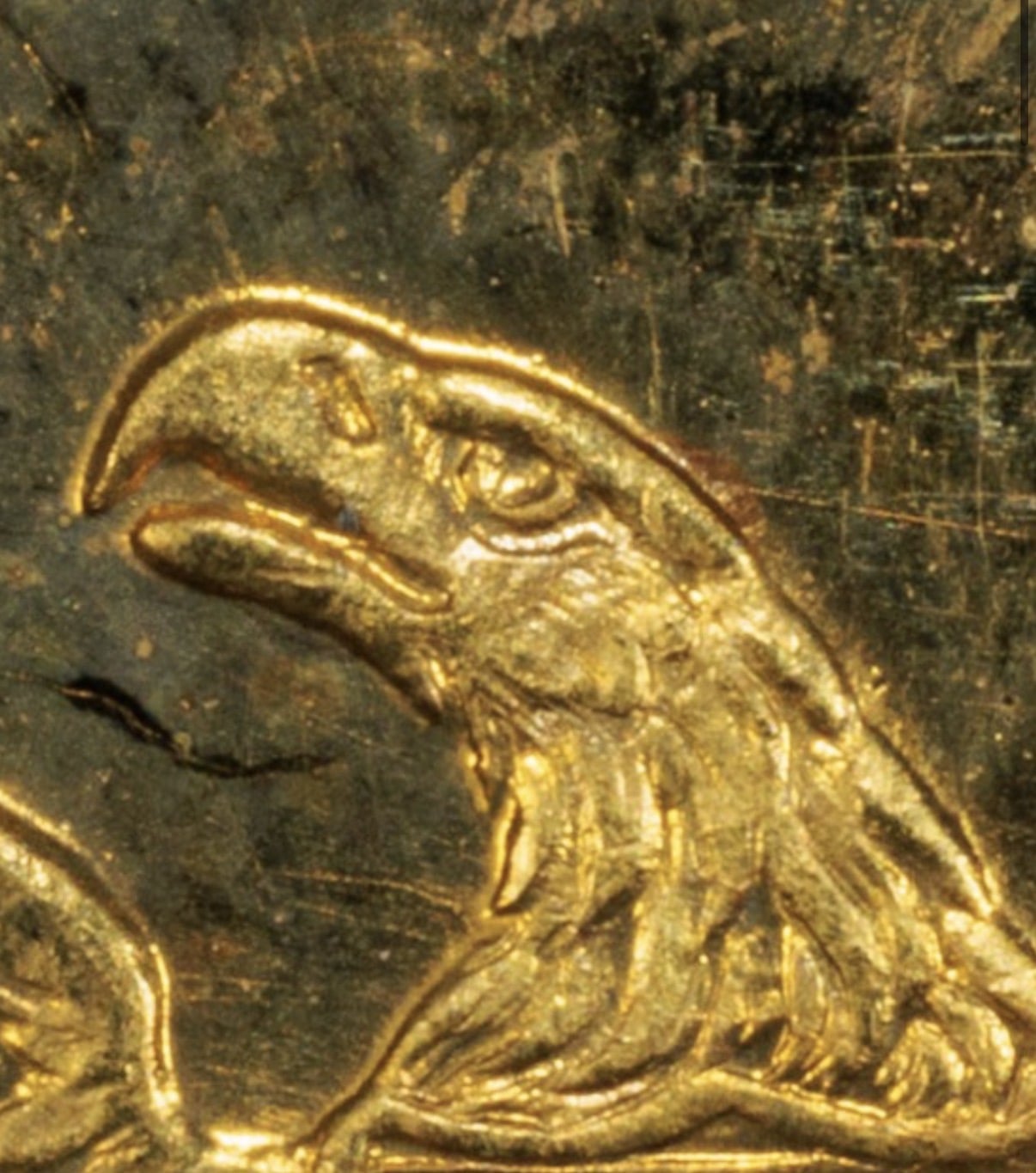
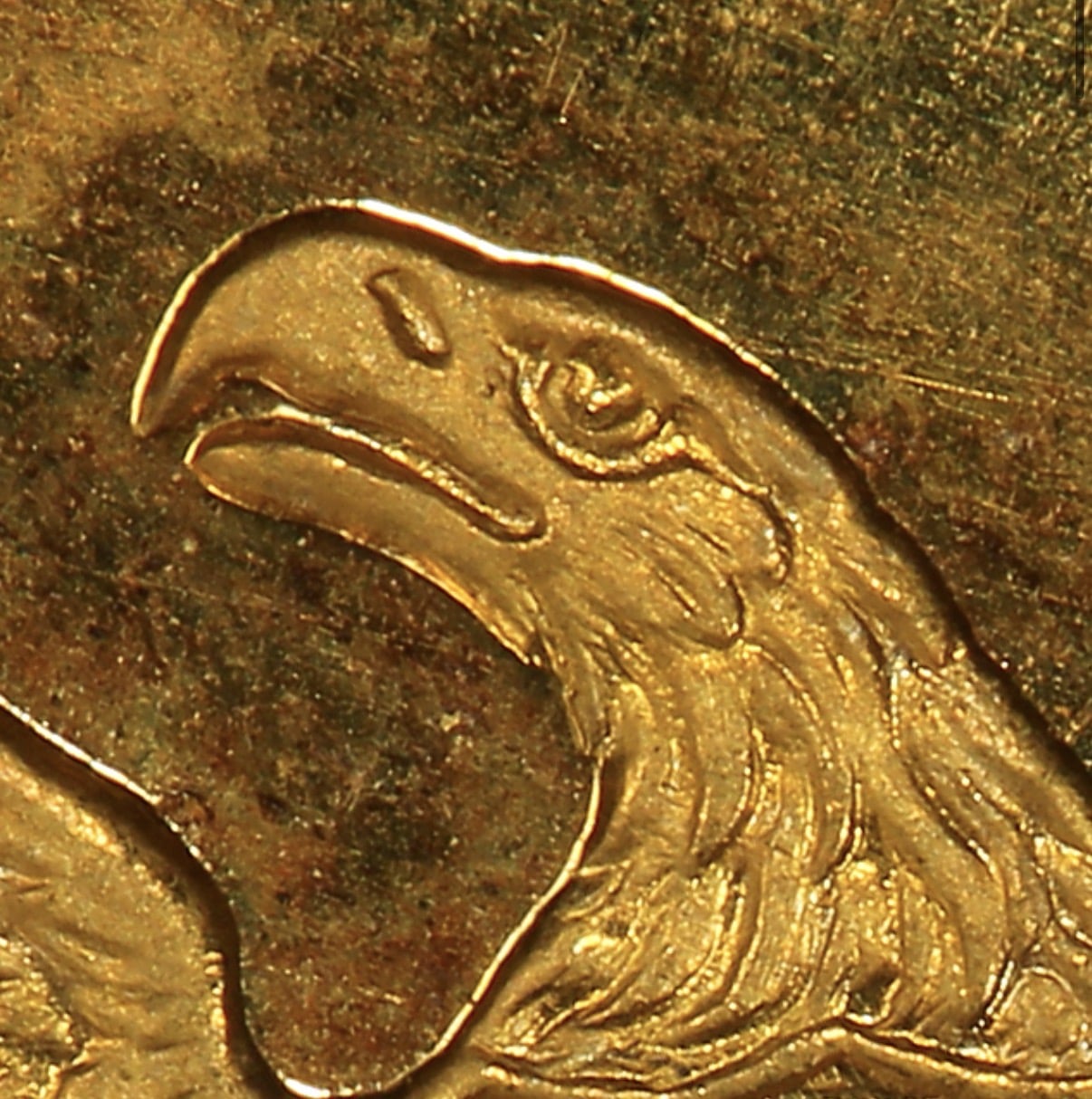
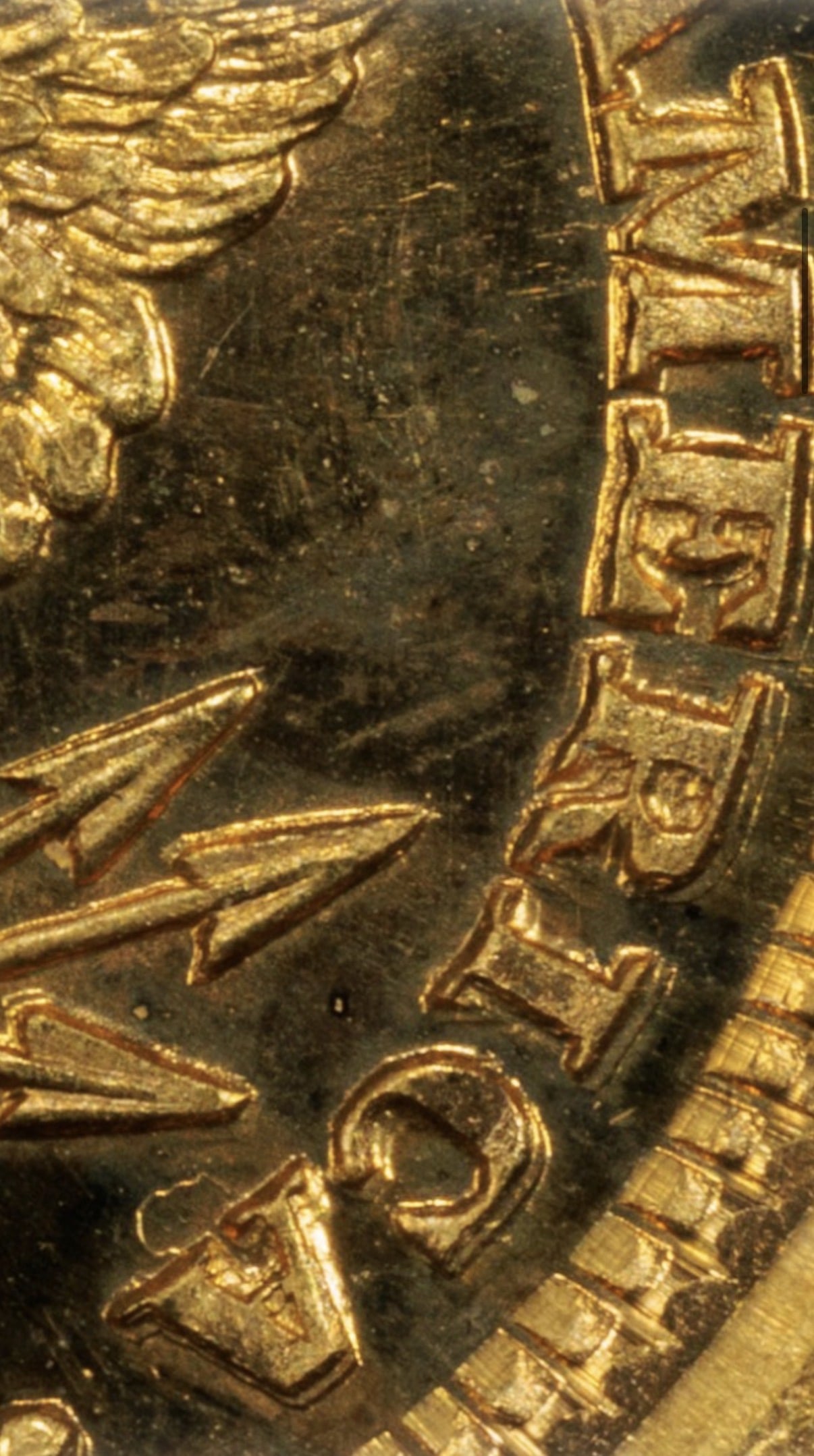
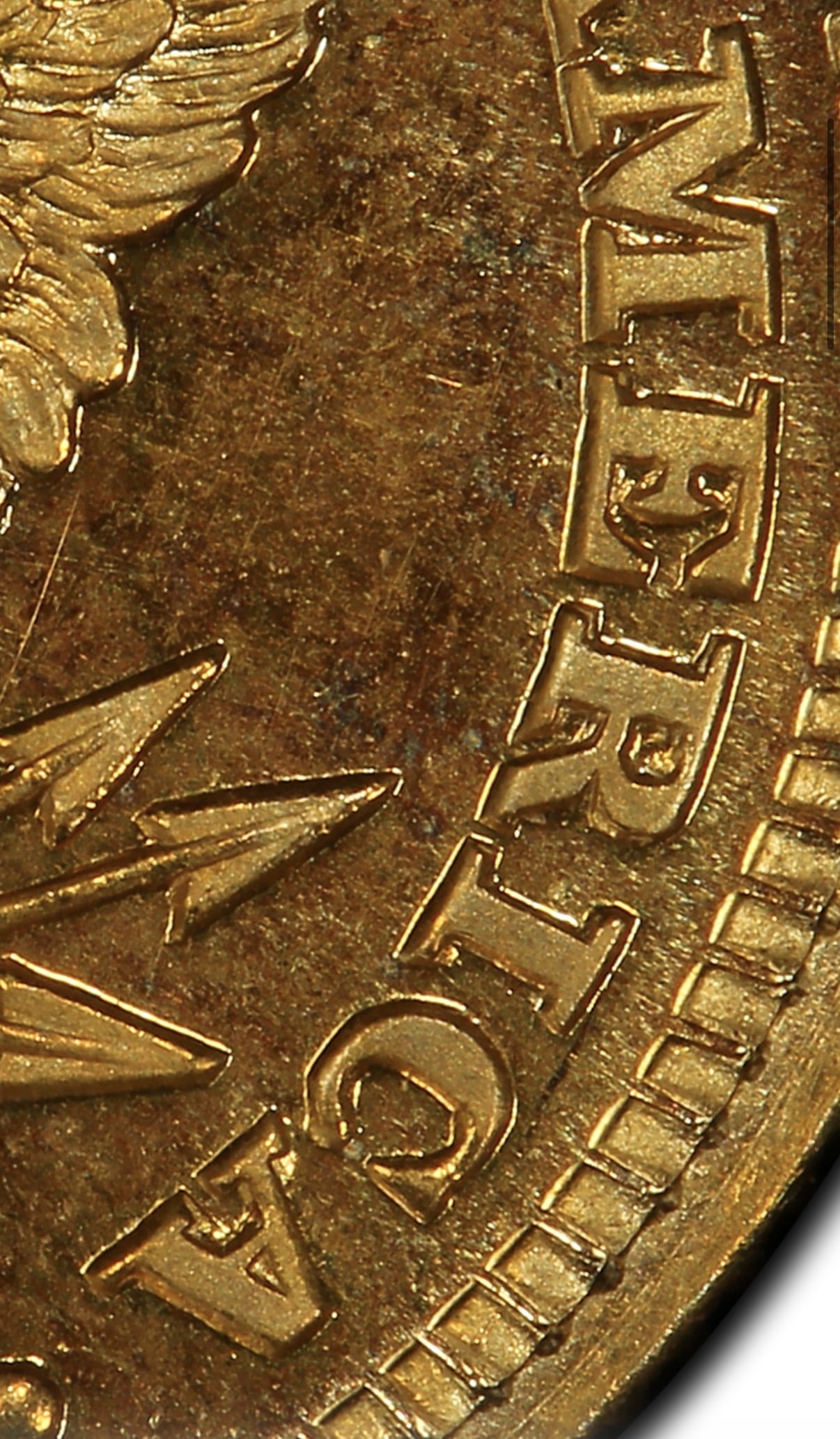
Below:
-Major overpolishing, they clearly really wanted to scrub the fields of detectable evidence and to give an imitation of proof luster.
-Random blobs around the devices (no, this is not from a double-strike or the broadstrike).
-Examples of very suspicious indents that would almost certainly repeat on other fakes from these dies if they existed (shield, beak)
-Die crack on wing that really shouldn’t be there if this is a trial.
-Wormy raised marks and irregular texture that is very consistent with a mechanical transfer die.
And let’s not get started on the planchet! Does this look like something the mint would make? (Ignoring even the oddness of using a gold planchet for a trial at all).
Yeah, I don’t find that convincing at all.
They are transfers, but I think matching anachronistic obv/rev dies is a little different of a task. They’re also worn coins and the physical characteristics to look for are going to be a bit different - at that point there’s no luster to go off of. But ok, maybe an outfield and infield.
How are these dies made?
Gobrecht's Engraved Mature Head Large Cent Model
https://www.instagram.com/rexrarities/?hl=en
@Rexford - thanks for posting the close-up pictures. Some of the artifacts in your pictures are small post-strike contact marks. I think you underestimate the types and quantity of irregularities that can exist on a genuine master hub of that era, especially one that has been in use for multiple years.
Here is an 1899 proof (NGC 66 Cameo). Note the texture on the lettering and the artifacs in the "A" of STATES:
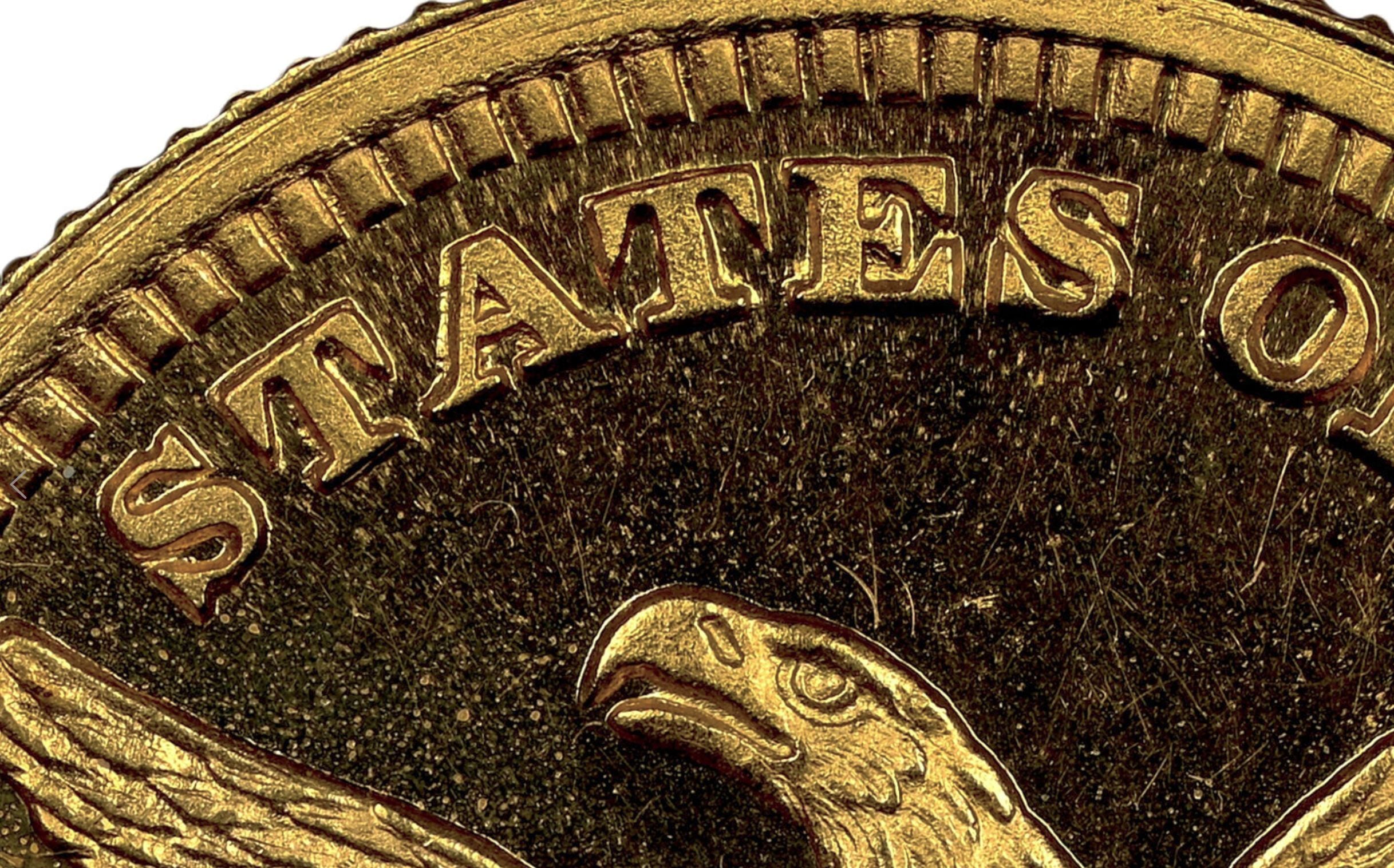
https://coins.ha.com/itm/a/1356-3833.s
Here is a 1900 proof that has similar artifacts in the "A", So it is likely from the same master hub as the 1899.
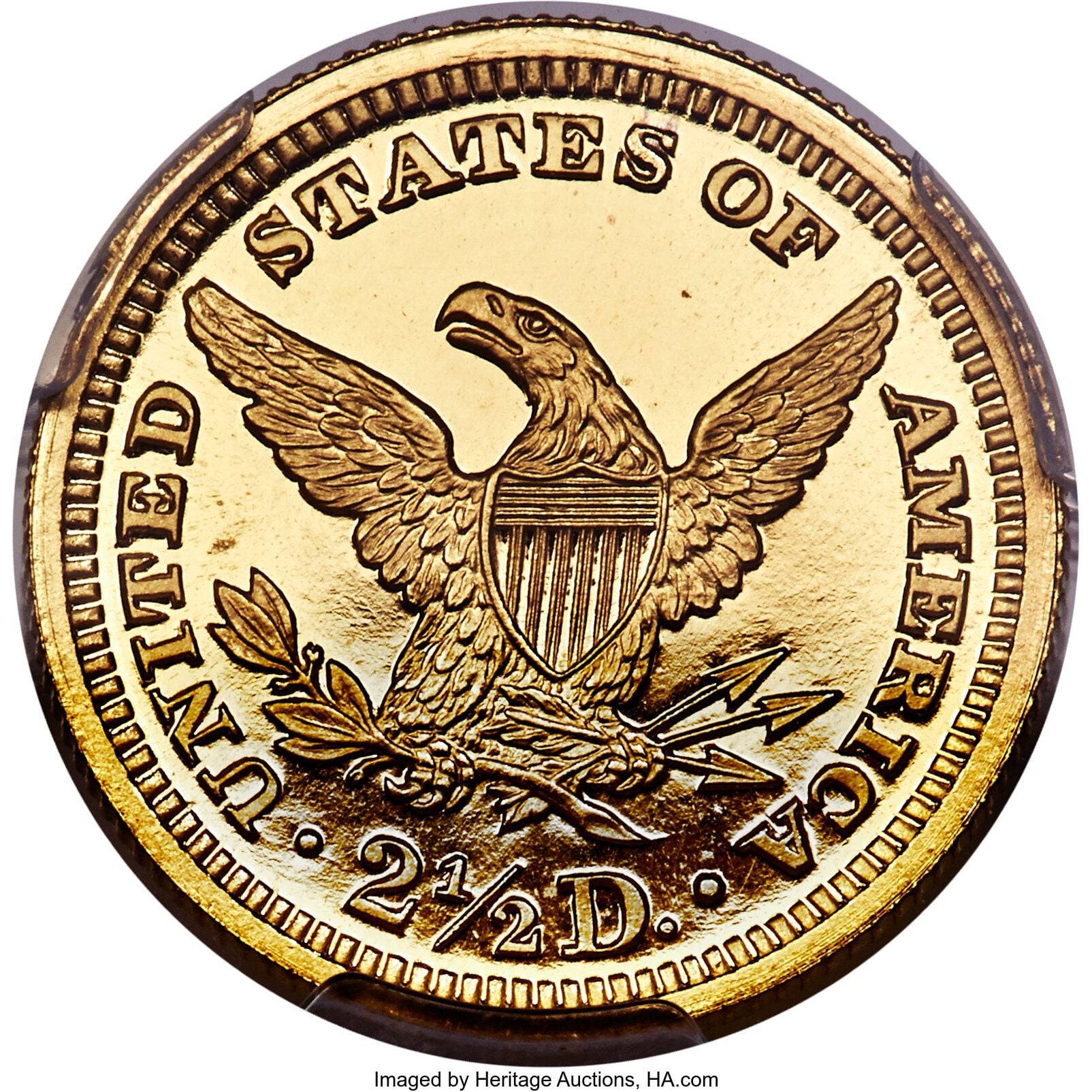
And look at the overall warping and rippling of the polished fields:
Neither of those examples are comparable. There are significantly more artifacts around the lettering on the fake, and I am aware of what orange peel is and do not agree that that is what’s going on here.
Every characteristic I posted is consistent with a mechanical (impact) transfer die counterfeit. None of them are post-strike. The wormy raised line on the U could almost singlehandedly condemn the coin.
Gobrecht's Engraved Mature Head Large Cent Model
https://www.instagram.com/rexrarities/?hl=en
PS:
I make my dies using a digital transfer method. The cutting of the die is similar to a reduction lathe, but the original model is digital rather than a physical plaster, galvano, or bronze casting.
That’s what I expected. That’s not going to end up with the same characteristics as a typical transfer fake - I imagine much of the surface texture is reworked entirely through the digital process. The characteristics I am referencing are ones regularly seen on these types of fakes.
Gobrecht's Engraved Mature Head Large Cent Model
https://www.instagram.com/rexrarities/?hl=en
This is a bit of a silly discussion at this point. I’ve given a bunch of comparisons and evidence - even if one were to argue with one or two points, the overwhelming evidence is that the coin is fake. I’m not really sure what more evidence could be provided, and at some point it’s just one person saying “this looks bad” and one person choosing whether or not to believe that. But the thing is, there are many, many coins that are much better fakes than this piece and that have far less physical evidence of being fake. It takes far less than this for a coin to be condemned by a TPG. So while this has been fun, it’s time for me to bow out.
Gobrecht's Engraved Mature Head Large Cent Model
https://www.instagram.com/rexrarities/?hl=en
.
What you have been posting is characteristics of the genuine master hub for the Quarter Eagle reverse, circa 1900.
You don't seem to recognize what you are looking at.
Your condemnation of the wormy line on the "U" is incorrect.
This is not the same thing as the Omega Saint-Gaudens high-relief.
Here is a genuine 1900 proof reverse that has a faint instance of that same line:
My compliments on the many fine photographs, and comments, in this thread. This is numismatics at its finest.
Personally, I suspect that had this come through ANACS on my watch we would have "No Decisioned" it, but that is just my thought.
One thing to consider when evaluating unusual pieces like this is the possibility that they are unofficial Mint made concoctions. So with this piece, you can’t assume that an authentic piece would have to be struck by a fresh dies created by a fresh hub. The dies could be old and degraded, or they could be new but created by an old and degraded hub. Which doesn’t mean that I think that’s what we’re looking at here, but it’s important to at least consider the possibility.
Doggedly collecting coins of the Central American Republic.
Visit the Society of US Pattern Collectors at USPatterns.com.
100%
The best part of this board is when two extremely informed and seasoned Numismatists share their expertise, even if they disagree on the outcome. The road to getting to their individual conclusions is an exciting and educational one.
Andy is correct. All possibilities should be explored.
Well it is on a $3 gold blank planchet.
Not every unofficial concoction created in the U.S. Mint are struck under normal and ideal circumstances. Some are out of this world and the grading services initially decline to certify them.
I have had more than my share of unofficial Mint made concoctions, as evident in my sold archives. There were a few occasions when a coin was rejected for certification, only to be authenticated later.
https://mikebyers.com/rarecoins-archives.html
As the first professional to see this coin after 40ish years of hiding, I feel like I should chime in. I figured it was bad within a few minutes of having it in my hands. It wasn't until we discovered it was published in the Judd book that we considered the possibility that it might be a legitimate US Mint product. I remained extremely skeptical. Key part here: All of my coworkers, who I won't run around name dropping, but are all very well-known and respected within the business, didn't like it either.
Do you know who I am? I'm a nobody. I'm a grunt. If I was able to pick this out that quickly, as far as I'm concerned, it's inexcusable that so many highly regarded industry luminaries missed it in the past. Embarrassing, even.
Know who had counterfeit $3 gold blanks laying around after 1900? The major counterfeiting operation out of the Middle East circa the 1940s-1960's. That is the most likely origin of this piece based on my research when it was in my possession. I tried to match it up with proof reverse dies from the entire run based on a few die markers I picked up in-hand and could find nothing that matched well enough to sell me on it.
"It's like God, Family, Country, except Sticker, Plastic, Coin."