@ChrisH821 said:
I would argue that the two additional factors actually hurt the value a bit. If I was buying transitional error bronze cents I would want full weight and non-defective planchet.
Whatever it is, it's neat.
For those arguing for a specific gravity test, how do you know that PCGS didn't do one?
We don’t, but it is not on the label.
Numismatist. 54 year member ANA. Former ANA Senior Authenticator. Winner of four ANA Heath Literary Awards; three Wayte and Olga Raymond Literary Awards; Numismatist of the Year Award 2009, and ANA Lifetime Achievement Award 2020. Author of "The Enigmatic Lincoln Cents of 1922," Available now from Whitman or Amazon.
@ChrisH821 said:
I would argue that the two additional factors actually hurt the value a bit. If I was buying transitional error bronze cents I would want full weight and non-defective planchet.
Whatever it is, it's neat.
For those arguing for a specific gravity test, how do you know that PCGS didn't do one?
We don’t, but it is not on the label.
There's also Occam's razor. Why is two errors more likely than one...or none?
All comments reflect the opinion of the author, even when irrefutably accurate.
@TomB said:
How was the weight the first thing that stuck out to you about this cent? It's about a third of a gram heavier than expected, so you couldn't possibly have felt that in-hand, and it is also too light to be a typical bronze cent planchet.
Might it simply have a copper plating that is too thick?
We have another thread on a similar coin with exactly the same weight that just sold for $11,000
As I said in the other thread: THIS COIN NEEDS A SPECIFIC GRAVITY TEST!
If you take a normal copper-plated zinc cent and give it a heavy copper plating you can increase the weight, and give it a copper shell that ordinary metal testers might not be able to penetrate, giving the appearance of a primarily copper coin. A specific gravity test would reveal the significantly less dense zinc core.
I am not saying that this is a heavily copper-plated zinc cent. I am saying that it is unresolved until all available testing is finished.
TD
Specific gravity test is not normally done at TPGs on coins such as the OP's, right? 2.87grams puts it's weight above an ordinary Zincoln but well below 3.1 grams for a bronze penny. Hard to believe someone would pay $11K for 2.87g 1983 penny. 2.87 gram penny is going to have a zinc core is the most likely situation is the way I'm seeing it.
Einstein’s view of God was non-traditional and pantheistic, focusing on the harmony, order, and intelligibility of the cosmos rather than a personal deity. His quotes reveal a profound respect for the universe’s mysteries, a belief in rational laws, and a moral philosophy grounded in compassion and understanding, bridging science and spirituality.
“My religion consists of a humble admiration of the illimitable superior spirit who reveals himself in the slight details we are able to perceive with our frail and feeble mind.”
@TomB said:
How was the weight the first thing that stuck out to you about this cent? It's about a third of a gram heavier than expected, so you couldn't possibly have felt that in-hand, and it is also too light to be a typical bronze cent planchet.
Might it simply have a copper plating that is too thick?
We have another thread on a similar coin with exactly the same weight that just sold for $11,000
As I said in the other thread: THIS COIN NEEDS A SPECIFIC GRAVITY TEST!
If you take a normal copper-plated zinc cent and give it a heavy copper plating you can increase the weight, and give it a copper shell that ordinary metal testers might not be able to penetrate, giving the appearance of a primarily copper coin. A specific gravity test would reveal the significantly less dense zinc core.
I am not saying that this is a heavily copper-plated zinc cent. I am saying that it is unresolved until all available testing is finished.
TD
Specific gravity test is not normally done at TPGs on coins such as the OP's, right? 2.87grams puts it's weight above an ordinary Zincoln but well below 3.1 grams for a bronze penny. Hard to believe someone would pay $11K for 2.87g 1983 penny. 2.87 gram penny is going to have a zinc core is the most likely situation is the way I'm seeing it.
And yet someone did just that for a 2017 cent that weighed 2.87 g just this week.
All comments reflect the opinion of the author, even when irrefutably accurate.
@TomB said:
How was the weight the first thing that stuck out to you about this cent? It's about a third of a gram heavier than expected, so you couldn't possibly have felt that in-hand, and it is also too light to be a typical bronze cent planchet.
Might it simply have a copper plating that is too thick?
We have another thread on a similar coin with exactly the same weight that just sold for $11,000
As I said in the other thread: THIS COIN NEEDS A SPECIFIC GRAVITY TEST!
If you take a normal copper-plated zinc cent and give it a heavy copper plating you can increase the weight, and give it a copper shell that ordinary metal testers might not be able to penetrate, giving the appearance of a primarily copper coin. A specific gravity test would reveal the significantly less dense zinc core.
I am not saying that this is a heavily copper-plated zinc cent. I am saying that it is unresolved until all available testing is finished.
TD
Specific gravity test is not normally done at TPGs on coins such as the OP's, right? 2.87grams puts it's weight above an ordinary Zincoln but well below 3.1 grams for a bronze penny. Hard to believe someone would pay $11K for 2.87g 1983 penny. 2.87 gram penny is going to have a zinc core is the most likely situation is the way I'm seeing it.
As Senior Authenticator for the ANA in the early 80's, I did a Specific Gravity test whenever it was relevant to the proper attribution of the piece in question, as certainly was the case with this coin. For example, in my time there we handled two 1943 Bronze cents. We could probably have done them just on weight and visual observation alone, but the specific gravity deserved to be in the record.
Numismatist. 54 year member ANA. Former ANA Senior Authenticator. Winner of four ANA Heath Literary Awards; three Wayte and Olga Raymond Literary Awards; Numismatist of the Year Award 2009, and ANA Lifetime Achievement Award 2020. Author of "The Enigmatic Lincoln Cents of 1922," Available now from Whitman or Amazon.
@TomB said:
How was the weight the first thing that stuck out to you about this cent? It's about a third of a gram heavier than expected, so you couldn't possibly have felt that in-hand, and it is also too light to be a typical bronze cent planchet.
Might it simply have a copper plating that is too thick?
We have another thread on a similar coin with exactly the same weight that just sold for $11,000
As I said in the other thread: THIS COIN NEEDS A SPECIFIC GRAVITY TEST!
If you take a normal copper-plated zinc cent and give it a heavy copper plating you can increase the weight, and give it a copper shell that ordinary metal testers might not be able to penetrate, giving the appearance of a primarily copper coin. A specific gravity test would reveal the significantly less dense zinc core.
I am not saying that this is a heavily copper-plated zinc cent. I am saying that it is unresolved until all available testing is finished.
TD
Specific gravity test is not normally done at TPGs on coins such as the OP's, right? 2.87grams puts it's weight above an ordinary Zincoln but well below 3.1 grams for a bronze penny. Hard to believe someone would pay $11K for 2.87g 1983 penny. 2.87 gram penny is going to have a zinc core is the most likely situation is the way I'm seeing it.
And yet someone did just that for a 2017 cent that weighed 2.87 g just this week.
I don't know. In order to get the weight up to 2.87 g, either the planchet would have to be extra thick or there's 6x as much copper. It is an unusual weight. Having a bronze planchet that is light, on the other hand, requires two simultaneous "errors". Either way, a specific gravity test would settle the issue. I wonder if electrical conductivity might also tell the tale.
Whatever it is, I wouldn't bid significant money on it without confirmation.
All comments reflect the opinion of the author, even when irrefutably accurate.
It's interesting that they called it a damaged planchet. They noted the scratch but the reverse seems (?) to be where the planchet damage is. Would be nice to know what type of damage they thought it was.
Looking at this picture again, a thought just popped into my head. Over the years I have seen a few copper electrotype shells, where the coin side of the shell was nice and smooth but the back of the shell was rather rough and pebbly. I am now wondering if perhaps this coin was electroplated.
TD
Numismatist. 54 year member ANA. Former ANA Senior Authenticator. Winner of four ANA Heath Literary Awards; three Wayte and Olga Raymond Literary Awards; Numismatist of the Year Award 2009, and ANA Lifetime Achievement Award 2020. Author of "The Enigmatic Lincoln Cents of 1922," Available now from Whitman or Amazon.
@TomB said:
How was the weight the first thing that stuck out to you about this cent? It's about a third of a gram heavier than expected, so you couldn't possibly have felt that in-hand, and it is also too light to be a typical bronze cent planchet.
Might it simply have a copper plating that is too thick?
We have another thread on a similar coin with exactly the same weight that just sold for $11,000
As I said in the other thread: THIS COIN NEEDS A SPECIFIC GRAVITY TEST!
If you take a normal copper-plated zinc cent and give it a heavy copper plating you can increase the weight, and give it a copper shell that ordinary metal testers might not be able to penetrate, giving the appearance of a primarily copper coin. A specific gravity test would reveal the significantly less dense zinc core.
I am not saying that this is a heavily copper-plated zinc cent. I am saying that it is unresolved until all available testing is finished.
TD
Prior to shipping, I did not employ any special verification methods other than checking for weight and color. The fact is that copper and bronze—even when aged and worn—differ significantly in color. I am a professional artist, and I have a keen sense of color.
@TomB said:
How was the weight the first thing that stuck out to you about this cent? It's about a third of a gram heavier than expected, so you couldn't possibly have felt that in-hand, and it is also too light to be a typical bronze cent planchet.
Might it simply have a copper plating that is too thick?
We have another thread on a similar coin with exactly the same weight that just sold for $11,000
As I said in the other thread: THIS COIN NEEDS A SPECIFIC GRAVITY TEST!
If you take a normal copper-plated zinc cent and give it a heavy copper plating you can increase the weight, and give it a copper shell that ordinary metal testers might not be able to penetrate, giving the appearance of a primarily copper coin. A specific gravity test would reveal the significantly less dense zinc core.
I am not saying that this is a heavily copper-plated zinc cent. I am saying that it is unresolved until all available testing is finished.
TD
Prior to shipping, I did not employ any special verification methods other than checking for weight and color. The fact is that copper and bronze—even when aged and worn—differ significantly in color. I am a professional artist, and I have a keen sense of color.
Lmao. You don't happen to be a mud engineer, do you?
Tell us, again, the one about the microscopic pits that existed before striking.
I'm a chemist, both bronze and copper tone into 1000 different overlapping shades.
All comments reflect the opinion of the author, even when irrefutably accurate.
@TomB said:
How was the weight the first thing that stuck out to you about this cent? It's about a third of a gram heavier than expected, so you couldn't possibly have felt that in-hand, and it is also too light to be a typical bronze cent planchet.
Might it simply have a copper plating that is too thick?
We have another thread on a similar coin with exactly the same weight that just sold for $11,000
As I said in the other thread: THIS COIN NEEDS A SPECIFIC GRAVITY TEST!
If you take a normal copper-plated zinc cent and give it a heavy copper plating you can increase the weight, and give it a copper shell that ordinary metal testers might not be able to penetrate, giving the appearance of a primarily copper coin. A specific gravity test would reveal the significantly less dense zinc core.
I am not saying that this is a heavily copper-plated zinc cent. I am saying that it is unresolved until all available testing is finished.
TD
Prior to shipping, I did not employ any special verification methods other than checking for weight and color. The fact is that copper and bronze—even when aged and worn—differ significantly in color. I am a professional artist, and I have a keen sense of color.
Lmao. You don't happen to be a mud engineer, do you?
Tell us, again, the one about the microscopic pits that existed before striking.
I'm a chemist, both bronze and copper tone into 1000 different overlapping shades.
No, I am not an engineer. There is also such a thing as intuition. We cannot rely on such things, as they are not scientific. However, in my case—even after receiving a grade from a reputable company—I doubted their assessment and sent the coin in for re-grading.
@TomB said:
How was the weight the first thing that stuck out to you about this cent? It's about a third of a gram heavier than expected, so you couldn't possibly have felt that in-hand, and it is also too light to be a typical bronze cent planchet.
Might it simply have a copper plating that is too thick?
We have another thread on a similar coin with exactly the same weight that just sold for $11,000
As I said in the other thread: THIS COIN NEEDS A SPECIFIC GRAVITY TEST!
If you take a normal copper-plated zinc cent and give it a heavy copper plating you can increase the weight, and give it a copper shell that ordinary metal testers might not be able to penetrate, giving the appearance of a primarily copper coin. A specific gravity test would reveal the significantly less dense zinc core.
I am not saying that this is a heavily copper-plated zinc cent. I am saying that it is unresolved until all available testing is finished.
TD
Prior to shipping, I did not employ any special verification methods other than checking for weight and color. The fact is that copper and bronze—even when aged and worn—differ significantly in color. I am a professional artist, and I have a keen sense of color.
Lmao. You don't happen to be a mud engineer, do you?
Tell us, again, the one about the microscopic pits that existed before striking.
I'm a chemist, both bronze and copper tone into 1000 different overlapping shades.
No, I am not an engineer. There is also such a thing as intuition. We cannot rely on such things, as they are not scientific. However, in my case—even after receiving a grade from a reputable company—I doubted their assessment and sent the coin in for re-grading.
Respectfully, you only doubted their assessment because it didn't match your expectations. Many of us doubt the second opinion more than the first opinion.
All comments reflect the opinion of the author, even when irrefutably accurate.
Grading has a bit of intuition involved and is subjective, to put it mildly..
It is all subjective. Money, too, possesses its nominal value solely by virtue of a prior agreement to recognize it as such. There is a certain order to this. The grading of coins by accredited services imparts that same sense of order to the asset.
Grading has a bit of intuition involved and is subjective, to put it mildly..
But they always accept the opinion that agrees with their biases.
I believe that an appraiser is more likely to adopt a stricter—and less risky—stance when assigning a grade, prioritizing the preservation of their company's reputation over assigning a potentially disputable valuation that might be commercially more favorable to the owner. For instance, I own a coin that features several interesting mint errors; however, it originally bore a layer of white residue which I—or so I thought—carefully removed. As a result, it was graded as "cleaned." This completely destroyed the remainder of its value.
Grading has a bit of intuition involved and is subjective, to put it mildly..
But they always accept the opinion that agrees with their biases.
I believe that an appraiser is more likely to adopt a stricter—and less risky—stance when assigning a grade, prioritizing the preservation of their company's reputation over assigning a potentially disputable valuation that might be commercially more favorable to the owner. For instance, I own a coin that features several interesting mint errors; however, it originally bore a layer of white residue which I—or so I thought—carefully removed. As a result, it was graded as "cleaned." This completely destroyed the remainder of its value.
You have two disparate views from 2 different reputable grading companies. [Neither is an appraiser, by the way.] You think PCGS got it right and NGC got it wrong because PCGS agrees with your bias and NGC might not. All this gross rationalization of the company's biases is irrelevant to why you chose not to challenge PCGS's opinion.
It's interesting that you own ANOTHER COIN with "several interesting mint errors". You seem to specialize in ultra-rare multiple mint errors. Or, you don't know as much about coins as you think. Based on the number of flawed statements you've made in this thread, I'm leaning towards door #2.
All comments reflect the opinion of the author, even when irrefutably accurate.
Grading has a bit of intuition involved and is subjective, to put it mildly..
I'll agree with the subjectivity of grading, but there can be no subjectivity in materials testing, such as SPECIFIC GRAVITY testing, as copper is close to 9 and zinc is around 7 -- there would be an easily distinguished science based objective difference. IMO the $11K 2017 and this coin are both zinc core with copper plating differences, until you show me the scientific data.
Grading has a bit of intuition involved and is subjective, to put it mildly..
But they always accept the opinion that agrees with their biases.
I believe that an appraiser is more likely to adopt a stricter—and less risky—stance when assigning a grade, prioritizing the preservation of their company's reputation over assigning a potentially disputable valuation that might be commercially more favorable to the owner. For instance, I own a coin that features several interesting mint errors; however, it originally bore a layer of white residue which I—or so I thought—carefully removed. As a result, it was graded as "cleaned." This completely destroyed the remainder of its value.
You have two disparate views from 2 different reputable grading companies. [Neither is an appraiser, by the way.] You think PCGS got it right and NGC got it wrong because PCGS agrees with your bias and NGC might not. All this gross rationalization of the company's biases is irrelevant to why you chose not to challenge PCGS's opinion.
It's interesting that you own ANOTHER COIN with "several interesting mint errors". You seem to specialize in ultra-rare multiple mint errors. Or, you don't know as much about coins as you think. Based on the number of flawed statements you've made in this thread, I'm leaning towards door #2.
"If it looks like a duck, swims like a duck, and quacks like a duck, then it’s probably a duck". I received a grading report from NGC containing an error. They listed the weight as 2.5g—something that simply could not be correct. Even on my own scale, it registered a weight closer to 3g. Furthermore, on their website, the section describing this specific coin actually displays an image of a different coin (one of the other coins I had submitted alongside the 1983 piece). Given such absurd errors, what else am I to conclude?
Grading has a bit of intuition involved and is subjective, to put it mildly..
But they always accept the opinion that agrees with their biases.
I believe that an appraiser is more likely to adopt a stricter—and less risky—stance when assigning a grade, prioritizing the preservation of their company's reputation over assigning a potentially disputable valuation that might be commercially more favorable to the owner. For instance, I own a coin that features several interesting mint errors; however, it originally bore a layer of white residue which I—or so I thought—carefully removed. As a result, it was graded as "cleaned." This completely destroyed the remainder of its value.
You have two disparate views from 2 different reputable grading companies. [Neither is an appraiser, by the way.] You think PCGS got it right and NGC got it wrong because PCGS agrees with your bias and NGC might not. All this gross rationalization of the company's biases is irrelevant to why you chose not to challenge PCGS's opinion.
It's interesting that you own ANOTHER COIN with "several interesting mint errors". You seem to specialize in ultra-rare multiple mint errors. Or, you don't know as much about coins as you think. Based on the number of flawed statements you've made in this thread, I'm leaning towards door #2.
"If it looks like a duck, swims like a duck, and quacks like a duck, then it’s probably a duck". I received a grading report from NGC containing an error. They listed the weight as 2.5g—something that simply could not be correct. Even on my own scale, it registered a weight closer to 3g. Furthermore, on their website, the section describing this specific coin actually displays an image of a different coin (one of the other coins I had submitted alongside the 1983 piece). Given such absurd errors, what else am I to conclude?
The 2.5 g is the default for the type. They don't weigh and enter individual weights.
All comments reflect the opinion of the author, even when irrefutably accurate.
I wonder if there is a specific category of errors to which this coin belongs, given that it represents a transitional error involving an incorrect planchet weight.
If you read the thread I provided for you, it is possible that you do NOT have a bronze cent but a zinc cent with an extra thick copper plating. Do a specific gravity test.
Before encapsulation, I weighed the monite many times, and the weight was between 2.9 g and 3 g.
I would have used a popsicle stick. Much more accurate.
@CoinOM said:
I WANTED TO SHARE AN INTERESTING EXPERIENCE AND GET SOME OPINIONS FROM THE COMMUNITY.
While doing a routine search through Lincoln cents (something I often record on my YouTube channel), I came across a 1983 cent that immediately caught my attention.
The first thing that stood out was the weight: about 2.87 grams.
As most collectors know, normal 1983 cents are copper-plated zinc and should weigh about 2.5 grams. The coin also had a noticeable granular texture on the reverse, which made me suspect something unusual about the metal.
Naturally, I decided to submit the coin for grading.
First submission: Numismatic Guaranty Company (NGC).
The coin came back labeled UNC Details – Obverse Scratched, with no mint error attribution. When I followed up with them, they explained that based on their standards the coin did not qualify as a mint error.
However, the weight and appearance still seemed unusual to me, so I decided to try a second opinion.
I submitted the coin to Professional Coin Grading Service (PCGS).
After their review, PCGS certified the coin as:
Lincoln Cent – Defective Bronze Planchet (AU Details)
So essentially the two major grading services reached different conclusions about the same coin.
I’m not posting this to criticize either company — grading and error attribution can be complex, especially with unusual metal anomalies. But I thought this case was interesting and worth sharing with other collectors.
A couple questions for the community:
• Have you ever had a coin where NGC and PCGS reached different conclusions?
• If one grading service does not attribute an error, do you ever try resubmitting it elsewhere?
• And what do you think could explain the 2.87 g weight on a 1983 cent?
Looking forward to hearing your thoughts.
Thank you to everyone who shared their opinions in this chat. I am grateful to every participant for their comments, which will serve as a source of new information for me and contribute to building my experience in numismatics. I would like to share some important news: an article about this coin has been published in both the print and upcoming online editions of Coin World.
@ChrisH821 said:
I would argue that the two additional factors actually hurt the value a bit. If I was buying transitional error bronze cents I would want full weight and non-defective planchet.
Whatever it is, it's neat.
For those arguing for a specific gravity test, how do you know that PCGS didn't do one?
That’s a fair point, and I can see why some collectors might prefer a full-weight example on a normal bronze planchet. In my case, the unusual aspects — the defective bronze planchet and the lighter weight (2.87 g) — are actually what make the coin interesting to me. They may not appeal to every transitional error collector, but they could represent a different type of minting anomaly within an already rare category.
As for the specific gravity test, that’s a good question. Since PCGS attributed the coin as a defective bronze planchet, it’s possible they performed additional analysis, though the exact methods they used aren’t publicly documented.
You could ask them - but you really don't want to know.
They have been known to put the data on the holder itself. In this case, they indicated neither XRF nor Specific Gravity and they might be going strictly by weight.
Let me predict the future. You will consign it, as is. You don't want to do further research that would disprove it as a valuable error. It will appear in an auction. We will see it and pester the auction house about the misidentified error. They may or may not pull it from the auction. If they don't pull it from the auction, the buyer might be made aware of the concerns and ask the auction house to verify it with PCGS before purchase. It could be quite awhile before you get paid.
I sent them a request today and want to receive an answer to the question.
At the risk of repeating myself, "WHAT IS THE SPECIFIC GRAVITY???"
Numismatist. 54 year member ANA. Former ANA Senior Authenticator. Winner of four ANA Heath Literary Awards; three Wayte and Olga Raymond Literary Awards; Numismatist of the Year Award 2009, and ANA Lifetime Achievement Award 2020. Author of "The Enigmatic Lincoln Cents of 1922," Available now from Whitman or Amazon.
I do not know the law, but I can imagine comments from this thread being read out loud in a court of law, as were comments from another thread in the trial over the return of the Langbord 1933 $20's.
Numismatist. 54 year member ANA. Former ANA Senior Authenticator. Winner of four ANA Heath Literary Awards; three Wayte and Olga Raymond Literary Awards; Numismatist of the Year Award 2009, and ANA Lifetime Achievement Award 2020. Author of "The Enigmatic Lincoln Cents of 1922," Available now from Whitman or Amazon.
@Mfield what if any responsibility does Heritage have to verify this before it is auctioned?
To verify a PCGS opinion? That's opening up a box, Pandora.
From the 2017 cent thread:
And from earlier in this thread:
@jmlanzaf said:
Let me predict the future. You will consign it, as is. You don't want to do further research that would disprove it as a valuable error. It will appear in an auction. We will see it and pester the auction house about the misidentified error. They may or may not pull it from the auction. If they don't pull it from the auction, the buyer might be made aware of the concerns and ask the auction house to verify it with PCGS before purchase. It could be quite awhile before you get paid.
@Mfield what if any responsibility does Heritage have to verify this before it is auctioned?
To verify a PCGS opinion? That's opening up a box, Pandora.
From the 2017 cent thread:
And from earlier in this thread:
@jmlanzaf said:
Let me predict the future. You will consign it, as is. You don't want to do further research that would disprove it as a valuable error. It will appear in an auction. We will see it and pester the auction house about the misidentified error. They may or may not pull it from the auction. If they don't pull it from the auction, the buyer might be made aware of the concerns and ask the auction house to verify it with PCGS before purchase. It could be quite awhile before you get paid.
I'm not saying they shouldn't verify it. I'm a little concerned about making it their "responsibility".
All comments reflect the opinion of the author, even when irrefutably accurate.
@Mfield what if any responsibility does Heritage have to verify this before it is auctioned?
To verify a PCGS opinion? That's opening up a box, Pandora.
From the 2017 cent thread:
And from earlier in this thread:
@jmlanzaf said:
Let me predict the future. You will consign it, as is. You don't want to do further research that would disprove it as a valuable error. It will appear in an auction. We will see it and pester the auction house about the misidentified error. They may or may not pull it from the auction. If they don't pull it from the auction, the buyer might be made aware of the concerns and ask the auction house to verify it with PCGS before purchase. It could be quite awhile before you get paid.
I'm not saying they shouldn't verify it. I'm a little concerned about making it their "responsibility".
How do you verify it without cracking it out of the slab and doing a specific gravity test? Was that done with the coin in the 2017 thread?
@Mfield what if any responsibility does Heritage have to verify this before it is auctioned?
To verify a PCGS opinion? That's opening up a box, Pandora.
From the 2017 cent thread:
And from earlier in this thread:
@jmlanzaf said:
Let me predict the future. You will consign it, as is. You don't want to do further research that would disprove it as a valuable error. It will appear in an auction. We will see it and pester the auction house about the misidentified error. They may or may not pull it from the auction. If they don't pull it from the auction, the buyer might be made aware of the concerns and ask the auction house to verify it with PCGS before purchase. It could be quite awhile before you get paid.
I'm not saying they shouldn't verify it. I'm a little concerned about making it their "responsibility".
How do you verify it without cracking it out of the slab and doing a specific gravity test? Was that done with the coin in the 2017 thread?
It was going back to PCGS, I think, for verification. But that was all done AFTER the sale.
Breaking it out is one problem. The other is interfering with the sale. Everyone will ignore it, because it's GC, but they didn't pull it from the sale. They waited till it sold and then contacted the new buyer and PCGS. I can't say for sure why, but I would bet it's because they are making it PCGS's responsibility.
PCGS will not pay the original submitter if there's an error. They will, however, pay the new buyer. That's the whole reason the OP isn't trying to verify it. He wants to get paid and if PCGS corrects the mistake, he gets nothing. [Assuming it is a mistake. ]
All comments reflect the opinion of the author, even when irrefutably accurate.
@jmlanzaf said:
Breaking it out is one problem. The other is interfering with the sale. Everyone will ignore it, because it's GC, but they didn't pull it from the sale. They waited till it sold and then contacted the new buyer and PCGS. I can't say for sure why, but I would bet it's because they are making it PCGS's responsibility.
And what do you think could explain the 2.87 g weight on a 1983 cent?
Copper plated comes to mind. There's really not much more to say about this piece until it gets a specific gravity test.
Einstein’s view of God was non-traditional and pantheistic, focusing on the harmony, order, and intelligibility of the cosmos rather than a personal deity. His quotes reveal a profound respect for the universe’s mysteries, a belief in rational laws, and a moral philosophy grounded in compassion and understanding, bridging science and spirituality.
“My religion consists of a humble admiration of the illimitable superior spirit who reveals himself in the slight details we are able to perceive with our frail and feeble mind.”
@jmlanzaf said:
I'm not saying they shouldn't verify it. I'm a little concerned about making it their "responsibility".
In your opinion when does doing the right thing and responsibility intersect? Or again in your opinion is there no point where doing the right thing and responsibility intersect?
I don't think that what I've asked is groundbreaking, while I do not have an example right off hand, in the past auction houses have pulled lots prior to the sale if there are serious concerns, even ebay. I think there are legitimate concerns over what this is vs what PCGS has determined, as such it seems prudent to fully verify what testing was (and was not) done before auctioning off this item. Apparently it has been reported in the 2017 cent thread that the cert for that coin is now inactive. That may only mean that a new cert was issued without any change to the status of the coin, or it could be that the status was changed as a result of further testing. Hopefully @ianrussell will be able to provide an update on what happened.
After reading this thread, I have decided to weigh all cents dated after 1982, just in case there is another overweight one around.
I don't think that you can do a specific gravity test while the coin is in a holder.
After reading this thread, I have decided to weigh all cents dated after 1982, just in case there is another overweight one around.
I don't think that you can do a specific gravity test while the coin is in a holder.
Justin Couch just made a video about this very coi
You cannot. But it wasn't in the holder when PCGS had it. And it seems they MAY have changed their mind about the 2017 one of the same weight after reviewing it.
All comments reflect the opinion of the author, even when irrefutably accurate.
A while back buried in a thread there was an informative post about what the PCGS guarantee covers.
If I recall right, there is no guarantee for submitters, instead just the future buyer gets the guarantee. Other things like grading limits, time limits capped I found interesting but I would be foolish to recall all that text.
I own several slabbed PCGS error coins as they arrived encapsulated, just like my NGC and ANACS purchases got delivered. I've never submitted a coin so I am uninformed.
It would be great if someone could enlighten me/us about what PCGS covers and their limits.
Unanswered questions remain that a test could answer, but there is too much downside so let's get it to auction! 🤑🤑🤑
I sent request to PCGS and they replied with: "Looking over order, we do not see that you requested the metal composition test.
If you would like that information, you are welcome to resubmit the item and request the metal composition test, which will be a $299 service fee."
@Mfield what if any responsibility does Heritage have to verify this before it is auctioned?
To verify a PCGS opinion? That's opening up a box, Pandora.
From the 2017 cent thread:
And from earlier in this thread:
@jmlanzaf said:
Let me predict the future. You will consign it, as is. You don't want to do further research that would disprove it as a valuable error. It will appear in an auction. We will see it and pester the auction house about the misidentified error. They may or may not pull it from the auction. If they don't pull it from the auction, the buyer might be made aware of the concerns and ask the auction house to verify it with PCGS before purchase. It could be quite awhile before you get paid.
I am not opposed to any additional appraisal. However, let’s be reasonable. If an auction house casts doubt on the valuation provided by a leading expert in the field, it thereby casts doubt on every single item that expert has ever authenticated and sold. As I see it: if you have doubts, don’t buy; but if you do buy, you must fully acknowledge and accept all the risks inherent in the transaction. Amen.
@Mfield what if any responsibility does Heritage have to verify this before it is auctioned?
To verify a PCGS opinion? That's opening up a box, Pandora.
From the 2017 cent thread:
And from earlier in this thread:
@jmlanzaf said:
Let me predict the future. You will consign it, as is. You don't want to do further research that would disprove it as a valuable error. It will appear in an auction. We will see it and pester the auction house about the misidentified error. They may or may not pull it from the auction. If they don't pull it from the auction, the buyer might be made aware of the concerns and ask the auction house to verify it with PCGS before purchase. It could be quite awhile before you get paid.
I am not opposed to any additional appraisal. However, let’s be reasonable. If an auction house casts doubt on the valuation provided by a leading expert in the field, it thereby casts doubt on every single item that expert has ever authenticated and sold. As I see it: if you have doubts, don’t buy; but if you do buy, you must fully acknowledge and accept all the risks inherent in the transaction. Amen.
PCGS did not provide a "valuation" - they graded the coin. If additional services were not paid for then they did not provide them. Furthermore, an error or oversight on their part does not cast doubt on every coin they've ever authenticated.
You are aware that there are serious and credible doubts about what is in that holder, yet you are apparently perfectly happy to put the responsibility on others. That is certainly a more convenient (and profitable) approach.
I will make one prediction: the other cent and this one will cause the get-rich-quick crowd to weigh every coin and try to get the next example of this supposed double error (bronze planchet, but underweight).
After reading this thread, I have decided to weigh all cents dated after 1982, just in case there is another overweight one around.
I don't think that you can do a specific gravity test while the coin is in a holder.
Justin Couch just made a video about this very coi
You cannot. But it wasn't in the holder when PCGS had it. And it seems they MAY have changed their mind about the 2017 one of the same weight after reviewing it.
@rec78 said:
After reading this thread, I have decided to weigh all cents dated after 1982, just in case there is another overweight one around.
I don't think that you can do a specific gravity test while the coin is in a holder.
Comments
We don’t, but it is not on the label.
There's also Occam's razor. Why is two errors more likely than one...or none?
All comments reflect the opinion of the author, even when irrefutably accurate.
Specific gravity test is not normally done at TPGs on coins such as the OP's, right? 2.87grams puts it's weight above an ordinary Zincoln but well below 3.1 grams for a bronze penny. Hard to believe someone would pay $11K for 2.87g 1983 penny. 2.87 gram penny is going to have a zinc core is the most likely situation is the way I'm seeing it.
Einstein’s view of God was non-traditional and pantheistic, focusing on the harmony, order, and intelligibility of the cosmos rather than a personal deity. His quotes reveal a profound respect for the universe’s mysteries, a belief in rational laws, and a moral philosophy grounded in compassion and understanding, bridging science and spirituality.
“My religion consists of a humble admiration of the illimitable superior spirit who reveals himself in the slight details we are able to perceive with our frail and feeble mind.”
Albert Einstein (14 March 1879--18 April 1955)
And yet someone did just that for a 2017 cent that weighed 2.87 g just this week.
All comments reflect the opinion of the author, even when irrefutably accurate.
As Senior Authenticator for the ANA in the early 80's, I did a Specific Gravity test whenever it was relevant to the proper attribution of the piece in question, as certainly was the case with this coin. For example, in my time there we handled two 1943 Bronze cents. We could probably have done them just on weight and visual observation alone, but the specific gravity deserved to be in the record.
I don't know. In order to get the weight up to 2.87 g, either the planchet would have to be extra thick or there's 6x as much copper. It is an unusual weight. Having a bronze planchet that is light, on the other hand, requires two simultaneous "errors". Either way, a specific gravity test would settle the issue. I wonder if electrical conductivity might also tell the tale.
Whatever it is, I wouldn't bid significant money on it without confirmation.
All comments reflect the opinion of the author, even when irrefutably accurate.
Looking at this picture again, a thought just popped into my head. Over the years I have seen a few copper electrotype shells, where the coin side of the shell was nice and smooth but the back of the shell was rather rough and pebbly. I am now wondering if perhaps this coin was electroplated.
TD
Prior to shipping, I did not employ any special verification methods other than checking for weight and color. The fact is that copper and bronze—even when aged and worn—differ significantly in color. I am a professional artist, and I have a keen sense of color.
Lmao. You don't happen to be a mud engineer, do you?
Tell us, again, the one about the microscopic pits that existed before striking.
I'm a chemist, both bronze and copper tone into 1000 different overlapping shades.
All comments reflect the opinion of the author, even when irrefutably accurate.
No, I am not an engineer. There is also such a thing as intuition. We cannot rely on such things, as they are not scientific. However, in my case—even after receiving a grade from a reputable company—I doubted their assessment and sent the coin in for re-grading.
Grading generally isn't scientific.
Grading has a bit of intuition involved and is subjective, to put it mildly..
Respectfully, you only doubted their assessment because it didn't match your expectations. Many of us doubt the second opinion more than the first opinion.
All comments reflect the opinion of the author, even when irrefutably accurate.
But they always accept the opinion that agrees with their biases.
All comments reflect the opinion of the author, even when irrefutably accurate.
It is all subjective. Money, too, possesses its nominal value solely by virtue of a prior agreement to recognize it as such. There is a certain order to this. The grading of coins by accredited services imparts that same sense of order to the asset.
I believe that an appraiser is more likely to adopt a stricter—and less risky—stance when assigning a grade, prioritizing the preservation of their company's reputation over assigning a potentially disputable valuation that might be commercially more favorable to the owner. For instance, I own a coin that features several interesting mint errors; however, it originally bore a layer of white residue which I—or so I thought—carefully removed. As a result, it was graded as "cleaned." This completely destroyed the remainder of its value.
You have two disparate views from 2 different reputable grading companies. [Neither is an appraiser, by the way.] You think PCGS got it right and NGC got it wrong because PCGS agrees with your bias and NGC might not. All this gross rationalization of the company's biases is irrelevant to why you chose not to challenge PCGS's opinion.
It's interesting that you own ANOTHER COIN with "several interesting mint errors". You seem to specialize in ultra-rare multiple mint errors. Or, you don't know as much about coins as you think. Based on the number of flawed statements you've made in this thread, I'm leaning towards door #2.
All comments reflect the opinion of the author, even when irrefutably accurate.
@CoinOM I see your new here welcome to the group! Good place to learn stuff. Nice pictures by the way!
I'll agree with the subjectivity of grading, but there can be no subjectivity in materials testing, such as SPECIFIC GRAVITY testing, as copper is close to 9 and zinc is around 7 -- there would be an easily distinguished science based objective difference. IMO the $11K 2017 and this coin are both zinc core with copper plating differences, until you show me the scientific data.
If I asked my wallet, this is the answer I'd expect.
"If it looks like a duck, swims like a duck, and quacks like a duck, then it’s probably a duck". I received a grading report from NGC containing an error. They listed the weight as 2.5g—something that simply could not be correct. Even on my own scale, it registered a weight closer to 3g. Furthermore, on their website, the section describing this specific coin actually displays an image of a different coin (one of the other coins I had submitted alongside the 1983 piece). Given such absurd errors, what else am I to conclude?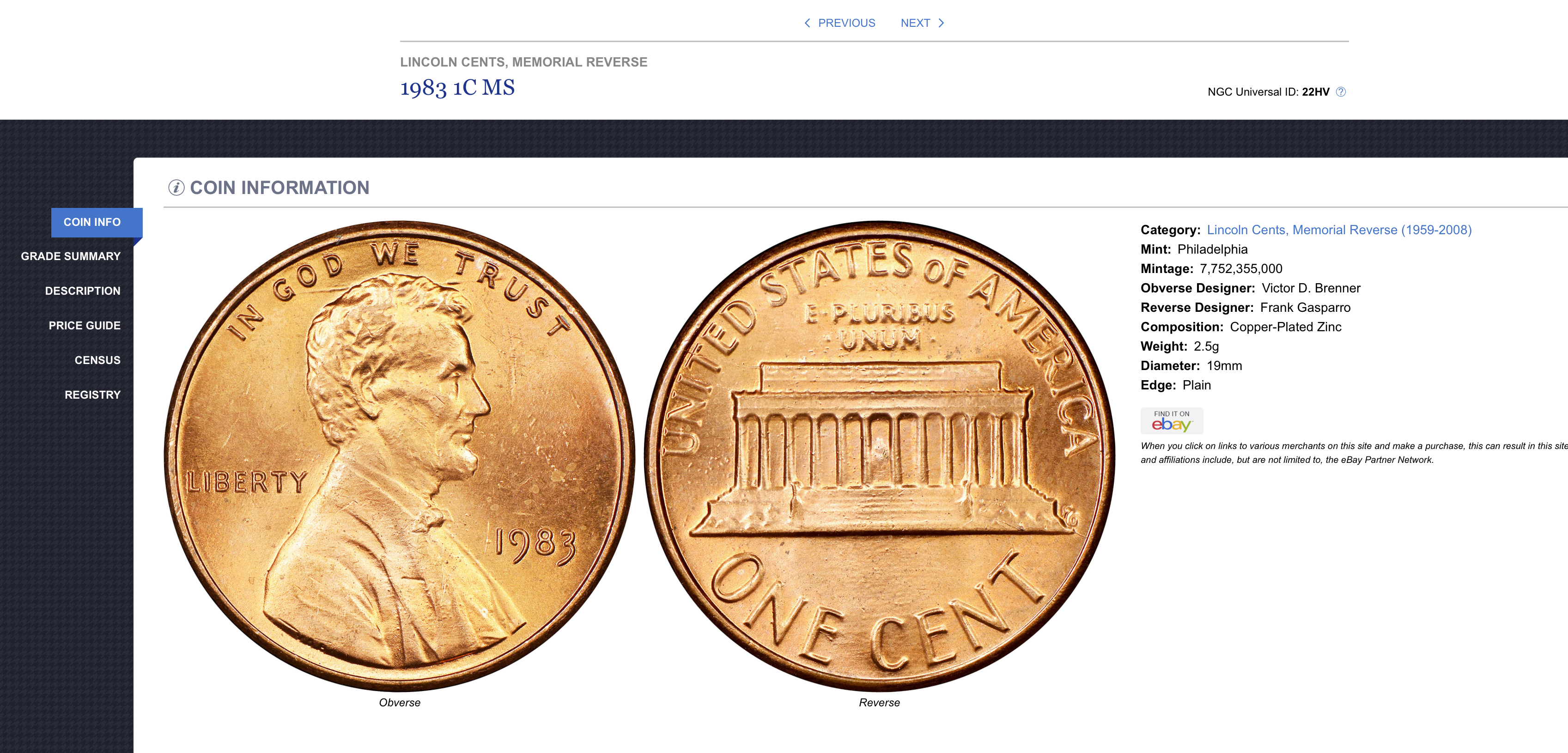
The 2.5 g is the default for the type. They don't weigh and enter individual weights.
All comments reflect the opinion of the author, even when irrefutably accurate.
I would have used a popsicle stick. Much more accurate.
Thank you to everyone who shared their opinions in this chat. I am grateful to every participant for their comments, which will serve as a source of new information for me and contribute to building my experience in numismatics. I would like to share some important news: an article about this coin has been published in both the print and upcoming online editions of Coin World.
I sent them a request today and want to receive an answer to the question.
Coming Soon to HERITAGE Auction!
Yippee. Buy the label not the coin.
Unanswered questions remain that a test could answer, but there is too much downside so let's get it to auction! 🤑🤑🤑
Belongs on the BST
All comments reflect the opinion of the author, even when irrefutably accurate.
At the risk of repeating myself, "WHAT IS THE SPECIFIC GRAVITY???"
You'll have to ask the new owner. This one doesn't care as long as he gets paid.
All comments reflect the opinion of the author, even when irrefutably accurate.
@Mfield what if any responsibility does Heritage have to verify this before it is auctioned?
My Collection of Old Holders
Never a slave to one plastic brand will I ever be.
To verify a PCGS opinion? That's opening up a box, Pandora.
All comments reflect the opinion of the author, even when irrefutably accurate.
I do not know the law, but I can imagine comments from this thread being read out loud in a court of law, as were comments from another thread in the trial over the return of the Langbord 1933 $20's.
From the 2017 cent thread:
And from earlier in this thread:
My Collection of Old Holders
Never a slave to one plastic brand will I ever be.
I'm not saying they shouldn't verify it. I'm a little concerned about making it their "responsibility".
All comments reflect the opinion of the author, even when irrefutably accurate.
How do you verify it without cracking it out of the slab and doing a specific gravity test? Was that done with the coin in the 2017 thread?
It was going back to PCGS, I think, for verification. But that was all done AFTER the sale.
Breaking it out is one problem. The other is interfering with the sale. Everyone will ignore it, because it's GC, but they didn't pull it from the sale. They waited till it sold and then contacted the new buyer and PCGS. I can't say for sure why, but I would bet it's because they are making it PCGS's responsibility.
PCGS will not pay the original submitter if there's an error. They will, however, pay the new buyer. That's the whole reason the OP isn't trying to verify it. He wants to get paid and if PCGS corrects the mistake, he gets nothing. [Assuming it is a mistake. ]
All comments reflect the opinion of the author, even when irrefutably accurate.
Well, as long as everybody gets paid, I guess.
And what do you think could explain the 2.87 g weight on a 1983 cent?
Copper plated comes to mind. There's really not much more to say about this piece until it gets a specific gravity test.
Einstein’s view of God was non-traditional and pantheistic, focusing on the harmony, order, and intelligibility of the cosmos rather than a personal deity. His quotes reveal a profound respect for the universe’s mysteries, a belief in rational laws, and a moral philosophy grounded in compassion and understanding, bridging science and spirituality.
“My religion consists of a humble admiration of the illimitable superior spirit who reveals himself in the slight details we are able to perceive with our frail and feeble mind.”
Albert Einstein (14 March 1879--18 April 1955)
In your opinion when does doing the right thing and responsibility intersect? Or again in your opinion is there no point where doing the right thing and responsibility intersect?
I don't think that what I've asked is groundbreaking, while I do not have an example right off hand, in the past auction houses have pulled lots prior to the sale if there are serious concerns, even ebay. I think there are legitimate concerns over what this is vs what PCGS has determined, as such it seems prudent to fully verify what testing was (and was not) done before auctioning off this item. Apparently it has been reported in the 2017 cent thread that the cert for that coin is now inactive. That may only mean that a new cert was issued without any change to the status of the coin, or it could be that the status was changed as a result of further testing. Hopefully @ianrussell will be able to provide an update on what happened.
My Collection of Old Holders
Never a slave to one plastic brand will I ever be.
After reading this thread, I have decided to weigh all cents dated after 1982, just in case there is another overweight one around.

I don't think that you can do a specific gravity test while the coin is in a holder.
Justin Couch just made a video about this very coin:
 https://www.youtube.com/watch?v=GXnytm81KJ0
It would have to be quite thick> @rec78 said:
You cannot. But it wasn't in the holder when PCGS had it. And it seems they MAY have changed their mind about the 2017 one of the same weight after reviewing it.
All comments reflect the opinion of the author, even when irrefutably accurate.
A while back buried in a thread there was an informative post about what the PCGS guarantee covers.
If I recall right, there is no guarantee for submitters, instead just the future buyer gets the guarantee. Other things like grading limits, time limits capped I found interesting but I would be foolish to recall all that text.
I own several slabbed PCGS error coins as they arrived encapsulated, just like my NGC and ANACS purchases got delivered. I've never submitted a coin so I am uninformed.
It would be great if someone could enlighten me/us about what PCGS covers and their limits.
Thank You !
Lindy
I sent request to PCGS and they replied with: "Looking over order, we do not see that you requested the metal composition test.
If you would like that information, you are welcome to resubmit the item and request the metal composition test, which will be a $299 service fee."
I am not opposed to any additional appraisal. However, let’s be reasonable. If an auction house casts doubt on the valuation provided by a leading expert in the field, it thereby casts doubt on every single item that expert has ever authenticated and sold. As I see it: if you have doubts, don’t buy; but if you do buy, you must fully acknowledge and accept all the risks inherent in the transaction. Amen.
PCGS did not provide a "valuation" - they graded the coin. If additional services were not paid for then they did not provide them. Furthermore, an error or oversight on their part does not cast doubt on every coin they've ever authenticated.
You are aware that there are serious and credible doubts about what is in that holder, yet you are apparently perfectly happy to put the responsibility on others. That is certainly a more convenient (and profitable) approach.
I will make one prediction: the other cent and this one will cause the get-rich-quick crowd to weigh every coin and try to get the next example of this supposed double error (bronze planchet, but underweight).
Thanks for the answer. I shut the video vay before sending in to be graded. My scale showed 3.0g.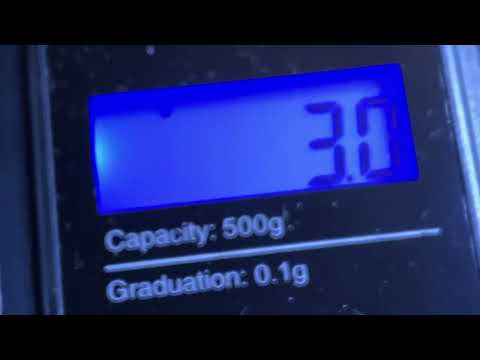 https://www.youtube.com/watch?v=pt6XHcjfQC0
Thanks for sharing it!
pay $299 to double check their work? lol
Who said anything about any appraisal? Do you not know the difference between a TPG grade and an appraisal?
That is useless, you have to have a scale that reads to 2 decimal places to have an accurate weight.
My Collection of Old Holders
Never a slave to one plastic brand will I ever be.