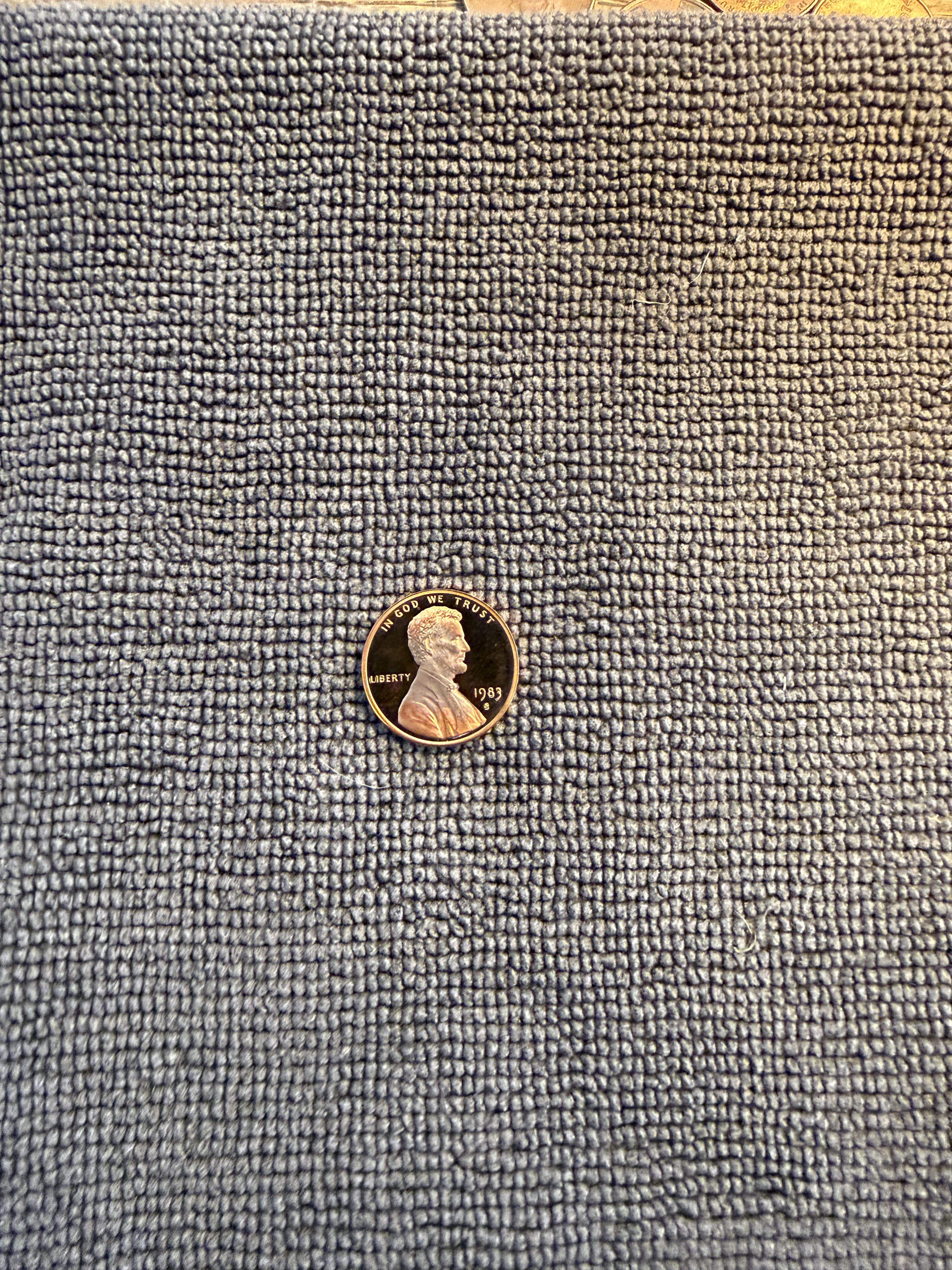
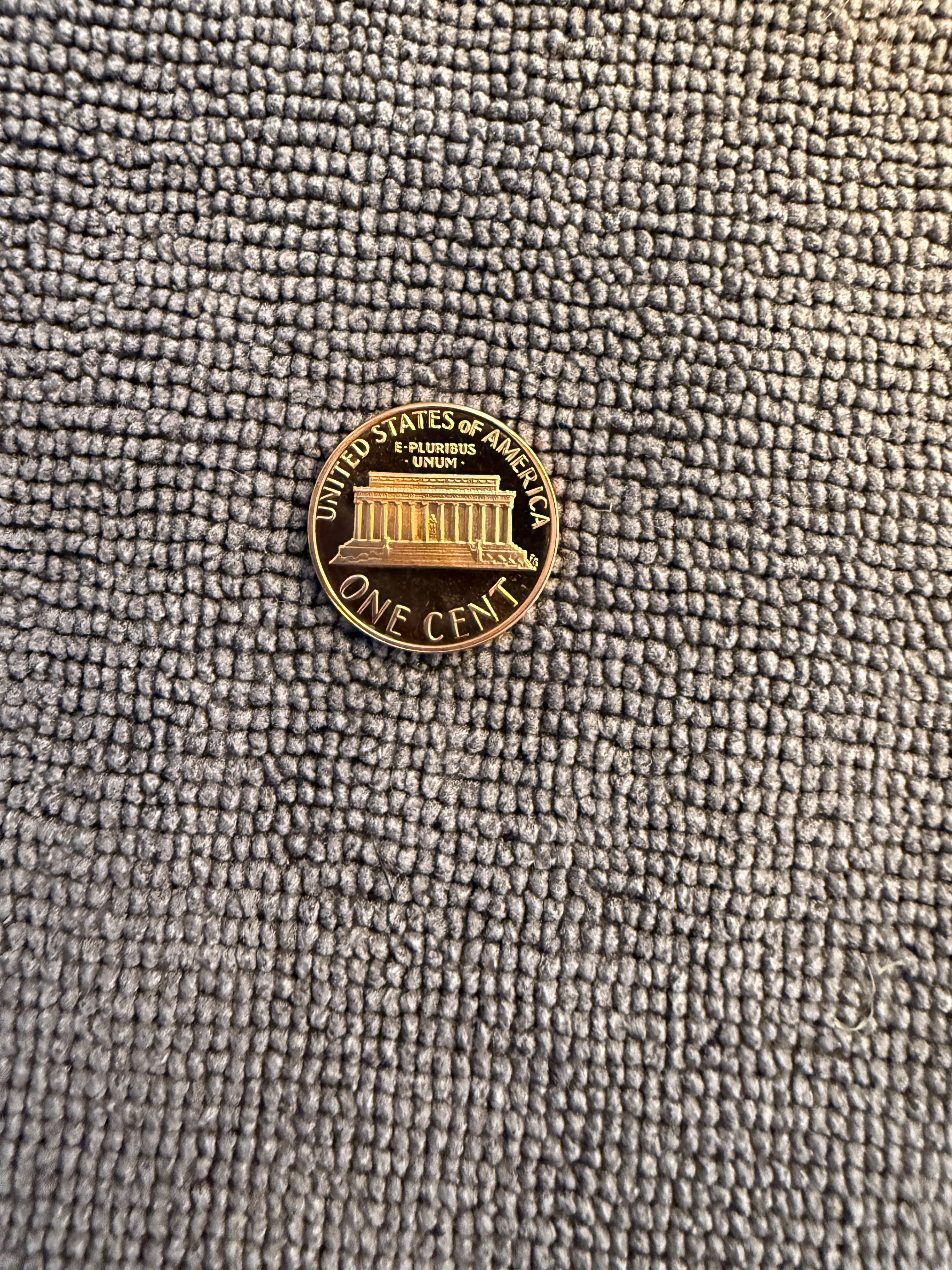
I already know what a proof coin is. I'm referring to the errors. Being a jerk a to others must make you feel like tough guy huh? Your comments imply you are angry miserable person in life. Go find someone else to be a jerk to. I would love to meet you in person bud.
There are no errors. Maybe some strike doubling, but that's not an "error".
All comments reflect the opinion of the author, even when irrefutably accurate.
He did not say there were errors, just that it was cool looking.
And he is right - a proof coin looks quite different from a regular circulation coin (as you know).
[EDIT:] Oops, yes, in a later post he said there were errors. I was wrong.
He did not say there were errors, just that it was cool looking.
And he is right - a proof coin looks quite different from a regular circulation coin (as you know).
He did later say there were errors
All comments reflect the opinion of the author, even when irrefutably accurate.
There's nothing wrong with asking about a coin.
Unfortunately its a proof. Many were made. Might be cool to hang on to it.
Btw you did come to the right place to ask your question.
Student of numismatics and collector of Morgan dollars
Successful BST transactions with: Namvet Justindan Mattniss RWW olah_in_MA
Dantheman984 Toyz4geo SurfinxHI greencopper RWW bigjpst bretsan MWallace logger7 JWP BruceS bigjpst
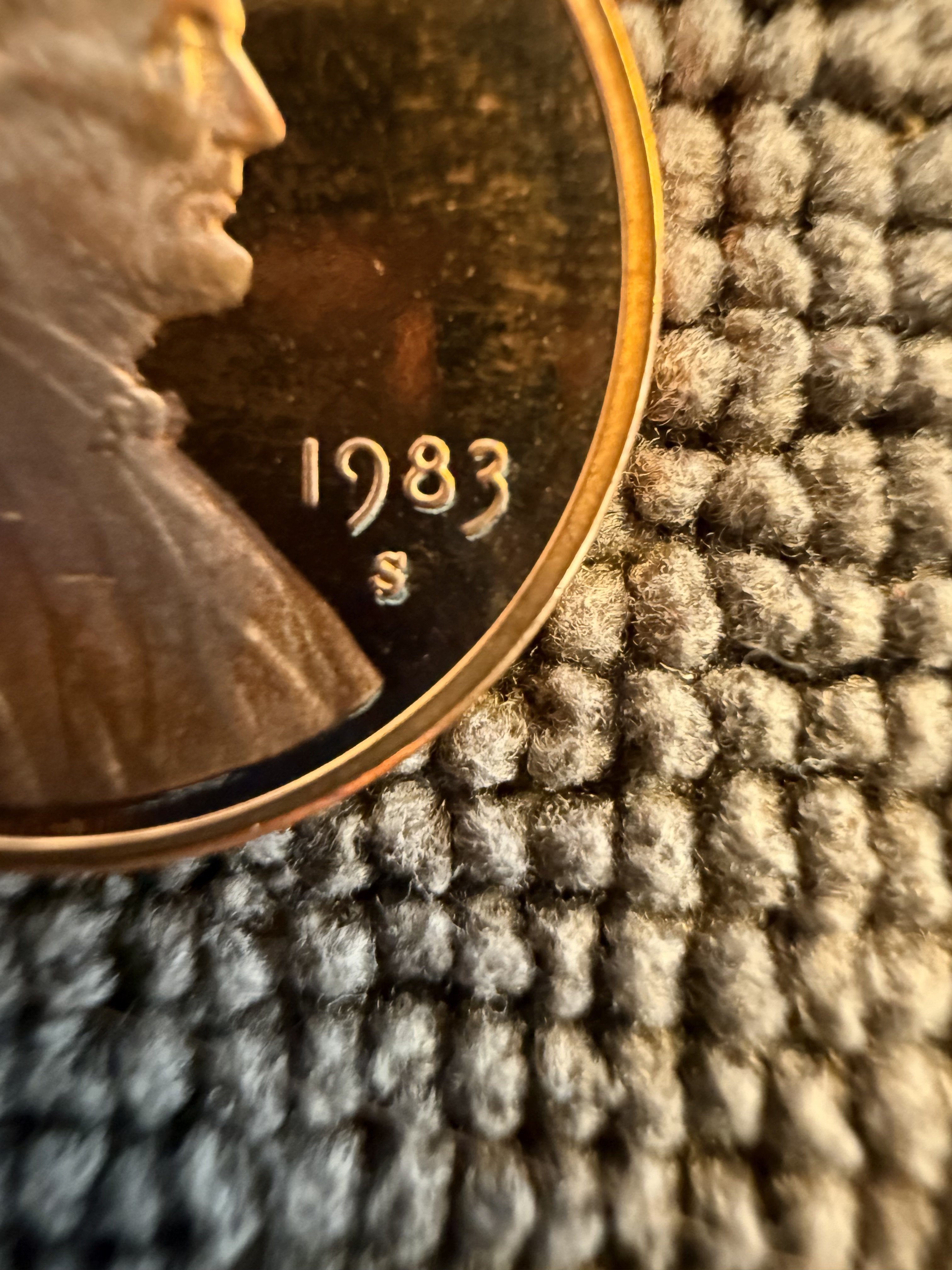
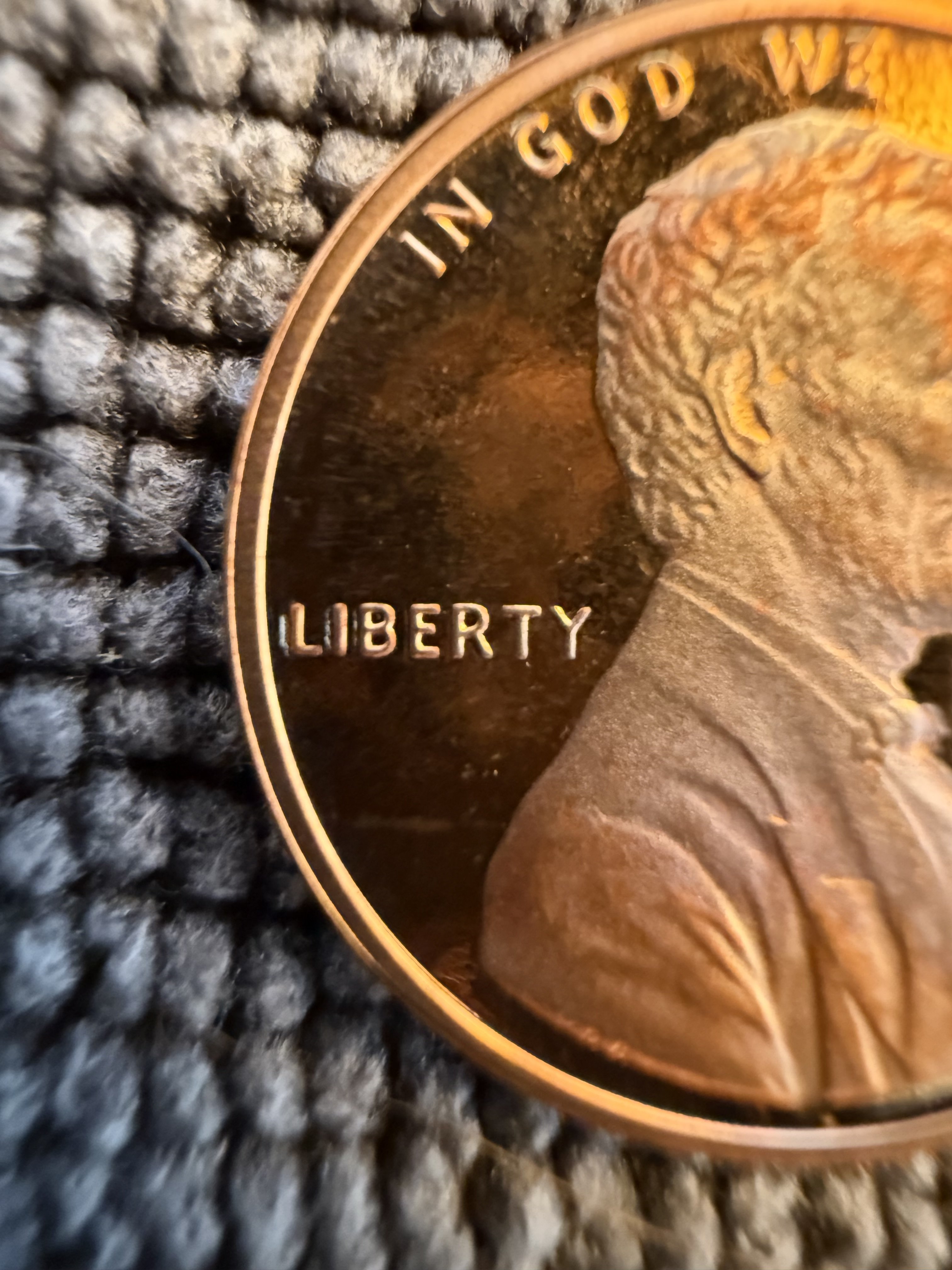
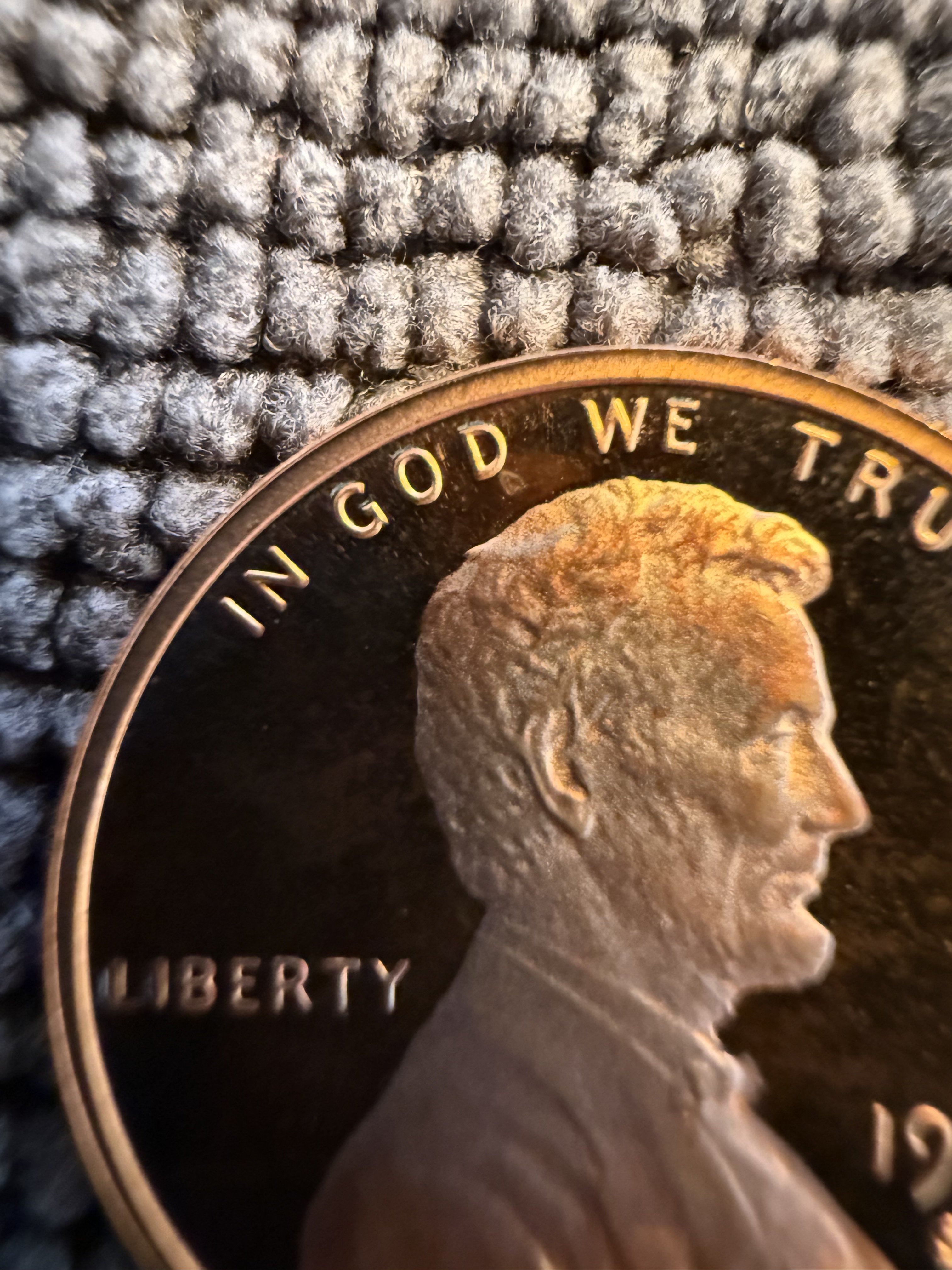
The rim at the bottom looks rounded if you zoom in. Then it flattens out after it passes Lincoln. Then the slight doubling on the 9, 8, 3 and s. Also, on the L and I in Liberty. Then above the letters in GOD. I'm just here to learn without people being so angry or hostile about wanting to learn.
@PeacockSteve said:
The rim at the bottom looks rounded if you zoom in. Then it flattens out after it passes Lincoln. Then the slight doubling on the 9, 8, 3 and s. Also, on the L and I in Liberty. Then above the letters in GOD. I'm just here to learn without people being so angry or hostile about wanting to learn.
There is no doubling, just reflections and the white you see is the zinc core showing because the copper plating split when it was struck. Soon zinc rot will set in and those white areas will turn black. This is not what a cool coin looks like this is what junk looks like.
The rim at the bottom looks rounded if you zoom in. Then it flattens out after it passes Lincoln. Then the slight doubling on the 9, 8, 3 and s. Also, on the L and I in Liberty. Then above the letters in GOD. I'm just here to learn without people being so angry or hostile about wanting to learn.
What you are seeing that you think is doubling is where the plating has split, exposing the zinc. It was mentioned in a couple of posts that there is split plating, no error.
@PeacockSteve said:
I'm just here to learn without people being so angry or hostile about wanting to learn.
I suspect you'd get a more favorable response if you describe what you think you're seeing, rather than open with "Is this anything special? Its cool looking."
@PeacockSteve said:
I'm just here to learn without people being so angry or hostile about wanting to learn.
I suspect you'd get a more favorable response if you describe what you think you're seeing, rather than open with "Is this anything special? Its cool looking."
Just trying to help. People come here all the time to find out about their "errors", without telling anyone what they think the error on their coin is. How can you offer an opinion when you don't know what the poster is asking for help with?
@MasonG said:
Just trying to help. People come here all the time to find out about their "errors", without telling anyone what they think the error on their coin is. How can you offer an opinion when you don't know what the poster is asking for help with?
That might be die erosion doubling. It's more of a shadow-looking effect than mechanical/machine doubling. I'd put it in the same category though, no demand for it.
@lermish said:
Best advice is to stop looking at (and showing us) random pocket change.
Learn what to look for first and then show it to the board. You are reaching conclusions first and then looking for justifications to get you there.
You have seen how that process has gone and, so far, have demonstrated that you've learned absolutely nothing.
::Insert Office Space "Jump To Conclusions mat" meme from @Morgan White::
THIS!
I say this to every new error hunter and every single one has ignored the advice. But, I'll try it again:
99.9999999% of all anomalies on coins are not errors. The number of errors is small and well-known. Looking for anomalies and then trying to ask if they are errors is a waste of everyone's time. Start by studying the known error types and the minting process. Once you can identify the known error types, your coin hunting will be much more efficient and you won't be guessing.
All comments reflect the opinion of the author, even when irrefutably accurate.
"99.9999999% of all anomalies on coins are not errors."
That means 00.0000001% are errors. Out of trillions of coins minted that would mean several hundred or even several thousands are errors.
I think PC Steve should continue his quest to be the one that locates one of them and continue to show them here for our approval (not likely) or disapproval (extremely likely).
99.9999999% of all anomalies on coins are not errors. The number of errors is small and well-known. Looking for anomalies and then trying to ask if they are errors is a waste of everyone's time. Start by studying the known error types and the minting process. Once you can identify the known error types, your coin hunting will be much more efficient and you won't be guessing.
I agree with this. I searched some 50,000 pennies from the bank a few years ago. That's about 20 boxes of $25 in pennies. It was something to do while I avoided going places during the Covid pandemic. I know what to look for in errors as I see them listed in the Redbook which has pictures of some of them. Out of 50,000 coins searched I found one Indian Head penny. About 10-15 wheat cents found in each $25 box. Nothing special, just common '40s and '50s dates. NO, NADA, ZERO varieties found. Maybe I missed a few low dollar ones but I can guarantee you all there was not a single 1969-S DDO in those 1000 rolls of pennies I searched. I wasn't being greedy all I wanted was one '69-S DDO. Is that too much to ask?
"Compassionate people are geniuses in the art of living, more necessary to the dignity, security, and joy of humanity than the discoverers of knowledge."
Nobody has bothered to tell you that there are free internet sites that you can search dates and mint marks to see if you have an error.
VarietyVista.com
Coppercoins.com
Check them out.
Good luck and keep hunting. I'm quite certain that 90% of those on this board have gone through the phase of error searching common coins.
bob
Registry: CC lowballs (boblindstrom), bobinvegas1989@yahoo.com
That might be die erosion doubling. It's more of a shadow-looking effect than mechanical/machine doubling. I'd put it in the same category though, no demand for it.
Coppercoins.com. Amazing what Daughtrey has done there. The place to go for learning about Lincoln penny varieties imo.
"Compassionate people are geniuses in the art of living, more necessary to the dignity, security, and joy of humanity than the discoverers of knowledge."
@RedRocket said:
"99.9999999% of all anomalies on coins are not errors."
That means 00.0000001% are errors. Out of trillions of coins minted that would mean several hundred or even several thousands are errors.
I think PC Steve should continue his quest to be the one that locates one of them and continue to show them here for our approval (not likely) or disapproval (extremely likely).
lol. Sure. But 99% of all the big errors never get into mint bags in the first place. So you're down to 1% of your 0.000000001%. And, of course, not every coin has an anomaly, so you are down to 1% of the 1% of the 0.00000000001%. And then there's the fact that you are trying to find something when you don't know what it looks like... That puts your odds on par with actually spotting Bigfoot.
All comments reflect the opinion of the author, even when irrefutably accurate.
I've been through a couple hundred thousand nickels, and in regard to errors, I found a couple minor cuds worth saving, a very minor clip or two, and some minor chipped dies. None of those are worth more than a few dollars each.
I did find one spectacular error coin, a double struck nickel worth a few thousand dollars or more, but that was a billions-to-one chance.
Searching coins can be relaxing or fun, but if your time could or should have been spent doing something else, then it's not the least bit profitable. And if you are going to look for errors you must know what you are looking for and speed is important. Agonizing over every strange-looking coin makes it a futile effort, unless it is a learning experience where the lessons are learned quickly.
@RedRocket said:
"99.9999999% of all anomalies on coins are not errors."
That means 00.0000001% are errors. Out of trillions of coins minted that would mean several hundred or even several thousands are errors.
I think PC Steve should continue his quest to be the one that locates one of them and continue to show them here for our approval (not likely) or disapproval (extremely likely).
lol. Sure. But 99% of all the big errors never get into mint bags in the first place. So you're down to 1% of your 0.000000001%. And, of course, not every coin has an anomaly, so you are down to 1% of the 1% of the 0.00000000001%. And then there's the fact that you are trying to find something when you don't know what it looks like... That puts your odds on par with actually spotting Bigfoot.
@RedRocket said:
"99.9999999% of all anomalies on coins are not errors."
That means 00.0000001% are errors. Out of trillions of coins minted that would mean several hundred or even several thousands are errors.
I think PC Steve should continue his quest to be the one that locates one of them and continue to show them here for our approval (not likely) or disapproval (extremely likely).
lol. Sure. But 99% of all the big errors never get into mint bags in the first place. So you're down to 1% of your 0.000000001%. And, of course, not every coin has an anomaly, so you are down to 1% of the 1% of the 0.00000000001%. And then there's the fact that you are trying to find something when you don't know what it looks like... That puts your odds on par with actually spotting Bigfoot.
The single issue with this analogy is error coins are real and Big Foot is not.
@RedRocket said:
"99.9999999% of all anomalies on coins are not errors."
That means 00.0000001% are errors. Out of trillions of coins minted that would mean several hundred or even several thousands are errors.
I think PC Steve should continue his quest to be the one that locates one of them and continue to show them here for our approval (not likely) or disapproval (extremely likely).
lol. Sure. But 99% of all the big errors never get into mint bags in the first place. So you're down to 1% of your 0.000000001%. And, of course, not every coin has an anomaly, so you are down to 1% of the 1% of the 0.00000000001%. And then there's the fact that you are trying to find something when you don't know what it looks like... That puts your odds on par with actually spotting Bigfoot.
The single issue with this analogy is error coins are real and Big Foot is not.
Actually, you can't prove that.
All comments reflect the opinion of the author, even when irrefutably accurate.
@RedRocket said:
"99.9999999% of all anomalies on coins are not errors."
That means 00.0000001% are errors. Out of trillions of coins minted that would mean several hundred or even several thousands are errors.
I think PC Steve should continue his quest to be the one that locates one of them and continue to show them here for our approval (not likely) or disapproval (extremely likely).
lol. Sure. But 99% of all the big errors never get into mint bags in the first place. So you're down to 1% of your 0.000000001%. And, of course, not every coin has an anomaly, so you are down to 1% of the 1% of the 0.00000000001%. And then there's the fact that you are trying to find something when you don't know what it looks like... That puts your odds on par with actually spotting Bigfoot.
The single issue with this analogy is error coins are real and Big Foot is not.
Comments
Yes, you did.
It's a proof.
I can't really tell. It's too close - can you take some photos of the coin a little farther away?
It's a toned proof coin. Better than spending money, but not a lot of value.
All comments reflect the opinion of the author, even when irrefutably accurate.
looks like the creamy zinc candy center is showing
spend it before it disappears
I already know what a proof coin is. I'm referring to the errors. Being a jerk a to others must make you feel like tough guy huh? Your comments imply you are angry miserable person in life. Go find someone else to be a jerk to. I would love to meet you in person bud.
I found it in a proof set bud.
There are no errors. Maybe some strike doubling, but that's not an "error".
All comments reflect the opinion of the author, even when irrefutably accurate.
It is not worth more than $1, unfortunately.
So probably not worth the effort of trying to sell it.
You can look it up in this price guide - it is a 1983-S proof, grade is possibly AU-55.
So it is worth less than a 1983-S RD Deep Cameo MS-60, which is shown as $1.50 .
https://www.numismedia.com/rarecoinprices/cgi/usrarecoinvalues.cgi?script=lnccntpr&searchtype=any&searchtext=fmv&search5b=any&proof=b
Thank you
what errors do you see?
He did not say there were errors, just that it was cool looking.
And he is right - a proof coin looks quite different from a regular circulation coin (as you know).
[EDIT:] Oops, yes, in a later post he said there were errors. I was wrong.
He did later say there were errors
All comments reflect the opinion of the author, even when irrefutably accurate.
No
There's nothing wrong with asking about a coin.
Unfortunately its a proof. Many were made. Might be cool to hang on to it.
Btw you did come to the right place to ask your question.
Student of numismatics and collector of Morgan dollars
Successful BST transactions with: Namvet Justindan Mattniss RWW olah_in_MA
Dantheman984 Toyz4geo SurfinxHI greencopper RWW bigjpst bretsan MWallace logger7 JWP BruceS bigjpst
The rim at the bottom looks rounded if you zoom in. Then it flattens out after it passes Lincoln. Then the slight doubling on the 9, 8, 3 and s. Also, on the L and I in Liberty. Then above the letters in GOD. I'm just here to learn without people being so angry or hostile about wanting to learn.
As was mentioned, it has split plating on the obverse. Not ideal...
Just remember...the advice you receive on the site is worth every bit of what you paid for it.
The apparent doubling in 83 S is probably just the reflection in the fields.
You can probably confirm this if you take a photo from an angle above the date instead of below it.
That's all good. They're not angry...just having some fun. Pics of coins gets monotonous quite rapidly.
Just remember...the advice you receive on the site is worth every bit of what you paid for it.
There is no doubling, just reflections and the white you see is the zinc core showing because the copper plating split when it was struck. Soon zinc rot will set in and those white areas will turn black. This is not what a cool coin looks like this is what junk looks like.
My Collection of Old Holders
Never a slave to one plastic brand will I ever be.
What you are seeing that you think is doubling is where the plating has split, exposing the zinc. It was mentioned in a couple of posts that there is split plating, no error.
- Bob -

MPL's - Lincolns of Color
Central Valley Roosevelts
I suspect you'd get a more favorable response if you describe what you think you're seeing, rather than open with "Is this anything special? Its cool looking."
Alrighty then
ideally, a proof coin would have a nice flat and squared rim all the way around
my guess is that the rim did not fully form because it was struck slightly off center
Just trying to help. People come here all the time to find out about their "errors", without telling anyone what they think the error on their coin is. How can you offer an opinion when you don't know what the poster is asking for help with?
I understand
Is this machine doubling ?
That might be die erosion doubling. It's more of a shadow-looking effect than mechanical/machine doubling. I'd put it in the same category though, no demand for it.
Collector, occasional seller
Thank you
those pics aren't good enough to tell
straight on, in-focus, not as harsh lighting
Best advice is to stop looking at (and showing us) random pocket change.
Learn what to look for first and then show it to the board. You are reaching conclusions first and then looking for justifications to get you there.
You have seen how that process has gone and, so far, have demonstrated that you've learned absolutely nothing.
::Insert Office Space "Jump To Conclusions mat" meme from @Morgan White::
chopmarkedtradedollars.com
Dear P.C. Steve,
You have enough common sense to know your coin is a common cent.
Regards,
Red R.
THIS!
I say this to every new error hunter and every single one has ignored the advice. But, I'll try it again:
99.9999999% of all anomalies on coins are not errors. The number of errors is small and well-known. Looking for anomalies and then trying to ask if they are errors is a waste of everyone's time. Start by studying the known error types and the minting process. Once you can identify the known error types, your coin hunting will be much more efficient and you won't be guessing.
All comments reflect the opinion of the author, even when irrefutably accurate.
"99.9999999% of all anomalies on coins are not errors."
That means 00.0000001% are errors. Out of trillions of coins minted that would mean several hundred or even several thousands are errors.
I think PC Steve should continue his quest to be the one that locates one of them and continue to show them here for our approval (not likely) or disapproval (extremely likely).
99.9999999% of all anomalies on coins are not errors. The number of errors is small and well-known. Looking for anomalies and then trying to ask if they are errors is a waste of everyone's time. Start by studying the known error types and the minting process. Once you can identify the known error types, your coin hunting will be much more efficient and you won't be guessing.
I agree with this. I searched some 50,000 pennies from the bank a few years ago. That's about 20 boxes of $25 in pennies. It was something to do while I avoided going places during the Covid pandemic. I know what to look for in errors as I see them listed in the Redbook which has pictures of some of them. Out of 50,000 coins searched I found one Indian Head penny. About 10-15 wheat cents found in each $25 box. Nothing special, just common '40s and '50s dates. NO, NADA, ZERO varieties found. Maybe I missed a few low dollar ones but I can guarantee you all there was not a single 1969-S DDO in those 1000 rolls of pennies I searched. I wasn't being greedy all I wanted was one '69-S DDO. Is that too much to ask?
"Compassionate people are geniuses in the art of living, more necessary to the dignity, security, and joy of humanity than the discoverers of knowledge."
Albert Einstein (14 March 1879--18 April 1955)
Nobody has bothered to tell you that there are free internet sites that you can search dates and mint marks to see if you have an error.
VarietyVista.com
Coppercoins.com
Check them out.
Good luck and keep hunting. I'm quite certain that 90% of those on this board have gone through the phase of error searching common coins.
bob
Thank you
I think I’m just going to go back to making my gourmet pasta sauce, everyone loved it.
I’m going to finish going through these coins and spend them.
Coppercoins.com. Amazing what Daughtrey has done there. The place to go for learning about Lincoln penny varieties imo.
"Compassionate people are geniuses in the art of living, more necessary to the dignity, security, and joy of humanity than the discoverers of knowledge."
Albert Einstein (14 March 1879--18 April 1955)
Here we go again!
Micah Langford - https://www.oldglorycoinsandcurrency.com/
lol. Sure. But 99% of all the big errors never get into mint bags in the first place. So you're down to 1% of your 0.000000001%. And, of course, not every coin has an anomaly, so you are down to 1% of the 1% of the 0.00000000001%. And then there's the fact that you are trying to find something when you don't know what it looks like... That puts your odds on par with actually spotting Bigfoot.
All comments reflect the opinion of the author, even when irrefutably accurate.
I've been through a couple hundred thousand nickels, and in regard to errors, I found a couple minor cuds worth saving, a very minor clip or two, and some minor chipped dies. None of those are worth more than a few dollars each.
I did find one spectacular error coin, a double struck nickel worth a few thousand dollars or more, but that was a billions-to-one chance.
Searching coins can be relaxing or fun, but if your time could or should have been spent doing something else, then it's not the least bit profitable. And if you are going to look for errors you must know what you are looking for and speed is important. Agonizing over every strange-looking coin makes it a futile effort, unless it is a learning experience where the lessons are learned quickly.
back to the proof cent
looking at both sides, it appears both sides aren't centered on the blank. that would be an off center strike, but it isn't even worth looking at.
this is the type of off center strike that gets people's attention
https://coins.ha.com/itm/errors/1924-s-1c-lincoln-cent-struck-30-off-center-ms65-brown-ngc/a/1175-5313.s?ic4=ListView-ShortDescription-071515
you can search "error" in their search box and get an idea of what different types of errors look like and how valuable they are
The single issue with this analogy is error coins are real and Big Foot is not.
Actually, you can't prove that.
All comments reflect the opinion of the author, even when irrefutably accurate.
We'll have to agree to disagree.