1983 Lincoln Cent – Defective Bronze Planchet. NGC VS PCGS.
 CoinOM
Posts: 58 ✭
CoinOM
Posts: 58 ✭
I WANTED TO SHARE AN INTERESTING EXPERIENCE AND GET SOME OPINIONS FROM THE COMMUNITY.
While doing a routine search through Lincoln cents (something I often record on my YouTube channel), I came across a 1983 cent that immediately caught my attention.
The first thing that stood out was the weight: about 2.87 grams.
As most collectors know, normal 1983 cents are copper-plated zinc and should weigh about 2.5 grams. The coin also had a noticeable granular texture on the reverse, which made me suspect something unusual about the metal.
Naturally, I decided to submit the coin for grading.
First submission: Numismatic Guaranty Company (NGC).
The coin came back labeled UNC Details – Obverse Scratched, with no mint error attribution. When I followed up with them, they explained that based on their standards the coin did not qualify as a mint error.
However, the weight and appearance still seemed unusual to me, so I decided to try a second opinion.
I submitted the coin to Professional Coin Grading Service (PCGS).
After their review, PCGS certified the coin as: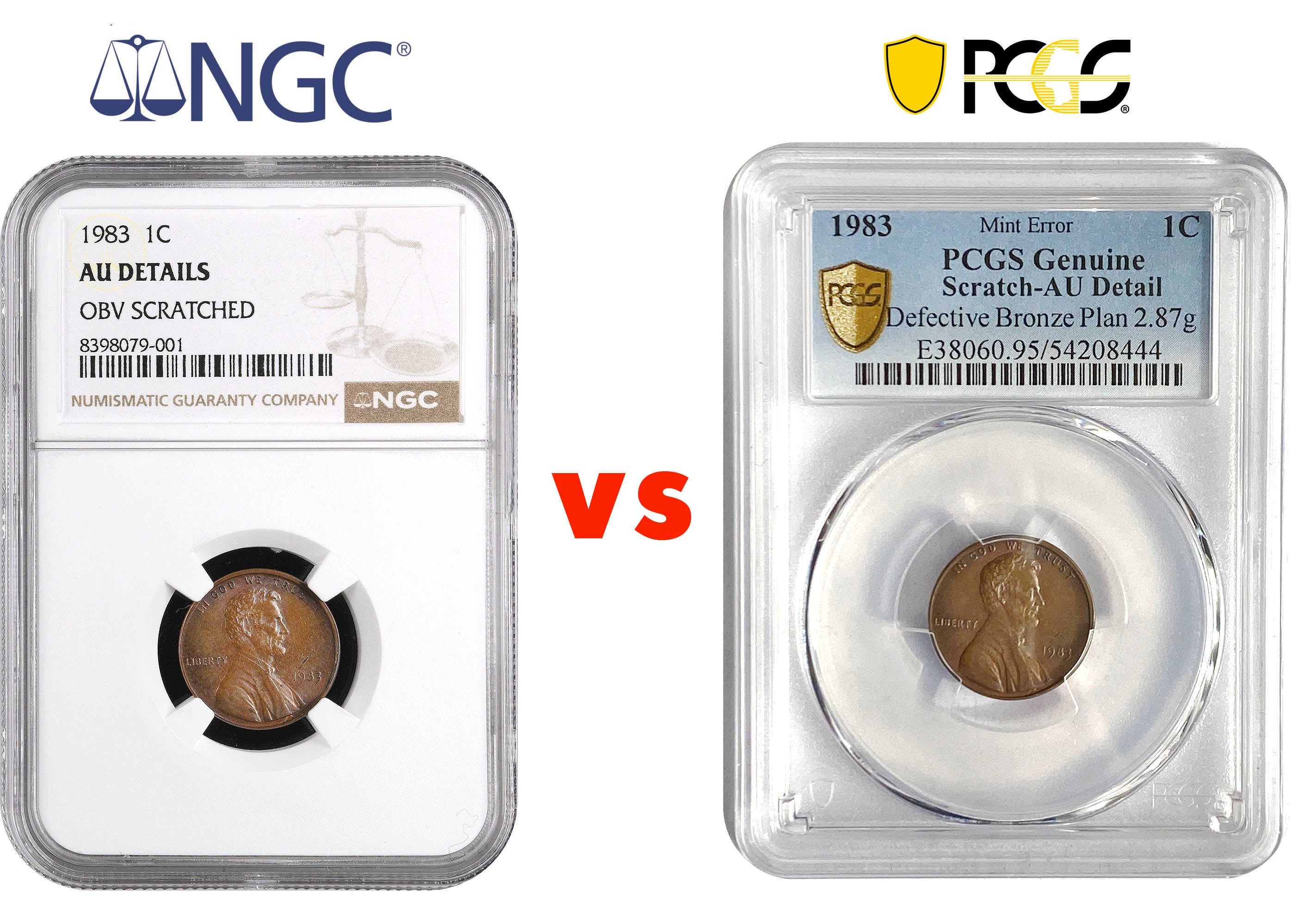
Lincoln Cent – Defective Bronze Planchet (AU Details)
So essentially the two major grading services reached different conclusions about the same coin.
I’m not posting this to criticize either company — grading and error attribution can be complex, especially with unusual metal anomalies. But I thought this case was interesting and worth sharing with other collectors.
A couple questions for the community:
• Have you ever had a coin where NGC and PCGS reached different conclusions?
• If one grading service does not attribute an error, do you ever try resubmitting it elsewhere?
• And what do you think could explain the 2.87 g weight on a 1983 cent?
Looking forward to hearing your thoughts.
Comments
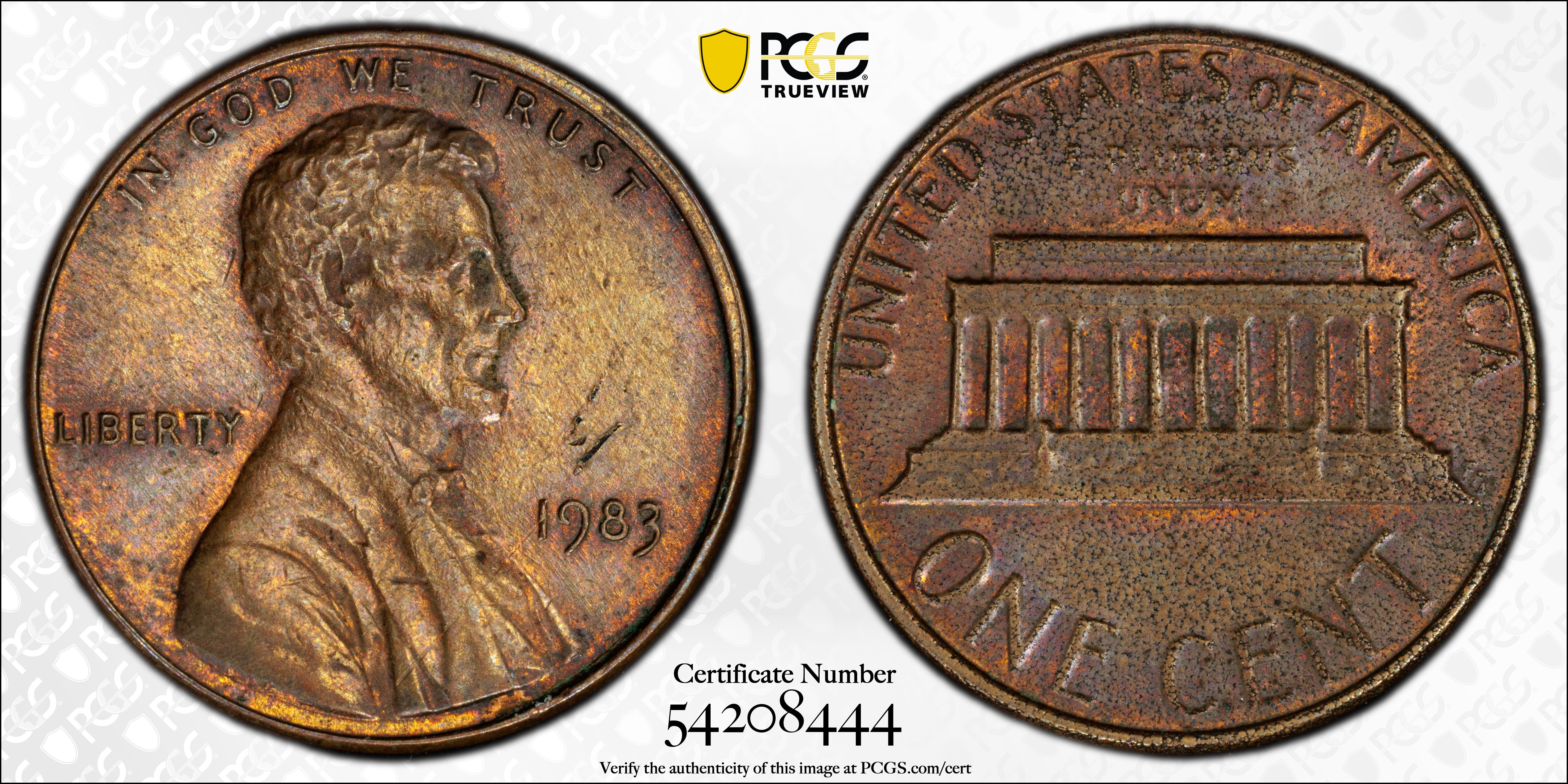
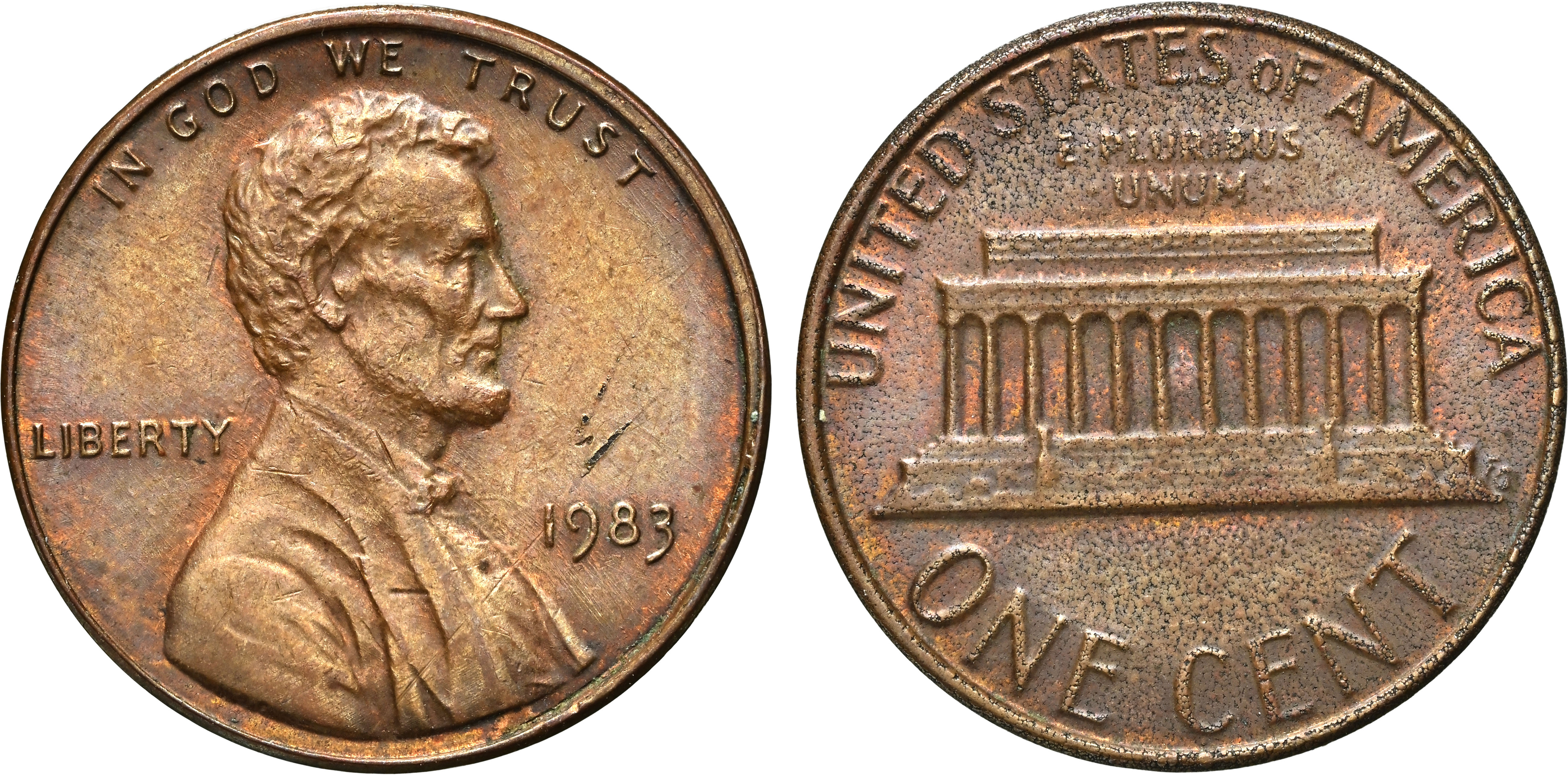
Would be nice to see the reverse.
In any case, there seems to be something missing from this story.
Did you pay for error attribution with NGC?
If PCGS recognized it as a rare bronze planchet transitional error then why wasn't that the focus on the label?
Was PCGS acknowledging that it is a transitional error but struck on a defective (split?) planchet?
Lots of mysteries. It seems like it could be a significant discovery.
I dont see any issues here. A scratch worded differently is all I see, jmo
How was the weight the first thing that stuck out to you about this cent? It's about a third of a gram heavier than expected, so you couldn't possibly have felt that in-hand, and it is also too light to be a typical bronze cent planchet.
Might it simply have a copper plating that is too thick?
In honor of the memory of Cpl. Michael E. Thompson
1983 cents are not on bronze planchets. It is not about the way the details grade is phrased.
All comments reflect the opinion of the author, even when irrefutably accurate.
We have another thread on a similar coin with exactly the same weight that just sold for $11,000
https://forums.collectors.com/discussion/1120640/2017p-lincoln-cent-amazing-find#latest
All comments reflect the opinion of the author, even when irrefutably accurate.
Wow. That's a lot. What was the verdict on the other coin? If it's just a plating issue then I don't know what to make of someone paying $11k for an example.
In honor of the memory of Cpl. Michael E. Thompson
Reverse photos would be nice anytime you present a coin, especially when you mention a feature of the reverse in your decision steps. But did you pay for attribution at NGC and at PCGS? JMO
Jim
When a man who is honestly mistaken hears the truth, he will either quit being mistaken or cease to be honest....Abraham Lincoln
Patriotism is supporting your country all the time, and your government when it deserves it.....Mark Twain
As I said in the other thread: THIS COIN NEEDS A SPECIFIC GRAVITY TEST!
If you take a normal copper-plated zinc cent and give it a heavy copper plating you can increase the weight, and give it a copper shell that ordinary metal testers might not be able to penetrate, giving the appearance of a primarily copper coin. A specific gravity test would reveal the significantly less dense zinc core.
I am not saying that this is a heavily copper-plated zinc cent. I am saying that it is unresolved until all available testing is finished.
TD
Specific gravity tutorial:
https://forums.collectors.com/discussion/842687/tutorial-on-how-to-do-specific-gravity#latest
"It's like déjà vu all over again"
@JBK Here ya go..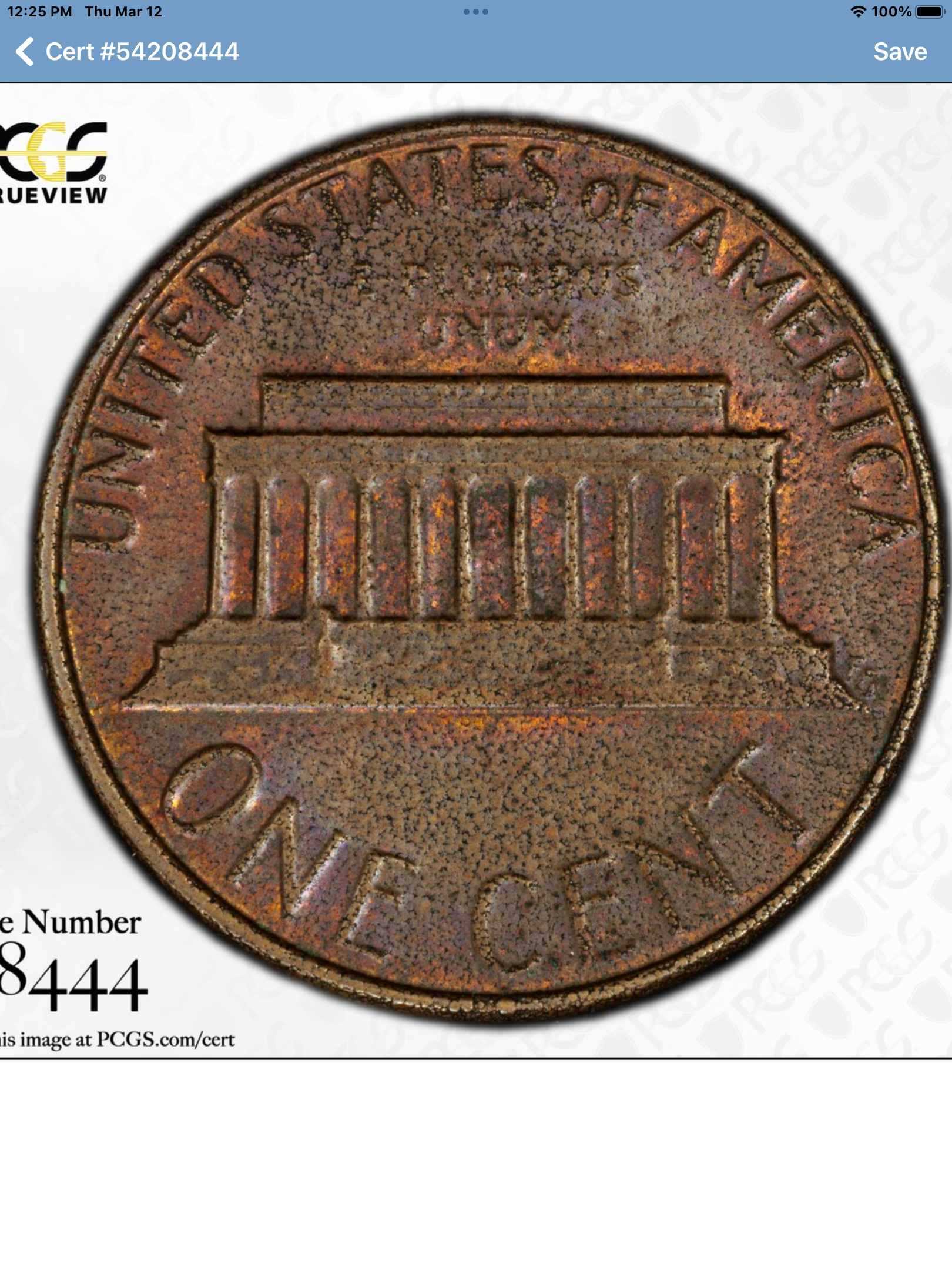
I had heard that there were i believe out there. Home work time here 👍
A test that is definitive in many cases, and woefully underused before people (and TPGs apparently) jump to extreme conclusions.
Here is the TrueView of the PCGS slab:
edit: NGC Images placed side by side:
Yes, they are out there and are legit Transitional Errors. The coin above is not one of them.
In 2024, the finest known example sold north of $29k...
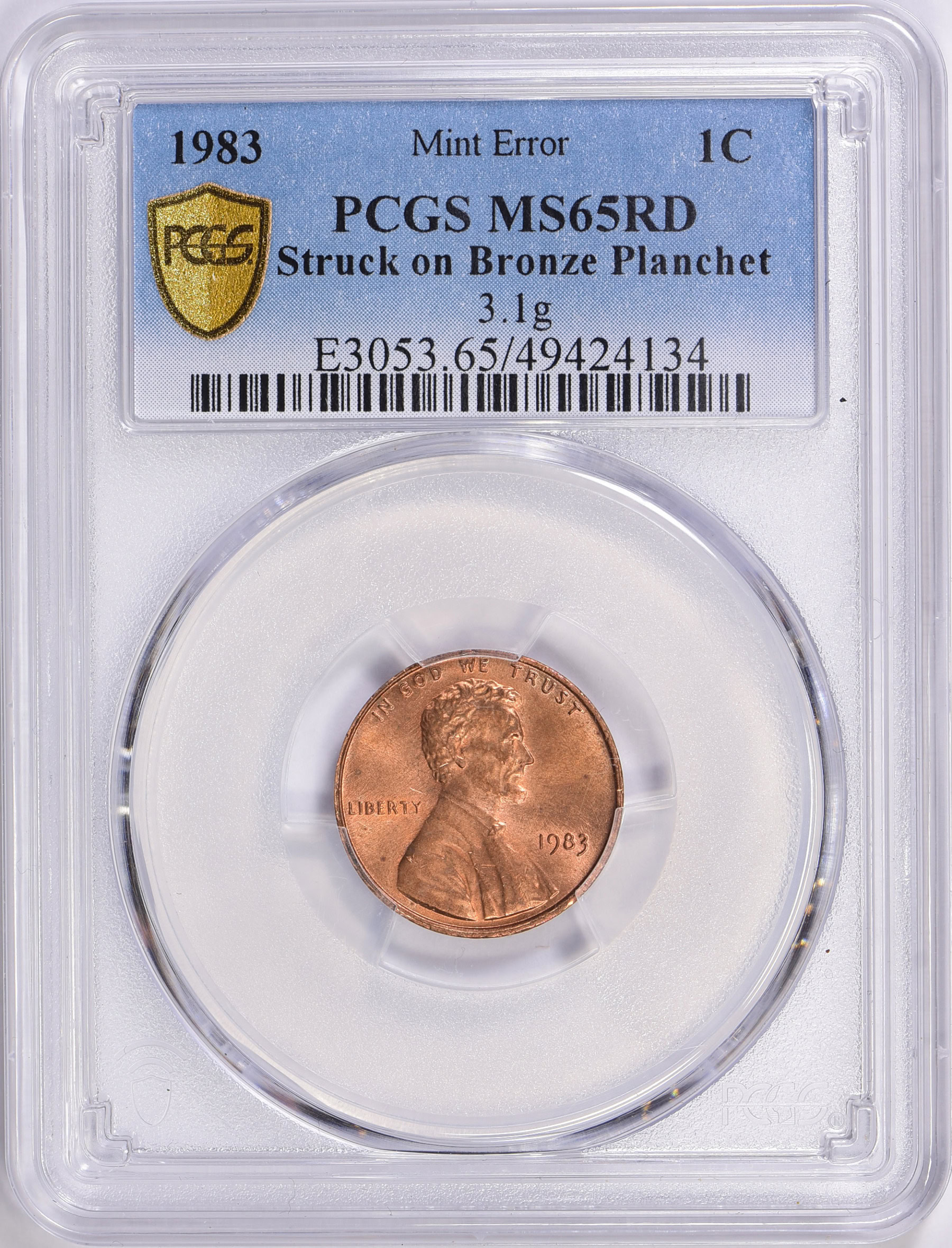
.
https://www.greatcollections.com/Coin/1607946/1983-Lincoln-Cent-Struck-on-Bronze-Planchet-31g-PCGS-MS-65-RD
.
It's interesting that they called it a damaged planchet. They noted the scratch but the reverse seems (?) to be where the planchet damage is. Would be nice to know what type of damage they thought it was.
Not trying to hijack the thread, but this is interesting. This is a 83 zinc cent with defective plating… Same Year
the black specs could be open holes in the plating thus letting the zinc corrode there
I'm well aware. But it is the same as the current coin.
All comments reflect the opinion of the author, even when irrefutably accurate.
There are transitional errors. NGC made no such designation, PCGS did. It wasn't about the scratch.
All comments reflect the opinion of the author, even when irrefutably accurate.
Yes, I did.
It just says "defective planchet"
I can only guess.
I think so. This is the first coin fund with this credentials.
Yes I payed. This is what I received from NGC when I asked them why they did not identify the error:
"Kailee S (Certified Collectibles Group)
Aug 18, 2025, 02:34 GMT-12
Hello Anatoliy.
Thank you for reaching out! I hope this message finds you well. In looking into the limited notes we have on this coin, my team determined that this coin was not a mint error based on our standards. Kindly note that coin grading is a team effort, with multiple
'NGC professionals examining every coin with the aid of advanced technology, ensuring the highest level of accuracy and consistency. With this in mind, they determined the coin did not qualify for this designation. We are very sorry for the inconvenience this may
cança
As for your second inquiry, can you kindly explain in better detail what the issue is with 8398079-001 so I may better assist you? Sadly, I did not fully understand your inquiry.
Thank vou"
You won't believe it, but after looking through thousands of coins, your hand becomes sensitive even to such insignificant weights. The weight was what first caught my attention, and I put the coin aside. The second was the color. Bronze's color is unmistakable.
I wonder if there is a specific category of errors to which this coin belongs, given that it represents a transitional error involving an incorrect planchet weight.
"I wonder if there is a specific category of errors to which this coin belongs, given that it represents a transitional error involving an incorrect planchet weight."
I wouldn't know.
I made an uneducated statement/opinion when I said "not" above. So I could be wrong.
What's interesting is the strange look with the reverse. Almost as if there was some environmental or chemical deterioration involved, thus lowering the weight?
@errormaven / Mike Diamond, any thoughts on this one?
https://forums.collectors.com/discussion/1120640/2017p-lincoln-cent-amazing-find/
in light of this coin and the 2017P coin, there are rumblings of "plating too thick" errors. however we'd need specific gravity tests to assist.
That, to me, is the significance of the "damaged planchet" designation, which would mean pre-strike.
environmental or chemical?
could be corroded zinc...
If you read the thread I provided for you, it is possible that you do NOT have a bronze cent but a zinc cent with an extra thick copper plating. Do a specific gravity test.
All comments reflect the opinion of the author, even when irrefutably accurate.
If you greatly magnify the reverse side under a microscope—as I have done—you can observe that this is not a chemical process, but rather a stamping operation performed on porous metal that contained microscopic pits.
The Mint doesn't stamp coins.
Your analysis is flawed. Metal moves when a coin is minted. Microscopic pits most likely would not survive and there would be clear differences between the high and low points of the coin.
You could have holes in the plating that have since corroded, but only if it is a zinc coin not bronze.
More work needs to be done. XRF would be interesting a would specific gravity. You could do XRF in the holder, but you'd have to Crack it out to do specific gravity.
All comments reflect the opinion of the author, even when irrefutably accurate.
microscopic pits fits in with the idea that the black is corroded zinc. don't ask me how so many holes exist on the reverse, but the pits add to the corrosion idea which would then add to the thick plated zinc idea
I just want to say that, visually, there was no discernible chemical effect
Exercise for the reader: Discuss (a) why the previous statement is incorrect in this case and (b) why there is no case where it could be correct. Provide at least one counterexample to support your discussion.
Before encapsulation, I weighed the monite many times, and the weight was between 2.9 g and 3 g. Here is the video:
https://www.youtube.com/shorts/tSOVsipKR5c
Before encapsulation, I weighed the coin many times, and the weight was between 2.9 g and 3 g. Here is the video:
https://www.youtube.com/shorts/tSOVsipKR5c
The weight is not the issue. Specific gravity would tell you whether it was bronze or copper plated zinc. See the discussion in the thread I referenced for you. Mike Diamond is adamant that the 2.87 g coin in that thread is not bronze but is zinc with a thick copper plating which is "fooling" the XRF. You can weigh it 100 times and that won't settle the controversy.
All comments reflect the opinion of the author, even when irrefutably accurate.
Thanks, I looked it over. That was an interested fact.
It's definitely worth a little more research. It might turn out to be nothing but a thick plating. But, there's at least a chance that it is something more interesting.
All comments reflect the opinion of the author, even when irrefutably accurate.
As far as I know that in numismatics, there exists the concept of "secondary rarity"—where a coin is rare not only by type but also due to specific individual characteristics.
In this case:
Type: 1983 Bronze Cent (already very rare)
Additional factor: Defective planchet
Another factor: Abnormally low weight
Such a combination can render the coin unique even within an already rare category.
After reviewing the feedback and speaking with a few auction houses, I have decided to consign the coin to an upcoming auction. Once the listing is published, I will share the link here for those who may be interested in following the sale.
I appreciate all the expertise and perspectives that were shared in this thread.
But it may not be a bronze cent. The weight might be correct for a thick copper zinc cent (see Mike Diamond on the other thread).
Good luck with the auction.
All comments reflect the opinion of the author, even when irrefutably accurate.
Mike is correct that authority alone shouldn’t decide the issue — evidence and logical interpretation are what ultimately matter. At the same time, experienced researchers like Mike Diamond bring decades of observation that can help interpret unusual cases.
In my coin’s case, the key questions are the physical evidence — a bronze planchet for a 1983 cent and the unusually low weight of 2.87 g — and how those facts are best explained. And thanks!
Not the same, not even close.
My Collection of Old Holders
Never a slave to one plastic brand will I ever be.
I would argue that the two additional factors actually hurt the value a bit. If I was buying transitional error bronze cents I would want full weight and non-defective planchet.
Whatever it is, it's neat.
For those arguing for a specific gravity test, how do you know that PCGS didn't do one?
Collector, occasional seller
Maybe a thin/underweight bronze planchet.
edit: though that scratch appears to be plating
Just remember...the advice you receive on the site is worth every bit of what you paid for it.
That’s a fair point, and I can see why some collectors might prefer a full-weight example on a normal bronze planchet. In my case, the unusual aspects — the defective bronze planchet and the lighter weight (2.87 g) — are actually what make the coin interesting to me. They may not appeal to every transitional error collector, but they could represent a different type of minting anomaly within an already rare category.
As for the specific gravity test, that’s a good question. Since PCGS attributed the coin as a defective bronze planchet, it’s possible they performed additional analysis, though the exact methods they used aren’t publicly documented.
They didn't do one on the other coin. Do they even have a set-up to measure one?
All comments reflect the opinion of the author, even when irrefutably accurate.
Again, if Mike Diamond is correct, PCGS mis-identified the bronze planchet on the other coin. In this case, they haven't even issued an XRF result to justify the assignment.
All comments reflect the opinion of the author, even when irrefutably accurate.
You could ask them - but you really don't want to know.
They have been known to put the data on the holder itself. In this case, they indicated neither XRF nor Specific Gravity and they might be going strictly by weight.
Let me predict the future. You will consign it, as is. You don't want to do further research that would disprove it as a valuable error. It will appear in an auction. We will see it and pester the auction house about the misidentified error. They may or may not pull it from the auction. If they don't pull it from the auction, the buyer might be made aware of the concerns and ask the auction house to verify it with PCGS before purchase. It could be quite awhile before you get paid.
All comments reflect the opinion of the author, even when irrefutably accurate.