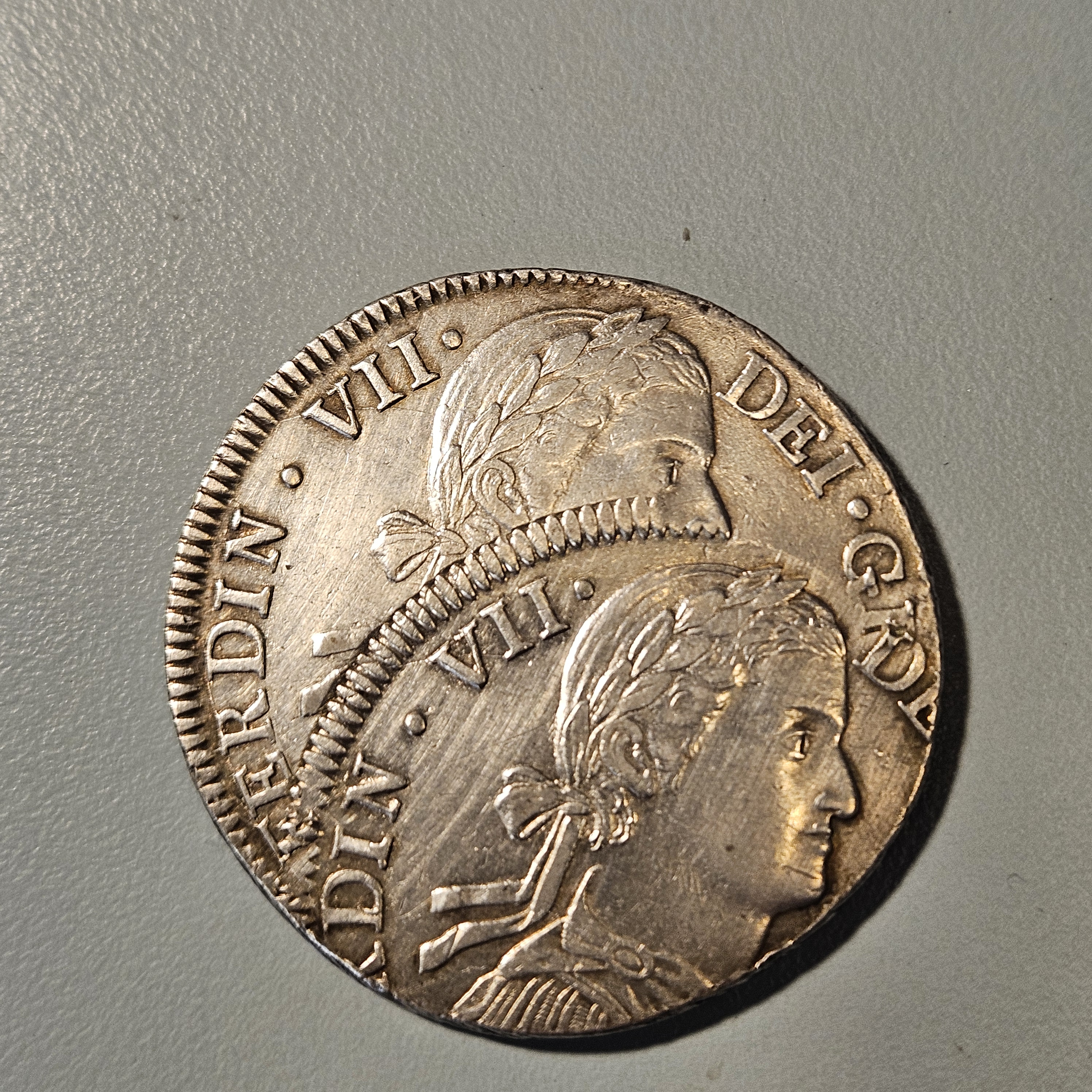
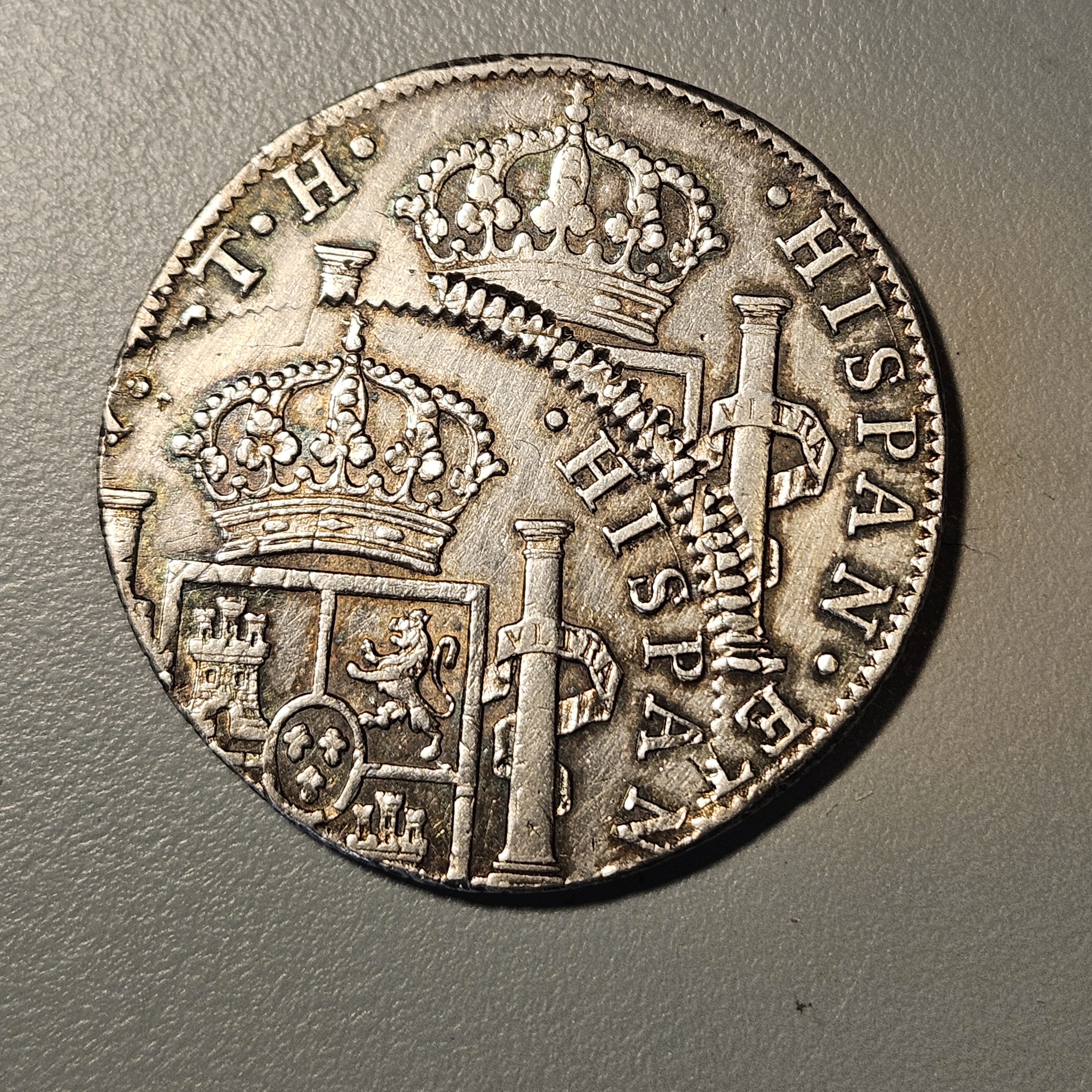
Double Struck Off-Center Mexico ND TH Assayer Ferdinand VII 8 Reales
 AngryDragon
Posts: 90 ✭✭✭
AngryDragon
Posts: 90 ✭✭✭
This showed up at the coin shop today. What do you think?
3
AngryDragon
Posts: 90 ✭✭✭
This showed up at the coin shop today. What do you think?
Comments
I'm confused how that could physically happen during the minting process for the type.
@TwoKopeiki wouldn't the collar that imparts the edge design keep the planchet from moving that far out?
Not sure that collar is the correct term but you get my drift, Castaing Machine
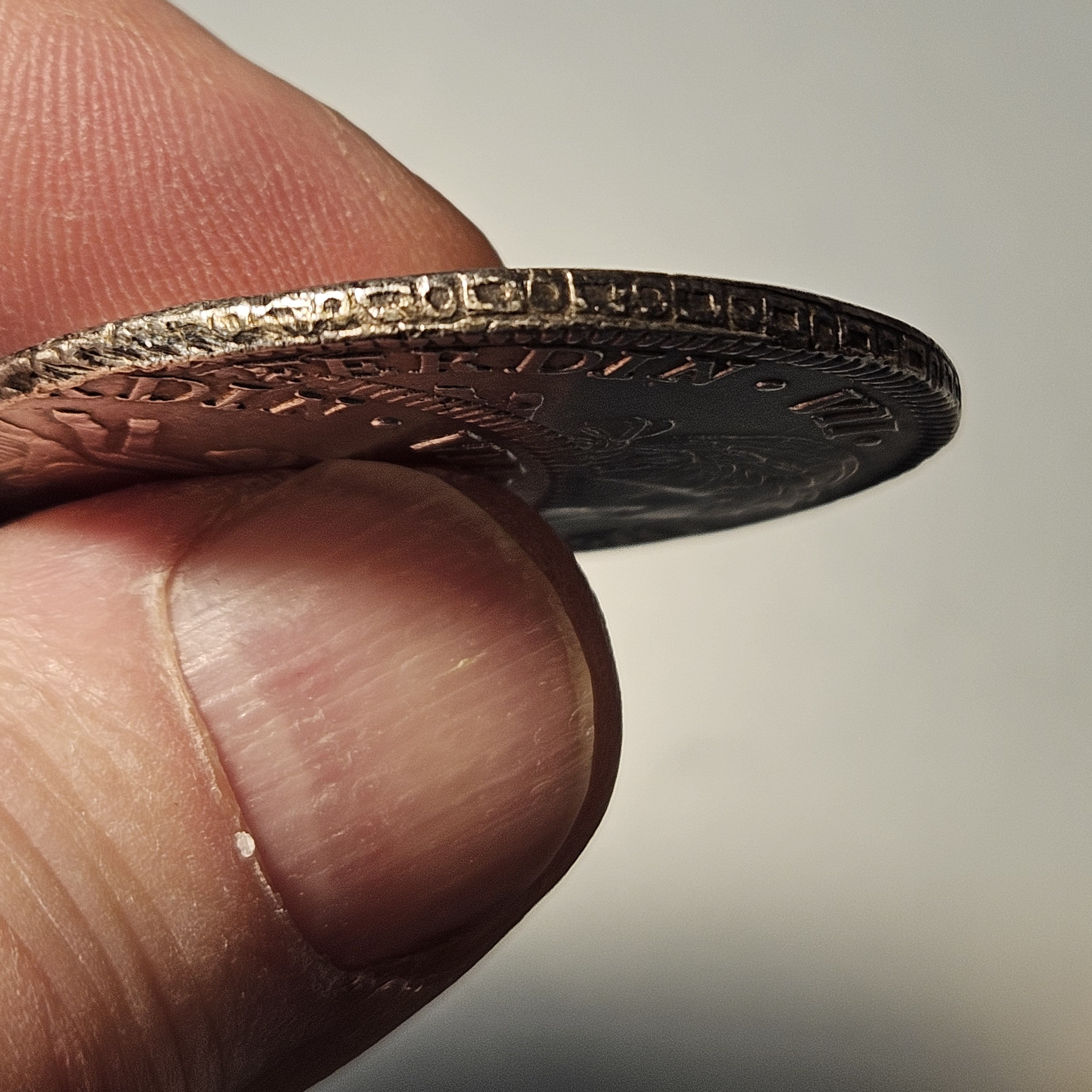
The edge design was applied in a separate operation before striking.
I will take a stab at it. The coins were edged first, using the Castaing machine, then struck in the screw press. No collar involved. I can remember one other wacky error of the same sort, it was an early Guadalajara.
https://www.acsearch.info/search.html?id=8728957
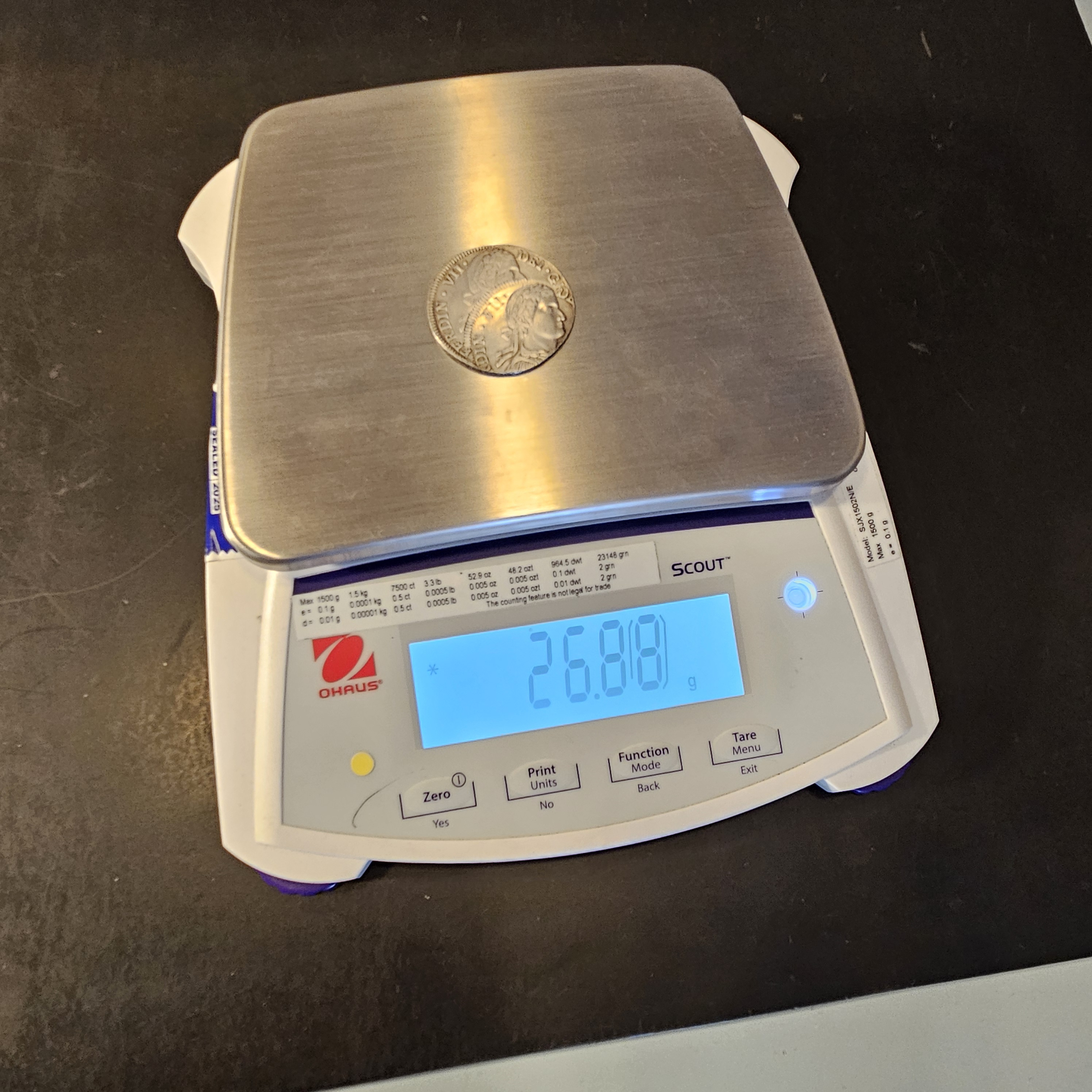
With the weight being spot on and the edge appearing correct, my thought is that this one is genuine, perhaps harshly cleaned. Hope to hear the opinions of @TwoKopeiki and @realeswatcher.
Neat coin. Rare, if real. While double strikes are pretty common, I've only seen a couple of portrait off-center double strikes this drastic. The coiner only had a few seconds to clear the struck coin off the anvil die before the hammer die came down again. Also, quality control at the mint was very high and examples like these almost never made it out of the mint. I think 1809 was one of the highest production years for portraits, so it makes sense that if anything was missed, it would be during the early armored bust series.
Dies look ok, edge looks ok-ish. Would be great to see the full edge images.
In any case, this coin definitely needs to be submitted. Let me know if you decide to buy it and the outcome from the graders.
Quite the piece.
So this exact type double strike is seen on more than a handful of Mex Cap & Rays (I've shown an example at the bottom) - but as @TwoKopeiki said, rare on portraits. I want to say I maybe recall seeing a Lima portrait (Charles IIII?) that was something close to this but I can't find a pic saved so maybe I'm imagining that.
@threefifty that's a great piece... I'm guessing we could find a few other WOI types that are goofy like that (as with the thread on legend errors... it's almost cheating!). Anyway, perusing ACsearch some, below are a few others in the conversation (the Lima Indian bust being closest to what's happening here).
As far as this piece... the majority of my common sense wants to say it should be a modern concoction (the Etsy/Alibaba sellers make lots of these for classic U.S. designs)... but I really can't see anything to condemn it.
Definitely needs to be slabbed. Please don't eff the person if you're offering on it (if I'm understanding correctly that you yourself have a shop and the public brought this in). Really quite the piece to just surface from the wild, considering how blatant of an error it is.
=====
We are hoping the owner will consent to submitting it for authentication. That will be the first step.
With the die cracks the “HISP”, can you match the die to already authenticated coins? That would be a big head start in authentication.
Latin American Collection
Tough to do with the Armored Bust Ferdinand. Peak production at Mexico City - 200+ dies a year used - but not impossible. Not sure I'd go down that path now vs sending it to our friends at NGC/PCGS.
Best of luck and please let us know how it goes. Even if it comes back authentic, it will be a pain to estimate fair market value for something like this.
I've narrowed the possible dates to 1808, 1809, 1810. Two Stackbowers lots have reverse die cracks at the top of H(IS)P similar to this example. This is the best I can do with the resources at my disposal.
https://auctions.stacksbowers.com/lots/view/3-LA2CY/mexico-8-reales-1809-mo-th-mexico-city-mint-ferdinand-vii-ngc-ms-63
https://auctions.stacksbowers.com/lots/view/3-141IQ3/mexico-8-reales-1809-mo-th-mexico-city-mint-ferdinand-vii-ngc-au-58
I may be wrong, but my guess would be that for the coin in question those are not die cracks but tracing lines made by the diesinker to guide the placement of the individually punched letters. As TwoKopeiki noted, if we're lucky we may see another example from the same dies but it will be quite a search.
Amazing piece. Never seen that type with that kind of error before.
Nice catch