Options
Gold Coins - Why Were They Minted?
 interpols
Posts: 51 ✭✭✭
interpols
Posts: 51 ✭✭✭
I heard that some types of Gold Coins have been Minted from the 1700s up until the late 1900s, but my question is, why? I can see Gold Dollars and such being minted a long while ago for gold being cheaper, but why did the U.S. gov keep on with it
Tagged:
2
Comments
I’ve read a lot of ideas on this but I haven’t looked it up in a while. So here’s my recollection in no particular order. I will assume people will correct me
The question is: Why did they stop?
Article 1, Section 10 of the Constitution.
They were minted due to the surplus of gold mines throughout America, especially fueled by the gold rushes of the 19th century, especially those in California and Colorado. The gold standard also played a part in US coinage.
"Another day, another Collectors Universe forum scrolling session."
- Someone, probably
Back then there was paper money backed by gold or silver. The "real" money was the previous metal that backed the paper money.
Gold was quite literally money back then. The laws required money to be backed by gold from the treasury, and you could exchange your treasury notes for gold coin.
FDR effectively took the US off the gold standard in the Great Depression, Nixon officially did later on in 1971 when Great Britain came knocking for their gold.
Coin Photography
No. They were minted to be used as money. Yes, they minted more when more gold became available. But they weren't minting it just to use it up.
All comments reflect the opinion of the author, even when irrefutably accurate.
I mean I'm not the most knowledgeable on this topic, as silver coinage is my main study spot but this is just what I've read.
"Another day, another Collectors Universe forum scrolling session."
- Someone, probably
Gold was "cheap" right up until it was deregulated.
By the way, they stopped minting gold coins for commerce in 1933, when it was made illegal.
All comments reflect the opinion of the author, even when irrefutably accurate.
King Croesus of Lydia started it in the 6th Century B.C., and folks took to the idea.
It is also true of silver. The only reason they minted either one of then was so they could be used as money. Chunks of gold or silver of various fineness could not be spent. Turn them into coins and they can be.
There was, famously, political pressure at times to Mint more due to surpluses. But the only point of Minting was to make money.
All comments reflect the opinion of the author, even when irrefutably accurate.
And resumed in 1986.
During his 1980 presidential campaign, Reagan indicated a desire to return the U.S. to the gold standard, noting that "No nation in history has survived fiat money, money that did not have precious metal backing".
But with silver, the Carson City Mint, to name an example, was made to make use of the Comstock Lode and turn the silver into legal tender. With the gold rushes, two new mints were made to make use of the local gold. I'm sure you most likely already know all of this, but I feel that they are fitting examples. Which, yes, going off of what you said with the reasoning to make use of the surpluses, this is essentially what I had said earlier. There were surpluses of silver and gold, fueled by various mines and gold rushes in areas around the country, which people wanted to make use of, and so in order to profit, they made more coins.
"Another day, another Collectors Universe forum scrolling session."
- Someone, probably
Gold coins have been used in commerce for thousands of years. Gold is scarce and valued by humans. Only very recently has gold been relegated to bullion status. All coins are next.
Gold (earlier Electrum) facilitated commerce for 27 centuries starting with the 7th Century BC. It sure beats barter.
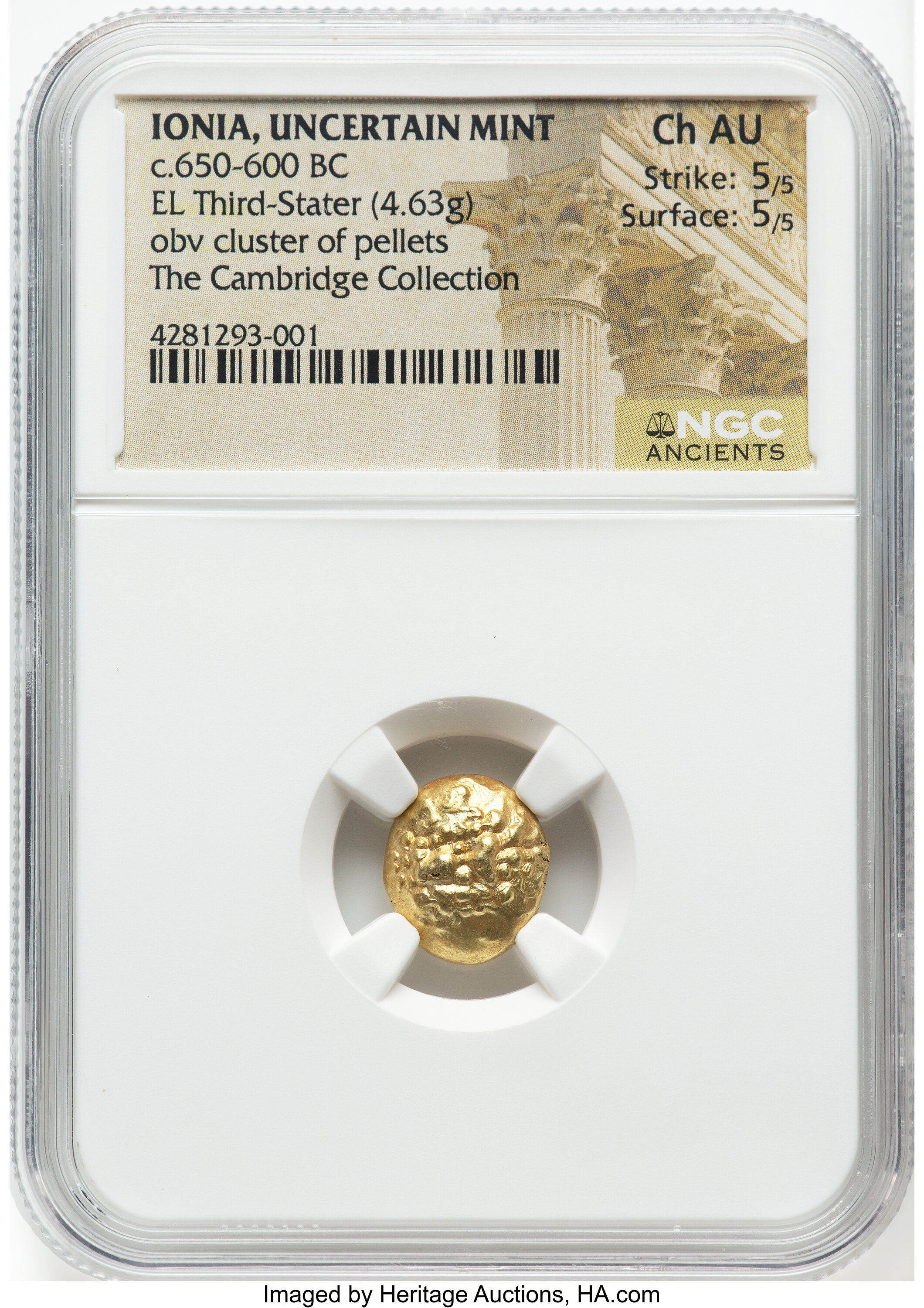
https://www.pcgs.com/setregistry/gold/liberty-head-2-1-gold-major-sets/liberty-head-2-1-gold-basic-set-circulation-strikes-1840-1907/publishedset/15628
March of Time - 27 Centuries in Gold
https://coins.www.collectors-society.com/WCM/CoinCustomSetView.aspx?s=36590
Those mints were established because it was too costly to ship the raw bullion to already established existing mints.