One of the most shocking boxing photos ever taken, Willie Pep after his fourth fight with Sandy Saddler. His right eye looks like somebody took a meat cleaver to it.
This is another awesome image, Robert F. Kennedy campaigns with Tony Zale (directly behind Kennedy) and three members of the "Fearsome Foursome" of the Los Angeles Rams football team (right of Kennedy) Lamar Lundy, Rosey Grier and Deacon Jones in Indianapolis in 1968.
The first Jack Dempsey vs Gene Tunney bout was fought in front of 120,557 fans back in 1926. It was the largest, live, paid attendance ever for a boxing match. The final gate came close to 1.9 million dollars, nearly 100 years ago. That's HUGE money for back then.
Holman Williams, all-time great from the "Black Murderers' Row" group of fighters back in the 1930s, 40s, and 50s. "Black Murderers' Row" was a group of exceptionally talented, feared, and overlooked African American middleweight contenders from the 1930s-1950s who were denied world title shots due to racial prejudice and boxing politics, often fighting each other in grueling bouts to stay active. Williams was part of that group and he was great, he was actually a key mentor, teacher, and sparring partner for Joe Louis early in Louis' career, and they maintained a close, supportive relationship throughout their time in the Detroit boxing scene. Known as a beautiful boxer, Williams taught a young Louis the fundamentals of boxing, particularly how to use a jab, move, and defend against right hands.
Credit: IBHOF
Born January 30, 1915 in Pensacola, Florida. Williams was a product of the boxing scene of Detroit where his family moved to in the early 1920s.
He began boxing as an amateur in 1928 as a bantamweight and had a successful 38-bout career. In 1932 he turned pro as a featherweight and would eventually be recognized as one of the cleverest welterweights and middleweights of his era.
A slick boxer, Williams was a stablemate of Hall of Famers Eddie Futch and Joe Louis and was managed by Julian Black and John Roxborough. Avoided by the champions of his day, the skillful and talented Williams never received a title bout. Nonetheless, he fought many of the best welterweights, middleweights and light heavyweights of the time. With an excellent jab, deft footwork, and taut defense, he scored victories over notable boxers such as Cocoa Kid, Charley Burley, Kid Tunero, Lloyd Marshall, Eddie Booker, Steve Belloise, Bob Satterfield, and Archie Moore. In 1946, after nearly 14 years as a pro, he lost back-to-back decisions to Marcel Cerdan and Jake LaMotta. Two years later he retired with a 145-30-11, 1NC (35 KOs) record.
Upon retiring, he relocated to Akron, OH and trained young fighters there. On July 15, 1967 Williams was killed in a fire while asleep in the club where he worked.
I was nine years old and I vaguely recall something about my dad wanting to take me to the Chicago Coliseum in April 1946 to see a youthful and popular bomber by the name of Bob Satterfield, 12-1 at the time, go up against a veteran middleweight who boxed with the speed and cleverness of a lightweight. It would be the main event in a card that also included Roy Cadie vs. Torpedo Reed and Tony Musto tangling with Dick Ieves. In 1945, I had seen Satterfield destroy Art McWhorter in one savage round at the Marigold Gardens. He floored McWhorter three times; first from a left hook, second from a volley of shots, and finally from a left hook that dropped him for the count. It was pure but beautiful violence. The attraction on this 1946 night would be the youth and explosiveness of “Rapid Robert,” 168½ and 22, vs. the style and experience of Williams, 34, who was 138-22-10 coming in and a 2 to 1 favorite. Most Chicago fans did their betting under the numerous “no betting” signs that were scattered throughout the Coliseum. This was done as a kind of post-war thing that said “we damn well will do anything we want.” That was pure post-war Chicago back in the day and the vets were not to be messed with. They had paid their dues. The fight drew 6,500 people, the largest crowd since the 30’s, and most were there to see Satterfield unload one of his lethal lefts or crunching rights on a veteran who was considered the quintessential “cutie” and one of the best defensive fighters of the 40s. The winner stood to fight Jake LaMotta making the fight even more intriguing. In his previous duke, the rangy, slick-boxing Williams lost to none other than the Chocolate Kid, Bert Lytell, but prior to that, he had put together a 14-fight undefeated streak including two wins over the aforementioned Lytell and one over future Hall-of-Fame inductee Charley Burley. Also included in this streak, were wins over The Cocoa Kid (165-44-8 at the time) and the great Archie Moore. In all, he would go 3-8-2 against The Kid, 3-3-1 against rugged Jose Basora, and 3-3-0-1 against Charley Burley, though I have not been able to verify these figures to the level of exactness I prefer. His career began in 1932 and ended in 1948. He came out of the professional gate fast losing only once in his first 32 fights. Included in this fast start was a win in 1935 for the Negro Lightweight Title. Back to the Coliseum. Unfortunately, I never did get to that 1946 fight. My dad took my brother instead (he had returned from the War in 1945) and their account of it was that Satterfield gave a great showing but simply could not reach Williams who was able to dodge and deflect the bomber’s shots, though it would later be said that even when Bob missed, he could hurt you. As it were, Williams won an entertaining ten round decision with young Bob stalking throughout but never catching the veteran. Little did I know that some 62 years later, Williams would be inducted into the International Boxing Hall of Fame. Holman would then fight and lose to future Hall of Famers Marcel Cerdan and LaMotta in succession. But these two losses came after he had been a professional fighter for many years and time had caught up to him. He would lose 11 of his remaining 22 fights, as his magnificent reflexes waned. Still, he fought top notch opposition right up to the end in 1948, and some of those defeats were controversial as well. His final record was an amazing 146-30-11. And get this; he was stopped only three times–once on cuts! He fought many times in New Orleans and Chicago, but he was the essence of a road warrior and toiled at his trade in just about every big city in the country. The legendary trainer, Eddie Futch, has often cited Holman Williams and Charley Burley as the two greatest fighters he ever had the privilege to see and was quoted as saying that he would rather watch Williams shadow box than watch most other fighters in action. Avoided by many of the higher ranked white fighters (and historically neglected by all except aficionados), this great technical boxing wizard fought the best welterweights, middleweights and light-heavyweights of his time. Inducting him into the International Boxing Hall of Fame in 2008, albeit posthumously, is manifestly the right thing to do. Tragically, he died in a fire in Akron, Ohio in 1967 at age 52. Holman Williams was a great boxer, but he never got the recognition because he wasn’t a puncher.
"He had the finesse of a Ray Robinson, but no punch.”
A deeper dive on Holman Williams' greatness, brilliantly written.
Credit: Gerry Harper
How great was one of the Black Murderer Row fighters, Holman Williams?
Holman Williams 146–31–11 was truly an all-time great fighter!
Born in Pensacola, Florida. Williams took up boxing in Detroit where his family moved to in the early 1920's.
He began boxing as an amateur in 1928 and turned pro in 1932 at lightweight. He was stablemates with Joe Louis and Eddie Futch. Early on he was known as a boxer-puncher, but became a defensive specialist after breaking his hands several times. Considered by many to have been the greatest tactician that ever lived. Legendary trainer Eddie Futch said Williams and Charley Burley were the two greatest fighters he ever seen and was quoted as saying that “Holman had the finesse of Sugar Ray Robinson, I would rather watch him shadow box than watch most other fighters in action.”
Renowned as one of the famed 1940's Black Murderers Row fighters who fought each other in an official 61 bouts! Holman participated in an astounding 35 (16-15–4) of them, far more than any other from this exclusive club. Here's his record against each member in the order of how I rate them:
Charley Burley (3–3)
Eddie Booker (1–1–1)
Lloyd Marshall (2–1)
Cocoa Kid (3–8–2)
Jack Chase (4–0)
Aaron Wade (2–0)
Bert Lytel (1–2–1)
Here's the record of each within this “exclusive club” only:
•Burley (11–5–1)
•Booker (2–3–1)
•Marshall (3–4–1)
•Cocoa Kid (10–8–3)
•Chase (4–9–2)
•Wade (2–7–1)
•Lytel (6–3–1)
To put the 61 official fights into context: the 4 Kings - Leonard, Hagler, Hearns and Duran fought each other a total of 9 times! When adding 4 more of their most common opponents - Benitez, Barkley, Cuevas and Palomino the total reaches 17 fights. Leading the way with the most fights are Duran with 8 (4–4) and Hearns with 8 (3–4–1).
The 35 fights that Holman had with this exclusive club isn't the extent of his accomplishments either, here's some other notable fights: back to back 12 round UD wins over Kid Tunero just before the “Kid” beat Ezzard Charles, and back to back 10 round decision win and draw with Jose Basora just prior to Jose's draw with Sugar Ray Robinson.
Nearing the end of his career and in his 167th fight no less, he beat atg Archie Moore by MD10 and lost a return match by TKO11 (his 2nd TKO loss of his career), in his 174th fight he won a SD10 over Bob Satterfield who would go onto a KO3 win over Cleveland Williams, in his 175th fight he lost on points in 10 to the atg Frenchman Marcel Cerdan (94–2) in Marcel's hometown of Paris. Holman injured his right hand in the fourth, and his leg in the eighth, when the decision was announced the crowd booed; the AP had the fight a draw.
(Holman Williams and Marcel Cerdan having a chat on a rooftop in Paris prior to their fight).
In what would be the last great fight of Holman's career and exactly a month to the day of his fight with Marcel, he would lose a UD10 to atg Jake Lamotta.
I think had he fought Cerdan or Lamotta during his prime he may very well have come away victorious.
After his retirement he moved to Akron, Ohio to help train fighters under the tutelage of Lee Thornton. When Thornton opened the Club Wonder, Holman would help out as a maintenance man. One weekend, while asleep in the club he was killed in a fire that engulfed the club. Holman Williams was 52.
The article states that Williams was the first boxing instructor of Joe Louis. While it's probably true that Holman 17, gave some instructions to Joe, also 17. I think it's more likely that it was the older Eddie Futch 20, who'd already been at the gym for 7 years. The man who actually trained all 3 fighters was Brewster's East Side Gym legend Billy Stewart (pictured below).
Sadly, missed in the article was paying homage to an atg fighter! I have Holman Williams rated as the 15th Greatest Welterweight of all-time, the 15th Greatest Middleweight of all-time, the #6 Greatest Boxer of the 1940's decade and overall #47 here in The Top 200 Greatest Boxers of All Time.
This is absolutely wicked stuff, the top photo shows Holman Williams and Marcel Cerdan after their fight in Paris in 1946. Notice the nasty cut on Williams' forehead, that cut was from a previous fight but it re-opened against Cerdan. On the bottom photo, you can see the scar up close from that cut.
Awesome poster from the Charley Burley vs Holman Williams fight on February 26th, 1942, their second meeting, two all-time greats right here. They fought seven times in a classic rivalry between 1939 and 1945, ending with an even split of three wins for each, with one fight ruled a no contest, making them central figures in the era's "Murderer's Row" of Black boxers.
For some reason, the Black Murderers' Row group of fighters don't have many cards or items to collect, it's darn near impossible to find anything to collect of them. But Holman Williams does have a 1946 Propagandas Montiel card, top row in the middle. These cards were a Cuba issued set and have black and white images of subjects inside of a yellow or orange border. Back include the name of the set as well as the player’s name and biography. They are fragile and printed on thin stock, usually resulting in damage. The majority of the set is comprised of baseball players but key boxing figures, including John Sullivan, Jack Johnson, Joe Louis, Jack Dempsey, and others, are included. Four wrestlers are also featured as well as a single tennis player — Hall of Famer Helen Wills Moody. I'm not sure how these cards were issued but there were albums made that you could glue the cards into to keep them.
Holmes Willis had many great rivalries, one of them was against legendary Puerto Rican Jose Basora.
Unforgettable Great Boxing Match| Holman Williams Vs José Basora
Holman Williams jars Jose Basora with an uppercut during their bout on October 3rd, 1944 in Philadelphia, Pennsylvania
The battles between the American Holman Williams and the Puerto Rican José Basora, constituted one of the great rivalries of the "Golden Era" (among so many more), a time when it was common for there to be many confrontations between two fighters, since the hunger for glory, to transcend, to be able to show that one was better than the other on the ring, money being an important issue, but not the ultimate goal. These two great boxers faced each other seven times, with three victories per side and a draw, always on points, except in their last fight, which was Basra's triumph by TKO in four rounds (the fight was stopped after an ugly cut suffered by Williams).
The two had many rivals in common and fought against all the opponents who got in front, with big wins on each side. Both Williams and Basra were avoided by many white boxers, especially Holman Williams, a member of the famous group known as the “Black Murderer's Row”, (a set of elite black boxers, avoided by the best white boxers and who were never given a shot at a world title). Both during their careers maintained other rivalries, fighting several times against other boxers.
Holman Williams was born in Pensacola, Florida, January 30, 1915. His record was [146 (36KO) -31-11] and his career spanned from 1932 to 1948. He died on July 15, 1967, following a fire while he was sleeping. at the club where he worked. His best wins were against: Battling Gizzy, Tommy Paul, Cocoa Kid, Chuck Woods, Bobby Pancho, Young Gene Buffalo, Charley Burley, Eddie Dolan, Antonio Fernández, Rand Jackson, Kid Tunero, Lloyd Marshall, Eddie Booker, Jack Chase, and precisely José Basora, among many more. With several of them he fought on various occasions, such as the Cocoa Kid, whom he faced 13 times !!!
José Basora was born on February 8, 1918, in Lajas, Puerto Rico. He left a mark of [78 (44KO) -20-6], developing his career between 1939 and 1952. He passed away in 1993, at the age of 85, in New York, where he resided. He has an unsurpassed record, in 1943: in just three months he faced three members of the “Hall of Fame”. In August he beat Holman Williams on points, in September he lost by the same way to Jack La Motta and in October he defeated Fritzie Zivic by UD, almost nothing. His great victories include: Frankie Saia, Jack LaMotta, Al Jolson, Young Gene Buffalo, Andy Holland, Fritzie Zivic, Jimmy Curl, Terry Moore and others. Notably, he was the first man to bring the glorious Sugar Ray Robinson to a draw.
Williams and Basra met for the first time on September 29, 1941, with the former winning on points in six rounds. The rematch would be four months later, with the same result. They would not see each other again until August 9, 1943, in a tremendous and very close fight, again with a victory for Holman, this time in a close SD. The fourth installment of this rivalry would take place on April 10, 1944, where Williams would put things 3-1, defeating the Puerto Rican by decision in 10 rounds. Six months later the only tie between them would arrive, when they crossed in Philadelphia at 10 laps. For his sixth fight, which would be in Puerto Rico, with Basora at home, he would win by points in 10 rounds, before his public.
The seventh and last war of this duel would be in 1948, at the Chicago Auditorium, with Basora winning by TKO in the fourth round, after an ugly cut on Williams's face, forcing the referee to stop the fight. It must be said that while their confrontations show that they were tremendously even with each other, they were as different in style, as can be. Williams was a very technical boxer, he handled a wide variety of punches, with excellent defense, great footwork, a correct punch and a classic style; Basora, on the other hand, although technically he was also very good, he was not classic at all, his style was very uncomfortable for anyone, especially for technical boxers, his defense was good without highlighting in that item, his right punch was lethal . Many say he was the hardest hitting Middleweight in the 1940-50 period. However, both left with their great rivalry, a golden legacy.
Holman Williams never had a crown placed on his head, but those who truly understood boxing — those who could hear the poetry in footwork, see the truth behind a jab — knew they were looking at royalty.
Born in the sun-bleached streets of Pensacola, Florida, Williams wasn’t handed anything. He carved his legend in shadows, with silence and sweat, far away from the glitter of title belts or grand headlines. And yet, within the undercurrents of the sport, his name still floats — quietly, insistently — like a ghost that won’t go away. Not because he had the loudest voice, but because his brilliance whispered louder than most men could shout.
They called it “Murderers’ Row,” a collection of Black fighters so skilled, so dangerous, that promoters and champions alike avoided them like plague. Titles were rarely won in the ring for these men; they were decided in smoky backrooms, through politics, fear, and money. And in that bitter fraternity, Holman Williams stood as its professor. The kind of boxer whose mastery was so pure, so clean, that the great Eddie Futch once admitted he'd rather watch Williams shadowbox than sit through most actual fights. Imagine that. A man so smooth, so sharp, that even his practice had people in awe.
Williams moved like music. He fought from lightweight all the way to light-heavyweight, flowing through weight classes not with brute force but with brainpower — clever, controlled, calculating. He didn’t just fight opponents; he dismantled them, one round at a time, like a chess player breaking you down before the checkmate.
And oh, the names he faced — not just names, but nightmares. Archie Moore. Cocoa Kid. Lloyd Marshall. Charley Burley. Eddie Booker. Aaron Wade. Jack Chase. Bert Lytell. Bob Satterfield. If there were any justice in boxing, each of those wins would have earned him a title shot, a standing ovation, or at the very least, acknowledgment. Instead, the world looked away.
By the time he crossed paths with Jake LaMotta and Marcel Cerdan — both future middleweight kings — Williams had already done more than enough to write his name into history. He went the distance with both. No one could ignore that, no matter how many title opportunities were stolen from him behind closed doors.
But he wasn’t bitter. At least not outwardly. That was part of his dignity. The injustice never left him, sure — how could it? — but he kept showing up, kept boxing beautifully, almost as if to say: Even if you won’t crown me, you’ll remember me.
And we do. Not because he held belts. Not because he played the game. But because Holman Williams was everything boxing is supposed to be when stripped of its corruption: courage, craft, and quiet greatness.
He wasn’t just one of the best boxers of his time. He was one of the best, period.
Here are some photos of the infamous "Black Murderers' Row" group of fighters. Top row: (from left to right), Eddie Booker, Charley Burley, Bert Lytel, Aaron Wade. Bottom row: (from left to right), Cocoa Kid, Lloyd Marshall, Holman Williams and Jack Chase. They were all great fighters.
One of the sickest boxing images I've ever seen, the great Joe Louis glances at the camera with after flooring Tony Galento during their 1939 fight. Louis looks ruthless.
This is an epic photo, the great lightweight Ad Wolgast aka "The Michigan Wildcat" about to play a game of 8-ball with a cigarette in his mouth and a smirk on his face. I had a chance to buy this original type 1 photo years ago on eBay but I hesitated and someone got to it before me, I have nightmares about it every night. Ad Wolgast was one of the most savage fighters to ever live. If I were hanging out in a bar or pool hall and looked over and saw Ad Wolgast rackin' em up, I would $hit myself. He was a bada$$.
''When you walk up those steps and see that ring - Jesus - you don't see anybody but somebody is there. If you don't get yourseIf in perfect shape, there are two people waiting for you. The first is death. The next one is you. If you're not ready, you'll go on the rest of your Iife and you won't know your own seIf.''
Puerto Rico's Esteban de Jesus gave world lightweight champion Roberto Duran a complete boxing lesson at Madison Square Garden November 17th in 1972 and scored a unanimous 10‐round decision.
Although Duran was a rough, vicious puncher, it was de Jesus who supplied the fireworks from the outset of a furious fight.
de Jesus caught Duran moving forward in the opening minute and nailed him with a stinging left hook on the point of Duran's chin. The champion, who was not defending his title in this over‐the‐weight scrap, landed on his seat, a look of complete amazement on his handsome face. Duran bounced up almost immediately although the count had reached two by Arthur Mercante, the referee.
It was the first time in the 32‐fight career of the previously undefeated 21‐year‐old Panamanian that he had ever been knocked off his feet.
Durán, the WBA lightweight champion, was fighting for the third time at the Garden and he was cocky. He was only taking on de Jesús as a favor to Garden brass for postponing other fights, a spokesperson said.
Instead, de Jesús had other plans and knocked Durán down moments into the bout with a left hook. While he wasn't badly hurt, Durán was affected and he had trouble getting into a rhythm. He bounced back to score well to the body in round 2, but de Jesús more or less had his way as he managed to physically push Durán around.
“At the [final] bell Duran threw his arms wide in a gesture of disgust," the AP said. He knew he'd lost, and de Jesús knew he'd won.
Durán would more than even the score with two return victories over de Jesús in the coming years, but the Puerto Rican would always be the first fighter to defeat the great "Manos de Piedra."
Bleeding and battered, Stanley Ketchel surrended his world middleweight championship when he was knocked out in the twelfth round at Jeffries's Vernon Arena in California at 4 o'clock in the afternoon by bitter rival Billy Papke on September 7th in 1908.
Neither had ever been knocked out, although Ketchel had a decision over Papke in a previous ten-round fight, as they entered the ring in apparently perfect condition, but the fight ended as one of the bloodiest in boxing history.
When Papke entered the ring he briskly walked to Ketchel's corner and greeted him with a handshake and smile, but when James J. Jeffries, the referee, called time and Ketchel walked to the centre and extended his hand for the formal shake, Papke ignored the hand and sailed into the Michigan man with savage ferocity.
The fight was practically over before it started. It was merely a case of how long Ketchel would last.
Papke tore into Ketchel with such fury that the former undefeated champion was lifted off his feet four times within the first round.
Ketchel never really recovered, dazed and bleeding, he somehow managed to fight back and for at least three rounds he held his own with Illinois' Papke.
By the end, both Ketchel's eyes were closed and he staggered around the ring as Papke landed at will. Both 21 year olds finished the fight covered in blood.
I must say, this is a wicked image, some real ancient Roman gladiator $hit.
My God, Fritzie Zivic really was a vicious bastard when provoked.
The Fight City
Boxiana
Oct. 4, 1940: Zivic vs Armstrong
By: Michael Carbert
Fritzie Zivic is forever one of the most colorful characters in the history of boxing and with 158 wins on his record, he was also no slouch in terms of ring accomplishments. But there’s a reason why you won’t find his name on too many lists of the all-time best, despite the fact it probably deserves to be there. After all, how many other boxers possess a roll-call of scalps to rival Zivic’s? Fritizie’s includes such venerable names as Jake LaMotta, Sammy Angott, Lew Jenkins, Al Davis, Charley Burley, Kid Azteca, and of course Armstrong. Add in his tough battles with Sugar Ray Robinson, Lou Ambers and Billy Conn and you’ve got a warrior for the ages. Robinson himself said no one taught him more about boxing than Zivic did in their two bouts.
Zivic: He didn’t get that nose from playing piano.
But the fact is, aside from there being a whopping 65 losses on his record, “The Croat Comet” was one of the “dirtiest” boxers in ring history, perhaps the dirtiest, even though, as the record shows, he was never disqualified. As a result, his reputation suffered. Everyone understood what Zivic was about. Tough, canny and clever, he was a master at the dark art of errant elbows and well-timed head butts, discreet low blows and painful thumbs to the eyes. Zivic didn’t try to deny it either. As far as he was concerned, this amounted to standard procedure. For Zivic, professional prizefighting was a rough and dirty business and when it came to foul tactics, boxers had to be ready to both take it and dish it out.
“I’d hit guys low,” admitted Zivic. “Choke ‘em or give ’em the head. My best punch was a left hook to you-know-where.”
Zivic’s career began in 1931 and by 1940 he had yet to earn a title shot, his inconsistency preventing the public from viewing him as a legitimate threat. But a big win over Sammy Angott set him up nicely for a chance at Armstrong’s welterweight crown in Madison Square Garden. And Zivic began dreaming about that big, new Cadillac he always wanted. A triple division champion with eighteen straight defenses of his welterweight title to his credit, Henry Armstrong was regarded as an all-time great and a lock to win. But that didn’t stop the longshot underdog from going down to the Cadillac dealership the day of the fight to try and give himself some extra motivation.
But the first several rounds of the match were not good for the challenger. The aggressive Armstrong looked as strong and capable as ever and ready to notch a record nineteenth successful title defense, while Zivic, his reputation preceding him, sought to be extra careful about any unseemly tactics and appeared inhibited.
“That night Henry’s givin’ it to me pretty good,” recounted Zivic years later to Red Smith. “And I can see that Cadillac rollin’ farther and farther away from me. Henry’s givin’ me the elbows and the shoulders and the top of the head, and I can give that stuff back pretty good, but I don’t dare to or maybe they’ll throw me outta the ring.”
Hank suffered serious eye injuries courtesy of Zivic’s thumbs and laces.
Zivic in fact was pacing himself, as he had never gone fifteen rounds and knew he had to have something extra for the late going; stopping the tough Armstrong inside the distance was simply not a realistic prospect. So entering the middle rounds, the challenger began to pick it up. He used hard uppercuts to perfection, nailing Armstrong repeatedly. And then, according to Zivic, he got the big break he needed.
“In the seventh round I give him the head a couple times and choke him a couple times and use the elbows some, and the referee says: ‘If you guys want to fight that way, it’s okay with me.’ Hot damn! I told Luke Carney in my corner: ‘Watch me go now!’ And from there out I saw that Cadillac turn around and come rollin’ back.”
Trainer Ray Arcel works on Armstrong’s wounds.
The bout turned into a bloody alley war. And while Zivic’s uppercuts were his prime weapon, his thumbs and laces to the champion’s eyes also took a painful and bloody toll. By round ten the champion bled from cuts around both eyes as Fritzie began to dominate the action and it soon became obvious that, barring a miracle, a massive upset win for the challenger was about to happen.
The final round: the spent champion reels from Zivic’s attack.
In the final round, Zivic closed the show, battering a hurt and exhausted Armstrong mercilessly. And with seconds left in the fight, he put “Homicide Hank” on the deck. We’ll never know if Henry could have beaten the count; the final bell rang before he had a chance. And while Zivic took a unanimous decision, those applauding at fight’s end were in fact paying tribute to Armstrong’s courage.
“He’s the gamest guy I ever saw,” said the new champion.
Armstrong down at the end of the 15th.
It was an all-time great upset, but Fritzie Zivic didn’t keep that world title belt for very long. He defeated Armstrong in a rematch and then lost the crown to Freddie Cochrane six months later. But he held on to that big, beautiful Cadillac for many years. For his part, Armstrong retired after he lost a rematch to Zivic three months later, but he came back in 1942 and in October of that year he got his revenge, a definitive ten round unanimous decision over Fritzie in San Francisco.
Marcos Geraldo. "If you didn't get Marcos, he was likely to get you."
The Peculiar Career of Marcos Geraldo
By: Ted Sares
If you play word association with retired boxer Marcos Geraldo, you might come up with “chinny,” or “easy work.” But if you did, you would be wrong.
This extremely active Mexican boxer fought out of Baja California but was a staple in Nevada and Southern California and was 38-12 before he ventured outside these regions
Many saw Geraldo as easy work because of the 21 KOs he suffered but what they missed was the fact he had 50 KOs of his own and that made him an ultra-exciting type of fighter--and it guaranteed him plenty of marquee events. If you didn’t get Marcos, he was likely to get you. That translated to bringing in fans. He also was an active fighter and fought, for example, 12 times in 1972 alone. He also toiled 25 times at the Silver Slipper in Las Vegas—yes, 25 times—and he went 21-4!
Along the way, Geraldo (who at various times was the middleweight and light heavyweight champion of Mexico) did battle with four Hall of Famers -- Sugar Ray Leonard, Marvin Hagler, Thomas Hearns, and Virgil Hill -- several world champions, and numerous title contenders. (Michael Nunn, another stiff opponent, could someday become a member of the Hall as well.)
As his career progressed, the level of his opposition became stiffer. Listed in the order of appearance, these are the records of some of his opponents at the time that he fought them: Peter Cobblah (48-46-5), Angel Robinson Garcia (138-80-21), Armando Muniz (32-6-1), George Cooper (49-4-3), Sugar Ray Leonard (21-0), John LoCicero (15-3), Marvin Hagler (48-2-2), Caveman Lee (13-2), Thomas Hearns (33-1), Fred Hutchings (20-1), Ron Wilson (71-33-7), Prince Mama Muhammad (29-1-1), Michael Nunn (7-0), Tony Willis (9-0), Chris Reid (14-0-1), Virgil Hill (16-0), Jesus Gallardo (16-1), Antoine Byrd (6-1-1).
Whew!
In 1979, Geraldo went the distance with Sugar Ray Leonard which surprised boxing buffs though Ray had previously been extended by others.
The following year he gave Marvelous Marvin Hagler all he could handle while losing a unanimous but close decision in a surprisingly tough thriller.
Hagler (May 1980)
Hagler pressed the action in-close but surprisingly was met with strong counterpunching. Both did plenty of shoe shining. First Hagler; then Geraldo. It was tit for tat and the fans roared their approval. What won the fight for Hagler was his stamina and harder punching which enabled him to tire the tough Mexican, but he never managed to break him down.
The scoring was Duane Ford 97-93, Art Lurie 97-94, and Chuck Minker 97-95.
The fans at Caesars Palace in Las Vegas gave both fighters a standing ovation as they raised each other’s arm up in a marvelous (no pun intended) show of mutual respect. The media framed it as a “great” fight. It defined “fan–friendly.”
Geraldo had stopped Bomber John LoCicero before the Hagler fight, but was KOd in round one by both Caveman Lee and Thomas Hearns subsequent to Hagler. And then he was stopped much later by Michael Nunn and Virgil Hill.
His final slate was 71-28-1 -- 100 bouts put him in rarefied company. Also, seven of those 21 KO losses came in his last eight fights.
After a very close review of his career, the word association that could more appropriately fit might be “incongruity,” or “action, or “resilient,” or even “peculiar.”
Sadly, he was always one big win away from entering the top tier.
Marcos Geraldo, he was the type of fighter that you had to get him early, if you let him hang around and get warm then you were in for a war. He was tall, rangy, tough, awkward, and threw punches in flurries, he could be a difficult riddle to solve. He gave Hagler and Leonard tough fights, I believe prior to Montreal Leonard said Geraldo was his toughest opponent. Fascinating fighter, I wish there were more photos available of him.
Fun fact, 1930s light heavyweight champion John Henry Lewis is the uncle of famous rapper and actor LL Cool J, but Lewis is more than that, he's one of the greatest light heavyweights ever. I don't even know where to begin with him, for starters he was beating all-time greats when he was still in high school for Christ's sake, legendary light heavyweight Archie Moore said Lewis was the best he ever saw at the weight, Eddie Futch said he was the second best and Ray Arcel called him the best. That's pretty high praise. Lewis was a phenomenal technician, his style was basically made out to be a traditional out-boxer, good fundamentals but with unholy body shots, as fast as greased lightning whilst being insanely accurate. His lead hand was supposed to be wonderful too. In his career he was stopped once in 117 fights; phenomenal chin. He had sneaky power, good power, good enough to ice over half of his 117 opponents, and good enough to drop and hurt the iron-chinned Maxie Rosenbloom twice. He was forced to retire at the age of 25 due to cataracts in his left eye, and it was later revealed that he had won the light heavyweight title and held it for four years all while being damn near blind. He was that great. Great, great fighter.
Credit: IBHOF
John Henry Lewis was the first black American to win the light heavyweight championship, a title he held for four years. And as with many light heavyweights, Lewis often fought larger heavyweights to gain more attention and bigger purses. Lewis was not the first fighter in his family. His great-great uncle was Tom Molineaux, an early bare knuckle heavyweight who traveled to England to challenge for the title.
Born in California, Lewis moved to Arizona when his father got a job as trainer for the University of Arizona athletic teams. Lewis's father also opened a gym in Phoenix. At a very early age, Lewis and his brother Christy were put to work at the gym, fighting "midget boxing" exhibitions. Later, the Lewises toured the Southwest in such exhibitions. Given this early training, Lewis was well-prepared to turn professional at the age of fourteen as a welterweight. Three years later Lewis won a decision over Lloyd Phelps to take what was considered to be the Arizona middleweight championship. In 1932, Lewis received wide attention when he decisioned future heavyweight champion James J. Braddock in San Francisco and lost a close decision in a non-title bout with light heavyweight champion Maxie Rosenbloom.
The next year, Lewis scored two victories over Rosenbloom, a closely matched rival who came back to defeat Lewis twice. Lewis lost a rematch with Braddock in his first New York appearance in 1934. Managed by the owner of the Pittsburgh Crawfords Negro League baseball team, Gus Greenlee, Lewis fought as often as possible in an attempt to secure a shot at the title. In 1935, he got his chance, fighting for the light heavyweight belt against Bob Olin in St. Louis. But being champ apparently didn't mean being paid. Under the terms of his contract, Lewis forfeited his purse when the sparse crowd failed to provide the minimum expected gate.
Lewis possessed all of the attributes of a great boxer. He had the speed of a welterweight, was aggressive, skilled at defense, and a master puncher. The lack of financial reward was a problem, however. In 1939, Lewis signed for a heavyweight title fight against his friend, Joe Louis. Although it was not widely known, Lewis was almost blind in one eye and had been for some years. Joe Louis gave his friend a chance for a big payday before the eye problem forced him to retire. Louis made short work of the challenger, knocking him out in one round. This fight was the only knockout Lewis suffered in 117 fights. Lewis retired after this defeat.
JOHN HENRY LEWIS - SENSATIONALLY HUMBLE
Sep 1, 2020
Contributed by: Paul Zanon
“My uncle is actually the first black Light-Heavyweight Champion in America, period: John Henry Lewis—the first ever lineal Heavyweight Champion, not just a belt-holder, a lineal Heavyweight Champion.”
- LL Cool J
Born 5 May 1914, on the cusp of World War I, John Henry Lewis would soon become a destructive force in his own right.
Born to John Edward Lewis and Mattie Drake Foster in Los Angeles, the family soon relocated to Arizona, which is where the embryonic stages of his boxing seeds began to be sowed. His father ran a gym in Phoenix, which is where young John was taught the fistic fundamentals.
His two brothers also donned the gloves. Paul Roger Lewis, who fought at middleweight and older sibling, welterweight Nathaniel Christy Lewis, who fought on many of John’s undercards. However, Lewis would often claim that boxing was in his blood long before he was born, citing his great, great uncle, bare knuckle boxing sensation, Tom Molineaux as a direct relative.
Molineaux, a slave who won his freedom through fighting, moved to London at the age of 25, and under the strict eyes of slave, turned fighter, Bill Richmond was involved in a number of historic encounters, including two barnburners with Tom Cribb. Molineaux stopped fighting at the age of 31, but unfortunately became dependent on alcohol. He passed away penniless at 34 years of age in 1818, in Galway. Thankfully, his spirit has been revived and in 2018 a plaque was erected in Galway to mark 200 years since his passing. The year after, two weight world champion, Katie Taylor unveiled a headstone on his previously unmarked burial spot.
On 18 January 1929, Lewis had his professional boxing debut against Buster Grant, losing a points decision over four rounds at the Arcadia Hall, Phoenix. However, the fourteen year old welterweight debutant gave a good account of himself and bounced back with gusto in his next 15 contests, boasting a record of 13-2-1. Unfortunately, one of the bouts became memorable for all the wrong reasons. On 11 March 1931, Lewis knocked out fellow Arizonian, Sam Terrin in the third of 10 scheduled rounds, at the O.K. Hall, Prescott. Shortly after Terrin died from the blows sustained in the contest.
On 1 July 1931 he challenged Lloyd Phelps for the USA Arizona State middleweight title. Despite taking a very convincing points decision over Phelps, riots ensued as the crowd in Mesa, Arizona resented the decision, threatening to lynch referee Harry Hegele. The belief was that the reaction was racially motivated, however, The Arizona Republic newspaper backed their 17 year old prospect, stating the result as ‘eminently just.’
On 21 September 1932, Lewis, now 37-3-4 and still only 18 years old took on a man bestowed with the moniker, ‘The Cinderella Man’. Standing almost four inches taller than Lewis and weighing 184lbs (compared to Lewis’ 172lbs), James Walter Braddock, nine years the Arizona favourite’s senior, brought a very erratic record of 48-25-7 to the table. In his previous eight contests, he’d only gained victory once and it didn’t come as a major surprise when Lewis clinched a points victory over the future heavyweight champion of the world. In hindsight, it’s even more impressive to state that Lewis only lost one out of the 10 rounds.
Three fights and eight weeks later, on 16 November 1932, Lewis took on his stiffest test by way of Maxie Rosenbloom. ‘Slapsie Maxie’ had already won the undisputed light heavyweight title in June 1930 against Jimmy Slattery and defended his crown a number of times. Incredibly, the 26 year old New Yorker already possessed a record of 147-28-15 and would finish his career with an incredible 272 contests to his name. That night, Rosenbloom gained the upper hand, taking a points victory at the Civic Auditorium in San Francisco. This was the first instalment of five fights the pair would engage in.
Over the next 22 months, Lewis gained a further 10 victories (including two against Rosenbloom), and one draw, before coming up against Idaho resident, Young Firpo on 20 September 1934 for the Pacific Coast Light Heavyweight title. In an evenly matched contest where the balance of power shifted round by round, nobody complained when the bout was declared a draw.
Over the next seven weeks, Lewis drew against Don ‘Red Barry’, won two further contests by knockout and then faced his old rival, James Braddock on 16 November 1934 at Madison Square Garden, New York. Think about that - five fights in seven weeks at this level. That would be unheard of these days.
On this occasion, Braddock gained the upper hand, walking away with the points decision over 10 rounds. The fight spring-boarded Braddock into a fight with heavyweight contender Art Lasky. The winner would challenge Max Baer for the world heavyweight crown and Braddock was predicted to lose. However, not only did he beat Lasky, we went on to do the unthinkable and beat Baer.
Undeterred by the Braddock loss, Lewis won his next 10 fights in seven months, before being pitted against his old nemesis, Maxie Rosenbloom, for the fourth time. Unfortunately for Lewis, it wasn’t his night, making the tally two a piece for the light heavyweight rivals. Then a week later, Lewis drew against Abe Feldman.
Despite coming off two draws, three months after the Feldman fight, on 31 October 1935, Lewis took on the reigning light heavyweight champion, Bob Olin at the Arena, Saint Louis in front of 9,219 spectators. Incidentally – Olin had beaten Rosenbloom to become champion, however, Lewis had beaten Olin in April 1935 and managed to repeat the feat with a landslide victory. John Henry Lewis was now light heavyweight champion of the world at the ripe age of 21. Interesting fact – Olin was trained by Ray Arcel. Yes, the same man who trained Roberto Duran four decades later.
On 29 November, Lewis lost his fifth encounter against Rosenbloom in a non sanctioned title fight, then knocked out George Simpson in two rounds two weeks later.
1936 was busy to say the least. Lewis fought 20 times, losing and drawing once and racking up 18 victories, including two defences of his crown against Britain’s Jock McAvoy at Madison Square Garden on 13 March, NYC and his first and only ever contest outside the States, against Len Harvey at the Empire Pool, Wembley on 9 November. Both Brits did themselves proud lasting the full 15 rounds with the vastly talented Lewis.
Incredibly, Lewis fought a further 20 times in 1937. That’s 40 fights in two years. The opening contest of 1937 on 4 January was against Pennsylvanian Al Ettore, at the Convention Hall, Philadelphia, where Ettore walked away with a controversial split decision victory. Ring Magazine described it as ‘the worst blow in boxing in several years.’ The pair locked horns again five weeks later, after Lewis, of course, squeezed in a further two contests, however, this time Lewis won a far more convincing decision over 15 rounds. The victory did come at a cost, as Lewis suffered eye injuries against Ettore – something which would later halt his career.
Lewis spent most of 1937 over the 175lbs light heavyweight limit, taking on all comers, many of whom were natural heavyweights, north of 200lbs. However, one fight he did come bang on the limit was against the man he won the world title from, Bob Olin. Intent on making a statement to show he had progressed as a boxer and world champion, on 3 June 1937, Lewis knocked out Olin in eight rounds at the Arena, St Louis, Missouri.
The second contest Lewis lost of 1937 was against heavyweight Spaniard, Isidoro Gastanaga on 15 October at the Olympia Stadium, Detroit. Outweighed by 23lbs and giving away a couple of inches in height, Lewis suffered three knockdowns early in the contest, but managed to last the 10 round distance. However, as with Ettore, Lewis avenged his loss a few weeks later on 7 December, stopping the Ibarra resident in the ninth session.
Lewis remained undefeated in 1938, clocking up 10 straight wins, however, it wasn’t all smooth sailing. The New York Athletic State Commission stripped him of his title on 28 July for failing to accept a challenge against ‘Tiger’ Jack Fox, an opponent who Lewis had knocked out in three rounds a couple of years prior. Lewis believed Fox was not a big enough name and would not generate enough financial traction to make it a worthwhile contest. Thankfully, Lewis still had his National Boxing Association (NBA – now WBA) world light heavyweight strap and defended successfully it against Florida’s Al Gainer on 28 October 1938.
On 25 January 1939, Lewis made a gutsy decision to take on the world heavyweight champion, Joe Louis at Madison Square Garden, in an attempt to become the first light heavyweight champion to claim the heavyweight crown. Unfortunately for Lewis, after three knockdowns, he was stopped in two minutes and 29 seconds of the opening session. The fight was Lewis only stoppage loss in his career. The Brown Bomber was in his pomp, weighed 20lbs more and was destined for unparalleled future greatness. There was no shame in losing to a sporting legend.
His next fight was scheduled to be a rematch with Len Harvey in London, but unfortunately he failed to pass the medical due to blindness in his left eye. Consequently, the Louis fight was his swansong after a 116 fight career (100-11-5). He was only 24 years old at the time of hanging up the gloves.
After retirement, Lewis worked for a Baltimore based liquor company for a number of years. He passed away on 18 April 1974 in Berkeley, California, at only 59 years old after battling Parkinson’s disease and emphysema. Thankfully his efforts in the square ring did not go in vain as he was he was inducted into the International Boxing Hall of Fame in 1994. He will always be known for his fast hands, great defence but more than anything, his incredible boxing brain. The ability to compute information whilst in a fight and strategize accordingly. It’s a rare talent as was Mr Lewis.
Light-heavyweight legend John Henry Lewis came up the hard way
Lewis rose from the small halls of Phoenix to hit the big-time
By: BN Staff
4th July, 2024
IN the lineal era, John Henry Lewis was one of the very best world light-heavyweight champions. He dominated the division during the mid-1930s in a similar way that Bob Foster did in the early 1970s.
Like Foster, he defended his title regularly and like Foster, he came unstuck when stepping up to fight for the world heavyweight title. Joe Frazier put paid to Bob’s account in a two-round thrashing and, as we shall see, Lewis had the misfortune to come up against the great Joe Louis, who beat him in a round.
Lewis grew up in Arizona and like so many black fighters of that era, he had to learn his trade the hard way, scrapping many times in the small halls of Phoenix and the surrounding area. One of these small halls was named after the most famous venue in boxing, Madison Square Garden.
It would take Lewis five years and nearly 50 contests before he stepped into the real Garden, in New York City, and when he did so, he went down on points in a 10-rounder to Jimmy Braddock, who at the time was on skid row. The following year, Braddock hit the jackpot, and so did Lewis.
On October 31, 1935, Lewis decisioned Bob Olin to win the world light-heavyweight title. He then boxed eight times in three months in non-title 10-rounders, losing two of them. This is the way that champions made money back then, particularly in an unfashionable weight division. They went on the road for good purses and generally didn’t care if they won or lost. Lewis defended his title twice in 1936 and he picked British fighters on each occasion.
One week after winning a 10-rounder against Eddie Simms in St Louis, Lewis was back at Madison Square Garden in New York, to take on Rochdale’s Jock McAvoy (both men pictured below) for the title. As I stated in an article last June, McAvoy had set the boxing world alight in 1935 when he KO’d Babe Risko in one round in his second American contest, and this title fight was his just reward.
The difference in height between the two men can clearly be seen in the accompanying photograph and this proved to be a major factor on the night, with Lewis using his extra height and reach to do just enough to win most of the rounds by a small margin. McAvoy was always in the fight, particularly in the last few rounds when he knew he had to stop his man, but it wasn’t enough.
Jock McAvoy and John Henry Lewis
Eight months later, Lewis came over to the UK to defend against Len Harvey. The Cornishman had held the British title at middle, light-heavy and heavyweight in a glittering professional career that started when he was just 12 years old, and in 1936 he was at his peak. He had lost the heavyweight title to Jack Petersen in January 1936 and had been inactive since.
The contest with Lewis took place at the Empire Pool, Wembley, in front of a full house of 11,800. Harvey came in at 12st 4lbs, three pounds under the championship limit. There was far less concern back in the 1930s for fighters to come in just ounces under the weight like they do today. A boxer trained hard and whatever the weight that he felt best at, was the weight that he fought at.
Once again, Lewis was just too good for his British opponent. Under the title ‘Britisher’s Bold and Valiant Bid for the World’s Light-Heavyweight Crown,’ BN reported that Lewis had to undergo a stern struggle before he came out on top.
Lewis boxed on until 1939, when, as undefeated light-heavyweight king, he stepped in with Joe Louis for the ultimate prize. He lasted only a couple of minutes as the Brown Bomber blasted him out with some murderous punching. It was John’s last contest. He retired immediately with eye trouble and died in 1974, aged just 59.
Time for some photos of the great John Henry Lewis. Nice shot of Lewis and Maxie Rosenbloom from their fight on November 16th, 1932. They had a great rivalry.
A write-up by the legendary Matt McGrain on just how great John Henry Lewis was at light heavyweight, McGrain ranks Lewis #7 on his 50 greatest light heavyweights of all-time list.
07 - John Henry Lewis (97-10-4)
John Henry Lewis met Maxie Rosenbloom on four separate occasions and the end result was 2-2. But in the two matches that Lewis lost, the men weighed in as heavyweights; Lewis tipped the scale at 182 and 186lbs respectively. When these two elite light-heavies met nearer the light-heavyweight limit, there was only one winner and that was Lewis. What surprises here is that Maxie Rosenbloom was the light-heavyweight champion of the world for these two ten-round non-title meetings, and that John Henry Lewis was a teenager. In fact, he was still at high-school. It didn’t stop him dropping Rosenbloom with a right to the jaw in the first and a left to the kidney in the second in their second meeting in the summer of 1937. Dominating the incumbent champion and then dealing with school the very next day marked Lewis out as something special as he had always been marked out as something special. He first pulled on the gloves as a toddler. He turned professional as a middleweight aged just seventeen. And although he had to wait two years after first defeating Rosenbloom to get his hands on a world champion in a title fight, when he did so he didn’t miss that chance, out-pointing Bob Olin (who had taken the title from Rosenbloom a year earlier) over fifteen in October of 1935. Lewis had already beaten Olin; and Tony Shucco and Young Firpo and Lou Scozza and Rosenbloom. His resume, before he even came to the title, was excellent. Over the coming years he would turn it into something truly extraordinary.
His first defence was staged against #2 contender Jock McAvoy. Lewis, still just twenty-one years old, turned in a performance great maturity and ring-craft, jabbing and counter-punching his way to a decision booed by the crowd for its efficiency rather than any sense that McAvoy had been cheated. Len Harvey, the British and Commonwealth champion was next for a tilt at the title, but before travelling to London to master him, Lewis found the time to dust off Tony Shucco, Al Gainer and former strapholder Bob Godwin, his level of competition remaining outrageously high.
His next defence was a little softer, granting faded ex-champion Bob Olin the rematch he craved and putting him away in eight rounds. “He is the perfect boxer…the best boxer in the world,” Olin later said of his old foe. “He’s fast on his feet with full knowledge of all the scientific departments of the game.” Presumably Emilio Martinez would have agreed with him, succumbing in four rounds, before the perennially ranked Al Gainer pushed him harder over fifteen late in 1938. A late rally protected his title and ensured that he would retire the undefeated light-heavyweight champion of the world. Lewis didn’t just go unbeaten as champion though; he went undefeated at 175lbs. He was never beaten in a match made within 5lbs of the light-heavyweight limit. He was invincible there, dominating a tough era with speedy boxing, a superb left hand and an innate toughness that was only ever beaten from him by heavyweight champion Joe Louis, who stopped him for the first and only time in his career in 1939. Lewis retired shortly thereafter, his eyesight failing him. One imagines the division let out a collective sigh of relief. Lewis had terrorised it.
Other top fifty light-heavyweights defeated: Al Gainer (#38), Tiger Jack Fox (#25), Maxie Rosenbloom (#15)
John Henry Lewis catches Len Harvey with a jab during their bout at the Empire Pool in Wembley, London, on November 9th, 1936. Lewis won a unanimous decision.
John Henry Lewis defeats Jock McAvoy in 1936 at Madison Square Garden. McAvoy was nicknamed "The Rochdale Thunderbolt" because he had thunder in his fists, the guy could punch.
This is my favorite image of John Henry Lewis, after defeating Jock McAvoy, it's just a spectacular boxing photo of an all-time great. The robe and towel draped over him, his hand with the wraps on raised in victory, the initials on his trunks, the fierce look on his face, just a spectacular image.
Comments
"I don't wanna knock my opponents out. I want to hit him, step away, and watch him hurt. I want his heart."
Hoe about a little music? A classic from the 80s seems appropriate.
One of the most shocking boxing photos ever taken, Willie Pep after his fourth fight with Sandy Saddler. His right eye looks like somebody took a meat cleaver to it.
Marvelous Marvin Hagler putting in the roadwork in 1984.
Awesome 1991 Kayo Roger Mayweather, aka "The Black Mamba", signed in Gold marker.
Riddick "Big Daddy" Bowe throws his WBC heavyweight title belt in the trash can on December 14th, 1992.
Bobby Kennedy with legendary middleweight Tony Zale aka "The Man of Steel" to his left on the campaign trail in 1968 in Indianapolis.
This is another awesome image, Robert F. Kennedy campaigns with Tony Zale (directly behind Kennedy) and three members of the "Fearsome Foursome" of the Los Angeles Rams football team (right of Kennedy) Lamar Lundy, Rosey Grier and Deacon Jones in Indianapolis in 1968.
The first Jack Dempsey vs Gene Tunney bout was fought in front of 120,557 fans back in 1926. It was the largest, live, paid attendance ever for a boxing match. The final gate came close to 1.9 million dollars, nearly 100 years ago. That's HUGE money for back then.
Holman Williams, all-time great from the "Black Murderers' Row" group of fighters back in the 1930s, 40s, and 50s. "Black Murderers' Row" was a group of exceptionally talented, feared, and overlooked African American middleweight contenders from the 1930s-1950s who were denied world title shots due to racial prejudice and boxing politics, often fighting each other in grueling bouts to stay active. Williams was part of that group and he was great, he was actually a key mentor, teacher, and sparring partner for Joe Louis early in Louis' career, and they maintained a close, supportive relationship throughout their time in the Detroit boxing scene. Known as a beautiful boxer, Williams taught a young Louis the fundamentals of boxing, particularly how to use a jab, move, and defend against right hands.
Credit: IBHOF
Born January 30, 1915 in Pensacola, Florida. Williams was a product of the boxing scene of Detroit where his family moved to in the early 1920s.
He began boxing as an amateur in 1928 as a bantamweight and had a successful 38-bout career. In 1932 he turned pro as a featherweight and would eventually be recognized as one of the cleverest welterweights and middleweights of his era.
A slick boxer, Williams was a stablemate of Hall of Famers Eddie Futch and Joe Louis and was managed by Julian Black and John Roxborough. Avoided by the champions of his day, the skillful and talented Williams never received a title bout. Nonetheless, he fought many of the best welterweights, middleweights and light heavyweights of the time. With an excellent jab, deft footwork, and taut defense, he scored victories over notable boxers such as Cocoa Kid, Charley Burley, Kid Tunero, Lloyd Marshall, Eddie Booker, Steve Belloise, Bob Satterfield, and Archie Moore. In 1946, after nearly 14 years as a pro, he lost back-to-back decisions to Marcel Cerdan and Jake LaMotta. Two years later he retired with a 145-30-11, 1NC (35 KOs) record.
Upon retiring, he relocated to Akron, OH and trained young fighters there. On July 15, 1967 Williams was killed in a fire while asleep in the club where he worked.
Who Is Holman Williams?
December 13, 2007
By: Ted Sares
I was nine years old and I vaguely recall something about my dad wanting to take me to the Chicago Coliseum in April 1946 to see a youthful and popular bomber by the name of Bob Satterfield, 12-1 at the time, go up against a veteran middleweight who boxed with the speed and cleverness of a lightweight. It would be the main event in a card that also included Roy Cadie vs. Torpedo Reed and Tony Musto tangling with Dick Ieves. In 1945, I had seen Satterfield destroy Art McWhorter in one savage round at the Marigold Gardens. He floored McWhorter three times; first from a left hook, second from a volley of shots, and finally from a left hook that dropped him for the count. It was pure but beautiful violence. The attraction on this 1946 night would be the youth and explosiveness of “Rapid Robert,” 168½ and 22, vs. the style and experience of Williams, 34, who was 138-22-10 coming in and a 2 to 1 favorite. Most Chicago fans did their betting under the numerous “no betting” signs that were scattered throughout the Coliseum. This was done as a kind of post-war thing that said “we damn well will do anything we want.” That was pure post-war Chicago back in the day and the vets were not to be messed with. They had paid their dues. The fight drew 6,500 people, the largest crowd since the 30’s, and most were there to see Satterfield unload one of his lethal lefts or crunching rights on a veteran who was considered the quintessential “cutie” and one of the best defensive fighters of the 40s. The winner stood to fight Jake LaMotta making the fight even more intriguing. In his previous duke, the rangy, slick-boxing Williams lost to none other than the Chocolate Kid, Bert Lytell, but prior to that, he had put together a 14-fight undefeated streak including two wins over the aforementioned Lytell and one over future Hall-of-Fame inductee Charley Burley. Also included in this streak, were wins over The Cocoa Kid (165-44-8 at the time) and the great Archie Moore. In all, he would go 3-8-2 against The Kid, 3-3-1 against rugged Jose Basora, and 3-3-0-1 against Charley Burley, though I have not been able to verify these figures to the level of exactness I prefer. His career began in 1932 and ended in 1948. He came out of the professional gate fast losing only once in his first 32 fights. Included in this fast start was a win in 1935 for the Negro Lightweight Title. Back to the Coliseum. Unfortunately, I never did get to that 1946 fight. My dad took my brother instead (he had returned from the War in 1945) and their account of it was that Satterfield gave a great showing but simply could not reach Williams who was able to dodge and deflect the bomber’s shots, though it would later be said that even when Bob missed, he could hurt you. As it were, Williams won an entertaining ten round decision with young Bob stalking throughout but never catching the veteran. Little did I know that some 62 years later, Williams would be inducted into the International Boxing Hall of Fame. Holman would then fight and lose to future Hall of Famers Marcel Cerdan and LaMotta in succession. But these two losses came after he had been a professional fighter for many years and time had caught up to him. He would lose 11 of his remaining 22 fights, as his magnificent reflexes waned. Still, he fought top notch opposition right up to the end in 1948, and some of those defeats were controversial as well. His final record was an amazing 146-30-11. And get this; he was stopped only three times–once on cuts! He fought many times in New Orleans and Chicago, but he was the essence of a road warrior and toiled at his trade in just about every big city in the country. The legendary trainer, Eddie Futch, has often cited Holman Williams and Charley Burley as the two greatest fighters he ever had the privilege to see and was quoted as saying that he would rather watch Williams shadow box than watch most other fighters in action. Avoided by many of the higher ranked white fighters (and historically neglected by all except aficionados), this great technical boxing wizard fought the best welterweights, middleweights and light-heavyweights of his time. Inducting him into the International Boxing Hall of Fame in 2008, albeit posthumously, is manifestly the right thing to do. Tragically, he died in a fire in Akron, Ohio in 1967 at age 52. Holman Williams was a great boxer, but he never got the recognition because he wasn’t a puncher.
"He had the finesse of a Ray Robinson, but no punch.”
A deeper dive on Holman Williams' greatness, brilliantly written.
Credit: Gerry Harper
How great was one of the Black Murderer Row fighters, Holman Williams?
Holman Williams 146–31–11 was truly an all-time great fighter!
Born in Pensacola, Florida. Williams took up boxing in Detroit where his family moved to in the early 1920's.
He began boxing as an amateur in 1928 and turned pro in 1932 at lightweight. He was stablemates with Joe Louis and Eddie Futch. Early on he was known as a boxer-puncher, but became a defensive specialist after breaking his hands several times. Considered by many to have been the greatest tactician that ever lived. Legendary trainer Eddie Futch said Williams and Charley Burley were the two greatest fighters he ever seen and was quoted as saying that “Holman had the finesse of Sugar Ray Robinson, I would rather watch him shadow box than watch most other fighters in action.”
Renowned as one of the famed 1940's Black Murderers Row fighters who fought each other in an official 61 bouts! Holman participated in an astounding 35 (16-15–4) of them, far more than any other from this exclusive club. Here's his record against each member in the order of how I rate them:
Charley Burley (3–3)
Eddie Booker (1–1–1)
Lloyd Marshall (2–1)
Cocoa Kid (3–8–2)
Jack Chase (4–0)
Aaron Wade (2–0)
Bert Lytel (1–2–1)
Here's the record of each within this “exclusive club” only:
•Burley (11–5–1)
•Booker (2–3–1)
•Marshall (3–4–1)
•Cocoa Kid (10–8–3)
•Chase (4–9–2)
•Wade (2–7–1)
•Lytel (6–3–1)
To put the 61 official fights into context: the 4 Kings - Leonard, Hagler, Hearns and Duran fought each other a total of 9 times! When adding 4 more of their most common opponents - Benitez, Barkley, Cuevas and Palomino the total reaches 17 fights. Leading the way with the most fights are Duran with 8 (4–4) and Hearns with 8 (3–4–1).
The 35 fights that Holman had with this exclusive club isn't the extent of his accomplishments either, here's some other notable fights: back to back 12 round UD wins over Kid Tunero just before the “Kid” beat Ezzard Charles, and back to back 10 round decision win and draw with Jose Basora just prior to Jose's draw with Sugar Ray Robinson.
Nearing the end of his career and in his 167th fight no less, he beat atg Archie Moore by MD10 and lost a return match by TKO11 (his 2nd TKO loss of his career), in his 174th fight he won a SD10 over Bob Satterfield who would go onto a KO3 win over Cleveland Williams, in his 175th fight he lost on points in 10 to the atg Frenchman Marcel Cerdan (94–2) in Marcel's hometown of Paris. Holman injured his right hand in the fourth, and his leg in the eighth, when the decision was announced the crowd booed; the AP had the fight a draw.
(Holman Williams and Marcel Cerdan having a chat on a rooftop in Paris prior to their fight).
In what would be the last great fight of Holman's career and exactly a month to the day of his fight with Marcel, he would lose a UD10 to atg Jake Lamotta.
I think had he fought Cerdan or Lamotta during his prime he may very well have come away victorious.
After his retirement he moved to Akron, Ohio to help train fighters under the tutelage of Lee Thornton. When Thornton opened the Club Wonder, Holman would help out as a maintenance man. One weekend, while asleep in the club he was killed in a fire that engulfed the club. Holman Williams was 52.
The article states that Williams was the first boxing instructor of Joe Louis. While it's probably true that Holman 17, gave some instructions to Joe, also 17. I think it's more likely that it was the older Eddie Futch 20, who'd already been at the gym for 7 years. The man who actually trained all 3 fighters was Brewster's East Side Gym legend Billy Stewart (pictured below).
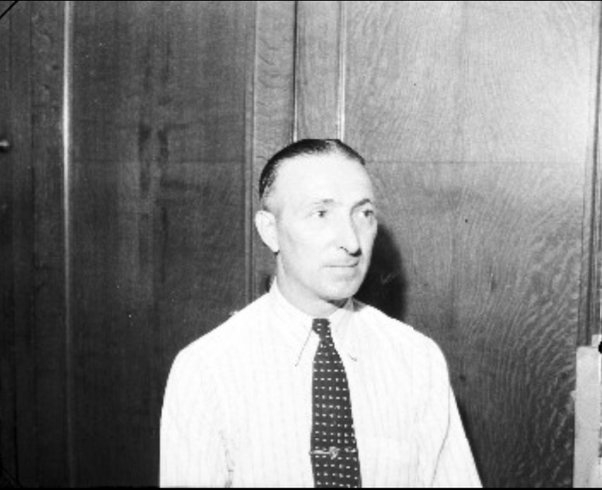
Sadly, missed in the article was paying homage to an atg fighter! I have Holman Williams rated as the 15th Greatest Welterweight of all-time, the 15th Greatest Middleweight of all-time, the #6 Greatest Boxer of the 1940's decade and overall #47 here in The Top 200 Greatest Boxers of All Time.
Holman Williams on the streets of Paris in 1946 before his fight with Marcel Cerdan.
Holman Williams training in a park in Paris before his fight with Marcel Cerdan.
Holman Williams vs Marcel Cerdan in 1946.
This is absolutely wicked stuff, the top photo shows Holman Williams and Marcel Cerdan after their fight in Paris in 1946. Notice the nasty cut on Williams' forehead, that cut was from a previous fight but it re-opened against Cerdan. On the bottom photo, you can see the scar up close from that cut.
Holman Williams vs Jean Walczak in 1945.
Awesome poster from the Charley Burley vs Holman Williams fight on February 26th, 1942, their second meeting, two all-time greats right here. They fought seven times in a classic rivalry between 1939 and 1945, ending with an even split of three wins for each, with one fight ruled a no contest, making them central figures in the era's "Murderer's Row" of Black boxers.
Holman Williams vs Johnny Green at Memorial Auditorium in 1945.
Joe Louis with Holman Williams, two all-time greats.
For some reason, the Black Murderers' Row group of fighters don't have many cards or items to collect, it's darn near impossible to find anything to collect of them. But Holman Williams does have a 1946 Propagandas Montiel card, top row in the middle. These cards were a Cuba issued set and have black and white images of subjects inside of a yellow or orange border. Back include the name of the set as well as the player’s name and biography. They are fragile and printed on thin stock, usually resulting in damage. The majority of the set is comprised of baseball players but key boxing figures, including John Sullivan, Jack Johnson, Joe Louis, Jack Dempsey, and others, are included. Four wrestlers are also featured as well as a single tennis player — Hall of Famer Helen Wills Moody. I'm not sure how these cards were issued but there were albums made that you could glue the cards into to keep them.
This is actually the image of Holman Williams that was used on his 1946 Propagandas Montiel card.
Nice sequence of photos of Holman Williams training.
Holmes Willis had many great rivalries, one of them was against legendary Puerto Rican Jose Basora.
Unforgettable Great Boxing Match| Holman Williams Vs José Basora
Holman Williams jars Jose Basora with an uppercut during their bout on October 3rd, 1944 in Philadelphia, Pennsylvania
The battles between the American Holman Williams and the Puerto Rican José Basora, constituted one of the great rivalries of the "Golden Era" (among so many more), a time when it was common for there to be many confrontations between two fighters, since the hunger for glory, to transcend, to be able to show that one was better than the other on the ring, money being an important issue, but not the ultimate goal. These two great boxers faced each other seven times, with three victories per side and a draw, always on points, except in their last fight, which was Basra's triumph by TKO in four rounds (the fight was stopped after an ugly cut suffered by Williams).
The two had many rivals in common and fought against all the opponents who got in front, with big wins on each side. Both Williams and Basra were avoided by many white boxers, especially Holman Williams, a member of the famous group known as the “Black Murderer's Row”, (a set of elite black boxers, avoided by the best white boxers and who were never given a shot at a world title). Both during their careers maintained other rivalries, fighting several times against other boxers.
Holman Williams was born in Pensacola, Florida, January 30, 1915. His record was [146 (36KO) -31-11] and his career spanned from 1932 to 1948. He died on July 15, 1967, following a fire while he was sleeping. at the club where he worked. His best wins were against: Battling Gizzy, Tommy Paul, Cocoa Kid, Chuck Woods, Bobby Pancho, Young Gene Buffalo, Charley Burley, Eddie Dolan, Antonio Fernández, Rand Jackson, Kid Tunero, Lloyd Marshall, Eddie Booker, Jack Chase, and precisely José Basora, among many more. With several of them he fought on various occasions, such as the Cocoa Kid, whom he faced 13 times !!!
José Basora was born on February 8, 1918, in Lajas, Puerto Rico. He left a mark of [78 (44KO) -20-6], developing his career between 1939 and 1952. He passed away in 1993, at the age of 85, in New York, where he resided. He has an unsurpassed record, in 1943: in just three months he faced three members of the “Hall of Fame”. In August he beat Holman Williams on points, in September he lost by the same way to Jack La Motta and in October he defeated Fritzie Zivic by UD, almost nothing. His great victories include: Frankie Saia, Jack LaMotta, Al Jolson, Young Gene Buffalo, Andy Holland, Fritzie Zivic, Jimmy Curl, Terry Moore and others. Notably, he was the first man to bring the glorious Sugar Ray Robinson to a draw.
Williams and Basra met for the first time on September 29, 1941, with the former winning on points in six rounds. The rematch would be four months later, with the same result. They would not see each other again until August 9, 1943, in a tremendous and very close fight, again with a victory for Holman, this time in a close SD. The fourth installment of this rivalry would take place on April 10, 1944, where Williams would put things 3-1, defeating the Puerto Rican by decision in 10 rounds. Six months later the only tie between them would arrive, when they crossed in Philadelphia at 10 laps. For his sixth fight, which would be in Puerto Rico, with Basora at home, he would win by points in 10 rounds, before his public.
The seventh and last war of this duel would be in 1948, at the Chicago Auditorium, with Basora winning by TKO in the fourth round, after an ugly cut on Williams's face, forcing the referee to stop the fight. It must be said that while their confrontations show that they were tremendously even with each other, they were as different in style, as can be. Williams was a very technical boxer, he handled a wide variety of punches, with excellent defense, great footwork, a correct punch and a classic style; Basora, on the other hand, although technically he was also very good, he was not classic at all, his style was very uncomfortable for anyone, especially for technical boxers, his defense was good without highlighting in that item, his right punch was lethal . Many say he was the hardest hitting Middleweight in the 1940-50 period. However, both left with their great rivalry, a golden legacy.
Excellent write-up on Holman Williams.
Credit: Chaitaly on Facebook
Holman Williams never had a crown placed on his head, but those who truly understood boxing — those who could hear the poetry in footwork, see the truth behind a jab — knew they were looking at royalty.
Born in the sun-bleached streets of Pensacola, Florida, Williams wasn’t handed anything. He carved his legend in shadows, with silence and sweat, far away from the glitter of title belts or grand headlines. And yet, within the undercurrents of the sport, his name still floats — quietly, insistently — like a ghost that won’t go away. Not because he had the loudest voice, but because his brilliance whispered louder than most men could shout.
They called it “Murderers’ Row,” a collection of Black fighters so skilled, so dangerous, that promoters and champions alike avoided them like plague. Titles were rarely won in the ring for these men; they were decided in smoky backrooms, through politics, fear, and money. And in that bitter fraternity, Holman Williams stood as its professor. The kind of boxer whose mastery was so pure, so clean, that the great Eddie Futch once admitted he'd rather watch Williams shadowbox than sit through most actual fights. Imagine that. A man so smooth, so sharp, that even his practice had people in awe.
Williams moved like music. He fought from lightweight all the way to light-heavyweight, flowing through weight classes not with brute force but with brainpower — clever, controlled, calculating. He didn’t just fight opponents; he dismantled them, one round at a time, like a chess player breaking you down before the checkmate.
And oh, the names he faced — not just names, but nightmares. Archie Moore. Cocoa Kid. Lloyd Marshall. Charley Burley. Eddie Booker. Aaron Wade. Jack Chase. Bert Lytell. Bob Satterfield. If there were any justice in boxing, each of those wins would have earned him a title shot, a standing ovation, or at the very least, acknowledgment. Instead, the world looked away.
By the time he crossed paths with Jake LaMotta and Marcel Cerdan — both future middleweight kings — Williams had already done more than enough to write his name into history. He went the distance with both. No one could ignore that, no matter how many title opportunities were stolen from him behind closed doors.
But he wasn’t bitter. At least not outwardly. That was part of his dignity. The injustice never left him, sure — how could it? — but he kept showing up, kept boxing beautifully, almost as if to say: Even if you won’t crown me, you’ll remember me.
And we do. Not because he held belts. Not because he played the game. But because Holman Williams was everything boxing is supposed to be when stripped of its corruption: courage, craft, and quiet greatness.
He wasn’t just one of the best boxers of his time. He was one of the best, period.
Here are some photos of the infamous "Black Murderers' Row" group of fighters. Top row: (from left to right), Eddie Booker, Charley Burley, Bert Lytel, Aaron Wade. Bottom row: (from left to right), Cocoa Kid, Lloyd Marshall, Holman Williams and Jack Chase. They were all great fighters.
"Black Murderers' Row" is legendary.
One of the sickest boxing images I've ever seen, the great Joe Louis glances at the camera with after flooring Tony Galento during their 1939 fight. Louis looks ruthless.
This is an epic photo, the great lightweight Ad Wolgast aka "The Michigan Wildcat" about to play a game of 8-ball with a cigarette in his mouth and a smirk on his face. I had a chance to buy this original type 1 photo years ago on eBay but I hesitated and someone got to it before me, I have nightmares about it every night. Ad Wolgast was one of the most savage fighters to ever live. If I were hanging out in a bar or pool hall and looked over and saw Ad Wolgast rackin' em up, I would $hit myself. He was a bada$$.
Music time.
''When you walk up those steps and see that ring - Jesus - you don't see anybody but somebody is there. If you don't get yourseIf in perfect shape, there are two people waiting for you. The first is death. The next one is you. If you're not ready, you'll go on the rest of your Iife and you won't know your own seIf.''
Puerto Rico's Esteban de Jesus gave world lightweight champion Roberto Duran a complete boxing lesson at Madison Square Garden November 17th in 1972 and scored a unanimous 10‐round decision.
Although Duran was a rough, vicious puncher, it was de Jesus who supplied the fireworks from the outset of a furious fight.
de Jesus caught Duran moving forward in the opening minute and nailed him with a stinging left hook on the point of Duran's chin. The champion, who was not defending his title in this over‐the‐weight scrap, landed on his seat, a look of complete amazement on his handsome face. Duran bounced up almost immediately although the count had reached two by Arthur Mercante, the referee.
It was the first time in the 32‐fight career of the previously undefeated 21‐year‐old Panamanian that he had ever been knocked off his feet.
Durán, the WBA lightweight champion, was fighting for the third time at the Garden and he was cocky. He was only taking on de Jesús as a favor to Garden brass for postponing other fights, a spokesperson said.
Instead, de Jesús had other plans and knocked Durán down moments into the bout with a left hook. While he wasn't badly hurt, Durán was affected and he had trouble getting into a rhythm. He bounced back to score well to the body in round 2, but de Jesús more or less had his way as he managed to physically push Durán around.
“At the [final] bell Duran threw his arms wide in a gesture of disgust," the AP said. He knew he'd lost, and de Jesús knew he'd won.
Durán would more than even the score with two return victories over de Jesús in the coming years, but the Puerto Rican would always be the first fighter to defeat the great "Manos de Piedra."
Bleeding and battered, Stanley Ketchel surrended his world middleweight championship when he was knocked out in the twelfth round at Jeffries's Vernon Arena in California at 4 o'clock in the afternoon by bitter rival Billy Papke on September 7th in 1908.
Neither had ever been knocked out, although Ketchel had a decision over Papke in a previous ten-round fight, as they entered the ring in apparently perfect condition, but the fight ended as one of the bloodiest in boxing history.
When Papke entered the ring he briskly walked to Ketchel's corner and greeted him with a handshake and smile, but when James J. Jeffries, the referee, called time and Ketchel walked to the centre and extended his hand for the formal shake, Papke ignored the hand and sailed into the Michigan man with savage ferocity.
The fight was practically over before it started. It was merely a case of how long Ketchel would last.
Papke tore into Ketchel with such fury that the former undefeated champion was lifted off his feet four times within the first round.
Ketchel never really recovered, dazed and bleeding, he somehow managed to fight back and for at least three rounds he held his own with Illinois' Papke.
By the end, both Ketchel's eyes were closed and he staggered around the ring as Papke landed at will. Both 21 year olds finished the fight covered in blood.
I must say, this is a wicked image, some real ancient Roman gladiator $hit.
My God, Fritzie Zivic really was a vicious bastard when provoked.
The Fight City
Boxiana
Oct. 4, 1940: Zivic vs Armstrong
By: Michael Carbert
Fritzie Zivic is forever one of the most colorful characters in the history of boxing and with 158 wins on his record, he was also no slouch in terms of ring accomplishments. But there’s a reason why you won’t find his name on too many lists of the all-time best, despite the fact it probably deserves to be there. After all, how many other boxers possess a roll-call of scalps to rival Zivic’s? Fritizie’s includes such venerable names as Jake LaMotta, Sammy Angott, Lew Jenkins, Al Davis, Charley Burley, Kid Azteca, and of course Armstrong. Add in his tough battles with Sugar Ray Robinson, Lou Ambers and Billy Conn and you’ve got a warrior for the ages. Robinson himself said no one taught him more about boxing than Zivic did in their two bouts.
Zivic: He didn’t get that nose from playing piano.
But the fact is, aside from there being a whopping 65 losses on his record, “The Croat Comet” was one of the “dirtiest” boxers in ring history, perhaps the dirtiest, even though, as the record shows, he was never disqualified. As a result, his reputation suffered. Everyone understood what Zivic was about. Tough, canny and clever, he was a master at the dark art of errant elbows and well-timed head butts, discreet low blows and painful thumbs to the eyes. Zivic didn’t try to deny it either. As far as he was concerned, this amounted to standard procedure. For Zivic, professional prizefighting was a rough and dirty business and when it came to foul tactics, boxers had to be ready to both take it and dish it out.
“I’d hit guys low,” admitted Zivic. “Choke ‘em or give ’em the head. My best punch was a left hook to you-know-where.”
Zivic’s career began in 1931 and by 1940 he had yet to earn a title shot, his inconsistency preventing the public from viewing him as a legitimate threat. But a big win over Sammy Angott set him up nicely for a chance at Armstrong’s welterweight crown in Madison Square Garden. And Zivic began dreaming about that big, new Cadillac he always wanted. A triple division champion with eighteen straight defenses of his welterweight title to his credit, Henry Armstrong was regarded as an all-time great and a lock to win. But that didn’t stop the longshot underdog from going down to the Cadillac dealership the day of the fight to try and give himself some extra motivation.
But the first several rounds of the match were not good for the challenger. The aggressive Armstrong looked as strong and capable as ever and ready to notch a record nineteenth successful title defense, while Zivic, his reputation preceding him, sought to be extra careful about any unseemly tactics and appeared inhibited.
“That night Henry’s givin’ it to me pretty good,” recounted Zivic years later to Red Smith. “And I can see that Cadillac rollin’ farther and farther away from me. Henry’s givin’ me the elbows and the shoulders and the top of the head, and I can give that stuff back pretty good, but I don’t dare to or maybe they’ll throw me outta the ring.”
Hank suffered serious eye injuries courtesy of Zivic’s thumbs and laces.
Zivic in fact was pacing himself, as he had never gone fifteen rounds and knew he had to have something extra for the late going; stopping the tough Armstrong inside the distance was simply not a realistic prospect. So entering the middle rounds, the challenger began to pick it up. He used hard uppercuts to perfection, nailing Armstrong repeatedly. And then, according to Zivic, he got the big break he needed.
“In the seventh round I give him the head a couple times and choke him a couple times and use the elbows some, and the referee says: ‘If you guys want to fight that way, it’s okay with me.’ Hot damn! I told Luke Carney in my corner: ‘Watch me go now!’ And from there out I saw that Cadillac turn around and come rollin’ back.”
Trainer Ray Arcel works on Armstrong’s wounds.
The bout turned into a bloody alley war. And while Zivic’s uppercuts were his prime weapon, his thumbs and laces to the champion’s eyes also took a painful and bloody toll. By round ten the champion bled from cuts around both eyes as Fritzie began to dominate the action and it soon became obvious that, barring a miracle, a massive upset win for the challenger was about to happen.
The final round: the spent champion reels from Zivic’s attack.
In the final round, Zivic closed the show, battering a hurt and exhausted Armstrong mercilessly. And with seconds left in the fight, he put “Homicide Hank” on the deck. We’ll never know if Henry could have beaten the count; the final bell rang before he had a chance. And while Zivic took a unanimous decision, those applauding at fight’s end were in fact paying tribute to Armstrong’s courage.
“He’s the gamest guy I ever saw,” said the new champion.
Armstrong down at the end of the 15th.
It was an all-time great upset, but Fritzie Zivic didn’t keep that world title belt for very long. He defeated Armstrong in a rematch and then lost the crown to Freddie Cochrane six months later. But he held on to that big, beautiful Cadillac for many years. For his part, Armstrong retired after he lost a rematch to Zivic three months later, but he came back in 1942 and in October of that year he got his revenge, a definitive ten round unanimous decision over Fritzie in San Francisco.
Marcos Geraldo. "If you didn't get Marcos, he was likely to get you."
The Peculiar Career of Marcos Geraldo
By: Ted Sares
If you play word association with retired boxer Marcos Geraldo, you might come up with “chinny,” or “easy work.” But if you did, you would be wrong.
This extremely active Mexican boxer fought out of Baja California but was a staple in Nevada and Southern California and was 38-12 before he ventured outside these regions
Many saw Geraldo as easy work because of the 21 KOs he suffered but what they missed was the fact he had 50 KOs of his own and that made him an ultra-exciting type of fighter--and it guaranteed him plenty of marquee events. If you didn’t get Marcos, he was likely to get you. That translated to bringing in fans. He also was an active fighter and fought, for example, 12 times in 1972 alone. He also toiled 25 times at the Silver Slipper in Las Vegas—yes, 25 times—and he went 21-4!
Along the way, Geraldo (who at various times was the middleweight and light heavyweight champion of Mexico) did battle with four Hall of Famers -- Sugar Ray Leonard, Marvin Hagler, Thomas Hearns, and Virgil Hill -- several world champions, and numerous title contenders. (Michael Nunn, another stiff opponent, could someday become a member of the Hall as well.)
As his career progressed, the level of his opposition became stiffer. Listed in the order of appearance, these are the records of some of his opponents at the time that he fought them: Peter Cobblah (48-46-5), Angel Robinson Garcia (138-80-21), Armando Muniz (32-6-1), George Cooper (49-4-3), Sugar Ray Leonard (21-0), John LoCicero (15-3), Marvin Hagler (48-2-2), Caveman Lee (13-2), Thomas Hearns (33-1), Fred Hutchings (20-1), Ron Wilson (71-33-7), Prince Mama Muhammad (29-1-1), Michael Nunn (7-0), Tony Willis (9-0), Chris Reid (14-0-1), Virgil Hill (16-0), Jesus Gallardo (16-1), Antoine Byrd (6-1-1).
Whew!
In 1979, Geraldo went the distance with Sugar Ray Leonard which surprised boxing buffs though Ray had previously been extended by others.
The following year he gave Marvelous Marvin Hagler all he could handle while losing a unanimous but close decision in a surprisingly tough thriller.
Hagler (May 1980)
Hagler pressed the action in-close but surprisingly was met with strong counterpunching. Both did plenty of shoe shining. First Hagler; then Geraldo. It was tit for tat and the fans roared their approval. What won the fight for Hagler was his stamina and harder punching which enabled him to tire the tough Mexican, but he never managed to break him down.
The scoring was Duane Ford 97-93, Art Lurie 97-94, and Chuck Minker 97-95.
The fans at Caesars Palace in Las Vegas gave both fighters a standing ovation as they raised each other’s arm up in a marvelous (no pun intended) show of mutual respect. The media framed it as a “great” fight. It defined “fan–friendly.”
Geraldo had stopped Bomber John LoCicero before the Hagler fight, but was KOd in round one by both Caveman Lee and Thomas Hearns subsequent to Hagler. And then he was stopped much later by Michael Nunn and Virgil Hill.
His final slate was 71-28-1 -- 100 bouts put him in rarefied company. Also, seven of those 21 KO losses came in his last eight fights.
After a very close review of his career, the word association that could more appropriately fit might be “incongruity,” or “action, or “resilient,” or even “peculiar.”
Sadly, he was always one big win away from entering the top tier.
Marcos Geraldo, he was the type of fighter that you had to get him early, if you let him hang around and get warm then you were in for a war. He was tall, rangy, tough, awkward, and threw punches in flurries, he could be a difficult riddle to solve. He gave Hagler and Leonard tough fights, I believe prior to Montreal Leonard said Geraldo was his toughest opponent. Fascinating fighter, I wish there were more photos available of him.
Fun fact, 1930s light heavyweight champion John Henry Lewis is the uncle of famous rapper and actor LL Cool J, but Lewis is more than that, he's one of the greatest light heavyweights ever. I don't even know where to begin with him, for starters he was beating all-time greats when he was still in high school for Christ's sake, legendary light heavyweight Archie Moore said Lewis was the best he ever saw at the weight, Eddie Futch said he was the second best and Ray Arcel called him the best. That's pretty high praise. Lewis was a phenomenal technician, his style was basically made out to be a traditional out-boxer, good fundamentals but with unholy body shots, as fast as greased lightning whilst being insanely accurate. His lead hand was supposed to be wonderful too. In his career he was stopped once in 117 fights; phenomenal chin. He had sneaky power, good power, good enough to ice over half of his 117 opponents, and good enough to drop and hurt the iron-chinned Maxie Rosenbloom twice. He was forced to retire at the age of 25 due to cataracts in his left eye, and it was later revealed that he had won the light heavyweight title and held it for four years all while being damn near blind. He was that great. Great, great fighter.
Credit: IBHOF
John Henry Lewis was the first black American to win the light heavyweight championship, a title he held for four years. And as with many light heavyweights, Lewis often fought larger heavyweights to gain more attention and bigger purses. Lewis was not the first fighter in his family. His great-great uncle was Tom Molineaux, an early bare knuckle heavyweight who traveled to England to challenge for the title.
Born in California, Lewis moved to Arizona when his father got a job as trainer for the University of Arizona athletic teams. Lewis's father also opened a gym in Phoenix. At a very early age, Lewis and his brother Christy were put to work at the gym, fighting "midget boxing" exhibitions. Later, the Lewises toured the Southwest in such exhibitions. Given this early training, Lewis was well-prepared to turn professional at the age of fourteen as a welterweight. Three years later Lewis won a decision over Lloyd Phelps to take what was considered to be the Arizona middleweight championship. In 1932, Lewis received wide attention when he decisioned future heavyweight champion James J. Braddock in San Francisco and lost a close decision in a non-title bout with light heavyweight champion Maxie Rosenbloom.
The next year, Lewis scored two victories over Rosenbloom, a closely matched rival who came back to defeat Lewis twice. Lewis lost a rematch with Braddock in his first New York appearance in 1934. Managed by the owner of the Pittsburgh Crawfords Negro League baseball team, Gus Greenlee, Lewis fought as often as possible in an attempt to secure a shot at the title. In 1935, he got his chance, fighting for the light heavyweight belt against Bob Olin in St. Louis. But being champ apparently didn't mean being paid. Under the terms of his contract, Lewis forfeited his purse when the sparse crowd failed to provide the minimum expected gate.
Lewis possessed all of the attributes of a great boxer. He had the speed of a welterweight, was aggressive, skilled at defense, and a master puncher. The lack of financial reward was a problem, however. In 1939, Lewis signed for a heavyweight title fight against his friend, Joe Louis. Although it was not widely known, Lewis was almost blind in one eye and had been for some years. Joe Louis gave his friend a chance for a big payday before the eye problem forced him to retire. Louis made short work of the challenger, knocking him out in one round. This fight was the only knockout Lewis suffered in 117 fights. Lewis retired after this defeat.
British Vintage Boxing
JOHN HENRY LEWIS - SENSATIONALLY HUMBLE
Sep 1, 2020
Contributed by: Paul Zanon
“My uncle is actually the first black Light-Heavyweight Champion in America, period: John Henry Lewis—the first ever lineal Heavyweight Champion, not just a belt-holder, a lineal Heavyweight Champion.”
Born 5 May 1914, on the cusp of World War I, John Henry Lewis would soon become a destructive force in his own right.
Born to John Edward Lewis and Mattie Drake Foster in Los Angeles, the family soon relocated to Arizona, which is where the embryonic stages of his boxing seeds began to be sowed. His father ran a gym in Phoenix, which is where young John was taught the fistic fundamentals.
His two brothers also donned the gloves. Paul Roger Lewis, who fought at middleweight and older sibling, welterweight Nathaniel Christy Lewis, who fought on many of John’s undercards. However, Lewis would often claim that boxing was in his blood long before he was born, citing his great, great uncle, bare knuckle boxing sensation, Tom Molineaux as a direct relative.
Molineaux, a slave who won his freedom through fighting, moved to London at the age of 25, and under the strict eyes of slave, turned fighter, Bill Richmond was involved in a number of historic encounters, including two barnburners with Tom Cribb. Molineaux stopped fighting at the age of 31, but unfortunately became dependent on alcohol. He passed away penniless at 34 years of age in 1818, in Galway. Thankfully, his spirit has been revived and in 2018 a plaque was erected in Galway to mark 200 years since his passing. The year after, two weight world champion, Katie Taylor unveiled a headstone on his previously unmarked burial spot.
On 18 January 1929, Lewis had his professional boxing debut against Buster Grant, losing a points decision over four rounds at the Arcadia Hall, Phoenix. However, the fourteen year old welterweight debutant gave a good account of himself and bounced back with gusto in his next 15 contests, boasting a record of 13-2-1. Unfortunately, one of the bouts became memorable for all the wrong reasons. On 11 March 1931, Lewis knocked out fellow Arizonian, Sam Terrin in the third of 10 scheduled rounds, at the O.K. Hall, Prescott. Shortly after Terrin died from the blows sustained in the contest.
On 1 July 1931 he challenged Lloyd Phelps for the USA Arizona State middleweight title. Despite taking a very convincing points decision over Phelps, riots ensued as the crowd in Mesa, Arizona resented the decision, threatening to lynch referee Harry Hegele. The belief was that the reaction was racially motivated, however, The Arizona Republic newspaper backed their 17 year old prospect, stating the result as ‘eminently just.’
On 21 September 1932, Lewis, now 37-3-4 and still only 18 years old took on a man bestowed with the moniker, ‘The Cinderella Man’. Standing almost four inches taller than Lewis and weighing 184lbs (compared to Lewis’ 172lbs), James Walter Braddock, nine years the Arizona favourite’s senior, brought a very erratic record of 48-25-7 to the table. In his previous eight contests, he’d only gained victory once and it didn’t come as a major surprise when Lewis clinched a points victory over the future heavyweight champion of the world. In hindsight, it’s even more impressive to state that Lewis only lost one out of the 10 rounds.
Three fights and eight weeks later, on 16 November 1932, Lewis took on his stiffest test by way of Maxie Rosenbloom. ‘Slapsie Maxie’ had already won the undisputed light heavyweight title in June 1930 against Jimmy Slattery and defended his crown a number of times. Incredibly, the 26 year old New Yorker already possessed a record of 147-28-15 and would finish his career with an incredible 272 contests to his name. That night, Rosenbloom gained the upper hand, taking a points victory at the Civic Auditorium in San Francisco. This was the first instalment of five fights the pair would engage in.
Over the next 22 months, Lewis gained a further 10 victories (including two against Rosenbloom), and one draw, before coming up against Idaho resident, Young Firpo on 20 September 1934 for the Pacific Coast Light Heavyweight title. In an evenly matched contest where the balance of power shifted round by round, nobody complained when the bout was declared a draw.
Over the next seven weeks, Lewis drew against Don ‘Red Barry’, won two further contests by knockout and then faced his old rival, James Braddock on 16 November 1934 at Madison Square Garden, New York. Think about that - five fights in seven weeks at this level. That would be unheard of these days.
On this occasion, Braddock gained the upper hand, walking away with the points decision over 10 rounds. The fight spring-boarded Braddock into a fight with heavyweight contender Art Lasky. The winner would challenge Max Baer for the world heavyweight crown and Braddock was predicted to lose. However, not only did he beat Lasky, we went on to do the unthinkable and beat Baer.
Undeterred by the Braddock loss, Lewis won his next 10 fights in seven months, before being pitted against his old nemesis, Maxie Rosenbloom, for the fourth time. Unfortunately for Lewis, it wasn’t his night, making the tally two a piece for the light heavyweight rivals. Then a week later, Lewis drew against Abe Feldman.
Despite coming off two draws, three months after the Feldman fight, on 31 October 1935, Lewis took on the reigning light heavyweight champion, Bob Olin at the Arena, Saint Louis in front of 9,219 spectators. Incidentally – Olin had beaten Rosenbloom to become champion, however, Lewis had beaten Olin in April 1935 and managed to repeat the feat with a landslide victory. John Henry Lewis was now light heavyweight champion of the world at the ripe age of 21. Interesting fact – Olin was trained by Ray Arcel. Yes, the same man who trained Roberto Duran four decades later.
On 29 November, Lewis lost his fifth encounter against Rosenbloom in a non sanctioned title fight, then knocked out George Simpson in two rounds two weeks later.
1936 was busy to say the least. Lewis fought 20 times, losing and drawing once and racking up 18 victories, including two defences of his crown against Britain’s Jock McAvoy at Madison Square Garden on 13 March, NYC and his first and only ever contest outside the States, against Len Harvey at the Empire Pool, Wembley on 9 November. Both Brits did themselves proud lasting the full 15 rounds with the vastly talented Lewis.
Incredibly, Lewis fought a further 20 times in 1937. That’s 40 fights in two years. The opening contest of 1937 on 4 January was against Pennsylvanian Al Ettore, at the Convention Hall, Philadelphia, where Ettore walked away with a controversial split decision victory. Ring Magazine described it as ‘the worst blow in boxing in several years.’ The pair locked horns again five weeks later, after Lewis, of course, squeezed in a further two contests, however, this time Lewis won a far more convincing decision over 15 rounds. The victory did come at a cost, as Lewis suffered eye injuries against Ettore – something which would later halt his career.
Lewis spent most of 1937 over the 175lbs light heavyweight limit, taking on all comers, many of whom were natural heavyweights, north of 200lbs. However, one fight he did come bang on the limit was against the man he won the world title from, Bob Olin. Intent on making a statement to show he had progressed as a boxer and world champion, on 3 June 1937, Lewis knocked out Olin in eight rounds at the Arena, St Louis, Missouri.
The second contest Lewis lost of 1937 was against heavyweight Spaniard, Isidoro Gastanaga on 15 October at the Olympia Stadium, Detroit. Outweighed by 23lbs and giving away a couple of inches in height, Lewis suffered three knockdowns early in the contest, but managed to last the 10 round distance. However, as with Ettore, Lewis avenged his loss a few weeks later on 7 December, stopping the Ibarra resident in the ninth session.
Lewis remained undefeated in 1938, clocking up 10 straight wins, however, it wasn’t all smooth sailing. The New York Athletic State Commission stripped him of his title on 28 July for failing to accept a challenge against ‘Tiger’ Jack Fox, an opponent who Lewis had knocked out in three rounds a couple of years prior. Lewis believed Fox was not a big enough name and would not generate enough financial traction to make it a worthwhile contest. Thankfully, Lewis still had his National Boxing Association (NBA – now WBA) world light heavyweight strap and defended successfully it against Florida’s Al Gainer on 28 October 1938.
On 25 January 1939, Lewis made a gutsy decision to take on the world heavyweight champion, Joe Louis at Madison Square Garden, in an attempt to become the first light heavyweight champion to claim the heavyweight crown. Unfortunately for Lewis, after three knockdowns, he was stopped in two minutes and 29 seconds of the opening session. The fight was Lewis only stoppage loss in his career. The Brown Bomber was in his pomp, weighed 20lbs more and was destined for unparalleled future greatness. There was no shame in losing to a sporting legend.
His next fight was scheduled to be a rematch with Len Harvey in London, but unfortunately he failed to pass the medical due to blindness in his left eye. Consequently, the Louis fight was his swansong after a 116 fight career (100-11-5). He was only 24 years old at the time of hanging up the gloves.
After retirement, Lewis worked for a Baltimore based liquor company for a number of years. He passed away on 18 April 1974 in Berkeley, California, at only 59 years old after battling Parkinson’s disease and emphysema. Thankfully his efforts in the square ring did not go in vain as he was he was inducted into the International Boxing Hall of Fame in 1994. He will always be known for his fast hands, great defence but more than anything, his incredible boxing brain. The ability to compute information whilst in a fight and strategize accordingly. It’s a rare talent as was Mr Lewis.
One more great write-up on John Henry Lewis.
Boxing News
Light-heavyweight legend John Henry Lewis came up the hard way
Lewis rose from the small halls of Phoenix to hit the big-time
By: BN Staff
4th July, 2024
IN the lineal era, John Henry Lewis was one of the very best world light-heavyweight champions. He dominated the division during the mid-1930s in a similar way that Bob Foster did in the early 1970s.
Like Foster, he defended his title regularly and like Foster, he came unstuck when stepping up to fight for the world heavyweight title. Joe Frazier put paid to Bob’s account in a two-round thrashing and, as we shall see, Lewis had the misfortune to come up against the great Joe Louis, who beat him in a round.
Lewis grew up in Arizona and like so many black fighters of that era, he had to learn his trade the hard way, scrapping many times in the small halls of Phoenix and the surrounding area. One of these small halls was named after the most famous venue in boxing, Madison Square Garden.
It would take Lewis five years and nearly 50 contests before he stepped into the real Garden, in New York City, and when he did so, he went down on points in a 10-rounder to Jimmy Braddock, who at the time was on skid row. The following year, Braddock hit the jackpot, and so did Lewis.
On October 31, 1935, Lewis decisioned Bob Olin to win the world light-heavyweight title. He then boxed eight times in three months in non-title 10-rounders, losing two of them. This is the way that champions made money back then, particularly in an unfashionable weight division. They went on the road for good purses and generally didn’t care if they won or lost. Lewis defended his title twice in 1936 and he picked British fighters on each occasion.
One week after winning a 10-rounder against Eddie Simms in St Louis, Lewis was back at Madison Square Garden in New York, to take on Rochdale’s Jock McAvoy (both men pictured below) for the title. As I stated in an article last June, McAvoy had set the boxing world alight in 1935 when he KO’d Babe Risko in one round in his second American contest, and this title fight was his just reward.
The difference in height between the two men can clearly be seen in the accompanying photograph and this proved to be a major factor on the night, with Lewis using his extra height and reach to do just enough to win most of the rounds by a small margin. McAvoy was always in the fight, particularly in the last few rounds when he knew he had to stop his man, but it wasn’t enough.
Jock McAvoy and John Henry Lewis
Eight months later, Lewis came over to the UK to defend against Len Harvey. The Cornishman had held the British title at middle, light-heavy and heavyweight in a glittering professional career that started when he was just 12 years old, and in 1936 he was at his peak. He had lost the heavyweight title to Jack Petersen in January 1936 and had been inactive since.
The contest with Lewis took place at the Empire Pool, Wembley, in front of a full house of 11,800. Harvey came in at 12st 4lbs, three pounds under the championship limit. There was far less concern back in the 1930s for fighters to come in just ounces under the weight like they do today. A boxer trained hard and whatever the weight that he felt best at, was the weight that he fought at.
Once again, Lewis was just too good for his British opponent. Under the title ‘Britisher’s Bold and Valiant Bid for the World’s Light-Heavyweight Crown,’ BN reported that Lewis had to undergo a stern struggle before he came out on top.
Lewis boxed on until 1939, when, as undefeated light-heavyweight king, he stepped in with Joe Louis for the ultimate prize. He lasted only a couple of minutes as the Brown Bomber blasted him out with some murderous punching. It was John’s last contest. He retired immediately with eye trouble and died in 1974, aged just 59.
Time for some photos of the great John Henry Lewis. Nice shot of Lewis and Maxie Rosenbloom from their fight on November 16th, 1932. They had a great rivalry.
John Henry Lewis beats Bob Olin, October 31st in 1935, to become the first Black light heavyweight champion since Battling Siki.
John Henry Lewis knocks Isidore Gastanaga through the ropes in St. Louis on December 7th in 1937, Lewis won by TKO in the 9th round.
A write-up by the legendary Matt McGrain on just how great John Henry Lewis was at light heavyweight, McGrain ranks Lewis #7 on his 50 greatest light heavyweights of all-time list.
07 - John Henry Lewis (97-10-4)
John Henry Lewis met Maxie Rosenbloom on four separate occasions and the end result was 2-2. But in the two matches that Lewis lost, the men weighed in as heavyweights; Lewis tipped the scale at 182 and 186lbs respectively. When these two elite light-heavies met nearer the light-heavyweight limit, there was only one winner and that was Lewis. What surprises here is that Maxie Rosenbloom was the light-heavyweight champion of the world for these two ten-round non-title meetings, and that John Henry Lewis was a teenager. In fact, he was still at high-school. It didn’t stop him dropping Rosenbloom with a right to the jaw in the first and a left to the kidney in the second in their second meeting in the summer of 1937. Dominating the incumbent champion and then dealing with school the very next day marked Lewis out as something special as he had always been marked out as something special. He first pulled on the gloves as a toddler. He turned professional as a middleweight aged just seventeen. And although he had to wait two years after first defeating Rosenbloom to get his hands on a world champion in a title fight, when he did so he didn’t miss that chance, out-pointing Bob Olin (who had taken the title from Rosenbloom a year earlier) over fifteen in October of 1935. Lewis had already beaten Olin; and Tony Shucco and Young Firpo and Lou Scozza and Rosenbloom. His resume, before he even came to the title, was excellent. Over the coming years he would turn it into something truly extraordinary.
His first defence was staged against #2 contender Jock McAvoy. Lewis, still just twenty-one years old, turned in a performance great maturity and ring-craft, jabbing and counter-punching his way to a decision booed by the crowd for its efficiency rather than any sense that McAvoy had been cheated. Len Harvey, the British and Commonwealth champion was next for a tilt at the title, but before travelling to London to master him, Lewis found the time to dust off Tony Shucco, Al Gainer and former strapholder Bob Godwin, his level of competition remaining outrageously high.
His next defence was a little softer, granting faded ex-champion Bob Olin the rematch he craved and putting him away in eight rounds. “He is the perfect boxer…the best boxer in the world,” Olin later said of his old foe. “He’s fast on his feet with full knowledge of all the scientific departments of the game.” Presumably Emilio Martinez would have agreed with him, succumbing in four rounds, before the perennially ranked Al Gainer pushed him harder over fifteen late in 1938. A late rally protected his title and ensured that he would retire the undefeated light-heavyweight champion of the world. Lewis didn’t just go unbeaten as champion though; he went undefeated at 175lbs. He was never beaten in a match made within 5lbs of the light-heavyweight limit. He was invincible there, dominating a tough era with speedy boxing, a superb left hand and an innate toughness that was only ever beaten from him by heavyweight champion Joe Louis, who stopped him for the first and only time in his career in 1939. Lewis retired shortly thereafter, his eyesight failing him. One imagines the division let out a collective sigh of relief. Lewis had terrorised it.
Other top fifty light-heavyweights defeated: Al Gainer (#38), Tiger Jack Fox (#25), Maxie Rosenbloom (#15)
John Henry Lewis shaking hands with Len Harvey before their bout in 1936, two all-time greats.
John Henry Lewis and Len Harvey at the weigh-in.
John Henry Lewis catches Len Harvey with a jab during their bout at the Empire Pool in Wembley, London, on November 9th, 1936. Lewis won a unanimous decision.
John Henry Lewis defeats Jock McAvoy in 1936 at Madison Square Garden. McAvoy was nicknamed "The Rochdale Thunderbolt" because he had thunder in his fists, the guy could punch.
This is my favorite image of John Henry Lewis, after defeating Jock McAvoy, it's just a spectacular boxing photo of an all-time great. The robe and towel draped over him, his hand with the wraps on raised in victory, the initials on his trunks, the fierce look on his face, just a spectacular image.
John Henry Lewis with a sparring partner in 1936.