Home U.S. Coin Forum

If You Graded Or Owned a 1964 "SMS" Coin, Please Share How You Determined It was a Specimen Strike

FlyingAlFlyingAl Posts: 4,150 ✭✭✭✭✭

Some interesting evidence has come up regarding these examples, and brings the attribution in particular of such coins to the forefront of research. I plan to share this as soon as I can, but I'm waiting on the some of the coins to arrive. If needed, I can share the one example I currently have.

As we know, the 1964 "SMS" examples trace to the same die pair as examples in the Smithsonian. Many numismatists have argued that these coins must be specimen strikes.

The attribution of such coins appears to have changed over the years. Some graders appear to have gone off of "feel" and "fabric" while the more modern approach appears to be die pair matching. I will note that the die pair matching of the current stock of "SMS" coins is remarkably consistent, with every half dollar, cent, nickel, and dime I have seen tracing to the same die pairs (the ones seen on the Smithsonian coins). One quarter does not trace to the same die pair, but the rest do. Similarly, the coins appear to exist only in "SMS" holders. This is more consistent than many TPG variety attributions. Thus, it would appear die pair matching would be TPG policy.

If you have owned a 1964 "SMS" example, how did you determine it was/was not a specimen? If you would be as specific as possible (die line positions, rim strength from which area to which area, particular characteristics) it would be greatly appreciated. If you used die pair alone, that description will suffice. If you do not believe die pair alone should be used, please also state that and why you would believe that, and how many die pairs you think were used to strike the coins.

I have seen a large majority of the descriptions out there, but I wanted to start fresh here to get entirely new ones. The existing descriptions also appear to rely on die pair matching alone.

Comments

  • MFeldMFeld Posts: 15,527 ✭✭✭✭✭

    I haven’t owned any 1964 SMS coins. However, I was a grader at NGC from 1991-1998. And during that time, a number of unusual 1964 sets were submitted for grading by a well known dealer who’d purchased them out of Stack’s auctions. I think that we, at NGC, were the first graders to grade the coins.
    Most, though not all of the coins in the sets looked quite distinctive/specially made.
    As I recall, they weren't what I’d refer to as “PL” and didn’t resemble 1965-1967 SMS coins. But they were atypically flashy, sharply detailed and (depending upon the denomination) exhibited varying degrees of distinctive die polish over portions of their surfaces. Most of the coins simply didn’t look like any circulation strikes we’d seen previously. The “fabric” of their surfaces appeared different. That said, a few of them didn’t stand out like the others, so weren’t given special designations. I remember that being somewhat of a tough decision, seeing as how we were examining complete sets. But ultimately, we felt that each coin needed to stand on its own merits.

    Mark Feld* of Heritage Auctions*Unless otherwise noted, my posts here represent my personal opinions.

  • oldabeintxoldabeintx Posts: 2,588 ✭✭✭✭✭

    Mark, so SP for the distinctive ones?

  • FlyingAlFlyingAl Posts: 4,150 ✭✭✭✭✭

    @MFeld said:
    I haven’t owned any 1964 SMS coins. However, I was a grader at NGC from 1991-1998. And during that time, a number of unusual 1964 sets were submitted for grading by a well known dealer who’d purchased them out of Stack’s auctions. I think that we, at NGC, were the first graders to grade the coins.
    Most, though not all of the coins in the sets looked quite distinctive/specially made.
    As I recall, they weren't what I’d refer to as “PL” and didn’t resemble 1965-1967 SMS coins. But they were atypically flashy, sharply detailed and (depending upon the denomination) exhibited varying degrees of distinctive die polish over portions of their surfaces. Most of the coins simply didn’t look like any circulation strikes we’d seen previously. The “fabric” of their surfaces appeared different. That said, a few of them didn’t stand out like the others, so weren’t given special designations. I remember that being somewhat of a tough decision, seeing as how we were examining complete sets. But ultimately, we felt that each coin needed to stand on its own merits.

    Mark, do you happen to remember if the non-SP coins were from different die pairs than the SP coins?

  • MFeldMFeld Posts: 15,527 ✭✭✭✭✭

    @oldabeintx said:
    Mark, so SP for the distinctive ones?

    Sorry for not having specified. I believe that back then, the designation would have been either “SP” or “Specimen”, though I don’t recall which was used.

    Mark Feld* of Heritage Auctions*Unless otherwise noted, my posts here represent my personal opinions.

  • MFeldMFeld Posts: 15,527 ✭✭✭✭✭

    @FlyingAl said:

    @MFeld said:
    I haven’t owned any 1964 SMS coins. However, I was a grader at NGC from 1991-1998. And during that time, a number of unusual 1964 sets were submitted for grading by a well known dealer who’d purchased them out of Stack’s auctions. I think that we, at NGC, were the first graders to grade the coins.
    Most, though not all of the coins in the sets looked quite distinctive/specially made.
    As I recall, they weren't what I’d refer to as “PL” and didn’t resemble 1965-1967 SMS coins. But they were atypically flashy, sharply detailed and (depending upon the denomination) exhibited varying degrees of distinctive die polish over portions of their surfaces. Most of the coins simply didn’t look like any circulation strikes we’d seen previously. The “fabric” of their surfaces appeared different. That said, a few of them didn’t stand out like the others, so weren’t given special designations. I remember that being somewhat of a tough decision, seeing as how we were examining complete sets. But ultimately, we felt that each coin needed to stand on its own merits.

    Mark, do you happen to remember if the non-SP coins were from different die pairs than the SP coins?

    Alex, I don’t know and don’t remember any discussions related to die pairs.

    Mark Feld* of Heritage Auctions*Unless otherwise noted, my posts here represent my personal opinions.

  • JCH22JCH22 Posts: 451 ✭✭✭✭✭

    I would label them likely “test strikes" from the surplus WWII & Korean War munition presses overhauled and put into service in 1964 to meet the coinage shortage.

    Dates they were overhauled and put into service--- and their strike capabilities align.

    Would account for different appearing, non PL surfaces.....

    GAO, and other Departments have more about them….

  • alefzeroalefzero Posts: 1,117 ✭✭✭✭✭

    The set I had was already graded and attributed as such by PCGS. I believe the presumption was correct that they knew exactly what die markers to look for as they were produced in 1965 with distinct dies that had been unused from the prior year, as trial pieces for the SMS replacement of proofs that year. When I owned them, they were largely still unknown by many dealers and collectors alike.

  • MFeldMFeld Posts: 15,527 ✭✭✭✭✭

    @alefzero said:
    The set I had was already graded and attributed as such by PCGS. I believe the presumption was correct that they knew exactly what die markers to look for as they were produced in 1965 with distinct dies that had been unused from the prior year, as trial pieces for the SMS replacement of proofs that year. When I owned them, they were largely still unknown by many dealers and collectors alike.

    How do you know when they were made or that they were in fact, trial pieces for the officially produced 1965-1967 SMS coins?

    Mark Feld* of Heritage Auctions*Unless otherwise noted, my posts here represent my personal opinions.

  • JCH22JCH22 Posts: 451 ✭✭✭✭✭

    @MFeld said:

    @alefzero said:
    The set I had was already graded and attributed as such by PCGS. I believe the presumption was correct that they knew exactly what die markers to look for as they were produced in 1965 with distinct dies that had been unused from the prior year, as trial pieces for the SMS replacement of proofs that year. When I owned them, they were largely still unknown by many dealers and collectors alike.

    How do you know when they were made or that they were in fact, trial pieces for the officially produced 1965-1967 SMS coins?

    One good piece of evidence is the surplus presses were used to strike "65 sms sets--per Congressional Testimony

  • alefzeroalefzero Posts: 1,117 ✭✭✭✭✭

    @MFeld said:

    @alefzero said:
    The set I had was already graded and attributed as such by PCGS. I believe the presumption was correct that they knew exactly what die markers to look for as they were produced in 1965 with distinct dies that had been unused from the prior year, as trial pieces for the SMS replacement of proofs that year. When I owned them, they were largely still unknown by many dealers and collectors alike.

    How do you know when they were made or that they were in fact, trial pieces for the officially produced 1965-1967 SMS coins?

    I didn't nor couldn't, thus "presumed". The two dozen sets (if I recall) turned up at one show and the determination of that provenance would be associated with that event. PCGS eventually certified them as such. But the full narrative would be interesting. Perhaps Roger B has tripped over some information in that regard.

  • MFeldMFeld Posts: 15,527 ✭✭✭✭✭

    @alefzero said:

    @MFeld said:

    @alefzero said:
    The set I had was already graded and attributed as such by PCGS. I believe the presumption was correct that they knew exactly what die markers to look for as they were produced in 1965 with distinct dies that had been unused from the prior year, as trial pieces for the SMS replacement of proofs that year. When I owned them, they were largely still unknown by many dealers and collectors alike.

    How do you know when they were made or that they were in fact, trial pieces for the officially produced 1965-1967 SMS coins?

    I didn't nor couldn't, thus "presumed". The two dozen sets (if I recall) turned up at one show and the determination of that provenance would be associated with that event. PCGS eventually certified them as such. But the full narrative would be interesting. Perhaps Roger B has tripped over some information in that regard.

    None of what you think you recall is correct.

    Mark Feld* of Heritage Auctions*Unless otherwise noted, my posts here represent my personal opinions.

  • FlyingAlFlyingAl Posts: 4,150 ✭✭✭✭✭

    @JCH22 said:

    @MFeld said:

    @alefzero said:
    The set I had was already graded and attributed as such by PCGS. I believe the presumption was correct that they knew exactly what die markers to look for as they were produced in 1965 with distinct dies that had been unused from the prior year, as trial pieces for the SMS replacement of proofs that year. When I owned them, they were largely still unknown by many dealers and collectors alike.

    How do you know when they were made or that they were in fact, trial pieces for the officially produced 1965-1967 SMS coins?

    One good piece of evidence is the surplus presses were used to strike "65 sms sets--per Congressional Testimony

    The coins have appeared in the Smithsonian years before the surplus presses arrived.

  • JCH22JCH22 Posts: 451 ✭✭✭✭✭

    @FlyingAl said:

    @JCH22 said:

    @MFeld said:

    @alefzero said:
    The set I had was already graded and attributed as such by PCGS. I believe the presumption was correct that they knew exactly what die markers to look for as they were produced in 1965 with distinct dies that had been unused from the prior year, as trial pieces for the SMS replacement of proofs that year. When I owned them, they were largely still unknown by many dealers and collectors alike.

    How do you know when they were made or that they were in fact, trial pieces for the officially produced 1965-1967 SMS coins?

    One good piece of evidence is the surplus presses were used to strike "65 sms sets--per Congressional Testimony

    The coins have appeared in the Smithsonian years before the surplus presses arrived.

    What was the accession date for the '64s in the Smithsonian?
    What was the arrival date(s) of the DOD surplus presses?
    Are 64 circulation strikes known with the same die markers?

  • oldabeintxoldabeintx Posts: 2,588 ✭✭✭✭✭

    @MFeld said:

    @oldabeintx said:
    Mark, so SP for the distinctive ones?

    Sorry for not having specified. I believe that back then, the designation would have been either “SP” or “Specimen”, though I don’t recall which was used.

    Thanks Mark. Did you encounter SP coins for other modern issue years with any frequency?

  • FlyingAlFlyingAl Posts: 4,150 ✭✭✭✭✭

    @JCH22 said:

    @FlyingAl said:

    @JCH22 said:

    @MFeld said:

    @alefzero said:
    The set I had was already graded and attributed as such by PCGS. I believe the presumption was correct that they knew exactly what die markers to look for as they were produced in 1965 with distinct dies that had been unused from the prior year, as trial pieces for the SMS replacement of proofs that year. When I owned them, they were largely still unknown by many dealers and collectors alike.

    How do you know when they were made or that they were in fact, trial pieces for the officially produced 1965-1967 SMS coins?

    One good piece of evidence is the surplus presses were used to strike "65 sms sets--per Congressional Testimony

    The coins have appeared in the Smithsonian years before the surplus presses arrived.

    What was the accession date for the '64s in the Smithsonian?
    What was the arrival date(s) of the DOD surplus presses?
    Are 64 circulation strikes known with the same die markers?

    1958 and 1963 coins show the same appearance.

    No clue to arrival of presses. No to the circulation strikes.

  • MFeldMFeld Posts: 15,527 ✭✭✭✭✭

    @oldabeintx said:

    @MFeld said:

    @oldabeintx said:
    Mark, so SP for the distinctive ones?

    Sorry for not having specified. I believe that back then, the designation would have been either “SP” or “Specimen”, though I don’t recall which was used.

    Thanks Mark. Did you encounter SP coins for other modern issue years with any frequency?

    You’re most welcome. The only other highly unusual “SP” coins (dated within a few decades of the 1964’s) I can recall having graded were 1927 “SP” Buffalo nickels. If any others come to mind, I’ll post an uodate.

    Mark Feld* of Heritage Auctions*Unless otherwise noted, my posts here represent my personal opinions.

  • TrickleChargeTrickleCharge Posts: 357 ✭✭✭✭

    If only one pair of dies were used for each of these coins and not for circulation strikes, then I would think matching up the dies would be all that is needed to identify them. I wish 3CN strike types could be distinguished by looking solely at the dies used.

  • MFeldMFeld Posts: 15,527 ✭✭✭✭✭

    @TrickleCharge said:
    If only one pair of dies were used for each of these coins and not for circulation strikes, then I would think matching up the dies would be all that is needed to identify them. I wish 3CN strike types could be distinguished by looking solely at the dies used.

    I don’t know that to have been the case, however. If it was, there shouldn’t be any controversy regarding the status of the coins.

    Mark Feld* of Heritage Auctions*Unless otherwise noted, my posts here represent my personal opinions.

  • FlyingAlFlyingAl Posts: 4,150 ✭✭✭✭✭

    @MFeld said:

    @TrickleCharge said:
    If only one pair of dies were used for each of these coins and not for circulation strikes, then I would think matching up the dies would be all that is needed to identify them. I wish 3CN strike types could be distinguished by looking solely at the dies used.

    I don’t know that to have been the case, however. If it was, there shouldn’t be any controversy regarding the status of the coins.

    Mark, in practice I've seen every coin trace to the same die pairs, with the one or two odd example being an exception.

    The controversy as I understand it is if any of the coins are special, not if only some are.

  • JCH22JCH22 Posts: 451 ✭✭✭✭✭

    @FlyingAl said:

    @JCH22 said:

    @FlyingAl said:

    @JCH22 said:

    @MFeld said:

    @alefzero said:
    The set I had was already graded and attributed as such by PCGS. I believe the presumption was correct that they knew exactly what die markers to look for as they were produced in 1965 with distinct dies that had been unused from the prior year, as trial pieces for the SMS replacement of proofs that year. When I owned them, they were largely still unknown by many dealers and collectors alike.

    How do you know when they were made or that they were in fact, trial pieces for the officially produced 1965-1967 SMS coins?

    One good piece of evidence is the surplus presses were used to strike "65 sms sets--per Congressional Testimony

    The coins have appeared in the Smithsonian years before the surplus presses arrived.

    What was the accession date for the '64s in the Smithsonian?
    What was the arrival date(s) of the DOD surplus presses?
    Are 64 circulation strikes known with the same die markers?

    1958 and 1963 coins show the same appearance.

    No clue to arrival of presses. No to the circulation strikes.

    The presses arrived last quarter '64. That would be close in time to the accession of the '64s to the Smithsonian. Any thoughts on why dies would have been reserved/destroyed-- rather then used for circulation strikes given the then ongoing, critical, coin shortage? Think such question deserves consideration. Perhaps as test dies for ongoing alternate alloy experiments, or for testing new presses? or ....?

  • MFeldMFeld Posts: 15,527 ✭✭✭✭✭

    @FlyingAl said:

    @MFeld said:

    @TrickleCharge said:
    If only one pair of dies were used for each of these coins and not for circulation strikes, then I would think matching up the dies would be all that is needed to identify them. I wish 3CN strike types could be distinguished by looking solely at the dies used.

    I don’t know that to have been the case, however. If it was, there shouldn’t be any controversy regarding the status of the coins.

    Mark, in practice I've seen every coin trace to the same die pairs, with the one or two odd example being an exception.

    The controversy as I understand it is if any of the coins are special, not if only some are.

    Alex, “if only one pair of dies were used for each of these coins and not for circulation strikes” it sounds like they were all specially made. If not circulation strikes and not specially made, what else could they be?

    Mark Feld* of Heritage Auctions*Unless otherwise noted, my posts here represent my personal opinions.

  • FlyingAlFlyingAl Posts: 4,150 ✭✭✭✭✭

    @MFeld said:

    @FlyingAl said:

    @MFeld said:

    @TrickleCharge said:
    If only one pair of dies were used for each of these coins and not for circulation strikes, then I would think matching up the dies would be all that is needed to identify them. I wish 3CN strike types could be distinguished by looking solely at the dies used.

    I don’t know that to have been the case, however. If it was, there shouldn’t be any controversy regarding the status of the coins.

    Mark, in practice I've seen every coin trace to the same die pairs, with the one or two odd example being an exception.

    The controversy as I understand it is if any of the coins are special, not if only some are.

    Alex, “if only one pair of dies were used for each of these coins and not for circulation strikes” it sounds like they were all specially made. If not circulation strikes and not specially made, what else could they be?

    Mark, the number of extant coins is roughly on par with the number of coins known for die varieties for the year, so the proportion is correct for what we would expect to see in pop reports from a single die pair. There could also be a large stockpile of undiscovered coins, especially with the large amounts of hoarding in those years.

    Additionally, the dies could have been resurfaced or condemned for a number of reasons. The dime dies show evidence of cracking, which could have lead to resurfacing or condemnation. Records for dies for 1964 do not appear to be in archives or have not yet been found.

  • JCH22JCH22 Posts: 451 ✭✭✭✭✭

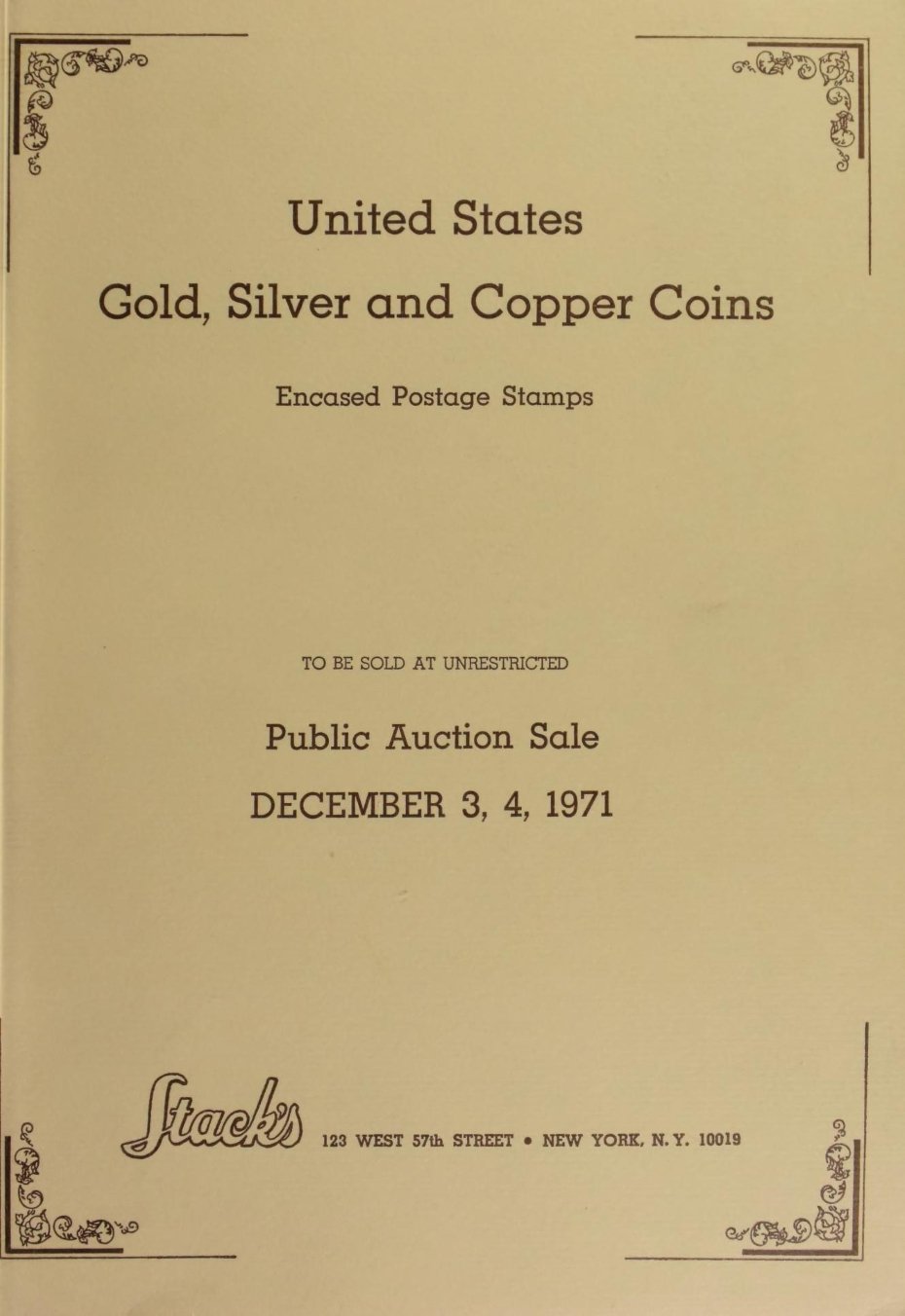
    Lot 600 a typo? If not, would push timeline back.....
  • MFeldMFeld Posts: 15,527 ✭✭✭✭✭

    @JCH22 said:
    Lot 600 a typo? If not, would push timeline back.....
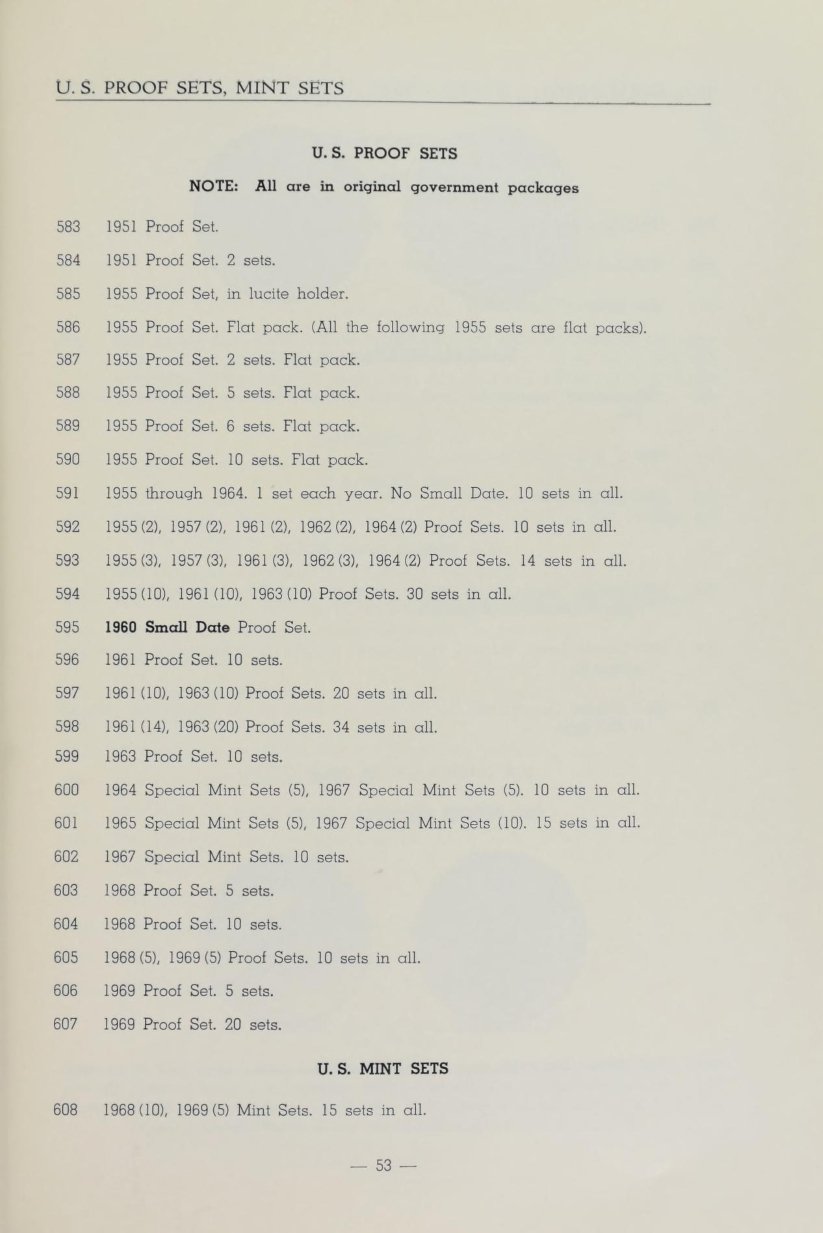
    If it hadn’t been a typo, I’m confident that any 1964 “Special Mint Sets” would have received a special description.

    Mark Feld* of Heritage Auctions*Unless otherwise noted, my posts here represent my personal opinions.

Leave a Comment

BoldItalicStrikethroughOrdered listUnordered list
Emoji
Image
Align leftAlign centerAlign rightToggle HTML viewToggle full pageToggle lights
Drop image/file