You are accurate, it is not absolute that seller, per se, constructed ten of those sets; nor did the description echo the lettering on the case.
I’m not trying to turn the thread into a whine about an ad. I occupy myself with the use, misuse, and abuse of language in the eBay pages.This is another case where a topic in numismatics is presented incompletely or inaccurately to beguile the collector who is incompletely or inaccurately informed. There is a tide of careless sellers and they learn more terms to afflict on careless buyers. I don’t care. I can’t help them. I’m liable to fall into traps like these myself.
This ad does damage if someone who reads it, thinks that it is genuine. This gets in the way of efforts to dispel the myths.
@Creg said:
You are accurate, it is not absolute that seller, per se, constructed ten of those sets; nor did the description echo the lettering on the case.
I’m not trying to turn the thread into a whine about an ad. I occupy myself with the use, misuse, and abuse of language in the eBay pages.This is another case where a topic in numismatics is presented incompletely or inaccurately to beguile the collector who is incompletely or inaccurately informed. There is a tide of careless sellers and they learn more terms to afflict on careless buyers. I don’t care. I can’t help them. I’m liable to fall into traps like these myself.
This ad does damage if someone who reads it, thinks that it is genuine. This gets in the way of efforts to dispel the myths.
It is remarkably easy to remove coins from an SMS and put in coins from 1964 proof sets. If you cut the Gems from '64 proof sets you not only have the means but the motive to fill up empty SMS cases.
But filling up sets in or out of a case from coins that appeared in circulation in 1964 is an impossibility. You couldn't run down to your favorite coin shop and order enough first strike coins to fill up even one single set. Indeed, the only way to acquire a single coin was to go through as many as 50 bags of freshly made coins. It was for every practical purpose impossible to assemble these sets outside the mint. Even at the mint it would require extensive effort and (perhaps) some help in getting dies set up to strike perfect coins after a perfect die was found.
These are specially made and the question is why, how, and by whom. Yes, perhaps an employee could have been charged with intercepting perfect specimens to assemble sets but it would require many weeks.
Again, though, with no expertise in these coins I have no means of knowing just how impossible these are. I'm just going by descriptions and my experience opening rolls and bags of '64 coinage. I am really quite confident that there are dates and mints of modern coins for which not a single Gem made by new dies even were produced much less has survived. The percentage of coins that survived in pristine condition is virtually infinitesimal in many cases.
History will be the final judge of these coins. Right now there are very few collectors even of '64 issues but as time goes on more will be known. I do agree we'll probably never be able to answer the fundamental question about these coins: how did they come to exist.
_ "Indeed, the only way to acquire a single coin was to go through as many as 50 bags of freshly made coins."_
And these bags would need to be random from many different sources because odds are good every bag on a pallet would look pretty much the same. If there were no VEDS coins in one bag there probably wouldn't be on the whole pallet.
Not to derail but this topic reminds me of an article on specimen vs. proof vs. matte & I think satin finishes in the forward to the Eliasberg Sale of Canadian coins.
Bottom line is the US MInt and other prominent mints such as the Royal Mint and Canadian Royal Mint experimented with different finishes even in off years.
Interesting? Well maybe just a bit but IMHO these coins are just not worth huge premiums even if rare.
However Young Al has evidently done us a service and look forward to the read if it should become available to non-ANA members.
Love that Milled British (1830-1960) Well, just Love coins, period.
Back to the original topic. I would just point out that there are many, many seasoned numismatists who have studied these coins, I mean the actual coins—not all the hearsay or lack of Mint documents or tenuous conclusions about the motives of Mint directors or the vocabulary of Mint employees or the opinions of Mint archivists—who believe they are indeed special coins, both in terms of their strike and their unusual finish. The "SMS" is a misnomer that has confused and confounded the issue for decades now, and should never have been used.
But the numismatists who believe/believed the 1964 Special Strike coins are indeed special or specimen coins and far more than mere "first strikes" would certainly include the graders at PCGS back in the 1990s when the coins first appeared (are any of you still around, and would you care to comment?), David Schweitz, Jess Lipka, John Dannreuther, (likely) David Hall, David Lange (NGC), myself, Mitch-Wondercoin, and I believe Jeff Garrett would agree as well. There are plenty of others who have bought and sold these coins whose names probably escape me at this moment. I wonder if JA would not be on that list as well.
The marketplace has determined the worth of these coins, and that will continue. These coins seldom appear in public auction (as most trade privately, and still seldom, as their owners tend to want to hang onto them), and when they do, they bring record prices. When I was a cataloger at Heritage years ago and working on my Kennedy half registry sets, I managed to acquire a 1964 Special Strike Kennedy in "MS67" PCGS (for which I was awarded a "You Suck"), and after hanging on to it for about six years, I consigned it to a Heritage auction where it brought $47,000 with the juice. This result opened the doors for another couple of "1964 SMS" Kennedy halves to appear at auction: one at Heritage April 2019 brought $108,000, a then-world record for a Kennedy half. We have bought and sold several other pieces and "groupings" (never any kind of Mint-assembled sets, which AFAIK do not exist) over the years, always at very healthy prices. One 1964 "SMS" Lincoln cent MS66RD PCGS that we sold on eBay now resides in the DLH Collection.
If it looks like a duck, quacks like a duck and walks like a duck it's a duck.
Except that these coins do not walk, talk, or quack like ducks.
They walk, talk, and quack like coins struck from fresh dies that then had a high degree of preservation post strike, as would be expected for a coin destined for the Smithsonian.
If it looks like a duck, quacks like a duck and walks like a duck it's a duck.
Except that these coins do not walk, talk, or quack like ducks.
They walk, talk, and quack like coins struck from fresh dies that then had a high degree of preservation post strike, as would be expected for a coin destined for the Smithsonian.
I think your research is illuminating and important.
I also think there is a history of coins from various mints in amazing condition or states of preservation without explanation or record.
Ex. CC and S Morgan dollars in proof, early prooflike bust etc.
If it looks like a duck, quacks like a duck and walks like a duck it's a duck.
Except that these coins do not walk, talk, or quack like ducks.
They walk, talk, and quack like coins struck from fresh dies that then had a high degree of preservation post strike, as would be expected for a coin destined for the Smithsonian.
I think your research is illuminating and important.
I also think there is a history of coins from various mints in amazing condition or states of preservation without explanation or record.
Ex. CC and S Morgan dollars in proof, early prooflike bust etc.
Firstly, thank you. I do appreciate the compliment.
There are a few examples of coins that appear to be uncommon, but the problem is that most of these remain hotly debated today. Even looking at the Branch Mint Proof Morgans will show how split the community is.
On another forum, there was hot discussion about the 1921 $20 in Proof. No definite conclusion on its true status was reached despite it residing in a PR holder.
‘’Except that these coins do not walk, talk, or quack like ducks.
They walk, talk, and quack like coins struck from fresh dies that then had a high degree of preservation post strike, as would be expected for a coin destined for the Smithsonian.’’
They sure do walk, talk and quack like Labrador Ducks. And, for those thinking you can find one now in the lake well preserved and looking great, think again.
My checkbook has been open, ready and waiting for these “regular coins” to be offered to me at super high prices and guess what - not one has come my way. I did get a board member privately write and tease me with a pop top 1964 “SMS” Lincoln Cent but it apparently (and unfortunately) will take more than an article to shake it loose. URGENT NEED- Anyone with a coin for sale, even a grade or two under, on the Cent, please write me.
Just my 2 cents.
Wondercoin
Please visit my website at www.wondercoins.com and my ebay auctions under my user name www.wondercoin.com.
@wondercoin said:
‘’Except that these coins do not walk, talk, or quack like ducks.
They walk, talk, and quack like coins struck from fresh dies that then had a high degree of preservation post strike, as would be expected for a coin destined for the Smithsonian.’’
They sure do walk, talk and quack like Labrador Ducks. And, for those thinking you can find one now in the lake well preserved and looking great, think again.
My checkbook has been open, ready and waiting for these “regular coins” to be offered to me at super high prices and guess what - not one has come my way. I did get a board member privately write and tease me with a pop top 1964 “SMS” Lincoln Cent but it apparently (and unfortunately) will take more than an article to shake it loose. URGENT NEED- Anyone with a coin for sale, even a grade or two under, on the Cent, please write me.
Just my 2 cents.
Wondercoin
They aren’t necessarily regular in the sense that they are the highest grade examples for 1964, but there is no proof to suggest they are made in any different way than any other 1964 coins.
‘’They aren’t necessarily regular in the sense that they are the highest grade examples for 1964, but there is no proof to suggest they are made in any different way than any other 1964 coins.’’
Hi Al. They are NOT the highest graded examples for 1964. I think I owned a 64 graded SMS 1C once before I upgraded to the coin in my set and that 64 grade coin looked totally different than the “regular issue coins”. And it sold at auction for hundreds of times (perhaps 1000x) the value of an MS64 regular coin. But, it was a few points lower than coins (fairly) easily found in BU rolls of 1964.
Wondercoin
Please visit my website at www.wondercoins.com and my ebay auctions under my user name www.wondercoin.com.
@wondercoin said:
‘’They aren’t necessarily regular in the sense that they are the highest grade examples for 1964, but there is no proof to suggest they are made in any different way than any other 1964 coins.’’
Hi Al. They are NOT the highest graded examples for 1964. I think I owned a 64 graded SMS 1C once before I upgraded to the coin in my set and that 64 grade coin looked totally different than the “regular issue coins”. And it sold at auction for hundreds of times (perhaps 1000x) the value of an MS64 regular coin. But, it was a few points lower than coins (fairly) easily found in BU rolls of 1964.
Wondercoin
Mitch, from what I've seen, there seems to be a tendency to undergrade the 1964 "SMS" coins due to the SP designation (similar to the grading on 65-67 SMS coins).
I'd imagine that's why the coins stick out.
For example, take the below two coins. Remove the slight die fatigue in the fields of the first coin and you'll be getting damn near, if not exactly, the look of the SP. There is very little difference at all between the two already. Combine exceptionally fresh dies and excellent preservation, and bingo it "looks" different.
@Creg said:
So, seller is putting ‘64s in ‘66 and ’67 cases?
Or someone else did that before the seller acquired them.
Either way, he’s not trying to sell them as the rare/valuable type of SMS coins being discussed in this thread.
Ignorance of the law (coins) is no excuse.
Successful transactions:Tookybandit. "Everyone is equal, some are more equal than others".
The biggest visual difference between the coins shown above is the lack of "normal" luster on the VEDS coin. This "fine" luster is what really defines the "look" of VEDS coins. The bottom coin does have luster, but it is the luster created only by the flow of planchet metal. The upper coin has luster created mainly by the die after it was subject to the wear of planchet metal flow due to striking many thousands of coins.
Edited to add: most of the VEDS coins I've run across are VEDS on one side only. Here are a couple other VEDS coins I've found:
@FlyingAl has confirmed through research that these coins were made/selected by someone at the mint and put into sets for a purpose we don’t know. They are special in that regard. For those of us who have seen them in hand, the do have a unique look, not necessarily captured in photos. I can’t recall if the OP has actually seen any in person. In this regard, I appreciate his efforts and having the idea that they might be related to the Smithsonian coins. That was a brilliant stroke.
@DMWJR said: @FlyingAl has confirmed through research that these coins were made/selected by someone at the mint and put into sets for a purpose we don’t know. They are special in that regard. For those of us who have seen them in hand, the do have a unique look, not necessarily captured in photos. I can’t recall if the OP has actually seen any in person. In this regard, I appreciate his efforts and having the idea that they might be related to the Smithsonian coins. That was a brilliant stroke.
I do agree that if collectors want to see them as special for the fact that they are related to the Smithsonian coins, that is totally fair. I'd say a FS number on a slab would suffice.
As far as photos go, I'd say the photos capture the coins well. It is of note that the old adage "you can't learn to grade from photos" is just false. For coins like these, you absolutely can compare the coins based on images.
@wondercoin said:
‘’ I can’t recall if the OP has actually seen any in person.’’
Al: if I may ask- How many of the 1964 coins designated by PCGS or NGC as SMS specimens have you personally examined in your career?
Wondercoin
Mitch - I haven't seen any in hand. I've seen pretty much all of the coins that have come up from auction in the auction photos.
While some may see this as some big "gotcha!" moment, the fact of the matter is that my not seeing these coins in hand has absolutely no effect on my research. I would still report the documents exactly as they are today even if I had seen the coins in hand.
Additionally, you can see in this thread alone people who have owned the 1964 "SMS" coins and felt they showed no distinctly special surfaces. There are also others that feel they do show a unique surface. In 50+ years, these conflicting opinions have not really changed much.
I'd also like to note that the vast majority of the coins I've worked with have been through photos. I learned to grade through photos, and it has become quite easy for me to identify factors like surface quality and condition from photos. Understanding how the photos are taken is also extremely helpful. I'm quite sure that if I did see a "SMS" coin in hand, I would not feel it was anything beyond a high grade piece struck from fresh dies. I have seen several "SP" or "PR" coins that aren't traditionally called as such, and my opinion of those coins did not change upon seeing them in hand.
However Mitch, if you think I would feel differently, I'll extend the following offer to you. If you'd like to send me a 1964 "SMS" of any denomination and grade, I'll image it and 10 other coins for you free of charge. If you feel this isn't a good enough deal, please send me a PM and we'll see if we can work something out.
Thousands of collectors could post photos of coins that are similar in grade, appearance and quality as the so-called SP or SMS 1964 coins....well, let's just call them for what they are, early strikes, I know that I could post a few. But then again, very few could resemble a true SP example as we see in the specially made 1994-P and 1997-P Jefferson nickels.
Here's a coin with a strike that occurred earlier than the 1964 coins. Aside from the VEDS details it has, there're also a bit of PL fields and raised lathe lines galore and the frost that appears on Jefferson and the Monticello. At this time, it's the only example I'm aware of with the high qualities it has.
It's hard to believe the only mark, a planchet mark that didn't smooth out during the making of this coin was limited to a MS 66 grade. I guess I should mention the 3 ticks on the 6th step, were they factered into the grade? Hmm But whenever I can buy a $10,000 coin for $50 .....I'll continue to leap for joy! Deserves a SP designation more than.......
Leo
The more qualities observed in a coin, the more desirable that coin becomes!
‘’However Mitch, if you think I would feel differently, I'll extend the following offer to you. If you'd like to send me a 1964 "SMS" of any denomination and grade, I'll image it and 10 other coins for you free of charge. ‘’
Thanks Al. Do you ever come to Las Vegas for a PCGS grading event? In a few months, I’ll have a home in Vegas. How about you plan to attend one of the PCGS Vegas shows in 2025 and I will bring some PCGS SMS coins for you to personally examine? We can do the same thing centered around a Long Beach show as well. Send me a P.M. with your thoughts on either venue.
Wondercoin.
Please visit my website at www.wondercoins.com and my ebay auctions under my user name www.wondercoin.com.
Looking at the 2 sets of photos @FlyingAl posted, the second coin is obviously sharper, especially on the reverse. Look a the steps and Lincoln in the memorial. To me, it is hard to see that sharpness being a die fatigue issue. It looks like the second coin was struck with a higher striking pressure.
You certainly opened some eyes with your research on the Smithsonian connection, but let’s leave it at that. You’ve never seen one, but you can opine on the look of the coins. That is irresponsible.
@leothelyon said:
Thousands of collectors could post photos of coins that are similar in grade, appearance and quality as the so-called SP or SMS 1964 coins....well, let's just call them for what they are, early strikes, I know that I could post a few. But then again, very few could resemble a true SP example as we see in the specially made 1994-P and 1997-P Jefferson nickels.
Here's a coin with a strike that occurred earlier than the 1964 coins. Aside from the VEDS details it has, there're also a bit of PL fields and raised lathe lines galore and the frost that appears on Jefferson and the Monticello. At this time, it's the only example I'm aware of with the high qualities it has.
It's hard to believe the only mark, a planchet mark that didn't smooth out during the making of this coin was limited to a MS 66 grade. I guess I should mention the 3 ticks on the 6th step, were they factered into the grade? Hmm But whenever I can buy a $10,000 coin for $50 .....I'll continue to leap for joy! Deserves a SP designation more than.......
I have several such coins myself. But they are one here and one there, different dates and denominations.
I can't imagine assembling 12 or 15 of every denomination for any date.
That's a really nice nickel by the way. Just nice even strikes are tough enough without also being fully struck and one of the first few from new dies.
@DMWJR said:
You certainly opened some eyes with your research on the Smithsonian connection, but let’s leave it at that. You’ve never seen one, but you can opine on the look of the coins. That is irresponsible.
And exactly how does viewing photos of them not count as "never seen one"? I can't say how many times someone has asked me to give an opinion based on a photo, but I can assure you it's far greater than the number of coins I've been asked to review in person.
Again - even if I somehow decided after seeing one of these in hand that "my goodness, they do look different!" the research does not change.
Saying that "yep - it's different because I looked at them and I say they are different" is irresponsible. Reporting the facts as it appears in mint and historical records, and then drawing logical conclusions based on those documents is not. Numismatic research needs more of the latter today.
A large grouping of these coins (3) appeared in a group of standard Mint Sets for 1964. Images of the coins are below. The coins came from a collector who had cut them out of the cellophane sets years ago.
It is my understanding that die pair matching is the only thing tying these "SMS" coins together. The below are die pair matches to the Smithsonian coins, and the PCGS "SMS" coins. One lone example (a quarter) from the die pairs found in the Smithsonian is known outside of a "SMS" holder, and every other example tracing to these dies is found in an "SMS" holder (15 or so per denomination and service). That is incredibly consistent.
This discovery would tend to support the conclusion that the coins are no different from the standard coinage for the year, given that they were quite literally distributed in the standard coinage for the year.
Now, having seen four of these coins in person, I can once again confirm that I see nothing special about them aside from them being fresh strikes from new dies.
.
.
This coin was not found in the Mint Sets, but is included for posterity.
And a Smithsonian example of each type. It is of note that extreme photographic differences produce extremely different appearances.
Going just by the images, I wouldn’t conclude that those coins were specially made. And I’d likely say the same about some of the examples that have been designated as “SMS”. However, before making a determination about something like this, I believe that it’s imperative to examine the coins in hand. So, to me, die pair matches between pieces designated as “SMS” and some coins found in “standard mint sets” doesn’t convince me that the former are merely early strikes from standard new dies.
Mark Feld* of Heritage Auctions*Unless otherwise noted, my posts here represent my personal opinions.
But modern mint sets (post-1964) are ALL specially made. They are struck by good dies and lower speeds and higher pressure. There are many other niceties that are only sometimes applied. This is just one of the many reasons that most modern Gems come from mint sets. You can get specially made coins in rolls and bags but they are few and far between. You will not find a bag of them and for most of these dates you can't find bags either.
Finding these coins in mint sets is certainly interesting but it proves nothing at all. Mint sets are where you look for special coins made after 1964. I don't know much about 1964 mint sets. Sure I've looked at more than 100 and I've seen lots of BU roll coins and bags to compare them too. The mint sets tend to just be "nice" more than "special". But it would hardly be surprising if an excess of specially made coins were tossed into 1964 mint sets or if the same dies used to make the "SMS" coins were used to strike mint sets.
Without documentation all we have are appearances.
Going just by the images, I wouldn’t conclude that those coins were specially made. And I’d likely say the same about some of the examples that have been designated as “SMS”. However, before making a determination about something like this, I believe that it’s imperative to examine the coins in hand. So, to me, die pair matches between pieces designated as “SMS” and some coins found in “standard mint sets” doesn’t convince me that the former are merely early strikes from standard new dies.
Especially since there is no reason they couldn't have simply put the die from the experimental strike into regular production.
[Although I am skeptical about the coins. ]
All comments reflect the opinion of the author, even when irrefutably accurate.
Going just by the images, I wouldn’t conclude that those coins were specially made. And I’d likely say the same about some of the examples that have been designated as “SMS”. However, before making a determination about something like this, I believe that it’s imperative to examine the coins in hand. So, to me, die pair matches between pieces designated as “SMS” and some coins found in “standard mint sets” doesn’t convince me that the former are merely early strikes from standard new dies.
Especially since there is no reason they couldn't have simply put the die from the experimental strike into regular production.
[Although I am skeptical about the coins. ]
I'll reply here to both of you since I believe this will dual tag.
I understand this point of view, however if this was the case we'd expect to see coins matching these die pairs in Mint State holders. We do not, except for anomalies. I looked for days when I first did the article, and searched effectively the whole GC archive. Nothing. The sole quarter is what I came up with, everything else was "SMS".
If the dies were put into circulation production, where are those coins? I'd argue they're in the "SMS" holders. There were never special strikes to start with, everything from these dies are circulation coins.
There's also issues with the attribution of the current stock of "SMS" coins if we accept some are special and some are not - which are which? Who gets to decide? Is one TPG correct and the other not? How special must they look? Do all of the graders need to be the same? Which graders are we going to use? What factors will they use to distinguish the special coins from those that aren't? What happens when they inevitably disagree or get it wrong? It's not an objective determination anymore.
You know this discussion of the "specialness", or whatever, of the SMS 1964 coins reminds me of the eternal philosophic battle in biology and medicine between "lumpers" and "splitters". Can there not be a spectrum? (Not to diverge but look how children are now referred to as "spectrum" as they have orientation toward autism).
An interesting discussion of proof, proof-like, specimen, and currency designations is found in the forward of the Norweb Canadian Sale....
I tend to agree with that author in that coins can be found possessing none, some, quite a few, or nearly all characteristics of fabric, strike, surfaces, etc. that would fit a coin in a particular designation - and even some of the individual characteristics can present in a spectrum...
Love that Milled British (1830-1960) Well, just Love coins, period.
Going just by the images, I wouldn’t conclude that those coins were specially made. And I’d likely say the same about some of the examples that have been designated as “SMS”. However, before making a determination about something like this, I believe that it’s imperative to examine the coins in hand. So, to me, die pair matches between pieces designated as “SMS” and some coins found in “standard mint sets” doesn’t convince me that the former are merely early strikes from standard new dies.
Especially since there is no reason they couldn't have simply put the die from the experimental strike into regular production.
[Although I am skeptical about the coins. ]
I'll reply here to both of you since I believe this will dual tag.
I understand this point of view, however if this was the case we'd expect to see coins matching these die pairs in Mint State holders. We do not, except for anomalies. I looked for days when I first did the article, and searched effectively the whole GC archive. Nothing. The sole quarter is what I came up with, everything else was "SMS".
If the dies were put into circulation production, where are those coins? I'd argue they're in the "SMS" holders. There were never special strikes to start with, everything from these dies are circulation coins.
There's also issues with the attribution of the current stock of "SMS" coins if we accept some are special and some are not - which are which? Who gets to decide? Is one TPG correct and the other not? How special must they look? Do all of the graders need to be the same? Which graders are we going to use? What factors will they use to distinguish the special coins from those that aren't? What happens when they inevitably disagree or get it wrong? It's not an objective determination anymore.
Alex, it sounds like the coins that you posted, which are a die pair match to the SMS coins, should be submitted to PCGS. If they receive the SMS designation, it will bolster (though not prove) your case that the coins are merely early strikes. And ironically, it would also provide the owner with a financial windfall. On the other hand, if they don’t receive the designation, at least you have some “coins matching these die pairs in Mint State holders” which to this point, have only been anomalies. 😉
Mark Feld* of Heritage Auctions*Unless otherwise noted, my posts here represent my personal opinions.
Going just by the images, I wouldn’t conclude that those coins were specially made. And I’d likely say the same about some of the examples that have been designated as “SMS”. However, before making a determination about something like this, I believe that it’s imperative to examine the coins in hand. So, to me, die pair matches between pieces designated as “SMS” and some coins found in “standard mint sets” doesn’t convince me that the former are merely early strikes from standard new dies.
Especially since there is no reason they couldn't have simply put the die from the experimental strike into regular production.
[Although I am skeptical about the coins. ]
I'll reply here to both of you since I believe this will dual tag.
I understand this point of view, however if this was the case we'd expect to see coins matching these die pairs in Mint State holders. We do not, except for anomalies. I looked for days when I first did the article, and searched effectively the whole GC archive. Nothing. The sole quarter is what I came up with, everything else was "SMS".
If the dies were put into circulation production, where are those coins? I'd argue they're in the "SMS" holders. There were never special strikes to start with, everything from these dies are circulation coins.
There's also issues with the attribution of the current stock of "SMS" coins if we accept some are special and some are not - which are which? Who gets to decide? Is one TPG correct and the other not? How special must they look? Do all of the graders need to be the same? Which graders are we going to use? What factors will they use to distinguish the special coins from those that aren't? What happens when they inevitably disagree or get it wrong? It's not an objective determination anymore.
Alex, it sounds like the coins that you posted, which are a die pair match to the SMS coins, should be submitted to PCGS. If they receive the SMS designation, it will bolster (though not prove) your case that the coins are merely early strikes. And ironically, it would also provide the owner with a financial windfall. On the other hand, if they don’t receive the designation, at least you have some “coins matching these die pairs in Mint State holders” which to this point, have only been anomalies. 😉
That might be the move here Mark. I'll have to talk to the owner of these three. I will likely submit my example.
I do not think finding matching dies pairs in a “regular mint set” conclusively proves there were no specimens/test strikes. Finding same could be completely consistent with a "special" ( or specimen or test) strikes.
You previously dismissed as a factor the new/surplus munition presses, capable of considerably more strike pressure (and other changes to minting procedures in 1964). These were up and running before the cessation of striking of ’64 mint sets and proof sets in December, 1964. These same former munition presses were subsequently transferred to San Fran to strike ’65 SMS sets because of their strike capabilities (and also because they were slow for circulation strikes).
Myself, think finding some matching die pairs in “regular mint sets” -- which continued to be struck after the new/surplus presses were reconditioned, and put into operation--- raises the question of at least some initial strikes ( Specimen/Test) to dial the machinery in. Later strikes included in standard mint sets using the same dies, but perhaps with adjustments to the striking procedures, would not be inconsistent
Do you still maintain it is a non-factor to look into whether any of the "SMS coins" could be test/specimen strikes from the higher tonnage presses? Guess you could say they might just be first/early strikes off fresh dies, on new/surplus presses, and nothing “special”-- but would you need to view the coin in hand (as suggested by Mark in his previous comment) before reaching that conclusion? Also, look to see what evidence might exist, apart from the coins themselves, on how and when 1964 mint sets were struck?
Think your research good, but definitive conclusions at this time are a bit premature.
As an aside, is it know how many die pairs were used to strike "regular '64 sets mint sets? I have found general numbers for global die records, but none specific to either proof or "regular mint set" coins. If you happen to know, info would be much appreciated.
The reason I dismiss your press theory is because we see coins with similar qualities to the 1964 coins in the Smithsonian dated 1958. Therefore, the presses would have had to be in use in 1958, which doesn't work with the timeline presented.
Die records are not available for 1964 as we know it, despite extensive searches by other researchers.
@7Jaguars said:
You know this discussion of the "specialness", or whatever, of the SMS 1964 coins reminds me of the eternal philosophic battle in biology and medicine between "lumpers" and "splitters". Can there not be a spectrum? (Not to diverge but look how children are now referred to as "spectrum" as they have orientation toward autism).
An interesting discussion of proof, proof-like, specimen, and currency designations is found in the forward of the Norweb Canadian Sale....
I tend to agree with that author in that coins can be found possessing none, some, quite a few, or nearly all characteristics of fabric, strike, surfaces, etc. that would fit a coin in a particular designation - and even some of the individual characteristics can present in a spectrum...
The route to reality goes through proper definition first. Mankind has lost touch with reality through using theory itself as a means to interpret all evidence. AI is abstracting us out of confusion through elaboration and extrapolation. It is exposing reality. We rely on induction and this is where the splitters reduce confusion by promoting deduction.
Positively identifying the nature of these coins from 60 years ago will prove fruitless in all probability.
Many people may not appreciate the rarity of early or hammered strikes of most modern coins including the huge mintages after 1952. Some new dies barely look new on the first strike and many others wear so quickly their tiny mintage gets lost in a bag or two of quarters that were probably used to make change at Poughkeepsie Woolworths in 1965. You can't just go to your local coin shop and pick up a roll of 1982-P quarters with nice strikes at bid. Yes, we could search for coins off these dies but even that might prove impossible but with a meaningful sample it could be determined if they were simply later strikes so have no bearing on any perceived "specialness" of the SMS coins.
One of the characteristics of modern mint sets is that they were made by new dies yet you'll find a new dies strike in only in only about .025% of mint sets. The fact that a 1964 was saved at all indicates its specialness.
The reason I dismiss your press theory is because we see coins with similar qualities to the 1964 coins in the Smithsonian dated 1958. Therefore, the presses would have had to be in use in 1958, which doesn't work with the timeline presented.
Die records are not available for 1964 as we know it, despite extensive searches by other researchers.
Thanks re die records.
From your article:
“The best way to describe these coins is with authentic mint terminology: uncirculated. These are not coins where documentation shows they were struck in a different manner for testing—in fact, it is quite the opposite. To further this stance, the 1963 coinage is another data point….
Based on the photographic evidence, it is clear that these 1963 coins were struck in the same manner as the 1964 “SMS” coins, and they were given to the Smithsonian.” They too were called “Uncirculated,” not “Specimen” or anything similar.”
Agree that: " These are not coins where documentation shows they were struck in a different manner." But... perhaps that is because documentation has not been looked into fully . Just pictures, mostly.
Will agree to disagree that: comparing photos of 1963 and 1964 sets in Smithsonian is dispositive; renders consideration of the circumstances surrounding the actual striking of ’64 uncirculated sets moot; and, photos alone are determinative of the striking process.
Sure thing on the die records.
Seems like we have some minor disagreements on the details here, which is ok with me. I think you have a good idea of what is going on and have made your own conclusions based on the facts, which is the important thing anyways.
Regardless, the discovery of the three coins above throws another element in to be considered, and does shift the pendulum.
For example, take the below two coins. Remove the slight die fatigue in the fields of the first coin and you'll be getting damn near, if not exactly, the look of the SP. There is very little difference at all between the two already. Combine exceptionally fresh dies and excellent preservation, and bingo it "looks" different.
So I'd first like to apologize for wading into this hotly debated topic having never owned, but merely seen a few of these. Here's my question, or observation. These two coins are obviously not "cut from the same cloth." Was this really the poster's intent, to say that they are so similar as to be nearly indistinguishable? Astonishing! Look at the differences between the fields and the devices. To me, everything about the bottom (SMS) coin is exceptionally well delineated, whereas the top coin seems obviously the product of mass production. Just look at the surfaces. I mean the surfaces of the fields and the devices. And look at the finish. I don't know about you but if someone handed me a raw SMS coin I'd spot it in a heartbeat, even with my old presbyopic eyes.
Look, everybody knows these things bring mad money at auction, and everybody would like a piece of that. Eyes seeing what they want to see is a known issue, just made obvious from all the "is this shelf-doubling or a DDO?" posts. I get it. It happens to us all. But these SMS coins, they ARE different. And what they ARE NOT is EDS versions of regular MS coins. Sorry.
Comments
You are accurate, it is not absolute that seller, per se, constructed ten of those sets; nor did the description echo the lettering on the case.
I’m not trying to turn the thread into a whine about an ad. I occupy myself with the use, misuse, and abuse of language in the eBay pages.This is another case where a topic in numismatics is presented incompletely or inaccurately to beguile the collector who is incompletely or inaccurately informed. There is a tide of careless sellers and they learn more terms to afflict on careless buyers. I don’t care. I can’t help them. I’m liable to fall into traps like these myself.
This ad does damage if someone who reads it, thinks that it is genuine. This gets in the way of efforts to dispel the myths.
It is remarkably easy to remove coins from an SMS and put in coins from 1964 proof sets. If you cut the Gems from '64 proof sets you not only have the means but the motive to fill up empty SMS cases.
But filling up sets in or out of a case from coins that appeared in circulation in 1964 is an impossibility. You couldn't run down to your favorite coin shop and order enough first strike coins to fill up even one single set. Indeed, the only way to acquire a single coin was to go through as many as 50 bags of freshly made coins. It was for every practical purpose impossible to assemble these sets outside the mint. Even at the mint it would require extensive effort and (perhaps) some help in getting dies set up to strike perfect coins after a perfect die was found.
These are specially made and the question is why, how, and by whom. Yes, perhaps an employee could have been charged with intercepting perfect specimens to assemble sets but it would require many weeks.
Again, though, with no expertise in these coins I have no means of knowing just how impossible these are. I'm just going by descriptions and my experience opening rolls and bags of '64 coinage. I am really quite confident that there are dates and mints of modern coins for which not a single Gem made by new dies even were produced much less has survived. The percentage of coins that survived in pristine condition is virtually infinitesimal in many cases.
History will be the final judge of these coins. Right now there are very few collectors even of '64 issues but as time goes on more will be known. I do agree we'll probably never be able to answer the fundamental question about these coins: how did they come to exist.
_ "Indeed, the only way to acquire a single coin was to go through as many as 50 bags of freshly made coins."_
And these bags would need to be random from many different sources because odds are good every bag on a pallet would look pretty much the same. If there were no VEDS coins in one bag there probably wouldn't be on the whole pallet.
Not to derail but this topic reminds me of an article on specimen vs. proof vs. matte & I think satin finishes in the forward to the Eliasberg Sale of Canadian coins.
Bottom line is the US MInt and other prominent mints such as the Royal Mint and Canadian Royal Mint experimented with different finishes even in off years.
Interesting? Well maybe just a bit but IMHO these coins are just not worth huge premiums even if rare.
However Young Al has evidently done us a service and look forward to the read if it should become available to non-ANA members.
Well, just Love coins, period.
Back to the original topic. I would just point out that there are many, many seasoned numismatists who have studied these coins, I mean the actual coins—not all the hearsay or lack of Mint documents or tenuous conclusions about the motives of Mint directors or the vocabulary of Mint employees or the opinions of Mint archivists—who believe they are indeed special coins, both in terms of their strike and their unusual finish. The "SMS" is a misnomer that has confused and confounded the issue for decades now, and should never have been used.
But the numismatists who believe/believed the 1964 Special Strike coins are indeed special or specimen coins and far more than mere "first strikes" would certainly include the graders at PCGS back in the 1990s when the coins first appeared (are any of you still around, and would you care to comment?), David Schweitz, Jess Lipka, John Dannreuther, (likely) David Hall, David Lange (NGC), myself, Mitch-Wondercoin, and I believe Jeff Garrett would agree as well. There are plenty of others who have bought and sold these coins whose names probably escape me at this moment. I wonder if JA would not be on that list as well.
The marketplace has determined the worth of these coins, and that will continue. These coins seldom appear in public auction (as most trade privately, and still seldom, as their owners tend to want to hang onto them), and when they do, they bring record prices. When I was a cataloger at Heritage years ago and working on my Kennedy half registry sets, I managed to acquire a 1964 Special Strike Kennedy in "MS67" PCGS (for which I was awarded a "You Suck"), and after hanging on to it for about six years, I consigned it to a Heritage auction where it brought $47,000 with the juice. This result opened the doors for another couple of "1964 SMS" Kennedy halves to appear at auction: one at Heritage April 2019 brought $108,000, a then-world record for a Kennedy half. We have bought and sold several other pieces and "groupings" (never any kind of Mint-assembled sets, which AFAIK do not exist) over the years, always at very healthy prices. One 1964 "SMS" Lincoln cent MS66RD PCGS that we sold on eBay now resides in the DLH Collection.
This^^^^^^^^^^. The duck test.
If it looks like a duck, quacks like a duck and walks like a duck it's a duck.
Except that these coins do not walk, talk, or quack like ducks.
They walk, talk, and quack like coins struck from fresh dies that then had a high degree of preservation post strike, as would be expected for a coin destined for the Smithsonian.
Coin Photography
I think your research is illuminating and important.
I also think there is a history of coins from various mints in amazing condition or states of preservation without explanation or record.
Ex. CC and S Morgan dollars in proof, early prooflike bust etc.
Firstly, thank you. I do appreciate the compliment.
There are a few examples of coins that appear to be uncommon, but the problem is that most of these remain hotly debated today. Even looking at the Branch Mint Proof Morgans will show how split the community is.
On another forum, there was hot discussion about the 1921 $20 in Proof. No definite conclusion on its true status was reached despite it residing in a PR holder.
Coin Photography
‘’Except that these coins do not walk, talk, or quack like ducks.
They walk, talk, and quack like coins struck from fresh dies that then had a high degree of preservation post strike, as would be expected for a coin destined for the Smithsonian.’’
They sure do walk, talk and quack like Labrador Ducks. And, for those thinking you can find one now in the lake well preserved and looking great, think again.
My checkbook has been open, ready and waiting for these “regular coins” to be offered to me at super high prices and guess what - not one has come my way. I did get a board member privately write and tease me with a pop top 1964 “SMS” Lincoln Cent but it apparently (and unfortunately) will take more than an article to shake it loose. URGENT NEED- Anyone with a coin for sale, even a grade or two under, on the Cent, please write me.
Just my 2 cents.
Wondercoin
They aren’t necessarily regular in the sense that they are the highest grade examples for 1964, but there is no proof to suggest they are made in any different way than any other 1964 coins.
Coin Photography
‘’They aren’t necessarily regular in the sense that they are the highest grade examples for 1964, but there is no proof to suggest they are made in any different way than any other 1964 coins.’’
Hi Al. They are NOT the highest graded examples for 1964. I think I owned a 64 graded SMS 1C once before I upgraded to the coin in my set and that 64 grade coin looked totally different than the “regular issue coins”. And it sold at auction for hundreds of times (perhaps 1000x) the value of an MS64 regular coin. But, it was a few points lower than coins (fairly) easily found in BU rolls of 1964.
Wondercoin
Mitch, from what I've seen, there seems to be a tendency to undergrade the 1964 "SMS" coins due to the SP designation (similar to the grading on 65-67 SMS coins).
I'd imagine that's why the coins stick out.
For example, take the below two coins. Remove the slight die fatigue in the fields of the first coin and you'll be getting damn near, if not exactly, the look of the SP. There is very little difference at all between the two already. Combine exceptionally fresh dies and excellent preservation, and bingo it "looks" different.


Coin Photography
Ignorance of the law (coins) is no excuse.
The biggest visual difference between the coins shown above is the lack of "normal" luster on the VEDS coin. This "fine" luster is what really defines the "look" of VEDS coins. The bottom coin does have luster, but it is the luster created only by the flow of planchet metal. The upper coin has luster created mainly by the die after it was subject to the wear of planchet metal flow due to striking many thousands of coins.
Edited to add: most of the VEDS coins I've run across are VEDS on one side only. Here are a couple other VEDS coins I've found:
https://easyzoom.com/image/343176/album/0/4?mode=manage
https://easyzoom.com/image/295627/album/0/4?mode=manage
http://macrocoins.com
@FlyingAl has confirmed through research that these coins were made/selected by someone at the mint and put into sets for a purpose we don’t know. They are special in that regard. For those of us who have seen them in hand, the do have a unique look, not necessarily captured in photos. I can’t recall if the OP has actually seen any in person. In this regard, I appreciate his efforts and having the idea that they might be related to the Smithsonian coins. That was a brilliant stroke.
I do agree that if collectors want to see them as special for the fact that they are related to the Smithsonian coins, that is totally fair. I'd say a FS number on a slab would suffice.
As far as photos go, I'd say the photos capture the coins well. It is of note that the old adage "you can't learn to grade from photos" is just false. For coins like these, you absolutely can compare the coins based on images.
Coin Photography
‘’ I can’t recall if the OP has actually seen any in person.’’
Al: if I may ask- How many of the 1964 coins designated by PCGS or NGC as SMS specimens have you personally examined in your career?
Wondercoin
Mitch - I haven't seen any in hand. I've seen pretty much all of the coins that have come up from auction in the auction photos.
While some may see this as some big "gotcha!" moment, the fact of the matter is that my not seeing these coins in hand has absolutely no effect on my research. I would still report the documents exactly as they are today even if I had seen the coins in hand.
Additionally, you can see in this thread alone people who have owned the 1964 "SMS" coins and felt they showed no distinctly special surfaces. There are also others that feel they do show a unique surface. In 50+ years, these conflicting opinions have not really changed much.
I'd also like to note that the vast majority of the coins I've worked with have been through photos. I learned to grade through photos, and it has become quite easy for me to identify factors like surface quality and condition from photos. Understanding how the photos are taken is also extremely helpful. I'm quite sure that if I did see a "SMS" coin in hand, I would not feel it was anything beyond a high grade piece struck from fresh dies. I have seen several "SP" or "PR" coins that aren't traditionally called as such, and my opinion of those coins did not change upon seeing them in hand.
However Mitch, if you think I would feel differently, I'll extend the following offer to you. If you'd like to send me a 1964 "SMS" of any denomination and grade, I'll image it and 10 other coins for you free of charge. If you feel this isn't a good enough deal, please send me a PM and we'll see if we can work something out.
Coin Photography
Thousands of collectors could post photos of coins that are similar in grade, appearance and quality as the so-called SP or SMS 1964 coins....well, let's just call them for what they are, early strikes, I know that I could post a few. But then again, very few could resemble a true SP example as we see in the specially made 1994-P and 1997-P Jefferson nickels.

Here's a coin with a strike that occurred earlier than the 1964 coins. Aside from the VEDS details it has, there're also a bit of PL fields and raised lathe lines galore and the frost that appears on Jefferson and the Monticello. At this time, it's the only example I'm aware of with the high qualities it has.
It's hard to believe the only mark, a planchet mark that didn't smooth out during the making of this coin was limited to a MS 66 grade. I guess I should mention the 3 ticks on the 6th step, were they factered into the grade? Hmm But whenever I can buy a $10,000 coin for $50 .....I'll continue to leap for joy! Deserves a SP designation more than.......
Leo
The more qualities observed in a coin, the more desirable that coin becomes!
My Jefferson Nickel Collection
‘’However Mitch, if you think I would feel differently, I'll extend the following offer to you. If you'd like to send me a 1964 "SMS" of any denomination and grade, I'll image it and 10 other coins for you free of charge. ‘’
Thanks Al. Do you ever come to Las Vegas for a PCGS grading event? In a few months, I’ll have a home in Vegas. How about you plan to attend one of the PCGS Vegas shows in 2025 and I will bring some PCGS SMS coins for you to personally examine? We can do the same thing centered around a Long Beach show as well. Send me a P.M. with your thoughts on either venue.
Wondercoin.
Looking at the 2 sets of photos @FlyingAl posted, the second coin is obviously sharper, especially on the reverse. Look a the steps and Lincoln in the memorial. To me, it is hard to see that sharpness being a die fatigue issue. It looks like the second coin was struck with a higher striking pressure.
You certainly opened some eyes with your research on the Smithsonian connection, but let’s leave it at that. You’ve never seen one, but you can opine on the look of the coins. That is irresponsible.
I have several such coins myself. But they are one here and one there, different dates and denominations.
I can't imagine assembling 12 or 15 of every denomination for any date.
That's a really nice nickel by the way. Just nice even strikes are tough enough without also being fully struck and one of the first few from new dies.
And exactly how does viewing photos of them not count as "never seen one"? I can't say how many times someone has asked me to give an opinion based on a photo, but I can assure you it's far greater than the number of coins I've been asked to review in person.
Again - even if I somehow decided after seeing one of these in hand that "my goodness, they do look different!" the research does not change.
Saying that "yep - it's different because I looked at them and I say they are different" is irresponsible. Reporting the facts as it appears in mint and historical records, and then drawing logical conclusions based on those documents is not. Numismatic research needs more of the latter today.
Coin Photography
.
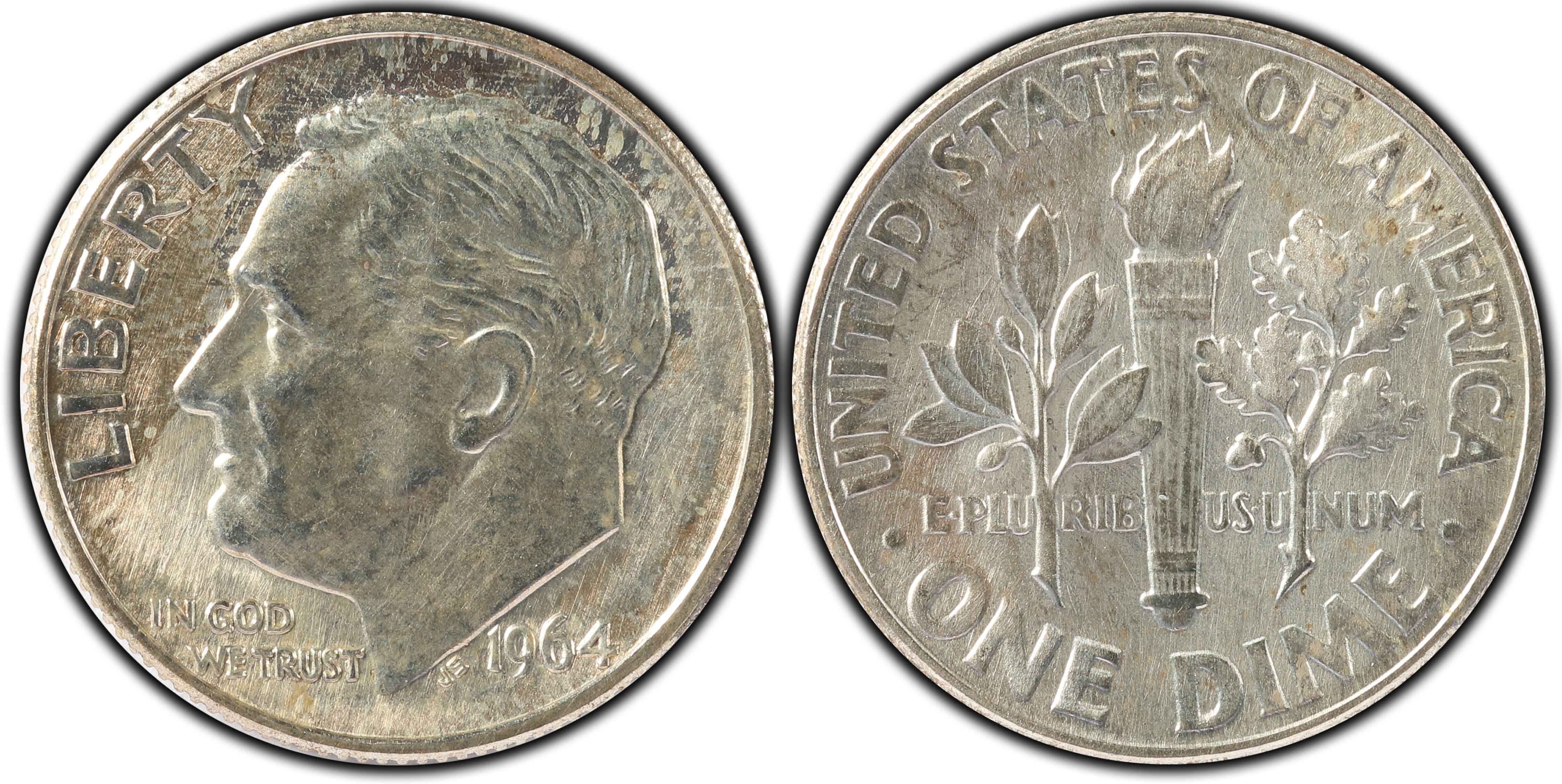
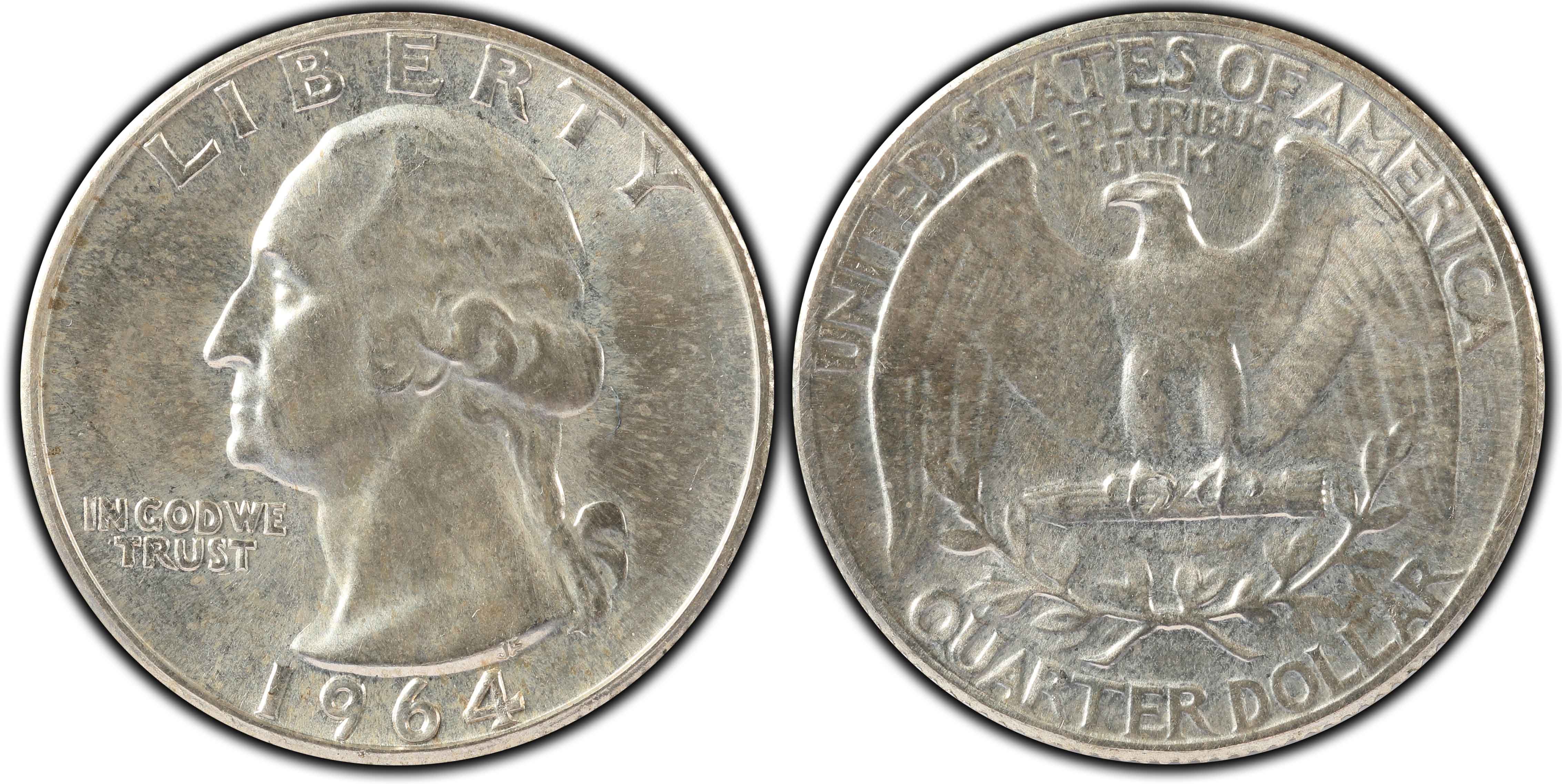
A large grouping of these coins (3) appeared in a group of standard Mint Sets for 1964. Images of the coins are below. The coins came from a collector who had cut them out of the cellophane sets years ago.
It is my understanding that die pair matching is the only thing tying these "SMS" coins together. The below are die pair matches to the Smithsonian coins, and the PCGS "SMS" coins. One lone example (a quarter) from the die pairs found in the Smithsonian is known outside of a "SMS" holder, and every other example tracing to these dies is found in an "SMS" holder (15 or so per denomination and service). That is incredibly consistent.
This discovery would tend to support the conclusion that the coins are no different from the standard coinage for the year, given that they were quite literally distributed in the standard coinage for the year.
Now, having seen four of these coins in person, I can once again confirm that I see nothing special about them aside from them being fresh strikes from new dies.
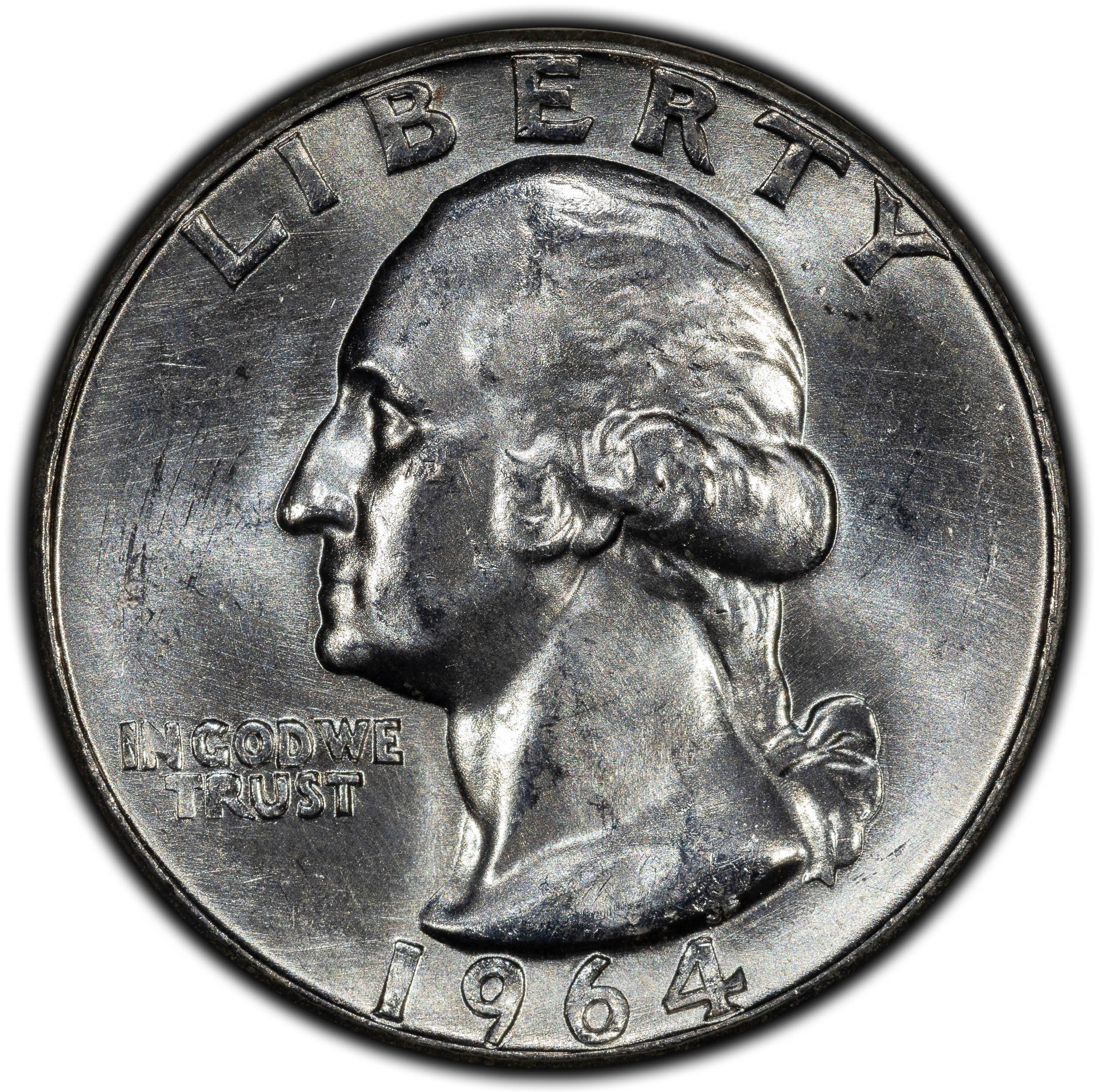
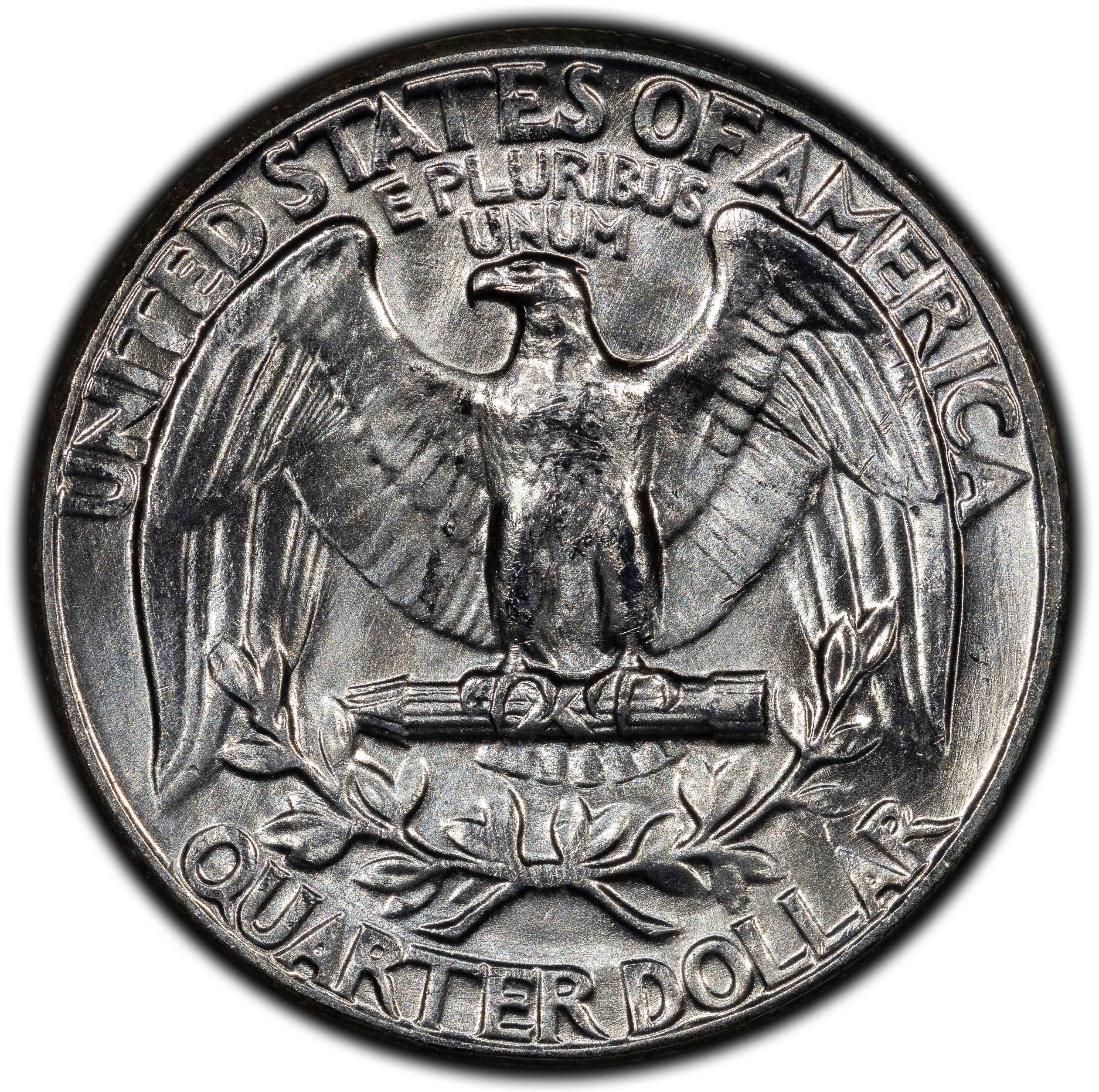
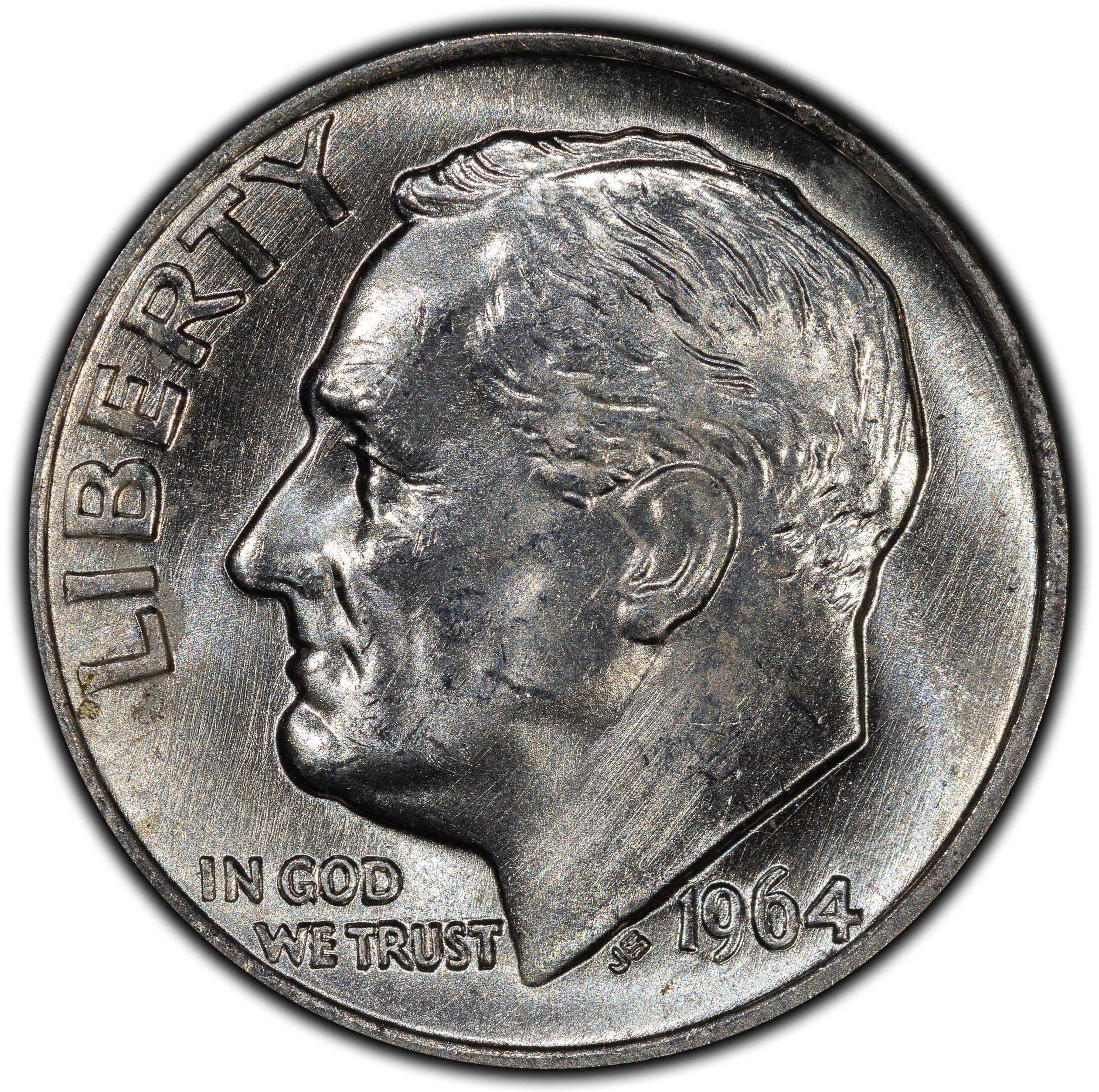
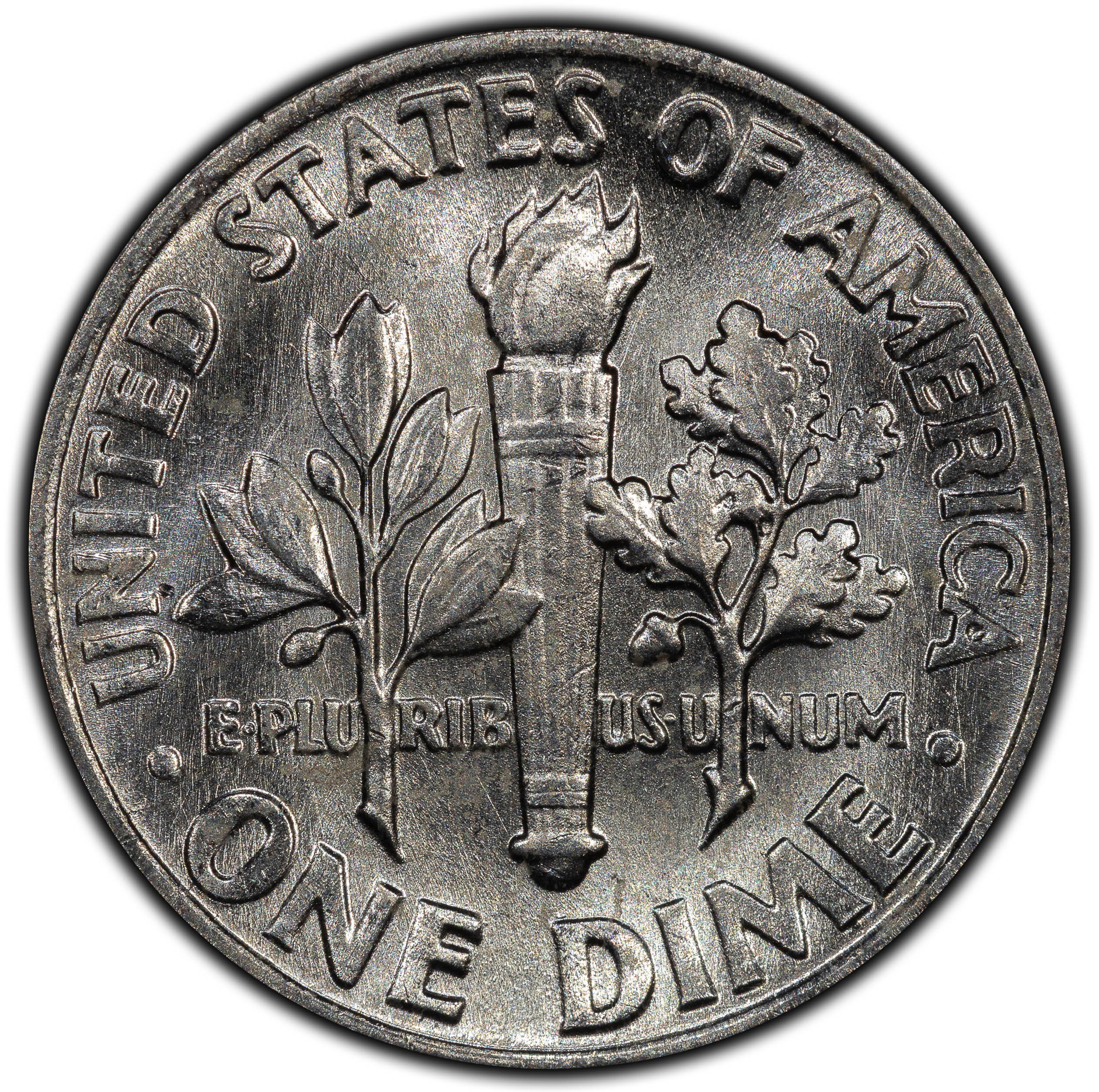
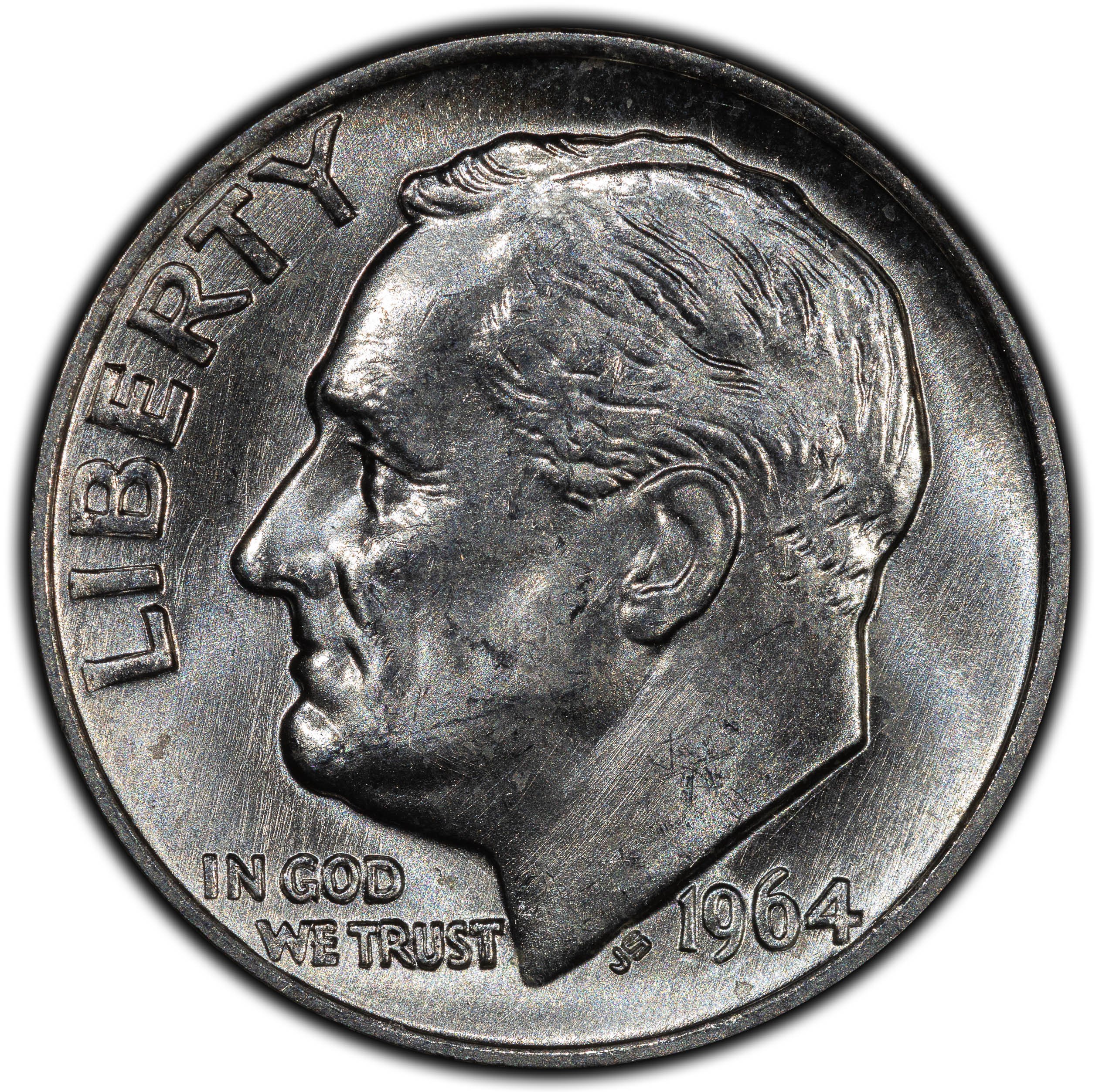
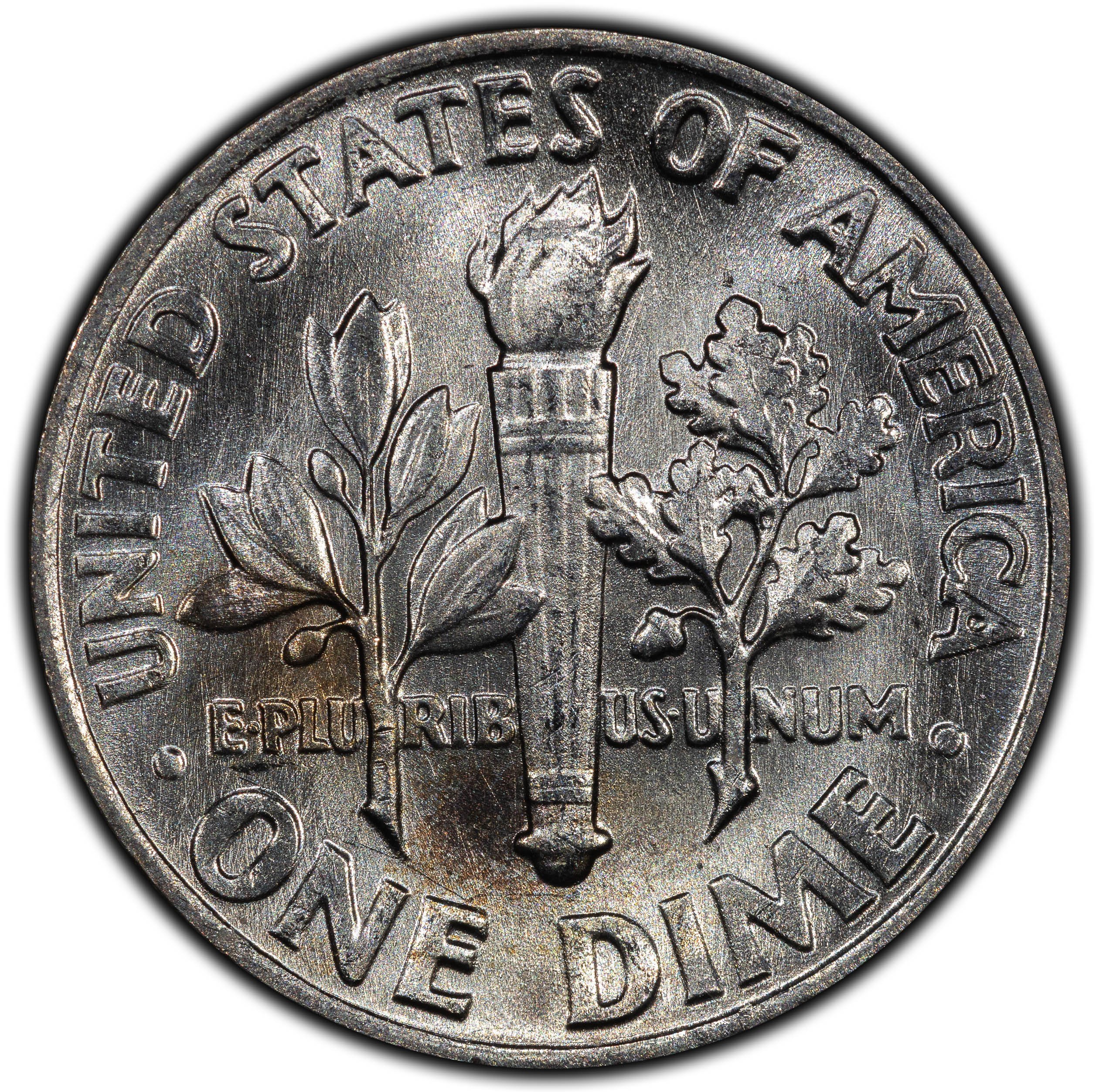
.
.
This coin was not found in the Mint Sets, but is included for posterity.
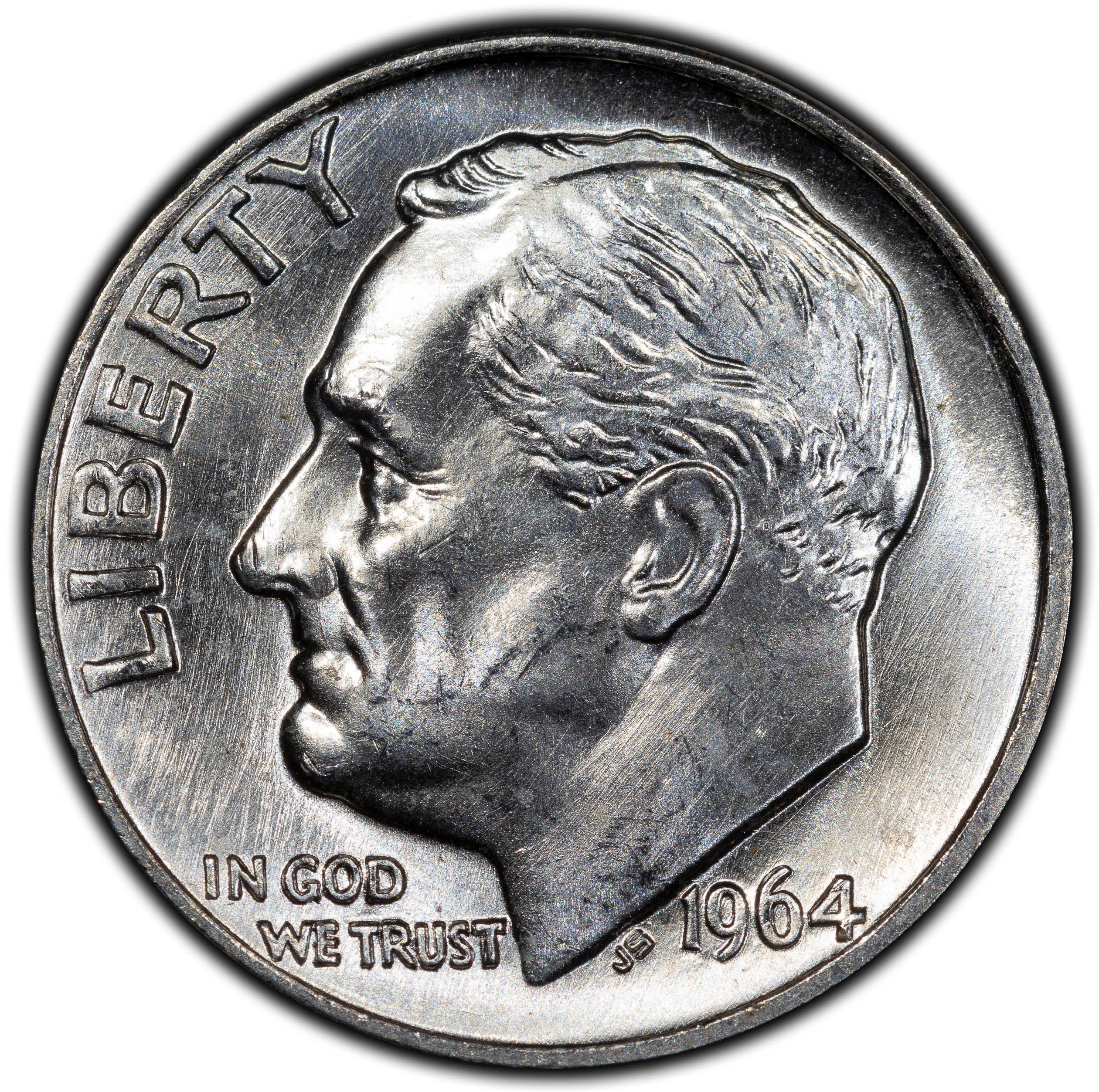
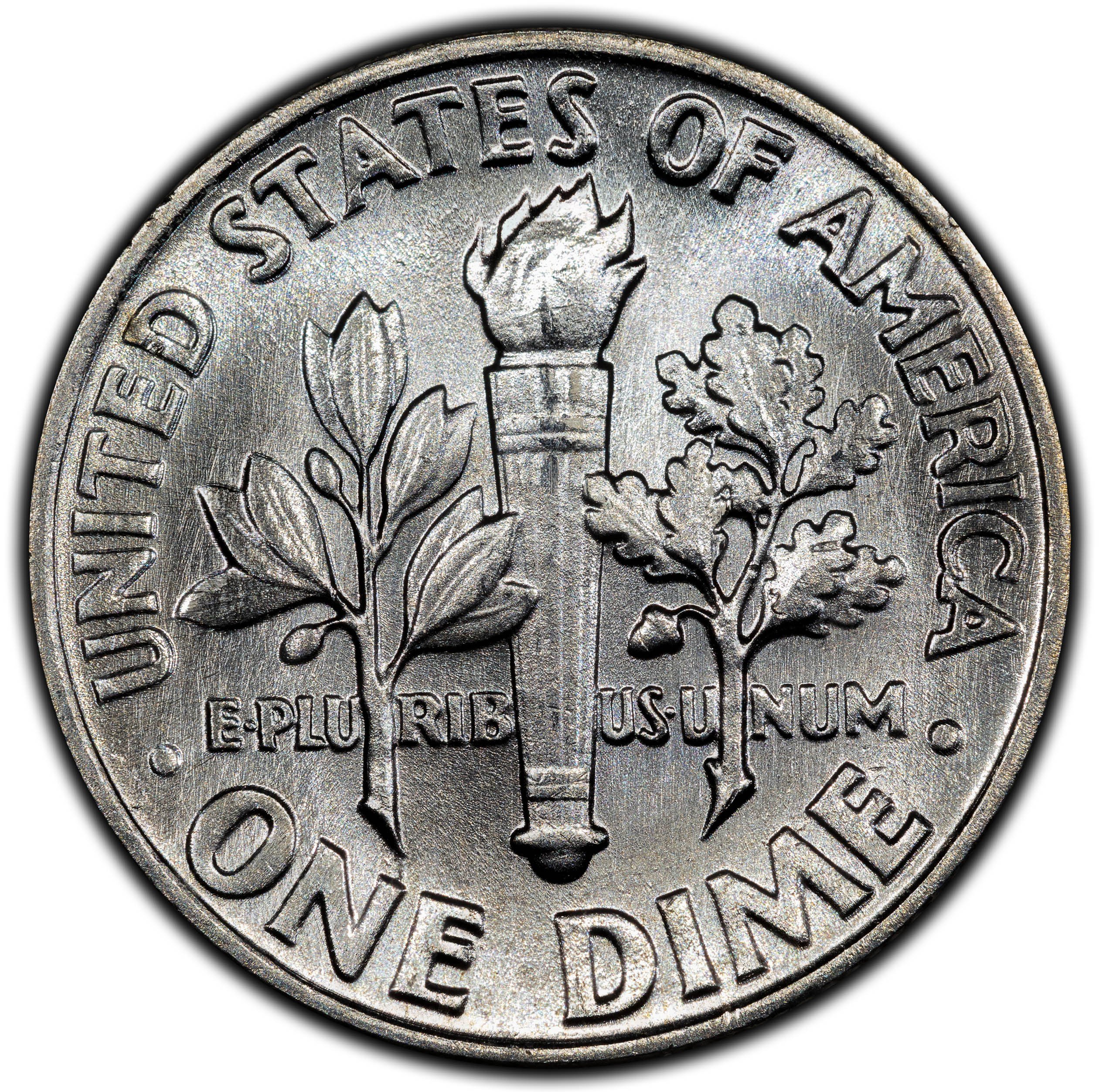
And a Smithsonian example of each type. It is of note that extreme photographic differences produce extremely different appearances.
Coin Photography
Thanks, Alex.
Going just by the images, I wouldn’t conclude that those coins were specially made. And I’d likely say the same about some of the examples that have been designated as “SMS”. However, before making a determination about something like this, I believe that it’s imperative to examine the coins in hand. So, to me, die pair matches between pieces designated as “SMS” and some coins found in “standard mint sets” doesn’t convince me that the former are merely early strikes from standard new dies.
Mark Feld* of Heritage Auctions*Unless otherwise noted, my posts here represent my personal opinions.
I've seen a lot of strange stuff in mint sets.
But modern mint sets (post-1964) are ALL specially made. They are struck by good dies and lower speeds and higher pressure. There are many other niceties that are only sometimes applied. This is just one of the many reasons that most modern Gems come from mint sets. You can get specially made coins in rolls and bags but they are few and far between. You will not find a bag of them and for most of these dates you can't find bags either.
Finding these coins in mint sets is certainly interesting but it proves nothing at all. Mint sets are where you look for special coins made after 1964. I don't know much about 1964 mint sets. Sure I've looked at more than 100 and I've seen lots of BU roll coins and bags to compare them too. The mint sets tend to just be "nice" more than "special". But it would hardly be surprising if an excess of specially made coins were tossed into 1964 mint sets or if the same dies used to make the "SMS" coins were used to strike mint sets.
Without documentation all we have are appearances.
Especially since there is no reason they couldn't have simply put the die from the experimental strike into regular production.
[Although I am skeptical about the coins. ]
All comments reflect the opinion of the author, even when irrefutably accurate.
I'll reply here to both of you since I believe this will dual tag.
I understand this point of view, however if this was the case we'd expect to see coins matching these die pairs in Mint State holders. We do not, except for anomalies. I looked for days when I first did the article, and searched effectively the whole GC archive. Nothing. The sole quarter is what I came up with, everything else was "SMS".
If the dies were put into circulation production, where are those coins? I'd argue they're in the "SMS" holders. There were never special strikes to start with, everything from these dies are circulation coins.
There's also issues with the attribution of the current stock of "SMS" coins if we accept some are special and some are not - which are which? Who gets to decide? Is one TPG correct and the other not? How special must they look? Do all of the graders need to be the same? Which graders are we going to use? What factors will they use to distinguish the special coins from those that aren't? What happens when they inevitably disagree or get it wrong? It's not an objective determination anymore.
Coin Photography
You know this discussion of the "specialness", or whatever, of the SMS 1964 coins reminds me of the eternal philosophic battle in biology and medicine between "lumpers" and "splitters". Can there not be a spectrum? (Not to diverge but look how children are now referred to as "spectrum" as they have orientation toward autism).
An interesting discussion of proof, proof-like, specimen, and currency designations is found in the forward of the Norweb Canadian Sale....
I tend to agree with that author in that coins can be found possessing none, some, quite a few, or nearly all characteristics of fabric, strike, surfaces, etc. that would fit a coin in a particular designation - and even some of the individual characteristics can present in a spectrum...
Well, just Love coins, period.
Duplicate post deleted.
Mark Feld* of Heritage Auctions*Unless otherwise noted, my posts here represent my personal opinions.
Alex, it sounds like the coins that you posted, which are a die pair match to the SMS coins, should be submitted to PCGS. If they receive the SMS designation, it will bolster (though not prove) your case that the coins are merely early strikes. And ironically, it would also provide the owner with a financial windfall. On the other hand, if they don’t receive the designation, at least you have some “coins matching these die pairs in Mint State holders” which to this point, have only been anomalies. 😉
Mark Feld* of Heritage Auctions*Unless otherwise noted, my posts here represent my personal opinions.
That might be the move here Mark. I'll have to talk to the owner of these three. I will likely submit my example.
Coin Photography
the
The reason I dismiss your press theory is because we see coins with similar qualities to the 1964 coins in the Smithsonian dated 1958. Therefore, the presses would have had to be in use in 1958, which doesn't work with the timeline presented.
Die records are not available for 1964 as we know it, despite extensive searches by other researchers.
Coin Photography
These coins remind me a lot of the 1875-S branch mint proof twenty cent pieces and the issues regarding them.
The route to reality goes through proper definition first. Mankind has lost touch with reality through using theory itself as a means to interpret all evidence. AI is abstracting us out of confusion through elaboration and extrapolation. It is exposing reality. We rely on induction and this is where the splitters reduce confusion by promoting deduction.
Positively identifying the nature of these coins from 60 years ago will prove fruitless in all probability.
Many people may not appreciate the rarity of early or hammered strikes of most modern coins including the huge mintages after 1952. Some new dies barely look new on the first strike and many others wear so quickly their tiny mintage gets lost in a bag or two of quarters that were probably used to make change at Poughkeepsie Woolworths in 1965. You can't just go to your local coin shop and pick up a roll of 1982-P quarters with nice strikes at bid. Yes, we could search for coins off these dies but even that might prove impossible but with a meaningful sample it could be determined if they were simply later strikes so have no bearing on any perceived "specialness" of the SMS coins.
One of the characteristics of modern mint sets is that they were made by new dies yet you'll find a new dies strike in only in only about .025% of mint sets. The fact that a 1964 was saved at all indicates its specialness.
So, many examples where proof die were tossed back in the business strike production. How is this different?
the
Because examples of those coins are found in both Proof and MS.
Coin Photography
Sure thing on the die records.
Seems like we have some minor disagreements on the details here, which is ok with me. I think you have a good idea of what is going on and have made your own conclusions based on the facts, which is the important thing anyways.
Regardless, the discovery of the three coins above throws another element in to be considered, and does shift the pendulum.
Coin Photography
So now you are finding these in SMS and MS
The coins presented in this thread are raw, and for all I know will grade as "SMS".
Coin Photography
So I'd first like to apologize for wading into this hotly debated topic having never owned, but merely seen a few of these. Here's my question, or observation. These two coins are obviously not "cut from the same cloth." Was this really the poster's intent, to say that they are so similar as to be nearly indistinguishable? Astonishing! Look at the differences between the fields and the devices. To me, everything about the bottom (SMS) coin is exceptionally well delineated, whereas the top coin seems obviously the product of mass production. Just look at the surfaces. I mean the surfaces of the fields and the devices. And look at the finish. I don't know about you but if someone handed me a raw SMS coin I'd spot it in a heartbeat, even with my old presbyopic eyes.
Look, everybody knows these things bring mad money at auction, and everybody would like a piece of that. Eyes seeing what they want to see is a known issue, just made obvious from all the "is this shelf-doubling or a DDO?" posts. I get it. It happens to us all. But these SMS coins, they ARE different. And what they ARE NOT is EDS versions of regular MS coins. Sorry.
Empty Nest Collection