Options
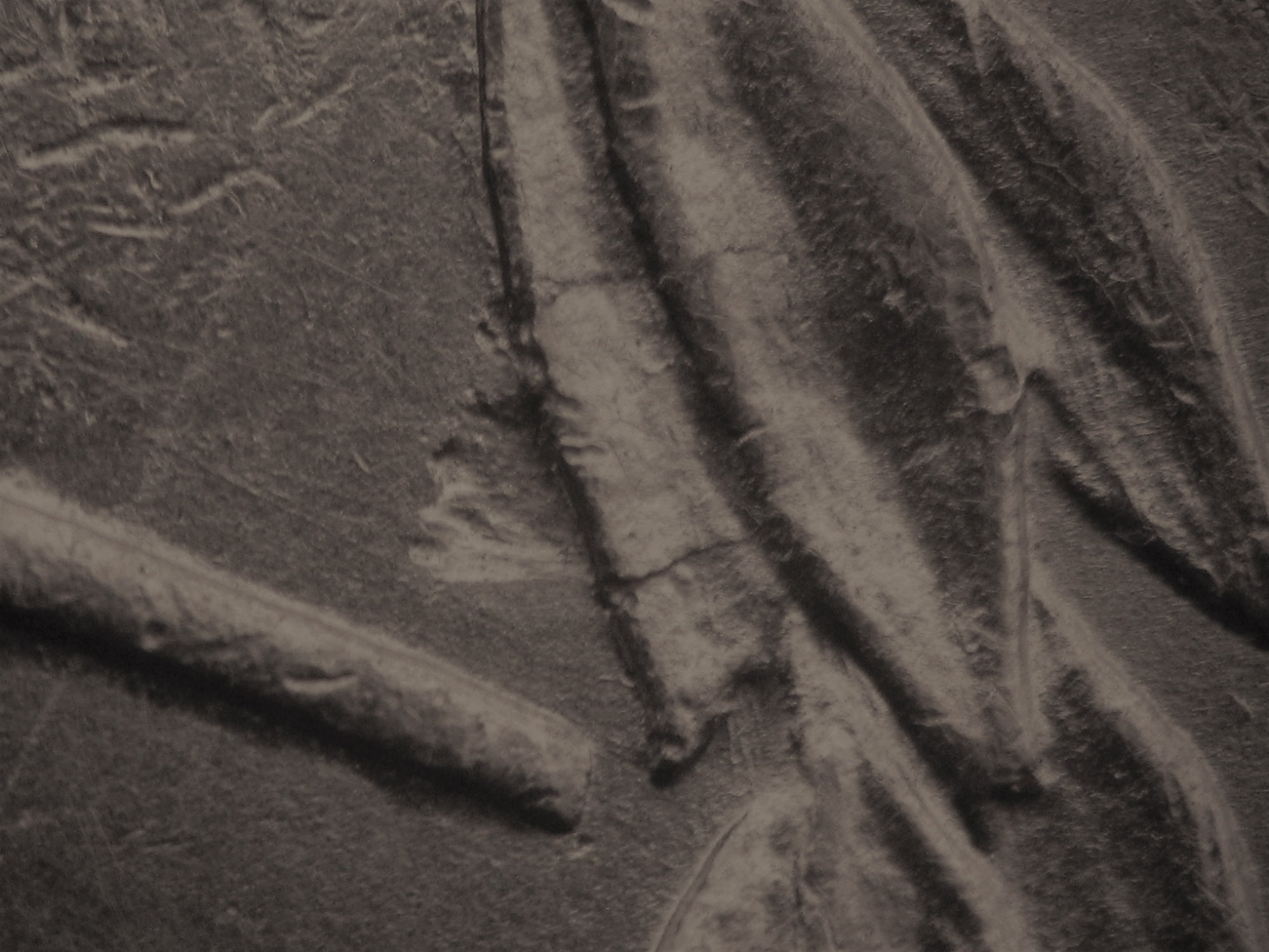
ANSWERED What characteristic is in this micrograph?
 Insider2
Posts: 14,452 ✭✭✭✭✭
This is suppose to be a FUN and hopefully educational post. But,  there is a curve ball in the post and you'll understand what I'm up to and why
 when all the answers are in.
I'm posting a 25X image of something commonly seen on coins. It is on the bunch of leaves and continues into the field. What do you call it:  The "trick" is to be specific.
0
Comments
It looks like a lamination?
I'm curious about opinions. Is it something like this?
Lance.
Could be a lamination as mentioned, but maybe struck through grease? (Is the "trick" to know what kind of grease? ).
lamination is correct but why. It looks to me as something was between how else do you get the raised leaves.
Best place to buy !
Bronze Associate member
Lamination crack ?
Attempt to repair lamination? Approximate age would be a nice little hint. To what lengths would the mint go to to keep a die in service?
First thought was die deterioration then I saw the problem extending through the leaves.....now do not know. Have not owned one like this.
bob
I can't get away from the burrito thread.
A flipped over die chip?
Something to do with a clashed die?
EOC
My YouTube Channel
OK, could be a lamination that started in the field that broke off at the leaves but still continued thru and under the leaves.
Or a struck thru right next to a lamination, but the above makes more sense as opposed to a coincidence.
Thanks to all posters. I took the time to post this and was very disappointed - until now. I was going to go to another forum where this kind of question always generates lots of responses.
Hint: sometimes two things can appear as one.
@ErrorsOnCoins Hope you return with a guess. This is an easy one but with a "technicality" as a twist.
That is a struck thru error
BINGO!
@ErrorsOnCoins said: "OK, could be a lamination that started in the field that broke off at the leaves but still continued thru and under the leaves."
This is a lamination error. Most got it.
The trick was this: The metal peeled up (lamination) and continued across the relief (dark cracks across the leaves). Note that the metal covering the filed has detached and is no longer on the coin.
This gives us a look at the two types of laminations. Detached (showing the interior of the coin) and attached (showing the coins surface.
Thanks, good post. Very educational.
Indeed, great thread!
My YouTube Channel
So, in other words, it is struck-through a lamination, part of which is retained and part of which is gone.

 (Or maybe not).
Somewhere I have an error Sac where a small piece of the rim was torn off and deposited on the reverse field and struck in (and retained). No idea how it happened, but I found 5 of them so there was something going on with the press that day. I kept the nicest three and set the other two free into the wild. (If I had it to do again I would probably have kept them all). When I come across them I will post pics....
@JBK said: "So, in other words, it is struck-through a lamination, part of which is retained and part of which is gone."
NO, The metal peeled up (lamination) and continued across the relief (dark cracks across the leaves). Note that the metal covering the filed has **detached and is no longer on the coin.'
There is no strike thru in this image. However, if the peeled up surface were not present and only the hole in the field next to the leaves was on the coin, that is what a strike thru could look like.
Everyone in this thread (including to OP) is wrong.
The correct term for this is delamination.
"Partial delamination" would also be acceptable.
Thwap!!


@dcarr said: "Everyone in this thread (including to OP) is wrong.
The correct term for this is delamination.
Thank you for educating me!
Nevertheless, I shall keep teaching that part of this "error" is due to a DETACHED lamination because none of my silver dollars are coated EXCEPT one example with a delaminating lacquer coating.
Please Note: A Delamination is the loss of coating adhesion to a surface or between coating layers.
Delamination can occur in:
•Composite materials
•Reinforced concrete structures
•Laminated materials
A DELAMINATION tends to destroy a coating's strength and durability, as well as the material's aesthetic appearance.
Mr. Carr is correct.
Thank you @Insider2 and @dcarr for my study

Ok, I'm going to play...
That is not actually a "layer" peeling back, but rather the unintended separation of a bonded alloy. Thus the "error." I'm sure a metallurgist can come along and tell us the correct term for this separation, but it might depend on why separated in order to give us the precise term.
Lamination is the layering of materials making up one solid piece. If one of the layers began to separate from the next layer, it would be delaminating, or the act of it occurring would be delamination. This would be more applicable, or accurately used to describe clad type coins in our case, if a part of the nickel layer peeled away from the copper layer. The silver dollar and Indian head cent are made of a bonded homogeneous alloy, not layered. So a part of the coin has separated which could be caused by many factors. IMO, some combination of heat, impurity, and/or mechanical stress.
Industries have "terms of art" where in this case the word "lamination" could be used for so long and widely throughout the industry to refer to what you are showing, that "lamination" takes on the new meaning, but only within the industry in which it derives. Everyone in that industry knows what you are talking about, although you are technically incorrect.
So in general, I hate to agree with the OP but he is using the term of art "lamination" correctly in the context of coins, lol. All of the people listed on the following link would agree that in the context of coins, it is called a lamination error (although it is a complete misdescription of what it actually is). But he is wrong in his terminology of detached or attached. It is a lamination (missing completely) or in this case a retained lamination.
I don't agree that there is conclusive evidence of any "struck through" error either, which would not be the loss of a part of the coin, but a displacement of part of the coin. A struck through error would probably not have stopped distinctly around the edges of the leaf, but then again it could be a "field-restricted" struck-through error.
http://www.error-ref.com/
Thanks for the clarification. It all boils down to this. Different terms are used for the same thing. It also depends on how deeply someone is involved. I thought my car runs on gas. Yet, someone more informed may say it runs on something else - fuel?
In this case, the term lamination is not in dispute. The "correct" term to use when it separates COMPLETLY from the surface and is no longer present on A COIN is what the "nit" is about. I choose to stay with the long-time accepted usage. Others can call it what they wish. The important thing is folks who are not as specialized can look at my image and understand it. The fact that this discussion has evolved into further posts IS GOOD FOR ALL OF US and illustrates one of the reasons we all enjoy CU!